



I think of the teaching as a literary project. It is a poem in progress.
I think of the teaching as a literary project. It is a poem in progress.
By KOLUMN Magazine
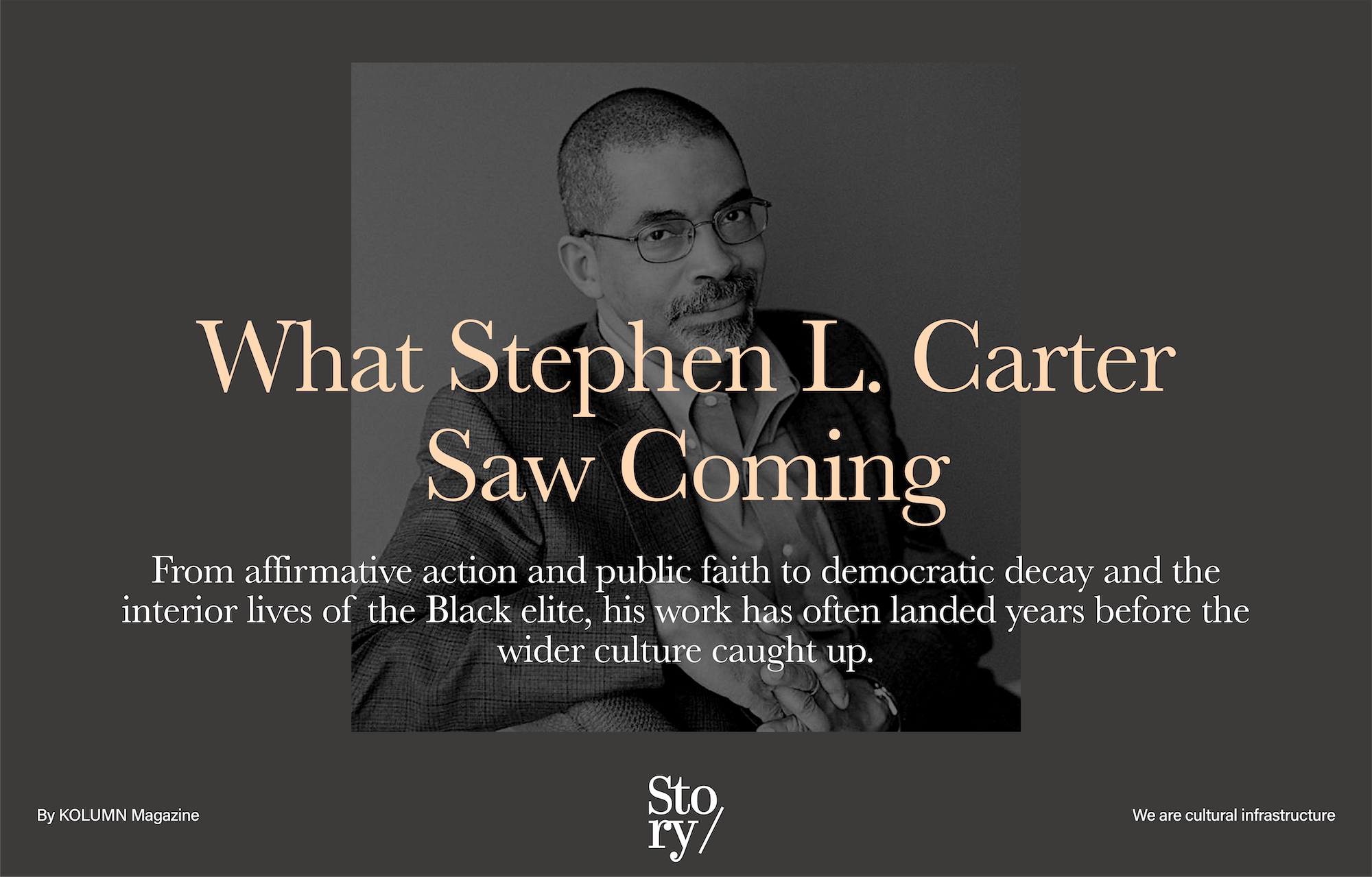
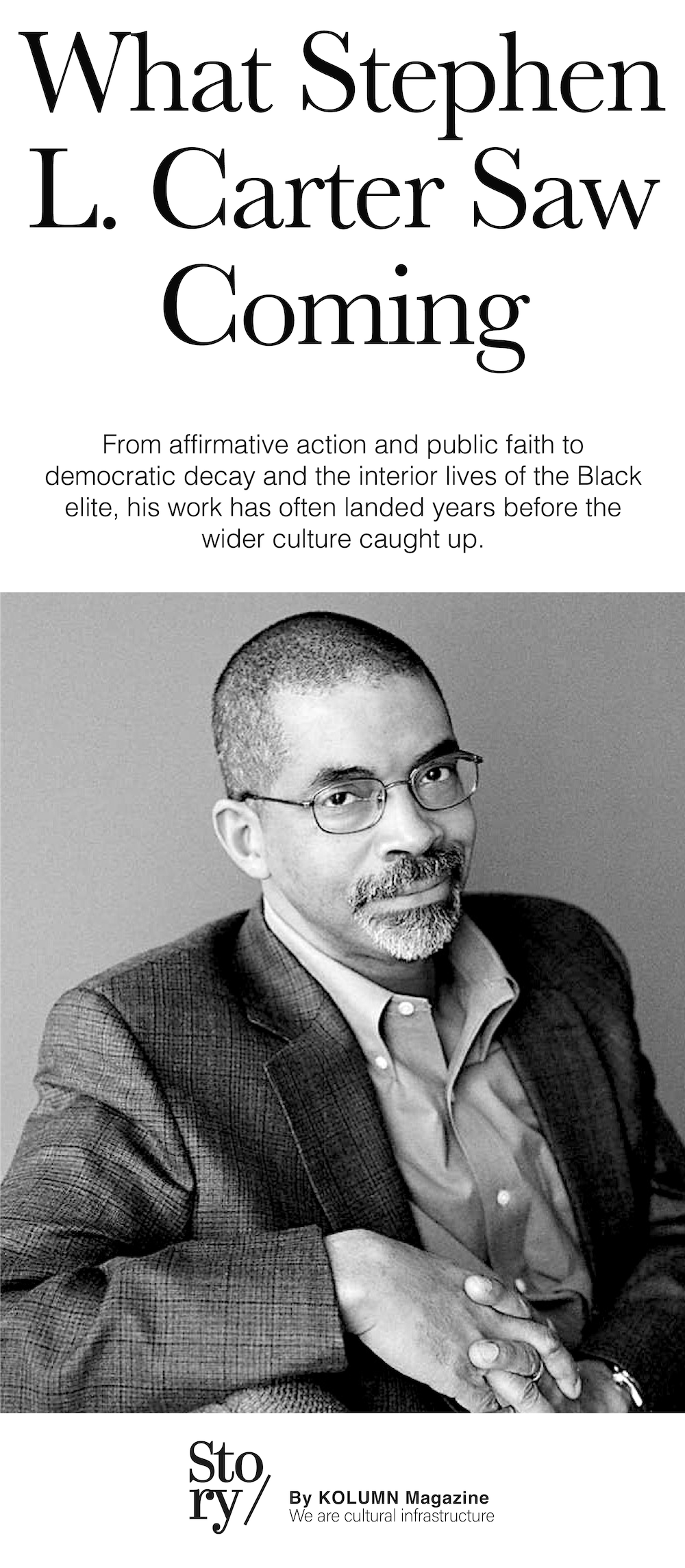
There are writers who become famous by simplifying the national conversation, and then there are writers like Stephen L. Carter, who become indispensable by insisting that the conversation is harder than it looks.
For more than three decades, Carter has occupied a curious, durable place in American intellectual life. He is a Yale Law School professor, a former clerk to Justice Thurgood Marshall, a prolific nonfiction author, a bestselling novelist, a regular opinion columnist, and a public thinker whose work has roamed across race, religion, law, war, integrity, manners, and the machinery of democratic life. Yale describes him as the William Nelson Cromwell Professor of Law, a faculty member since 1982, and the author of 15 books; in recent years he has continued writing for Bloomberg while remaining a visible presence in debates about constitutional culture and public ethics.
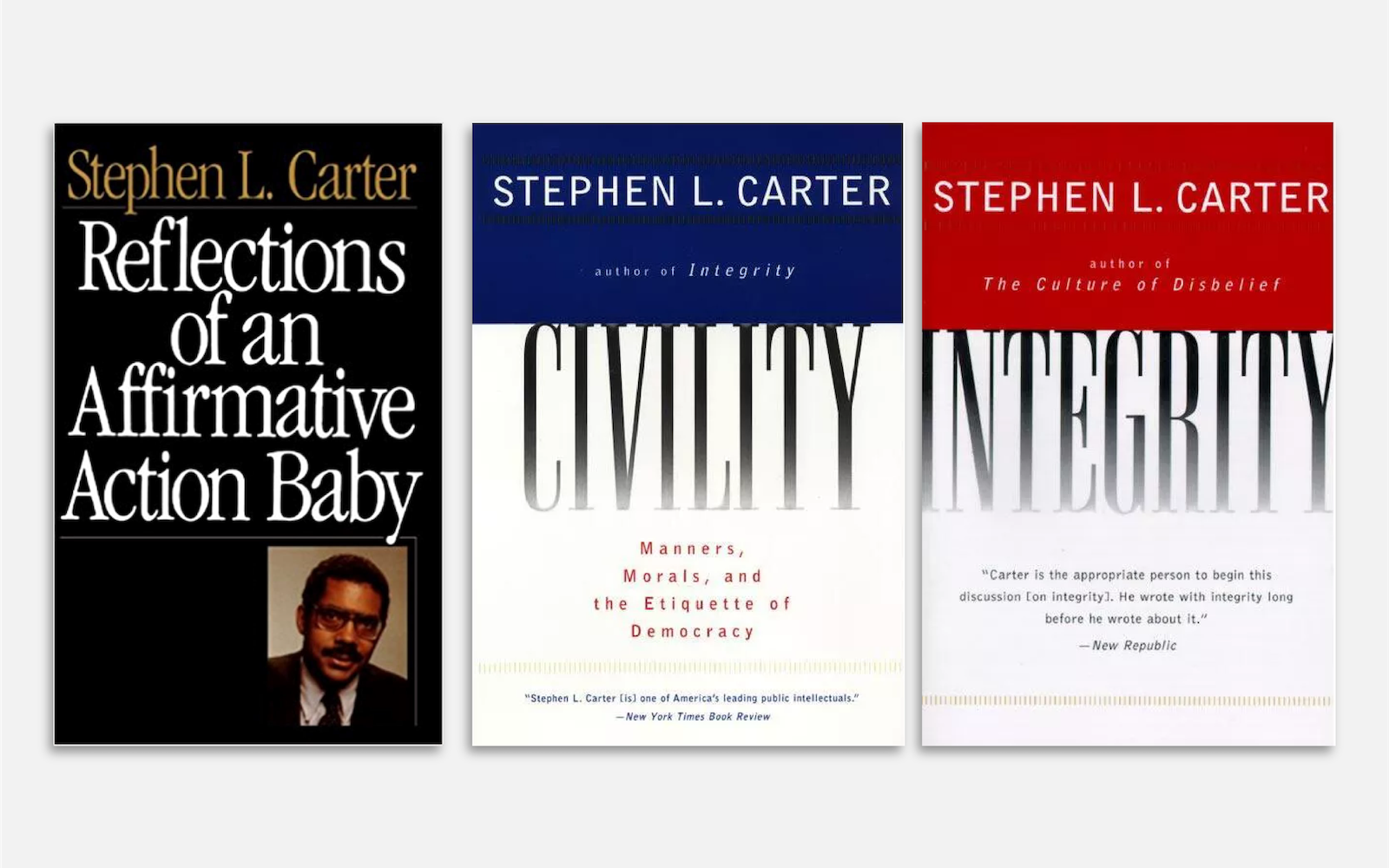
That résumé alone would make him notable. But it does not quite explain his significance. Carter matters because he has spent much of his career challenging America’s preferred shortcuts. He has pushed back against the idea that diversity at elite institutions equals justice. He has resisted the secular condescension that treats religious conviction as an embarrassment unless translated into approved public language. He has warned that civility is not mere etiquette but a costly democratic discipline. And in his fiction, especially The Emperor of Ocean Park, he has mapped the ambitions, anxieties, and internal politics of Black professional life with a scale and seriousness that critics recognized almost immediately. His debut novel spent 11 weeks on The New York Times bestseller list, won the 2003 Anisfield-Wolf Book Award for fiction, and continues to reverberate, not least because it was adapted for television in 2024.
Carter’s career is, in one sense, improbably broad. In another, it is all of a piece. His novels ask the same questions as his essays, just in a different key. Who gets to belong? What do institutions reward? What happens when virtue becomes performance? How does power disguise itself as fairness? What does loyalty cost? Even his classroom life seems to fit the pattern. In a 2024 Yale Law School podcast, Carter described teaching as “a literary project” and “a poem in progress,” a formulation that sounds at once grand and unexpectedly revealing. For Carter, even pedagogy is a form of narrative craftsmanship.
To write about Stephen L. Carter now is to write about a figure who has outlasted several versions of the American public sphere. He emerged nationally in the early 1990s, when debates over affirmative action and multiculturalism were reordering higher education and public policy. He became a widely read commentator on religion in public life during the culture-war years. He wrote a celebrated book on civility before civility itself became a contested term. He moved into fiction at blockbuster scale in 2002, when Knopf reportedly paid $4 million for his first novel and another to follow. And he remains active in the present tense, still publishing arguments about courts, democratic norms, and public responsibility in 2026.
That longevity is part of the story. So is the fact that Carter has never been easy to slot neatly into ideological categories. He can sound, depending on the subject, like a liberal critic of symbolic racial progress, a moral conservative uneasy with elite secularism, a democratic traditionalist worried about civic fracture, or a novelist drawn to the hidden codes of class and kinship. His significance lies partly in that refusal to become legible on demand. He has remained, for decades, stubbornly himself.
A childhood inside aspiration and contradiction
Carter’s biography helps explain the scale of his attention and the texture of his skepticism. He was born in Washington, D.C., in 1954, into a family steeped in Black achievement and public service. His father, Lisle C. Carter Jr., was a lawyer and administrator who held posts in the Kennedy and Johnson administrations, later became a Cornell vice president, and served as president of the University of the District of Columbia. His grandmother, Eunice Hunton Carter, was a pioneering Black prosecutor whose strategy helped bring down Lucky Luciano, a story Stephen Carter would later recover in his 2018 book Invisible.
The family story matters not merely because it is impressive, but because it placed Carter early inside a particular Black world: accomplished, educated, institutionally fluent, and intensely aware of what race does to achievement in America. In a 2002 New Yorker profile, Carter recalled being steered away from academic tracks as a child in a predominantly white Washington junior high, then later flourishing once he was allowed into Latin and algebra. The experience helped shape his sense that talent is often mediated by gatekeeping, expectation, and the racial imagination of institutions.
The same profile traced his path through Ithaca High School, Stanford, Yale Law School, and elite legal clerkships. After Yale, Carter clerked first for Judge Spottswood W. Robinson III on the D.C. Circuit and then for Justice Thurgood Marshall. By 1982, he had joined the Yale faculty; according to The New Yorker, he became Yale Law School’s first tenured Black professor just a few years later.
This is one of the central tensions in Carter’s work: he is both beneficiary and critic of elite American meritocracy. He knows its doors open unevenly, and he also knows what it means to walk through them carrying the suspicion that some people believe you did not fully earn the invitation. That tension was the combustible center of his first major book, Reflections of an Affirmative Action Baby.
The book that made him impossible to ignore
Published in 1991, Reflections of an Affirmative Action Baby announced Carter as the sort of writer Americans claim to admire and often punish: intelligent, unscripted, unwilling to flatter any camp for long. The book drew partly on his own experience as a Black student navigating elite institutions and on the psychic burden attached to preferences administered in the name of justice. Carter did not reject affirmative action in simple terms. He made a more unsettling argument. He suggested that it often benefits the already advantaged Black middle class while allowing the nation to avoid the harder work of addressing structural inequality. In The New Yorker’s summary, Carter argued that America seeks “racial justice on the cheap.”
That formulation has had unusual staying power because it cuts through familiar partisan choreography. Carter’s argument was not that race-conscious policy is always illegitimate; it was that elite uplift can become a national alibi. Universities and professions may congratulate themselves for admitting a gifted Black striver from a relatively stable background while leaving intact the deeper conditions that make broad-based equality so elusive.
He was writing before the current phase of the affirmative-action debate, before the Supreme Court’s recent interventions, before diversity language became corporate boilerplate. Yet the core problem he identified remains recognizable: the temptation to confuse representation at the top with justice across the whole. Carter’s critique was especially potent because it came from someone who openly acknowledged having benefited. He was not speaking from resentful distance. He was writing from inside the machinery.
What made the book memorable was also what made it uncomfortable. Carter was clear-eyed about racism but skeptical of therapeutic slogans. He understood symbolic victory and refused to overvalue it. He saw how elite inclusion could dignify its beneficiaries while isolating them. That complexity became part of his public identity: a Black intellectual who would not allow his analysis to be reduced to team loyalty.
Carter’s enduring question was never simply, “Did I get in?” It was, “What kind of justice lets that answer stand in for everything else?”
Religion, seriousness, and the secular elite
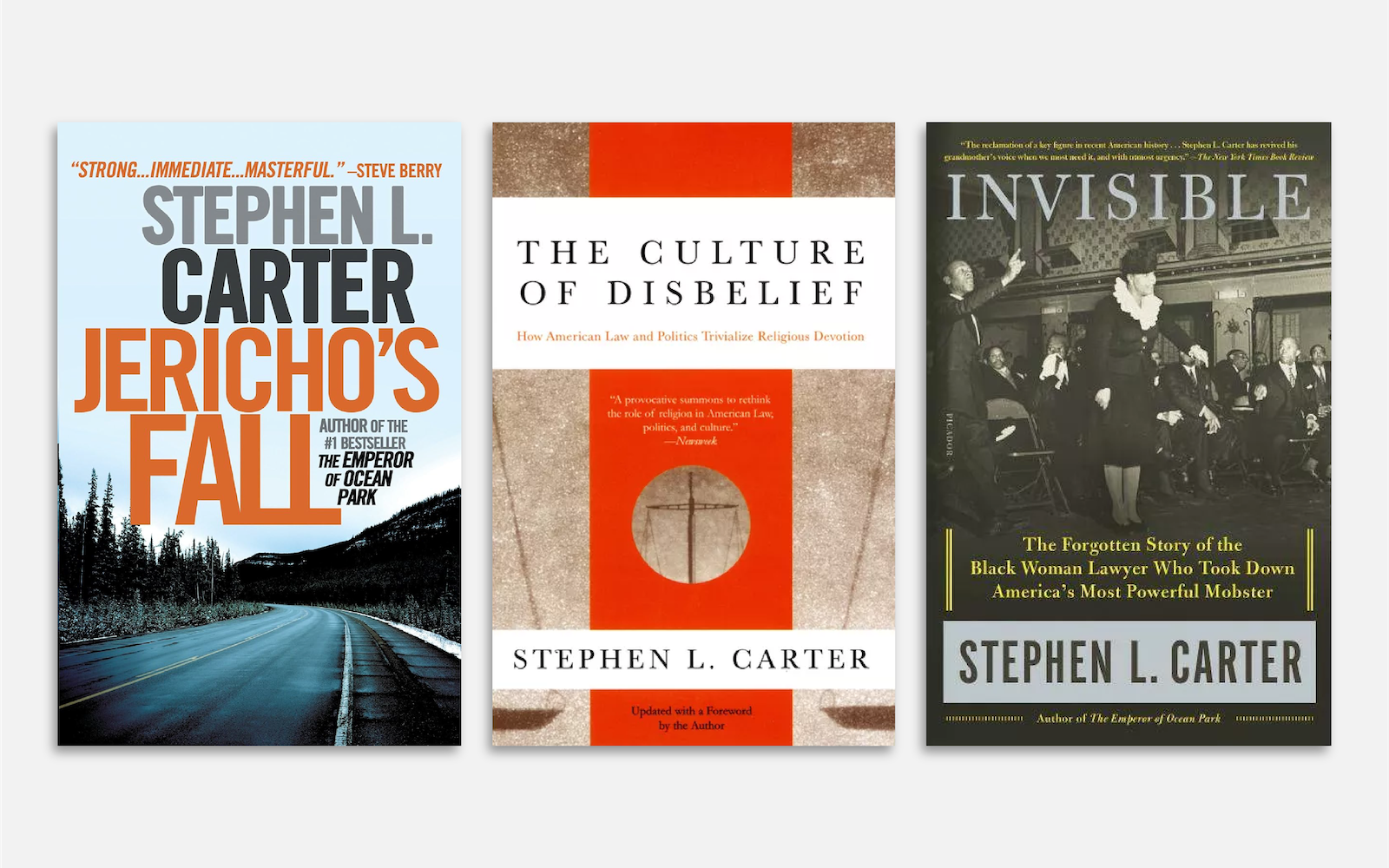
If Affirmative Action Baby established Carter as a provocative commentator on race and merit, The Culture of Disbelief made him a major voice in debates over religion and public life. Yale notes that the 1993 book remains among his most important works, and it earned the Louisville Grawemeyer Award in Religion in 1994. The Grawemeyer organization describes Carter as the winner for his study of how American law and politics trivialize religious devotion; other biographical sources note that he was the first non-theologian to receive the prize.
Here again, Carter’s intervention was not reducible to culture-war cliché. He did not argue for theocracy, or for collapsing the wall between church and state. His complaint was narrower and sharper: that elite legal and political culture often permits religious believers to enter public debate only after they translate their convictions into a vocabulary deemed secular enough to count. The practical effect, in his telling, is that religious devotion gets demoted from a serious account of the good to a kind of private hobby. Google Books’ summary of the work captures the central claim: liberal democracy can preserve church-state separation while still refusing to trivialize faith.
That argument was especially striking coming from Yale, from a constitutional scholar, and from a Black public intellectual whose politics were never straightforwardly reactionary. Carter was not an outsider railing against the academy; he was a tenured insider diagnosing one of its reflexes. In the 2002 New Yorker profile, his faith was described as a variety of evangelical Christianity uncommon among Northeastern university faculties, and part of what distinguished him from many of his peers.
His work on religion also helps explain why Carter has often seemed both timely and out of step. He arrived before many secular liberals were willing to recognize how their own assumptions could flatten pluralism. He also insisted that believers themselves bear obligations: seriousness, humility, moral consistency. In a Yale Reflections interview on civility and values, Carter said he wanted those who take God’s word seriously to be serious in applying it to the problems of society, while expressing skepticism about whether many Christians were well positioned to do so. That two-sided critique is classic Carter. He resists elite disdain for religion and refuses cheap absolution for the religious.
Integrity, civility, and the disappearing democratic middle
Before the internet turned contempt into a business model, Carter was already writing about what democratic life loses when moral vocabulary collapses. His books Integrity and Civility emerged from the same broad concern: that American public culture was becoming increasingly performative, less sacrificial, and less capable of sustaining common life.
Of those books, Civility has perhaps had the widest afterlife, not least because the word itself now arrives pre-contested. To some critics, civility language can sound like a demand for politeness from the powerless while the powerful continue behaving brutally. Carter understood that risk, but he proposed a deeper definition. In Yale’s Reflections, he described civility as “the sum of the many sacrifices that we make for the sake of living our common life.” That is a much tougher standard than decorum. It asks for restraint, charity, obligation, and the willingness to accept limits for the sake of others.
“Civility,” Carter argued, is not just good manners. It is the sacrifice required to share a common life.
It is worth pausing on why that definition still resonates. Carter’s idea of civility is not an aesthetic preference for nicer tone. It is a democratic ethic. It implies that citizenship cannot survive on rights talk alone; it requires habits of self-limitation. That is why his critics and admirers have both returned to the book. Some have found in it a bracing corrective to the cruelty of modern politics; others have worried, fairly, that civility can be invoked selectively. Even that disagreement proves Carter’s relevance. He wrote a book that still forces readers to ask whether democratic coexistence can endure without some account of mutual obligation.
What Carter saw earlier than many was that moral erosion rarely announces itself dramatically. It arrives as incentive structure, as media style, as the normalization of contempt, as the shrinking of institutions that once taught people how to disagree without total war. His recent Bloomberg columns, including pieces published in early 2026 about courts, presidential rhetoric, and legal norms, show that he remains preoccupied with these themes. The emphasis changes with the news cycle, but the underlying concern is constant: institutions are fragile, and democratic habits decay faster than people imagine.
From public intellectual to novelist of power
Then came the surprise, except perhaps it was not a surprise at all.
In 2002, Carter published The Emperor of Ocean Park, a long, intricate, heavily anticipated debut novel that landed with the force of an event. The New Yorker reported that Knopf paid $4 million for the book and another to come, making Carter one of the highest-paid novice fiction writers in the country. The novel was not merely a commercial gamble. It was a test of whether an already prominent public intellectual could reinvent himself as a serious novelist without being crushed by the spectacle around him.
He passed.
Reviewers noticed several things at once: the scope of the story, the density of its plotting, the legal and political intelligence under the hood, and the unusual seriousness with which it treated the Black upper-middle-class and professional world. The Guardian called it an absorbing thriller with well-observed social commentary and said it lived up to the hype. WGBH, reflecting on the 2024 screen adaptation, noted that the novel had spent 11 weeks on the Times bestseller list and helped establish Carter as a fiction writer of consequence. The Anisfield-Wolf Foundation’s record of its 2003 fiction prize further underscored the novel’s standing.
The novel’s importance was not only literary. It expanded the imaginative map of Black American fiction in the mainstream market. Carter gave readers a murder mystery and a family saga, yes, but also a thick account of Black privilege, ideology, ambition, and social code. He wrote about a stratum of Black life that popular culture often flattens or ignores: the world of judges, professors, clubs, legacies, ideological schisms, and inherited pressure. In that sense, The Emperor of Ocean Park was both entertainment and intervention.
The book’s afterlife confirms the point. More than two decades later, the story was adapted as a 10-episode MGM+ series that premiered on July 14, 2024. Coverage of the adaptation emphasized how the novel’s themes of Black excellence, family, politics, and elite tension retained their force. The Television Academy described the series as bringing Carter’s complex tale of politics, suspicion, and privileged Black family life to the screen; WGBH similarly framed the adaptation as a showcase for Black excellence rooted in the novel’s long cultural memory.
This is one measure of Carter’s significance as an author: he wrote a novel that the culture could not quite exhaust in its own moment.
The fiction never left the argument behind
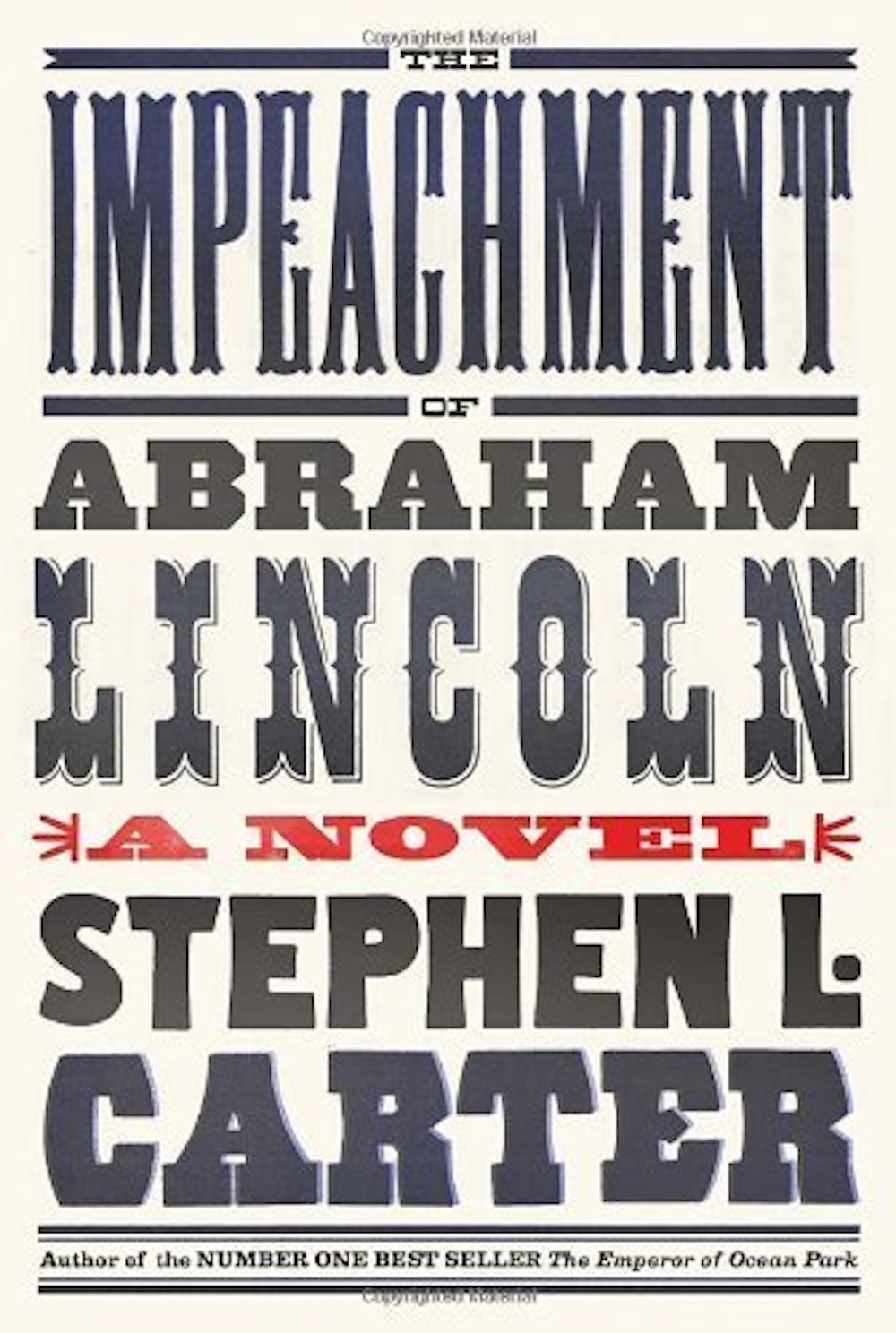
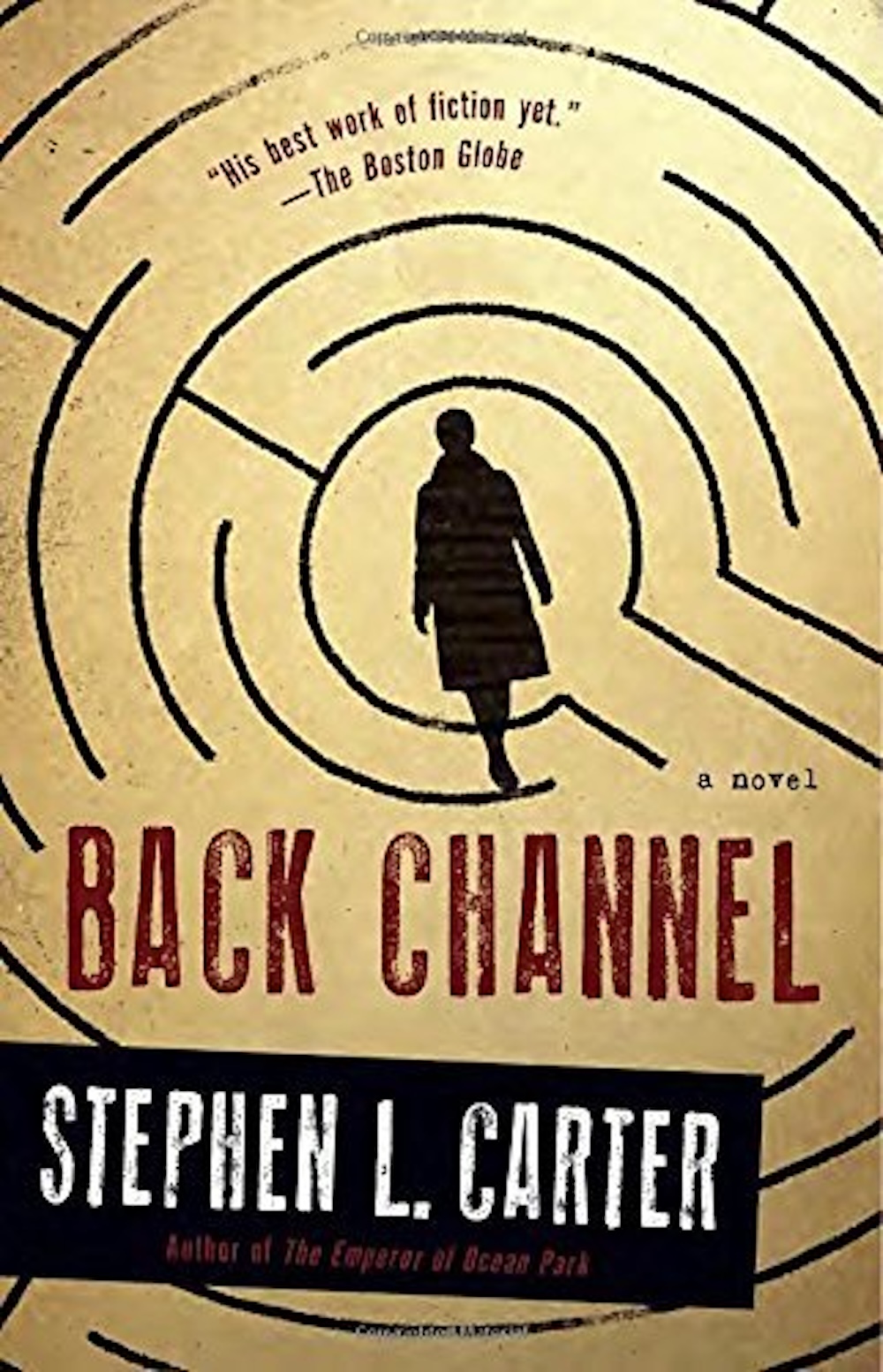
What is striking about Carter’s fiction career is how thoroughly it extends the concerns of his nonfiction. The Elm Harbor books, along with later novels like Jericho’s Fall, The Impeachment of Abraham Lincoln, and Back Channel, are built from suspense, but their deeper engine is moral and institutional tension. They are interested in secrecy, yes, but also in legitimacy. In power, but also in the narratives power tells about itself. In Black interiority, but also in the cost of moving through American institutions while carrying history on your back.
Take Back Channel, his 2014 historical thriller set against the Cuban Missile Crisis. Yale’s 2024 podcast summary lists it among the novels that demonstrate Carter’s range, while contemporary reviews described it as a suspenseful reimagining of unofficial diplomacy during one of the Cold War’s most dangerous confrontations.
Or consider The Impeachment of Abraham Lincoln, which imagines Lincoln surviving assassination only to face constitutional reckoning. Even in alternate history, Carter gravitates toward the hinge where law, morality, and politics grind against one another. The premise itself is pure Carter: a thriller constructed from constitutional anxiety.
What separates Carter from many idea-driven novelists is that he does not merely smuggle arguments into plot. He uses narrative to test arguments against messy life. Families complicate ideology. Desire complicates principle. Institutions turn out to be populated by ordinary, vain, frightened, ambitious people. The characters may inhabit elite worlds, but their contradictions are recognizably human.
That is one reason his fiction has aged well. The books are not just topical interventions in disguise. They are anatomies of systems: racial systems, legal systems, family systems, systems of prestige. The details may change; the machinery remains familiar.
Recovering Eunice Hunton Carter, and the politics of memory
In 2018, Carter published Invisible: The Forgotten Story of the Black Woman Lawyer Who Took Down America’s Most Powerful Mobster, a biography of his grandmother Eunice Hunton Carter. The book did at least two things at once. It restored to public memory a remarkable Black woman whose legal ingenuity had been marginalized in standard accounts of Lucky Luciano’s downfall, and it revealed something about Stephen Carter himself: beneath the polemicist, beneath the novelist of elite intrigue, there is also an archivist of Black accomplishment and erasure.
Yale’s description of the book emphasizes that Eunice Hunton Carter “masterminded the strategy” that brought down Luciano. Fordham’s profile of her makes clear how extraordinary her life was, situated at the intersection of Black professional advancement, women’s legal history, and New York criminal justice.
The significance of Invisible is easy to miss if one treats it as a side project. It is not. The book belongs squarely within Carter’s lifelong concern with what institutions remember, what they omit, and how prestige narratives are constructed. He has long written about the distortions produced by official respectability. In Invisible, he turned that skepticism toward the historical record itself. The result was both family tribute and historiographic correction.
And that too is part of Carter’s legacy: he has not only analyzed American institutions; he has tried, at key moments, to repair the stories they tell.
Thurgood Marshall, Yale, and the discipline of seriousness
Carter’s authority has always rested partly on where he has been. Yale matters. Thurgood Marshall matters. The institutions do not validate him by magic, but they do help explain why his observations have carried weight across several eras. He has worked at a level of American professional life where abstractions become administrative fact, where legal theory turns into doctrine and doctrine into power.
Yet the Carter that emerges from interviews is less interested in elite glamour than in intellectual and moral formation. In the 2024 Yale podcast, he said Marshall taught him something crucial: if you see those you disagree with only as evil, “you can’t do business with them.” Marshall’s point, Carter said, was that law is not fundamentally about winning and losing but about doing business.
“If you see these people who you disagree with only as evil, then you can’t do business with them.”
That sentence feels almost antique in the current climate, which is precisely why it matters. Carter’s work has often asked Americans to resist the narcotic pleasures of simplification. He is not naïve about evil; his writing on democratic norms and political conduct makes that clear. But he does insist on something harder than outrage: the discipline of understanding institutions as arenas where people who distrust one another still must find ways to operate.
That sensibility may be one reason he has remained legible across genres. Scholarship, opinion writing, teaching, fiction, biography: all depend, in Carter’s hands, on serious attention to motives, structures, and limits.
Why Stephen L. Carter still matters
There is a temptation, with writers who have been around a long time, to split their careers into phases. Early Carter, the affirmative action critic. Middle Carter, the religion-and-civility theorist. Later Carter, the novelist. Contemporary Carter, the columnist and elder statesman of Yale law. But the more accurate reading is that he has been pursuing the same set of concerns all along.
He writes about the distance between image and substance. He writes about the moral cost of institutional belonging. He writes about race without surrendering to the reassuring scripts available on either side of a debate. He writes about religion without asking unbelievers for permission. He writes about democracy as a discipline, not a vibe. He writes fiction that refuses to imagine Black life only through deprivation or uplift, insisting instead on intricacy, power, pettiness, memory, ambition, and class.
This is why he remains significant. Not because he was always right; serious writers rarely are. Not because he can be cited as an all-purpose authority; his work resists that flattening. He matters because he has consistently enlarged the argument. He has made simplistic positions harder to maintain.
And he has done so while crossing boundaries that American literary and intellectual culture often likes to keep separate. Scholar or novelist. Public moralist or entertainer. Legal thinker or cultural critic. Carter has declined the forced choice. The categories blur because the questions are the same.
In a media culture that rewards instant identity and permanent performance, Stephen L. Carter has kept faith with a more demanding model of authorship. The writer’s job, in that model, is not to reassure his side. It is to look steadily at the contradiction inside the triumph, the evasion inside the slogan, the vanity inside the institution, the history inside the present tense.
That is why The Emperor of Ocean Park could be both a page-turner and a sociological excavation. It is why The Culture of Disbelief still sounds relevant in a country unable to decide whether pluralism means mutual toleration or mutual translation. It is why Reflections of an Affirmative Action Baby continues to unsettle easy celebration of elite diversity. It is why Invisible felt less like a detour than a return to first principles: memory, justice, voice, omission.
Even the recent adaptation of The Emperor of Ocean Park carries a broader lesson. Cultural endurance is not just about longevity. It is about whether a work continues to explain the present. The 2024 television series arrived in an era newly attuned to Black wealth, Black political complexity, and the fault lines within aspirational class life. Carter had written that world decades earlier.
In that sense, Carter belongs to a particular tradition of Black American intellectual production: the tradition that distrusts ceremony without surrendering to nihilism. He is too serious about institutions to romanticize rebellion for its own sake, and too aware of exclusion to romanticize institutions themselves. He believes in standards, but not in innocence. He believes in law, but not in purity. He believes in democracy, but not in ease.
That combination can make him awkward to market and occasionally difficult to love. It also makes him valuable.
The American public sphere has changed dramatically since Carter first emerged as a national figure. The old op-ed ecosystem has frayed. Television punditry has hardened into tribal code. Universities are more visibly ideological battlegrounds. Social media has made moral exhibition cheaper and more constant. Through all of it, Carter has kept writing against reduction. He is still there, in 2026, publishing columns about courts and norms, still at Yale, still treating public life as something that demands craft, argument, and ethical seriousness.
Maybe that is the clearest way to understand his significance. Stephen L. Carter is one of the relatively few American writers whose body of work asks the country not simply what it believes, but how seriously it believes it.
And that is a harder question than most of us like to hear.
More great stories
Afro Sheen, Wall Street, and the Architecture of Black Possibility
July 6, 2026
No Comments
The Fire Inside the Fourth
July 5, 2026
No Comments