





Henry Bibb’s enduring significance: he shows that freedom, in the nineteenth century as now, is not only something you win. It is something you make.
Henry Bibb’s enduring significance: he shows that freedom, in the nineteenth century as now, is not only something you win. It is something you make.
By KOLUMN Magazine
There is a particular kind of courage in escape. And then there is the rarer courage that follows it: the decision to live as if freedom is not merely a destination but a set of obligations—toward family, toward community, toward the next person still running.
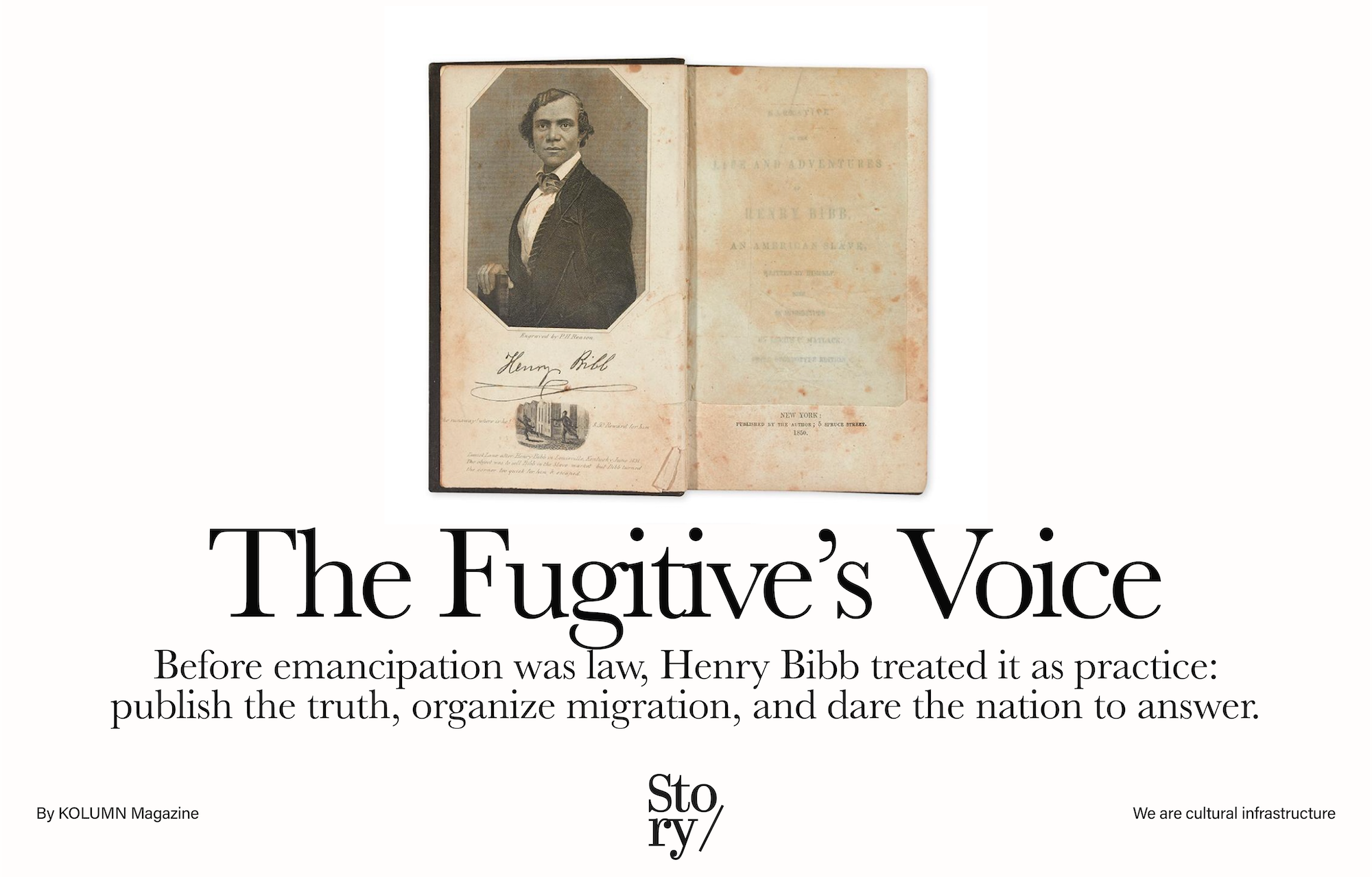
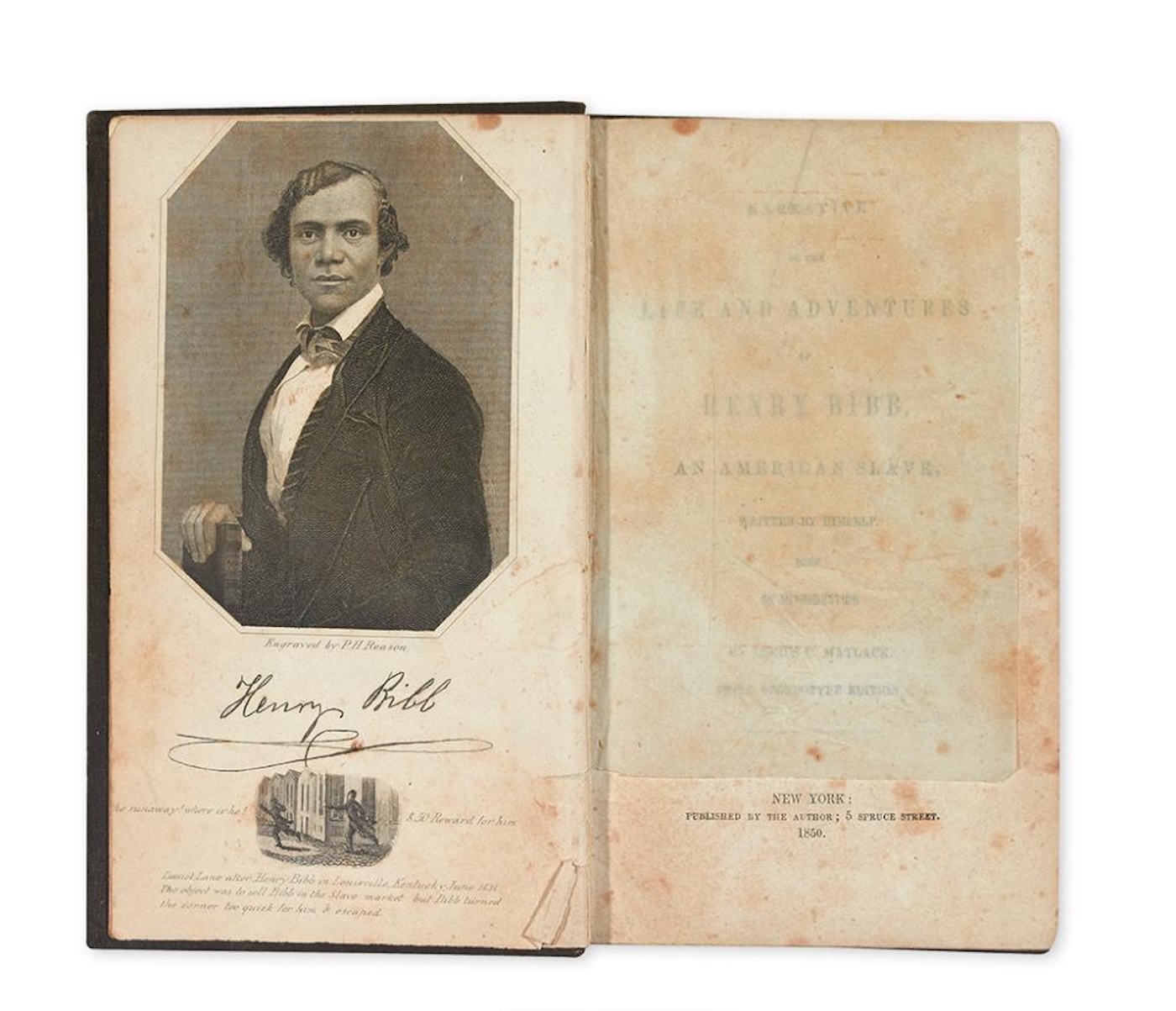
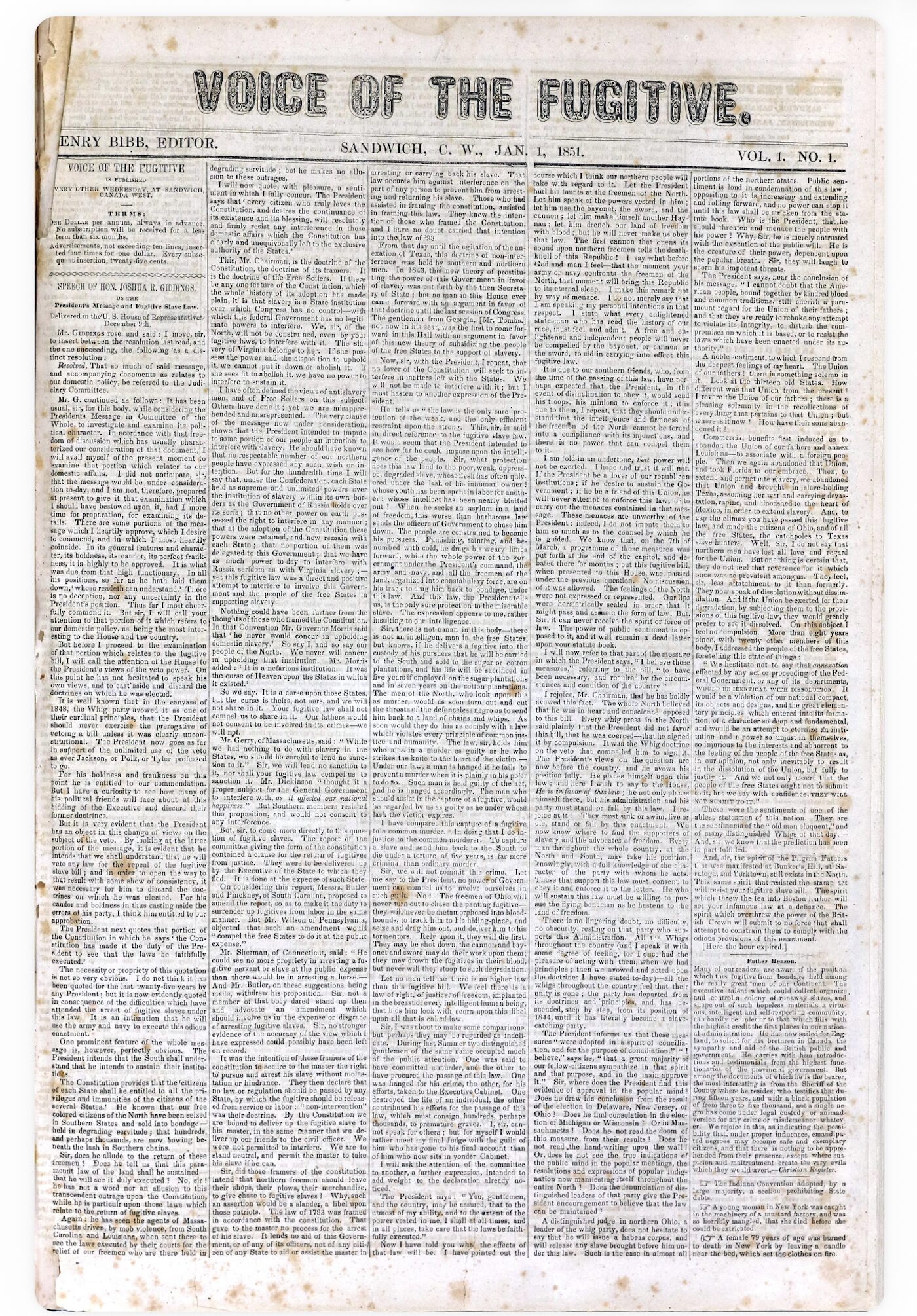
Henry Walton Bibb, born enslaved in Kentucky in 1815, belonged to that second category as much as the first. He is most often remembered today for his autobiography, Narrative of the Life and Adventures of Henry Bibb, An American Slave, Written by Himself, published in New York in 1849, a work that stands among the major slave narratives of the era. But Bibb’s life was not simply a story he told; it was an argument he lived. In the decade before his death in 1854, he became an abolitionist lecturer, a transnational organizer in the Detroit River borderland, and—alongside his wife, Mary Elizabeth Bibb—a builder of institutions meant to make emancipation survivable. That included the Voice of the Fugitive, a militant newspaper created for Black refugees in Canada West (now Ontario), and the Refugee Home Society, an effort to purchase land and facilitate settlement for freedom seekers.
Bibb’s significance sits at an intersection that American memory often treats as a footnote: the idea that “the Underground Railroad” did not end with a crossing, that the geography of freedom extended into Canada, and that the work of abolition was as much logistical as it was moral. Bibb did not only describe slavery’s cruelty; he described the mechanics of it—how a human life is converted into collateral, how kinship is turned into leverage, how a border can feel like salvation and later reveal itself as merely a different kind of test.
To understand Henry Bibb is to understand that the anti-slavery movement was not only speeches and petitions, but also newspapers, schoolrooms, land surveys, mutual aid, and the constant, grinding negotiation over what Black freedom would mean in practice. His life offers a clear view of the antebellum struggle as it was actually lived: intimate, mobile, improvisational—and, for many, permanently unfinished.
Born into a system that specialized in erasing futures
Bibb’s early life begins with the fundamental arithmetic of American slavery: a child inherits the condition of the mother, and the father’s name—if it is known—does not confer protection. The Dictionary of Canadian Biography identifies his parents as James Bibb and Mildred Jackson, noting the legal reality that his mother was enslaved and thus he was enslaved as well. In his narrative, Bibb describes a world of forced labor, violence, and the casual terror of sale—the ever-present possibility that the people you love might be separated from you by a transaction.
This is not incidental context; it is the engine of his later politics. Unlike some abolitionist writing that abstracts slavery into sin and cruelty alone, Bibb’s story continuously returns to the ways slavery weaponized relationships. His repeated attempts to free himself are bound up with a more complicated, more painful problem: whether escape could ever be real freedom if it left family behind. That moral pressure, the knowledge that liberty could be solitary, shaped the pattern of his life—flight, return, capture, flight again—cycles that reveal both his determination and slavery’s capacity to reach across distance.
When Bibb writes about the “Ohio River” as a psychological boundary—an emblem of separation between slave states and free soil—he is giving language to an entire geography of longing. Even the hope of freedom, in that framing, is a kind of torment: to see the possibility of another life and yet be held in place.
The fugitive as witness: What the 1849 narrative does differently
Slave narratives, as a genre, are often discussed in terms of their rhetorical purpose: testimony designed to move Northern audiences against slavery. Bibb’s narrative does that, but it also contains distinctive ethnographic and social detail that scholars continue to highlight. A modern edition description from UNC Press notes that Bibb’s account includes unusually extensive experiences across regions—including the Deep South—as well as documentation of African folkways such as conjuring and observations about Native American slaveholding practices.
That breadth matters. It expands the reader’s sense of slavery not as a single plantation tableau but as a flexible, adaptable system—one that could appear in different forms across Kentucky, the Deep South, and the borderlands, while remaining consistent in its core logic: extraction, coercion, and control.
Equally important is the narrative’s preoccupation with family rupture. Bibb writes not only about his own suffering but about the social architecture that made such suffering predictable. The enslaved are denied legal marriage, denied secure parenthood, denied the presumption that intimacy should be protected. And yet Bibb repeatedly returns to marriage, fatherhood, and kinship as sites of aspiration—things he insists on imagining as real even when the law will not recognize them.
The book’s bibliographic record, preserved in multiple public archives, anchors the story in its time: published by Bibb himself in New York in 1849, with an introduction by Lucius C. Matlack. That self-publication is itself a statement. It positions Bibb not merely as subject but as author and proprietor—someone determined to control his own account at a moment when Black self-representation was both politically urgent and routinely contested.
A movement on the move: Abolitionist lecturing and the politics of credibility
After securing freedom, Bibb joined the abolitionist lecture circuit, a world that demanded both charisma and stamina. The circuit functioned as a kind of human media network: speakers traveled from town to town, testifying, fundraising, and battling hostile crowds and skeptical audiences. For formerly enslaved lecturers, credibility was often treated as a hurdle that white speakers did not face. They were expected to perform authenticity, to relive trauma on demand, to persuade people who had the luxury of doubt.
Bibb’s narrative helped establish that credibility, but the lectures transformed him from witness into strategist. He was not only telling what had happened; he was arguing for what should happen next. In the late 1840s and early 1850s, that “next” increasingly included emigration to Canada West—especially after the Fugitive Slave Act of 1850 raised the stakes for Black life in the United States by empowering slave catchers and penalizing assistance to fugitives.
Bibb’s decision to locate so much of his organizing work across the border reflects a sober reading of American law: that a person could be nominally free in the North and still be kidnapped into slavery, and that legal protections could be reconfigured overnight. The border, for Bibb, was not romantic; it was tactical.
Canada West: The promise and the grind of settlement
In popular retellings, Canada can appear as the simple “end point” of the Underground Railroad—a safe haven reached, story concluded. Bibb’s life complicates that myth by focusing on what came after arrival: housing, employment, schooling, community formation, and the bitter realization that racism did not stop at the border.
In this context, Bibb’s partnership with Mary Elizabeth Miles—whom the Dictionary of Canadian Biography describes as a Quaker from Boston, married to Bibb in 1848—becomes central to his legacy. Their work in Canada West was not simply charitable; it was infrastructural. Parks Canada’s commemoration of Mary and Henry Bibb emphasizes their influence on the development of the African Canadian community, highlighting their newspaper and their educational efforts, including the founding of schools in response to discrimination in public schooling.
The location matters too. The Detroit River borderland—Sandwich (near present-day Windsor) and Amherstburg—was a corridor of movement and a zone of vulnerability, where American slave catchers, Canadian authorities, and Black residents navigated competing legal regimes. Bibb’s choice to publish and organize there placed him near the flow of refugees arriving from the United States while also making him a visible target for pro-slavery antagonists.
The Refugee Home Society: Freedom requires land, and land requires money
The Refugee Home Society is one of those projects that reads, in hindsight, like an early blueprint for resettlement and community development. Contemporary accounts describe it as a mechanism to use donations from anti-slavery supporters to purchase land in Essex County, which could then be sold to refugees so they could establish stable lives.
That premise—land as the bedrock of freedom—was radical in its clarity. Without property or secure tenure, fugitives could remain perpetually precarious, vulnerable to exploitation and to the social penalties imposed on the poor. The Society’s effort to turn philanthropic funds into tangible acreage was a way of converting moral support into material security.
It also exposed the internal tensions of “uplift” politics. Settlement schemes could be empowering, but they could also invite paternalism: the suggestion that Black freedom seekers needed to be “managed,” “improved,” or disciplined into respectability. Bibb’s own posture, as reflected in the militant tone associated with his newspaper and activism, suggests he wanted aid that respected autonomy. The Ontario Heritage Trust’s background paper on a historic Black community in the region notes the Society’s role in helping African American families escaping slavery to settle in Canada, identifying Bibb as a key founder and editor of the Voice of the Fugitive.
Settlement was not merely benevolent; it was political. Every successful Black farm, every purchased lot, every schoolhouse erected was an implicit argument against slavery’s central claim: that Black people could not govern themselves.
The Voice of the Fugitive: A newspaper built for people in transit
If Bibb’s narrative was testimony, his newspaper was a tool.
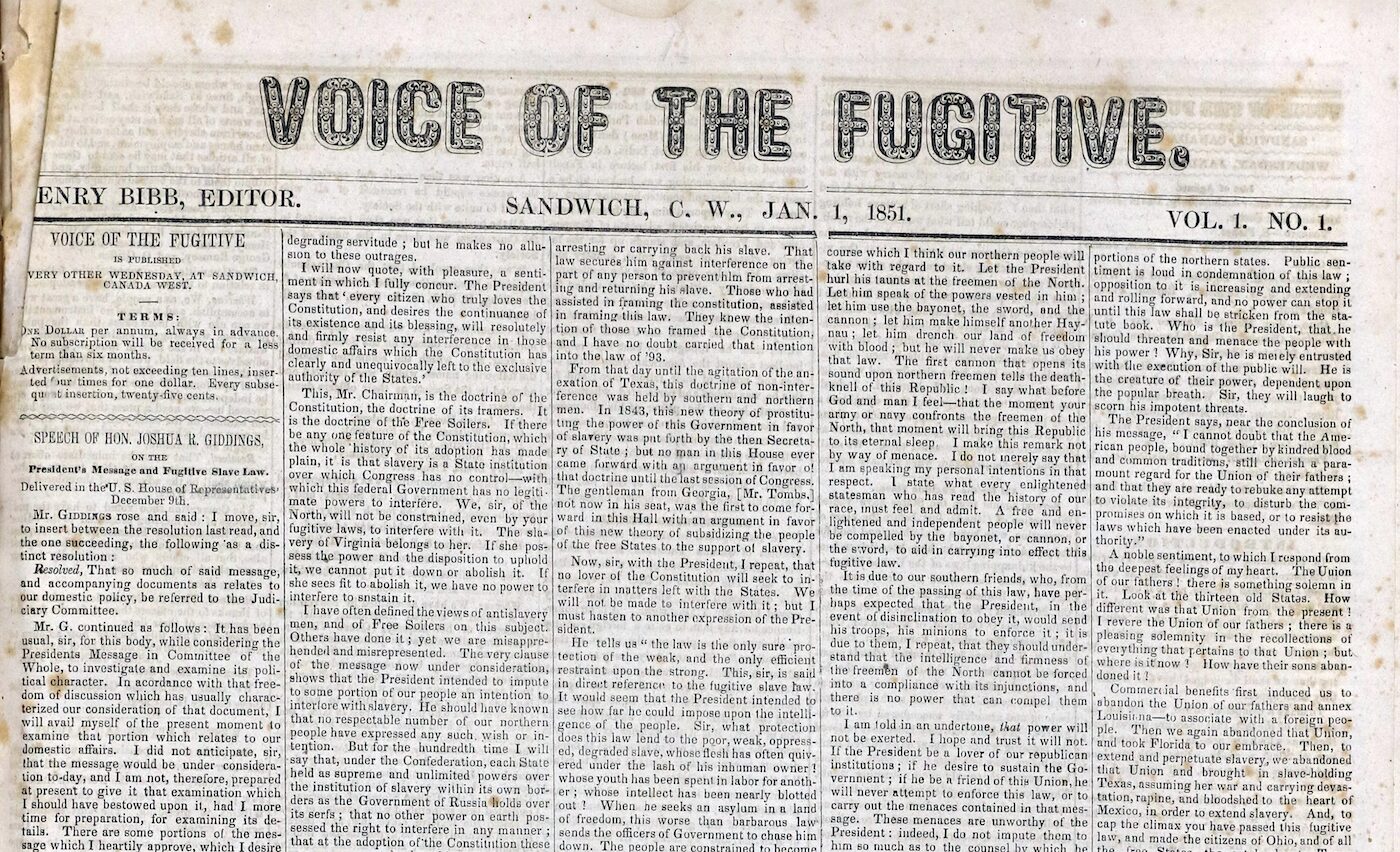
The Voice of the Fugitive—edited and published by Henry Bibb and Mary E. Bibb—was created in 1851 in Sandwich and soon moved to Windsor. Its intended audience was explicit: fugitives and Black refugees from the United States, people who needed information and analysis that mainstream papers did not provide or did not prioritize. Even bibliographic records that preserve the paper’s publication details underline its focus on freed persons and Black communities in Ontario.
A newspaper like this was not a luxury. It was navigation equipment.
For newly arrived refugees, reliable information could be the difference between stability and disaster: where work could be found, what local laws meant in practice, which communities were hospitable, how to respond to threats from across the border. The paper also helped create a sense of shared identity among people who had been scattered by slavery and then scattered again by migration.
And it offered something more subtle but equally potent: a Black editorial voice claiming authority over the story. The name itself—Voice of the Fugitive—refuses the logic that fugitivity is shameful. It reframes flight as political clarity. In a world where “fugitive” was meant to mark someone as stolen property, Bibb turns the term into a badge of agency and a platform for speech.
That the paper is often described as Canada’s first Black newspaper directed toward freedom seekers underscores its historical weight. But its importance is not only chronological; it is conceptual. It represents an early, deliberate attempt to build a Black public sphere across national borders—to treat the struggle against slavery as transnational and to insist that Black community life in Canada was not peripheral to American history but deeply entangled with it.
A marriage of politics and pedagogy: Mary E. Bibb and the schoolhouse fight
Too often, Henry Bibb appears in historical shorthand as a solitary figure—a man of repeated escapes and singular voice. But the work in Canada West was inseparable from his partnership with Mary E. Bibb, whose role in education was not supplementary but foundational.
Parks Canada’s commemoration highlights that, facing discrimination in public schools, the Bibbs established their own schools to improve education for Black children and adults. This detail matters because it situates their activism in the realm of everyday life. A community can survive without a headline; it cannot survive without literacy, numeracy, and the capacity to train leaders who can negotiate contracts, read laws, and organize institutions.
Education, in this context, was defensive infrastructure. It protected children from the violence of exclusion while preparing them to inhabit freedom with competence and confidence. It was also aspirational: an implicit insistence that Black futures would not be dictated by the degradations of slavery.
If Bibb’s newspaper addressed people in motion, the school addressed people trying to become rooted.
The borderland’s hard truth: Freedom is not immunity
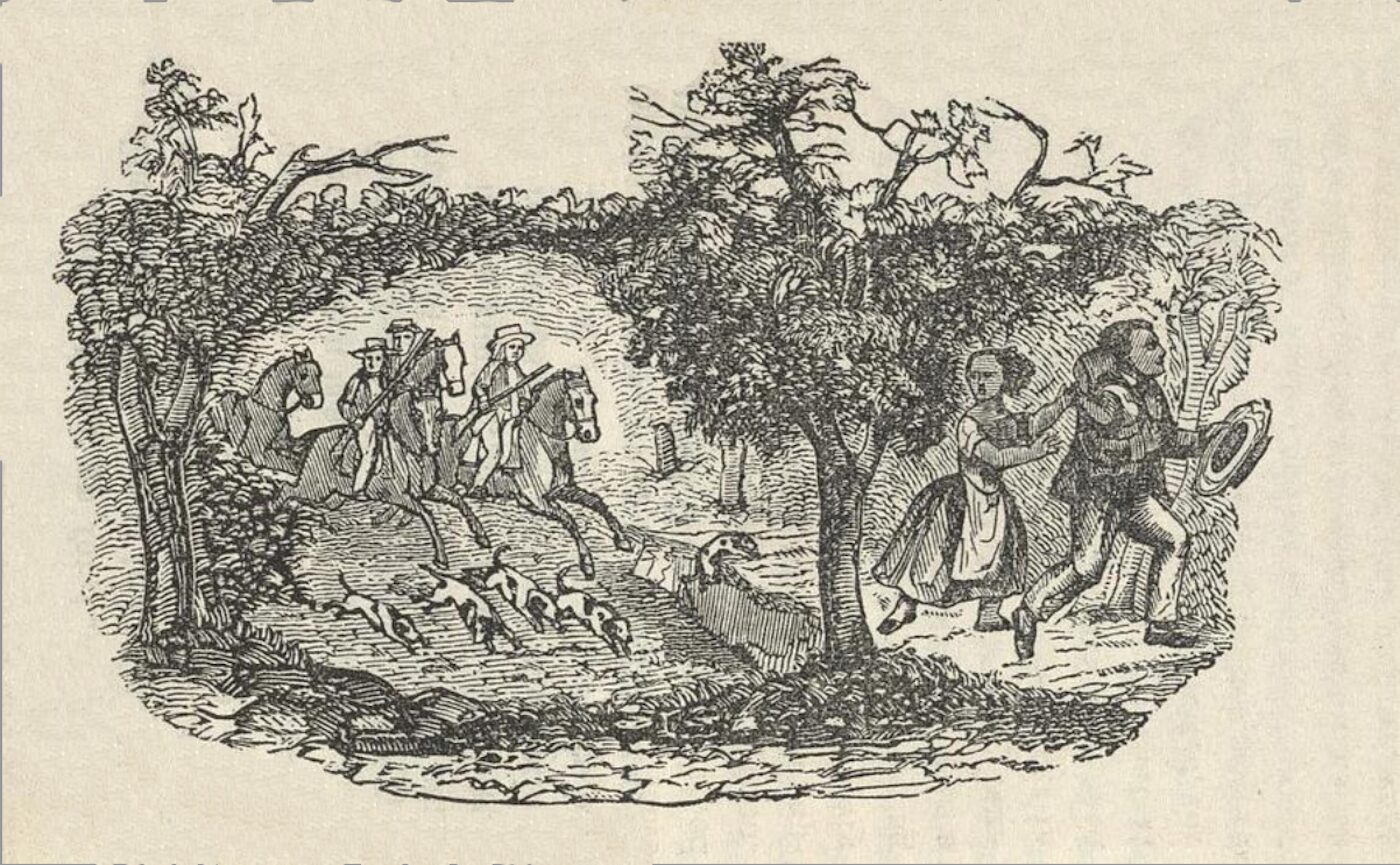
Bibb’s Canadian work did not erase the fear that shaped so many fugitive lives. The border reduced certain legal threats, but it did not abolish danger altogether. American slave catchers operated aggressively in the era, and the entire region lived under the shadow of U.S. policy shifts.
Moreover, racism in Canada West—social, economic, and institutional—complicated the promise of sanctuary. Black refugees could find safety from legal enslavement while still encountering segregation, employment discrimination, and violence. This contradiction is essential to Bibb’s significance. He stands as a reminder that “free soil” was never a pure category; it was a contested condition that required constant maintenance.
In a way, that makes his institutional focus even more striking. Bibb does not appear to have believed that good intentions were enough. He built structures that could outlast the mood of the majority: a newspaper, a society, a school. When freedom is fragile, durability becomes politics.
Death and afterlife: A life cut short, a legacy that keeps reappearing
Henry Bibb died in Windsor in 1854. He was not yet 40, and his death truncated a career that might have expanded dramatically as the sectional crisis intensified toward the Civil War. That brevity contributes to his relative obscurity in popular memory: Frederick Douglass lived long enough to become an institution unto himself; Harriet Tubman’s legend grew across decades. Bibb’s life ended in the period when his institutions were still young and precarious.
And yet his legacy persists in archives and commemorations. His narrative remains widely accessible through collections like Documenting the American South and the Library of Congress. The Voice of the Fugitive survives in bibliographic repositories that preserve Black print culture in Ontario. Parks Canada’s designation of Mary and Henry Bibb as persons of national historic significance is not merely honorary; it is an acknowledgment that Black community-building in Canada West was a central chapter of North American freedom struggles.
More recently, public history organizations and media outlets have returned to Bibb as a figure who helps explain the practical realities of “the Underground Railroad” as settlement history rather than mere escape lore.
That return makes sense. Bibb speaks to contemporary questions about migration, asylum, and what happens after refuge. He also anticipates modern debates over media: who gets to narrate a crisis, who controls information in moments of vulnerability, and how communities build their own channels when dominant institutions fail them.
Why Henry Bibb matters now
Henry Bibb’s story is not simply that he escaped slavery. Many did, and their courage deserves remembrance. Bibb matters because he treated escape as the beginning of responsibility rather than the end of suffering. His life insists that freedom is not only a legal status but a social environment—one that must be constructed, defended, and funded.
His 1849 narrative is significant because it adds texture and specificity to the genre of slave testimony, documenting not only brutality but also cultural practices and the varied geographies of enslavement. His Canadian activism matters because it highlights a transnational dimension of Black abolitionism that is too often minimized in U.S.-centered histories. And his newspaper matters because it demonstrates an early recognition that information is a form of shelter—that a community in motion needs more than sympathy; it needs communication, coordination, and voice.
There is also a harder, more intimate lesson embedded in his work: the recognition that slavery’s most corrosive power was its ability to sever relationships—to turn spouses into strangers, children into commodities, parents into grief. Against that force, Bibb offered what he could: testimony that made separation visible, and institutions that tried, however imperfectly, to give separated people a chance to reassemble their lives on new terms.
If American history is often told as a set of monumental laws and famous speeches, Bibb’s life suggests another approach: follow the fugitive’s path and watch what gets built in the wake of that flight. A newspaper press in Sandwich. A classroom assembled in defiance of exclusion. A land society trying to turn donations into deeds. A community learning, day by day, how to live beyond the reach of a system that once claimed them as property.
That is Henry Bibb’s enduring significance: he shows that freedom, in the nineteenth century as now, is not only something you win. It is something you make.
More great stories
Afro Sheen, Wall Street, and the Architecture of Black Possibility
July 6, 2026
No Comments
The Fire Inside the Fourth
July 5, 2026
No Comments