

Steve Baker said he was merely documenting January 6. Don Lemon says the same about St. Paul. Only one claim is treated as sacred.
Steve Baker said he was merely documenting January 6. Don Lemon says the same about St. Paul. Only one claim is treated as sacred.
By KOLUMN Magazine
On paper, the two scenes do not belong in the same moral universe.
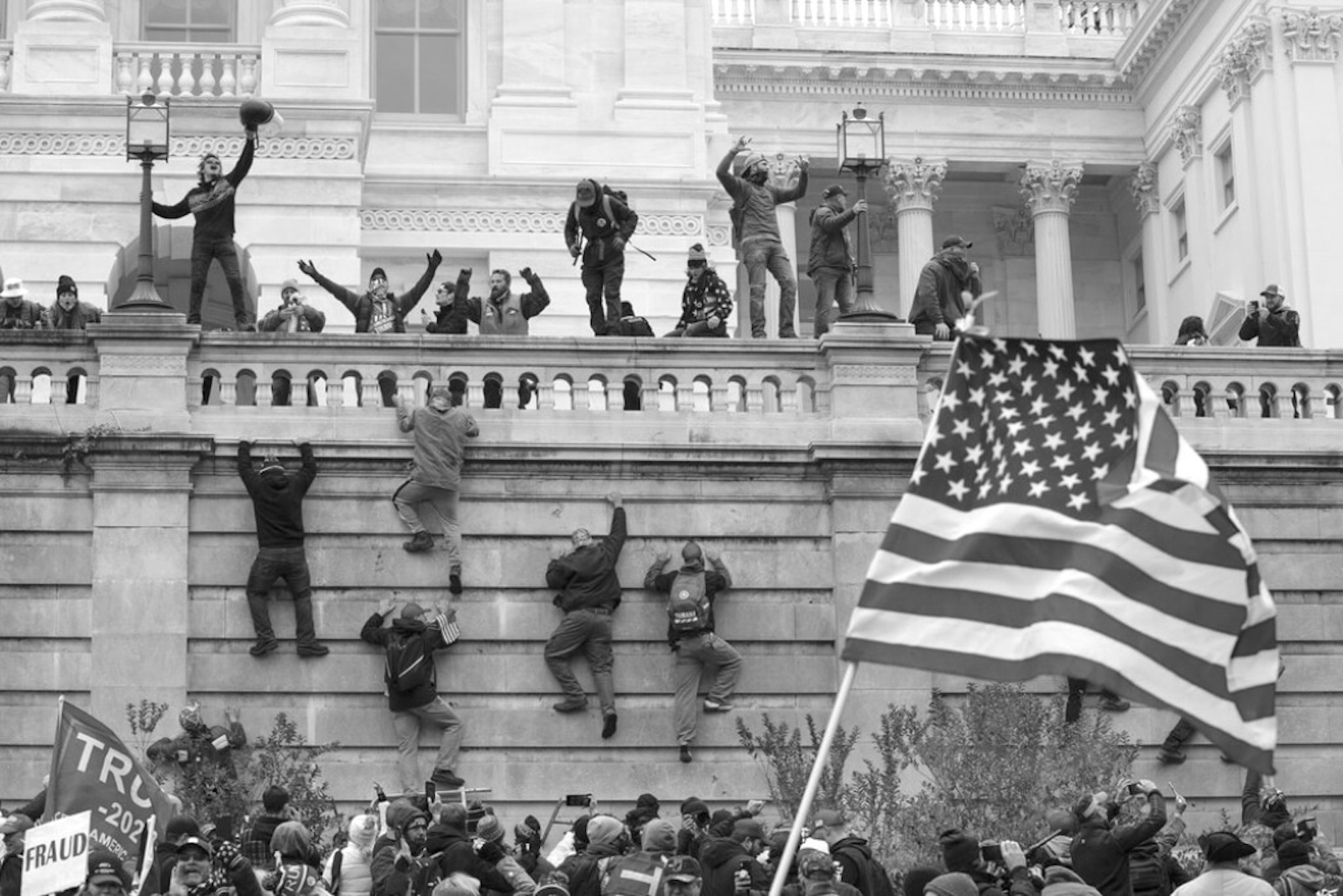
In one, a crowd surges into the U.S. Capitol on January 6, 2021—an assault on a building and a constitutional ritual that, by the government’s account, forced lawmakers into hiding and paused the certification of a presidential election. Among the thousands who traveled to Washington that day was Steve Baker, a conservative writer and commentator who would later insist he was there to document events. Federal prosecutors charged him with four misdemeanors. Conservatives rallied, describing him not as a defendant but as a symbol: a man targeted for his politics, punished for his reporting, proof that the system had turned on the right.
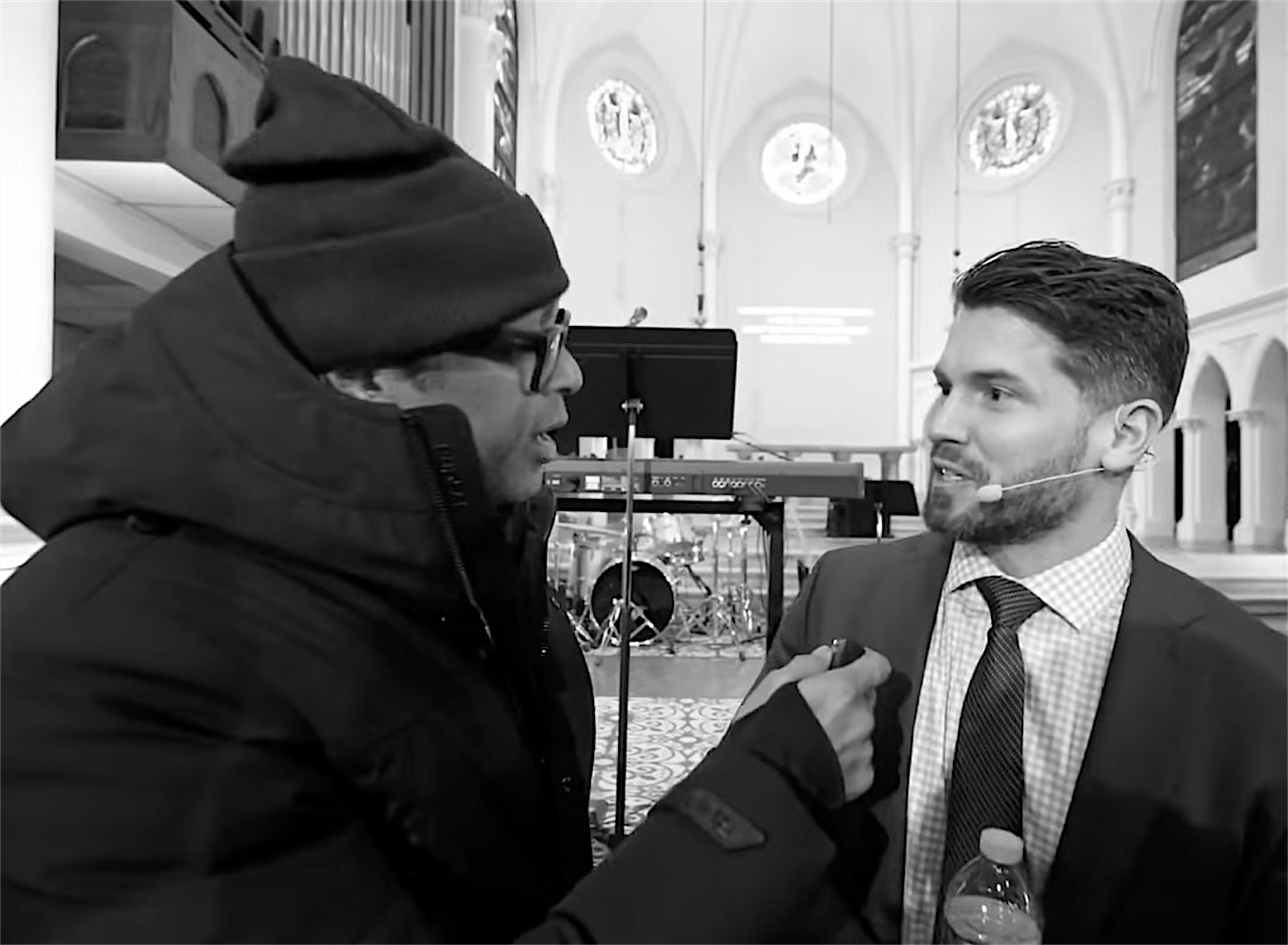
In the other, a worship service at a church in St. Paul, Minnesota is disrupted by an anti-ICE protest on January 18, 2026. Don Lemon—by then a veteran broadcaster turned independent journalist—livestreams and reports from inside the church. Lemon says he followed a story and did what journalists do: observe, interview, record. Within days, federal prosecutors seek charges. A magistrate judge rejects some of the government’s efforts; the Department of Justice presses on anyway. Lemon is later arrested in Los Angeles while covering Grammy week, according to multiple reports, and charged with federal civil rights crimes tied to the church protest.
The ideological throughline tying these moments together is not simply the culture war’s appetite for spectacle. It is the stark contradiction of claims and principles advanced by the Trump administration and national conservatives—especially those who spent years insisting that January 6 defendants were “political prisoners,” that federal law enforcement was weaponized against conservatives, that “law and order” must yield to civil liberties when the right is in the dock.
Those same voices—administration officials, aligned media figures, and influential conservative commentators—have demanded arrest and prosecution for Lemon and other journalists connected to the St. Paul church protest, arguing that filming and moving with demonstrators crossed the line from reporting to criminality. In their framing, the church disruption is not an event to be covered; it is an intolerable offense to be punished, and the journalist in the room is not a witness but a conspirator.
This is not a story about whether January 6 was violent or whether the church protest was disruptive. Those facts, in the public record, are largely settled. It is a story about how “principle” becomes pliable—how “press freedom,” “citizen journalism,” and “law and order” can be invoked as absolution or as a cudgel depending on who is holding the camera, and which side of American politics that camera is thought to serve.
It is also, inevitably, a story about power—because this contradiction is not unfolding in a vacuum. It is unfolding amid a broad January 6 clemency action at the start of Trump’s second term, and amid a Justice Department that, in the Lemon case, critics argue is treating journalistic proximity to protest as a prosecutable act.
To understand the hypocrisy embedded in the dueling narratives, you have to follow the details: what Baker did on January 6, what Lemon did on January 18, how conservatives constructed a years-long campaign for the former, and how quickly they demanded punishment for the latter.
The making of a “citizen” defense
Baker’s defenders have offered a simple formulation: he was there as a journalist, or as a citizen journalist, gathering evidence, documenting government overreach, exposing the truth about January 6 as a “setup” or a distorted media narrative. That defense—repeated in conservative outlets and echoed by sympathetic officials—has been crucial because it does two things at once. It minimizes the significance of his presence inside a breached Capitol and reframes prosecution as censorship: not law enforcement responding to unlawful entry, but the state punishing speech.
The government’s account, in contrast, emphasizes conduct rather than intent. In a March 2024 report, the Associated Press described an FBI affidavit alleging that Baker entered the Capitol through a broken door, moved toward the House chamber area, joined crowds at barricaded doors, antagonized police, and remained inside for roughly 37 minutes until an officer escorted him out. The same reporting noted that Baker had later sold video footage to major productions and made inflammatory remarks afterward.



That gap—between “I was documenting” and “you entered illegally”—is not unique to Baker. It is, in some ways, the defining friction of the modern protest era: people record, people stream, people publish; the line between observer and participant can blur. But conservative advocacy made Baker’s case exceptional by insisting that his intent—journalism—should immunize him from legal consequence, or at minimum prove selective prosecution.
In March 2024, Rep. Barry Loudermilk published a statement describing Baker’s arrest in dramatic terms—handcuffs, leg irons, armed agents—and framed the case as an outrage against press freedom and fairness. The rhetorical strategy was plain: emphasize the spectacle of enforcement, de-emphasize the alleged underlying conduct, and use the language of civil liberties to turn the defendant into a victim.
Conservative media amplified the narrative. On programs hosted by Glenn Beck, Baker described his treatment as humiliating, a symbol of an FBI punishing the wrong people. The case became content: interviews, clips, segments that recast a misdemeanor prosecution as a constitutional crisis.
By late 2024, Baker’s legal saga had an additional political hook: the prospect of a presidential pardon. In November 2024, multiple outlets reported that he pleaded guilty to four misdemeanor counts, with reporting noting his expectation that a returning Trump would grant clemency to January 6 defendants. He maintained he was there to report and suggested the system was making an example of him.
Even the guilty plea did not end the cause-making. It arguably strengthened it. In a political environment where pleas can be framed as coerced (a rational decision to avoid risk, not a concession of wrongdoing), the plea became another chapter in the persecution narrative: he had to plead because the system was rigged, because the cost of fighting was too high, because the point was to silence him.
This is the story conservatives told: Baker as citizen-journalist, Baker as political prisoner in waiting, Baker as evidence of a two-tiered justice system.
Then clemency arrived.
The broad January 6 clemency action
At the start of Trump’s second presidency, the White House issued an executive action granting pardons and commutations for certain offenses related to January 6. The White House document lists commutations for named individuals and indicates broader relief tied to offenses “at or near” the Capitol on January 6, 2021.
In January 2025, judges began dismissing January 6 cases under the new clemency regime, even as some judges criticized the revisionist framing surrounding the pardons. Reuters reported on a judge’s sharp condemnation of the pardons as reflecting a “revisionist myth” while the court nevertheless dismissed charges, acknowledging the president’s constitutional authority.
Local reporting indicated Baker benefited from the clemency action. A North Carolina outlet described him as among those whose cases were effectively resolved through the pardon process, noting he had pleaded guilty months earlier. Conservative media treated the moment as vindication—proof the prosecution had been illegitimate, proof the movement had been right to fight.
But clemency, by its nature, does not function like exoneration. A pardon does not rewrite factual records, erase video, or change what was captured in affidavits. Judges, in the January 2025 dismissals, emphasized that legal closure is not historical closure.
Still, politically, that distinction mattered less than the victory lap. The pardon validated a narrative structure national conservatives had been building for years: January 6 defendants as victims of a rogue state, “law and order” as a selective weapon aimed at conservatives, and the Trump movement as the corrective force.
In that framework, “press freedom” and “citizen journalism” were not neutral principles. They were identity markers—tools to protect the in-group.
Which is why the Lemon case detonated so quickly.
A church protest, a livestream, and federal charges
On January 18, 2026, a protest inside a St. Paul church drew national attention. Reports described demonstrators disrupting a worship service to protest immigration enforcement, with allegations that a pastor associated with the church also held a role connected to U.S. Immigration and Customs Enforcement.
Lemon says he was there as an independent journalist covering the event. Multiple outlets reported that he livestreamed, interviewed people, and documented the disruption.
The government’s posture was aggressive. According to the Associated Press, Lemon was charged with federal civil rights crimes connected to the protest. The Guardian reported that press freedom organizations condemned the arrests of Lemon and another independent journalist, arguing it represented an escalation against the press under the Trump administration.
The legal theory described in coverage is notable. Reports indicated prosecutors considered statutes generally associated with civil rights conspiracies and interference with First Amendment rights—serious framing for an incident Lemon claims was journalistic coverage.
The timeline is, in itself, revealing. CBS News reported that a Minnesota magistrate judge rejected prosecutors’ efforts to charge Lemon and blocked some charges for others—an unusual speed bump suggesting evidentiary concerns. Yet within days, the Justice Department persisted, and Lemon was arrested in Los Angeles while covering Grammy-related events, according to multiple major outlets.
If you believe Lemon’s account—and the accounts of press freedom advocates—this is the chilling scenario: a journalist enters a volatile scene to document it, and the government later characterizes proximity as participation. If you believe the administration’s framing, this is the opposite: the press label is being used as a shield for coordinated disruption of religious worship, and enforcement is necessary to protect constitutional rights of congregants.
Either way, it is a conflict about boundaries: what a journalist is allowed to do when covering protests, what the government must prove to criminalize that presence, and whether enforcement is consistent across ideologies.
It is in the public reaction that the contradiction becomes most stark.
The speed of sympathy—and the speed of condemnation
Baker’s defenders spent years building a narrative of victimhood around January 6 defendants, often using maximalist language: political prisoners, hostages, detainees of a corrupt regime. Baker’s own framing leaned on journalistic identity: he was documenting, exposing, reporting. He had a cause. And he had a movement ready to recast enforcement as oppression.
In Lemon’s case, many conservatives—along with administration officials—moved in the opposite direction: not “protect the press,” but “arrest the press.” Reports described public statements celebrating or justifying the arrest and emphasizing the idea of a “coordinated attack” on the church.
The hypocrisy is not subtle. It rests on four claims that cannot comfortably coexist:
First: that “citizen journalism” is an inherently protected category when conservatives invoke it, even amid unlawful entry into restricted spaces.
Second: that the state’s use of force and prosecution against conservatives is presumptively political, while the state’s use of prosecution against a prominent journalist in a politically charged protest is presumptively legitimate.
Third: that January 6 defendants—some of whom were convicted or pleaded guilty—should be viewed primarily through the lens of speech and grievance, while anti-ICE protesters and journalists should be viewed primarily through the lens of disruption and punishment.
Fourth: that “law and order” is a neutral principle, rather than a flexible slogan.
The sharpest way to see this is to look at what each man says he was doing: documenting.
Baker insisted he was there to report. Lemon insists he was there to report. In one narrative, that claim is treated as near-sacramental—a shield that should stop prosecution in its tracks. In the other, it is treated as cynical cover—a press badge as camouflage for illegality.
A principle that applies only to one side is not a principle. It is a tool.
What Baker did, according to the record—and why conservatives defended it
Baker’s career is rooted in conservative media ecosystems that reward adversarial storytelling about institutions: the FBI, the Justice Department, the “mainstream media.” By January 6, he was already positioned to see himself not just as an observer but as an actor in a broader project: documenting the supposed fraud narrative, proving what others would deny, capturing what could be used as evidence in a culture war trial.
The AP’s reporting outlined key allegations: Baker entered through a broken door, approached sensitive areas near the House chamber, antagonized police, and stayed inside until escorted out. Those details matter because they define the government’s view: his presence was not incidental, not restricted to public sidewalks, not clearly within a cordoned press pen. It was inside a breached building in the middle of a national emergency.
And yet conservatives did not merely argue for proportionality—i.e., that misdemeanors shouldn’t be treated like terrorism. They argued something more absolute: that prosecution itself was illegitimate.
The Loudermilk statement treated the arrest as an abuse and focused on the spectacle of restraints and secrecy. Conservative programs highlighted “humiliation” and the idea of a two-tiered system. The implication was that a conservative journalist had crossed the government and was being punished for it—an old story in right-wing media, given new fuel by January 6.
When Baker pleaded guilty in November 2024, reporting noted the context: a judge refused to pause the case until after Trump’s inauguration, and Baker anticipated clemency. The plea did not disrupt the cause. It reinforced it: why plead if you’re innocent? Because the system is rigged. Why expect a pardon? Because the case was political.
In the conservative imagination, Baker’s case fit neatly into the “political prisoner” template: a man targeted for being on the right side of a contested historical event.
What Lemon did, according to the reporting—and why conservatives condemned it
Lemon’s career, by contrast, sits in a different public register. He became a national figure through mainstream broadcast journalism, and after leaving cable news he built an independent platform—still journalist-branded, but less institutionally protected.
In the Cities Church incident, Lemon’s own assertion is consistent across coverage: he was present to report and livestream; he was not an organizer. Coverage describes Lemon documenting the protest and interviewing those involved.
The government’s allegations, as reported, frame the episode as something closer to coordinated interference with worship and civil rights—using statutes associated with conspiracies and interference with constitutional rights. That is a significant escalation in theory compared to the misdemeanor framework used in many nonviolent January 6 trespass cases—including Baker’s.
And it is here that the “law and order” hypocrisy becomes hardest to ignore: conservatives who spent years insisting that trespassers inside the Capitol were victims now celebrate or defend the use of sweeping federal tools against journalists filming a protest in a church.
The administration’s messaging amplified this posture. Multiple outlets reported that the Attorney General characterized the church incident as a “coordinated attack” and tied Lemon’s arrest to that framing. The result was a rhetorical inversion of the January 6 story: instead of “peaceful protestors demonized,” it was “worshipers attacked, justice served.”
What changed?
Not the underlying complexity of protest reporting. Not the ambiguity of movement in chaotic spaces. What changed was the identity of the perceived target: a conservative-aligned defendant versus a high-profile journalist associated, fairly or not, with liberal cultural power—and a protest movement opposing immigration enforcement, a priority issue for the administration.
The selective meaning of “law and order”
“Law and order” is a phrase that pretends to be self-explanatory, like gravity. But it has always been political: invoked to signal whose disorder is intolerable and whose can be reframed.
In Trump-era conservative politics, “law and order” has often meant aggressive enforcement against perceived out-groups—protesters, immigrants, media critics—paired with rhetorical mercy for in-groups framed as patriots or victims. The broad January 6 clemency action embodies that asymmetry. The executive action is explicit in its scope, and judges’ public criticisms underscore how politically freighted the move was.
At the same time, the Lemon prosecution reflects a different use of the state’s power: not mercy, but escalation—serious charges, high-profile arrest, and public signaling that the government is willing to pursue journalists it claims crossed a line.
The contradiction is not merely that conservatives are “tough” on Lemon and “soft” on Baker. It is that they claim the mantle of principle in both directions.
When they defended Baker, they invoked press freedom and the dangers of prosecuting journalists for being present at controversial events. They suggested that the government was criminalizing reporting and dissent.
When they defend Lemon’s arrest, they invoke the sanctity of worship, the need to protect civil rights of congregants, and the danger of letting “activists” hide behind journalism.
Each argument, in isolation, can be made in good faith. It is possible to believe the government overreached in some January 6 cases. It is possible to believe a church service should not be disrupted. It is possible to believe journalists should be protected—while also believing journalists can commit crimes.
But good faith collapses when categories flip depending on partisan identity.
If Baker’s claim—“I was there as a citizen journalist”—is treated as an almost dispositive defense, then Lemon’s claim must be given the same presumption, tested by evidence rather than dismissed by affiliation.
If Lemon’s proximity to protesters is enough to justify federal conspiracy framing, then Baker’s proximity to—and movement within—a mob that breached the Capitol must be treated with at least equal seriousness.
The right’s rhetorical choices suggest the opposite: that “journalist” is a protective identity when it describes a conservative storyteller, and an aggravating suspicion when it describes a journalist whose work is seen as hostile to the administration.
The campaigns: Years for Baker, days for Lemon
Time is a moral instrument in politics. How long a movement sustains outrage, and how quickly it demands punishment, reveals who is presumed worthy of empathy.
Baker’s case lingered for years as a conservative cause—boosted by sympathetic members of Congress, conservative broadcasters, and a narrative that folded his prosecution into a broader claim of systemic persecution. He became, in the language of the moment, not simply a defendant but a symbol to be rescued. His eventual relief came not through an evidentiary reversal but through presidential clemency tied to the larger January 6 narrative.
Lemon’s case moved at a different pace: protest on January 18, prosecutorial push within days, judicial skepticism reported by CBS and others, then a high-profile arrest while covering a major cultural event. Even before legal questions were resolved, conservative discourse rapidly hardened into a presumption of guilt: the journalist is part of the mob; the arrest is righteous; the message is deterrence.
The difference is not merely rhetorical temperature; it is the implied purpose of the law.
For Baker, the law is portrayed as a weapon aimed at conservatives, and therefore illegitimate. For Lemon, the law is portrayed as a shield for “order,” and therefore necessary—even admirable.
That is not consistency. It is factionalism dressed up as constitutionalism.

Careers and the politics of credibility
It is tempting to treat Baker and Lemon as mirror-image avatars: conservative commentator versus mainstream journalist turned independent; January 6 versus anti-ICE protest; Capitol versus church. The symmetry is part of what makes the contradiction so clarifying.
But their careers also matter because they determine how each man’s claims are received.
Lemon has decades of public-facing journalism experience and was widely known as a cable news host before striking out independently. Major outlets report he insists he was present as an independent journalist reporting on the protest and that his legal team calls the arrest an attack on the First Amendment. Press freedom groups echoed that alarm, warning about a chilling effect on protest coverage.
Baker’s identity is more contested, because his January 6 presence and subsequent reporting are bound together. The AP reported he wrote about January 6 for Blaze News and that he later sold footage to major outlets. To his defenders, this proves he was truly reporting. To critics, it suggests opportunistic immersion in a historic event in which he was not a neutral observer.
The crucial point is not whose identity is more credible. The crucial point is how conservatives treat identity itself: as a shield for allies, as a suspicion for opponents.
If journalism is a practice—gathering facts, documenting events, interviewing participants—then the practice must be protected even when the practitioner is disliked. If journalism is merely an identity label allocated by political tribes, then “press freedom” becomes another factional weapon, and the First Amendment becomes a slogan rather than a constraint.
The deeper logic: Impunity for “our” disorder, punishment for “theirs”
January 6 is often discussed as an anomaly: a singular eruption, a shameful day, an unprecedented attack. Yet one of the most consequential outcomes of January 6 has been how it reshaped conservatives’ relationship to state power.
For years, many national conservatives argued that federal law enforcement was irredeemably politicized. The phrase “two-tiered justice system” became a refrain. Cases like Baker’s were used as proof—especially when arrests were dramatic or when defendants claimed journalistic intent.
But the Trump-era state is not anti-state. It is selective-state. It rejects enforcement when it harms allies, then embraces enforcement when it targets enemies. That is the throughline connecting a mass clemency action for January 6 defendants to aggressive federal posture toward anti-ICE protest coverage.
Reuters’ reporting on judges criticizing the January 6 pardons underscores that even within the judiciary, there is concern that clemency is being used to rewrite the moral narrative of January 6. Meanwhile, the Lemon case suggests a willingness to test expansive theories of criminal liability around protest disruption and press presence.
The contradiction is not a glitch. It is the feature. It is a coherent political logic: mercy is for allies; maximum enforcement is for opponents; and “law and order” is whatever advances that sorting.
What the First Amendment requires—and what it doesn’t
A journalist is not immune from law. Reporting does not create an invisibility cloak. If a reporter assaults someone, vandalizes property, or coordinates a crime, the First Amendment does not absolve them.
But the First Amendment does demand that the government not treat reporting itself—presence, documentation, interviewing—as criminal conduct. That is why press freedom advocates reacted so strongly to Lemon’s arrest: because the charges and the spectacle risk creating a precedent where merely being inside a contested space with a camera becomes evidence of conspiracy.
Conservatives made exactly that argument in Baker’s defense. They argued that the state was criminalizing presence and documentation, treating journalism as participation.
They cannot credibly argue that in 2024 and deny it in 2026 without revealing the underlying truth: the principle was never about journalism. It was about whose story gets protected.
The reckoning: What consistency would look like
If the Trump administration and national conservatives want to claim a serious “law and order” posture without hypocrisy, they would have to adopt at least one of two consistent approaches.
They could take the maximal enforcement route: unlawful entry and disruption should be punished regardless of ideology; journalistic claims are evaluated strictly; proximity to criminal activity is not excused by politics. That approach would require acknowledging that many January 6 defendants, including those charged with misdemeanors like Baker, were lawbreakers—not martyrs—and that clemency was an act of political favoritism, not justice.
Or they could take the civil liberties route: protest-related prosecutions should be restrained; journalistic presence should be protected; the state should be cautious about conspiracy theories that criminalize association. That approach would require treating Lemon’s claim of journalistic purpose with the same seriousness they demanded for Baker—and dialing back a prosecutorial posture that press advocates describe as intimidation.
Instead, conservatives have chosen a third path: selective absolution, selective punishment, selective principle.
It is not merely hypocrisy. It is governance by double standard.
A final irony: The weaponization claim becomes the weapon
For years, conservatives warned that the Justice Department could be weaponized. They said the state could be used to punish political opponents and protect allies. In the January 6 era, they argued this was happening to them.
But the Lemon case—and the broader context of January 6 clemency—suggests another possibility: that the movement learned the lesson not to dismantle weaponization, but to control it.
That is the quiet transformation embedded in these two stories.
Baker becomes the symbol of persecution, then receives relief through presidential power. Lemon becomes the symbol of intolerable dissent, then faces federal prosecution for what he says was reporting.
The contradiction is the point: it tells you what “law and order” means in practice when principle is subordinate to faction.
It means the law is not a standard. It is a switch.
And the switch is flipped based on who you are.