

Barnes’s achievement is not only that he made The Sugar Shack. It is that he made an argument—across canvases, across decades—that Black life is not a footnote in America’s aesthetic story. It is one of its engines.
Barnes’s achievement is not only that he made The Sugar Shack. It is that he made an argument—across canvases, across decades—that Black life is not a footnote in America’s aesthetic story. It is one of its engines.
By KOLUMN Magazine
Ernie Barnes’s life reads like an American fable that refuses to stay in one genre. It begins in Durham, North Carolina, where a Black child, shaped by segregation’s hard geometry, grows into a young man with a body built for collisions and a mind tuned to observation. It moves through professional football—work that demanded he treat his own body as equipment—and into an art practice that insisted the body is never merely a tool, never merely a statistic, never merely an instrument of someone else’s entertainment. Barnes became famous to millions who did not know his name. They knew his dancers. They knew his elongated figures—eyes closed, limbs arcing, torsos bending like reeds in wind. They knew The Sugar Shack, even if they encountered it on a television screen or an album cover long before a museum wall.
That double-bind—beloved, recognizable, omnipresent in Black popular memory, yet under-credited in the formal machinery of art history—frames much of Barnes’s story. He was both ubiquitous and overlooked, a painter whose most iconic image traveled through living rooms and record stores, while the broader critical apparatus often treated him as illustration, nostalgia, or “pop culture” rather than as a serious modern artist. In the last decade, as museums mounted retrospectives and the market re-priced his work with startling force, Barnes’s reputation has been re-litigated in public: not simply “Was he good?” but “Why did it take so long for so many institutions to behave as if he mattered?”
To write about Ernie Barnes carefully is to write about more than a single painter with a singular style. It is to write about the cultural supply chain that determines what counts as “fine art,” who gets to be framed as an innovator, and how Black creativity is often forced to sneak into the canon through side doors—through television, sports, music packaging—before the front doors open. Barnes knew those side doors well. He lived inside one of America’s most familiar myths, the Black athlete, and then walked out of it, insisting on another identity, another legitimacy, another mode of seeing.
Durham, the choreography of segregation, and a boy learning to look
Barnes was born in 1938 in Durham. To be a Black child in the South then was to be trained early in boundaries—where you could go, what you could touch, what you could aspire to without being punished for aspiring. But it was also to be immersed in social worlds that made beauty out of constraint: church clothes, parades, front-porch rituals, neighborhood economies of care, and the music that traveled across town like weather. One of the central origin stories of Barnes’s most famous painting turns on a moment of looking—sneaking a glimpse at a rhythm-and-blues dance at the Durham Armory, watching bodies move with a rawness and freedom that felt both forbidden and inevitable. Barnes would later describe that adolescent memory as the seed for The Sugar Shack, a scene that, in his telling, wasn’t invented so much as retrieved.


What Barnes saw—if we take him at his word—wasn’t merely “people dancing.” It was a community releasing pressure. It was a language of motion, and it was an aesthetic system that did not need permission from museums to be profound. Barnes would spend his career painting the thesis that Black life is not only struggle; it is also form, style, invention, intimacy, play, and communal rhythm. That thesis was never politically neutral. In a country that repeatedly flattened Black people into problem, threat, or labor, Barnes’s insistence on pleasure and interiority carried its own weight.
Barnes’s early years also carried another force: the belief, common in many working-class families, that art was not a stable livelihood, and that a Black boy needed a practical path. Sports offered a different kind of plausibility. A strong body could be monetized. Talent could be measured. And in the mid-century United States, the idea of a Black athlete making it was at least legible, even if that legibility came with its own traps. Barnes’s story becomes complicated precisely because he succeeded at the thing that was supposed to save him, and then treated that success as insufficient.
Football as labor—and as a school for seeing bodies
Barnes played college football and eventually entered the professional ranks, drafted in the late 1950s and playing in the early era of modern pro football. Accounts of his football life often return to a nickname—“Big Rembrandt”—that suggests teammates recognized something unusual: a man who could hold his own in a violent profession while carrying an artist’s temperament.
It is tempting, in profiles, to treat the athlete-to-artist shift as a surprising pivot, as if Barnes woke up one day and swapped helmets for brushes. But a more credible reading is that football sharpened the very sensibility that his art would later make visible. Barnes painted bodies in motion with a specificity that feels studied rather than generalized. He understood weight distribution, torque, the way a shoulder leads and a hip follows, the way exhaustion changes posture. He understood how a crowd looks when it leans. He understood the theatricality of sports and the ways it can be both a stage and a trap.
Football also taught Barnes about institutions: who benefits from a player’s body, who controls the narrative, who gets remembered. For Black athletes of Barnes’s generation, this was not abstract. It was structured into contracts, coaching cultures, media portrayals, and the limited range of identities available to them in public life. Barnes’s later insistence on being taken seriously as an artist can be read as a refusal to remain inside a role that America found comfortable.
There is another tension here, one that Barnes’s life makes difficult to ignore. Art and sports are both performance economies, but they award legitimacy differently. In sports, results can override taste; in art, taste can override results. Barnes entered a world where the gatekeepers did not necessarily care that he was disciplined, prolific, and formally consistent. They cared whether they could categorize him, whether his work fit the prevailing critical conversations, whether he belonged to the “right” lineage. He did not arrive through the expected channels, and he did not paint in the styles that dominated elite discourse at every stage of his career.
Leaving the game, entering the studio, and building a signature language
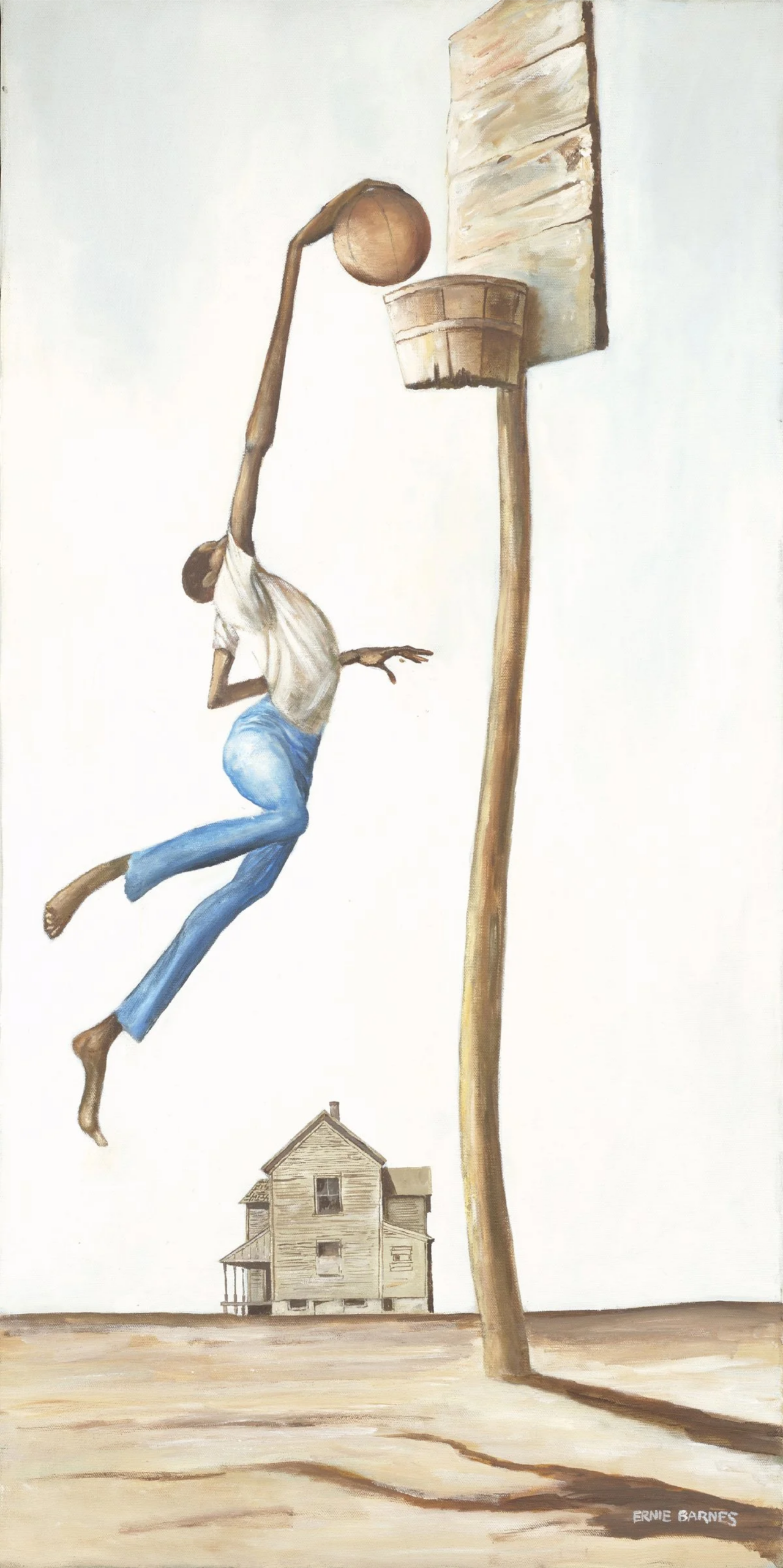
Barnes’s mature style is instantly recognizable: elongated figures, compressed and stretched anatomy, bodies that seem to run on rhythm rather than bone. Critics and journalists have often described his work in relation to Mannerism—the historical period that favored stylization and elongation—while others have emphasized how Barnes made that elongation serve movement, turning distortion into dynamism. The point is not that he “couldn’t draw bodies correctly.” It is that he chose a visual grammar that makes motion the subject.
In Barnes’s paintings, the human figure is rarely static. Even when someone is standing still, there is the suggestion of sway, of breath, of the next beat. The crowd scenes are not merely crowded; they are choreographed. The athletes are not merely muscular; they are kinetic diagrams. The churchgoers, the dancers, the drum majors—these are figures built to transmit what Barnes considered the most under-acknowledged dimension of Black life: its constant invention under pressure.
Barnes also made a choice that can feel subtle until you notice it everywhere: eyes closed. In many of his paintings, the figures’ eyes shut as if they are inside themselves, feeling rather than performing. A Los Angeles Times piece about The Sugar Shack pointed to Barnes’s explanation that the closed eyes related to his belief about being “blind” to one another’s humanity, a theme that reframes the party scene as more than celebration—it becomes moral argument.
This is one of Barnes’s central achievements: he painted Black joy without turning it into triviality. He made pleasure complex. He made the dance floor a site of social meaning. And he did it with a style that did not beg for approval from institutions that had historically undervalued Black figurative work, especially work that refused the dourness sometimes demanded as the price of being taken seriously.
“The Sugar Shack”: One painting, two versions, and a cultural afterlife
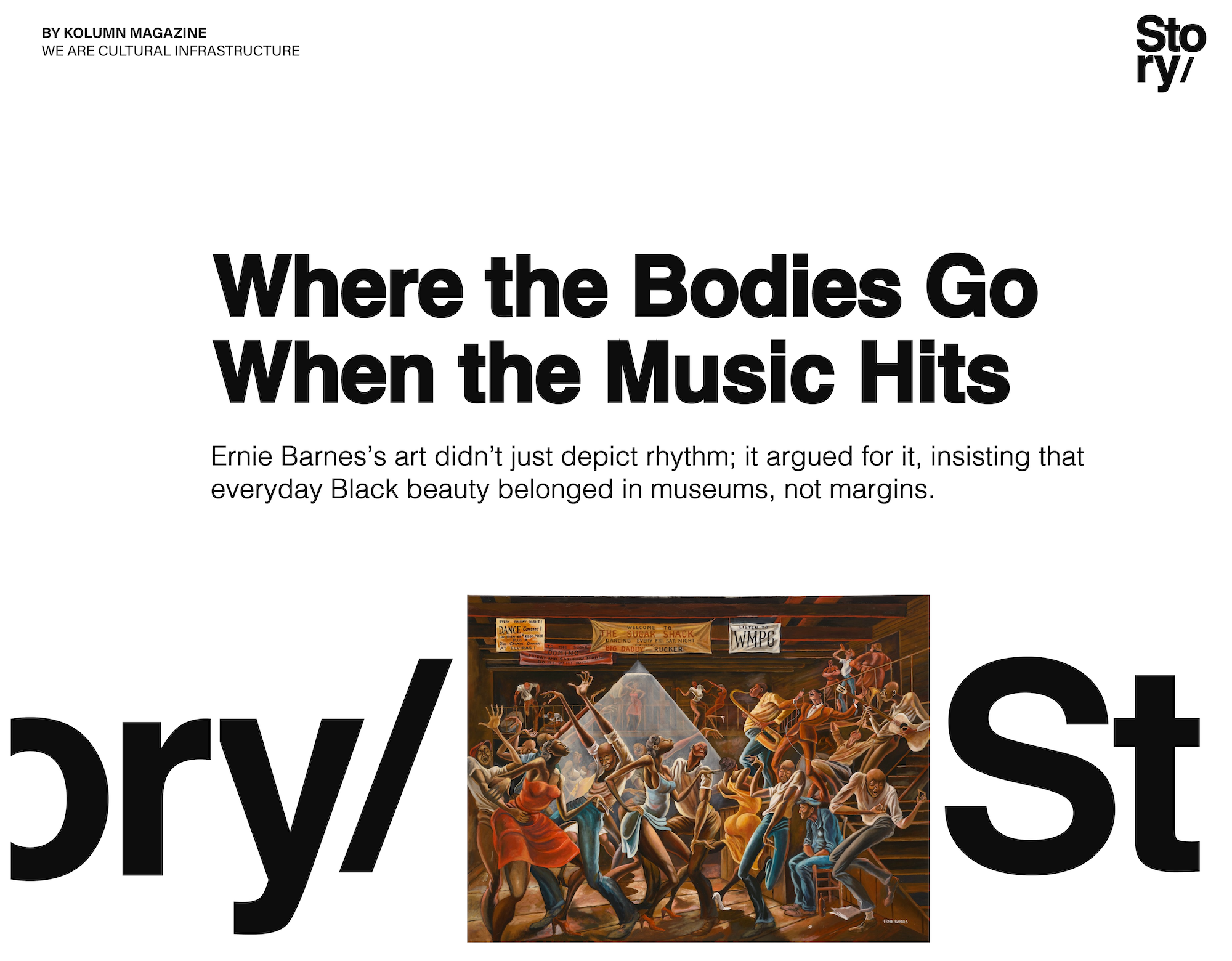
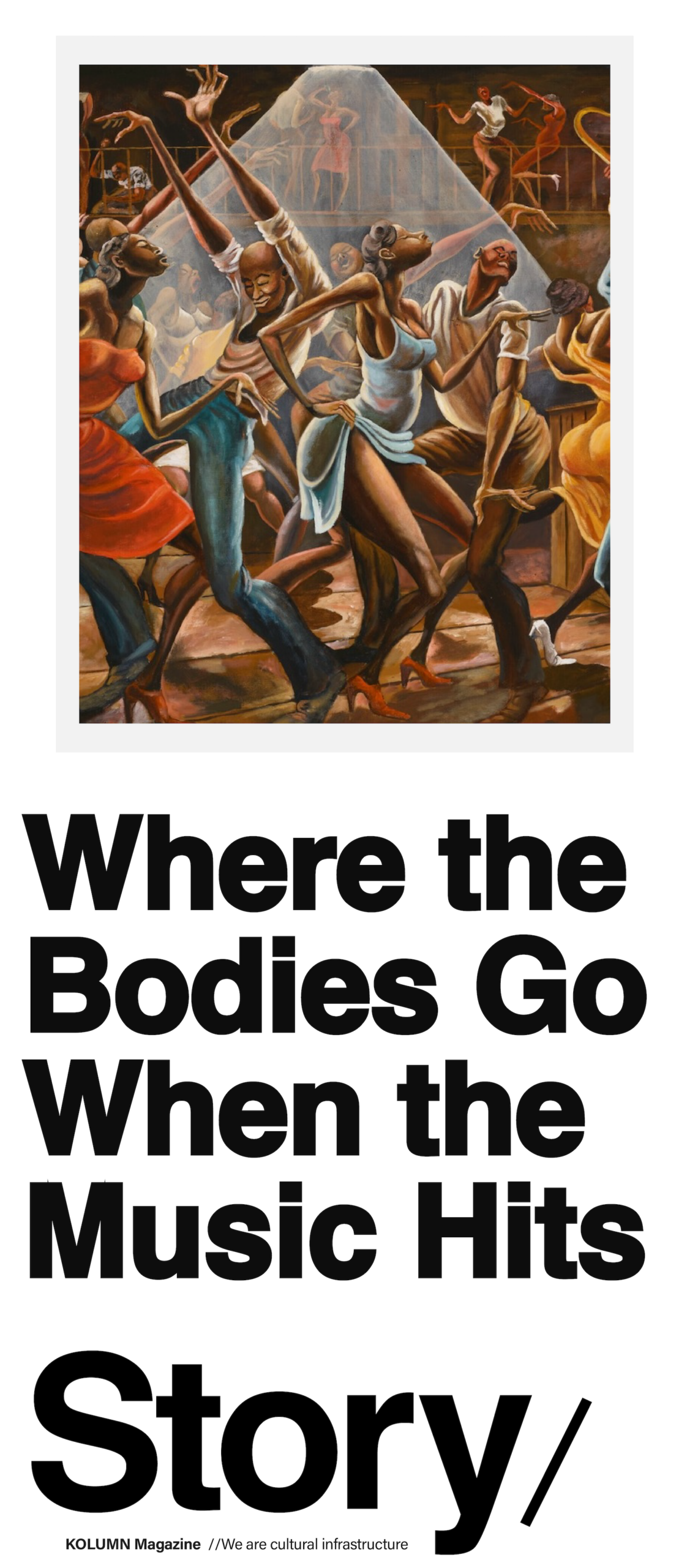
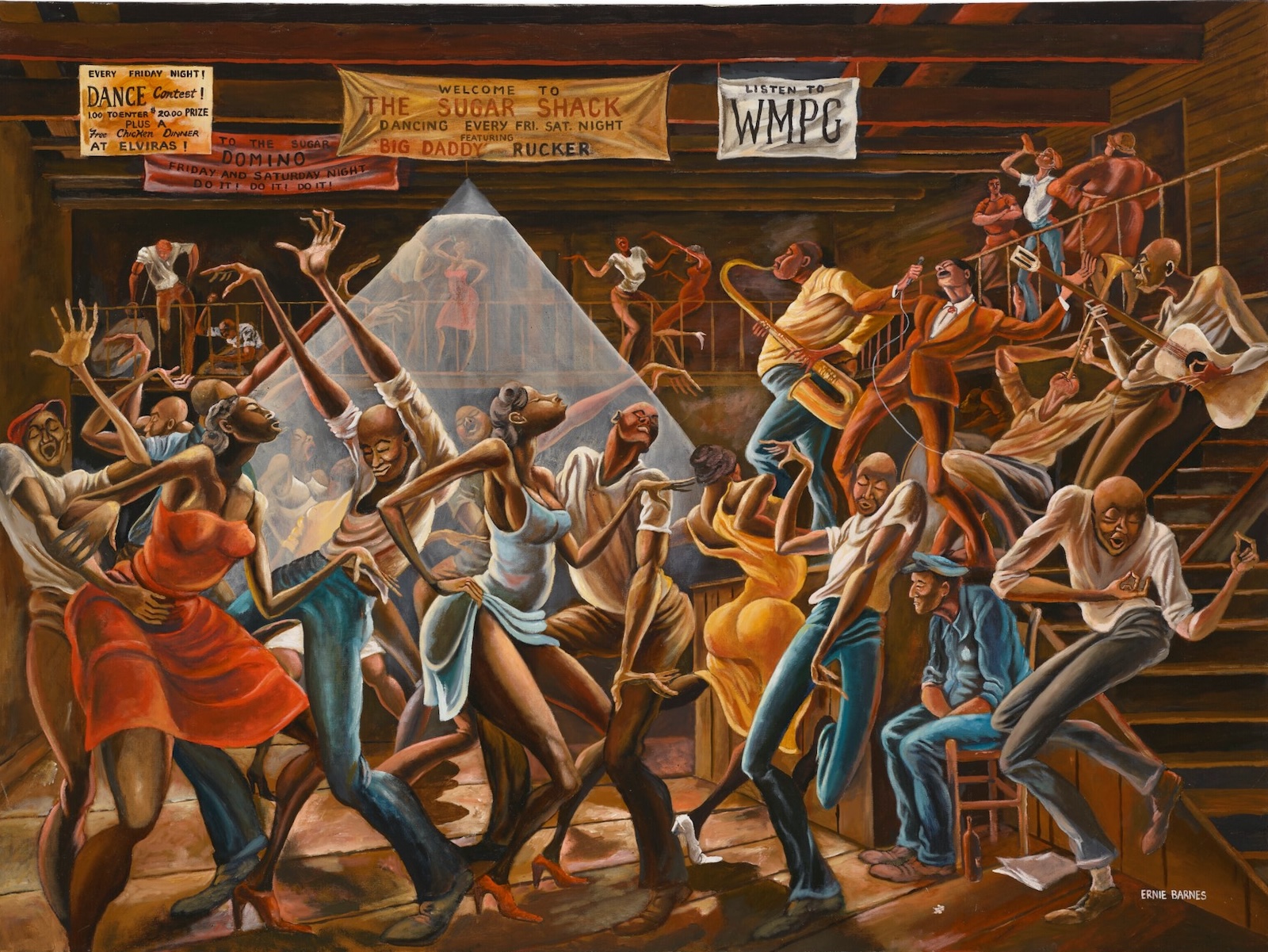
It is difficult to write about Barnes without writing about The Sugar Shack, because the painting has become a kind of communal property in memory—an image so widely recognized that people often forget it was made by someone, at a certain time, for reasons that mattered. The painting depicts a crowded Black dance hall—part juke joint, part community sanctuary—packed with bodies bending and lifting in syncopated celebration. It has the heat of proximity, the intimacy of shared space, the comic grace of human beings letting go.
But The Sugar Shack is also, literally, more than one painting. Barnes created two versions, and over time public conversation has often conflated them—treating a single canvas as if it carried every major appearance at once. Recent scholarship and reporting have emphasized that there are two authentic works by Barnes, with different ownership histories and media associations that have been blurred in popular retellings.
That confusion matters because it reveals how Barnes’s legacy has been processed: not through careful art-historical documentation, but through the fuzzier logic of mass culture, where an image is “everywhere” and therefore its particulars are treated as optional. Barnes’s painting became recognizable through Good Times, where it appeared in the show’s visual world and, crucially, as a signature part of the closing credits for many viewers. The painting also traveled through music: it was adapted for the cover art of Marvin Gaye’s 1976 album I Want You, binding Barnes’s image to one of the era’s defining records of sensuality and longing.
The Atlantic, writing about I Want You, called attention to the “seductive” cover art by Barnes as part of the album’s aesthetic of Black sensuality. That framing is instructive: Barnes’s painting doesn’t just illustrate the album; it participates in its world-building, giving a visual analogue to Gaye’s sound—a choreography of desire and atmosphere.
Then came the market’s delayed thunderclap. In May 2022, a version of The Sugar Shack sold at Christie’s for $15,275,000—an auction result that shattered expectations and reset Barnes’s market standing overnight. Christie’s listing documents the realized price and the painting’s details, fixing in official record what mass culture had long treated as vibe: this was not merely beloved; it was, suddenly, “valuable” in the narrow language the market speaks.
News and cultural coverage around the sale emphasized the scale of the jump—tens of times above estimate—while also narrating the bidding war as spectacle. Vanity Fair’s account leaned into the auction-room drama while situating the result within a broader reappraisal of Barnes’s work, tied to museum attention and new representation arrangements for the estate. Ebony also covered the headline-making sale, connecting the painting’s visibility to its appearances in Good Times and on Gaye’s album cover, reflecting how Barnes’s fame has always been braided with Black popular culture rather than separated from it.
If there is irony here, it is not simply that Barnes became “hot” after his death. It is that a painting that functioned for decades as an intergenerational touchstone of Black memory required an extraordinary auction number to force certain sectors of the art world to speak about it with full seriousness. Barnes’s viewers had already anointed it. The market merely caught up.
Popular culture as a gallery: Good Times, Hollywood, and the stealth canon
Barnes’s work didn’t just appear in popular culture; it lived there. The relationship with Norman Lear’s Good Times is central: Barnes produced artwork used as paintings associated with the character J.J. Evans, meaning millions of viewers encountered his style weekly, often without credit or art-world framing. The Los Angeles Times described how Lear hired Barnes to “ghost” paintings for the character, and how Sugar Shack became a signature image through the show’s credits.
This arrangement is complicated. On one hand, it gave Barnes an audience that most painters could only dream of. On the other, it placed his work within a context that could encourage dismissal: “TV art,” “set dressing,” something consumed but not necessarily respected. Barnes’s career exposes how Black artists have often been asked to accept visibility without infrastructure—recognition without institutional support, popularity without critical protection.
Barnes’s art also traveled through film and television beyond Good Times, and accounts of his career note that his works appeared across a range of series and movies over the years, extending his presence in American visual culture. What emerges is a portrait of an artist whose work was already embedded in the nation’s image-stream, long before curators began to narrate him as a figure of consequence.
The museum world eventually provided a different kind of visibility. The California African American Museum mounted Ernie Barnes: A Retrospective in 2019, framing him explicitly as a major artist and contextualizing his work across decades. That kind of institutional framing matters not only for legacy, but for the way future scholars can speak about a body of work without relying solely on nostalgia.
“The Beauty of the Ghetto” and the politics of representation
Barnes did not limit himself to dance halls and athletes. He developed bodies of work that engaged everyday Black life more broadly, including exhibitions that sought to document and dignify communities that mainstream America often caricatured or ignored. One of the recurring themes in accounts of his career is his commitment to painting Black social worlds with affection rather than pathology—to treat the “ordinary” as worthy of aesthetic attention.
This was a hard road in an era when the dominant art conversations often swung between abstraction and political critique, and when Black figurative painters were frequently pressured to justify themselves in narrow terms: either as activists illustrating suffering, or as entertainers illustrating culture. Barnes insisted on another register. His paintings can be read as social documents, yes, but they are also acts of insistence: the insistence that Black life contains its own formal intelligence, its own compositional drama, its own radiance.
To say Barnes painted joy is not to say he ignored hardship. It is to say he refused the idea that hardship is the only legitimate subject. In a country that has often demanded Black pain as proof of Black seriousness, Barnes’s celebratory canvases function as a kind of rebuttal.
The burdens of categorization: “Black Romantic,” critical taste, and the fight to be legible
One of the most persistent challenges in Barnes’s career was categorization. The art world is not merely a space of appreciation; it is a system of labels. Barnes’s work has been discussed under terms like “neo-Mannerist,” and in connection to the idea of “Black Romantic,” a phrase that has circulated in critical writing about The Sugar Shack and its relationship to Black popular circuits of performance and pleasure.
Labels can be clarifying, but they can also function as containment. Barnes’s elongated figures, for some critics, seemed too accessible, too narrative, too rooted in Black vernacular life to fit the prestige frameworks that elevated other kinds of modern painting. This is not unique to Barnes; it is a familiar pattern for many Black artists whose work is beloved by communities but treated as minor by institutions.
Barnes’s life also raises a question that the art world rarely confronts with full honesty: what happens when an artist’s primary audience is Black America, and the dominant arbiters of “taste” are not? Barnes’s paintings circulated in homes, on album covers, in television credits—in other words, in spaces where Black viewers could claim them without permission. Museums came later. The canon followed the crowd.
The late-life resurgence and the posthumous boom
Barnes died in 2009 in Los Angeles at age 70. But his afterlife as an artist has been unusually active, shaped by museum attention, renewed scholarship, and a market suddenly eager to “discover” what Black audiences had long known.
In 2018–2019, the North Carolina Museum of History mounted The North Carolina Roots of Artist Ernie Barnes, situating him as a major homegrown figure and emphasizing his distinctive style of energy and movement. In 2019, CAAM’s retrospective provided a fuller institutional accounting of his career and gave audiences a chance to see the work beyond its most famous image.
Then, in 2022, the Christie’s sale detonated. What followed was not merely price inflation. It was a wave of narrative correction: features explaining who Barnes was, how The Sugar Shack traveled through Black culture, why the work mattered, and how the art market’s attention reflected broader shifts in collecting and institutional priorities.
Museums also began presenting the painting as an event object—something people line up to see, something that carries communal meaning beyond its formal properties. Reporting on visitors’ devotion to the canvas highlighted the emotional relationship many viewers have with Barnes’s imagery, as if the painting were not just art but a memory surface for a particular era of Black life.
This renewed attention, however, should not be mistaken for uncomplicated triumph. The posthumous boom invites uncomfortable questions: Why did it take so long? Who benefits when an artist’s work is dramatically re-priced after his death? What does it mean when a community’s beloved image becomes a seven-figure asset traded through elite institutions? Barnes’s story sits at that intersection—between love and money, recognition and extraction.
Barnes’s influence: Athletes, artists, and the permission to be more than one thing
Barnes’s legacy has become newly resonant in a culture that increasingly celebrates hybridity—athletes who make music, musicians who direct films, creators who refuse a single lane. But Barnes lived this before it was fashionable. He insisted on being more than one thing in a society that often punishes Black men for complexity.
It is telling that contemporary sports institutions now cite Barnes as a model of multidimensional life. The Los Angeles Chargers, for example, have described Barnes as an influential Black artist whose experiences—growing up in North Carolina, playing pro football, witnessing history—fed his art, positioning him as an emblem of breadth beyond the field.
That embrace, while welcome, also underscores what Barnes faced: the cultural assumption that a Black athlete’s artistry is an anomaly rather than an expectation. Barnes had to fight for the right to be taken seriously in a second profession because the first profession had already branded him in the public imagination. His achievement is not only his paintings. It is the life he built against the gravity of stereotype.
The meaning of “The Sugar Shack” now: Black joy, historical record, and the museum line
Today, The Sugar Shack functions almost like a national folk image within Black America—recognizable across generations, circulating as poster, print, reference point, meme, shorthand. But its meaning has also sharpened in the last several years, as public language around “Black joy” has expanded and as institutions have begun to treat joy as a serious historical subject rather than as decorative relief.
Barnes’s dance hall is not utopia. It is sanctuary. It suggests that joy is made, not granted—that it is produced through community, through music, through the embodied intelligence of people who know how to survive and still choose pleasure. When viewers line up at museums to see the painting, they are not only admiring a composition. They are visiting a scene that feels like inheritance.
At the same time, the painting’s institutional journey—museum shows, blockbuster attention, record-breaking sale—invites the broader American art world to confront its own lag. Barnes was never invisible. The question is: invisible to whom?
What a fuller Barnes story asks of us
Barnes’s life, when treated with journalistic seriousness, demands that we hold multiple truths at once.
He was an artist with a mass audience—an extraordinary fact in itself—whose mass audience did not automatically translate into critical respect. He was a professional athlete who became a painter, but the more interesting point is that he refused the cultural script that says a Black man must be one thing. He was a maker of images that became iconic, but icons can flatten the person who made them unless we do the work of restoration—context, chronology, the long view.
And he was a Durham son whose earliest memory of art’s necessity may have been a stolen glimpse through a window—proof that beauty was happening, with or without permission. Barnes spent his life painting what he saw there: bodies insisting on their right to move, to gather, to be radiant, to exist as more than what the outside world expected.
In the end, Barnes’s achievement is not only that he made The Sugar Shack. It is that he made an argument—across canvases, across decades—that Black life is not a footnote in America’s aesthetic story. It is one of its engines.