

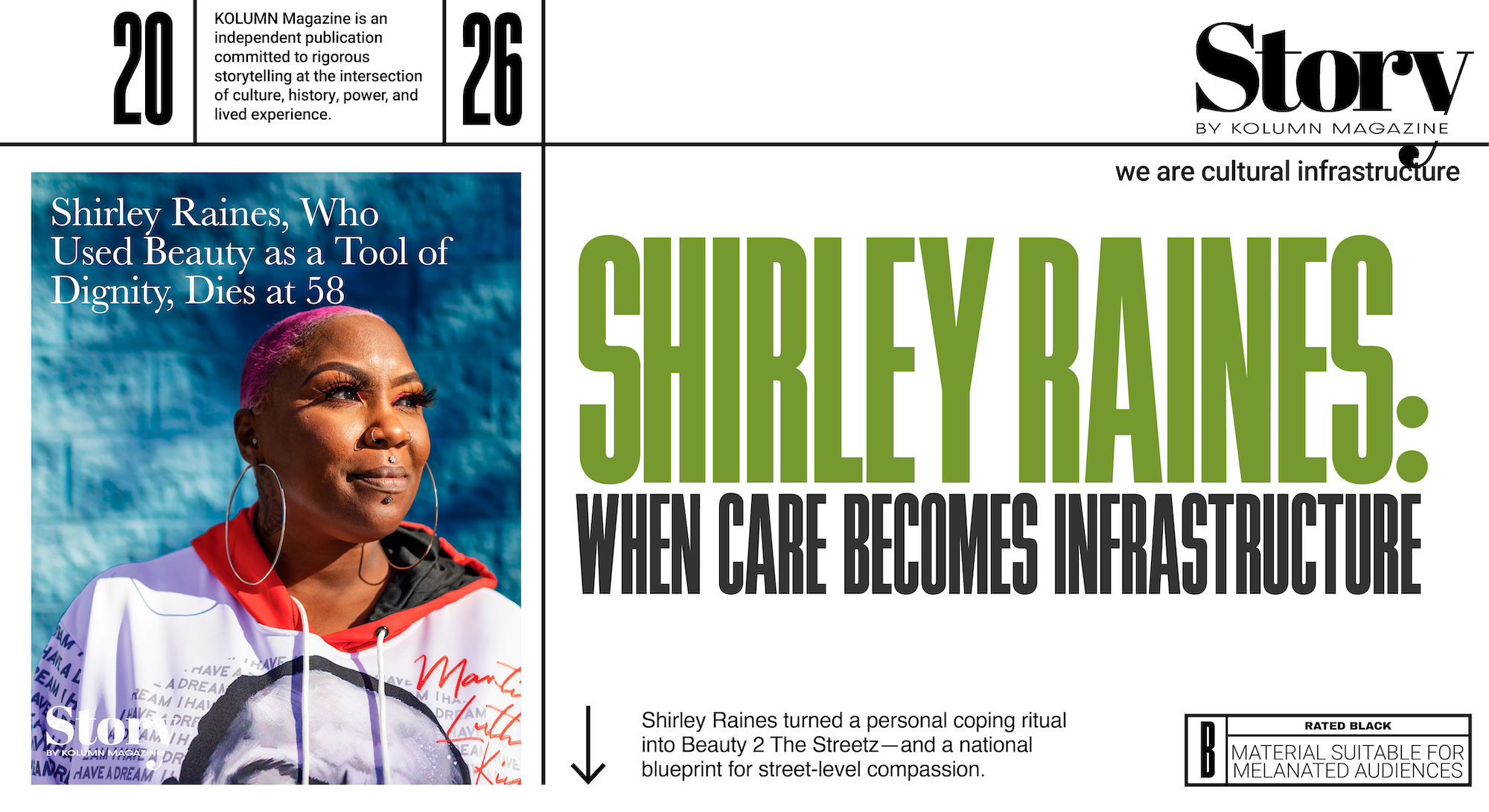
Where the system offered scarcity—scarcity of housing, scarcity of privacy, scarcity of safety, scarcity of attention—she offered presence. And she offered it repeatedly, enough times that presence started to resemble infrastructure
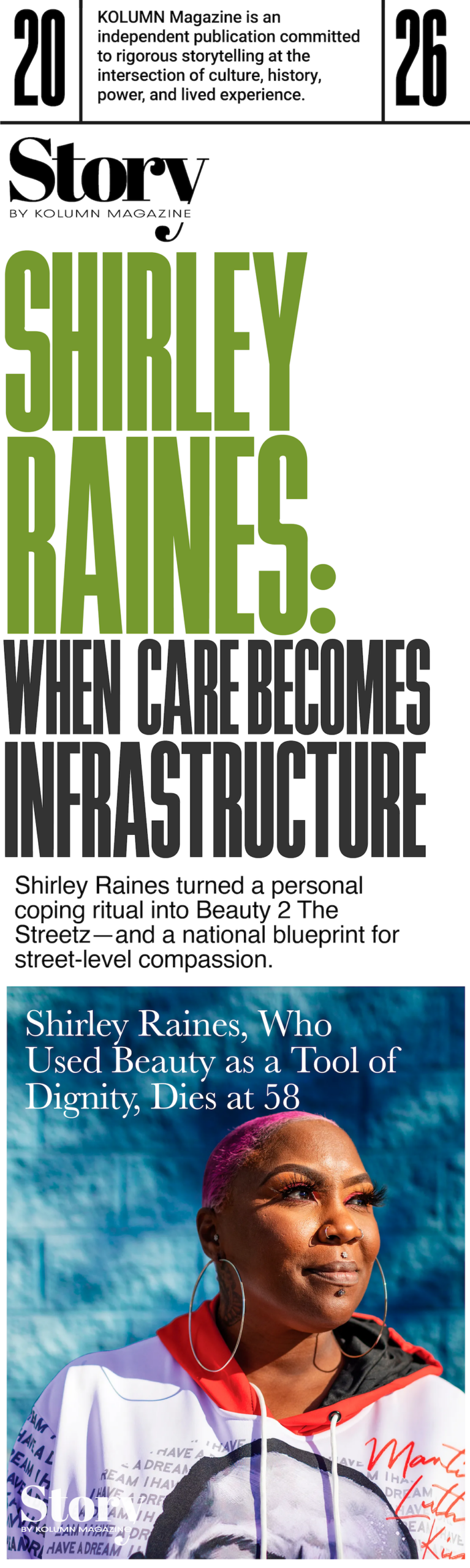
Where the system offered scarcity—scarcity of housing, scarcity of privacy, scarcity of safety, scarcity of attention—she offered presence. And she offered it repeatedly, enough times that presence started to resemble infrastructure
By KOLUMN Magazine
On January 27, 2026, Shirley Raines died in Las Vegas, Nevada. She was 58. The confirmation came through reporting that cited the Clark County Coroner’s Office; her nonprofit, Beauty 2 The Streetz, announced the loss publicly the following day in a statement that called her presence “immeasurable” and her impact enduring.
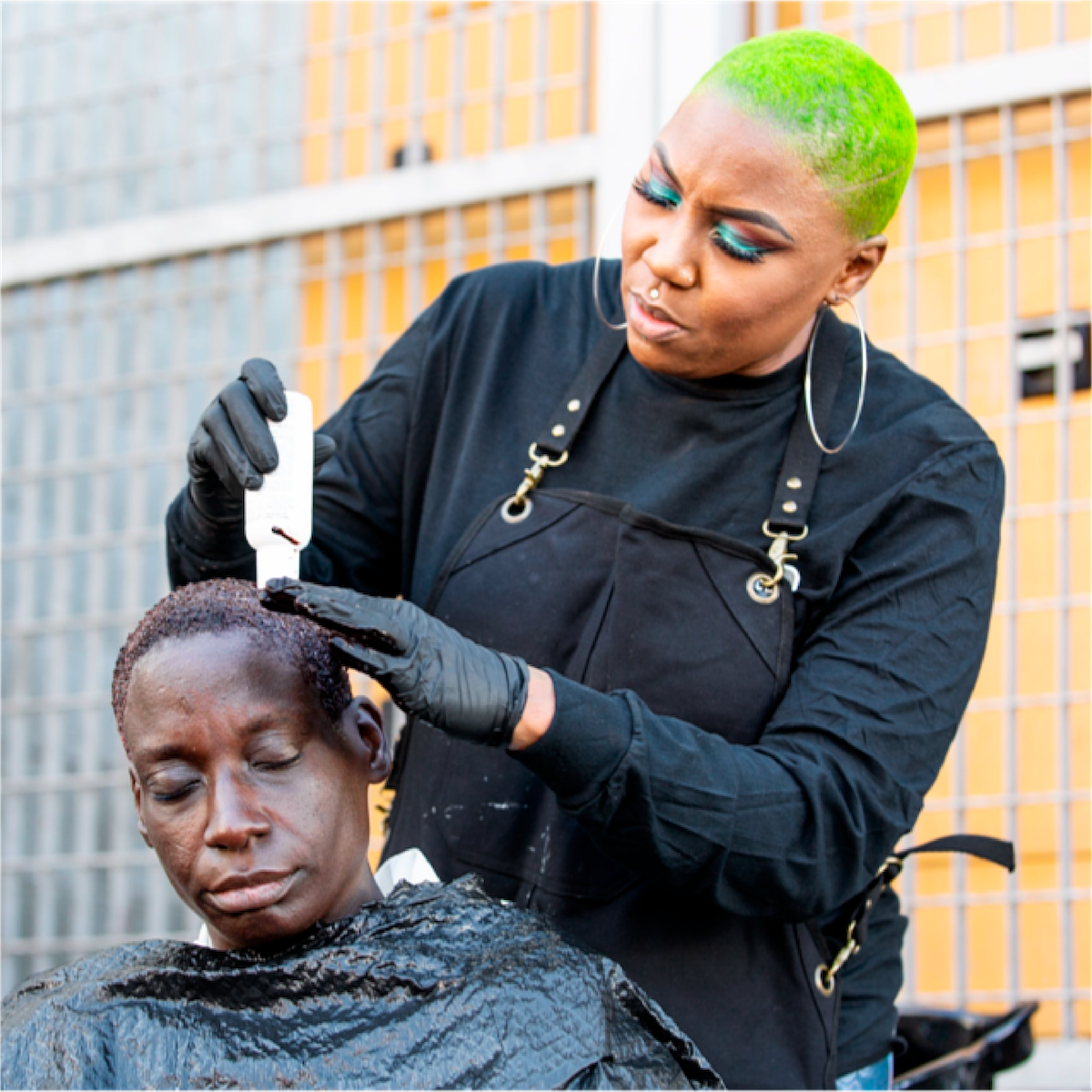
If you encountered Raines first through a phone screen—TikTok, Instagram, a repost from a celebrity, a stitched video of an unhoused woman smiling into a freshly revealed face—you met her the way millions did: as “Ms. Shirley,” a force of personality as vivid as her makeup. But the spectacle was never the point. The lashes, the hair color, the glittering eye shadow: those were her signage, a way of announcing herself in places America prefers to keep dim. For the women on Skid Row and in other encampments she served—across Los Angeles and, increasingly, Nevada—beauty wasn’t a frivolity; it was a vocabulary for self-possession. It was a way of saying, You still get to choose.
That insistence—choice—ran through nearly every credible profile of her work. In a widely read interview, Raines described a recurring moment: she would ask someone how they wanted their hair, and the reply would be resignation—it doesn’t matter. Her response was the opposite of pity. It mattered. It had to matter. The smallest choice was practice for larger ones.
This is the paradox at the center of Raines’s story: she became famous for an act many people dismiss as superficial, and she used that act to expose how profoundly structural homelessness is. Where the system offered scarcity—scarcity of housing, scarcity of privacy, scarcity of safety, scarcity of attention—she offered presence. And she offered it repeatedly, enough times that presence started to resemble infrastructure.
A life shaped by grief—and by a refusal to surrender to it
Raines’s own telling of her story never flinched from pain. She spoke, in multiple interviews, about the death of her two-year-old son, Demetrius—an event she described not as a closed chapter but as a rupture that rearranged everything that came after. In a Word In Black interview, she framed Beauty 2 The Streetz as something formed in the aftermath of that loss: grief set her on a downward spiral; eventually, she found herself feeding unhoused people through a church function; there, she recognized “a community of broken people” who mirrored her own brokenness.
This is the part of her biography that can sound like familiar American mythmaking: tragedy, redemption, purpose. But the details complicate the simplicity. Raines did not describe herself as instantly transformed into a saint. She described depression. She described survival. She described beauty—her own beauty routine—as something she used to face the mirror when the mirror felt accusatory. A Glamour profile traced how she woke on Saturdays, painted her face in the brightest colors she could find, and headed to Skid Row. In that telling, makeup functioned first as armor, then as offering: a “mask” she wore to conceal trauma, and later, a “mask” she could share with someone else—not to hide them, but to let them breathe for a moment.
It is tempting, when someone turns suffering into service, to tidy the narrative into a simple inspiration narrative—an easy uplift that flatters the audience more than it honors the subject. Raines resisted that framing by being blunt about what the work cost. She talked about exhaustion, about safety, about the relentless churn of need. She spoke of the women on the street being uniquely vulnerable—an observation echoed in profiles that noted her emphasis on women and trans people in the unhoused community, where safety and bodily autonomy are often precarious.

In other words, she did not sentimentalize the street. She romanticized dignity instead.
Skid Row as a place America made—then learned to look past
To understand what Raines built, you have to understand the geography she entered. Skid Row, in downtown Los Angeles, is not an accident. It is a fifty-block district with a long history as a containment zone—an area where poverty, addiction, mental illness, disability, and the fallout of housing markets become visible and concentrated.
Official counts and estimates have varied, and the numbers are always contested because counting homelessness is itself an imperfect science. But the scale has been undeniable. LAHSA data has placed the broader countywide crisis at tens of thousands of people on any given night, while local planning documents have described Skid Row as the densest concentration of homelessness in Los Angeles County, with thousands of people experiencing homelessness in that small footprint and a majority unsheltered.
Those numbers matter, but not in the way policymakers often wield them. They matter because they reveal the mismatch between the problem and the tools routinely offered to address it: episodic sweeps, temporary shelter with restrictive rules, public-private spending fights, political cycles that reset long before lives do. Coverage in recent years has also documented how homelessness policy is pulled between two poles—criminalization and care—with court cases and local ordinances shaping whether sleeping outside is treated as a crime or a symptom.
Raines was not a housing czar. She did not claim her services were a substitute for homes. But she understood something that many large systems miss: people living outside are constantly being managed—moved along, searched, policed, counted, disappeared. What they are not consistently given is consent.
This is why, in one of the most incisive lines attributed to her in national coverage, she emphasized “consensual touch”—the idea that even a haircut can be a rare moment in which someone’s body is treated as theirs. That framing is not merely poetic; it’s a critique of how homelessness erodes the boundaries that make personhood possible.
The origin of Beauty 2 The Streetz: wants, not only needs
In the Allure profile that helped translate her street-level work into the language of the beauty industry, Raines explained the pivot that became her mission. She had been volunteering to feed unhoused residents in the Central City East area and noticed something that many helpers miss: people were interested in her style. They commented on her eye shadow. They admired her hair. Their attention wasn’t frivolous; it was human. And it was the seed of an insight: people don’t only have needs; they have wants.
Wants are where dignity lives. A need can be met with anything—any sandwich, any bar of soap, any blanket. A want requires recognition of the self. It requires someone to ask a question and wait for an answer. What color? What cut? How do you want to look today?
Beauty 2 The Streetz emerged as a response to that. Over time, reporting described an operation that brought haircuts, shampooing, braiding, lice removal, makeup, wigs, hygiene supplies, and food—often on a weekly rhythm. What began as a small effort grew into a team: barbers, stylists, volunteers, and donors coordinating to create something like an outdoor salon and mutual-aid hub.
The beauty press sometimes framed this as novelty—makeovers for the homeless, a viral hook. Raines reframed it as policy in miniature: if a person can make a choice in the chair, that person can begin to imagine choices beyond the chair. The glamour wasn’t the point. Agency was.
Social media as megaphone—and as moral hazard
Raines’s rise coincided with a specific era of American attention: the period in which frontline service, filmed on a phone, can become a movement—or a controversy. She used social media not simply to raise money, but to force visibility. TIME, in naming her to its TIME100 Creators list in 2025, described her belief that everyone deserves to feel seen and beautiful, and noted the ways her nonprofit offered both resources and appearance-related services across multiple cities.
That duality—aid plus aesthetics—made her legible to the algorithm. It also raised ethical questions that hover around any content made in the proximity of suffering: who is the audience, what is consent, and when does documentation slide into exploitation?
Raines’s defenders argued that she did what the system refused to do: she let people speak, let people be seen. Her critics—often speaking more generally about the genre than about her alone—warned that poverty can be turned into content. The truth is that both concerns can coexist. The ethics of care are rarely clean, and the ethics of care on-camera are messier still.
What distinguishes Raines, in much of the mainstream and community coverage, is how often her work is described as relational rather than extractive: consistent presence, repeat visits, familiarity, nicknames, an earned intimacy with a community that can spot performative helpers from a block away. Vogue’s pandemic-era coverage emphasized trust as a product of consistency—showing up, week after week, when it would have been easier to retreat.
Still, the platform was not incidental. It scaled her work. It brought brand partnerships and donations. It made Beauty 2 The Streetz a name that could attract volunteers with credentials—licensed stylists, barbers, makeup artists—turning the operation into something more formal and more durable than a single charismatic founder.
This is one of the central tensions of modern grassroots leadership: the leader’s visibility fuels the mission, but also makes the mission dependent on the leader. Raines’s death, and the mourning that followed, put that tension into sharp relief.
The pandemic years: When beauty became “essential”
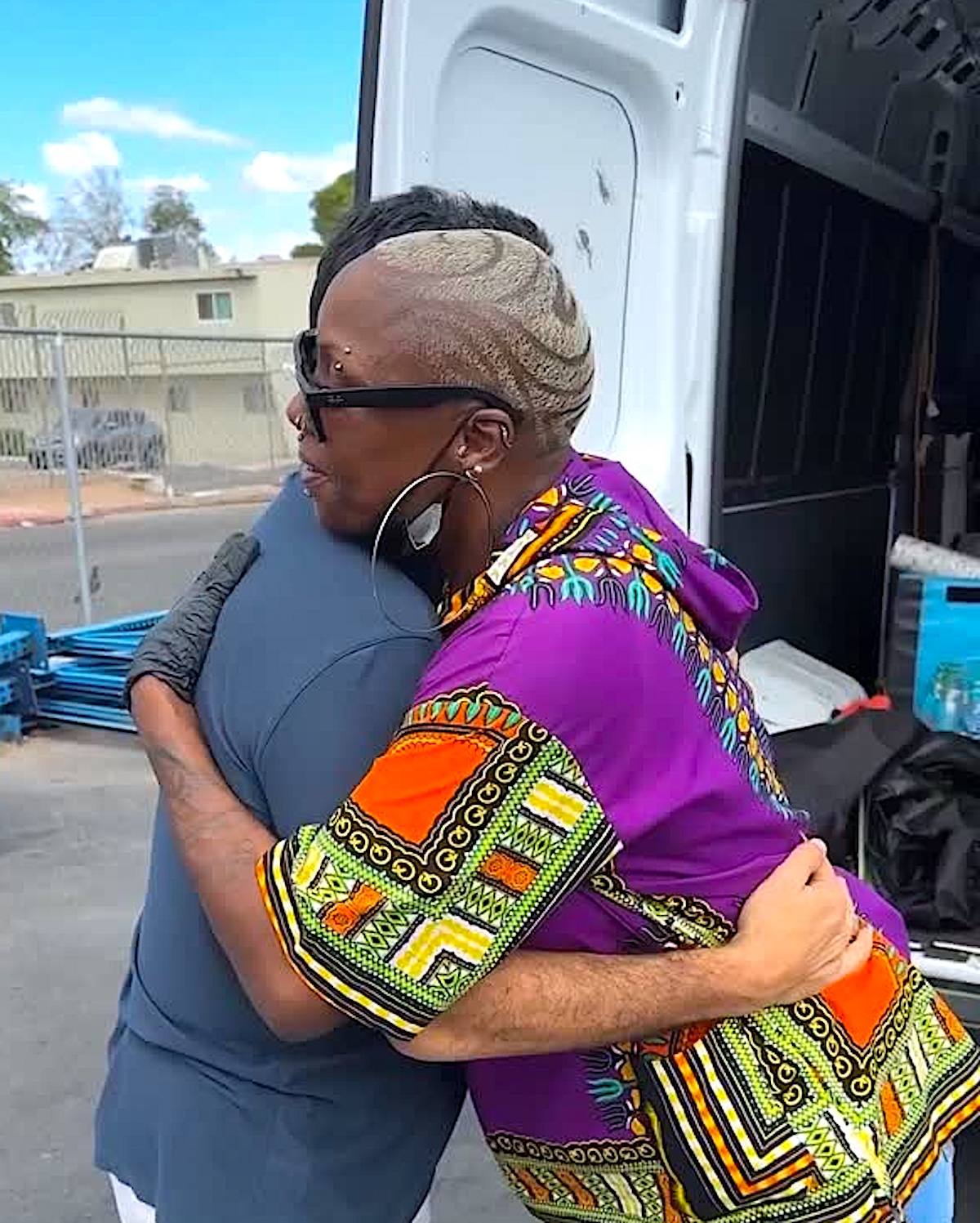
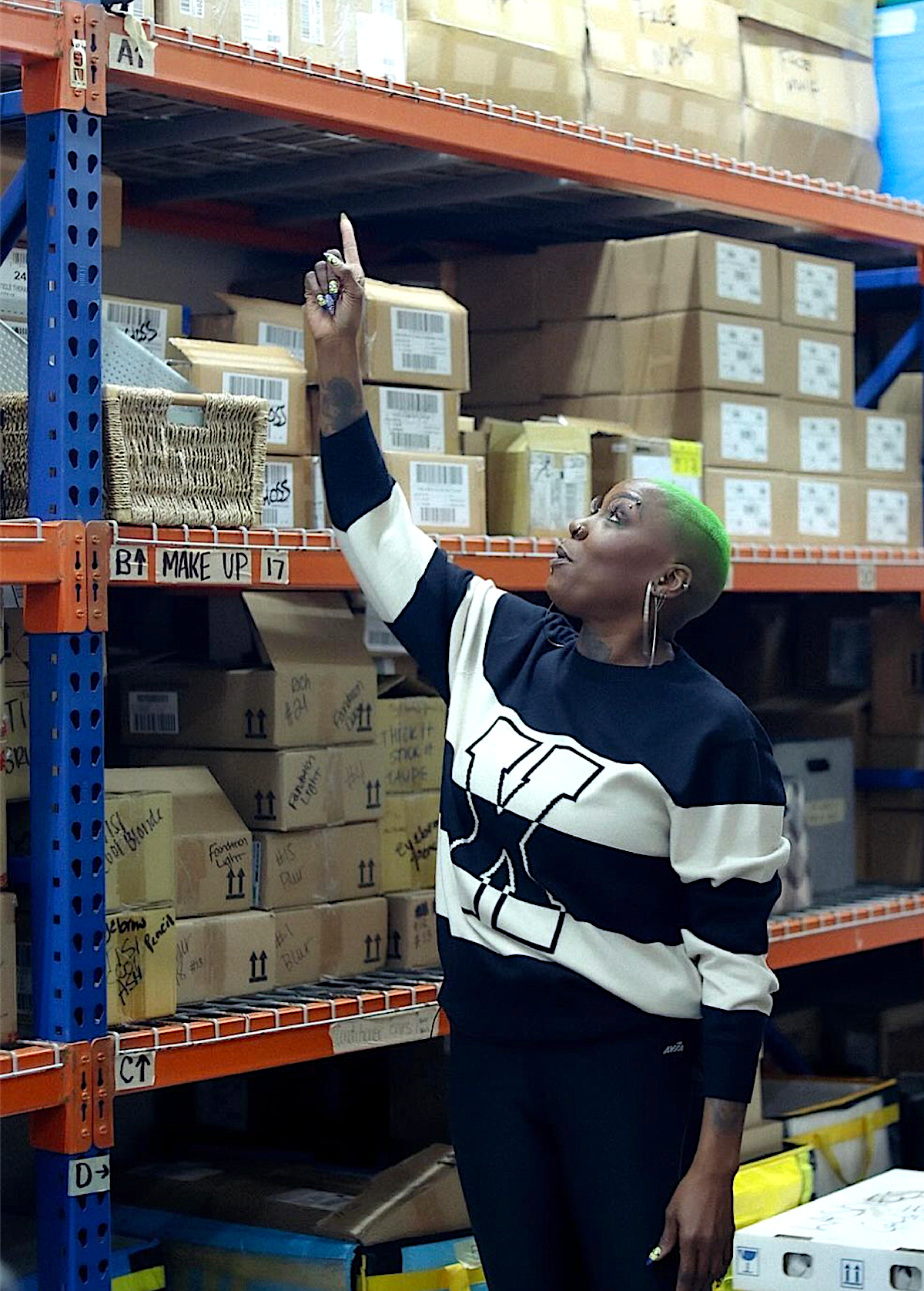
COVID-19 forced countless nonprofits to choose between retreat and risk. For Raines, the choice was brutal and, in hindsight, defining. Multiple profiles describe how Beauty 2 The Streetz pivoted during the pandemic: beauty services became harder, even dangerous; needs became more urgent; supply chains collapsed; PPE and sanitizer became precious. Raines and her team shifted toward distributing masks, food, hygiene supplies, and information—sometimes in partnership with health services, even turning their outpost into a testing and vaccination site, according to reporting.
The pivot is telling. It demonstrates that the organization was never simply about hair and makeup. It was about resource delivery—what public health people might call harm reduction, what nonprofits might call direct service, what Raines might have called love with receipts.
It also illustrates a theme that runs through homelessness coverage more broadly: crises do not create vulnerability so much as they expose it. Skid Row, already dense and under-resourced, became even more dangerous under a virus that thrives in crowded conditions and punishes people who cannot wash their hands easily. During that period, Raines’s work functioned as a kind of unofficial public health extension—one more example of how community actors often become the last reliable mile of service delivery when formal systems falter.
Recognition—and what recognition can’t fix
By 2021, Raines’s name moved beyond local awareness into national ceremony: she was selected as CNN Hero of the Year, a milestone frequently referenced in later profiles and institutional write-ups.
Awards are complicated things in the nonprofit world. They can validate a leader and unlock resources. They can also simplify messy realities into a digestible narrative of individual heroism. Raines accepted recognition while continuing to speak, in her own idiom, about the structural nature of the crisis. The point was never that she was extraordinary; the point was that what she provided should not have been extraordinary at all.
Her later visibility intersected with pop culture in ways that both widened her reach and risked diluting her message. Word In Black’s interview referenced her presence among activists acknowledged at a major awards moment with Lizzo, highlighting how celebrity can act as a spotlight for frontline work.
And yet, even in the most flattering write-ups, the underlying reality remained: an award does not house a person; a viral video does not repeal a rent increase; a donation does not erase the trauma of sleeping outside. That is not a critique of Raines. It is the context that makes her insistence on dignity so urgent. When you cannot control the big structures, you control what you can: a shower. A hot meal. A clean wig. A moment of being treated like someone with preferences, not merely problems.
The hard parts: Safety, mental health, and the limits of love
Raines’s work took place inside a volatile ecosystem: street violence, substance use, severe mental illness, exploitation, and the constant churn of people moving between tents, shelters, jails, emergency rooms, and sidewalks. County and regional reporting has described Skid Row as an area facing high rates of substance use and mental health crises, and overdose mortality—conditions that are inseparable from the instability of living unsheltered.
In that environment, care is never simply care. It is negotiation. It is boundary-setting. It is risk management. It is also grief.
Raines became known for a style of “tough love” that people close to street-level service recognize immediately: compassion paired with firmness, affection paired with rules. The public sometimes misunderstands this style, mistaking it for harshness. In practice, it can be a safety mechanism. If you are feeding hundreds of people outdoors, running makeshift salon chairs, distributing supplies that can be stolen or fought over, and trying to protect women and trans clients in particular, you cannot operate on sentiment alone. You need protocol.
What is most striking in the best profiles is that the protocol served a deeper ethic: not control, but respect. Raines did not present unhoused people as passive recipients of her generosity; she presented them as clients, as community, as partners in a ritual of restoration. Allure’s reporting emphasized that the goal was autonomy—reminding someone they still had choices.
Still, the work demanded a kind of emotional endurance that can hollow out even the most resilient leader. This is a truth the nonprofit world often hides behind cheerful branding: chronic exposure to trauma changes the caregiver too. Raines spoke openly about depression and pain, and about how the work both healed her and required her to keep reopening the wound.
A widening map: From Los Angeles to Nevada
In the years leading up to her death, Raines’s work expanded beyond the Los Angeles footprint that made her famous. TIME noted that Beauty 2 The Streetz provided aid in multiple cities beyond L.A., reflecting a broader geographic ambition: the model could travel because the need was everywhere.
Local reporting in Nevada in late 2025 described her outreach expanding in Las Vegas, presenting her as a familiar figure bringing food, makeup, wigs, and other essentials to people living outside—an extension of what she had long done in California.
This expansion is worth pausing on, because it underscores a sobering implication: Beauty 2 The Streetz was not scaling because homelessness was shrinking. It was scaling because homelessness was metastasizing—across regions, across city boundaries, across political jurisdictions.
The Atlantic has argued, in broader analysis of the homelessness crisis, that the most powerful drivers are housing costs and vacancy rates, not simplistic narratives about individual moral failure. That framework helps make sense of why Raines’s model traveled: when housing becomes unattainable, the street becomes an address in more than one city.
The final days—and the public mourning
Details around Raines’s death remained limited in the earliest announcements. Beauty 2 The Streetz confirmed the loss on January 28. PEOPLE reported that she was found dead on January 27, citing the Clark County Coroner’s Office, and later published additional detail from her twin sister describing a wellness check that led to her being found unresponsive at home in Henderson, Nevada.
In the days immediately following, tributes poured in from media outlets and community platforms—some formal, some raw, many repeating a theme: she made people feel seen. BET, in its remembrance, described her as an “angel” figure to many in Skid Row, while other outlets highlighted her practical impact—food, hygiene kits, makeovers—alongside the emotional one: hope.
Public grief can become a kind of haze, smoothing sharp edges. But the most honest mourning is specific. It names the habits that will now be missed: the Saturday rhythm, the voice calling someone “queen,” the insistence that a woman pick the color she actually wanted, the refusal to let a person’s last name be “homeless.”
This specificity matters because it reveals what Raines truly built: not merely a nonprofit, but a recurring social relationship that the street often denies.
What her work teaches—if we’re willing to learn it
The easiest way to interpret Shirley Raines is as an exceptional individual—an outlier of empathy. That interpretation lets everyone else off the hook.
A more demanding interpretation is that Raines’s work exposes a gap so large it had to be filled by an influencer with a folding chair and a box of lashes. It should trouble us that dignity had to be delivered by a volunteer brigade because the official architecture of care—housing policy, public health, mental health services, addiction treatment, domestic violence support, reentry programs—remains fragmented and insufficient.
Consider what Skid Row represents at a systems level: a concentrated zone of unsheltered people, in one of the wealthiest metros in the country, inside a state with vast resources, inside a nation that can build anything except enough housing people can afford. LAHSA’s counts show the scale; local action plans describe density and unsheltered rates; investigative coverage has examined the churn of spending, accountability debates, and policy whiplash.
Within that landscape, Raines’s signature contribution was not simply giving things away. It was giving a framework for how to see the person in front of you.
She treated beauty as a human need because she treated choice as a human need. She treated grooming as care because she treated attention as care. She treated a woman’s desire to look good not as vanity but as evidence that she was still alive to herself.
There is also a gendered intelligence in her approach. Many homelessness interventions are designed around a default subject: a man. But women, trans people, and gender-nonconforming people experience the street through different threats—sexual violence, coercion, survival sex, intimate partner abuse that pushes someone into homelessness, and the constant requirement to manage vulnerability. Beauty 2 The Streetz functioned as a gender-aware intervention without always using that language: it offered services that mattered particularly to women and trans clients, and it did so in a way that centered consent and dignity.
The question of legacy: Can the mission outlive the founder?
After the death of a charismatic founder, every community organization faces the same test: can the work become institution rather than personality? Beauty 2 The Streetz has always been bigger than one person—volunteers, stylists, donors, clients whose stories shaped the mission. But Raines was also its face, its voice, its engine.
The nonprofit’s own language suggests an intention to continue: her legacy will live through the work she started, the statement said, and further information would be shared.
Legacy, however, is not only what an organization does next. It is also what the rest of us do with the lesson.
If Raines’s story becomes only a eulogy, we have misunderstood her. Her life argued for a different moral accounting: that the unhoused are not a separate species; that homelessness is not simply a personal failure but a policy outcome; that dignity is not the cherry on top of survival but a component of it.
And she offered a precisely simple diagnostic tool for any city claiming it wants to solve homelessness: listen to what people say they want, not only what you think they need. The first builds trust. The second, alone, often builds resentment.
Shirley Raines lived in the tension between the intimate and the structural. She could fix a wig. She could not fix a housing market. But she understood—perhaps better than many officials—that people cannot wait for structural change to deserve humane treatment.
On Skid Row, on sidewalks in Nevada, and across the screens of millions, she made a case that should have been unnecessary to make: that a person sleeping outside is still a person, and a person is allowed to want.
And now, with her death, that case becomes a challenge handed to everyone who watched her work and felt moved by it: to stop treating care as an exception—and start treating it as a baseline.