

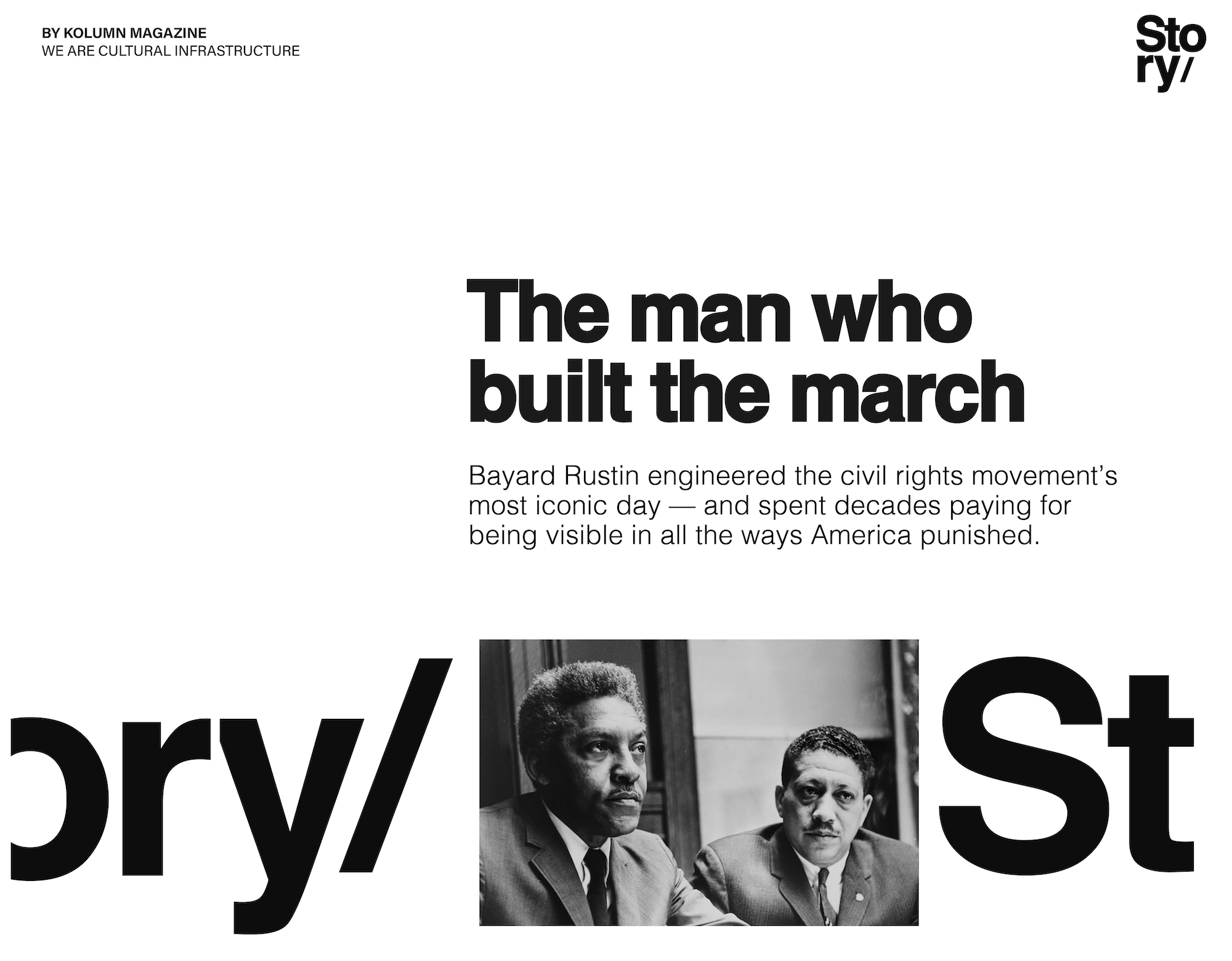
This is one of the cruel ironies of Rustin’s life: he was asked to build movements de-voted to human dignity, while being told—sometimes implicitly, sometimes explicit-ly—that his own dignity was negotiable.
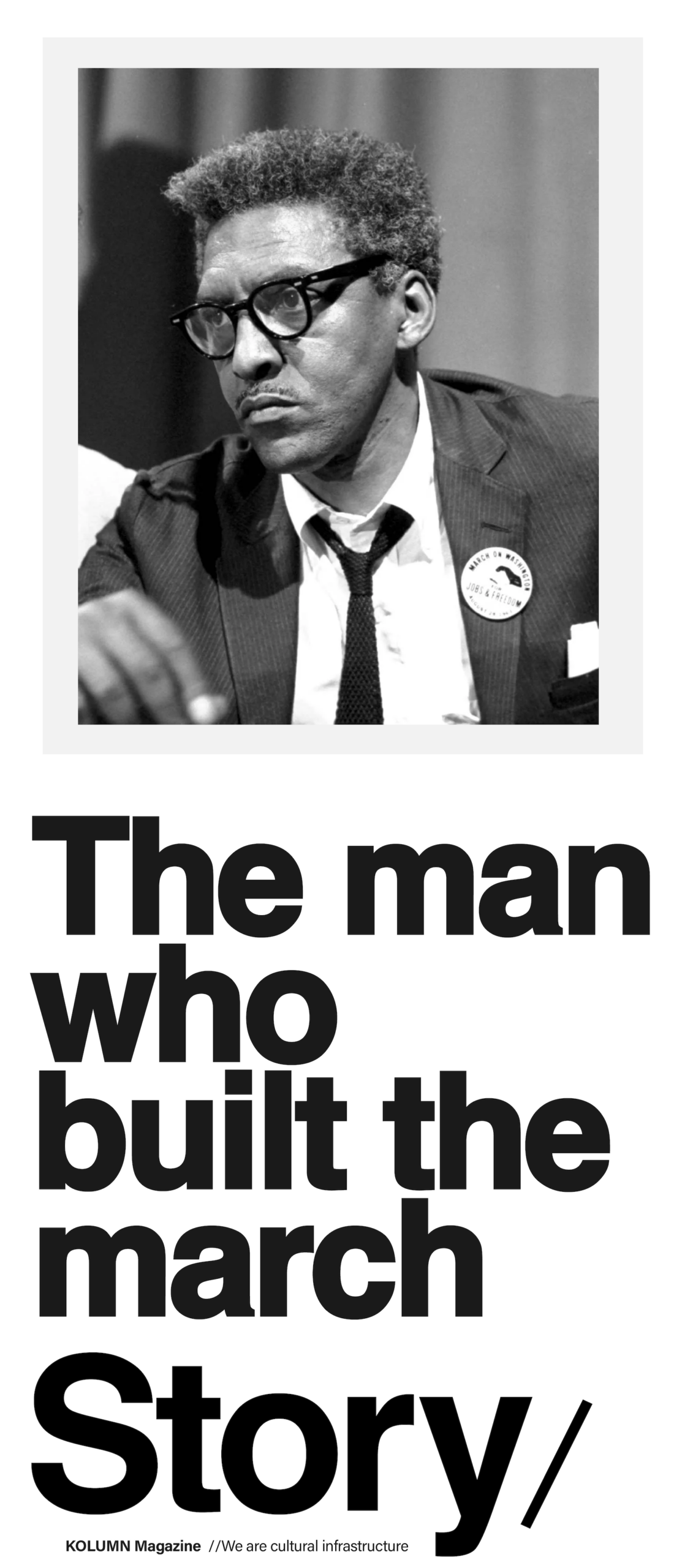
This is one of the cruel ironies of Rustin’s life: he was asked to build movements de-voted to human dignity, while being told—sometimes implicitly, sometimes explicit-ly—that his own dignity was negotiable.
By KOLUMN Magazine
American political memory has a habit of crediting the charismatic and forgetting the indispensable. Bayard Rustin belonged to the second category: the organizer who could translate ideals into action, moral outrage into systems, sermons into schedules. He was, in the phrase often used about him, the man behind the 1963 March on Washington for Jobs and Freedom—the day the country remembers as a national turning point, a civic sacrament, a stage for Martin Luther King Jr.’s “I Have a Dream.” But if the march became a symbol of America’s democratic promise, Rustin’s life became a case study in how that promise is rationed: he was Black in a segregated nation, a pacifist in a militarized century, a socialist-leaning labor strategist in a Cold War culture, and openly gay in a movement dominated by clergy and policed by scandal. The public story of civil rights often wants heroes without complications. Rustin’s story refuses that comfort.
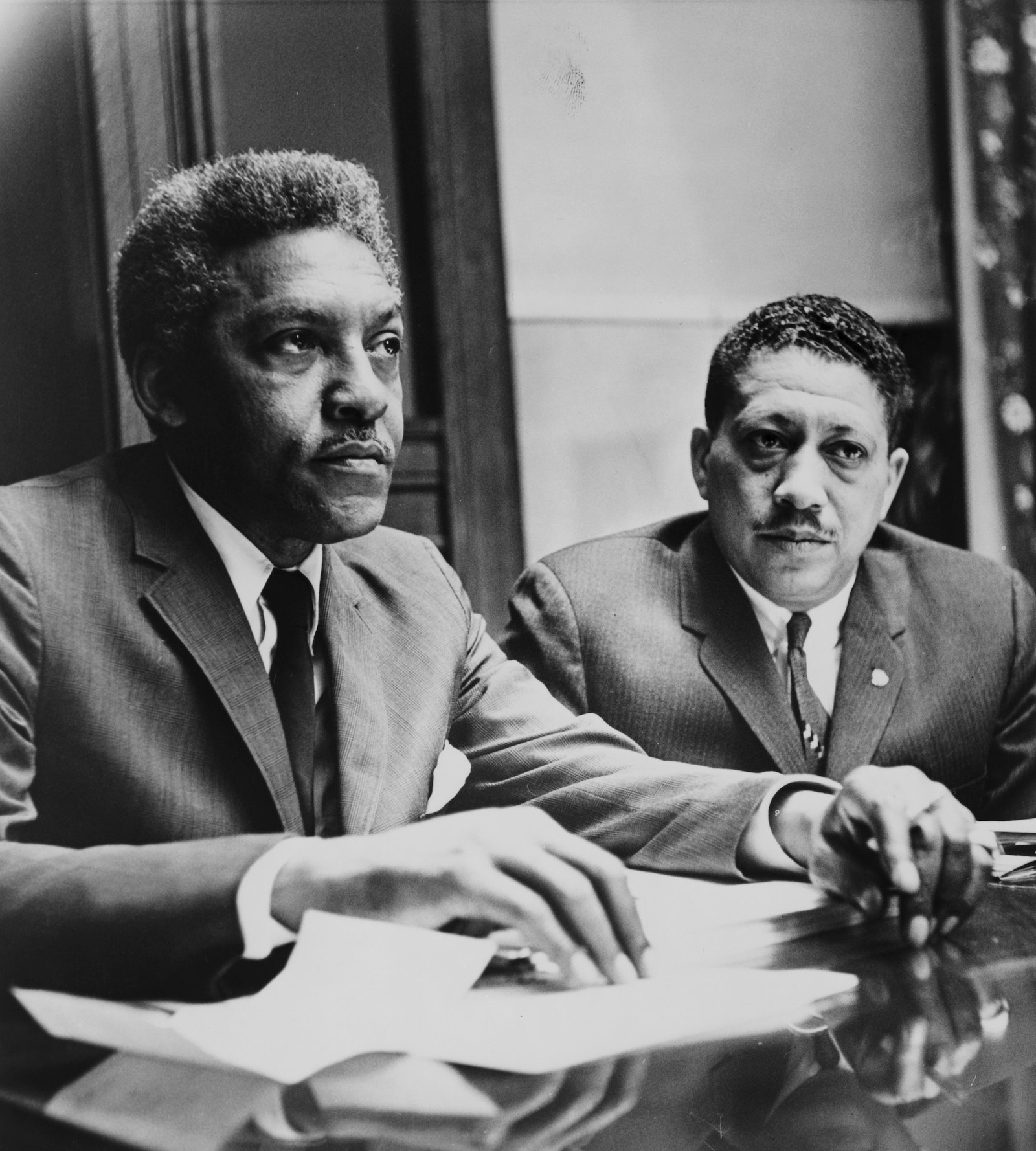
Rustin’s absence from many mainstream retellings was not accidental. It was a political outcome—produced by allies who feared his vulnerability, adversaries who exploited it, and institutions that surveilled him. The FBI kept files on him, as it did on many activists, framing his associations and beliefs as national-security threats. Southern segregationists, including powerful elected officials, used insinuation and exposure as weapons, attempting to make his sexuality and past arrests a public lever to disrupt civil rights planning. Even admirers sometimes described his brilliance with a qualifying clause—brilliant, but—a rhetorical tick that reveals how often his achievements were negotiated against the prejudices of the era.
And yet, Rustin’s life is not merely a tragedy of sidelining. It is also an argument for a deeper definition of leadership. He did not lead by dominating a microphone. He led by building coalitions that could withstand pressure, by developing strategies that could be taught and replicated, and by insisting—sometimes at odds with prevailing fashion—that civil rights required not only moral witness but also durable political and economic power. His work traveled across the mid-century’s defining conflicts: segregation and labor exploitation, war and conscience, sexuality and public respectability, Black liberation and the competing vocabularies of nationalism, integration, and social democracy. In all of it, Rustin kept returning to one deceptively simple principle: humanity is a “single human family,” and movements must be built as if that is true.
A Quaker formation, and the early discipline of dissent
Bayard Rustin was born in 1912 and raised largely by his grandparents in West Chester, Pennsylvania, in a Quaker household that shaped his temperament and his politics. Quaker traditions—especially the emphasis on conscience, pacifism, and the dignity of every person—were not merely spiritual influences for Rustin; they were training grounds. In a country that treated racial hierarchy as social fact and violence as a legitimate instrument of order, Quakerism offered him an alternative moral technology: dissent as daily practice, and nonviolence as method rather than sentiment.
That moral formation met a second education in the ferment of left politics. In the 1930s, Rustin moved through currents that attracted young Black activists who were tired of gradualism and skeptical that American institutions would deliver equality without pressure. Some of Rustin’s early political associations—frequently highlighted by his critics—touched Communist-linked spaces, a fact that later made him vulnerable in the Cold War era. But what mattered for Rustin’s development was not a party line so much as an exposure to organizing: how to build meetings, how to recruit, how to articulate demands, how to frame injustice as a systemic problem rather than a private misfortune. He would later break with Communist organizations when he concluded that their priorities were shifting in ways that subordinated Black freedom to other imperatives.

These overlapping formations—Quaker conscience and organizing practice—help explain something that remained consistent in Rustin’s career: he could speak in the language of moral clarity while thinking in the logic of operations. He was neither purely a moralist nor purely a tactician. He believed that movements needed ethics and infrastructure, and he treated logistics as one of the ways a movement demonstrates respect for human beings. To plan a march is to decide whether people will be safe, whether they will have water, whether they will be marshaled away from panic and provocation. Rustin understood that injustice can be reproduced not only through laws but also through incompetence.
The pacifist as “troublemaker”: War, prison, and a politics of conscience
Rustin’s pacifism was not rhetorical. It had consequences. During World War II, he became a conscientious objector, and he served prison time for refusing to cooperate with military conscription. The experience became another chapter in his political schooling. In confinement, Rustin observed how power works in compressed form: how rules are enforced, how dignity is stripped, how solidarity can be built, and how protest must be both disciplined and creative. Accounts of his life often note that he organized fellow inmates to protest conditions—an early sign of his instinct to turn even punitive settings into sites of collective action.
In mid-century America, pacifism carried suspicion, especially for Black men already treated as presumptively disloyal. A Black pacifist who also moved in left circles could be framed as a threat from multiple directions. Rustin’s insistence on nonviolence, however, was not passivity. It was a strategy rooted in a view of power: violence, he believed, invited repression that the state could justify; nonviolent discipline could expose the state’s brutality and invite broader coalitions to join the cause. This was not a naive belief that oppressors would suddenly grow a conscience. It was a calculation about legitimacy, optics, and the capacity to mobilize ordinary people.
That strategic sensibility made Rustin invaluable to civil rights leaders who wanted to transform moral protest into mass action. It also made him a lightning rod. In a country increasingly defined by anti-communist politics, he could be described as suspect simply because he opposed war or had once been close to left organizations. The FBI’s investigative attention to Rustin—part of a wider surveillance ecosystem—offers a window into how the state treated Black dissent as a kind of criminality.
The first Freedom Ride before it had that name
Long before the 1961 Freedom Rides entered popular memory, Rustin helped organize a 1947 interracial bus journey through the South aimed at testing segregation in interstate travel—the Journey of Reconciliation, sometimes described as the first Freedom Ride. Working with allies in pacifist and civil rights organizations, the journey used nonviolent direct action to challenge Jim Crow practices on buses. Participants were arrested; Rustin himself faced punishment that included time on a chain gang in North Carolina, a reminder that direct action in the South carried physical, legal, and psychological risk.
The significance of that early campaign is twofold. First, it shows Rustin’s long-term commitment to nonviolent confrontation—not as symbolic theatre, but as a practical test of law and power. Second, it demonstrates his early investment in interracial coalition as a tool. The Journey of Reconciliation required Black and white participants to accept danger together, which was both politically potent and personally fraught in a society organized around racial separation. In Rustin’s view, such collaboration was not a sentimental gesture; it was essential to building the kind of political force capable of changing national policy.
The episode also foreshadowed the paradox of Rustin’s career: he was often ahead of the curve in tactics that later became celebrated, but he rarely received the mythic status that attaches to more visible actors. When those later Freedom Rides became iconic, the public story tended to focus on the drama of confrontation and the heroism of the riders. Rustin understood that heroism; he also understood the planning behind it—the recruitment, the training, the legal strategy, the discipline. He was building a movement’s operating system.
Advising King: Nonviolence as craft, not slogan
Rustin’s relationship with Martin Luther King Jr. has often been summarized as mentorship or advisership, but that language can understate what was at stake. King was a young minister thrust into leadership during the Montgomery Bus Boycott, and Rustin was one of the organizers who helped translate Gandhian ideas into practical guidance for a Southern Black church-based movement. Word In Black has described Rustin as part of the organizing genius that advised and assisted King, including in Montgomery, and later served as deputy director and chief organizer of the 1963 march.
The deeper story is about method. Nonviolence requires training; it is not the natural posture of a community under attack. It asks people to absorb humiliation without retaliation, to follow instruction under pressure, to maintain discipline even when provoked. Rustin was skilled at operationalizing that discipline: how to brief volunteers, how to prepare marshals, how to structure marches to reduce chaos, how to negotiate with authorities without surrendering the movement’s demands. His gift was not only belief in nonviolence but also the ability to implement it at scale.
That scalability mattered because the civil rights movement was shifting in the 1950s and early 1960s from localized campaigns to national confrontation. A boycott can be organized within a city; a march on Washington requires systems. Rustin became one of the people who could build those systems. In the process, he also became someone many leaders both relied on and worried about.
The liabilities the movement could not stop fearing
Rustin lived as an openly gay man in a period when homosexuality was criminalized, pathologized, and used as a career-ending scandal. In 1953, after giving a speech in Pasadena, California, he was arrested following a sexual encounter with men in a parked car; he ultimately served time and was forced into the humiliations that came with a “morals” charge—part of a broader legal regime used to target LGBTQ people. The facts of the arrest became a weapon in the hands of opponents, and even some allies treated the episode less as an injustice than as a vulnerability to manage.
If Rustin’s sexuality was one “liability,” his political history was another. His early affiliations with left politics and his pacifism were constantly available for mischaracterization. The FBI’s interest in his alleged ties to communism illustrates how easily dissent could be reframed as subversion. In the civil rights movement, where leaders were regularly accused of communist influence, Rustin’s history offered segregationists an easy line of attack.
The most notorious attempt to weaponize Rustin’s vulnerabilities came in the run-up to the March on Washington, when segregationists sought to discredit him publicly. Accounts of this period describe how Senator Strom Thurmond used an FBI file and brought Rustin’s past arrests before Congress as part of a smear campaign, following positive press about Rustin’s role as organizer. The Washington Post’s later reflections on Rustin emphasize that he ignored criticism and carried out the work anyway, even as the attacks threatened not just his reputation but the viability of the march itself.
This is one of the cruel ironies of Rustin’s life: he was asked to build movements devoted to human dignity, while being told—sometimes implicitly, sometimes explicitly—that his own dignity was negotiable. His story forces a question that remains modern: how many movements for justice reproduce the exclusions of the world they seek to change?
The March on Washington: Turning moral protest into a national event
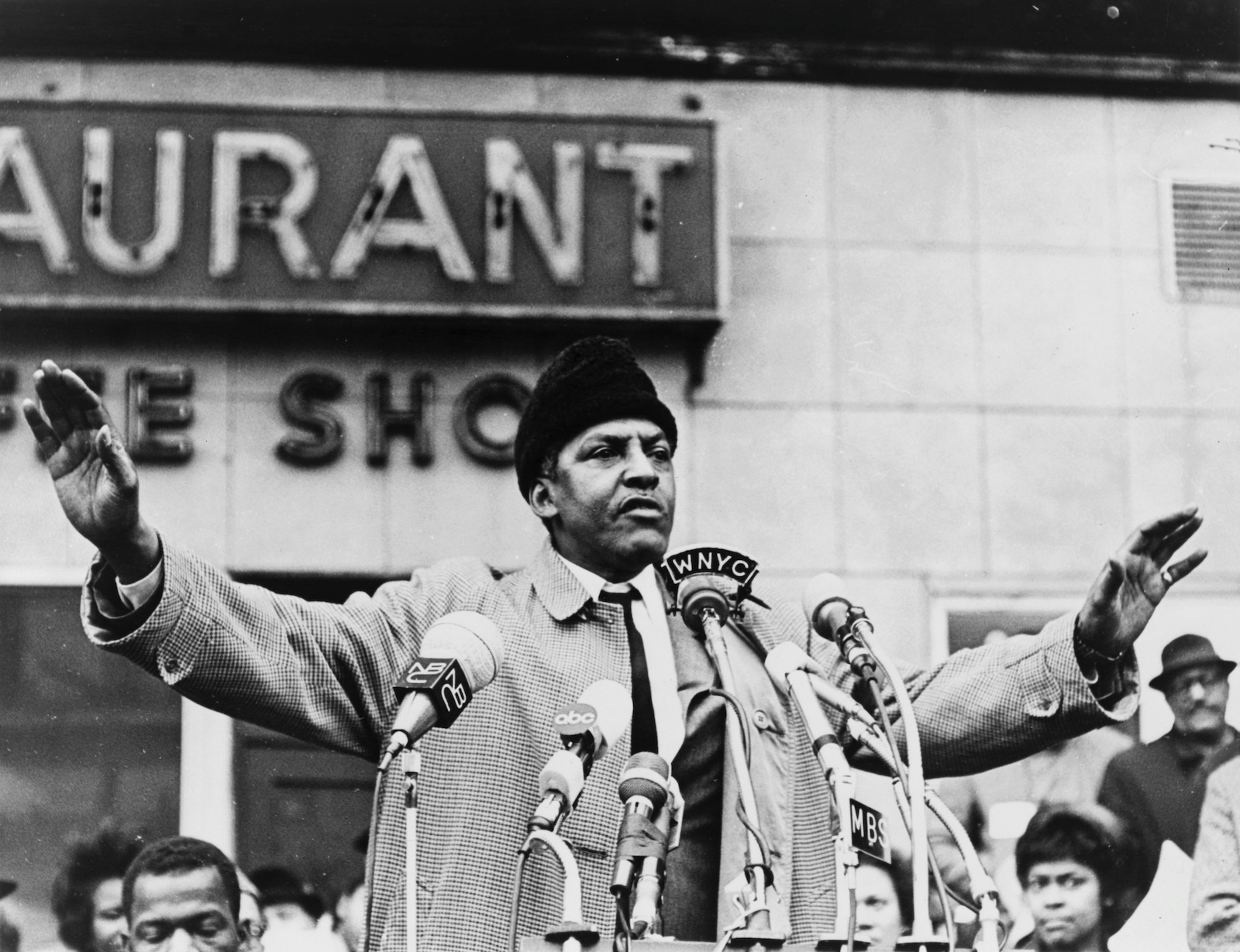
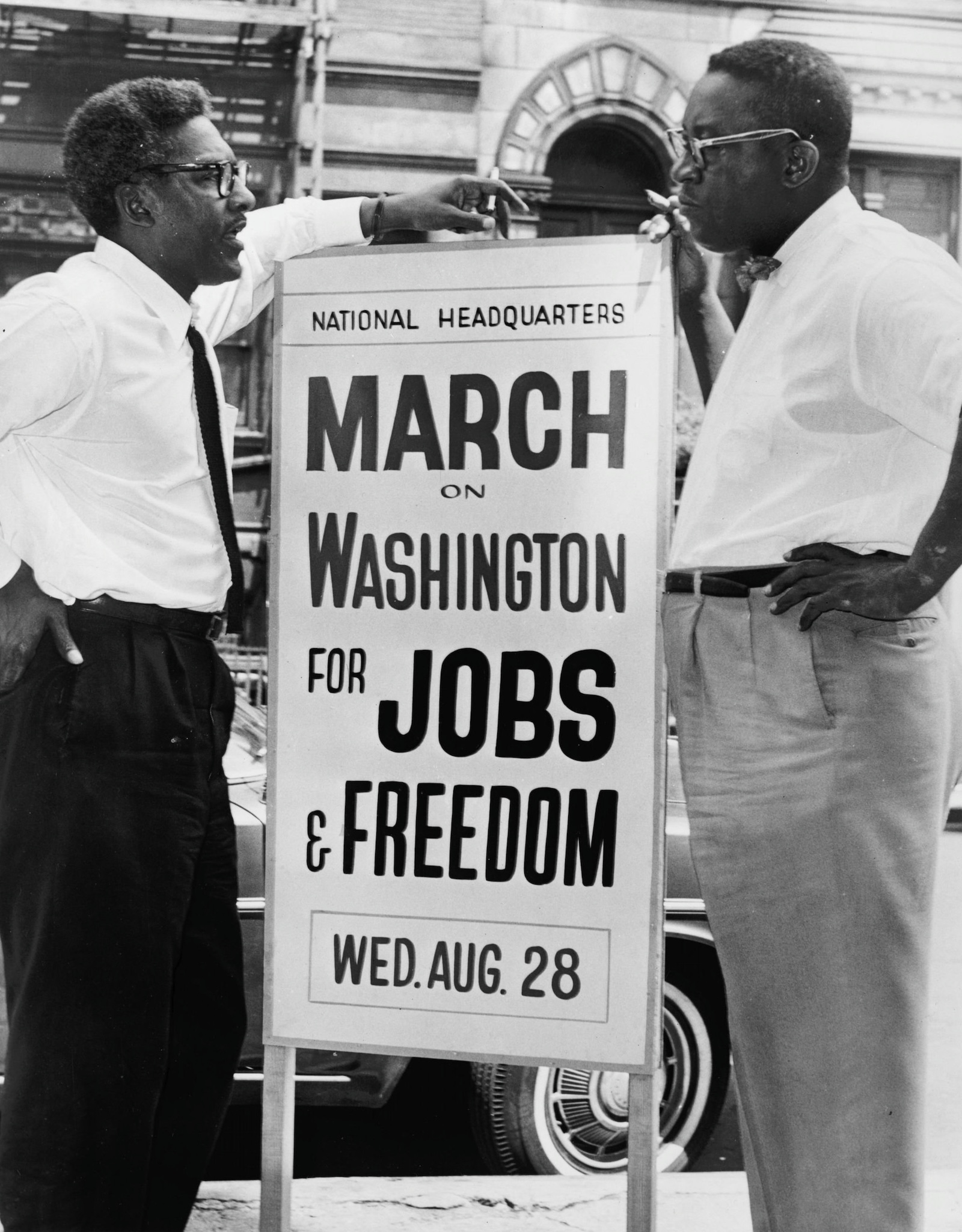
The March on Washington for Jobs and Freedom is frequently remembered as a civil rights demonstration, but its full title carries its deeper ambition: jobs and freedom. It was an economic demand as much as a moral one, an attempt to fuse civil rights with labor rights, racial equality with material security. Bayard Rustin, working alongside A. Philip Randolph and a coalition of civil rights and labor leaders, served as the march’s principal organizer—the person who made the gathering operationally possible. Britannica, among other references, describes Rustin as the principal organizer of the march, which drew roughly 250,000 people to the National Mall.
To say he “organized” it is to understate the job. The march required negotiations with the federal government and law enforcement; careful planning to prevent violence; transportation coordination for tens of thousands; stage management; press strategy; and a disciplined program that could hold a diverse coalition together. Rustin’s skill set—logistics, negotiation, coalition maintenance—was unusually suited to this task. He built an event that would be powerful, peaceful, and persuasive, and contemporaries recognized that the triumph was not inevitable but engineered. A Washington Post remembrance from 1987 described Randolph as the march’s titular director, but Rustin as the planner and “detail man” whose organizational work made the massive demonstration function.
That detail work had political meaning. A march that descended into violence could have been used to justify repression and to discredit civil rights legislation. Rustin’s commitment to nonviolence was therefore not simply ethical; it was strategic defense. The movement’s credibility depended on its ability to hold discipline in the face of provocation. Rustin organized marshals, managed schedules, and designed the day as a demonstration of civic competence. The march, in this sense, was not just a protest. It was a performance of democratic belonging—Black Americans asserting their right to inhabit the national story.
Yet Rustin’s relationship to the march remained complicated. The movement needed his genius, but some leaders feared the cost of associating too closely with him. He worked anyway. He carried the clipboard anyway. In doing so, he helped create one of the most iconic scenes in American political history, while remaining vulnerable to those who wanted to reduce him to a scandal.
After the march: Labor, coalition, and the hard work of economic justice
If the march is the moment most associated with Rustin, his later work reveals his deeper political theory. Rustin believed civil rights victories could not be sustained without economic power, and he devoted increasing energy to forging alliances between Black communities and organized labor. In 1965, he helped found the A. Philip Randolph Institute, designed as a Black-labor alliance capable of advancing social and economic justice for working Americans. The institute’s own history notes that Randolph and Rustin founded it in 1965 to continue the struggle for social, political, and economic justice. The AFL-CIO’s labor-history profile emphasizes that Rustin served as executive director for several years and treated labor coalition-building as essential to securing jobs and freedom.
This focus can look less glamorous than direct action, but Rustin understood that policy, elections, and labor institutions shape the daily life of ordinary people. He was wary of a civil rights politics that remained perpetually in protest mode without consolidating gains through durable institutions. That belief put him at odds with some younger activists who were turning toward Black Power politics and who viewed interracial coalitions with skepticism. Rustin did not dismiss that skepticism; he simply insisted that the arithmetic of power required allies and systems, not only slogans.
In later writing and speeches—some of which were published in intellectual magazines—Rustin argued that movements evolve. Protest can crack open the political imagination, but it must eventually translate into governance, budgets, and policy. Even when one disagrees with his conclusions, the structure of his thought is instructive: he treated civil rights not as a single moral drama but as a long campaign requiring phases, institutions, and strategy.
His labor focus also clarified the March on Washington’s meaning. The march was not simply a demand for inclusion at lunch counters; it was a demand for inclusion in the economy. Rustin believed dignity required work, wages, housing, and access to opportunity—not as charity, but as rights. Later reflections on civil rights anniversaries have emphasized that Randolph and Rustin were “chief architects” of the march and that its demands included full employment and labor justice.
The contested legacy: Cold War politics, criticism, and the cost of pragmatism
Rustin’s later political positioning has provoked debate among historians and activists. As the Cold War intensified and global politics reshaped liberal coalitions, Rustin sometimes adopted positions that critics viewed as overly aligned with establishment foreign policy. Even sympathetic accounts note that his anti-communism and his belief in certain forms of U.S. liberal internationalism complicated how later generations understood him. The point is not to litigate every position here, but to recognize that Rustin was a strategist who believed politics required trade-offs—and he was willing to be unpopular when he thought a coalition could not be built otherwise.
This pragmatism, however, was never merely careerist. Rustin had already paid too much—through prison, surveillance, and sidelining—to be motivated only by acceptance. His commitment to institution-building suggests he wanted victories that lasted. In that sense, his legacy sits in tension with the romantic desire for purity that sometimes animates activist storytelling. Rustin’s life asks whether movements can afford purity when the opposition is ruthless—and whether pragmatism becomes a form of surrender when it forgets the people at the margins.
That question becomes even sharper when one considers how Rustin’s sexuality shaped his political options. Being openly gay in mid-century America meant that any mistake could be weaponized, any rumor could become a career-ending scandal. It also meant that some leaders treated him as expendable, even as they depended on his competence. The vulnerability did not vanish when the civil rights movement gained moral authority; it simply shifted forms.
“Openly gay” before it was safe: The long arc to LGBTQ recognition
In the 1950s, Rustin’s openness about his sexuality made him exceptional. It also made him a target. The Guardian has described how his open homosexuality was regarded as a liability in the early 1960s, particularly in a movement dominated by clerics, and how his 1953 arrest was used to undermine him. That tension—the movement’s dependence on a gay strategist, paired with fear of public association—became a recurring theme in Rustin’s life.
Decades later, recognition arrived in ways that revealed what had been denied. In 2013, President Barack Obama awarded Rustin the Presidential Medal of Freedom posthumously, explicitly naming both his civil rights work and his LGBTQ significance. In remarks at the Medal of Freedom ceremony, Obama noted that Rustin had been denied his rightful place in history for decades because he was openly gay, and that the nation could not change that past but could honor him and “take our place in his march toward true equality.” The White House archival page describing Rustin’s medal citation emphasized his role as an advisor to King, his promotion of nonviolent resistance, his participation in early Freedom Rides, and his work for marginalized communities, while also noting that he stood “at the intersection” of several fights for equal rights as an openly gay African American.
Recognition also came through legal repair. In 2020, California Governor Gavin Newsom posthumously pardoned Rustin for his 1953 conviction related to consensual same-sex activity, framing the pardon as an act of confronting historic homophobia in the justice system and launching a process for others prosecuted under similar discriminatory laws. The pardon did not erase the harm Rustin experienced, but it clarified something important: the scandal was never Rustin’s life; it was the law and the culture that criminalized it.
Contemporary Black media outlets have emphasized this dimension of his story. The Root, for example, covered Rustin’s pardon by stressing the compounded hardship of being both Black and gay at the height of the civil rights era and noting the belated nature of institutional recognition. Ebony, in features that place Rustin among Black LGBTQ icons, similarly frames him as a figure whose impact on civil rights cannot be separated from the persecution he faced as a gay man.
Love, law, and survival: The adoption of Walter Naegle
One of the most telling details of Rustin’s life is also one of the most quietly devastating: because same-sex marriage was illegal and largely unimaginable in legal terms, Rustin and his partner, Walter Naegle, used adult adoption as a means of securing legal recognition and protection for their relationship. That fact—documented in later archival and historical accounts—speaks to the everyday improvisations LGBTQ people were forced to make in order to protect one another.
At the Medal of Freedom ceremony, Naegle accepted the award on Rustin’s behalf, a public moment that carried private history: the partner once rendered invisible by law now standing in a national spotlight to receive the highest civilian honor for the man he loved. Rustin’s earlier erasure was so thorough that even mainstream obituaries and institutional biographies sometimes minimized this relationship, reflecting the norms of the time. The later public acknowledgment of Naegle’s role reveals how recognition can be both celebratory and corrective—an attempt to restore what the culture had refused to name.
The surveillance state and the politics of character assassination
Rustin’s story cannot be told without acknowledging the machinery built to neutralize people like him. The FBI’s published “Vault” materials on Rustin confirm that he was investigated, with attention to alleged ties to communism, and that files largely date to the 1960s. Surveillance was not passive record-keeping; it was a form of political control, a way to gather material that could be used directly or indirectly to disrupt organizing. In Rustin’s case, the existence of a file intersected with the politics of exposure: opponents could seek to obtain and publicize damaging information, as happened in the lead-up to the march.
The method was familiar: portray a movement leader as deviant, disloyal, or dangerous. In Rustin’s case, it was easy for adversaries to pile labels—communist, draft dodger, pervert—because the culture had already provided scripts for each accusation. The point was not simply to attack Rustin; it was to destabilize coalitions by making association with him risky. That method remains relevant today, even when the details change. Rustin’s experience is a reminder that movements do not only fight their public opponents; they also fight the quiet coercions that occur through stigma, rumor, and state surveillance.
The public memory problem: Why Rustin kept disappearing
If Rustin was so central, why did he remain so marginal in popular narratives for so long? The easiest answer is homophobia, and it is a major part of the truth. But Rustin’s erasure also reflects a broader tendency in American storytelling: to prioritize charismatic oratory over organizational infrastructure. The civil rights movement is often taught as a sequence of speeches and spectacles rather than as a sequence of campaigns with staff meetings, budgets, coalition disputes, legal strategies, and logistical dilemmas. Rustin lived in that backstage world. He was the person who made it possible for other people to deliver history in front of cameras.
There is also a discomfort in Rustin’s ideological complexity. He does not fit easily into a single political brand. He was a pacifist who worked with labor institutions. He was a radical who also believed in coalition and electoral politics. He debated Black nationalists without caricaturing them, critiquing ideas while acknowledging the anger that produced them. The Atlantic has noted moments in which Rustin engaged opponents like Malcolm X with a mix of respect and critique, refusing easy moralizing while pressing for strategic clarity. Complexity is harder to canonize than purity, and Rustin’s life offers no clean narrative arc.
Finally, Rustin’s marginalization was not only imposed from outside. It was also, at times, a strategy chosen by the movement itself—leaders making decisions about what the public could “handle,” or what donors and politicians might tolerate. Rustin accepted some of this sidelining because he believed the work mattered more than the spotlight. But acceptance should not be mistaken for consent. To give up visibility as a tactic is still to pay a price.
The late-life turn toward gay rights, and the meaning of belatedness
Rustin did not become primarily identified as a gay-rights activist until later in life, in part because the civil rights movement’s internal politics and America’s legal regime made such advocacy professionally risky. When he did speak more directly to LGBTQ issues, the significance was symbolic: here was a civil rights architect insisting that sexuality, too, belongs inside the human-rights framework. The belatedness of that public turn underscores a historical reality: movements are often sequential not because injustices are separate, but because the political cost of addressing them simultaneously is high.
That cost was exactly what Rustin lived. His “intersection” was not a theory; it was a vulnerability. Yet it is also what makes him increasingly legible to contemporary audiences. In an era when activists and scholars speak more openly about overlapping systems of oppression, Rustin looks less like an anomaly and more like a prototype—someone who was living the complexity before there was a popular vocabulary for it.
What Rustin leaves us: Leadership as infrastructure
Rustin’s legacy is sometimes reduced to a single phrase—“the organizer of the March on Washington”—but his deeper contribution is a model of leadership that treats infrastructure as moral work. He believed nonviolence is a discipline that must be practiced; coalition is a craft that must be maintained; and economic justice is inseparable from civil rights. His life suggests that the future belongs not only to those who can inspire but also to those who can build.
That model is increasingly relevant. Contemporary movements—whether for racial justice, LGBTQ rights, labor rights, or democratic reform—face the same operational questions Rustin spent a lifetime answering. How do you scale without collapsing? How do you protect people while confronting power? How do you keep a coalition together when its members disagree? How do you convert public sympathy into policy outcomes? Rustin’s biography is a kind of manual in narrative form: it shows what happens when those questions are answered well, and what happens when prejudice prevents a movement from fully embracing its own builders.
In that sense, Rustin’s story is not only about correction—adding a missing figure back into the timeline. It is also about rethinking what counts as history. If we tell civil rights history as a parade of great speeches, we will keep missing the people who make change possible. If we tell it as an ecosystem—organizers, strategists, logistics, labor alliances, legal maneuvers, moral arguments—we begin to see how someone like Rustin could be simultaneously central and hidden.
That is the final, unsettling truth of his life: America did not fail to notice Bayard Rustin. America often chose not to.