

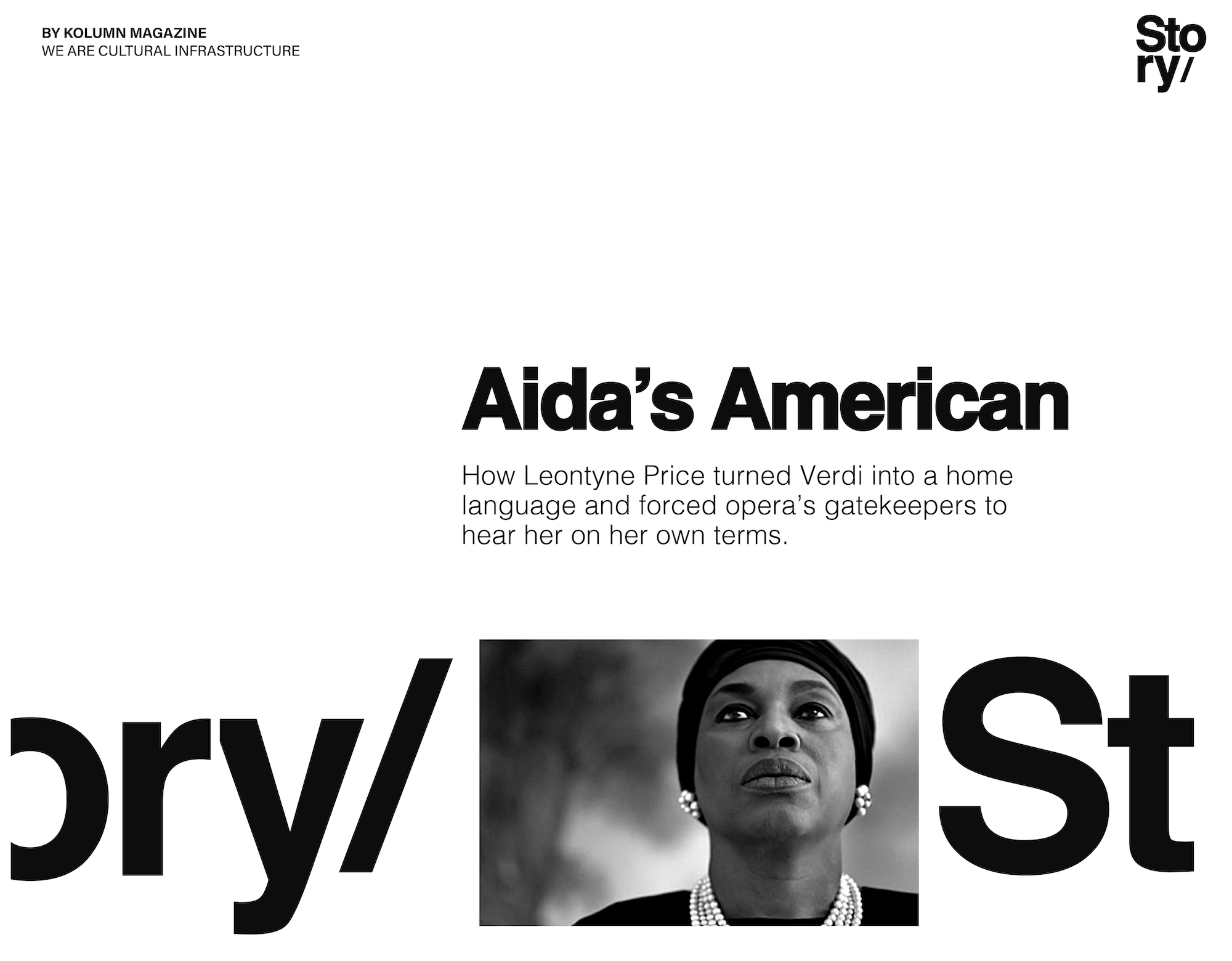
Price did not merely arrive. She navigated. She chose repertoire with strategy. She protected her instrument.
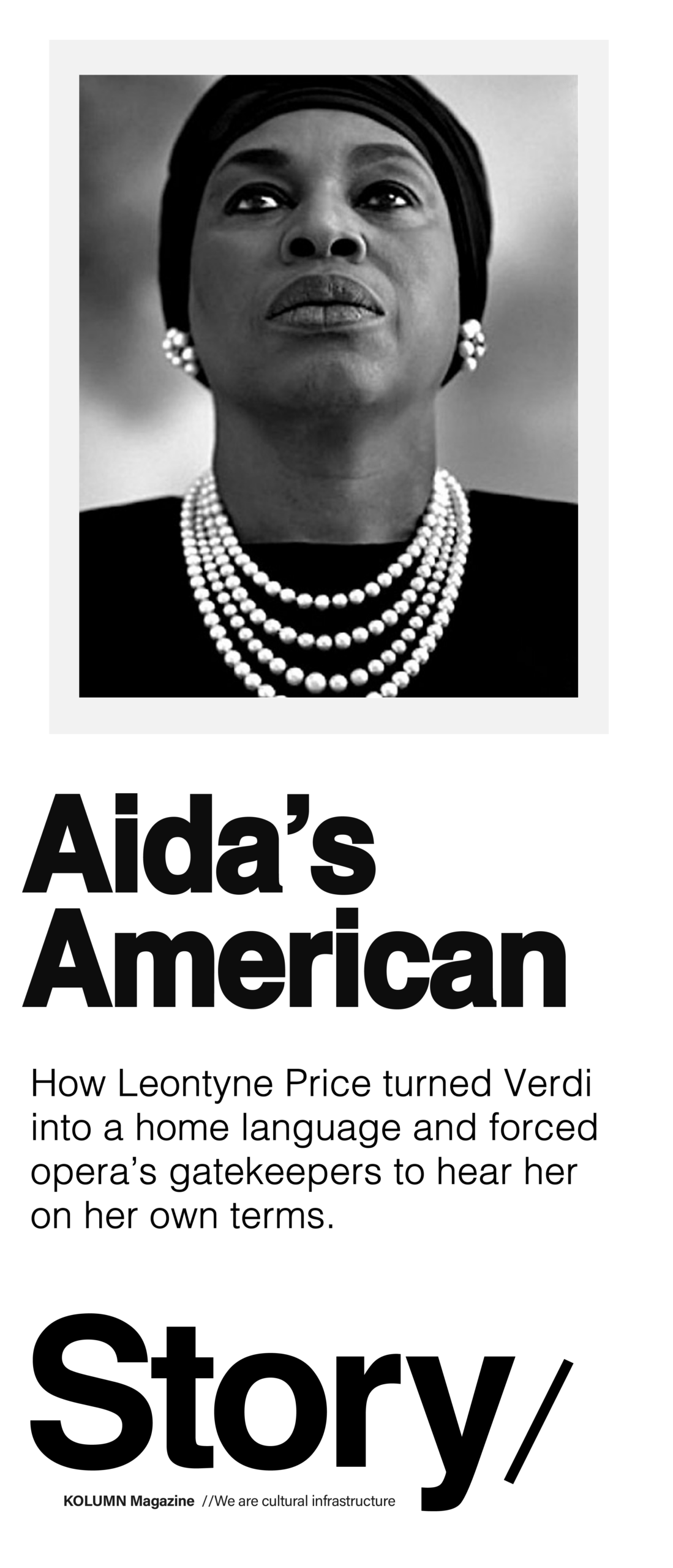
Price did not merely arrive. She navigated. She chose repertoire with strategy. She protected her instrument.
By KOLUMN Magazine
There are artists whose greatness is so widely agreed upon that the argument ends before it begins. Leontyne Price is one of them. The consensus about her voice—its velvet sheen, its bronze core, the way it could float a line and then suddenly blaze—is so settled that it risks turning her into a monument. Monuments do not sweat; they do not doubt; they do not negotiate contracts; they do not read reviews with a knot in the stomach; they do not walk into rehearsal rooms carrying the unspoken knowledge that they are being weighed not only as singers but as symbols.
Price, born Mary Violet Leontine Price in Laurel, Mississippi, in 1927, grew up under the everyday enforcement of segregation. Her childhood world—its schools, its churches, its public spaces—was bounded by rules designed to make Black life smaller. She did what so many great American artists have done: she refused to stay inside the boundary. She left the South, trained in New York, and built an international career at the precise intersection of artistry and politics where a single human being can become, to admirers and critics alike, an event.
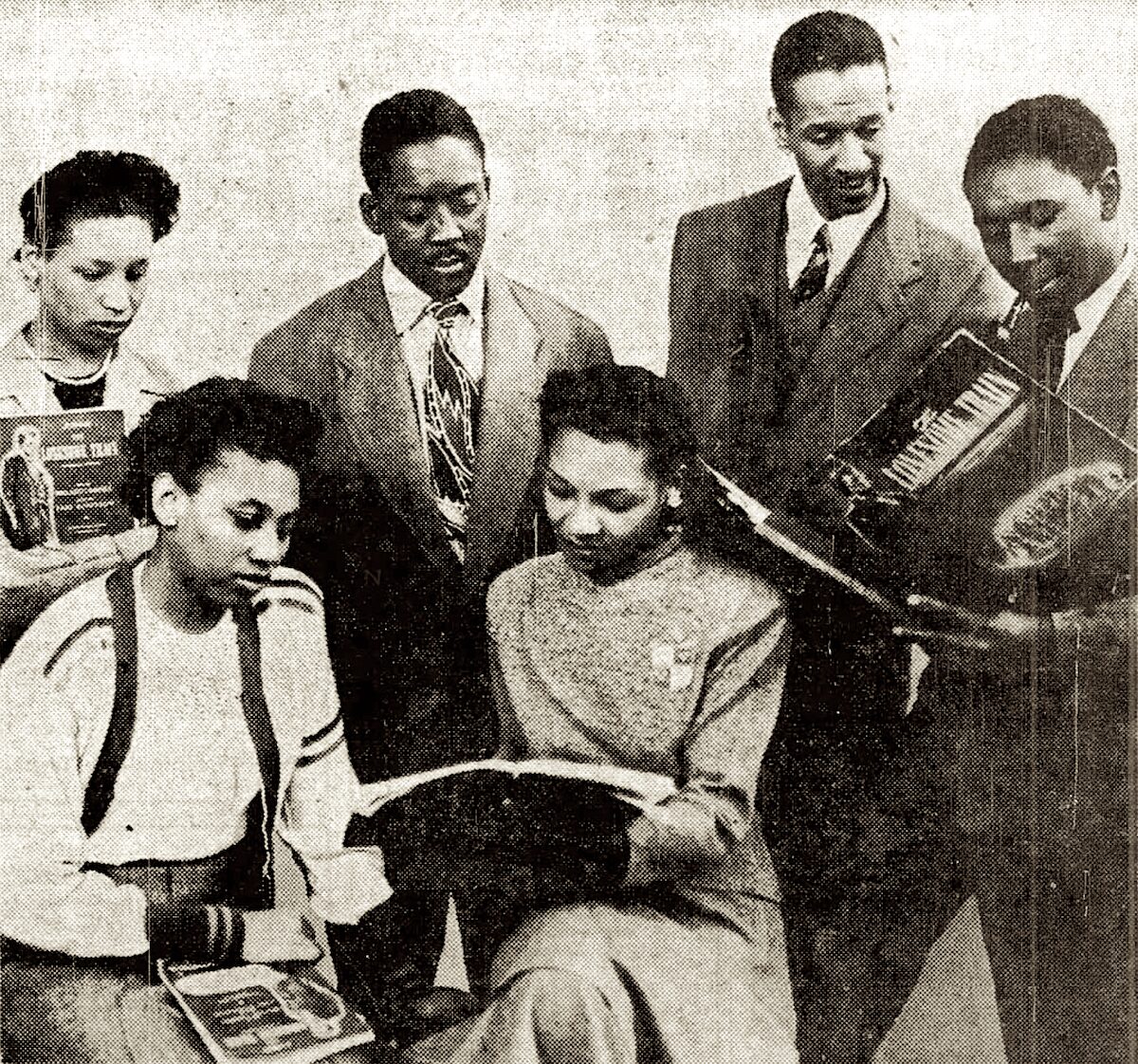
Price’s story is sometimes summarized as a series of “firsts” and “breakthroughs”: the Black soprano who became an international star; the singer who helped open doors at the Metropolitan Opera; the woman whose Aida became a reference point so enduring that later generations still measure themselves against it. Those facts are true, but they are not the whole truth. What her life shows—more revealing, and more difficult—is how excellence behaves when it is forced to carry social meaning. Price did not merely arrive. She navigated. She chose repertoire with strategy. She protected her instrument. She managed the psychological pressure of being watched as “the representative” even when she wanted to be treated as simply “the soprano.” She also accepted, at moments, the usefulness of symbolism: she understood that a voice could change minds in ways that arguments and editorials could not.
To write about Leontyne Price with journalistic integrity is to do two things at once. First, to take the music seriously—the technique, the repertoire, the craft, the discipline behind the glamour. Second, to treat the social context as more than backdrop: the context shaped the terms of her career, the opportunities that arrived late or in coded form, the assumptions she had to outsing, and the tightrope she walked between being embraced and being contained.
Laurel, Mississippi: The making of a musician under Jim Crow
Price’s beginnings were not the fairy tale version of discovery, but they were musical. Laurel, Mississippi, was a segregated town, and Price grew up in the portion where Black residents were expected to live and stay. She sang in church, heard music as a communal language, and learned early the disciplined beauty of congregational sound—voices blending, rising, and landing together. Accounts of her childhood often emphasize her mother, a nurse and midwife with a soprano voice, and a household where music was both pleasure and practice.
If you want to understand why Price’s later singing could feel at once sumptuous and steady, you could do worse than to begin with church. Church singing teaches breath not as an abstraction but as survival: you must carry the phrase, you must arrive at the cadence, you must hold your part against the room. It also teaches performance as service. In that world, the point is not to display yourself but to lift something larger than yourself—until, one day, your gift is so obvious that the room reorganizes around it.



Another key moment, repeated in biographies and institutional profiles, is her childhood encounter with Marian Anderson’s example—an early hint that a Black classical artist could be more than an exception. Anderson, who had shattered barriers and absorbed indignities with stoic poise, represented both the possibility and the price. For Price, the lesson was not simply “this can be done,” but “this is what it costs to do.”
Training and ambition: Leaving the South for the discipline of New York
Price’s route into professional singing moved through formal study. She attended Central State University in Ohio and later studied at Juilliard. In the mid-20th century, classical training in America still carried old-world assumptions: the European canon was treated as the highest language of seriousness; opera houses were bastions of tradition; and race was an unspoken rule—sometimes enforced with policy, sometimes with custom, often with the quiet authority of “how things are done.”
At Juilliard, she studied voice and refined the technical foundations that would later make her seem inevitable. Technique is the least romantic part of operatic mythmaking, but it is the part that explains longevity. Price’s sound was not only beautiful; it was engineered. Her breath support, the placement that allowed a rich timbre without heaviness, the controlled spin of sustained lines—these are not gifts that arrive fully formed. They are built, day after day, under teachers who demand consistency and under a student who can tolerate repetition without losing imagination.
She also entered adult life as a Black woman training for a profession in which she would rarely see herself reflected back. That absence matters. When you do not see people like you in the roles you want, the ambition itself can feel like a transgression. What Price carried, even early, was a refusal to be apologetic about wanting the highest stage.
Early career: “Porgy and Bess,” diplomacy, and the complicated road to opera
For many Black classical singers of Price’s generation, “Porgy and Bess” functioned as both opportunity and trap: a vehicle that provided major employment and international exposure, but also a work burdened by debates about representation. Price performed in productions connected to that ecosystem early in her career, including the State Department–linked touring world that treated cultural performance as a Cold War instrument.
Here is one of the central tensions of Price’s story: she emerged at a time when America wanted to project an image of democratic openness abroad even as segregation persisted at home. The arts became proof-of-concept: look, the nation said, at our Black excellence; look at the refinement; look at the “progress.” Yet that projection did not automatically translate into equal treatment on American stages. In other words, visibility could be used without equality being granted.
This is where Price’s strategic intelligence becomes part of her artistry. She did not treat career choices as simply musical; she treated them as structural. Her management, her repertoire, her timing—these were ways of negotiating a system that might celebrate her while still trying to keep her in a symbolic box.
The NBC “Tosca” and the power of the camera
In 1955, Price portrayed the title role in Puccini’s Tosca with NBC Opera Theatre—an appearance often cited as a landmark: a major televised opera starring a Black soprano at a time when many opera stages remained informally segregated in practice, if not explicitly in policy. The significance was not only that she sang the role, but that she did so in America’s living rooms.
Television changed the dynamics of gatekeeping. An opera house can control who enters, who sits where, what the social atmosphere feels like. A broadcast dissolves that control. Viewers can fall in love with a voice before they have been taught whom to consider “appropriate” for the repertoire. And while television has its own biases, the camera can also democratize awe: it can make an artist undeniable.
For Price, the NBC moment helped build a public identity that preceded her onstage. By the time she arrived at major opera houses, she was not only auditioning for management; she was arriving with a story already circulating—one that suggested she belonged.
Europe and the international circuit: Karajan, Vienna, and the making of a Verdi soprano
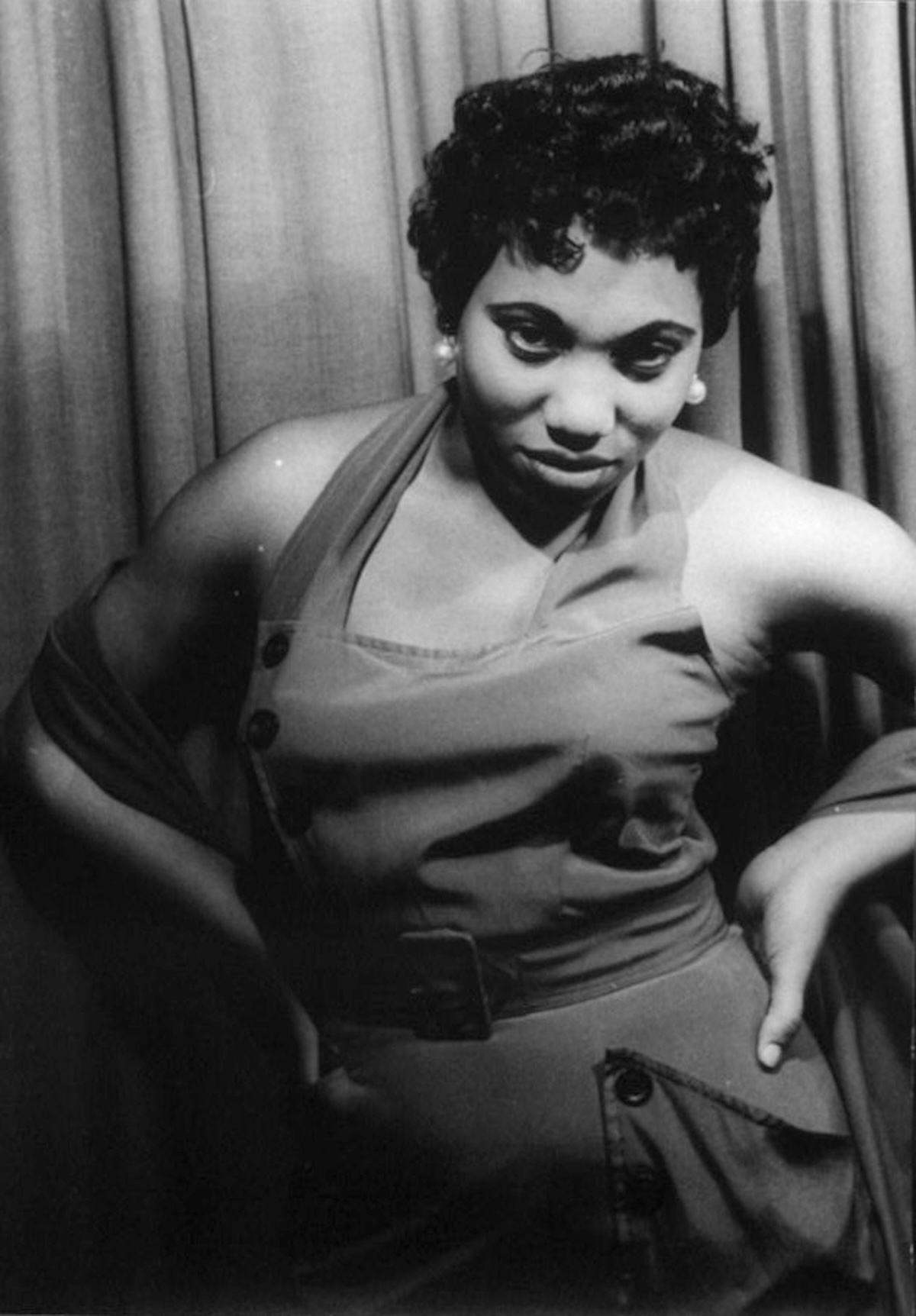
Price’s European success—especially in the late 1950s—confirmed what American institutions were still slow to fully accept: she was not merely a talented singer; she was a world-class Verdi soprano. Biographical accounts emphasize her relationships with major conductors and houses, including Vienna and Salzburg, and her emergence in the repertoire that would define her public legend, particularly Verdi.
It is worth pausing on the concept of a “Verdi soprano,” because it is not just a category; it is a test. Verdi demands the full spectrum: lyrical line, dramatic attack, endurance, and the ability to embody moral intensity without turning it into melodrama. The voice must be warm enough to invite intimacy and strong enough to cut through orchestral weight. The singer must shape long arches of sound and still deliver incisive consonants. It is the kind of writing that exposes weaknesses quickly.
Price’s gift was that she could meet Verdi’s demands while making them sound generous rather than punishing. She sang with an ease that implied abundance. The core of her instrument had a kind of dark radiance—“creamy,” “rich,” “luscious” are the adjectives that recur in descriptions, because listeners reach for texture when faced with a sound that feels tactile.
Europe also offered something else: a partial relief from America’s racial choreography. That relief should not be romanticized—European stages had their own prejudices—but many Black American artists have described the difference between being treated as a curiosity at home and being treated as a professional abroad. Word In Black, reflecting on Black excellence in classical music, points to the way artists like Price and Marian Anderson found European audiences willing to embrace them, even as Jim Crow structured their home lives.
The Metropolitan Opera debut: January 1961 and the sound of arrival
Price’s Metropolitan Opera debut came in 1961 as Leonora in Verdi’s Il trovatore, the beginning of a long association that would make her one of the defining Met artists of the century. Even the bare facts—date, role, institution—carry symbolic weight. But the deeper story is about what it means to debut not as an experiment, not as a “special case,” but as a prima donna.
Accounts of that debut emphasize the extraordinary audience response—an ovation so prolonged it became part of the folklore around her. That kind of reaction is not simply about social progress; opera audiences can be brutal egalitarians when they choose. They can also be sentimental. But sustained ovations usually happen when a room believes it has witnessed something that cannot be repeated.
What made Price’s debut different was that it was, in a sense, overdetermined. The Met in 1961 was not a neutral platform. For a Black soprano, the stage carried an invisible set of questions: Would she be accepted? Would she be tolerated? Would she be treated as an artist rather than as an argument? Price answered with sound—sound that made the questions feel petty.
The repertoire mattered, too. She did not debut as Aida, the enslaved Ethiopian princess. She debuted as Leonora, a noblewoman—an artistic choice that also functioned as a cultural statement about dignity and role assignment. The distinction may sound like optics, but in opera optics are part of meaning: who is permitted to embody nobility, who is confined to roles framed by servitude, who is allowed to be “the lady” rather than “the symbol.” Biographical accounts describe how advisors urged her not to arrive at the Met in a racially stereotyped role.
Price’s Met career spanned roughly a quarter century, including performances across major roles and a sustained relationship that marked her as the first Black singer to build that kind of long-term Met presence. That longevity matters because it is the difference between a door briefly opened and a door permanently widened.
The Lincoln Center opening and “Antony and Cleopatra”: ambition, spectacle, and risk
If Price’s Met debut announced her, her participation in Samuel Barber’s Antony and Cleopatra in 1966 tied her to one of the institution’s most symbolically loaded moments: the opening of the new Metropolitan Opera House at Lincoln Center. The production itself became notorious for its troubled reception, often described as overburdened by spectacle. But for Price, the moment still signaled institutional trust: she was cast as Cleopatra in a grand American commission designed to proclaim a modern Met.
Opera history is full of paradoxes like this: an artist can deliver something extraordinary inside a production that is judged, overall, as a misfire. The misfire becomes the headline; the singing becomes the surviving memory. For Price, the role added to her aura of scale. Cleopatra is a part that invites both vocal glamour and dramatic intelligence. Even in a flawed staging, she embodied the idea that the Met’s future could be voiced by a Black woman without apology.
A later New Yorker piece, recalling Met history, notes the enduring resonance of Antony and Cleopatra in institutional memory—often via clips of Price that continue to circulate as shorthand for the era. That is one measure of legacy: the moment remains useful not merely as a curiosity but as a reference point.
Recordings and the art of permanence: what Price left behind
Opera is famously ephemeral. Even in the best houses, sound evaporates the moment it is made. Recordings are the closest thing the form has to permanence, and Price recorded extensively—arias, full operas, recitals—leaving behind a catalog that still functions as both education and pleasure.
The Recording Academy credits her with 13 competitive Grammy wins and 25 nominations—numbers that are not mere trivia but evidence of how widely her artistry was recognized across decades. Her discography includes studio albums that helped define her public persona: collections of Verdi and Puccini arias, recital programs, and recordings that capture not only her voice but her interpretive priorities.
One of the key themes in descriptions of her recorded work is recognizability. Some singers are excellent but chameleonic; others are instantly identifiable within a single phrase. Price belonged to the second category. That kind of sonic signature is not just a vocal trait; it is interpretive identity. It is how a singer makes repertoire feel as if it is being spoken by a particular consciousness.
Her recordings also widened access. For listeners who never entered an opera house—because of cost, geography, intimidation, or exclusion—records provided a private entrance. In the 1960s and 1970s, when mainstream cultural institutions still coded opera as elite, the ability to bring Price’s voice into a living room mattered. If the NBC Tosca put her on television, recordings kept her there, repeatable and intimate.
The question of “firsts,” and why they are never only celebratory
Price is often described as the first African American soprano to achieve international acclaim and as a barrier-breaking figure at the Met. These descriptions are accurate, but journalism should not treat “first” as a self-contained compliment. A first is also evidence of a system that prevented others from arriving sooner.
What Price navigated was not only racism in its overt forms but bias in its institutional forms: assumptions about what audiences would accept, beliefs about what a Black singer “should” sing, and the psychological pressure of being treated as an exception. She also navigated the politics of representation inside Black America, where classical music could be seen as assimilationist or distant from community life. Her career required her to live in a space where she could be criticized from multiple directions: too “highbrow” for some, too “Black” for others, too “symbolic” for those who wanted art without politics.
The Guardian, in an article that touches on Black opera history, quotes Price pointing to the ongoing absurdity of opera’s lack of Black “heroes,” given the depth of available talent. This is not nostalgia; it is critique. It suggests that even after Price, the field still struggled to transform individual breakthroughs into systemic change.
Ebony, writing about Black presence in opera, places Price among the pantheon of celebrated Black women who earned global respect in the classical world. The phrasing matters: “long been some of the most respected.” That is both a celebration and an indictment. Respect did not automatically yield equal access, equal casting, or equal institutional support. It often yielded admiration at a distance—a kind of praise that does not necessarily redistribute power.
Craft, repertoire, and the discipline of saying “no”
One of the least discussed aspects of operatic greatness is refusal. The myth is that a great singer says yes to everything and conquers all roles. In reality, longevity often depends on saying no—no to roles that sit wrong in the voice, no to schedules that threaten stamina, no to productions that treat the artist as replaceable.
Price was known for repertory choices that aligned with her strengths: Verdi’s middle-period heroines, certain Puccini roles, and recital work that allowed her to shape a program rather than merely survive a production. Her career suggests a singer who understood the difference between fame and sustainability.
This is where her story becomes instructive beyond opera. In American culture, especially for barrier-breaking artists, there is often pressure to overperform gratitude: to accept every invitation, to prove oneself endlessly, to treat opportunity as something that can be revoked at any moment. Price’s longevity implies that she resisted that trap. She built an identity strong enough that she could choose.
The Washington Post, in a 1990 piece framed around her own voice and reflections, captures her impulse to pass on lessons drawn from an “eventful life,” suggesting she saw the value of experience as guidance for younger singers. The subtext is clear: in a field filled with talent, what separates survival from burnout is not only sound but judgment.
Public honors and what they reveal about a nation
Honors can be symbolic, and symbolism can be cheap. But in Price’s case, the accumulation of major national recognitions across decades indicates something more complicated: her voice became part of America’s official cultural self-image.
Her honors include the Kennedy Center Honors (1980) and recognition by the National Endowment for the Arts as an Opera Honors recipient. The NEA’s Opera Honors profile emphasizes her origins in Mississippi and her early musical life, framing her as both artist and advocate. Such institutional narratives can be polished, but they also mark a reality: Price became a figure the country could point to as evidence of cultural greatness.
That visibility matters because opera in America has often struggled for broad legitimacy—viewed as foreign, elitist, or museum-like. Price helped make it feel American. Not by diluting it, but by embodying it with such authority that the “foreignness” argument collapsed. When an American singer from Mississippi becomes synonymous with Verdi, the art form’s borders shift.
“Aida” and the meaning of a signature role
Aida is often described as Price’s signature role, and for good reason: it sits at the center of her myth. But the role’s meaning is layered. Aida is an enslaved Ethiopian princess caught between love and loyalty. For a Black American singer in the mid-20th century, the optics of a Black woman repeatedly embodying an enslaved figure on a major stage could feel uneasy—especially when opera houses had historically confined Black performers to servile or “exotic” roles.
And yet, Price’s Aida was not a narrowing. It was an expansion. She sang the part with a kind of interior nobility that refused caricature. She made the character’s dignity audible. If opera is, among other things, an argument about whose inner life deserves music, Price argued—through phrasing, color, and intensity—that Aida’s inner life was not only deserving but monumental.
Her operatic farewell at the Met came in 1985 with Aida, making the circle complete: the role that could have been a stereotype became her chosen exit. The Root, referencing that final performance, evokes the weight of the moment and the audience response. Even for readers who do not follow opera, the image is legible: a woman whose career had carried public meaning closing her operatic life in a role saturated with themes of exile, loyalty, and loss.
The endurance of her Aida is visible even now, when contemporary Black sopranos inherit the role at the Met and are described as stepping into a lineage “long associated” with Price. That is legacy in the most practical sense: she changed the baseline against which others are measured.
Marriage, privacy, and the cost of public life
Price’s marriage to baritone William Warfield is often mentioned in biographical summaries, sometimes framed as a union of two major Black classical artists. Their relationship, like many relationships lived partly in public, has been subject to narrative simplification. What matters, journalistically, is not gossip but the broader point: opera demands a life structure that is hard on intimacy. Travel, rehearsal schedules, performance stress, and the constant exposure to judgment can make personal life feel like something squeezed into the margins.
Price also cultivated privacy in a way that now seems almost radical. In the current era, artists are expected to perform accessibility—behind-the-scenes content, emotional transparency, constant presence. Price came from a tradition where the work was the message. That posture was partly generational, but it was also protective. For a Black woman whose public meaning could be appropriated, privacy was a boundary.
The politics of “representation” and the burden of being exemplary
To listen seriously to Price is to hear not only beauty but control. Control can be aesthetic; it can also be survival. Black artists in predominantly white institutions have often been pressured to be “exemplary”—to be perfect ambassadors, to avoid anger, to appear grateful, to never confirm stereotypes that the institution claims it does not hold. Price’s image—elegant, poised, vocally authoritative—fit what gatekeepers wanted from a “historic” Black star: proof that inclusion could happen without discomfort.
And yet, Price was not simply an institution’s dream. She was a working artist with opinions about the field’s failures. The Guardian’s reference to her critique about the lack of Black operatic heroes points to her willingness to name the ongoing problem. She understood that her success did not erase structural bias; it merely revealed what was possible when bias was forced to retreat.
Word In Black’s framing of Black classical excellence also underscores a key fact: Price’s international embrace did not mean America had solved anything. Her career unfolded across decades when civil rights battles were being fought in courts, streets, and legislatures. Opera houses did not exist outside that reality; they absorbed it. When Price sang, she did so inside a nation arguing about Black citizenship.
This is why her artistry cannot be reduced to symbolism, even though symbolism followed her. The most radical thing she did was to insist—through consistency—that she was not a novelty. She returned season after season. She occupied the same space that had been rationed. She made it normal.
Later years: Recitals, reflection, and the afterlife of a great instrument
After stepping away from opera performance, Price continued to appear in concerts and recitals for years, sustaining a public presence that allowed audiences to hear the voice in different settings. Recital work is often where operatic singers reveal their musicianship most nakedly. Without costumes and sets, without the adrenaline of a staged drama, the singer must create a world through nuance alone: a turn of phrase, a dynamic shift, a consonant shaped like a thought.
Reviews and interviews from this period often emphasize not only that the voice remained, but that her interpretive intelligence remained—her ability to inhabit text and character without theatrical scaffolding. There is also a pedagogical dimension in her later public persona: she became a living archive, a figure whose experience could be mined for lessons by younger singers trying to navigate a profession that still contained many of the old barriers, merely updated in form.
Her continuing recognition by institutions—the Kennedy Center’s ongoing archival attention, the NEA’s Opera Honors—suggests that her story has been absorbed into America’s cultural record as more than entertainment. She is treated as heritage.
What Leontyne Price changed—and what she could not change alone
It is tempting to end a profile of a barrier-breaking artist with triumph. But the honest ending is mixed.
Price changed what was imaginable. She proved, at the highest professional level, that a Black American soprano could be not only present but central—box-office, critical discourse, institutional identity. She left recordings that continue to educate singers and seduce listeners. She altered the cultural memory of the Metropolitan Opera, not as a footnote but as a pillar.
She also exposed the limits of individual greatness as a solution to systemic exclusion. The fact that later articles still need to argue for Black presence in opera—still need to list names, still need to explain that talent exists—shows that institutions can celebrate a legend while failing to normalize the conditions that would produce many more legends.
That tension does not diminish her. It clarifies her.
Leontyne Price’s achievement was not simply that she sang beautifully. Plenty of people sing beautifully. Her achievement was that she sang beautifully in places that were not designed to receive her—and she did it long enough that the place had to adjust. She did not ask the world to be ready. She trained until she was ready. Then she arrived, and the world had to listen.
In a culture that often treats classical music as a museum, Price remains a reminder that the art form’s most vital moments are not about preservation. They are about collision—between voice and expectation, between talent and rule, between a human being and the history that tries to assign her a limit.
Her voice, preserved in recordings and remembered in lore, still carries that collision. You can hear it in the way a phrase opens like a door. You can hear it in the steadiness that suggests a woman who understood that she would be judged, and decided to be undeniable anyway.
And that, more than any award or anniversary, is why Leontyne Price still matters.