

By KOLUMN Magazine
On certain spring days in North Carolina, you can hear the state thinking.
Not in words—words arrive later, once the moment has already passed into explanation—but in the small noises that do not ask permission to be meaningful: wind in hardwood leaves, a distant engine, a bird deciding where to land. And, if the year is right, the cicadas. Not a metaphorical swarm of them, not the polite background hum we file away as “summer,” but the full-bodied, electrical, nearly geological insistence of insects rising from the ground all at once. The sound is ancient and present tense. It can make a yard feel like a theater.
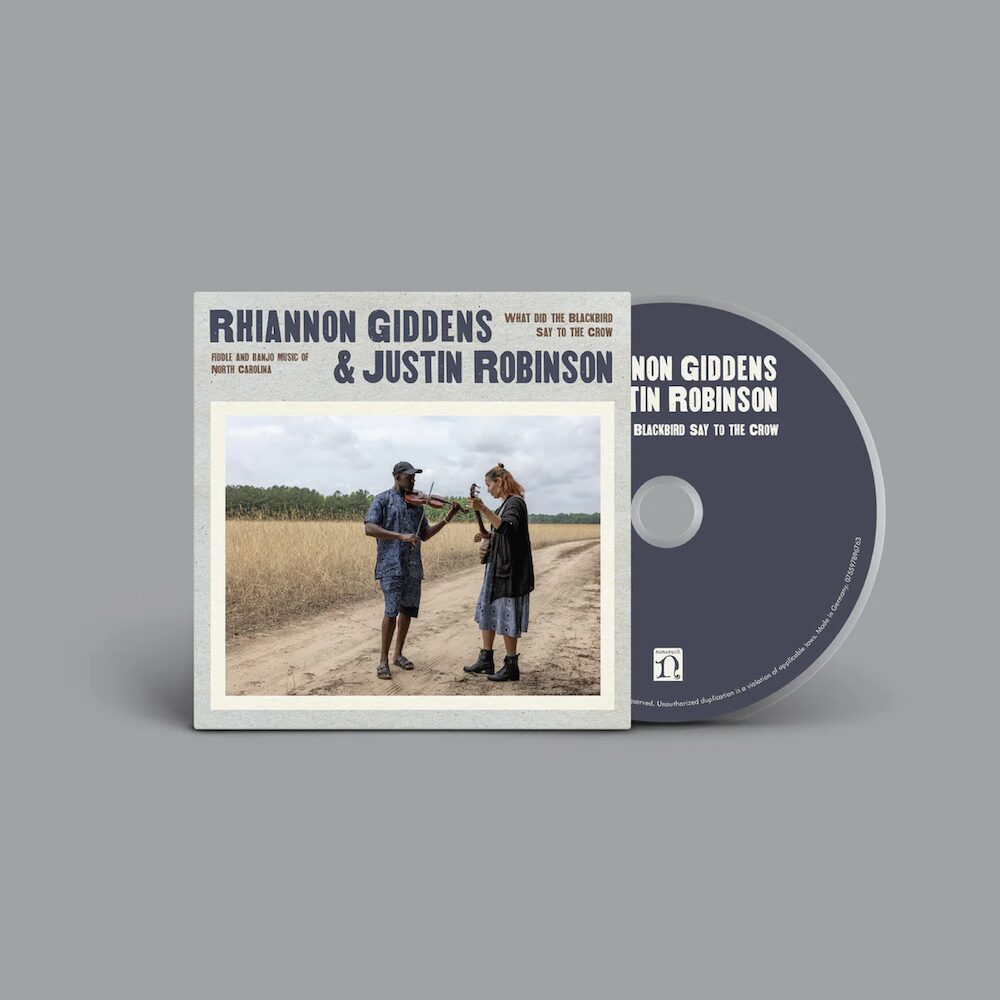
It was in that kind of open air—outdoors, with the incidental soundtrack left intact—that Rhiannon Giddens and Justin Robinson recorded What Did the Blackbird Say to the Crow, their GRAMMY-nominated album of North Carolina fiddle-and-banjo tunes. The album, released April 18, 2025, is spare by design: two musicians, two instruments, folding chairs, microphones, and the ungovernable ambiance of place. One microphone, intentionally positioned, was tasked with a responsibility that most studio engineers spend careers trying to eliminate: the sound of nature itself. The record was captured at the homes of mentors—Joe Thompson and Etta Baker—and at Mill Prong House, a former plantation, with the world left on. It is, in other words, the opposite of a “clean” recording. It is a deliberate surrender to context.
Giddens has made a career out of context.
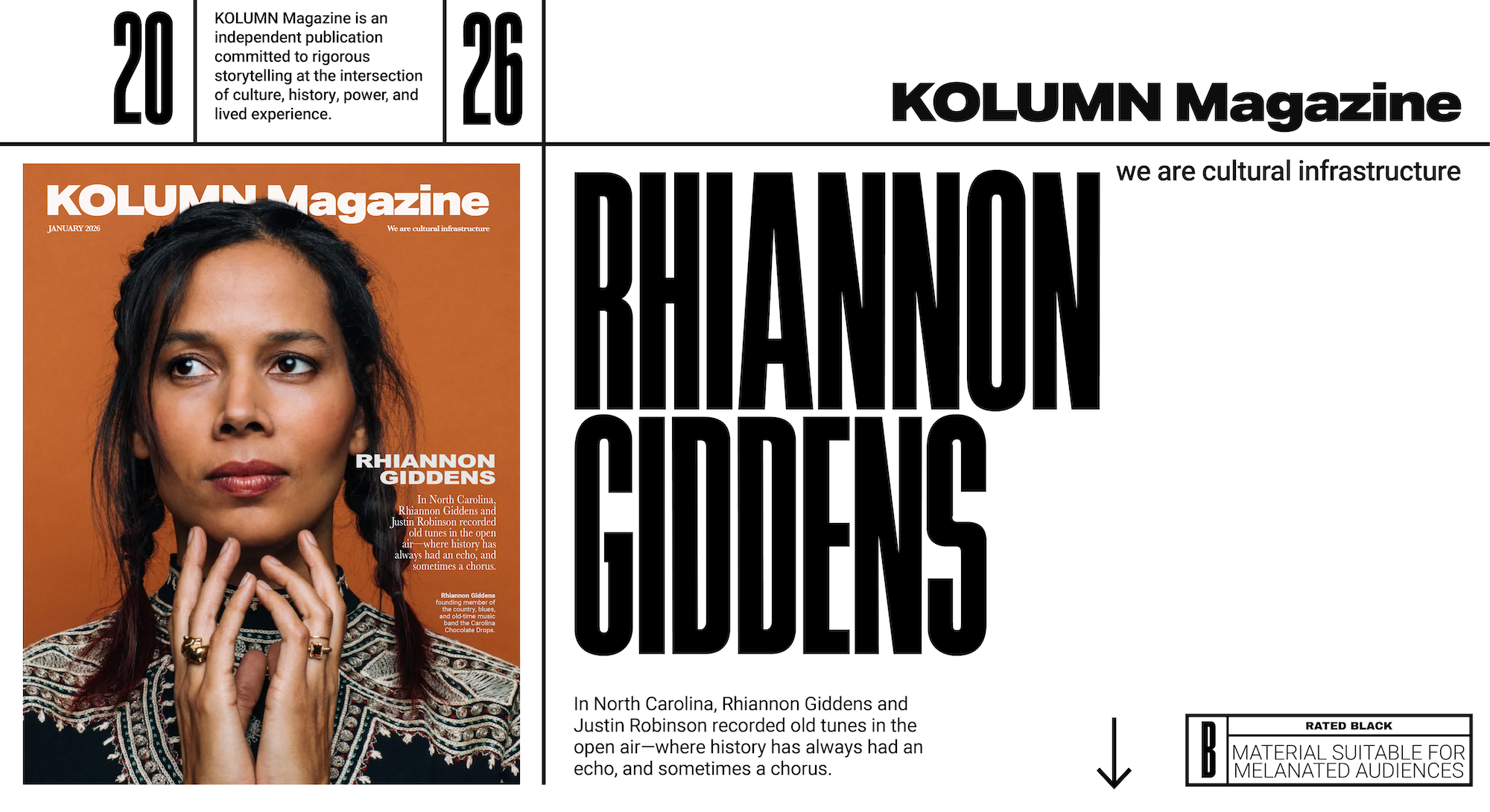
Her name is often introduced with the kinds of honors that function as shorthand in American cultural life: Grammy-winning founding member of the Carolina Chocolate Drops; MacArthur Fellow; artistic director of Silkroad; co-creator of Omar, the Pulitzer Prize–winning opera. She can sing with the authority of classical training and then turn around and play the banjo like someone who knows that the instrument’s story is not an ornament but an argument. Yet what distinguishes her is not simply virtuosity, or even range. It is her insistence—sometimes gentle, sometimes blunt—that what we call “American roots” is not a nostalgic genre category. It is a contested record of who got to be heard, who got to be credited, and who got written out.
What Did the Blackbird Say to the Crow is, on its surface, an old-time record: eighteen tunes, some instrumentals, some with words, learned through mentorship and listening, and played with the warm economy of people who understand that ornament is not the point. But Giddens is not the kind of artist who makes “just” anything. Even her quiet records carry a thesis, and this one’s thesis is embedded in the very choice to record where the music came from—at the houses of the people who gave them the tunes, in the state that shaped their ears, in yards where the air itself refuses to be neutral.
To understand why this album matters—and why its GRAMMY nomination for Best Folk Album landed not as a surprise but as a kind of confirmation—you have to trace the line of Giddens’ life the way she traces music: not as a straight career narrative but as a set of braided inheritances.
Greensboro beginnings, and the question of where you belong
Rhiannon Giddens was born in Greensboro, North Carolina, in 1977. She grew up in a state where the cultural map is dense with overlapping traditions: Piedmont blues; church gospel; string band music; the lingering memory of tobacco money; the quiet intimacy of small-town dance halls and living-room jam sessions; the complicated, often violent history that sits beneath it all.
From early on, Giddens moved through music with the appetite of someone who could feel how much was in it. She would later describe herself not only as a musician but as an “armchair historian”—a phrase that sounds casual until you realize how few artists willingly take on the historian’s ethical burden: to place the work in time, to resist convenient amnesia, to confront what the archive prefers to hide.
If her later work would become identified with reclaiming the Black heritage of American folk and country traditions, it is worth noting that her path did not begin in a tidy roots-music pipeline. She trained in opera at the Oberlin Conservatory, graduating in 2000. Opera is a discipline of breath, precision, and projection; it is also a tradition with its own exclusions and hierarchies. In Giddens’ case, the training gave her command—over timbre, phrasing, stamina—that would later allow her to inhabit everything from archaic ballads to contemporary protest songs without ever sounding like she was visiting a style. She could live in it.
But the deeper education—the one that would rewire her sense of American music—came later, in a setting far from the conservatory. In 2005, she attended the Black Banjo Then and Now Gathering in Boone, North Carolina. That event is the kind of cultural node that, in retrospect, looks inevitable: a convening to address a truth that American popular memory had smudged. The banjo, widely marketed and mythologized as a white Appalachian instrument, is in fact of African origin, carried into the Americas through enslavement and transformed in the hands of Black musicians long before it became a commercial emblem of “hillbilly” authenticity. The banjo’s history is inseparable from the country’s history, which means it is inseparable from race, labor, and power.
At Boone, Giddens met Dom Flemons and Súle Greg Wilson. Soon, they were playing as Sankofa Strings, a name that itself signaled a philosophy: Sankofa, the Akan concept often translated as “go back and get it,” a refusal to let history remain lost. This was not merely a band formation. It was a direction of travel.
Carolina Chocolate Drops, and the shock of recognition
The Carolina Chocolate Drops emerged from this milieu: a “postmodern string band,” in one often-used description, but also a corrective. Here was a group insisting, through repertoire and presence, that Black string band traditions were not footnotes to Americana. They were foundational.
Giddens became a prominent face and voice of that insistence: a singer, fiddler, banjo player whose performances carried both joy and steel. The group’s rise helped push conversations in folk and country circles that had been easy to avoid: why the imagery of old-time music had become so overwhelmingly white; why Black innovators were credited less than white revivalists; why “authenticity” was so often coded as a kind of racial property.
That period also placed Giddens in direct relationship with elders and mentors who did not treat “tradition” as a museum category. Among the most important was Joe Thompson, the legendary North Carolina Piedmont musician who became a guiding force for the band’s understanding of repertoire and feel. When you watch Giddens talk about Thompson—or hear her play music learned from him—you sense a reverence that is not sentimental. It is practical. In a world where institutions often fail to preserve what they should, mentorship becomes an archive, transmitted hand to hand.
This is the understated drama behind What Did the Blackbird Say to the Crow: it is not simply a collaboration between two acclaimed musicians. It is a return to teachers who cannot be replaced.
A career that refused the straight line
After the Carolina Chocolate Drops, Giddens’ solo and collaborative work expanded outward, not away. The pattern of her career has been to take what looks like an established genre boundary and treat it as a false wall.
She made records that moved between European repertoire and American protest; between sacred and secular; between the folk club and the symphony hall. She joined ensembles and projects that used roots instrumentation to tell stories about enslavement, migration, and national mythmaking. She became, in public perception, a kind of musical cartographer—mapping the ways traditions cross-pollinate, collide, and reshape each other.
This approach has not always been comfortable for audiences trained to consume Black artists as representatives of a singular style. In a 2024 essay for The Guardian—published amid a renewed public debate about Black presence in country music—Giddens argued that Black artistry belongs to the genre’s foundation, and that capitalism and racism helped warp the story that country music tells about itself. The point was not simply to claim space but to correct a narrative: to remind the public that the “roots” in roots music include the labor, creativity, and survival strategies of Black communities.
Her work with Our Native Daughters made that correction audible in another register. The group—Giddens alongside Amythyst Kiah, Leyla McCalla, and Allison Russell—framed their project as reclamation, confronting the ways American history has trained people to avert their gaze from slavery and misogyny while still consuming the cultural products built atop them. A piece in The Root described the group as reclaiming the soul of country music, linking their work to a lineage of Black women artists who refused to be silenced.
Even outside the recording studio, Giddens has shown a habit of building institutions, not just albums: curating festivals, leading organizations, commissioning works that force a broader public to contend with what it has ignored. Her role as artistic director of Silkroad—an ensemble and cultural organization originally founded by Yo-Yo Ma—fits this pattern: a platform dedicated to cross-cultural collaboration and to the idea that music is not a set of sealed national traditions but a history of exchange.
That same instinct appears in moments that look, at first glance, like ordinary career moves: a touring band that “skips and hops through musical traditions,” as The Washington Post put it when previewing a performance featuring the “Old-Time Revue” lineup, including Robinson and referencing the just-released Blackbird album. The phrasing matters: skipping and hopping suggests play, yes, but it also suggests movement across boundaries—movement that reveals, if you’re paying attention, how intertwined the sources are.
In other words: the arc of Giddens’ life is an argument for intertwinement. And What Did the Blackbird Say to the Crow is what that argument sounds like when you strip away the orchestra and leave the bones.
The reunion: Justin Robinson and the music that raised them
Justin Robinson is not simply a featured collaborator here. He is a co-protagonist in a story about what it means to return to the source. As a former Carolina Chocolate Drops bandmate, he shares not only musical vocabulary with Giddens but a history of learning these tunes through the same mentor network, the same North Carolina ecosystems of instruction.
The album’s press materials emphasize the personal nature of the repertoire: eighteen favorite North Carolina tunes, many learned from Joe Thompson, with one linked to another hero, Etta Baker. This is not the language of an ethnomusicologist collecting field recordings from a safe distance. It is the language of apprentices paying their dues.
Folk Alley’s review captured something essential about the project: the sense that these tunes “live so deeply” within the duo that the playing evokes the earthiness and spirit of old-time string music, and that the pair traveled back to the houses of their mentors and included their arrangements. The review also highlights the project’s key artistic decision: to treat place not as marketing but as method.
And it is here—at the level of method—that Giddens’ larger mission becomes clearest. She is not merely performing repertoire from the past. She is making an argument about how the past survives: through relationships, through geography, through sound that still contains the world around it.
Recording outdoors: The album as living document
There is a reason that the Nonesuch description of the album reads almost like a short story. The details are unusually specific: outdoors, folding chairs, microphones, one capturing nature. A restored fiddle emerges from Thompson’s house, brought out by his nephew, and Robinson plays it on the recording. At Etta Baker’s home, her son mentions that Baker once recorded “Carolina Breakdown” in her yard and a Carolina wren ended up on the tape—an anecdote that becomes a kind of blessing, because that very recording had inspired Giddens and Robinson’s approach.
Even the cicadas become part of the album’s identity: two different broods, emerging simultaneously, something that had not happened since 1803, creating what the label calls a “once-in-a-lifetime soundscape.”
You can choose to read these details as charming promotional color. But that would miss what Giddens is doing. She is making the recording process itself a form of meaning. In a modern industry built on isolation booths and digital repair, she insists on permeability: between musicians and environment, between performance and history. She treats the soundscape as a collaborator, not noise.
This is consistent with her broader critique of how American culture has separated “music” from the conditions that produced it. Folk traditions, especially, are often marketed as if they floated free of economics and violence. But Giddens’ work repeatedly reinserts what was extracted: the Black labor and creativity behind instruments; the social conditions behind repertoire; the structures that determined who got recorded, who got paid, who got remembered.
By recording at a former plantation, Mill Prong House, the album refuses to let “North Carolina heritage” remain a harmless aesthetic. The choice forces an implicit confrontation: this music was shaped in a state where plantations were not abstractions, and where Black life was defined by the structures those plantations enforced. The field becomes an acoustic space that remembers.
A close listen: Tunes as carriers of story
The tracklist reads like a set of invitations into that memory.
On Bandcamp, where the album is available with full track listing, you can see the sequence begin with “Rain Crow,” followed by “Brown’s Dream,” “Hook and Line,” “Pumpkin Pie,” “Duck’s Eyeball,” “Ryestraw,” “Little Brown Jug,” and onward. Even without a lyrical narrative, these titles feel like folk storytelling—small images that point to larger worlds.
The point of the album is not to modernize these tunes with glossy fusion. It is, instead, to let them speak in their own dialect. Giddens and Robinson do not approach the material like curators polishing artifacts. They approach it like people who know the tunes can handle themselves.
This is where Giddens’ conservatory discipline becomes an invisible advantage: she has the control to do less. Many technically trained performers struggle with restraint, because training can produce a reflex to demonstrate competence. But the best old-time playing has a different value system: groove over spectacle, conversation over soloing, feel over flash. Blackbird is full of that confidence.
The album’s title—What Did the Blackbird Say to the Crow—functions like a riddle, or a line from a children’s rhyme, or a fragment of oral tradition. It suggests call-and-response, or gossip, or warning. It also suggests translation: one bird speaking to another, one voice carrying something to a neighbor. In an era when so much music is designed to be content—flattened for playlists, optimized for attention—the title’s quiet oddness is itself a stance.
The album’s GRAMMY arc: Recognition and timing
The record’s GRAMMY nomination for Best Folk Album places it inside an industry category that has long struggled with a basic question: what counts as “folk,” and who gets to define it?
According to Nonesuch, the album is a GRAMMY Award nominee for Best Folk Album. The Recording Academy’s published nominations list for the 2026 GRAMMY Awards includes What Did The Blackbird Say To The Crow under Best Folk Album. Major trade coverage also lists it in the category’s nominee slate.
Awards do not create value, but they do signal which stories the mainstream is willing to hear. In this case, the nomination is significant not only for Giddens’ career but for what the album represents: a folk record that refuses the sanitized “front porch” fantasy and instead insists on the porch as a site of Black tradition, mentorship, and survival.
If you read the nomination alongside Giddens’ public commentary about Black artistry’s place in country and folk traditions, the moment feels less like an industry surprise and more like a delayed acknowledgment.
Why Blackbird is not nostalgia
It would be easy—especially for a mainstream audience encountering the record without context—to frame What Did the Blackbird Say to the Crow as nostalgia: a return to “simpler” music, a pastoral aesthetic, a respite from modern noise.
But the album is not escapism. It is a re-entry.
Giddens’ career has been about resisting the ways American culture uses genre as a sorting mechanism: a way to file Blackness into certain sonic categories while claiming others as default-white. Her insistence that “American music” is a braided inheritance has sometimes been treated as political commentary. It is, but it is also simply accurate. The instruments, the rhythms, the melodic structures, the performance practices—these have always been in conversation across racial and cultural lines, because the country itself was built in enforced proximity, in coerced labor, in migration, in exchange and theft.
In her 2024 Guardian essay, she described how racism and capitalism distorted country music’s narrative about itself. Blackbird offers an antidote to that distortion, not through polemic but through method: by centering North Carolina Black string band tradition as foundational, and by treating the act of recording as a form of testimony.
Even the choice to keep the environment audible is political in this sense. Studio music often sells the illusion of placelessness—sound that could have been made anywhere, by anyone, detached from local textures. Blackbird is the opposite: it is insistently located. It sounds like air, like yard, like a specific kind of day.
The deeper biography: Passion as discipline
Giddens’ passion is often described as scholarship, and she has earned that description. But what stands out, in the long arc of her work, is how she turns passion into discipline: how she builds structures around her curiosity so that it can outlast the moment.
Consider the range of roles she has taken on: performer, composer, curator, organizer, institutional leader. These roles are often treated as separate career “lanes.” For Giddens, they are all part of the same project: changing what gets heard and how it gets framed.
That project requires patience. It requires the willingness to correct people—sometimes repeatedly—about the banjo’s origins, about the Black presence in early country music, about the difference between “heritage” as branding and heritage as lived experience. It requires the willingness to face the backlash that comes whenever a comfortable story is challenged. It requires, perhaps most of all, the willingness to keep making art that embodies the argument rather than simply stating it.
This is why the return to duet form with Robinson matters. After years of large-scale projects and cross-cultural collaborations, here is a record that narrows the frame. It says: before the festival, before the opera, before the think pieces, there were tunes—tunes learned from elders, played in kitchens and yards, carried forward not because they were profitable but because they were loved.
The record is not small because it lacks ambition. It is small because it trusts the material.
A festival in the background: Community as the next record
The Nonesuch album page notes that Blackbird arrived a week before Biscuits & Banjos, the inaugural edition of Giddens’ festival in Durham, curated to highlight the deep roots and enduring legacy of Black music, art, and culture while fostering community and storytelling.
That detail matters because it places Blackbird inside a broader ecosystem of work: not just a record to consume, but a node in a larger project of convening, education, and cultural repair. Festivals can be cynical branding exercises. They can also be institutions—places where the next generation hears what it didn’t know it was missing.
In this sense, the album’s outdoor recordings at mentors’ homes and the festival’s urban gathering in Durham are part of the same philosophy: the music is not a product; it is a community practice.
Listening as an ethical act
There is a word that appears often in writing about Giddens: “reclamation.” It is accurate, but it can also become abstract if we don’t ask: reclamation of what, exactly?
What Did the Blackbird Say to the Crow reclaims, in part, the simple dignity of letting Black string band tradition be heard without translation. It also reclaims the idea that folk music is not a white inheritance with occasional Black contributions. It is an American inheritance built from entanglement, and any story that pretends otherwise is not just incomplete—it is engineered.
It is tempting, in a magazine profile, to cast Giddens as a singular hero: the artist who corrects the record, the genius who saves tradition. That framing is seductive and wrong. Giddens herself has consistently pointed away from individual hero narratives and toward networks: mentors like Joe Thompson and Etta Baker, collaborators like Robinson, communities of musicians and scholars and fans who have kept these traditions alive in the face of neglect.
What makes her work exceptional is not that she claims to be the only one doing it. It is that she has made the work visible—audible—in a culture that often prefers invisibility, because invisibility is convenient.
And perhaps that is the album’s deepest achievement: it makes listening feel like an ethical act. Not in the scolding sense, not as a demand for performative virtue, but as a quiet invitation to hear what is actually there—the birds, the cicadas, the old tunes, the living people behind them—and to recognize that what we call “American music” has always been larger, more braided, and more honest than the version we were sold.
The question in the title, and the answer in the sound
So what did the blackbird say to the crow?
The album does not provide a literal answer. It provides something better: a scenario in which the question can be asked in the right place, by the right people, with the air left in.
If you listen closely, you can hear the question itself become a method. It is the method Giddens has used her whole life: ask what has been left out, who has been ignored, what story the sound is carrying, what the landscape remembers. Then, instead of speaking over the past, sit down—two chairs, two instruments—and let it speak back.