




You don’t have to wait for the group, you start the group.
You don’t have to wait for the group, you start the group.
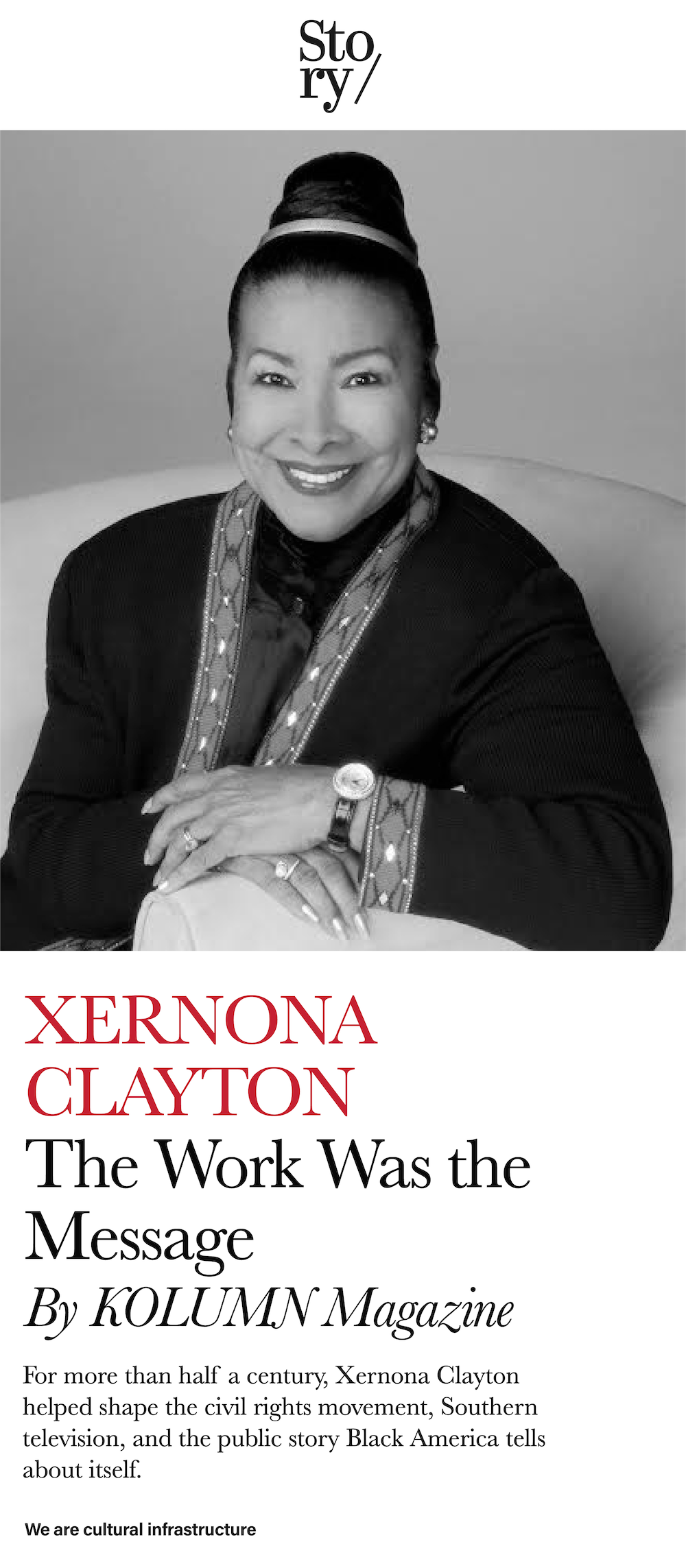
By KOLUMN Magazine
In Atlanta, where civic mythology and lived struggle are forever braided together, Xernona Clayton occupies a singular place. She is one of those figures whose résumé is almost too broad to summarize cleanly without flattening the force of the life behind it. Civil rights organizer. Fundraiser. Media pioneer. Corporate executive. Institution builder. Keeper of memory. Creator of a platform that insisted Black achievement deserved ceremony, glamour, and global circulation. By the time the city unveiled an eight-foot bronze statue of her in downtown Atlanta in 2023, the monument felt less like an upgrade to her public standing than a delayed acknowledgment of something the city had long known: Clayton had already become part of Atlanta’s civic architecture.
That public recognition arrived late, but not too late for Clayton to enjoy it. Georgia Public Broadcasting reported that the statue was unveiled on International Women’s Day in a plaza already bearing her name, and the Atlanta Journal-Constitution noted that she became the first Black woman with a statue in downtown Atlanta. The symbolism was pointed. Clayton had once been ejected from a hotel on that same corridor during the segregation era; now her likeness stands there permanently, facing the city. That is not just a nice local tribute. It is a compressed history of the United States: exclusion, struggle, institutional change, and then, sometimes, official memory catching up to private courage.
Clayton’s significance rests partly in the range of arenas she moved through and partly in the unusual consistency of her method. She has spent decades working on racial justice not only through protest and persuasion, but through access, relationships, production, and presentation. She helped desegregate Atlanta hospitals. She worked closely with Martin Luther King Jr. and Coretta Scott King. She became the first Black person in the South to host a regularly scheduled prime-time television talk show. Later, at Turner Broadcasting, she became one of the highest-ranking women in the company and founded the Trumpet Awards, which carried images of Black excellence around the world. Each chapter looks distinct. The through-line is not. Again and again, Clayton identified a space where Black people were excluded, minimized, or misrepresented, and then she built a mechanism to change that fact.
That sentence, preserved in an Atlantic interview project, is as good a governing thesis for Clayton’s life as any biographer could hope for. It captures both her impatience and her pragmatism. She was not merely adjacent to movements. She was the kind of person who made movement infrastructure work: the person who assembled the room, nudged the powerful, recruited the talent, framed the message, forced the meeting, and turned aspiration into an actual event with names, dates, cameras, and consequences.
A childhood shaped by dignity
Xernona Clayton was born in Muskogee, Oklahoma, on August 30, 1930. National Park Service materials and other biographical sources describe her as the daughter of Rev. James Brewster and his wife, in a household shaped by religion, discipline, and public service. The NPS also notes that she had a twin sister, Xenobia, and that her family’s work intersected with Indian Affairs in Oklahoma. Those details matter because they situate Clayton in a Black world that was not defined only by deprivation, but by structure, ambition, and expectation. The stereotype of Black Southern or border-state life in the early 20th century often leaves little room for seriousness, cultivation, or institutional consciousness. Clayton’s upbringing seems to have supplied all three.
Georgia Public Broadcasting’s account of a 2024 public conversation with Clayton adds texture to that early story. It places her in Muskogee during the 1930s and 1940s, then tracks her to Tennessee State University and later to the University of Chicago. GPB’s reporting also notes that, while in Chicago, Clayton worked with the Urban League and helped push for the desegregation of the workforce at Marshall Field’s. Even before the movement years for which she is most widely known, the pattern was already visible: she was willing to investigate discrimination directly and push institutions to change their rules rather than merely denounce them from a distance.
The City of Atlanta, in a 2011 release honoring Clayton, described her early Chicago work in particularly revealing terms: she worked for the Urban League as an undercover agent investigating employment discrimination against African Americans. That is the sort of line that should probably appear more often in casual retellings of her life, because it clarifies the steel beneath the elegance. Clayton is often remembered through the grace of her public presence, the crispness of her speech, the polish of the events she later produced. But before the televised honors and gala stages, there was fieldwork. There was risk. There was the hard, unsentimental labor of gathering evidence against systems designed to hide their own bias.
The movement needs organizers, not just icons
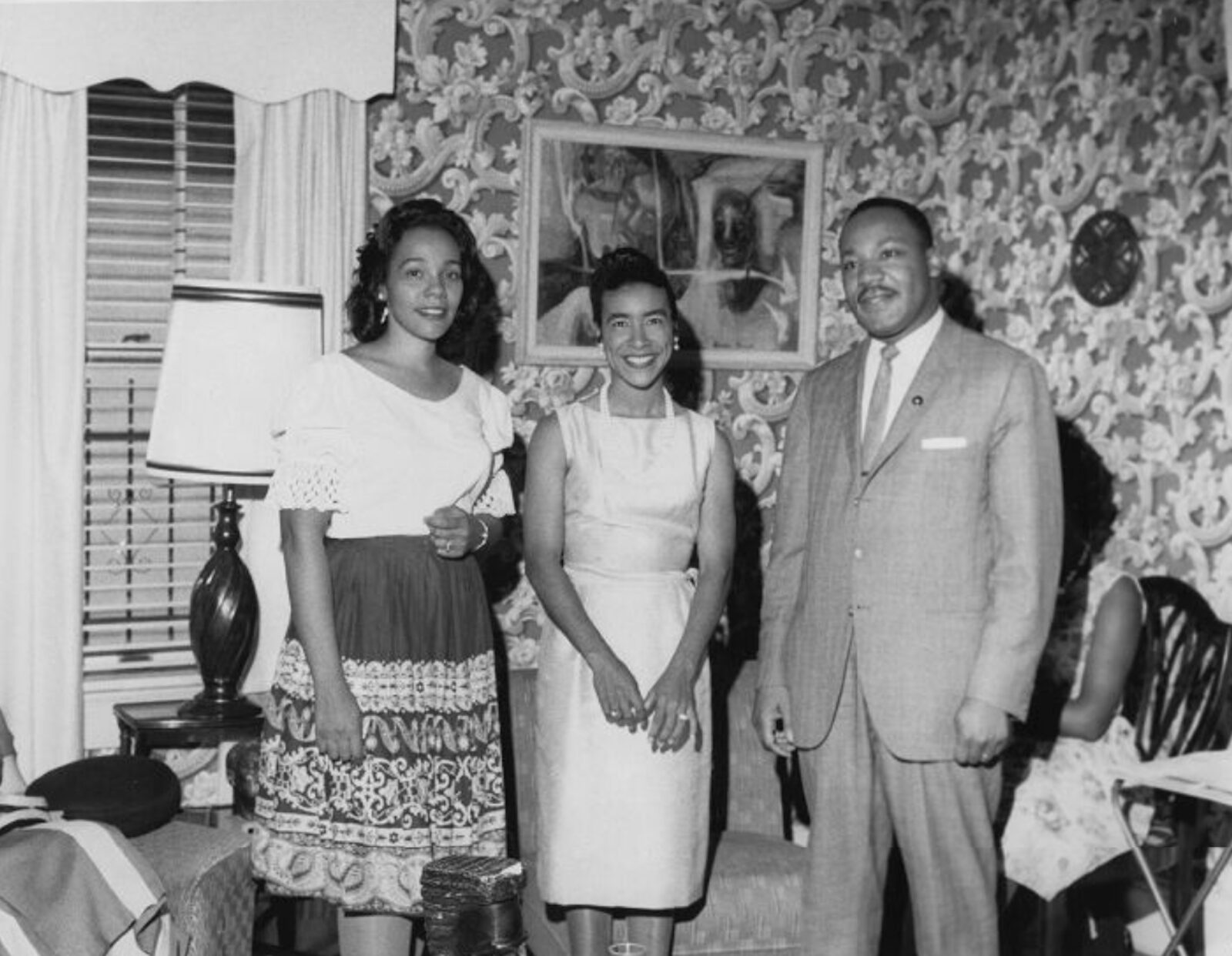
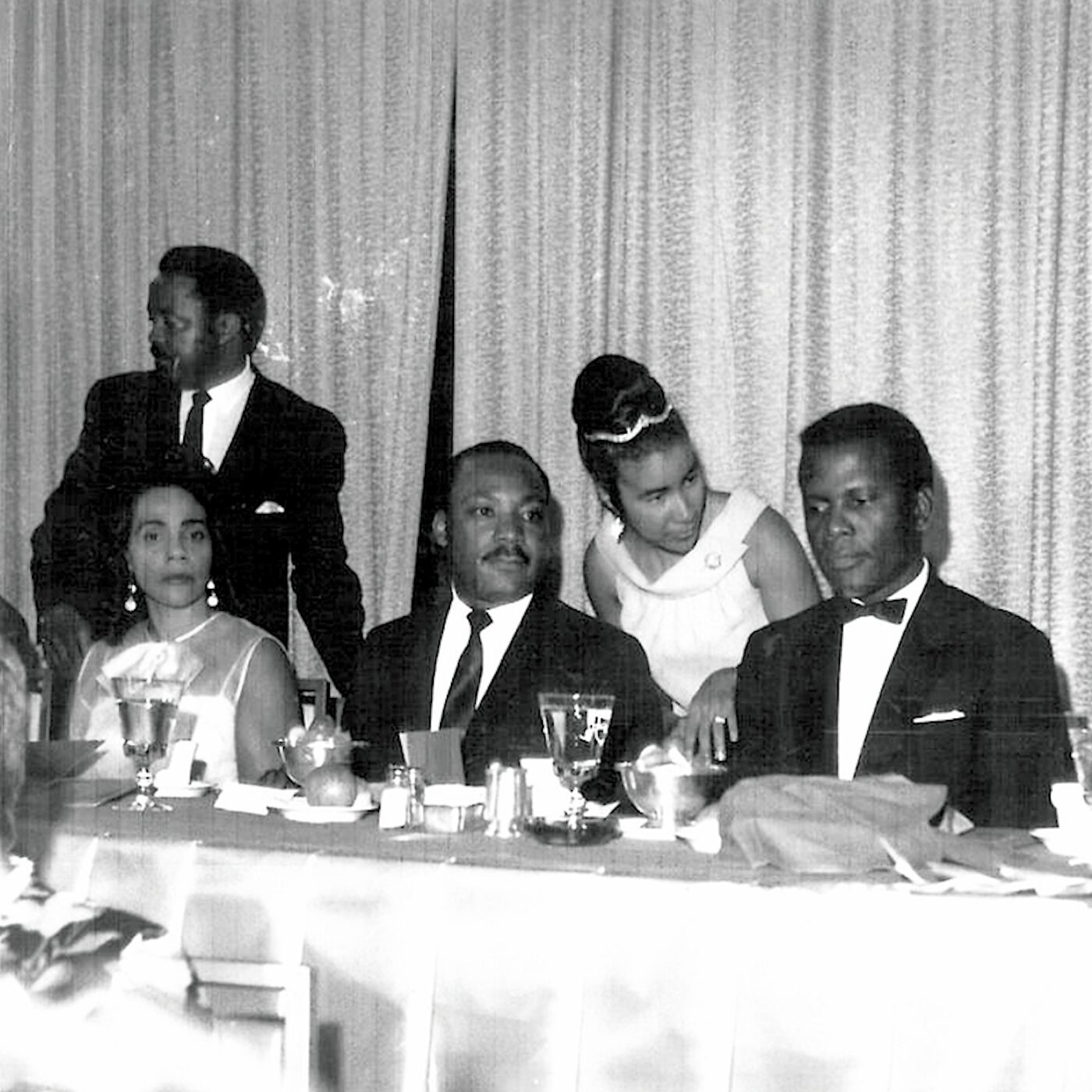
American memory has a tendency to simplify the civil rights movement into a parade of sermons, marches, and martyrdom. Clayton’s life is a corrective to that flattening. When she moved to Atlanta in 1965 to work with the Southern Christian Leadership Conference, she entered the movement through organizing and fundraising rather than through the public role that history books usually reward most lavishly. Both the National Park Service and the Trumpet Foundation biography note that she worked closely with Martin Luther King Jr. and traveled extensively with Coretta Scott King on nationwide concert tours. AP reported that King and Coretta Scott King recruited Clayton and her first husband, Edward Clayton, to help bring money and attention to SCLC.
This is not secondary work. It is movement work. Every great campaign has its visible speakers, but it also has its networkers, fundraisers, logisticians, and relationship managers. AP’s 2022 profile makes that tangible: Clayton recalled organizing Coretta Scott King’s tours, helping secure care for injured protesters, and calling friends like Sidney Poitier and Harry Belafonte for bail money. That is a very particular kind of activism. It is emotional, administrative, strategic, and immediate all at once. It also helps explain why Clayton became such a durable figure in movement memory. She was not merely present for major episodes; she was part of the machinery that kept them viable.
The Guardian, in a 2021 profile, described her as someone who helped organize the March on Washington, fought for integrated hospitals, and went on to become the first Black TV presenter in the South. Even within that compact summary, what stands out is her ability to traverse different modes of power. She could operate in the moral world of movement politics and in the practical world of civic negotiation. She knew how to host a fundraiser in Hollywood, how to open doors in Atlanta, and how to make herself useful to people whose names now dominate public history. Her career is a reminder that movements are sustained by people who can do more than speak beautifully. They also need people who can arrange, persuade, produce, and endure.
Xernona Clayton’s story complicates the old idea that movement leadership belongs only to the loudest person at the microphone. Much of her influence came from making institutions move.
That matters especially when thinking about Black women in the civil rights era. PBS, in a segment on “hidden heroines,” framed Clayton as one of the women whose work is often overshadowed when the movement is told through the names of prominent men. That framing is accurate, though “hidden” may now understate her. What has too often been hidden is not Clayton herself, but the very kind of labor she represents. She is evidence that the back room, the fundraiser, the committee, the media booking, and the stubbornly arranged conversation can all be sites of history.
Desegregating Atlanta’s hospitals
If one wanted a single episode that proves Clayton was more than a symbolic presence, the Atlanta hospital campaign would be a strong candidate. Multiple sources agree on the core facts. In 1966, Clayton coordinated Atlanta’s Black physicians in what became known as the Doctors’ Committee for Implementation. The result, according to the National Women’s History Museum, the City of Atlanta, the Trumpet Foundation, and the National Park Service, was the desegregation of all hospital facilities in Atlanta. Those sources also note that the campaign became a model for other cities and states and drew national recognition from the National Medical Association.
AP’s reporting adds the human stakes. Clayton recalled that Black doctors in Atlanta were restricted largely to Grady Hospital and, in one especially brutal expression of segregation, Black mothers could give birth there on only one designated day. “Wednesday was the day Black people would have their babies,” she said. That detail lands with particular force because it strips segregation of abstraction. Here was not merely separate access, but the scheduling of human birth under racial caste rules. Clayton’s response was direct: organize the doctors and do something about it.
The Atlantic’s “Speaking of Hope” project offers the next step in the story. According to that account, Clayton formed the committee, wrote President Lyndon B. Johnson, received no response, traveled to Washington, staged a press conference on the steps of Congress, and then successfully pressured the White House into a meeting. In Clayton’s retelling, she told Johnson she was disappointed that he had ignored her appeal. Soon afterward, the article says, Johnson issued an order that hospitals receiving federal funds had to desegregate, expanding the effect beyond Atlanta. As with many retrospective oral histories, the exact causal chain deserves careful handling; federal desegregation policy was shaped by broader legal and political processes as well. Still, the source is valuable for showing Clayton’s own understanding of how pressure works: organize locally, embarrass nationally, demand an audience, and refuse passivity.
What this campaign reveals is Clayton’s talent for converting moral urgency into administrative consequence. Plenty of people could identify the injustice. Fewer could build the coalition, frame the appeal, leverage the press, and force a response from the federal government. Her contribution to hospital desegregation deserves far more space in the public telling of Atlanta’s civil rights history than it usually gets, partly because it demonstrates a side of the movement that fits uneasily into cliché. This was not just a battle of ideals. It was a battle over credentials, admitting privileges, public funds, institutional rules, and medical access. Clayton understood that racism survives through procedure as well as through hatred. She fought it at the procedural level.
The Calvin Craig story, and the risks of reconciliation
Of all the stories attached to Clayton’s name, none is more arresting to contemporary audiences than her relationship with Calvin Craig, the Georgia grand dragon of the Ku Klux Klan. It is an irresistible narrative hook: a Black civil rights leader and a Klan official in dialogue; a personal relationship crossing the most poisonous racial divide imaginable; a segregationist eventually crediting her with changing his mind. The story has been retold by The Guardian, Atlanta Magazine, the City of Atlanta, and the National Park Service, among others. The broad outline is consistent. Clayton met Craig through the federally funded Model Cities program in Atlanta, maintained civil engagement with him, later interviewed him on television, and influenced him to leave or denounce the Klan.
The temptation is to reduce the episode to a sentimental lesson about love conquering hate. Clayton herself seems both more practical and more disciplined than that reading allows. In the Guardian profile, she recalled thinking that direct battle with Craig would get nowhere; instead, she hoped he would change his negative attitude. She stayed civil, talked with him repeatedly, and refused to mirror his dehumanization. The important point is not that she was naïve about racism. The article makes clear that Craig was operating in an environment of active intimidation and racist violence. Her approach was tactical, not dreamy. She was testing whether proximity, dignity, and persistence could alter one man’s worldview and therefore reduce one node of organized hatred.
Still, this part of Clayton’s legacy deserves sober treatment. The Craig story is striking precisely because it is exceptional. It should not be universalized into a demand that oppressed people redeem their oppressors through patience. Nor should it be detached from power. Clayton was not some random bystander. She was already an accomplished organizer, a poised public figure, and someone operating within civic and media structures that gave the exchange consequence. Her success with Craig says something about her discipline and interpersonal intelligence. It does not erase the need for law, protest, or institutional pressure. In fact, her whole life argues the opposite: she believed in dialogue, yes, but she also believed in leverage.
What the Craig episode perhaps reveals most clearly is Clayton’s refusal to let white supremacy dictate the emotional terms of every encounter. She would not surrender her own civility, curiosity, or strategic patience simply because another person had embraced hatred. That is different from softness. It is a form of command. Her interaction with Craig endures because it is morally dramatic, but it fits within a much larger pattern in her life: she kept entering spaces where Black humanity was either denied or narrowly framed, and then she altered the terms of the encounter.
Her life suggests that persuasion is not the opposite of struggle. Sometimes it is one of struggle’s most exacting forms.
Breaking into Southern television
The other great hinge in Clayton’s life is media. In 1967, according to the National Park Service, the Trumpet Foundation, and GPB, she became the first Black person in the South to host a regularly scheduled prime-time television talk show. The program, initially called Variations and later The Xernona Clayton Show, aired on WAGA-TV, the Atlanta CBS affiliate. The Guardian similarly described her as the first Black television presenter in the South.
This achievement is easy to underplay now, because contemporary media contains Black hosts, Black executives, Black producers, Black-owned platforms, and an endless churn of segmented audiences. But in late-1960s Southern television, Clayton’s presence was radical. Television was not merely entertainment; it was a public mirror, a maker of legitimacy, a daily performance of who counted as articulate, trustworthy, sophisticated, and fully American. To put a Black woman at the center of a prime-time talk show in the South was to challenge a visual regime that had long confined Black people to caricature, invisibility, or crisis coverage.
GPB’s 2024 report notes that Clayton landed the show after filling in for Atlanta Constitution editor Ralph McGill on a TV special. That detail matters because it underscores another truth about her career: she was prepared when the opening appeared. Lots of firsts arrive that way. Not through abstract destiny, but through a temporary chance that reveals the absurdity of the barrier. Once audiences and executives saw Clayton on air, the logic of exclusion became harder to defend. She had the intelligence, poise, and command that television demands. The question was never whether she could do it. The question was why the system had taken so long to permit it.
Her show also connected activism to representation in a deeper sense. By bringing serious conversation to television and by interviewing figures like Calvin Craig, Clayton made media a site of civic confrontation. She was not simply occupying a seat. She was using the medium to force a broader public to look at the very tensions Atlanta often preferred to manage quietly. Her television career extended the logic of her organizing career: create the room, control the frame, and make people encounter realities they might otherwise evade.
Turner, corporate power, and the politics of visibility
Clayton’s move into Turner Broadcasting is sometimes treated as a clean break from movement work, but it makes more sense to see it as an expansion of her methods. The Trumpet Foundation biography says she worked at Turner for nearly 30 years, and the National Park Service notes that Ted Turner appointed her to senior roles in public affairs, later making her assistant corporate vice president for urban affairs in 1988. The foundation describes her as one of the highest-ranking female employees in the company. AP and other sources also identify her as a broadcast pioneer whose corporate career ran alongside continuing civic engagement.
To some activists, corporate titles can look like assimilation. But Clayton’s presence inside Turner mattered for reasons beyond symbolism. Turner controlled major media properties, including CNN, TNT, Headline News, the Braves, and the Hawks. As the foundation biography explains, Clayton served as a liaison between those corporate entities and civic groups locally and nationally. In other words, she occupied a pressure point where capital, media, image, and community relations converged. That is not trivial terrain. In late-20th-century America, corporations helped shape the public story of race as powerfully as politicians did. Clayton understood that if you want representation to change, you need influence not only in the streets and at nonprofits, but in the institutions that decide what gets broadcast, celebrated, and normalized.
This is one reason her later work feels so modern. Clayton grasped earlier than many that cultural infrastructure matters. Awards shows matter. Public rituals matter. Corporate sponsorship matters. International distribution matters. The image economy is not separate from politics; it is one of politics’ most durable theaters. Black life could not be defended only against violence and exclusion. It also had to be represented expansively, elegantly, and repeatedly. Clayton’s answer to that need was the Trumpet Awards.
The Trumpet Awards and the politics of celebration
Founded in 1993 with Turner Broadcasting, the Trumpet Awards were Clayton’s answer to a chronic American problem: Black excellence was often either ignored or recognized only within narrow categories. The foundation says the awards were designed to highlight African American accomplishments and contributions and were televised annually to audiences in more than 185 countries. A 2004 Washington Post article captured Clayton’s own language about the project’s purpose. She said the goal was to expose people to the diversity of the African American community and to challenge the tendency to know Black people only through entertainment and sports. “The Trumpet Awards wants to change negative attitudes through positive presentation,” she said.
That mission sounds deceptively simple. It was not. Awards shows can become hollow exercises in brand management. But Clayton’s conceptual move was astute. She recognized that ceremony itself can be corrective. To honor Black judges, physicians, executives, activists, entrepreneurs, and young prodigies in a format associated with prestige was to do more than hand out trophies. It was to stage a counternarrative against scarcity and stereotype. It told viewers that Black distinction was broad, intergenerational, and institutionally serious. It also insisted that excellence did not need to be stripped of glamour in order to remain politically meaningful.
There is a straight line from Clayton’s civil rights work to the Trumpet Awards, though it may not be obvious at first glance. Desegregating hospitals challenged who was allowed to practice. Hosting a television show challenged who was allowed to speak. Creating the Trumpet Awards challenged who was allowed to be publicly revered. All three are fights over legitimacy. All three push against a national habit of shrinking Black possibility into a handful of familiar scripts. Clayton did not merely want access to white institutions. She wanted Black accomplishment to be seen in its own scale and variety.
Why her legacy feels bigger now
In 2022, the Associated Press quoted Clayton, then 91, lamenting the persistence of racial terror and saying her mind goes back to what King would have said. The remark matters because it places her not in the safe amber of nostalgia, but in the unfinished present. She is not significant simply because she knew famous people, or because she survived long enough to become ceremonial. She remains significant because the problems she spent her life confronting are not over. Violence, segregation by other means, media distortion, and the thinness of official memory all persist in changed form.
That is part of why the 2023 statue resonated so strongly. It was not just Atlanta admiring one of its elders. It was a city trying, however imperfectly, to encode a different model of leadership into public space. GPB described the statue as honoring a “broadcasting pioneer and civil rights legend.” The AJC emphasized how overdue the recognition was. Taken together, those accounts suggest something larger: Clayton’s life resists the compartmentalization that public honors often impose. She was not only a civil rights worker, not only a TV pioneer, not only a corporate executive, not only a philanthropist. Her actual legacy lies in the bridges among those roles.
Atlanta Magazine reported in 2025 that Clayton, at 95, was reflecting publicly on her “remarkable life,” while Atlanta Downtown and The Atlanta Voice documented celebrations of her 95th birthday that included public art and community tribute. Even without leaning heavily on the details of those later events, their existence says something useful. Clayton has lived long enough to witness not only the civil rights movement and the media transformations of the late 20th century, but also the active construction of her own legacy. That gives her an unusual authority. She is both participant and archivist, both subject and interpreter of the era through which she moved.
What Xernona Clayton teaches about power
The most interesting thing about Clayton may be that she never seems to have believed power lived in just one place. Some people put all their faith in protest. Others in policy. Others in media. Others in elite access. Clayton moved among all of them. She helped movement leaders raise money. She coordinated doctors and pressured government. She entered television. She navigated corporate structures. She created ceremonies of recognition. She built educational and philanthropic projects. The lesson is not that every tactic is equally effective at every moment. It is that durable change usually requires more than one lane.
That multidimensionality also helps explain why she can be hard to reduce to a single headline. Journalists, historians, and the public alike tend to prefer protagonists who fit neat genre categories. The fiery orator. The courtroom strategist. The grassroots organizer. The TV pioneer. Clayton was inconveniently plural. She belonged to all those stories without being fully containable by any one of them. For a publication trying to assess her significance honestly, that is not a bug in the narrative. It is the narrative. She kept finding leverage wherever the next door happened to be.
There is also something quietly radical in the style she brought to public life. Clayton’s elegance has long been remarked upon, but it should not be mistaken for ornamental polish detached from substance. In a country determined for so long to degrade Black dignity, style could itself be a political language. To be composed, witty, immaculately presented, and strategically relentless was to refuse degradation on every level. Clayton’s public bearing became part of her instrument panel. She disarmed, impressed, unsettled, and persuaded with it.
The measure of a life
There are public figures whose lives are remembered mainly through one iconic act. Xernona Clayton belongs to a different category. Her life reads as a sequence of interventions, each one reinforcing the next. She did not merely appear at history’s climactic moments. She kept building the conditions under which other people could be seen, treated, and remembered differently. That is a harder legacy to package, but in many ways it is the more valuable one. It suggests that progress is not made only by singular breakthroughs. It is also made by people who understand institutions well enough to bend them.
So what is Xernona Clayton’s significance? It is, first, that she helped alter concrete realities: hospital segregation, media exclusion, the visibility of Black achievement. It is, second, that she expanded the public vocabulary of leadership. She showed that one can be glamorous without being superficial, conciliatory without being submissive, corporate without being politically empty, and movement-minded without needing to dominate the camera. And it is, finally, that she has spent a lifetime insisting that Black life deserves not only justice, but also recognition equal to its complexity.
A statue in downtown Atlanta can capture only so much. Bronze is good at permanence, not motion. But Xernona Clayton’s life has been about motion: from Muskogee to Chicago to Atlanta, from undercover investigator to movement strategist, from civil rights insider to television first, from corporate executive to curator of Black excellence. The better metaphor for her may not be a monument at all, but a set of doors swinging open. She spent decades pushing on them. Many opened because she did.
More great stories
Afro Sheen, Wall Street, and the Architecture of Black Possibility
July 6, 2026
No Comments
The Fire Inside the Fourth
July 5, 2026
No Comments