





My painting is reaching out to people and saying look at what you have done, or look at what is happening to us.
My painting is reaching out to people and saying look at what you have done, or look at what is happening to us.
By KOLUMN Magazine
Ernest Crichlow’s achievements live across decades, mediums, institutions, and communities.
He was born in Brooklyn in 1914, the son of parents from Barbados, and he died in the same borough in 2005 at 91. In between, he became a painter, illustrator, muralist, teacher, organizer, and institution-builder whose work chronicled Black American life with a mix of lyricism and unease that never let the viewer get comfortable. His art was figurative, but never merely descriptive. It was socially alert without collapsing into slogan. And it was intimate in a way that made even his most political work feel inhabited rather than preached.
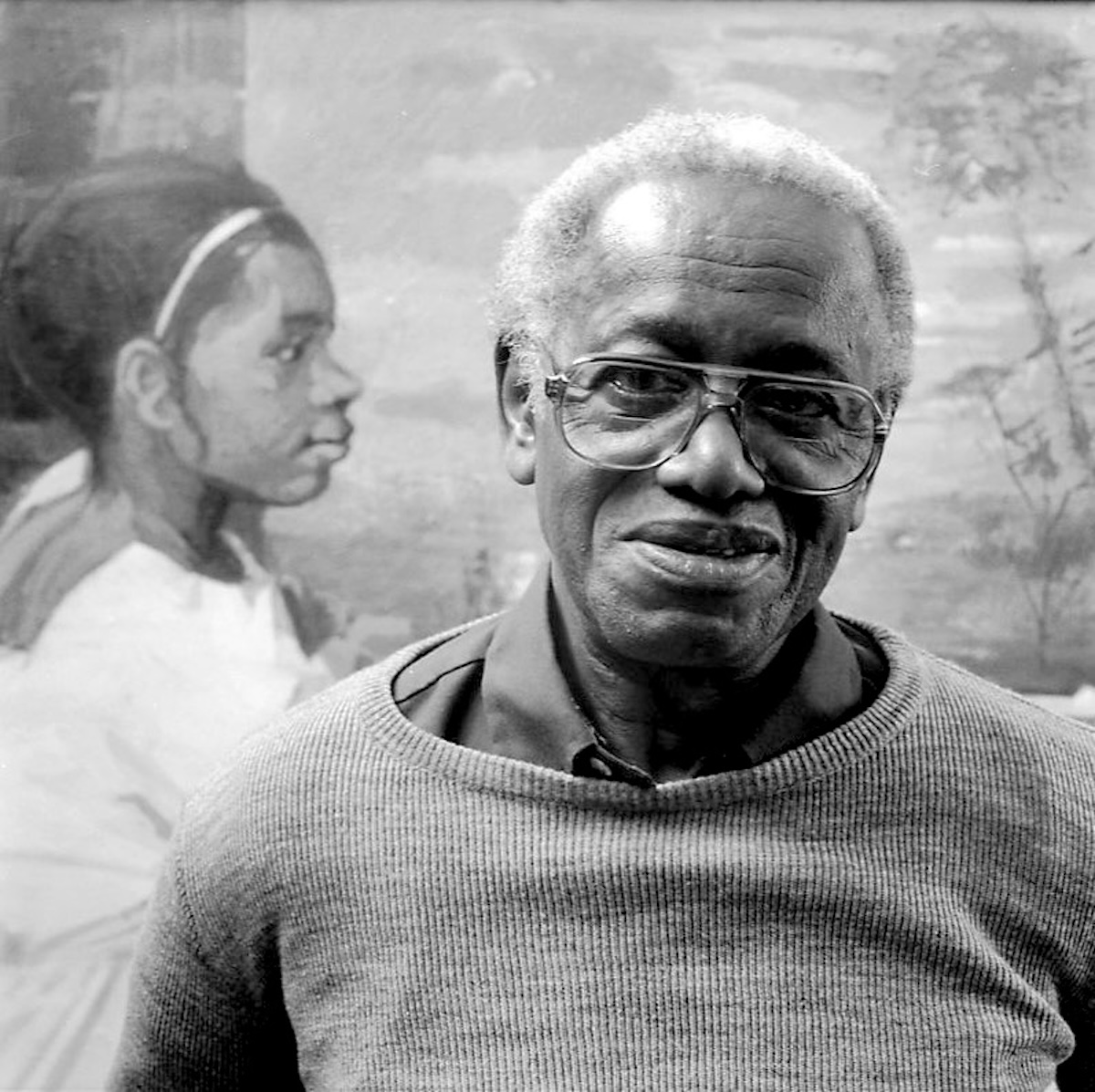
Crichlow is sometimes placed too neatly inside a handful of historical labels: Harlem Renaissance descendant, social realist, civil rights artist, Black arts advocate. None of those labels is wrong. All of them are incomplete. He moved through the ecosystem of 20th-century Black American art at crucial pressure points: the workshops and opportunities shaped by Augusta Savage and the WPA, the debates around representation and “Black subject matter,” the artist collective Spiral, the founding of Cinque Gallery, the local energy of Brooklyn’s Fulton Art Fair, and the long, stubborn fight to make Black artists visible inside institutions that preferred to celebrate them selectively, if at all.
What makes Crichlow especially worth revisiting now is that he understood something many artists and critics still wrestle with: representation is never neutral. To paint a child, a fence, a room, a street corner, a shoeshine stand, or an interracial encounter is not simply to record a scene. In Crichlow’s hands, these things became evidence. They revealed how race lived in space, how power appeared in the arrangement of bodies, and how American innocence often depended on someone else’s confinement. His best work does not just show Black life. It shows the structures pressing against it.
That sentence, drawn from Crichlow’s 1968 oral history interview with the Smithsonian’s Archives of American Art, offers a clean entry into his legacy. He was not an artist of withdrawal. He was not interested in obscuring feeling or evacuating history from form. He wanted his paintings to communicate, and he knew communication did not mean simplification. In the same interview, he made clear that the political feeling in his art was not an add-on or a pose. It was, as he put it, “an extension of my real life.” That phrase matters. Crichlow’s work was not topical in the shallow sense; it was existentially bound to the conditions he lived through and the community he inhabited.
Brooklyn made him before the art world did
Crichlow’s origin story is rooted in Brooklyn, but not in any sentimental, borough-pride way. The details matter because they shaped his sensibility. In his oral history, he states plainly that he was born in Brooklyn on June 19, 1914, and that he grew up in a neighborhood marked by ethnic diversity. He was one of nine children in a family headed by Barbadian immigrants. That background placed him inside a Black diasporic household and inside a borough where migration, labor, aspiration, and racial hierarchy met in dense everyday ways. Brooklyn gave him not only material but a visual education in proximity: who lived near whom, who worked where, how class and race announced themselves in dress, posture, and neighborhood boundaries.
As a young person, Crichlow’s artistic ambitions were encouraged rather than dismissed. He studied at the School of Commercial Illustrating and Advertising Art in New York and also studied at New York University. Those details can sound routine, but they were not. For a Black artist coming of age during the Depression, formal study did not guarantee professional access. Training sharpened skill; it did not remove structural barriers. The Brooklyn Museum notes that Crichlow studied at NYU and produced art commissioned by the federal government during the Depression, while Smithsonian and Library of Congress materials place him within the network of Black artists connected to Augusta Savage and Harlem’s art workshops.
Savage’s role in his development was especially significant. The Library of Congress notes that Crichlow went to Harlem around 1932 to work with Augusta Savage and met Robert Blackburn at Savage’s Uptown Art Laboratory and at the Harlem Community Art Center. That matters because Savage was not just a mentor figure in the abstract; she helped create actual infrastructure for Black artists at a time when formal institutions were exclusionary. To pass through her orbit was to gain entry into a world where Black art was serious work, collective work, and work tied to broader cultural and political life.
Crichlow would later describe the Works Progress Administration with unusual clarity. In an account reproduced by Illustration History from his oral history, he called the WPA “the greatest stimulant the American art scene had ever had,” adding, “The WPA was our haven and offered us a real entrée into what was happening.” Even stripped of nostalgia, that is a major statement. The WPA did not solve inequality, but for artists like Crichlow it provided income, contact, practice, and professional legitimacy. Just as important, it put Black artists in relation to one another. In his oral history, Crichlow recalled that the WPA was where he got to meet “most of the Negro artists,” describing the practical intimacy of waiting in line together to be paid. Out of those lines came networks, conversations, and careers.
The early work already had a conscience
It is tempting to narrate politically engaged artists as if they “became” political only when the country entered open crisis. Crichlow complicates that story. From early on, his work contained social critique, sometimes direct and sometimes embedded in gesture, setting, and mood. His first exhibition took place in 1938 at the Harlem Community Center, and one of his best-known early works, Lovers from 1938, remains startling even now.
The Metropolitan Museum of Art’s description of Lovers is blunt: it shows a Black woman in her bedroom being attacked by a hooded Ku Klux Klan member, a scene that implies imminent sexual violence. The title is bitterly ironic. The room is intimate, but not safe. The domestic interior, supposedly private, becomes a theater of racist terror. The overturned chair in the corner is a small but devastating touch; the space has already been violated before the viewer has fully registered the assailant. This is not simply protest art in an abstract sense. It is a visual argument that anti-Black violence invades not only public life but the zones people imagine as their own.
The Library of Congress places Lovers within the context of “targeted activism against racism” by Harlem artists of the period. That framing is useful, but Crichlow’s achievement is that the image is more than message delivery. It is formally composed, psychologically tense, and narratively compressed. He understood that one way to make an image endure is to refuse the flattening that often attends righteous art. Lovers is legible, but not easy. Its violence is direct, yet its emotional force comes from how abruptly it yanks terror into ordinary space.
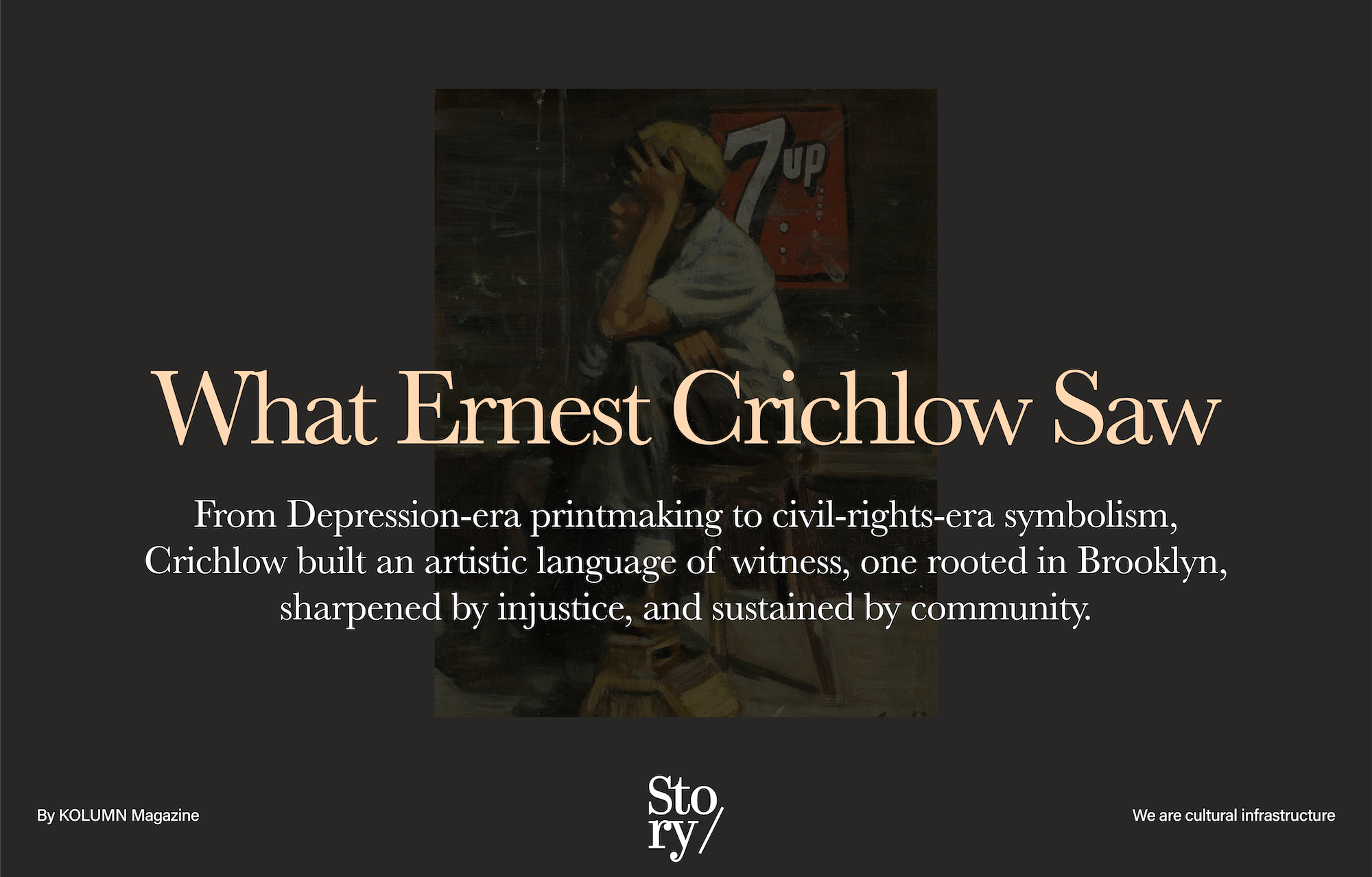
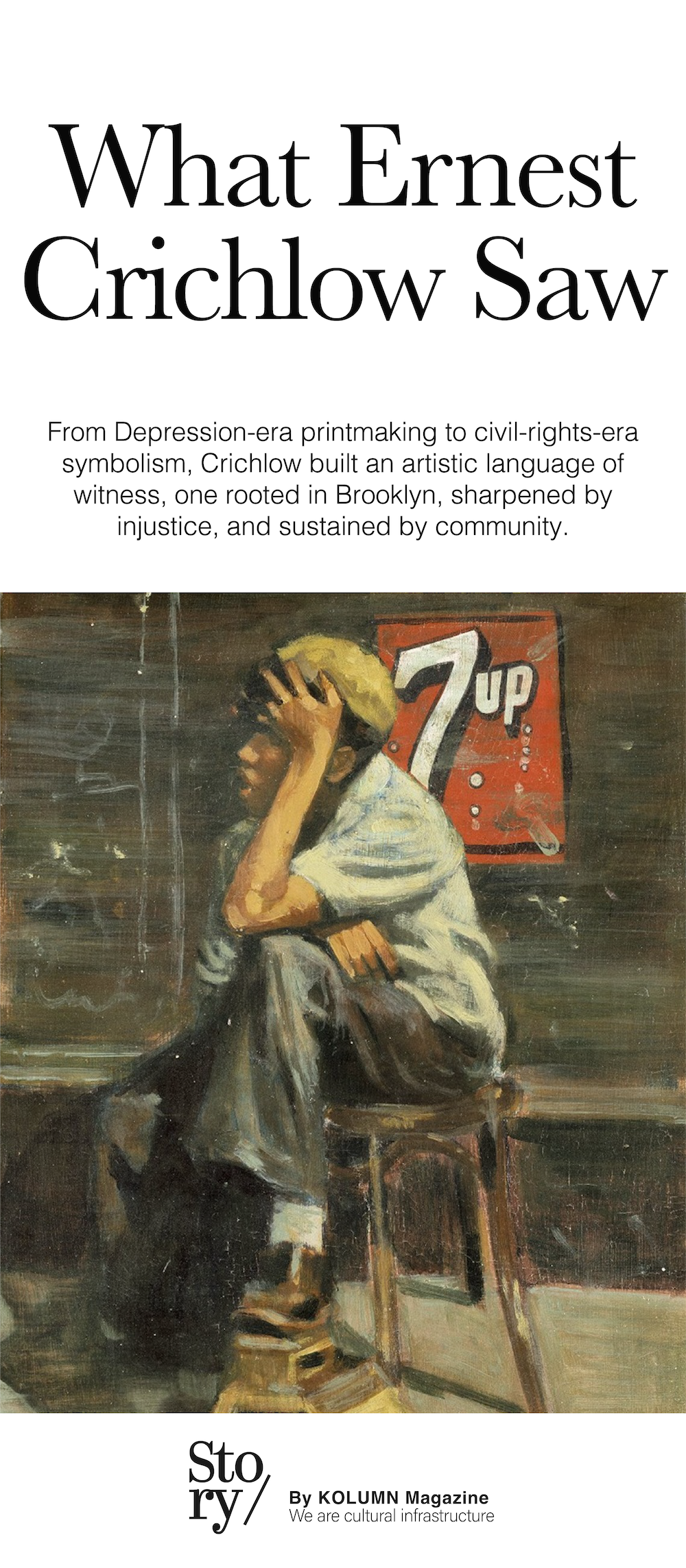
This was a pattern in Crichlow’s work. He often began with recognizably human scenes, then loaded them with social friction. Consider Shoe Shine from 1953, held by the Brooklyn Museum. Even in the museum’s concise framing, the work is described as drawing attention to the everyday conditions of the working class and the poor. That plainness matters. Crichlow did not need grand allegory to say something sharp. Labor itself, especially labor rendered through Black bodies and urban routine, carried historical charge.
There is a tendency in some art writing to undervalue accessibility, as though a painting’s communicative clarity somehow compromises its seriousness. Crichlow rejected that premise. In his 1968 oral history, he acknowledged that his approach ran against the tide in a period when art that did not make “a crystal clear or a strong statement” was receiving heavy attention. He was not apologizing. He was defining his position. He knew what he wanted painting to do, and he was willing to sound old-fashioned to do it.
Crichlow’s gift was not just depicting Black life. It was showing how American life was organized against it.
He painted children without ever painting innocence naively
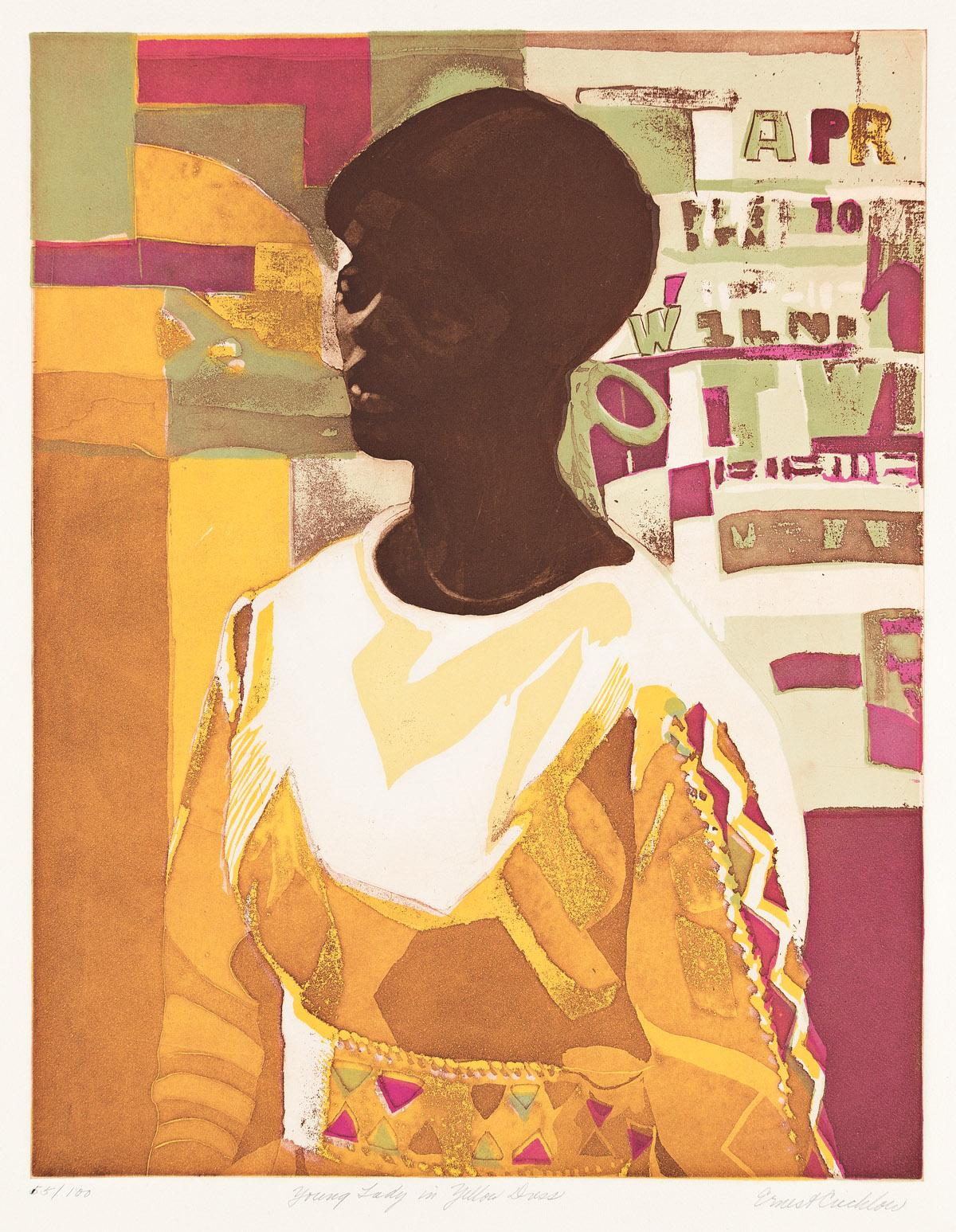
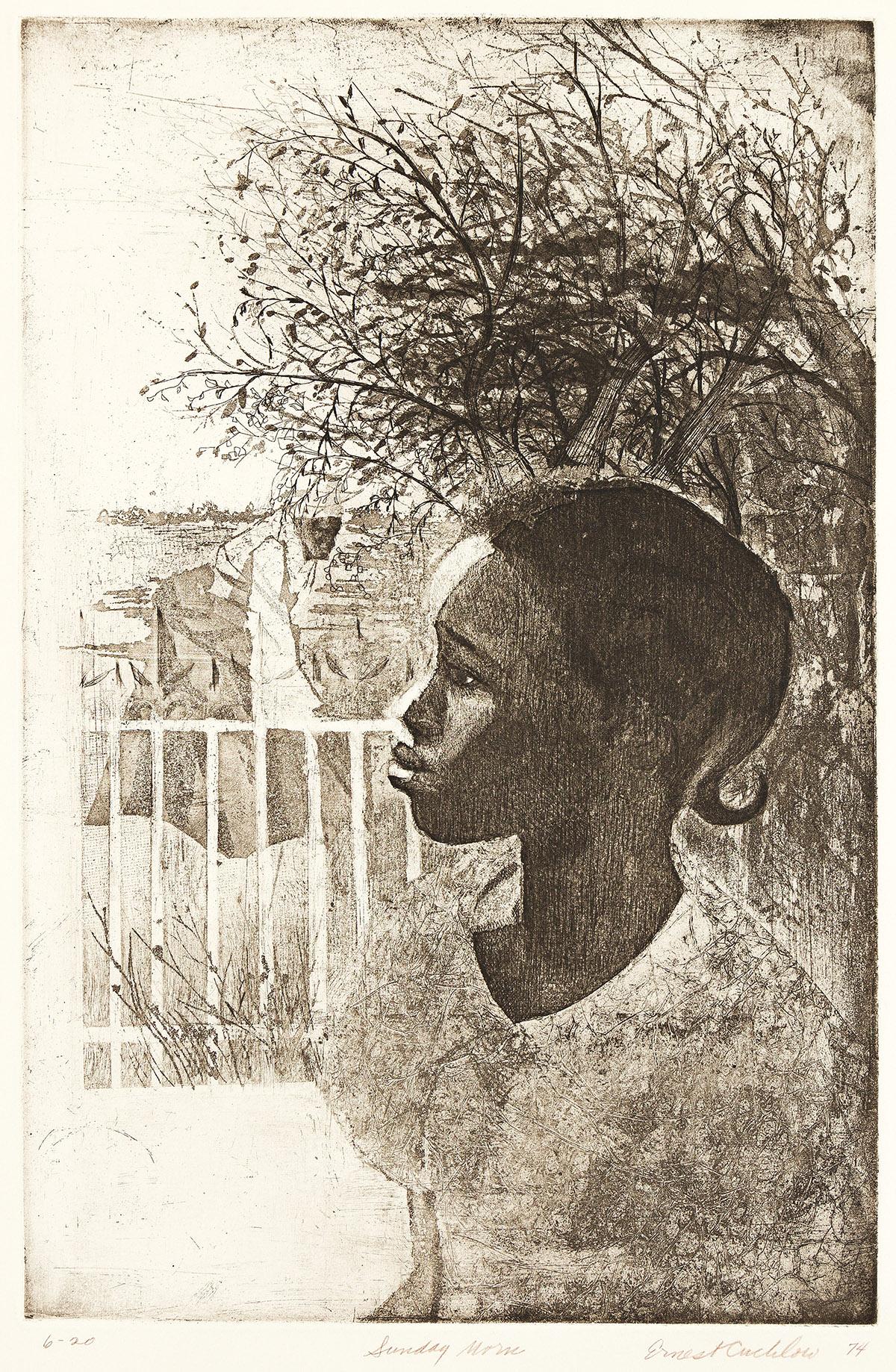
One of the strongest through lines in Crichlow’s career is his attention to children. That fact can be misread if approached casually. Children in American art are often used as shorthand for purity, sentiment, or a supposedly universal innocence that floats above politics. Crichlow was too acute for that. His children are vulnerable, but they are not decorative. They exist in environments already shaped by race, power, and expectation. In his work, the child is not outside history. The child is where history lands.
This is obvious in White Fence, one of his most discussed later paintings. In the 1968 oral history, Henri Ghent describes the picture as featuring a very blond little white girl separated by a small white picket fence from Black children. Crichlow’s own explanation is revealing. He says he hoped the “isolation” of enclosing the Black children would register clearly and adds that in his paintings the color white was often being used “oppressively,” as either restrictive or oppressive. He then unpacks the symbolic arrangement: the white child dominates the composition with her whiteness; the white fence intensifies the separation; the grouped Black children become almost like flowers pressed into barrenness. That is a serious formal meditation on race as visual structure.
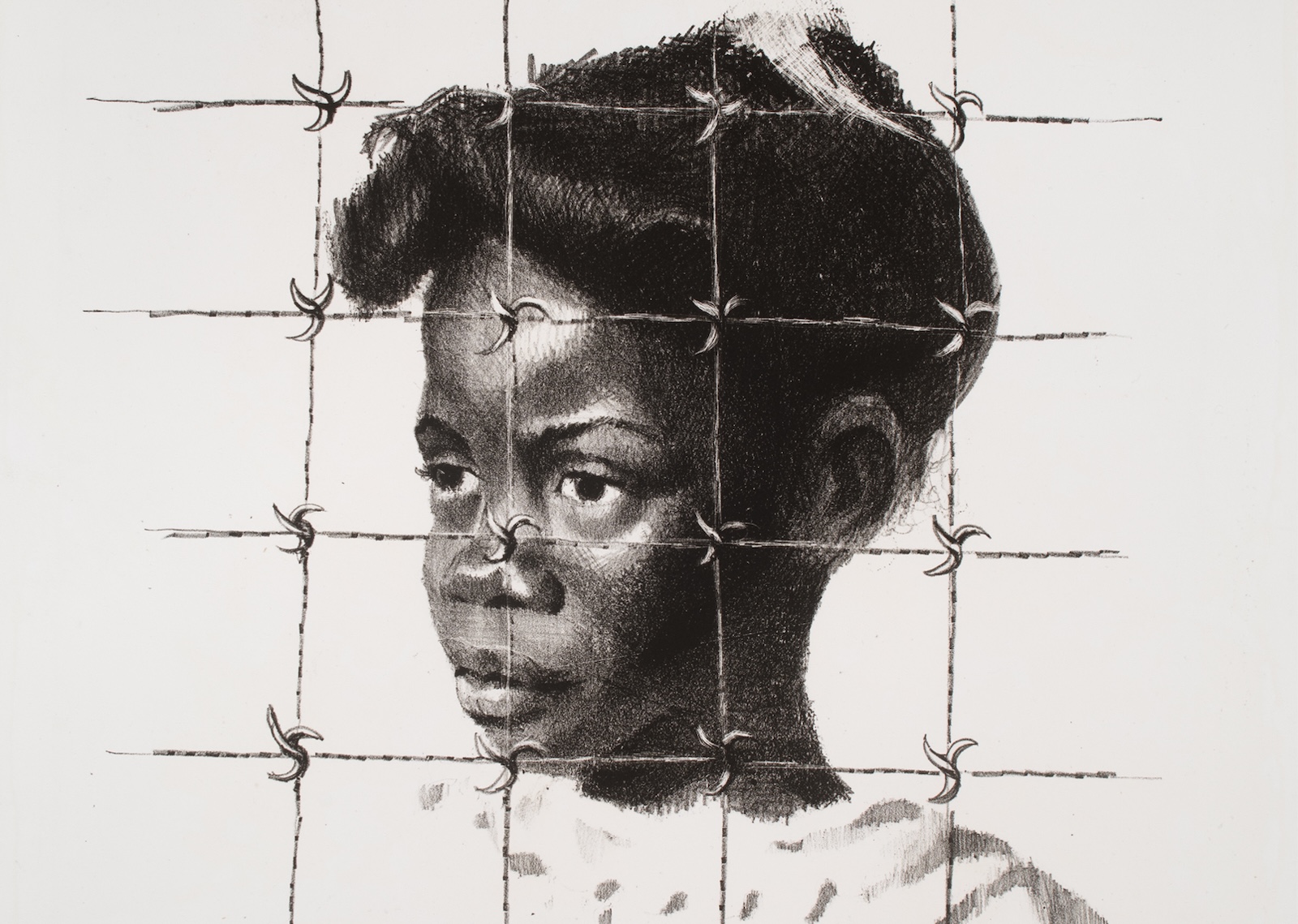
What makes White Fence enduring is that it does not rely on melodrama. The fence is not a prison wall. The children are not in overt physical distress. The violence is spatial and psychological. Crichlow understood that segregation was not only a matter of official policy or spectacular brutality. It was also a way of arranging sightlines, comfort, belonging, and fear. The painting turns racial hierarchy into an atmosphere you can almost breathe. Delaware Art Museum, which notes that fences and barbed wire recur in his work to indicate civil injustice, connects this painting to a broader visual vocabulary that Crichlow returned to repeatedly.
That same vocabulary appears in Waiting from 1968, another work associated with his civil-rights-era imagery. Delaware Art Museum and later commentary on the restaging of the 1971 exhibition Afro-American Images both emphasize how Crichlow used fences and barbed wire to evoke restriction and racism. Here again the formal intelligence is striking. Fences and wire are not neutral background elements. They are the grammar of exclusion. When Crichlow uses them, he is not merely illustrating oppression; he is diagramming it.
His commitment to children also extended into illustration. Illustration History notes that in the 1940s he began creating picture books that placed African American children in positive, central roles. Two Is a Team from 1945, for instance, presented interracial friendship in a children’s story, and Mary Jane from 1959 addressed school desegregation from the perspective of Black protagonists. Those were not incidental side gigs. They were part of a larger project: to alter the visual field available to children and to insist that Black children could appear as full imaginative subjects rather than token presences or afterthoughts.
That work deserves more attention than it usually gets. Children’s illustration is often treated as secondary to “serious” painting, but for Black artists in the mid-20th century, representation in children’s books had enormous ideological stakes. Who gets to be seen as curious, brave, complicated, scared, playful, or lovable? Who gets to be normal? Crichlow appears to have understood that the battle over images was also a battle over psychic formation. A child who sees herself in a book is not simply being included; she is being told she belongs in the story of the world.
He was a social realist, but not a narrow one
Calling Crichlow a social realist is accurate, but it can also undersell him if the term is heard too rigidly. Social realism often gets reduced to documentary earnestness, a kind of worthy visual journalism. Crichlow’s paintings do document something, but they are also stylized, symbolic, and emotionally tuned. He cared about narrative, but he also cared about arrangement, chromatic contrast, and the expressive force of everyday objects. The recurring fence, for example, is both literal and metaphorical. The bare interior is both specific room and psychic chamber.
His own comments make this plain. In the oral history, when discussing his work, he insists that he needs “this way of saying what I want to say.” That phrase carries an aesthetic principle. Crichlow was not choosing figuration because he lacked imagination or because he was trapped by tradition. He chose it because it allowed him to make a specific kind of address: intimate, legible, morally charged, and open to symbol without surrendering the body.
That same interview is full of reflections on how Black artists were perceived. Crichlow says that Black artists were often urged by white critics to get out of the box of being “Negro artists,” yet when their work was evaluated, it was placed right back in that box. It is a brilliant diagnosis of a double bind that still feels contemporary. On one hand, Black artists are told universality requires distance from racial specificity. On the other, the institution marks their work as racial regardless. Crichlow was too clear-eyed to pretend otherwise. Asked whether he would rather be known as an artist who is Black or just an artist, he effectively rejects the linguistic dodge and says he would rather be known as a Black artist than participate in empty word games.
That refusal is central to his importance. Crichlow did not treat racial specificity as a creative limitation. He treated it as material, truth, and responsibility. He also refused the false choice between speaking to Black audiences and making art for everybody else. In the oral history, he suggests the issue is inclusion: Black audiences must be understood as a total and important part of the audience. That is both an aesthetic and institutional intervention. It challenges the assumption that white reception confers artistic legitimacy.
Crichlow the builder mattered as much as Crichlow the painter
A full reckoning with Crichlow has to move beyond individual canvases and prints. His significance is also institutional. He did not merely seek space in existing structures; he helped build new ones. That includes the Fulton Art Fair in Brooklyn and, even more enduringly in art-historical terms, Cinque Gallery in Manhattan.
The Fulton Art Fair’s own history states that the fair was founded by Bedford-Stuyvesant businesswoman Shirley Hawkins and co-chaired by Crichlow and Jacob Lawrence, with the aim of presenting and promoting local artistic talent while countering negative media images of the neighborhood. That mission says a great deal about Crichlow’s worldview. He was not interested only in elite validation. He understood art as community infrastructure. A fair in a park might not look as glamorous as a museum retrospective, but it can do something museums often fail to do: place art in the middle of ordinary community life and let residents see cultural production as something that belongs to them.
Cinque Gallery was even more consequential. The Smithsonian’s Archives of American Art states that it was founded in 1969 by Crichlow, Romare Bearden, and Norman Lewis to exhibit both new and established African American artists and to provide community educational programs. It was named for Joseph Cinqué of the Amistad revolt, which immediately locates the gallery inside a Black political genealogy rather than a purely market one. And it lasted. Smithsonian notes that over more than three decades, Cinque sponsored more than 300 exhibitions before closing in 2004. That is not symbolic activism. That is durable institution-building.
The Arts Students League also notes that Crichlow, Bearden, and Lewis founded Cinque and that it exhibited the work of minority artists for more than three decades. Hyperallergic, in a later discussion of Richard Mayhew, frames Cinque as a response to the continuing lack of opportunity for Black artists in New York even after the Civil Rights Act. That point should not be lost. Crichlow and his peers were not founding parallel institutions because they misunderstood the mainstream. They were founding them because they understood it perfectly. Legal progress had not translated into equal cultural access.
Crichlow did not wait to be let in. He helped build doors for other artists.
His involvement with Spiral belongs in this same frame. Although the sources here are more fragmentary than one might want, multiple museum and archival references identify Crichlow as part of the generation of Black artists engaged in the debates around Spiral in the 1960s. Spiral was not just a collective in the casual sense. It was a forum for Black artists to think through how, and whether, their work should respond to civil rights struggle and what it meant to make art as Black artists in the United States. Crichlow’s oral history, with its remarks on discrimination, audience, and Black subject matter, reads almost like a companion text to those debates.
Teaching was not peripheral to his practice
Crichlow taught at the Art Students League and at other institutions over the course of his career. Delaware Art Museum notes that he taught at the Art Students League in New York, while other summaries connect him to the Brooklyn Museum Art School and additional teaching appointments. The point is not merely that he had teaching jobs. It is that pedagogy was a core part of how he moved through the art world.
This too fits his larger pattern. Artists who care about community often teach, but not all teaching carries the same weight. In Crichlow’s case, teaching seems continuous with his broader commitment to sustaining Black artistic life beyond his own studio. To teach is to transmit standards, technique, discipline, and seriousness. It is also to resist the scarcity model that says one artist’s advancement is enough. Crichlow’s career suggests the opposite ethic: a serious artist helps make an environment in which others can work.
There is a subtle politics in that stance. American culture loves the singular genius story, especially when Black achievement can be narrated as exceptional triumph over adversity. Crichlow complicates that storyline because he never appears content with being the exception. He kept returning to structures: workshops, classrooms, fairs, galleries, community exhibitions. His life argues that representation at the top is not enough without support below and around it.
Why his work still feels current
Crichlow’s work has not lost force because the problems it registered have not disappeared. The fences in his paintings are not historical curiosities. They remain readable because Americans still live amid managed separation, uneven belonging, and the visual politics of who gets to move freely and who is marked as out of place. His art does not need updating to speak to the present; the present has done the work of making it current again.
This is especially true in the way he handled innocence. American culture routinely sentimentalizes childhood while tolerating the disproportionate exposure of Black children to surveillance, discipline, dispossession, and fear. Crichlow did not sentimentalize. He looked directly at the child under pressure, the child behind wire, the child inside a segregated composition, the child navigating interracial space. He understood that one of racism’s most enduring tricks is to preserve innocence for some by sacrificing it in others.
He also remains current because of what he understood about institutions. Museums and galleries continue to wrestle, sometimes sincerely and sometimes cosmetically, with the underrepresentation of Black artists. Cinque Gallery’s history is therefore not just a footnote; it is a lesson. Black artists and organizers built alternatives because the mainstream system failed them. Any contemporary institution celebrating Black art should have to answer a basic question: what have you actually changed beyond the exhibition schedule? Crichlow’s example pushes beyond visibility toward structure.
Recent museum attention has helped keep his work in circulation. Delaware Art Museum has featured Waiting and summarized Crichlow as an advocate for new and established African American artists. Its biographical materials also note that a major retrospective of his work toured in 1999, and that his work is held by institutions including the Studio Museum in Harlem, Brooklyn Museum, and DuSable Museum. Those facts matter, but they should not become excuses for complacency. Canonization after the fact is not the same thing as being fully integrated into public memory. Crichlow is respected. He is still not widely known enough.
The obituary frame is too small
When Crichlow died in November 2005, the Washington Post described him as an artist and illustrator of Black life whose figurative paintings offered poignant and unsettling themes. The Los Angeles Times emphasized that his work depicted the struggles of Black America and noted that it moved from Depression-era social justice themes to civil rights issues. Those are fair obituary formulations. But obituary language, by design, compresses. It cannot quite capture the density of a life spent making art, teaching it, defending its place, and creating platforms for others to show it.
It is also too small to call him simply a chronicler. He was that, yes, but he was more. He was an arranger of symbols. He took color, enclosure, posture, and proximity and made them do ideological work. He made domestic spaces uneasy. He made public life personal. He made the child political without stripping the child of humanity. He made work that did not confuse clarity with simplicity.
And maybe most importantly, he kept faith with Black visibility as an artistic problem and a civic one. In a culture that has repeatedly demanded Black artists either universalize away their Blackness or perform it according to market desire, Crichlow held a firmer line. He painted Black people because Black life was his world, because Black audiences mattered, because injustice needed form, and because painting could still say something unmistakable.
Ernest Crichlow’s real legacy
Ernest Crichlow’s legacy is not reducible to a single masterpiece, though Lovers and White Fence would be enough to secure many careers. It lies instead in the total shape of his contribution. He helped define a visual language for Black social experience in the 20th century. He linked the workshop culture of the Harlem art world to later civil-rights-era debates. He crossed painting, printmaking, book illustration, teaching, and institution-building without treating any of them as beneath the dignity of art. He made Brooklyn not just a birthplace but a site of ongoing cultural labor. And he insisted, in practice and in words, that Black artists were not asking for special pleading but for full recognition on honest terms.
To revisit Crichlow now is to see how much 20th-century American art history still depends on artists who were once treated as adjacent to the main story rather than central to it. He was central. Not because he can be symbolically inserted into the canon, but because the canon itself is unintelligible without the work he did and the worlds he helped sustain. If American art is, among other things, a record of who has been seen, how they have been seen, and who got to control the frame, then Crichlow belongs near the center of that record.
His paintings still ask the hardest questions in a deceptively quiet voice. Who is fenced in? Who is fenced out? Who gets imagined as safe? Who is asked to wait? Who is visible only when suffering, and who gets to occupy the picture with ease? Those are not just Crichlow’s questions. They are American questions. He simply had the discipline, and the nerve, to paint them clearly.
More great stories
What Happened at Colfax
April 13, 2026
No Comments
The Woman Whose Name Changed the Law
April 13, 2026
No Comments