



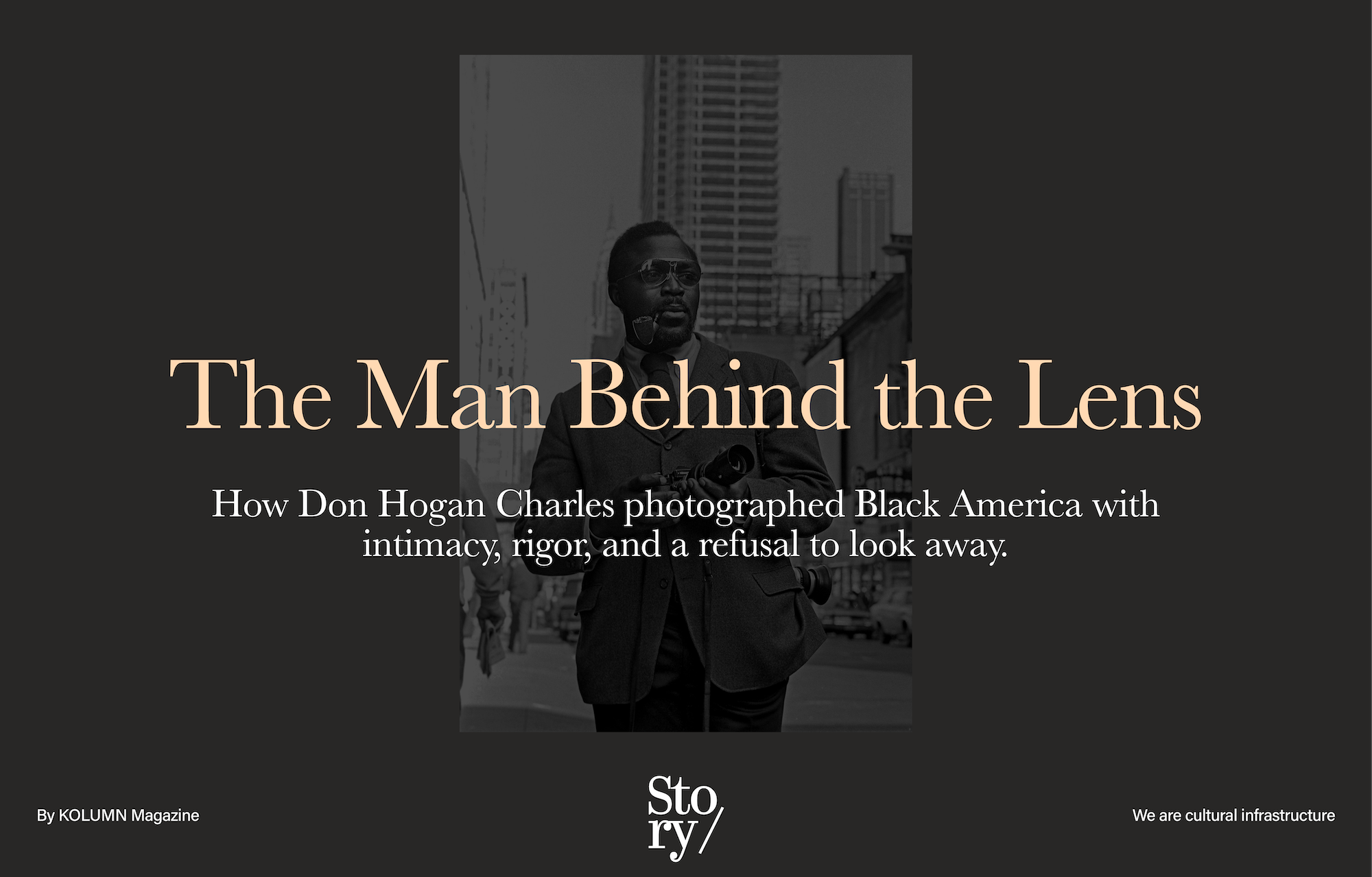
Don Hogan Charles didn’t simply photograph major events. He altered the visual terms on which Black life could enter the American record.
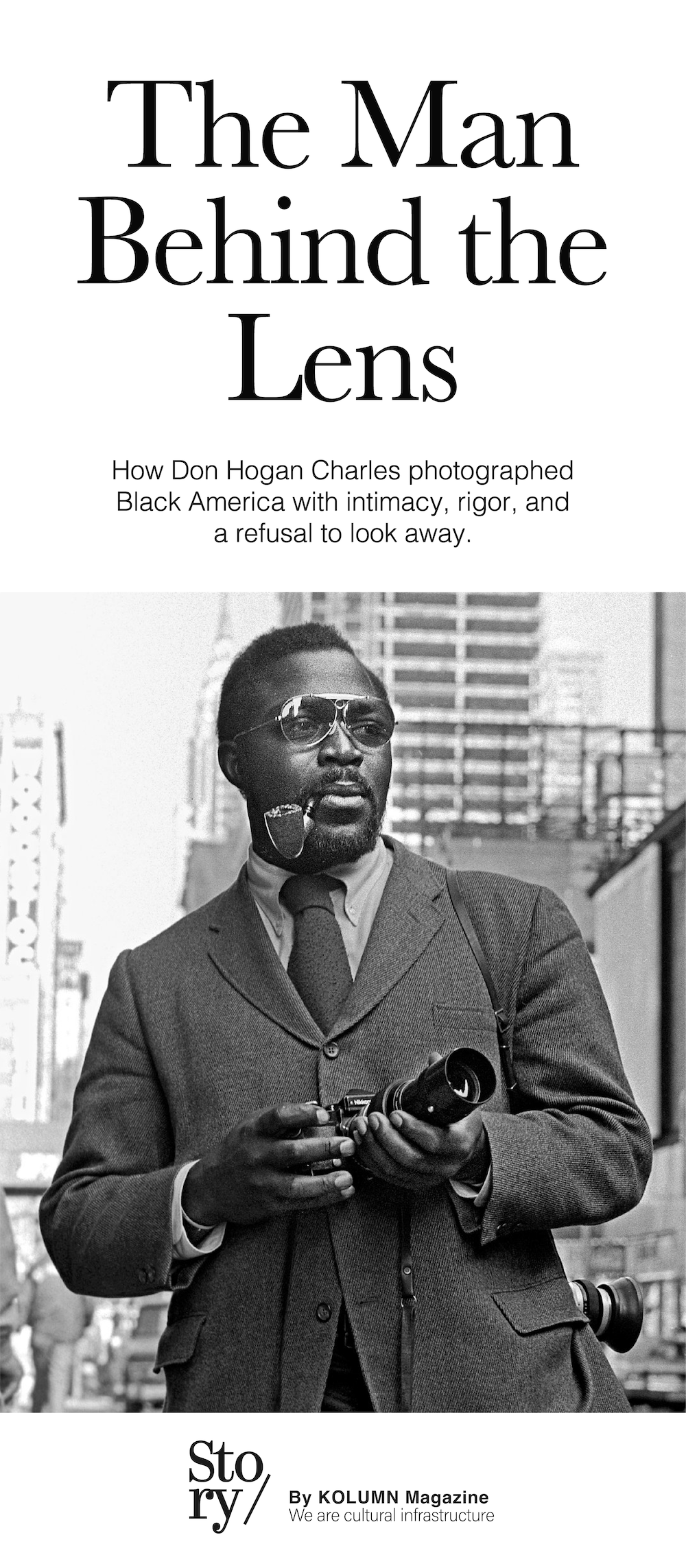
Don Hogan Charles didn’t simply photograph major events. He altered the visual terms on which Black life could enter the American record.
By KOLUMN Magazine
There are photographers whose names become inseparable from one unforgettable image. And then there are photographers whose real contribution is bigger than any single frame, even when they made one of the most recognizable photographs of the 20th century. Don Hogan Charles belongs in that second category. Yes, he is often introduced as the man who photographed Malcolm X peering through the curtains of his home with a rifle in hand. Yes, he was the first Black staff photographer hired by The New York Times, joining the paper in 1964 and remaining there for more than four decades. But to leave him there, frozen inside one credential and one picture, is to miss what made his career matter. Charles was not just present for history. He widened the field of who history was allowed to include.
Born Daniel James Charles in New York City in 1938 to Caribbean immigrant parents, James Charles and Elizabeth Ann Hogan, he came of age in a city that advertised itself as modern and worldly but still carried the hard architecture of exclusion. He attended George Washington High School in Manhattan and then enrolled at City College of New York as an engineering student before dropping out to pursue photography, a choice that looked risky on paper but proved decisive for American visual journalism. Before landing at The Times, he worked as a freelancer, with assignments appearing in international magazines like Der Spiegel and Paris Match, and with commercial clients that included fashion houses and airline brands. That mix of editorial rigor and commercial polish would stay with him: his pictures could carry urgency without losing elegance.
Breaking the Frame at The New York Times
His arrival at The New York Times in 1964 was not merely a personnel milestone. It was an institutional breach. Charles became the first Black staff photographer hired by the paper, and that fact matters not as a ceremonial first but as a clue to the newsroom he entered. American news photography in the mid-20th century was dominated by white photographers, white editors, and white assumptions about what constituted a newsworthy image and what counted as “universal” experience. Charles entered that apparatus carrying both the burden and the opportunity that comes with being first: he had to prove himself as a photographer while also navigating an industry that did not yet know how to fully make room for him.
That matters because Charles’s career unfolded during a period when photography had enormous civic power. Images from the civil rights era did not merely accompany the news; they shaped public memory of the news. They turned local struggle into national reckoning. They also, just as importantly, could flatten people into symbols. A photographer like Charles worked inside that tension. He documented marches, funerals, demonstrations, riots, and public figures. But he also kept returning to ordinary people, neighborhood life, the unglamorous and the uncaptioned. Aaron Bryant, the curator of photography and visual culture at the National Museum of African American History and Culture, put it succinctly: while Charles was telling the story of New York in the decades after the mid-1960s, he was also documenting Black community life at the same time, with what Bryant described as a different vision and voice.
That phrase, “different vision and voice,” gets at the core of Charles’s significance. He was not significant only because he was Black in a white institution. He was significant because his pictures often registered social texture that others either missed or ignored. The accessible record of his work shows a photographer alert not just to spectacle but to social density: the emotional weather of a room, the dignity or fatigue of a subject, the way power is distributed in public space, the visual grammar of a neighborhood that outsiders too often render as problem or pathology.
The Malcolm X Image — and the Risk of a Single Photograph
The famous Malcolm X image is the obvious place to start, because it remains the photograph most people know even when they do not know Charles’s name. Taken in 1964 for an Ebony assignment, the image shows Malcolm X armed and vigilant at the window of his Queens home. It has become one of the defining visual symbols of Malcolm’s final period: disciplined, endangered, prepared, and unsentimental about the threats against him and his family. Over the years, the image has circulated so widely that the authorship has sometimes been blurred or misattributed, a pattern that says something about how Black photographers can make canonical work and still be partially erased from their own legacy. Charles’s name deserves to be restored to that frame.
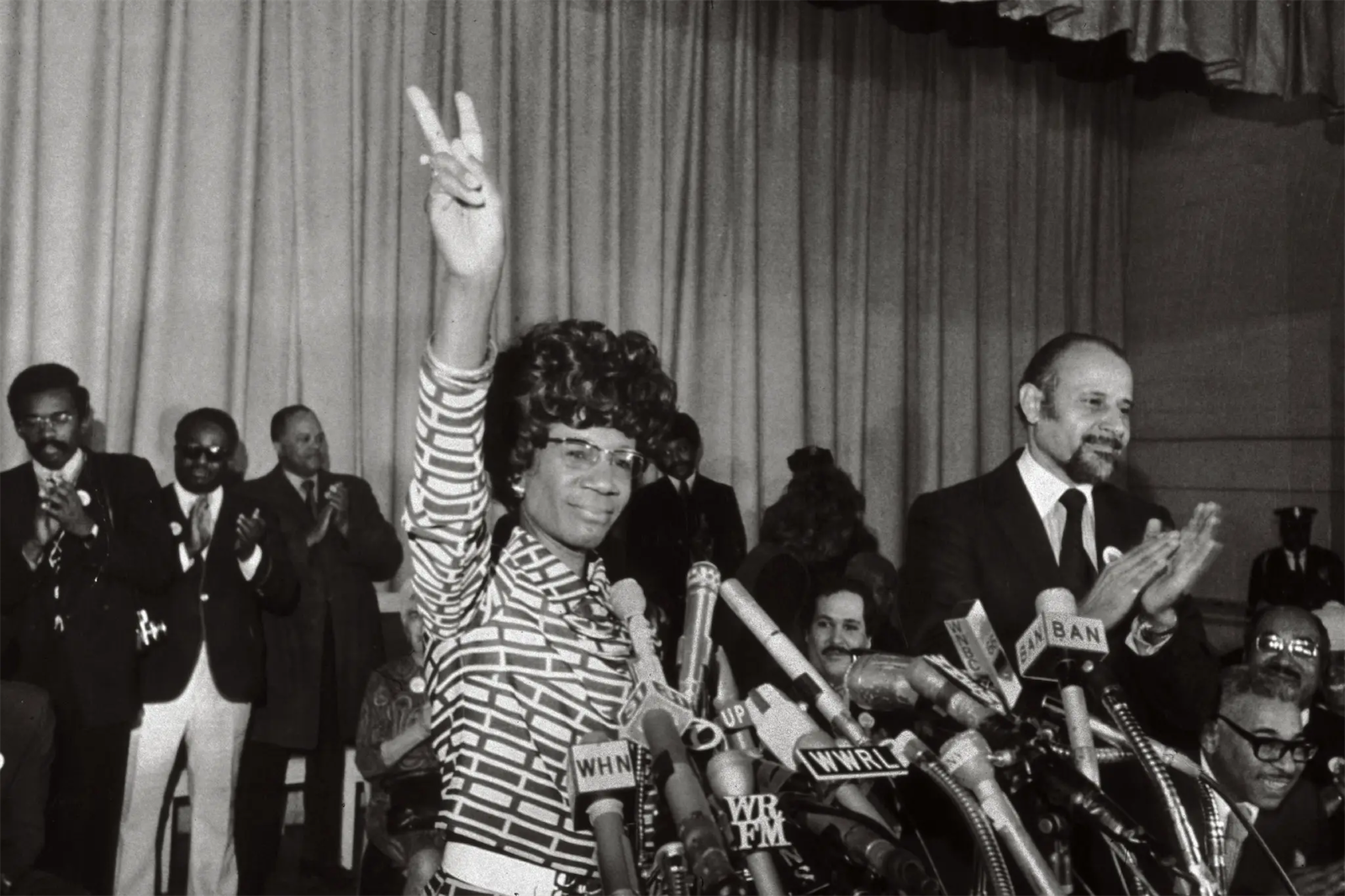
But even that picture becomes more meaningful when placed inside Charles’s wider practice. He photographed Malcolm X again at the leader’s funeral in Harlem in 1965. He photographed the aftermath of the firebombing of Malcolm’s home. He photographed Martin Luther King Jr.’s funeral, including powerful scenes involving Coretta Scott King and Harry Belafonte. He photographed Adam Clayton Powell Jr. and Shirley Chisholm. He photographed John Lennon and Muhammad Ali. He photographed politicians, entertainers, demonstrations, fashion, street life, and the slow drama of New York itself. The range matters because it shows Charles refusing the narrow assignment of being only a “civil rights photographer,” even as his civil rights images remain foundational.
Charles himself seems to have understood that photography required historical literacy as much as technical skill. In a 1982 interview cited by the New York Amsterdam News, he advised aspiring photojournalists that they “must be well read on current events,” because any event already has a backstory and a cast of principals one must understand. That statement is more than professional advice. It is a theory of photography. Charles was saying that the camera is not a neutral machine. It is only as intelligent as the person behind it. To photograph responsibly, you have to know what came before the shutter click. You have to know the structure behind the scene.
A Photographer of Black Public Life, Not Just Black Protest
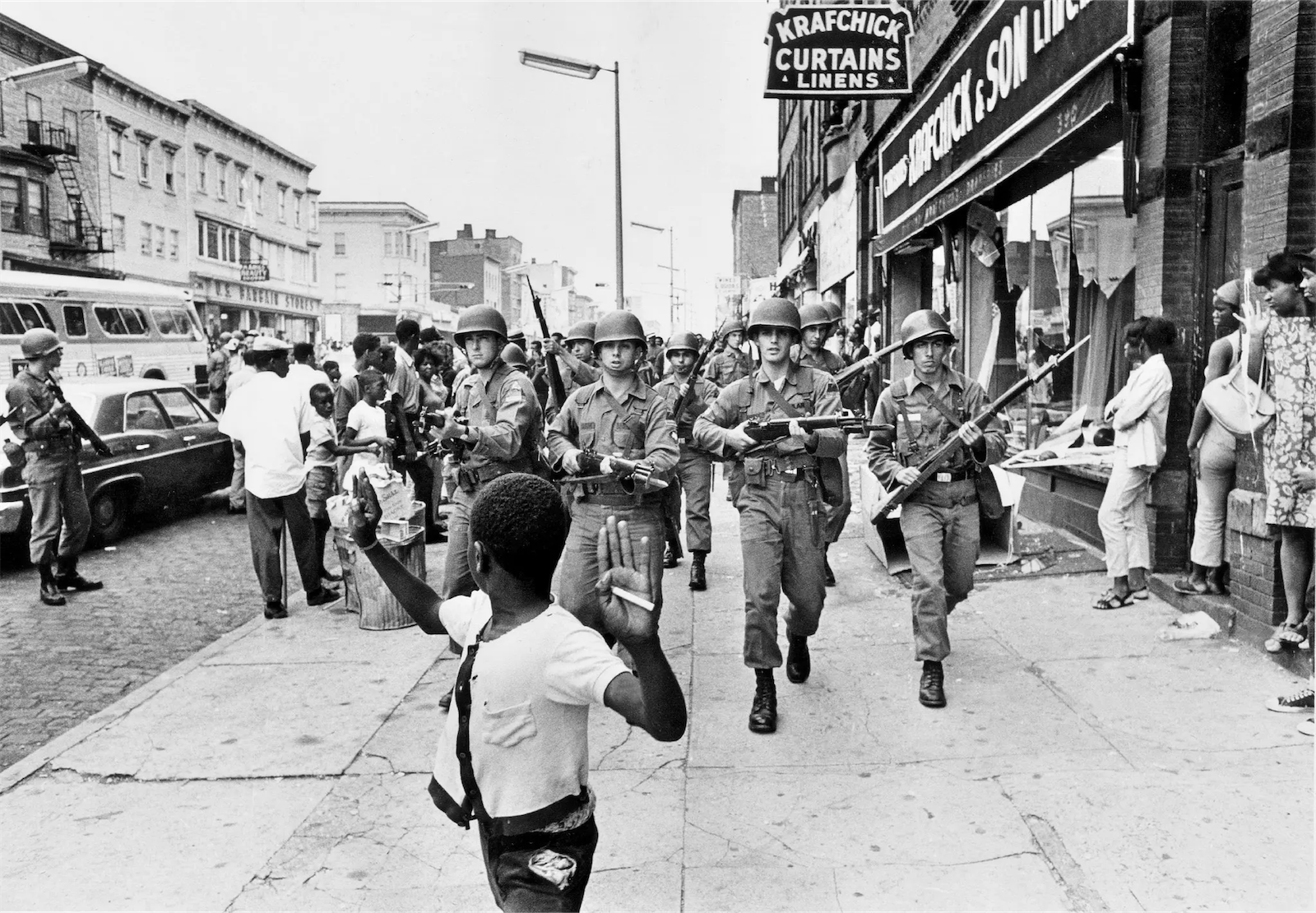
That idea helps explain why so much of his work resists the cheap sensationalism that could have been rewarded in a news ecosystem hungry for heat. The image of a young boy walking with his hands up ahead of soldiers during the 1967 Newark uprising is a case in point. The picture is now in the collection of the National Museum of African American History and Culture, where it has been recognized as one of Charles’s most resonant images. The force of the photograph lies in its compression of innocence, military presence, civic breakdown, and racialized surveillance into a single moment. It is not just a riot photo. It is a study in how Black childhood is made to move through state power.
The Newark photograph also signals how Charles worked against the temptation to reduce Northern racism to a softer, more respectable cousin of Southern brutality. The mid-century photographic canon of civil rights is often dominated by images from the South: Birmingham, Selma, Mississippi, Little Rock. Those images deserve their place. But Charles’s work reminds viewers that northern cities were also battlegrounds shaped by segregation, police force, disinvestment, and media distortion. His photographs of Harlem, Newark, and New York’s Black political life widened the geography of civil rights visual culture. He helped make clear that Black struggle was not only a Southern story and not only a story of singular heroes. It was an urban, national, daily condition.
Harlem, Everyday Life, and the Pictures Editors Left Behind
One of the most revealing episodes in the Charles archive involves Harlem, the neighborhood where he lived and which he photographed with unusual intimacy. In 1966, he took hundreds of images for a Times feature on Harlem. According to later accounts cited by Smithsonian and Rachel Swarns, editors selected only a tiny fraction of those photographs for publication, leaving behind a much richer visual record of ordinary neighborhood life. James Estrin later highlighted how nuanced those unpublished photographs were, offering a fuller portrait than the more limited editorial frame the paper originally used. That gap between what Charles saw and what editors printed is instructive. It tells us that the history of photography is never only about photographers. It is also about gatekeepers, institutional framing, and the politics of selection.
The archive suggests that Charles often saw more than the institutions around him were ready to publish.
This is one reason Charles’s legacy feels so contemporary. Today, journalists and critics talk constantly about representation, editorial bias, and who gets to shape public narrative. Charles lived those questions decades before the language around them became mainstream. His Harlem work shows that inclusion is not solved when a newsroom hires one Black photographer. Inclusion also depends on what editors recognize, what they dismiss, what they fear, and what kinds of Black life they believe audiences can understand. Charles’s career did not erase those tensions. It exposed them.
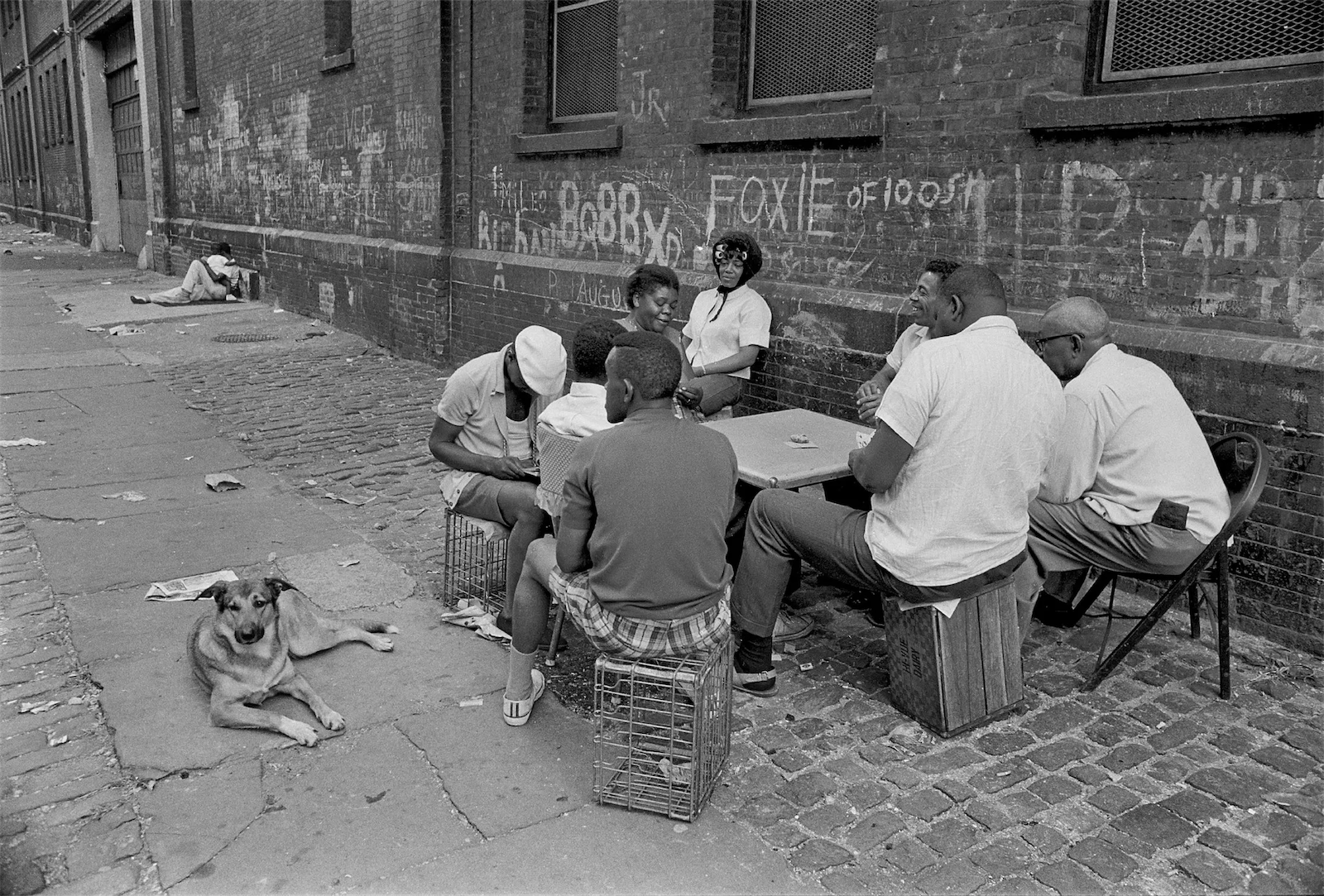
He also appears to have understood, perhaps better than some of his contemporaries, that Black life could not be truthfully represented through trauma alone. The available accounts of his work consistently return to his interest in everyday people and daily scenes in Harlem and across New York. That emphasis may sound modest, but it is not. In a country that has repeatedly trained its cameras on Black life only when it combusts, the simple act of careful, unspectacular attention becomes radical. Charles documented not just rupture but continuance: people getting through the day, inhabiting the city, building style, carrying themselves with wit and formality and fatigue and flair.
Journalism With an Artist’s Eye
There is, too, the question of aesthetic discipline. Charles was a working photojournalist, not a museum-first artist in the contemporary sense. But the afterlife of his photographs in major institutions says a great deal about their formal power. MoMA lists his work in its collection, including images from Martin Luther King Jr.’s funeral, a confrontation outside an armory in 1968, and photographs related to Adam Clayton Powell Jr. Those works were also included in the museum’s exhibition Pictures of the Times: A Century of Photography from The New York Times. The museum stamp does not create his significance, but it confirms something visible in the pictures themselves: Charles composed news photographs with a strong sense of balance, emotional angle, and narrative economy.
The art world has continued to situate Charles within larger histories of Black image-making. Getty’s current exhibition Photography and the Black Arts Movement, 1955–1985, organized by the National Gallery of Art, frames photography during those decades as a tool for social change and for the articulation of Black culture across the diaspora. Charles fits squarely within that story, even though his career crossed journalism, commercial work, and documentary practice rather than a single movement-defined lane. His photographs helped produce the modern visual vocabulary of Black public life: not only the vocabulary of protest, but the vocabulary of presence.
That phrase matters because presence is easy to underestimate. A great many photographers can capture an event. Fewer can register the social meaning of who is present, who is centered, who is peripheral, and who has historically been rendered invisible. Charles’s camera repeatedly centered Black subjects without exoticizing them. That sounds simple. It is not. Too much American photography has oscillated between caricature and sentimentality when approaching Black life. Charles often threaded a more difficult needle. He could be elegant without becoming decorative; he could be unsparing without becoming exploitative.
The Costs and Courage of Bearing Witness
His colleagues and successors speak to that duality. Michelle Agins remembered him as a protective elder presence for younger photographers arriving at The Times, someone who “was all of that” when a newcomer needed a big brother. Chester Higgins Jr., another distinguished Black photojournalist, said Charles believed it was his responsibility to get the story right and understood that many white reporters and photographers were limited in what they could perceive. Those assessments are not just affectionate. They sketch Charles as both craftsman and newsroom counterweight: someone who knew that correct exposure and correct focus were not enough if the interpretation of Black life remained distorted.
There is also evidence that Charles paid a personal price for doing this work in racially hostile environments. According to accounts from family and colleagues, some assignments brought him sorrow and frustration; he experienced discrimination in Manhattan and took practical precautions when traveling in the South, including checking the tailpipe of his car for explosives. Those details are jarring because they restore the risk too often edited out of retrospective praise. Charles did not simply document danger at a safe distance. As a Black man moving through segregated or volatile spaces with a camera, he was also vulnerable to it.
That vulnerability helps explain the authority in his work. Charles was not a tourist in Black history. He was implicated in it. He did not have the luxury of pretending race was just an interesting subject matter. At the same time, accounts of his career suggest that he resisted being racially pigeonholed, even while feeling a duty to cover the movement and the communities that mainstream journalism often mishandled. That combination is crucial. Charles wanted neither erasure nor confinement. He was a Black photographer, not only a photographer of Blackness. His beat was America. His subject was the city, the century, the struggle, the spectacle, the ordinary, and the people who moved through all of it.
Charles’s genius was not merely that he stood near history. It was that he understood history was happening in famous rooms and on ordinary blocks at the same time.
Beyond the Icon: A Career That Outlasted the Moment
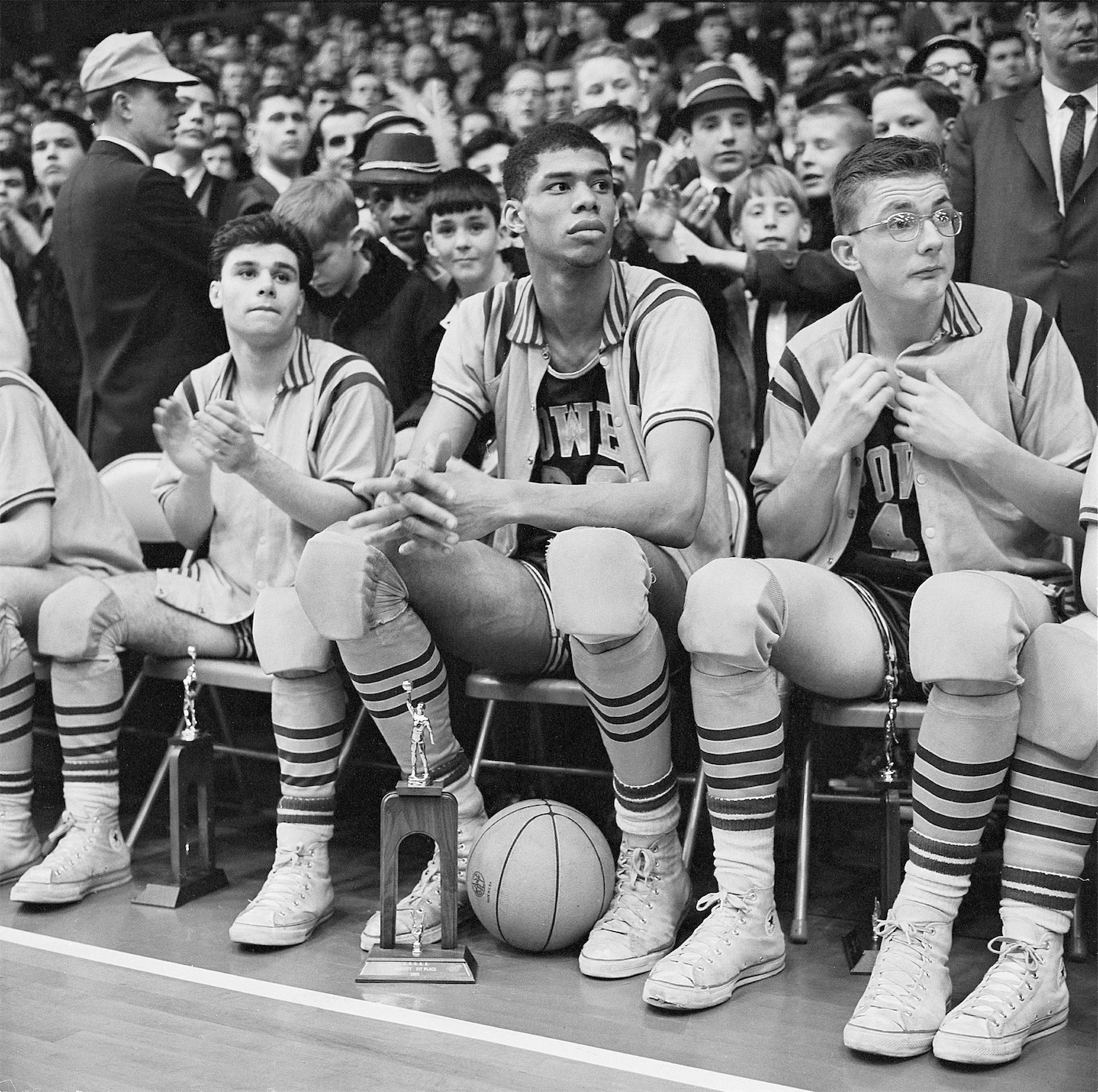
If one image keeps dragging Charles back into public discussion, it is the Malcolm X window portrait. That is understandable. The photograph is genuinely iconic. But there is a risk in allowing one picture to do all the talking. The fixation can make Charles seem like a specialist in singular drama when the archive suggests something broader and more difficult: he was a chronicler of Black public existence across registers of power. He photographed grief at funerals, ambition at podiums, conflict in the streets, charisma in performance, style in motion, and everyday neighborhood life. That is not a one-note career. It is a visual sociology of postwar Black America with the timing of news photography and the restraint of someone who knew that overstatement weakens an image.
The fact that he stayed at The New York Times until retiring in 2007 is also telling. Forty-three years inside a major institution means Charles witnessed multiple eras of American journalism: the civil rights years, urban crisis, the expansion of Black elected power, the culture wars, the rise of celebrity politics, and the beginnings of digital transition. That longevity complicates the simplistic narrative of the trailblazer who appears, breaks a barrier, and disappears into legend. Charles endured. He kept working. He adapted. And he left behind a record broad enough that no single institution can fully contain it.
In recent years, efforts to recover overlooked archives have made his legacy easier to see in full. Photoville presented his work in 2018. MoMA maintains his presence in its collection. The Smithsonian has foregrounded his photographs in relation to northern civil rights and Black urban experience. Rachel Swarns and colleagues, through projects like Unpublished Black History, have helped surface images that earlier editorial processes left unseen. These acts of recovery matter because archival neglect does not happen by accident. It is structured by the same hierarchies Charles spent his career navigating. To revisit his work now is not just to celebrate him. It is to correct the record.
Why Don Hogan Charles Still Matters
Charles died in East Harlem on December 15, 2017, at age 79. Reports at the time noted that he never married and had no children, though he remained close to his nieces. The biographical facts are spare, almost guarded, and that guardedness seems consistent with how he was described by people who knew him: private, exacting, sometimes distant until you got close enough to see the warmth underneath. There is something fitting about that. His pictures were often more revealing than his public persona. He seemed to understand the old journalistic paradox that the camera can disclose the world while allowing the photographer to remain partially hidden behind it.
Yet death did not close the question of his place in journalism. In some ways it sharpened it. Discussions around his funeral and remembrance reopened uncomfortable questions about how institutions celebrate pioneers after benefiting from their labor. That tension should not eclipse the greatness of Charles’s work, but neither should it be brushed aside. American media has often been slow to recognize Black innovators until after they are gone, and even then the recognition can feel partial, perfunctory, or belated. Charles’s legacy deserves more than ceremonial gratitude. It deserves integration into the core story of American photojournalism.
To say that Charles was the first Black staff photographer at The New York Times is true. It is also not enough. The phrase can become a plaque line, polished by repetition until it loses force. What made Charles important was not just that he opened a door, though he did. It was that once he got inside, he practiced a kind of looking that expanded the field for everyone who came after. His photographs demonstrate that representation is not cosmetic. It changes the archive. It changes what a city looks like on the page. It changes which faces appear as subjects rather than scenery.
And the archive he helped build remains urgent now because so many of the themes inside it remain unresolved. Police force in Black neighborhoods. The visual politics of protest. The public uses of grief. Black political ambition. The editorial struggle over what counts as a full, human portrait of community. None of that is historical residue. It is current language. Charles’s work does not feel contemporary merely because institutions have rediscovered it. It feels contemporary because America keeps replaying the arguments his photographs were already making.
There is something else worth saying plainly: Don Hogan Charles made Black life legible on terms that were more complex, more elegant, and more truthful than many of the institutions around him initially seemed prepared to handle. That may be the best way to understand his achievement. He did not just capture what happened. He recorded how people carried themselves within what happened. He found the posture inside the politics, the human scale inside the headline, the neighborhood within the metropolis, the full person within the public symbol. That is why his best images do not feel trapped in the past. They feel like the present learning to see itself.
In the end, Charles’s significance lies in the combination of access, instinct, and witness. He was close enough to power to photograph presidents, candidates, movement leaders, and global celebrities. He was attentive enough to understand that fame was only part of the story. And he was grounded enough in Black urban life to know that the camera’s most lasting task might not be to glorify the famous at all, but to dignify the lives that institutions routinely underexpose. Many photographers chase the decisive moment. Don Hogan Charles built a career out of recognizing that entire communities were decisive, whether the country noticed or not.
That is why he remains essential. Not as a footnote to Malcolm X. Not as a diversity milestone in a newsroom timeline. Not even only as a civil rights photographer, though he was certainly that. He remains essential as one of the clearest visual historians of Black American presence in the second half of the 20th century: rigorous, stylish, observant, historically literate, and unwilling to let the American record settle for a thinner story than the one he could see through his lens.
More great stories
Samuel Wilbert Tucker and the Quiet Architecture of Freedom
April 6, 2026
No Comments
Bryan Stevenson and the Long Work of Repair
April 6, 2026
No Comments