





She was not simply trying to save souls in the abstract. She was building a moral infrastructure for people the city had already decided were expendable.
She was not simply trying to save souls in the abstract. She was building a moral infrastructure for people the city had already decided were expendable.
By KOLUMN Magazine
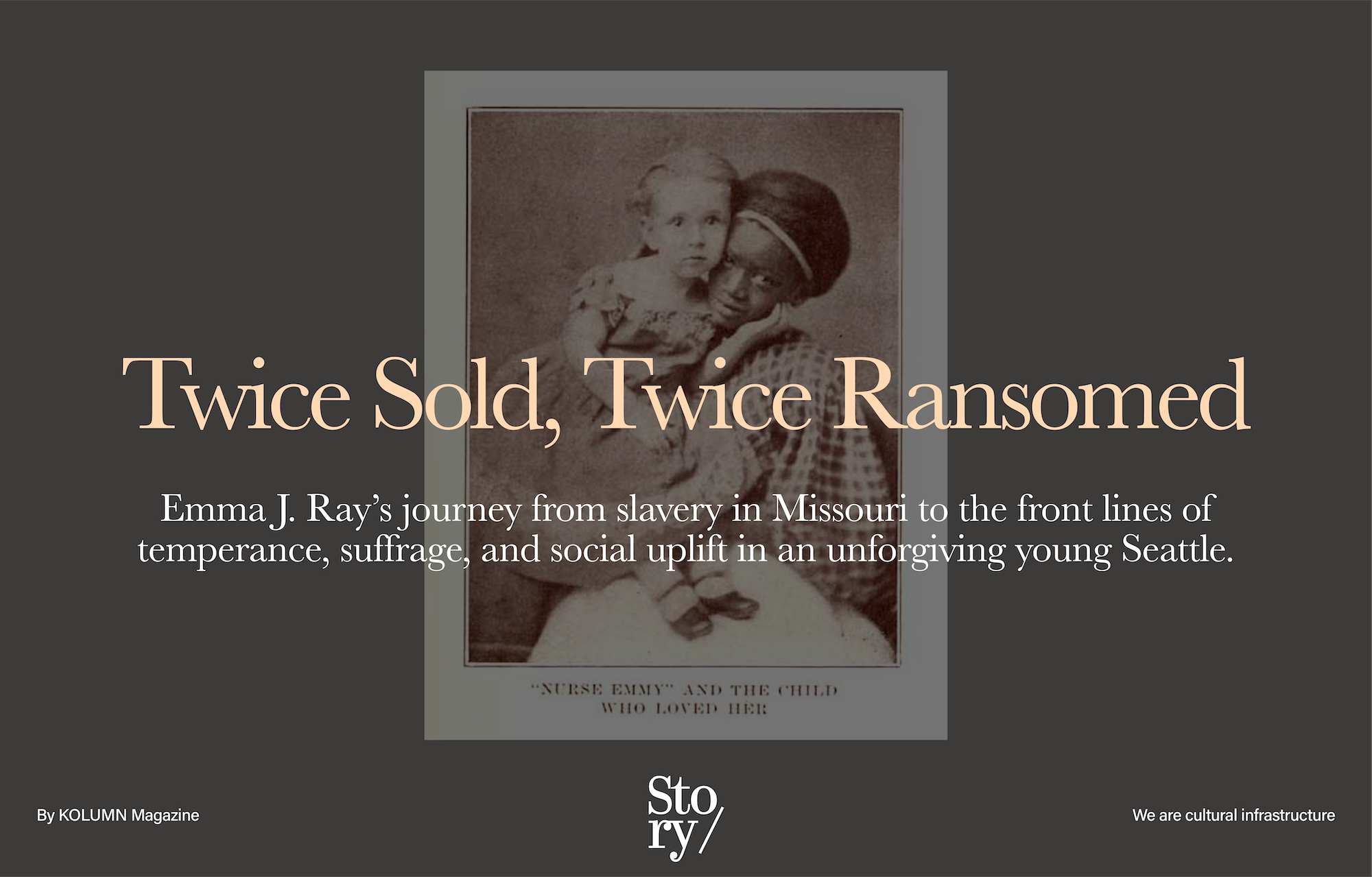
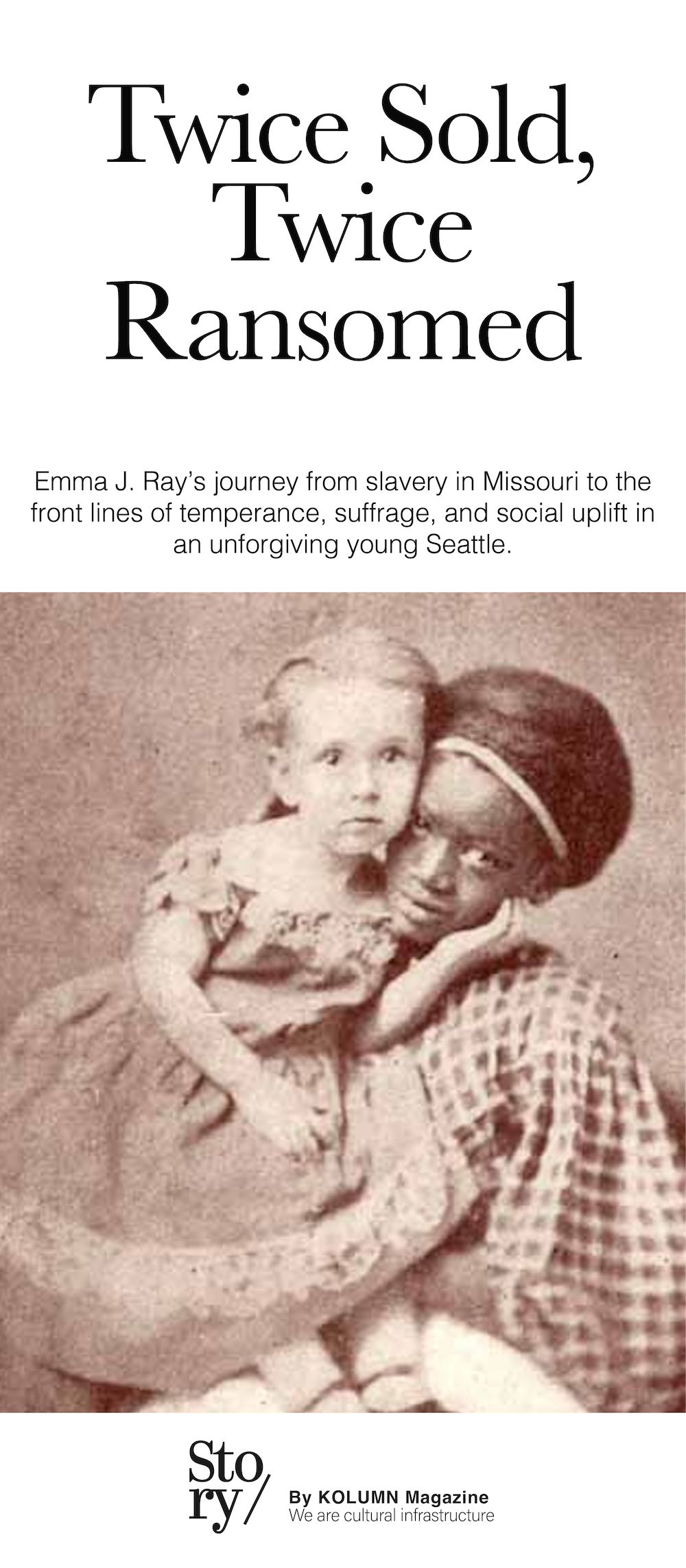
Emma J. Ray is not nearly as famous as she should be. She does not occupy the same easy-to-recall place in American memory as Ida B. Wells, Frances Ellen Watkins Harper, or Mary Church Terrell. She is not commonly taught as a national civil rights icon. She rarely appears in the mainstream shorthand of Black reform history. And yet, when you sit with the record, Emma J. Ray begins to look like the kind of figure who forces a correction in how that history gets told. She was born in slavery in Springfield, Missouri, on January 7, 1859. As an infant, she was sold at auction with her mother and sister. In adulthood, she became an activist, evangelist, temperance leader, jail worker, suffragist, rescue-mission laborer, and memoirist whose life spanned the brutal afterlife of slavery and the volatile moral politics of the Progressive Era.
Ray’s significance lies partly in the sheer improbability of her trajectory. The child born into bondage and poverty would become a public religious worker in Seattle, a president of a Black women’s Woman’s Christian Temperance Union chapter, a county superintendent of jail and prison work, and a woman whose ministry crossed racial lines in a city where Black residents remained a tiny minority. Her work was at once intensely practical and deeply ideological. She fed people, clothed children, visited prisoners, and entered vice districts. But she also insisted—through action as much as argument—that Black women had authority in public life, that moral reform was inseparable from racial justice, and that the discarded poor were not objects of pity but human beings deserving fellowship, discipline, and care.
What makes Emma J. Ray especially compelling is that she does not fit neatly into the categories that often structure historical storytelling. She was not only a churchwoman, though faith defined her. She was not only a suffragist, though she worked in the movement for decades. She was not only a temperance activist, though liquor and its social wreckage shaped her public mission. She was not only a charity worker, though she spent years in direct relief and rescue. She inhabited all of those roles at once. Her activism was not polished for elite reform circles. It was rough-edged, street-level, improvisational, and often under-resourced. It happened in jails, missions, alleys, and crowded working-class neighborhoods. It happened where respectable society preferred not to linger.
That may be one reason Ray remains less visible in the broad public memory than she deserves. American historical culture has long privileged reformers who worked through national organizations, left large institutional archives, or moved in elite circles legible to later historians. Ray’s world was different. Much of what we know comes from her 1926 autobiography, Twice Sold, Twice Ransomed, from later historians of Black women’s activism and Pacific Northwest religion, and from local historical recovery projects that have taken her seriously as an architect of early Seattle’s conscience. Mainstream national outlets the user named have not, to the public record readily accessible online, produced extensive standalone reporting on Ray herself; the strongest available evidence comes instead from her own writing and from scholarly and regional historical work. That does not diminish her importance. If anything, it reveals how many consequential Black women’s lives still sit outside the usual canon.
Born in slavery, formed in dispossession
Ray’s early life reads as a compact history of slavery’s violence and its long shadow. In her autobiography, she writes plainly that she was born of enslaved parents in Springfield, Missouri, and that when she was one month old, she, her mother, and her sister were sold on the auction block to the highest bidder. Her father was not sold, but the family’s survival still turned on the whims of enslavers. Her mother was sold more than once. Relatives were separated. One uncle was sold south and never seen again. These are not incidental background details. They are the emotional and political foundation of Ray’s later worldview. The woman who spent years insisting on human worth had first learned, in the most brutal way available, what it meant to have human worth denied.
The Civil War and emancipation changed the legal terms of her life but not the hardship. Ray recalled both the terror and the hope of wartime Missouri: the danger, the movement into Arkansas to avoid Union forces, the confusion of a child living inside a convulsed social order, and then the jubilation surrounding freedom. But freedom did not arrive as security. After emancipation, Black communities in Missouri had to build churches, schools, and social life with meager resources. Ray’s mother died in 1868 after years of hard labor, leaving nine children. Emma, still a child, went out to work. She left school after only a few grades and entered domestic labor—washing dishes, tending babies, and serving white households.
That experience mattered. Ray’s later activism was never abstract because her own education in class and race came through service work. She knew what it meant to be in white homes but not of them, to help sustain family life while remaining socially subordinated, to be both necessary and disposable. The domestic worker, in the late nineteenth-century Black women’s political tradition, often became a sharp observer of hypocrisy. Ray would carry that sensibility into reform work. She had no romantic illusions about vice, poverty, religion, or respectability. She understood that moral language could be sincere, but also that institutions frequently failed the very people they claimed to uplift.
There is another key dimension here. Ray’s story complicates the still-too-common assumption that Black women’s activism of the period emerged mainly from formal education or middle-class leadership. Ray had limited schooling. She was a working woman. She came up through labor, church life, and testimony rather than through elite literary or clubwoman circuits. That made her no less strategic. In fact, scholars of Black women’s Christian activism have emphasized that organizations such as the WCTU created public platforms for working Black women, including women whose church traditions often limited their authority to preach or lead. Ray’s life is a vivid example of that dynamic.
Marriage, alcohol, and the politics of survival
In 1881, Ray met her future husband, Lloyd P. Ray, in Carthage, Missouri. They married in Fredonia, Kansas, in 1887. The marriage would become central to her public story, not because it was easy but because it forced into the open many of the same social problems she would later confront as an activist. Ray wrote that her husband drank, and that what began as not “so very heavily” grew into a destructive problem. This was not simply a private marital issue. In the reform politics of the period, alcoholism was understood not only as a personal failing but as a force that damaged households, stripped families of stability, and exposed women to economic and emotional vulnerability. Ray’s later temperance work was therefore not theoretical. It emerged from lived struggle.
“Ray understood temperance not as decorum, but as triage. Alcohol, in her world, was tied to hunger, violence, instability, and despair.”
When Lloyd Ray arrived in Seattle on July 6, 1889, just after the Great Seattle Fire, he did so as a stonemason and cutter looking for work in a city literally rebuilding itself. He described a landscape of tents, ubiquitous saloons, and constant temptation. Emma followed into that atmosphere, and together they entered a Seattle that was growing fast, rough around the edges, and organized in ways that made vice profitable and reform difficult. The city’s development was not only architectural; it was moral and political. Seattle was making itself, and Ray would eventually insist that the poor, the drunk, the jailed, and the abandoned counted as part of that civic equation.
Their conversion through the African Methodist Episcopal church marked the pivotal turn in both of their lives. Lloyd Ray wrote of deliverance from drink. Emma Ray described a deepening sanctified faith that moved beyond church attendance into vocation. The Rays’ story then became one of shared labor: a husband and wife team whose activism fused holiness religion with direct engagement among society’s castoffs. That model was significant in its own right. It turned domestic redemption into public witness. The Rays were, in effect, making an argument that the healing of one Black household could become a platform for intervention in many others.
Still, Emma Ray’s voice remains distinct. Even when the couple worked together, her autobiography makes clear that she developed her own sense of calling and her own burden for “the lost and the drunkard.” She was not a side character in her husband’s redemption story. She was a public actor in her own right, and often the sharper analyst of what needed to happen next. That distinction matters because women reformers of the period are frequently flattened into supportive spouses or spiritual adjuncts. Ray was not that. She was a strategist of rescue work, a political thinker in religious language, and a woman who kept moving even when institutional backing weakened.
The Black WCTU chapter and the opening of public womanhood
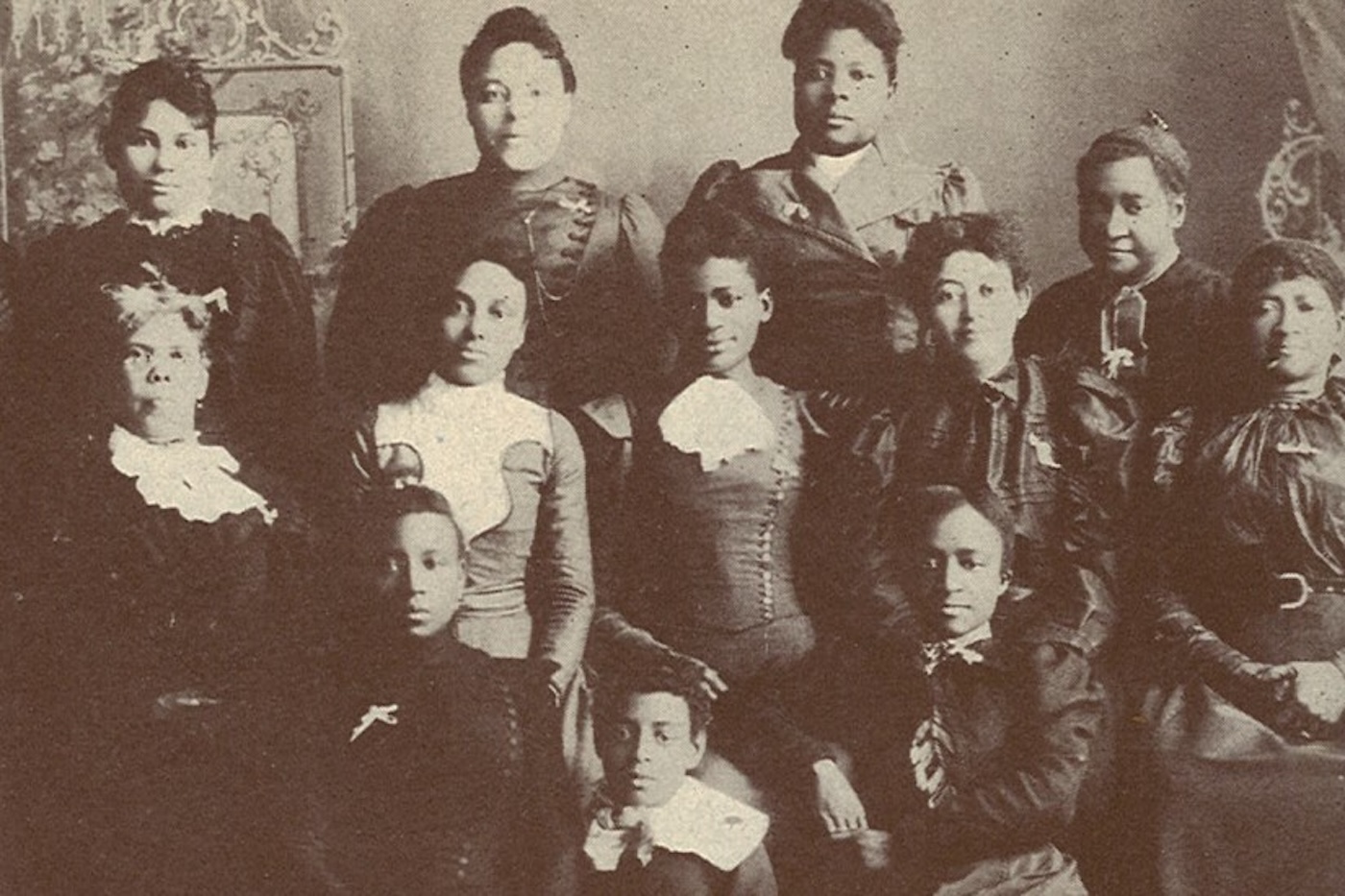
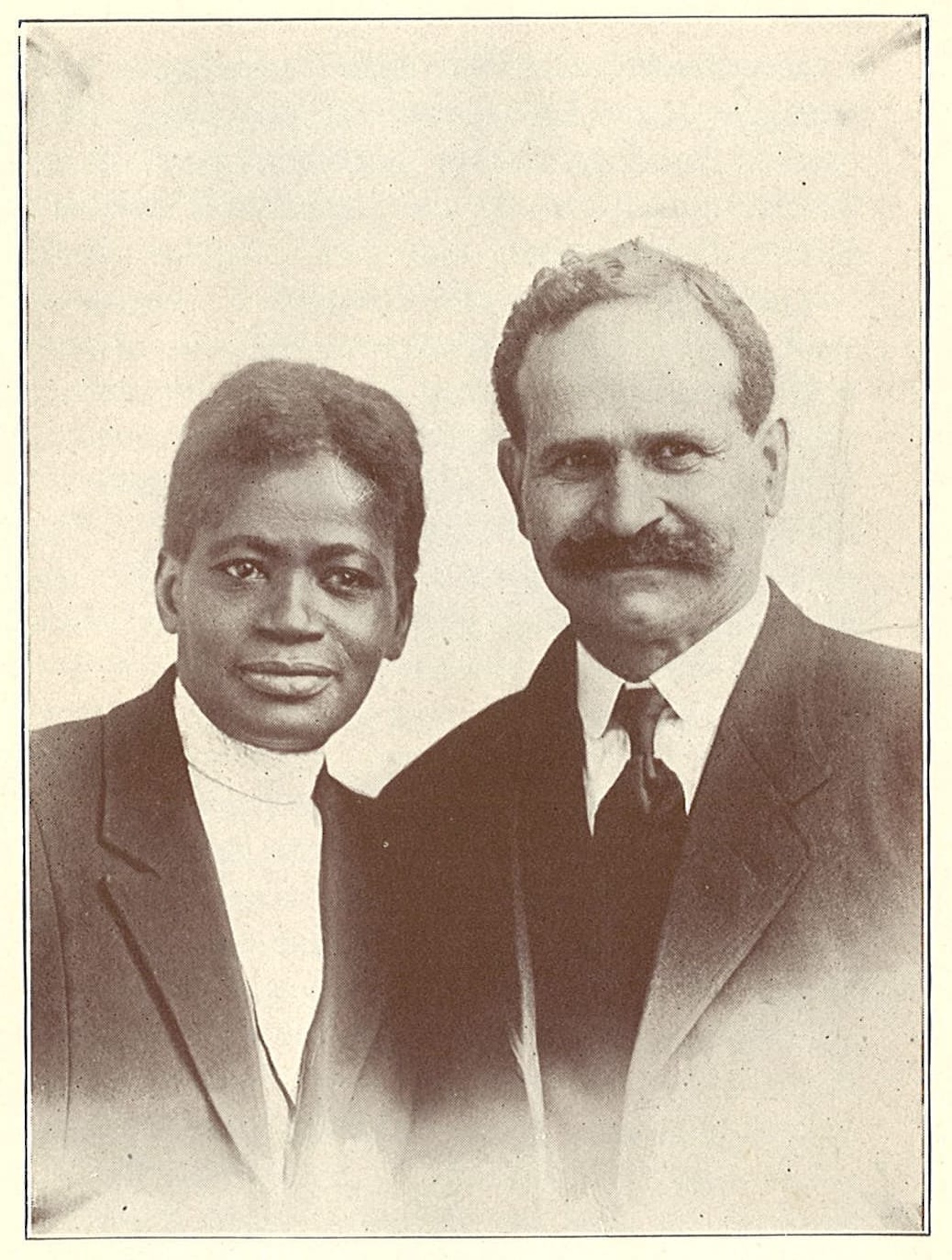
One of the clearest indicators of Emma J. Ray’s historical importance is her work within the Woman’s Christian Temperance Union. In Seattle, she helped lead what her autobiography calls the “Colored W.C.T.U.” chapter. She wrote that women from the WCTU came to her church to organize a union among Black women, that there were fourteen or fifteen other sisters, and that she was made president. A photograph in her autobiography identifies her as having been president for many years. Later historical accounts identify the chapter as the Frances Ellen Harper unit, linking Ray’s local work to a national tradition of Black women’s temperance and suffrage organizing associated with Harper’s name and influence.
That organizational moment deserves more attention than it usually gets. The WCTU is often remembered simplistically as a white Protestant temperance movement. In reality, Black women engaged it in complex ways: sometimes in separate units, sometimes in interracial cooperation, sometimes critically, sometimes opportunistically, often with a sharper understanding of how alcohol, incarceration, sexual exploitation, and disenfranchisement converged in Black life. Scholars have argued that the WCTU could function as a training ground in public leadership for Black women, especially working women. Ray’s experience fits that pattern exactly. Within the WCTU she found structure, language, allies, and a route into public ministry that her church did not fully authorize.
Ray’s own account of the WCTU’s impact is especially revealing. She described sitting through county convention reports, listening, crying, and asking what she could do. The key point is not sentimentality. It is political awakening. The WCTU exposed her to a wider map of organized reform and helped her identify a specific field of labor. In modern terms, it gave her a platform, a network, and a portfolio. The result was not simply membership. It was mobilization. She moved from witness to administration, from testimony to programmatic work.
But Ray’s experience also underscores the limits of reform institutions. Her pastor objected to the WCTU’s outreach priorities and preferred that the women focus on raising money to pay church debts. Some members resigned. Ray was devastated but refused the narrower definition of women’s duty being imposed on her. “This is the church work,” she recalled saying. That line is one of the most revealing in her life story. It captures a larger conflict in Black women’s religious history: who gets to define ministry, and whether service among prisoners, drinkers, sex workers, and the poor counts as central or peripheral to the church’s mission. Ray’s answer was uncompromising. The work outside the sanctuary was not secondary. It was the point.
In time, even when the Black unit weakened, Ray continued through interracial cooperation with white WCTU members. She was elected county superintendent of jail and prison work, and her reform labor expanded rather than shrank. Scholars note that when the national WCTU convention came to Seattle in 1899, Ray hosted Lucy Thurman, the Black national organizer for “colored work.” Thurman encouraged reorganization among Black women, and Ray again became president. That the reconstituted effort did not last says as much about the fragility of local Black institutional bases in a city with a small Black population as it does about Ray herself. She kept going anyway.
Suffrage as discipline, strategy, and long memory
Emma J. Ray’s role as a suffragist is less richly documented in public-facing sources than her rescue work, but it is still a meaningful part of her life and significance. The Turning Point Suffragist Memorial’s Kansas database records that Emma J. Smith Ray of Fredonia began working for the suffrage campaign in 1881 and spent thirty years organizing members on the importance of the movement. That is a remarkable span. It suggests a durable political commitment rather than incidental affiliation.
The temptation is to treat suffrage here as an add-on, a reform credential tacked onto a religious life. That would be a mistake. In Ray’s world, suffrage, temperance, and evangelical activism were linked through a coherent moral politics. Voting was not merely symbolic access to citizenship. For women like Ray, it was a tool for confronting the social conditions she encountered every week: drink, domestic suffering, exploitation, lawlessness, neglect, and the vulnerability of poor women and children. Black women suffragists often saw the ballot not as a genteel prize but as an instrument of collective defense and moral governance. Ray’s decades-long involvement makes far more sense when read in that framework.
There is also a racial dimension that cannot be ignored. Ray belonged to the first generation of Black women activists shaped directly by the collapse of slavery and Reconstruction’s betrayals. She knew that political rights were unstable, unevenly distributed, and fiercely contested. In Kansas and later in Washington, suffrage organizing offered Black women a public language for asserting that their judgment counted. For someone whose earliest experience of power was being sold as property, the insistence that women deserved political voice carried obvious weight. Suffrage was not an abstract constitutional question. It was a declaration that Black women’s thinking, labor, and moral authority belonged in the civic realm.
Ray’s life also reminds us that the history of suffrage did not happen only in famous marches, white dresses, and national conventions. It happened in church basements, local campaigns, county organizations, and the patient work of persuasion. It happened through women who may not have left a massive paper trail but spent years making the idea of women’s citizenship normal, discussable, and urgent. Ray appears to have been one of those women: not always centered in the grand narrative, but absolutely part of the machinery that made political change thinkable.
In jails, brothels, and the city’s neglected corners
If one wanted to locate the moral core of Emma J. Ray’s activism, it would probably be here: in the jails, on the streets, and in the missions where she put herself in contact with people respectable society had written off. Ray and her co-workers visited prisoners, testified in jails, and built a sustained ministry among incarcerated men. After Mr. Blake withdrew, the work was turned over to the Rays, and Ray was elected county superintendent of jail and prison work. She kept at it for about four years, according to her autobiography, with what she described as “wonderful results.”
This was more than prison evangelism in the narrow sense. It was an intervention into the expanding punitive systems of modern urban life. Ray seems to have understood that jail was not just where “bad people” went; it was a holding zone for poverty, addiction, abandonment, and failed reintegration. She and her husband sometimes took released prisoners into their own home because they had seen how quickly people returned to desperation outside. That instinct is strikingly modern. It reflects an understanding that the problem was not only sin or bad choices, but also the absence of structure, support, and community after release.
“Before social work had a settled professional vocabulary, Ray was already practicing a demanding version of it—part evangelism, part mutual aid, part public accountability.”
Her urban visitation extended beyond the jail. The SMU historical vignette on Ray notes that she and “Mother” Ryther visited prostitutes and held services in brothels on Wednesday afternoons. That detail says a great deal about the social imagination of her ministry. Ray did not work only with the sympathetic poor. She went toward stigmatized populations whose lives were entangled with sex, vice economies, and male consumption. She brought religion into spaces that the church often discussed but did not enter. That choice reflects courage, but also a refusal to let women in such spaces be treated as beyond redemption or beyond solidarity.
Her work in Seattle’s missions was similarly concrete. At the “Stranger’s Rest” mission at Second and Washington, she and Lloyd Ray labored among transient, desperate men in grim, insanitary conditions, using shelter and food as openings for religious encounter and practical help. Later, at the Olive Branch Mission, they continued work among men broken by alcohol, illness, and failure. Ray’s descriptions are vivid: bad air, mosquitoes, drunken men, makeshift arrangements, high-volume preaching over the clatter of dishes. This was not symbolic philanthropy. It was hand-to-hand reform.
Here again, race complicates the story in important ways. Priscilla Pope-Levison’s scholarship argues that because Seattle’s Black population was small in the late nineteenth century, many of the outcasts Ray ministered to were white. That created an unusual and historically significant pattern: a Black woman engaging in sustained ministry and reform among white prisoners, drunkards, homeless men, and prostitutes during the Progressive Era. In a nation otherwise hardening along segregationist lines, Ray’s labor exposed the instability of racial hierarchy at the level of social wreckage. The city might have been organized by race, but suffering crossed those boundaries, and so did her ministry.
Seattle, race, and the paradox of interracial reform
Emma J. Ray’s Seattle years reveal a deep paradox. On one hand, the Pacific Northwest could appear less rigidly segregated than parts of the South and Midwest she had known. On the other, that relative openness was shaped partly by demographics: there were simply very few Black residents. Scholars note that in 1889, the year the Rays relocated to Seattle, the city had only 406 African American residents. That reality limited the scale of autonomous Black institutions while also creating interracial encounters of a different kind than those available in larger Black urban communities.
Ray’s life shows both the possibility and the fragility of interracial cooperation. Through the WCTU and holiness circles, she worked with white women and white church members who supported her labor, elected her to responsibility, and joined her in jail visitation and mission work. She hosted Lucy Thurman during the 1899 national WCTU convention in Seattle, and she moved increasingly into Free Methodist networks that licensed her and her husband as conference evangelists. Those affiliations mattered because they gave Ray room to exercise public authority that some Black male-led church structures constrained.
But none of this should be mistaken for racial harmony. Interracial cooperation in the Progressive Era was always unstable, conditional, and shaped by power imbalances. Ray’s very prominence in white-supported religious reform settings may also indicate the structural weakness of Black institutional power in Seattle at the time. Separate Black WCTU organizing proved difficult to sustain. Her work often depended on cross-racial alliances because local Black numbers were small and resources limited. The arrangement could create opportunity, but it also left Black women reformers vulnerable to institutional drift, condescension, or simple disappearance from the archive later on.
Still, Ray used what was available with impressive clarity. She did not wait for ideal conditions. She leveraged white women’s reform networks where useful, kept her commitments to Black uplift, and operated in public ways that made race impossible to ignore even when her audience or beneficiaries were mostly white. Her activism offers a corrective to simplistic regional myths. Seattle was not a racial blank slate, and Black women did not experience the West as a pure zone of liberation. Yet the city did produce an arena where a Black woman reformer could exercise forms of public leadership that remain historically striking.
The autobiography as political testimony
Ray’s 1926 autobiography, Twice Sold, Twice Ransomed, is not just a memoir. It is a political text disguised as testimony. The title itself does enormous work: “twice sold” points both to literal enslavement and to spiritual bondage; “twice ransomed” pairs emancipation with religious salvation. The phrase is theological, but it is also historical. Ray is effectively insisting that the story of Black life in America cannot be reduced to legal freedom alone. One liberation did not end the need for another.
The autobiography is also a record of Black women’s self-fashioning. Ray writes herself into public history as a person who has seen what the nation prefers to euphemize: auction blocks, labor exploitation, drunkenness, prison, prostitution, poverty, and spiritual hunger. She positions herself not as a passive witness but as a worker among these realities. That matters because autobiographies by Black women evangelists often served double duty: they testified to God’s power while also staking a claim to authority in a world that routinely denied women, and especially Black women, the right to interpret public life. Scholars have read Ray in that tradition, and the fit is persuasive.
What emerges from the text is not a sentimental heroine but a disciplined narrator. She records setbacks, opposition, illness, and exhaustion. She describes facial neuralgia or paralysis symptoms that did not stop her from working. She recounts the pastor who wanted women to fundraise instead of carry out rescue work. She notes the racial composition of audiences and the practical details of missions. This is one of the reasons the autobiography has such value for historians. It is thick with social evidence. It documents not just what Ray believed, but how reform work actually functioned on the ground.
And yet the autobiography’s relative obscurity also tells a broader story about historical memory. Many Black women left texts that later generations failed to canonize. Ray’s book was published by the Free Methodist Publishing House, not by a major commercial press. It circulated within religious and reform communities more than literary ones. That, too, shaped what later audiences remembered. But obscurity should not be mistaken for insignificance. Often it is merely a verdict delivered by institutions that did not know how to value Black women’s mixed genres of religious, political, and social testimony.
Why Emma J. Ray matters now
Emma J. Ray matters now because she helps expose how narrow our popular definitions of activism can be. Contemporary culture often imagines activism as public protest, electoral organizing, legal strategy, or media visibility. Ray’s life offers another model: activism as persistent, embodied intervention in the places where society deposits its injuries. She did not simply denounce injustice from afar. She entered its rooms. She sat with prisoners. She went into vice districts. She organized women. She worked across race lines without pretending race had disappeared. She linked individual transformation to civic responsibility.
She also belongs in a fuller history of Black women’s political thought. Ray understood that the public and private were inseparable. Drink affected households. Voting affected law. Churches shaped what kinds of women’s labor would be recognized. Poverty and incarceration were not isolated problems. The people in missions, jails, and brothels were part of the same moral economy as the respectable classes who avoided them. That analysis may not have arrived in the vocabulary of sociology or policy, but it was analysis all the same.
There is a final reason she matters. Ray complicates easy narratives about respectability. She clearly valued discipline, holiness, sobriety, and moral reform. But she also refused abandonment. Her version of reform did not stop at judging people. It demanded proximity to them. That combination is difficult, and sometimes uncomfortable, especially for modern readers suspicious of temperance-era moral language. But it is precisely what makes her interesting. Ray was not a soft-focus humanitarian. She believed in accountability. She also believed nobody should be left to rot alone.
In the end, Emma J. Ray’s life expands the frame. She was a former enslaved child who became a reform leader in an emerging western city. She was a Black woman who used religious institutions to push beyond their constraints. She was a suffragist whose politics grew from lived vulnerability. She was a mission worker who understood that social salvation required more than preaching. And she was a writer who left behind a testimony strong enough to outlast the relative silence around her name. The least we can do now is read her as she deserves to be read: not as a footnote to better-known movements, but as one of the people who made those movements real in daily life.
More great stories
Yvonne Pickering Carter’s Long Arc
March 31, 2026
No Comments
He Built a Career Telling Hard Truths
March 31, 2026
No Comments