




By KOLUMN Magazine
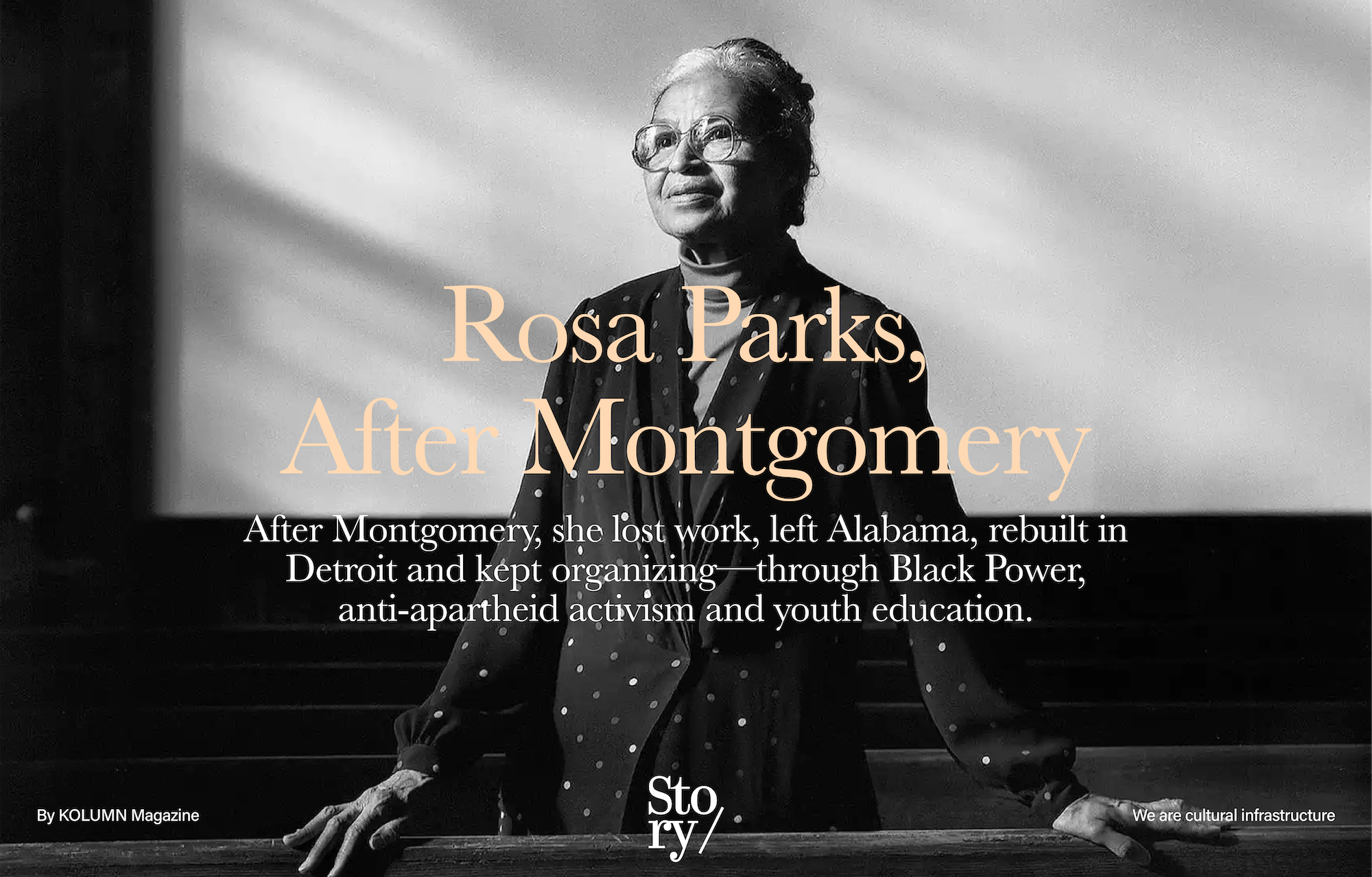
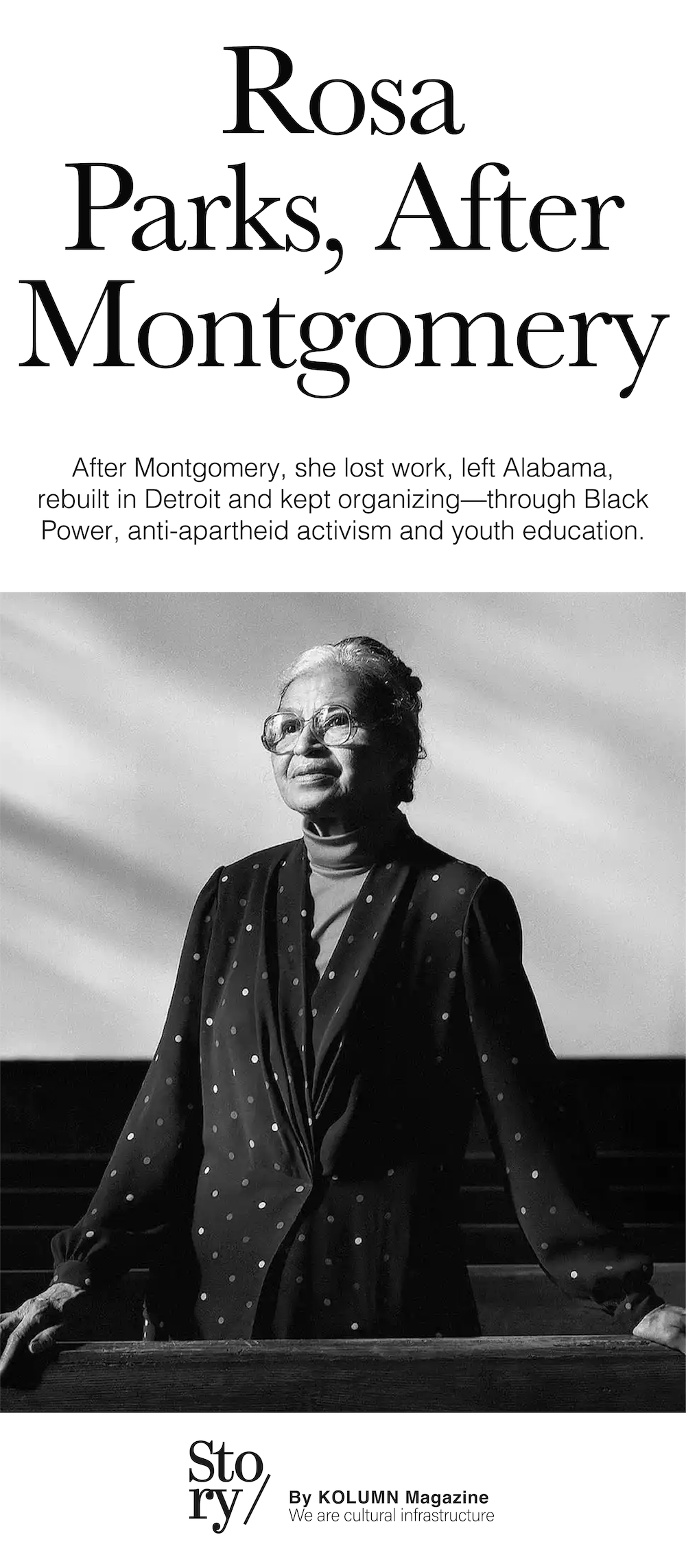
America likes its heroes neat. It likes them compressed into a lesson plan, reduced to one gesture, one photograph, one date circled on a calendar. Rosa Parks has long been treated that way: the dignified seamstress, the tired woman on a Montgomery bus, the spark that started a movement. All of that is true, but it is also radically incomplete. Parks herself spent years pushing back against that tidy version of her life. She was not just the woman who sat down. She was an organizer before that night, and she remained an organizer long after the buses in Montgomery were desegregated. The trouble is that the country has often preferred the myth to the woman. Archival records, reporting, and the testimony of those who worked with her make plain that after the Montgomery Bus Boycott, Parks did not retire into symbolism. She entered a harder, poorer, less romantic chapter—one that may tell us even more about her than the moment that made her famous.
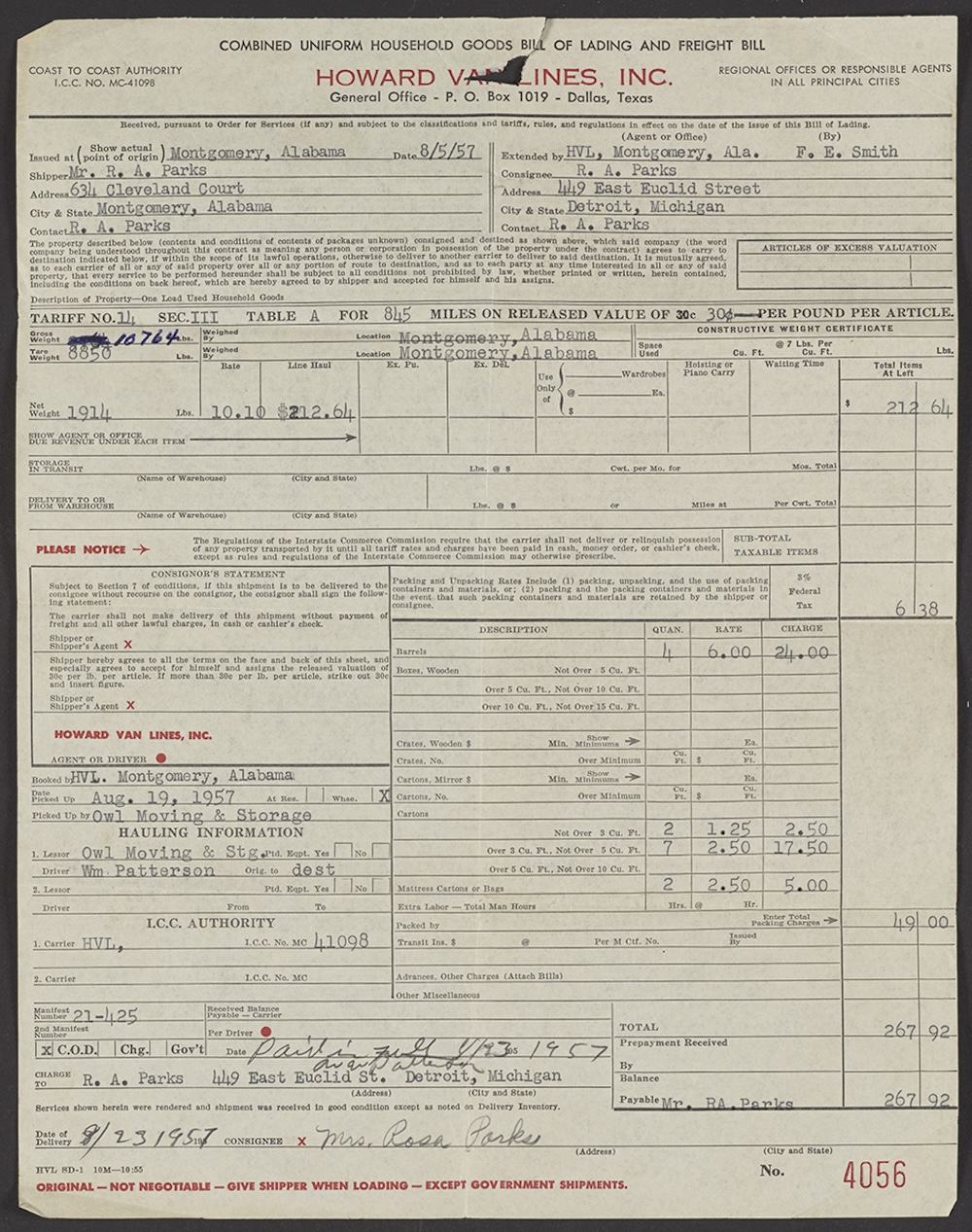
What happened to Rosa Parks after Montgomery is, in some ways, the story America least likes to tell about the civil rights movement. Victory did not bring comfort. Recognition did not bring security. Courage did not bring a salary, or safety, or relief from grief. Instead, Parks paid dearly. In the wake of the boycott, she and her husband Raymond faced economic retaliation, public harassment, and death threats. They left Alabama in 1957 for Detroit, hoping for something steadier, freer, more livable. What she found there was not peace, exactly, but a new front in the same struggle. Detroit became the center of her later activism and her home until her death in 2005. From there she marched, organized, advocated for prisoners, supported voting-rights campaigns, worked in Congressman John Conyers Jr.’s office for more than two decades, joined anti-apartheid protests, and co-founded a youth institute built around historical memory and civic purpose. The arc after Montgomery was not an epilogue. It was most of her adult life.
The price of being right
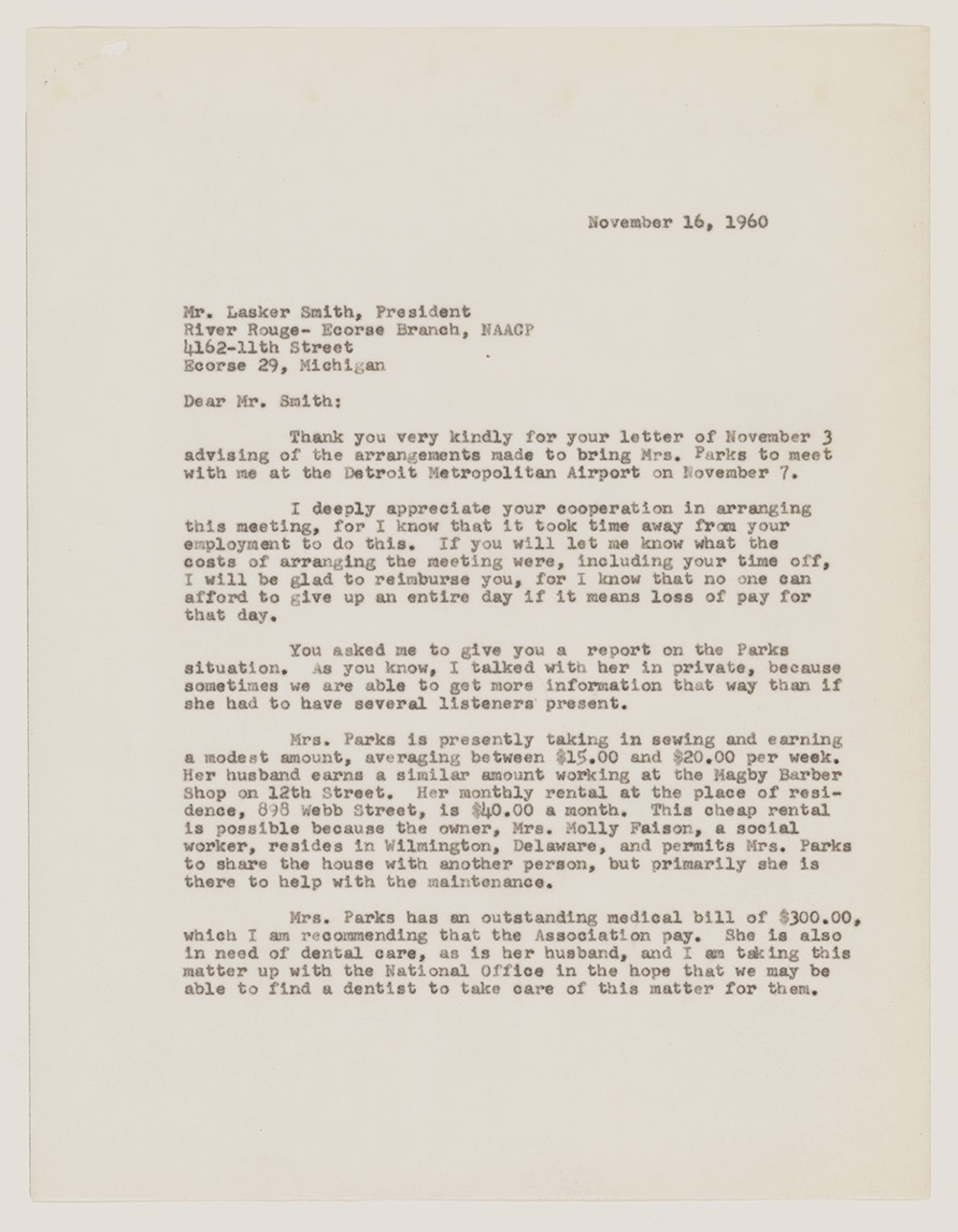
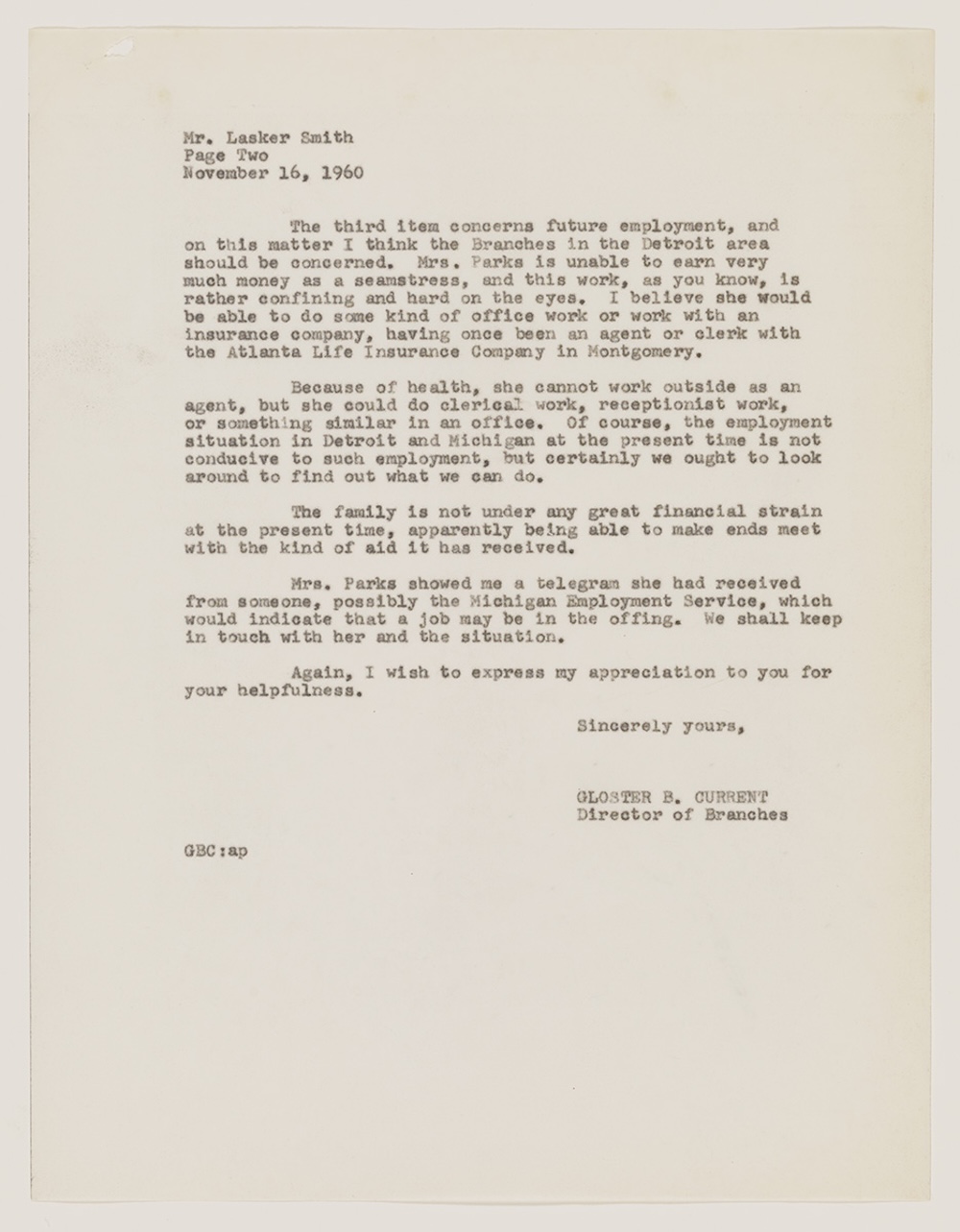
The sentimental version of civil rights history often implies that moral clarity eventually wins over the nation. The archival record is harsher. After the boycott, Rosa Parks was not embraced by a grateful public. She was punished. The National Park Service notes that in the wake of the Montgomery Bus Boycott, Parks lost her tailoring job and received death threats. Library of Congress materials and associated reporting show that Raymond Parks also lost stable work, and that the family’s finances collapsed badly enough that poverty became an immediate fact, not an abstract worry. AP’s reporting on the opening of her archive described the couple as having sunk into deep poverty after her arrest and the boycott that followed.
That part matters because it disrupts the triumphalist script. It reminds us that in the United States, even transformative civic bravery can lead first to unemployment. Rosa Parks’s stand did help make the modern civil rights movement legible to the nation, but it did not protect her from the ordinary mechanics of retaliation. White hostility was explicit. Economic isolation was just as damaging. Parks had already spent years in NAACP work, including investigative work around racist violence and sexual assault cases in Alabama, so she knew better than most what white supremacy could do. What came after Montgomery confirmed that the system was not simply angry with her; it intended to make an example of her.
There is another uncomfortable layer here. The punishment did not come only from formal institutions. The social burden of being “the boycott heroine,” as Library of Congress materials describe it, included alienation, scrutiny and the exhausting demand to carry history while trying to survive in real time. The more famous she became, the more unstable her daily life could be. That dissonance—public reverence, private precarity—would follow her for years. It is one of the clearest examples of how the country venerates Black freedom fighters in retrospect while leaving them materially exposed in the present tense.
Leaving Alabama, without leaving the struggle
In 1957, Rosa Parks, Raymond Parks and her mother Leona McCauley moved to Detroit to join Parks’ brother Sylvester. The move is sometimes described as a clean break, but it was really a forced migration shaped by threats, economic hardship and political exhaustion. The National Park Service is direct about that: after the boycott, harassment and material hardship pushed the family north. Yet Detroit was not merely refuge. It became the place where Rosa Parks rebuilt a political life on new terrain.
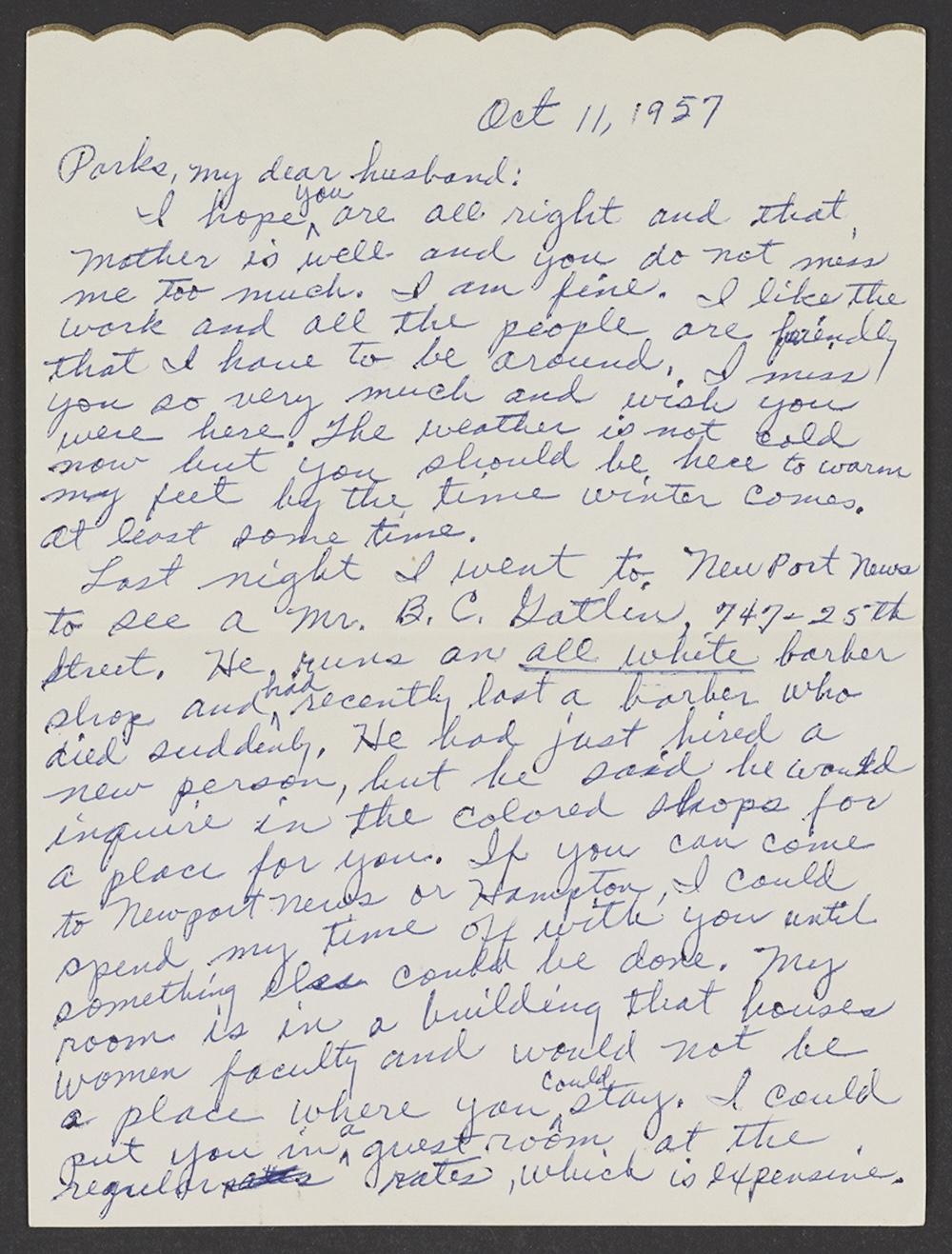
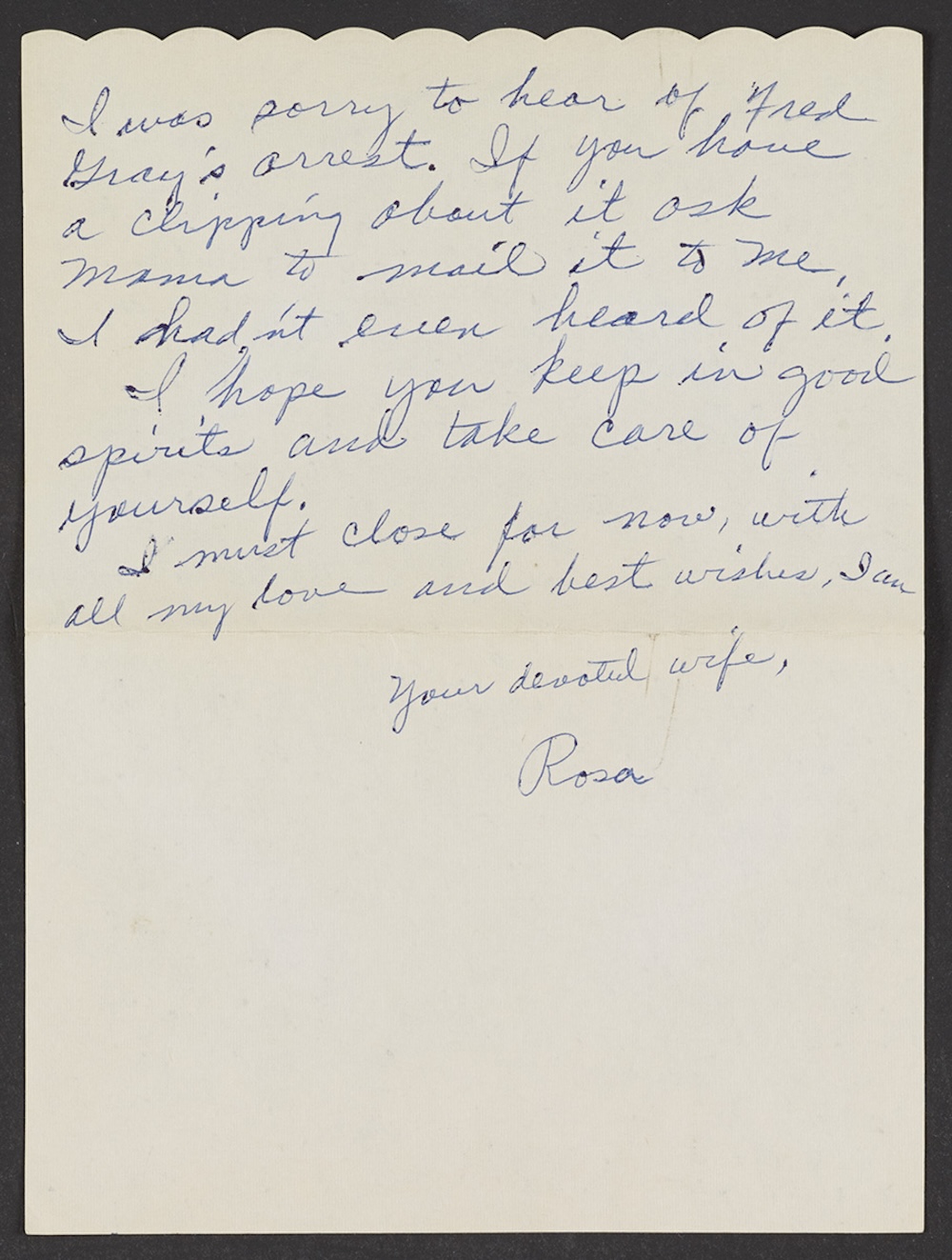
Before Detroit fully became home, there was another difficult detour. In October 1957, Rosa Parks moved alone to Virginia’s Hampton Institute to work as hostess of the Holly Tree Inn. She had hoped Raymond and Leona could join her, but housing arrangements there did not work out, and she returned to Detroit at the end of the fall semester in 1958. That episode reveals a lot about the instability of those years. Parks was not stepping into a new life with ease. She was piecing together employment, family obligations and emotional survival, sometimes while separated from the people she depended on most. Her letters from that period, preserved in the Library of Congress collection, underscore the distance and strain.
Detroit is often left out of the Rosa Parks story because Montgomery is so narratively irresistible. But if you want to understand Rosa Parks as a political thinker and not just a historical icon, Detroit is essential. The city was where she spent more than half her life. It was where she lived out the afterlife of fame, where she saw northern segregation up close, where she expanded her activism beyond the narrower frame in which schoolbooks tend to place her. The National Park Service says flatly that after the move, Detroit became the new center of her activism. That line should probably be printed in every textbook that still teaches her as if her life climaxed in Alabama.
The North was no promised land
Detroit was not Jim Crow Alabama, but Rosa Parks understood quickly that northern racism did not arrive in the same costume. It operated through housing, employment, public neglect and segregation by other means. That helps explain why her later work had such a strong emphasis on economic justice and daily civic survival. She had moved north, but not beyond the architecture of inequality.
This is one of the more important correctives in the later Rosa Parks story. Too many accounts treat the South as the primary theater of racial injustice and the North as a kind of imperfect but functional alternative. Parks’ life in Detroit argued otherwise. The civil rights struggle was national. It involved transportation and voting, yes, but also housing, jobs, welfare policy, industrial disinvestment and the rights of the poor. By the time she was living in Michigan, Parks was operating with that broader map in mind.
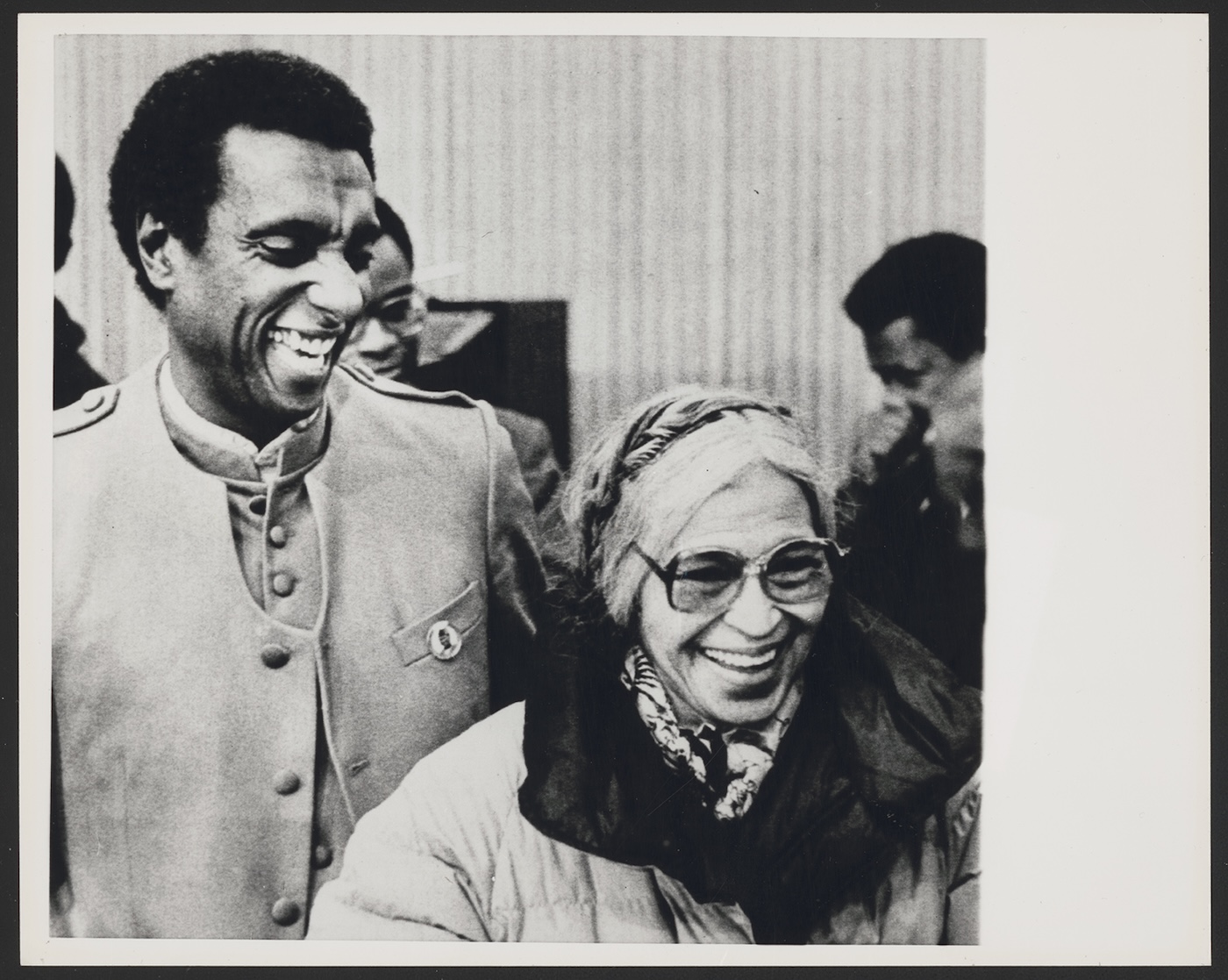
That broader map also helps explain why her later alliances sometimes made establishment audiences uneasy. The elder Rosa Parks did not remain confined to the most sanitized forms of liberal remembrance. The Library of Congress exhibition on her papers notes that she fought for women’s rights, opposed the Vietnam War, advocated for prisoners, supported the growing Black Power movement, joined anti-apartheid protests and helped welcome Nelson Mandela when he visited the United States after his release from prison. AP’s reporting on the archive similarly noted that her papers show support for Malcolm X, Black Panther gatherings and the Wilmington 10. Those positions do not fit neatly inside the version of Parks that America prefers to wheel out every December. They do, however, fit the record.
Still in motion: marches, campaigns and movement work
If the mythology of Rosa Parks ends with stillness—a woman seated on a bus—the reality of her later life is movement. The Library of Congress records show that after leaving Alabama she participated in the 1957 Prayer Pilgrimage, the 1963 March on Washington, Mississippi Freedom Summer in 1964, the 1965 Selma to Montgomery march and the 1968 Poor People’s Campaign. That alone should settle the question of whether her public life dwindled after Montgomery. It didn’t. It widened.
Her work with the Detroit Friends of SNCC makes that widening even clearer. Parks helped run the Detroit Friends of the Student Nonviolent Coordinating Committee, supported the 1964 Freedom Summer voter-registration campaign in Mississippi, and in 1966 joined Stokely Carmichael and other SNCC workers in Alabama to support the Lowndes County Freedom Organization, also known as the Black Panther Party of Lowndes County. This is not the biography of someone who drifted away from radical politics as she aged. It is the biography of someone who kept recognizing where the energy and urgency of Black freedom struggles were headed, and who did not respond by scolding younger activists from a safe historical pedestal.
That detail is especially important now because it refutes a familiar and lazy trope: that the “good” civil rights generation and the “militant” generation of the 1960s were cleanly separated by temperament and strategy. Rosa Parks’s later record complicates that neat divide. She had roots in older forms of Black political organizing, but she was not allergic to new language, new coalitions or sharper critiques of American power. The archive suggests a woman whose political commitments were sturdy enough to evolve.
The office on Jefferson Avenue
One of the most consequential developments in Parks’ post-boycott life was her employment with Congressman John Conyers Jr. In 1964, she volunteered on his campaign for Michigan’s First Congressional District. After he won, she joined his Detroit office staff in March 1965. According to the Library of Congress, the job restored the Parks family’s financial stability, and she stayed until retiring in 1988. The office work was not glamorous, but it mattered. She answered phones, met visitors, handled constituent cases and assisted with scheduling. The National Park Service adds that in this role she helped homeless constituents find housing.
That detail is a reminder that movement work is not only speeches and marches. Sometimes it is constituent services. Sometimes it is paperwork. Sometimes it is listening to people in distress, figuring out how federal systems work, and trying to make those systems serve people who have been ignored. Rosa Parks’s place in Conyers’s office brought her into exactly that kind of practical civic labor. She remained a public symbol, but she was also doing the unflashy work of democracy.
Conyers later remarked that having Parks on his staff was the greatest honor of his career, and he often joked that more people came to see Rosa Parks than came to see him. The joke lands because it is plainly true. Parks carried unusual moral authority into that office. People knew what she represented. But the fuller point is that she did not cash out that authority for comfort. She put it to use in the machinery of public service.
A politics bigger than commemoration
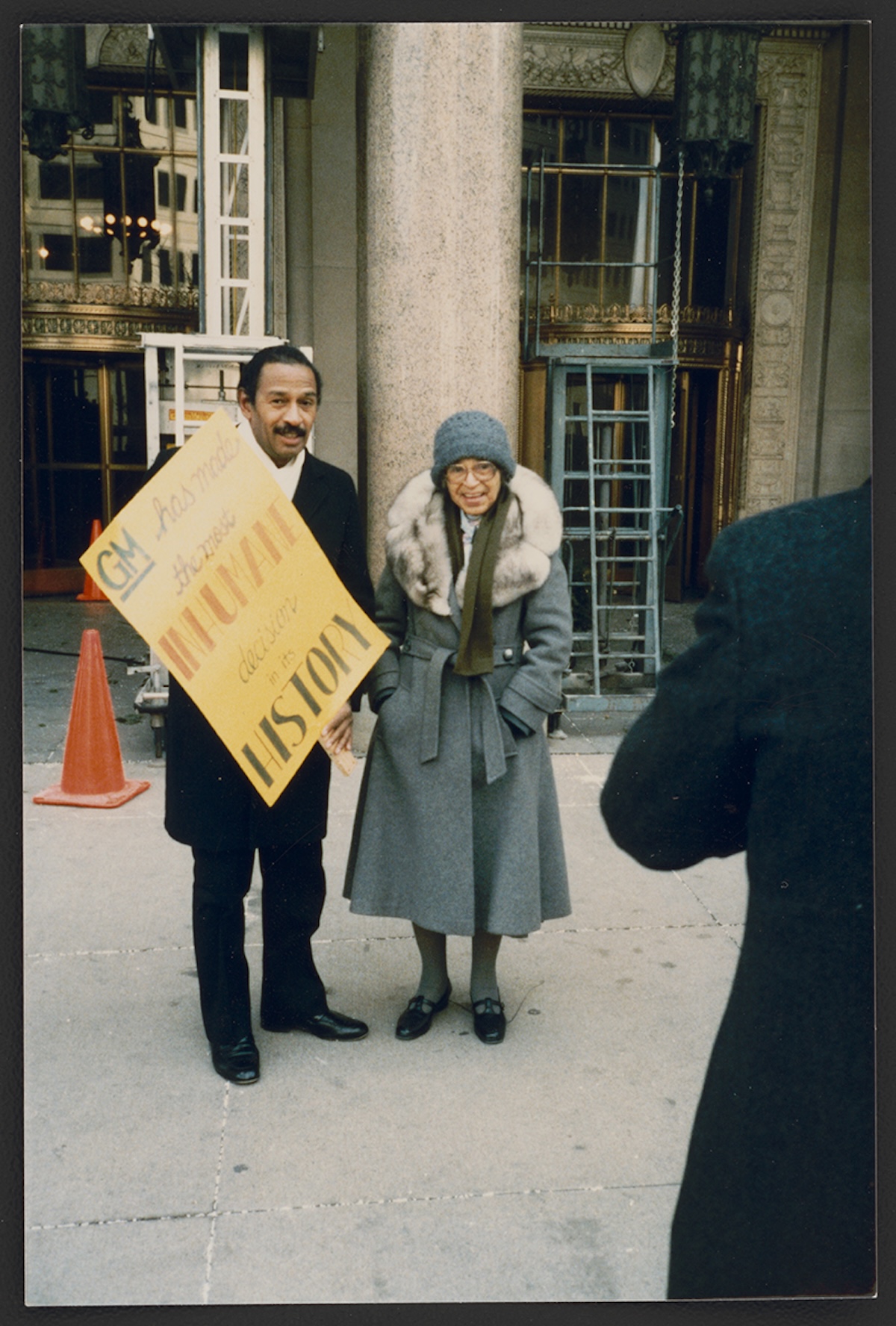
By the 1970s and 1980s, Rosa Parks was widely revered, but she was not politically dormant. The Library of Congress says she fought for women’s rights and against the Vietnam War, advocated for prisoners, supported Jesse Jackson’s presidential campaigns in 1984 and 1988, and joined anti-apartheid protests in the mid-1980s. The National Park Service also documents her participation in a 1986 protest against General Motors after the company announced plans to close five Michigan auto plants, a move expected to cost thousands of workers their jobs. Parks joined Conyers on the picket line outside GM headquarters.
Those commitments tell us something about her political imagination. Rosa Parks was not just attached to civil rights in the narrow sense of ending legal segregation. She saw the interlocking nature of injustice. War, labor displacement, incarceration, apartheid, youth neglect, housing instability—these were not side issues. They were part of the same moral universe. In that sense, the later Rosa Parks can seem more contemporary than the marble version usually presented to children. She was concerned with structures, not just etiquette; with power, not just civility.
And then there was Nelson Mandela. The Library of Congress recounts that when Mandela visited Detroit in 1990 after his release from prison, he recognized Parks immediately in the receiving line and greeted her with visible emotion. That moment is more than moving symbolism. It places Parks where she belongs: not simply as an American hero, but as part of a global freedom tradition. Anti-apartheid activists understood what many American textbook writers did not—that Rosa Parks belonged to an international language of resistance.
Teaching freedom forward
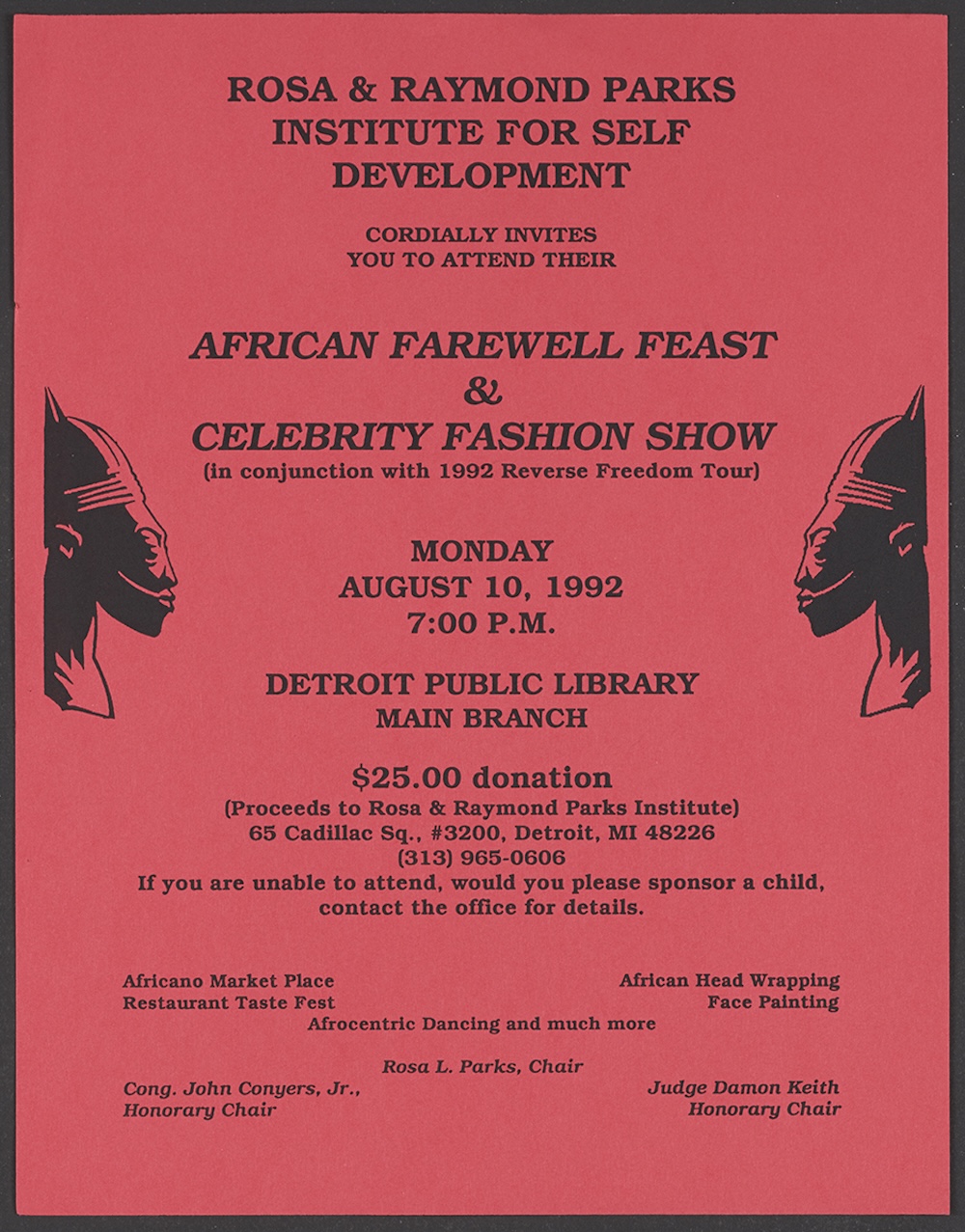
In 1987, Rosa Parks and Elaine Eason Steele co-founded the Rosa and Raymond Parks Institute for Self Development. The Library of Congress says the institute was created “to motivate and direct youth not targeted by other programs to achieve their highest potential.” In 1989, it launched “Pathways to Freedom,” bus tours in which young people researched and traced routes from the Underground Railroad into the civil rights movement and beyond. The institute’s own program description says Pathways to Freedom was designed to bring history to life and help young people model Parks’s work for human rights in their own communities.
This may be the most underappreciated part of Rosa Parks’s late-life work. A woman made world-famous by a single act spent her later years creating institutions so that young people would understand movements, not just moments. That is not a small distinction. The institute’s programming suggests that Parks wanted youth to inherit a usable historical framework, one that linked the Underground Railroad, the civil rights movement and ongoing human-rights struggles. This is history as civic formation, not mere remembrance.
There is something deeply consistent in that. Parks had long objected to being flattened into one anecdote. By building youth programs, she helped create a counter-memory: a way of teaching that insisted freedom struggles are long, collective and unfinished. In that sense, the institute was not just charitable work. It was political pedagogy. It was a way of refusing the shrinkage of her own story and, by extension, the shrinkage of Black history itself.
Grief, aging and the burden of survival
Any honest account of Rosa Parks after Montgomery has to make room for the fact that the later decades were marked not only by activism but by loss. Raymond Parks died in 1977. Her brother Sylvester and her mother Leona both died of cancer within the following two years, according to standard biographical accounts summarized by History and widely reflected in retrospective coverage. Washington Post reporting on her death also noted that she had dementia in her later years. Parks died in Detroit on October 24, 2005, at age 92.
What stands out in the late-life record is not invulnerability but endurance. The heroic image often strips away the fact that survival itself can be difficult work. Parks dealt with poverty, dislocation, public expectation, family grief and declining health, all while remaining available to history. By the 1990s and early 2000s, she was less able to appear publicly, but she had already spent decades showing what a life in movement looked like after the cameras moved on.
That is one reason the soft-focus “quiet seamstress” image is so misleading. AP’s report on the archive quoted Library of Congress staff saying the papers reveal a stronger, sharper, more politically assertive woman than the popular caricature allows. The archive shows her pain, but it also shows steel. It shows loneliness, yes, but not passivity. It shows a person who never agreed to become a harmless relic.
Death, honor and the making of memory
When Parks died in 2005, the national response reflected both genuine reverence and the strange process by which America converts difficult people into usable symbols. She was honored in Montgomery, Washington and Detroit. The Capitol Visitor Center notes that she became the first woman to lie in honor in the U.S. Capitol Rotunda. The Washington Post reported on the scale of mourning and the language of national tribute; the Guardian noted the historic recognition that followed her death.
Those honors mattered. They were not empty. But they also raise a harder question: what exactly was the nation honoring? The safe version of Rosa Parks? The bus-seat icon severed from later radical commitments? Or the full woman who supported SNCC, stood with labor, opposed war, backed anti-apartheid activism and built youth programs because she knew the struggle had not ended? Public memory often chooses the first version because it is easier to praise than to follow.
That tension has surrounded Parks for decades. The Guardian’s obituary pushed back against the condescending story of a woman who was merely tired. Library of Congress archivists later echoed that correction, emphasizing how powerfully Parks’s own papers challenge the image of a quiet, accidental heroine. Even now, the fight over Rosa Parks’s memory is really a fight over the meaning of the civil rights movement itself. Was it a completed moral drama, or an ongoing demand? Parks’ later life suggests she knew the answer.
Why the later Rosa Parks matters now
The afterlife of the Montgomery Bus Boycott is often told through institutions: court rulings, national legislation, the rise of Martin Luther King Jr. Those things matter. But the life of Rosa Parks after Montgomery reminds us that movements are also made of ordinary, grueling continuities. They are made of moving to a new city because staying is too dangerous. Of taking work where you can find it. Of answering phones in a congressional office. Of helping people secure housing. Of showing up for younger organizers. Of recognizing that justice in transportation is connected to justice in labor, education, foreign policy and memory.
In that sense, the later Rosa Parks is not less inspiring than the Montgomery Rosa Parks. She is more demanding. The famous moment on the bus asks whether one person can refuse humiliation. The decades that followed ask whether a country can build the kind of civic life that such refusal requires. Parks spent the rest of her life demonstrating that the answer, so far, was only partial. She kept working because she understood that desegregating a bus was never the same thing as achieving justice.
And maybe that is the real lesson. Rosa Parks’s significance after the boycott lies not only in what she did, but in what she refused to let America do to her story. She would not allow herself to be reduced to fatigue, chance or nostalgia. She insisted on context. She insisted on continuity. She insisted, in effect, that freedom is not an event. It is a practice. Detroit, more than Montgomery, was where she spent decades proving it.
By the end of her life, the country had wrapped Rosa Parks in medals, memorials and schoolbook reverence. She received the Congressional Gold Medal in 1999, and years after her death a statue of her was unveiled at the U.S. Capitol. Streets, libraries, museums and public spaces carry her name. None of that is unearned. But the memorials are only worthy if they point us back to the full scale of her life. Rosa Parks was not just a catalyst. She was a strategist, a witness, a public servant, a freedom worker, a mentor and, in the truest sense, a democratic radical—someone who believed the country owed more to ordinary people than it was willing to give.
So yes, Rosa Parks changed history on a bus in Montgomery. But the deeper story is what came after: the years of loss, movement, organizing and insistence. The move to Detroit. The work at Hampton. The office with John Conyers. The alliances with SNCC and Black Power organizers. The support for prisoners, workers and anti-apartheid activists. The institute for young people. The long labor of refusing simplification. To tell only the famous first chapter is to miss the harder and more revealing achievement. Rosa Parks did not simply ignite a movement. She kept faith with it.