

Browne’s genius was not just that she criticized power. It was that she denied power the dignity of being painted on its own terms.
Browne’s genius was not just that she criticized power. It was that she denied power the dignity of being painted on its own terms.
By KOLUMN Magazine
Vivian E. Browne should be far more widely known than she is. That sentence is not a gesture of belated generosity; it is a matter of historical correction. Browne was not a marginal figure who happened to leave behind a few interesting paintings. She was a serious American artist with a four-decade practice, a founder of the Black Emergency Cultural Coalition, a participant in the Where We At Black women artists collective, a member of SOHO20, and a longtime Rutgers professor whose career moved from figuration and biting social commentary into abstraction, landscape, and formally adventurous work shaped by travel in West Africa and China. Her work has since appeared in major institutional reconsiderations, including We Wanted a Revolution at the Brooklyn Museum and the 2025 retrospective Vivian Browne: My Kind of Protest at The Phillips Collection.
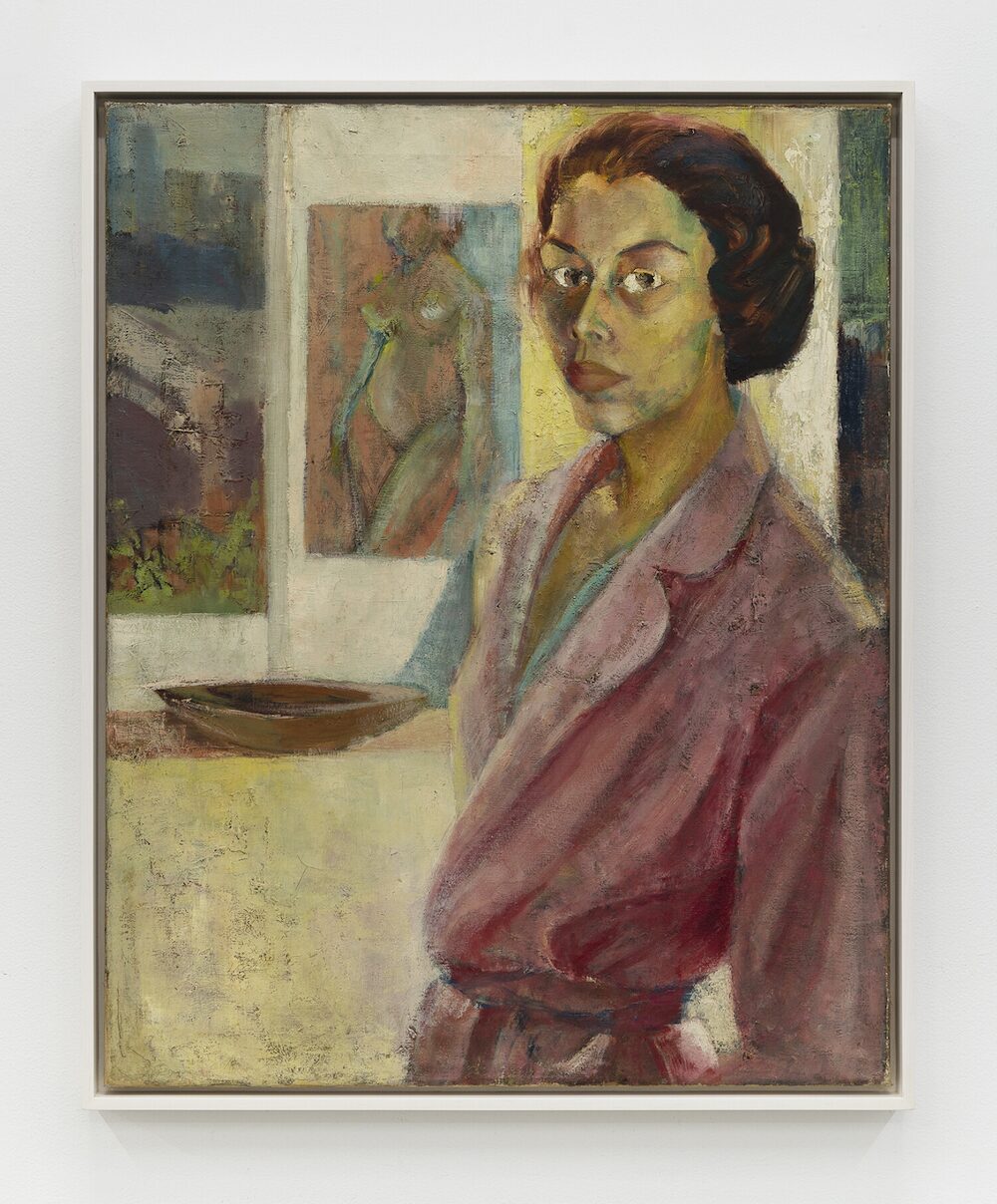
That larger rediscovery matters because Browne’s career tells a bigger story about American art: who gets remembered, who gets filed into categories, and who gets admired only after the culture finally catches up. Browne was never only one thing. She was not only a Black artist, though Black life and Black political struggle shaped her. She was not only a woman artist, though she confronted misogyny directly and structurally. She was not only an activist, though she stood in picket lines and helped force the museum world to reckon with exclusion. She was also a painter’s painter, deeply concerned with surfaces, atmosphere, line, translucency, movement, and the stubborn mystery of what a picture can hold.
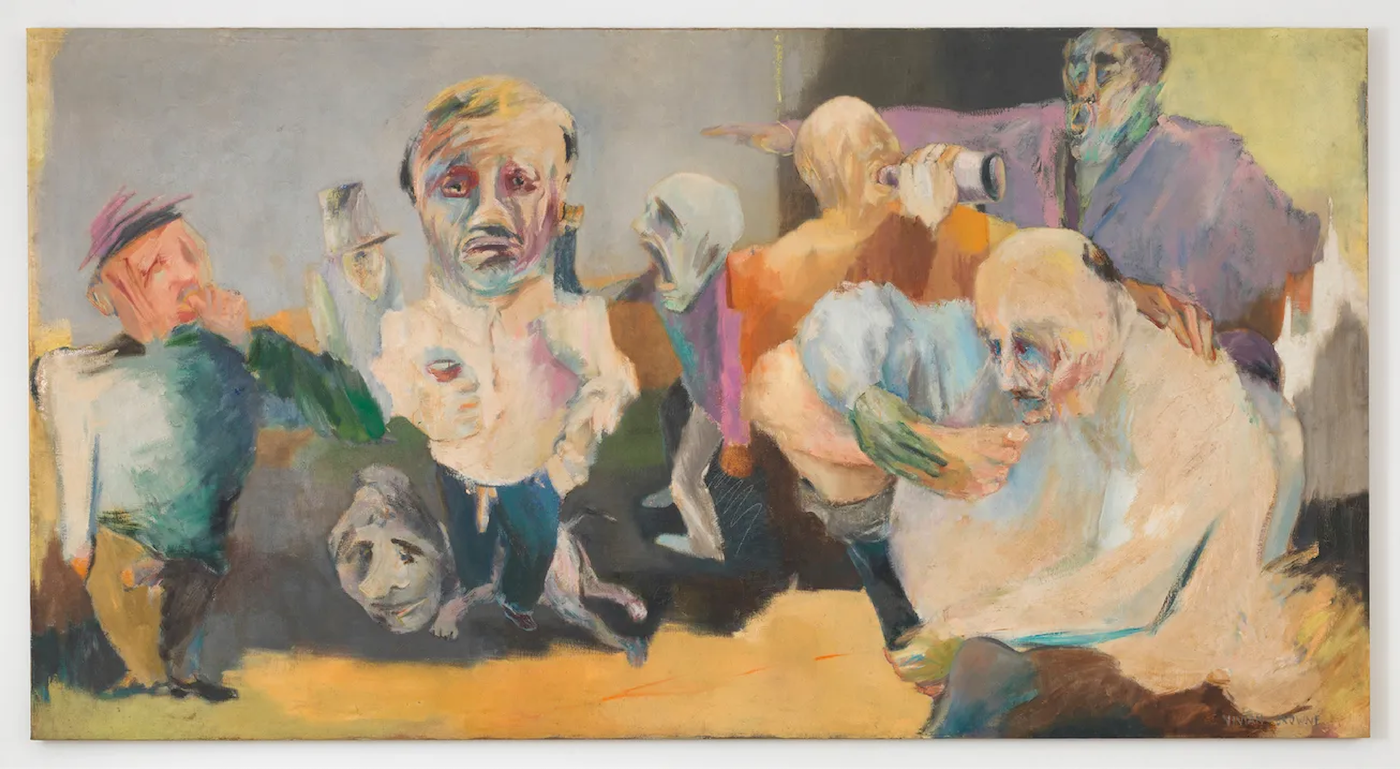
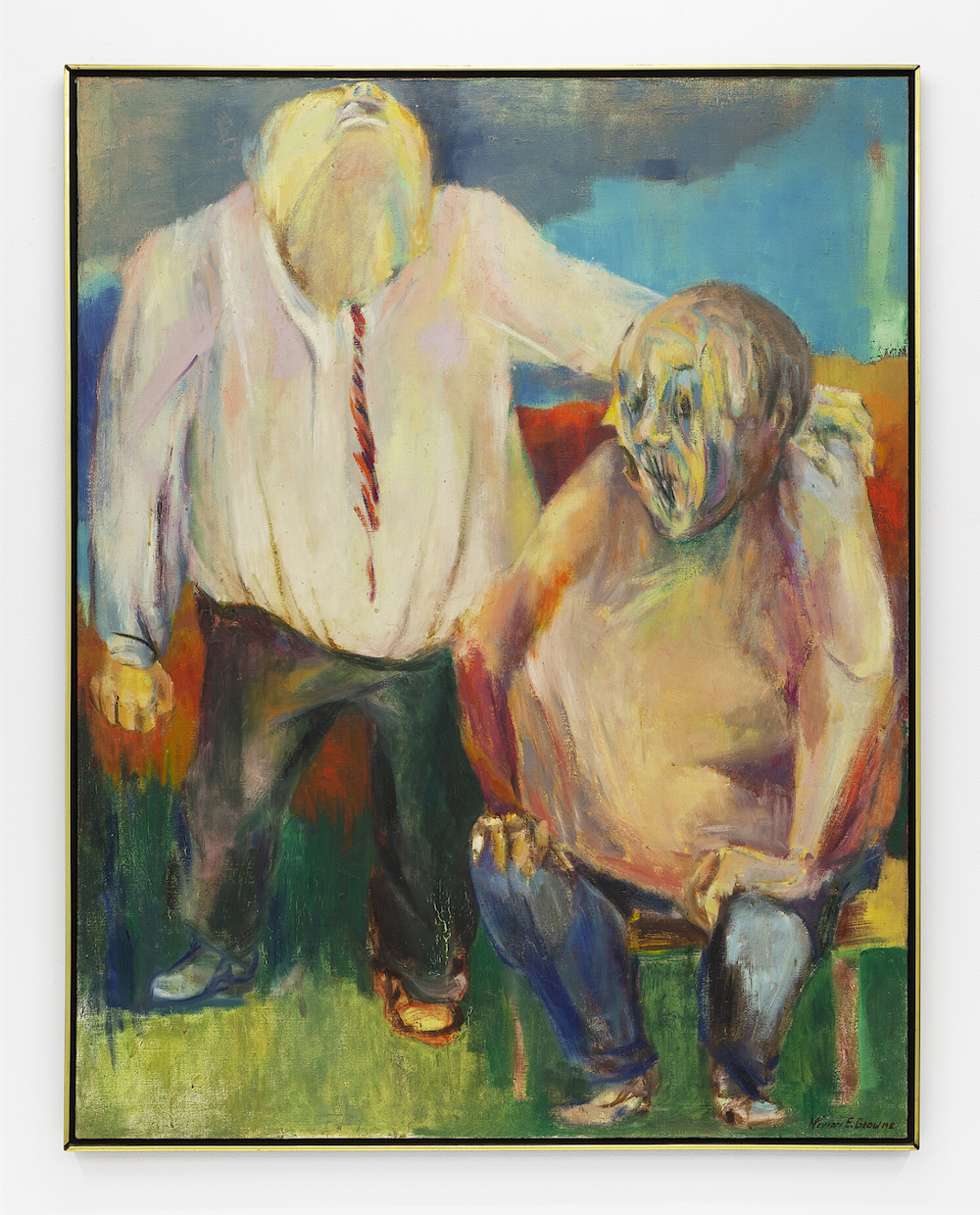
One reason Browne remains so compelling is that she refused tidy expectations. In the 1960s, when many artists and critics were asking what Black art should look like, Browne took a sharp left turn. Rather than centering Black figures as emblematic subjects, she made the now-famous Little Men paintings and works on paper: anxious, swollen, stumbling, unraveling white male figures in shirts and ties, portraits of privilege made ridiculous, unstable, and spiritually vacant. As Culture Type later observed, these were white men in states of “rant, rage, and rebellion,” men whose authority had curdled into spectacle. Frieze, reviewing her retrospective in 2025, described the series as evidence of Browne’s ability to render “mundane violences” and the ugliness of patriarchy through a style that felt sketchy, humane, and merciless all at once.
That choice was radical in more ways than one. Browne was critiquing white male power without giving it grandeur. She was also refusing the demand that Black artists produce only edifying images of Black life for white institutions or movement-approved images for everyone else. “I was painting my kind of protest, but it didn’t look like Black art,” she said in a 1986 conversation quoted by Frieze. That line, more than almost any other, explains the arc of her career. Browne’s politics were real, explicit, and lived. But they were never limited to poster logic. She believed protest could be atmospheric, oblique, psychological, and painterly.
A Florida birth, a Queens upbringing, and a late turn toward painting
Vivian Elaine Browne was born on April 26, 1929, in Laurel, Florida. Within two months, according to the timeline assembled for The Phillips Collection retrospective and Browne’s own oral history, her family relocated north, and she grew up in Jamaica, Queens. That geographic shift matters. Browne was Southern-born but fundamentally shaped by Black urban life in New York, by the movement between regions, and by a family atmosphere in which the arts were present even if formal museum-going was not. In her 1968 oral history with the Archives of American Art, Browne recalled that her childhood home had “a lot of music,” and she described that atmosphere as an “air” that helped shape her sensibility.
She studied at Hunter College, earning her undergraduate degree in 1950 and her MFA in 1959. By her own account, painting did not become central to her life until relatively late in her student years. In the oral history, Browne said she did not start painting until she was a senior in college, and that once she began, “all those directions came into one.” That line is revealing. She had wanted to be a scientist and a doctor, minored in music, loved art history and English literature, and did not initially experience herself as someone moving toward a single predetermined artistic destiny. Browne’s seriousness was never narrow. She came to painting through curiosity rather than self-mythology.
Her path into teaching was not smooth. Browne said in the same interview that when she tried to get education coursework at Hunter, she was told she was “not suitable,” which she later attributed to a lisp. Even so, teaching became one of the central strands of her life. She taught in South Carolina and New York public schools for a total of 11 years. In South Carolina, she worked at Booker T. Washington High School in Columbia, in what she described as a difficult early experience made harder by her lack of formal pedagogical training. Yet teaching and painting developed together for her; she said that once she got into the high school classroom, she also began painting much more seriously.
That double life, artist and teacher, was not incidental. It gave Browne an unusual vantage point. She understood labor, routine, and institutional life from the inside. She knew what it meant to make art while holding a job, to fight for studio time, and to refuse the romantic fantasy that artists emerge from pure isolation. Her later authority at Rutgers was built not only on talent but on years of working through the practical realities that many artists, especially Black women artists, were expected to manage without complaint.
Freedom, travel, and the widening of the self
In 1955, Browne traveled to England, France, and Italy, the first time she had left the United States. The trip stayed with her for years, and in her 1968 oral history she spoke about it with unusual emotional force. In Europe, she said, “you are not a Negro. You’re a person.” That statement should not be mistaken for some naïve fantasy about Europe as a post-racial paradise. What it records, instead, is the shock of contrast. Browne had taught in Jim Crow South Carolina and remembered even the basics of segregated transit as humiliating and formative. Europe represented, at least in that moment, a loosening of the American racial script. The feeling of freedom she described was not abstract. It was social, bodily, immediate.
Travel would remain crucial to Browne’s practice. The Phillips Collection notes that these early trips abroad were the first of many important experiences outside the United States, and later scholarship has made clear that her art changed significantly in response to movement, place, and cross-cultural looking. This is not unusual in modern art history, but with Browne there is an added layer: travel became a way to test the boundaries of identity imposed on her at home. Abroad, she was still herself, but the terms of perception changed. That experience seems to have opened formal possibilities as well as psychic ones.
Her 1964 fellowship at the Huntington Hartford Foundation in Southern California was another turning point. The Phillips timeline notes that while there she met artist Camille Billops, who became a lifelong friend. California would recur later in her life and work, especially in the 1980s, but even in the mid-1960s it offered Browne both distance from New York and a different relationship to space and light. If New York sharpened her political eye, travel repeatedly expanded her formal one.
The “Little Men” and the refusal of respectable protest
Browne’s best-known early work is the Little Men series, and for good reason. These paintings and works on paper from the mid-to-late 1960s are among the smartest meditations on power produced by any American artist of the era. The men are often frazzled, unbalanced, washed in unstable color, stripped of dignity but not of recognizability. They are office workers, authority figures, everyman patriarchs, embodiments of the social type that presumed itself universal. Browne made them small without making them trivial.
The accomplishment here was conceptual as much as stylistic. Browne took the social class and racial group that usually occupied the unmarked center of American life and made it visible as a type. White masculinity became her subject not in heroic terms but in diagnostic ones. She treated it as a performance, a pathology, a structure of entitlement under stress. Seen now, the series can feel eerily contemporary, not because Browne was predicting our politics, but because she understood how fragile dominance can look when someone finally paints it from the outside.
The series also pushed back against assumptions about what political art by a Black artist should do. Browne had painted Black subjects and spoke in her oral history about painting “beautiful people,” but she resisted forcing subject matter according to ideology. She said that such material had to come naturally into the work, not by compulsion. That insistence on artistic integrity was itself political. Browne did not reject Blackness; she rejected prescription.
Her work from this period suggests an artist thinking simultaneously as a social observer and as a formal experimenter. The figures look unstable because the world they occupy is unstable. Browne’s brushwork, color choices, and spatial looseness are not decorative afterthoughts. They are part of the argument. The emotional weather of the image does the political work.
Protest in the streets, protest in the institutions
If Browne’s paintings registered protest obliquely, her public life often did not. By the late 1960s she was actively involved in organizing against the exclusion of Black artists from major museums. The Phillips timeline notes that she protested the Whitney Museum of American Art’s 1968 exhibition The 1930’s: Painting & Sculpture in America for omitting Black artists. In 1969, she became a founding member of the Black Emergency Cultural Coalition, the group formed to fight anti-Black discrimination in the art world.
The backdrop was a museum culture that wanted Black culture as content while often excluding Black artists as makers. The Metropolitan Museum of Art’s 1969 exhibition Harlem on My Mind became a flash point. As The Met itself later acknowledged, one of the central complaints was the exclusion of work by Black artists such as Romare Bearden, Faith Ringgold, and Jacob Lawrence, and the show did not contain a single work of fine art by a Black artist. The protests around that exhibition helped force broader conversations about representation in museums, both in exhibitions and behind the scenes. Browne was part of that generation of artists who understood that cultural power had to be confronted institutionally, not just aesthetically.
The BECC was not merely symbolic. Records held by the New York Public Library describe the coalition’s activities across administrative work, arts programs, and community-based initiatives. Browne’s involvement places her squarely inside the long struggle to transform museum culture from an exclusionary gatekeeping system into something at least minimally accountable to the people whose culture it claimed to honor.
And then there was gender. Browne was part of the generation that made clear, again and again, that Black liberation movements and feminist art movements both had blind spots. The 1972 Faith Ringgold oral history captures that moment vividly, naming Browne among the Black women artists in the groundbreaking Acts of Art Gallery show that fed into the formation of the Where We At collective. Ringgold also described the discouragement Black women faced in male-dominated artist groups and the importance of belonging to a group where they could “participate fully.” Browne’s later association with Where We At and with feminist publication networks like HERESIES situates her in the thick of those debates, where race and gender could not be separated cleanly.
Africa, abstraction, and a new visual language
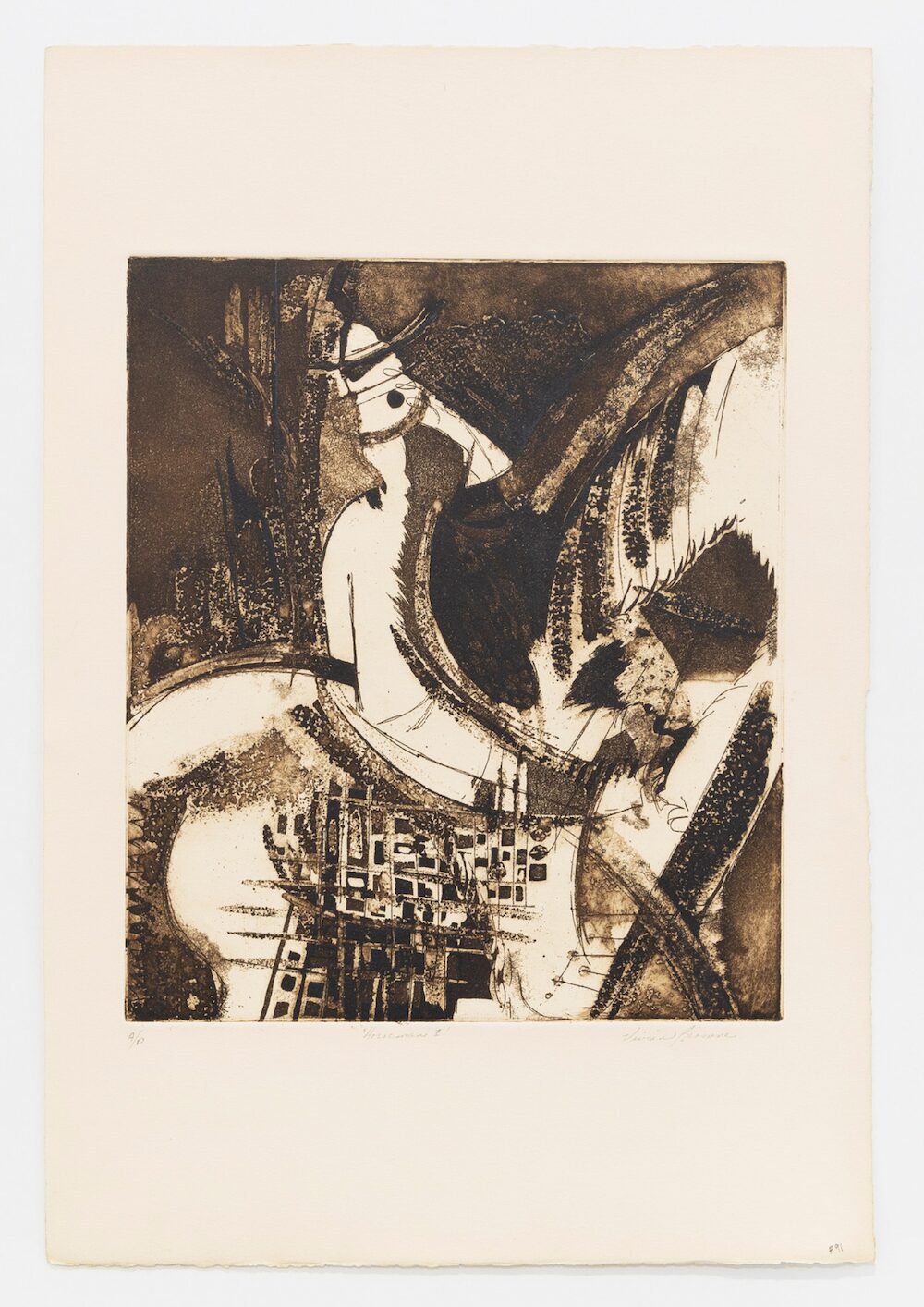
In 1971, Browne traveled with painter and scholar Floyd Coleman to Ibadan, Nigeria, where she studied for six weeks at the University of Ibadan; she also spent time in Lagos and Ghana. Multiple sources, including The Phillips Collection and the National Gallery of Art, identify this trip as a decisive turning point in her art. Browne herself later said that after West Africa, her work shifted from figuration toward abstraction. The Phillips describes the journey as “multi-sensory,” noting that she translated its colors, patterns, sights, and sounds into vibrant semi-abstract work. The National Gallery similarly notes that her African sojourn inspired landscapes and abstract compositions in vivid color, and that works such as Benin Equestrian show how she distilled forms from African art into marks and shapes she would later develop further.
This shift was not a retreat from politics. It was an expansion of them. Browne’s abstraction was rooted in encounter, study, memory, and transformation. She was not simply “influenced by Africa” in the vague, flattening way that phrase has often been used in art writing. She studied in Ibadan, absorbed visual systems, and used them to rethink her own language. Her Africa series from the early 1970s became a field in which place, plant forms, bodies, and atmosphere could approach one another without collapsing into literalism.
There is also something important in the timing. Browne’s move toward abstraction came after intense years of activist visibility. It is tempting, in retrospect, to narrate that change as a softening. It was not. It was a refusal to let political commitment trap her in a single mode. She could confront museums one year and pursue chromatic, semi-abstract, sensuous work the next without contradiction. That flexibility is one reason her oeuvre now feels so contemporary. She understood that Black artists were often asked to choose between formal ambition and political urgency. Browne chose both.
Rutgers, teaching, and the labor of building futures
Browne joined Rutgers in the early 1970s and remained on the faculty until 1992. The Phillips Collection notes that she taught at Rutgers University from 1971 to 1992, was promoted in 1975 to chairperson and associate professor of the visual arts department, and went on to have a storied career there as an educator and administrator. The Whitney’s artist page adds that she taught the history of Black art and, in 1985, became the first African American and second woman to receive full professorship in her department.
That teaching record matters as much as the exhibitions do. Browne did not only make work; she also helped create the conditions in which other people could encounter art history differently. Teaching Black art history at Rutgers in that period was itself an intervention. It meant institutionalizing knowledge that museums had long marginalized and helping students understand Black art as a field of formal and historical complexity, not an addendum.
The Phillips retrospective emphasizes her influential teaching career, and that phrase should be taken literally. Artists who work as teachers are often remembered publicly for the art and privately for the impact. Browne appears to have been both an authoritative intellectual presence and a model of artistic independence. Her career offered students a map for how to live in contradiction: inside institutions but not absorbed by them, committed to rigor without surrendering imagination, engaged in politics without letting politics flatten art into messaging.
China, California, trees, and the late work
In 1977, Browne became the first African American woman formally invited by the Chinese government to visit China as part of a delegation of American artists and crafters. According to the Phillips timeline, she was selected to represent American “women and Black artists,” and the trip led directly to her China series. Her practice continued to widen geographically and formally. These were not ornamental travels appended to a settled career; they were engines of reinvention.
Soon after, in 1979–80, Browne received a fellowship at MacDowell and officially joined SOHO20, one of Manhattan’s earliest women’s cooperative galleries. That affiliation placed her in another crucial network of artists committed to building alternatives to exclusionary mainstream structures. By the mid-1980s, she had also achieved important recognition: a mid-career retrospective at the Bronx Museum of Art in 1985, honors from Mayor Ed Koch in 1986, and later solo presentations including The Trees Speak at SOHO20 in 1987.
Her late work, especially the tree paintings and expansive nature-based abstractions, can look at first glance like a dramatic departure from the Little Men. In fact, the connection is deep. Frieze argues that Browne’s mature turn to nature extended her aversion to straightforward narrative, and that feels right. The late works remain probing, restless, and deeply alert to systems larger than the self. They are less satirical, more immersive, but not less serious. After a visiting professorship at UC Santa Cruz in 1981, Browne renewed her relationship to California and to the natural world, a reconnection the Phillips timeline explicitly links to her later work.
What changed was scale of attention. Early Browne often looked hard at social types. Late Browne looked hard at forms of life and environment that exceeded human drama. Trees, in her hands, are not quaint motifs. They are structures of endurance, movement, rootedness, and speech. Even the title The Trees Speak suggests an artist still interested in voice, but no longer willing to confine it to the human figure.
Why Browne matters now
Vivian Browne died on July 23, 1993, in New York. Yet the afterlife of her work has been steadily building. The Phillips timeline notes memorial exhibitions after her death, and by 2017 her work had entered major institutional reevaluations such as the Brooklyn Museum’s We Wanted a Revolution: Black Radical Women, 1965–85. By 2025, Vivian Browne: My Kind of Protest arrived as the first retrospective to fully explore the breadth of her four-decade career. That timeline says something obvious but still worth saying: the art world did not fail to notice Browne because she lacked seriousness. It failed because its systems of recognition were themselves distorted.
Browne matters now because she offers a model for how to think beyond stale oppositions. She was political without being doctrinaire. She was formally adventurous without being evasive. She believed Black art had political stakes, but she also insisted on complexity, ambiguity, and the artist’s right to move. That combination feels newly relevant in a moment when art is often asked either to soothe institutions or to produce instant legibility on demand. Browne did neither. She made work that thought.
She also matters because her career illuminates the ecology around art: collectives, classrooms, lofts, archives, alternative spaces, and informal networks of friendship and mentorship. Norman Lewis helped her secure the West Broadway loft she would keep for the rest of her life. Camille Billops was a lifelong friend. Linda Goode Bryant’s Just Above Midtown included her in its inaugural exhibition Synthesis. These are not side notes. They are reminders that Black art history has always been collective history too, built through people who created openings for one another when institutions would not.
And Browne matters for a simpler reason: the paintings hold up. They still do the work. The Little Men remain funny, sour, unsettling, and precise. The Africa works open outward with color and rhythm. The China series extends her curiosity into another visual register. The late tree paintings feel alive with motion and intelligence. Across all of it runs the same mind: skeptical of authority, hungry for experience, unwilling to be pinned down.
In her 1968 oral history, Browne said she preferred to be understood as “an artist who is a Negro” rather than as a “black artist,” a phrasing that reflects the language of its moment and a desire not to be reduced to category. Today, the more useful reading may be this: Browne wanted room to be fully herself. Not category-free, never that, but category-uncontained. That desire courses through her work and career. It is why the rediscovery of Vivian Browne does not feel like an act of charity. It feels like the return of a missing argument in American art.
The argument goes something like this: protest is not one style; Black art is not one mood; women artists do not owe clarity to institutions that ignored them; and painting, when practiced with enough nerve, can diagnose a culture while still making room for beauty, atmosphere, and surprise. Vivian Browne knew all of that decades ago. The rest of the art world is still catching up.
More great stories
The Painter Philadelphia Kept
March 21, 2026
No Comments
The Marriage That Threatened Jim Crow
March 21, 2026
No Comments