





The Groveland Four case was not a miscarriage of justice in the narrow sense. It was justice, as Jim Crow intended it to work.
The Groveland Four case was not a miscarriage of justice in the narrow sense. It was justice, as Jim Crow intended it to work.
By KOLUMN Magazine
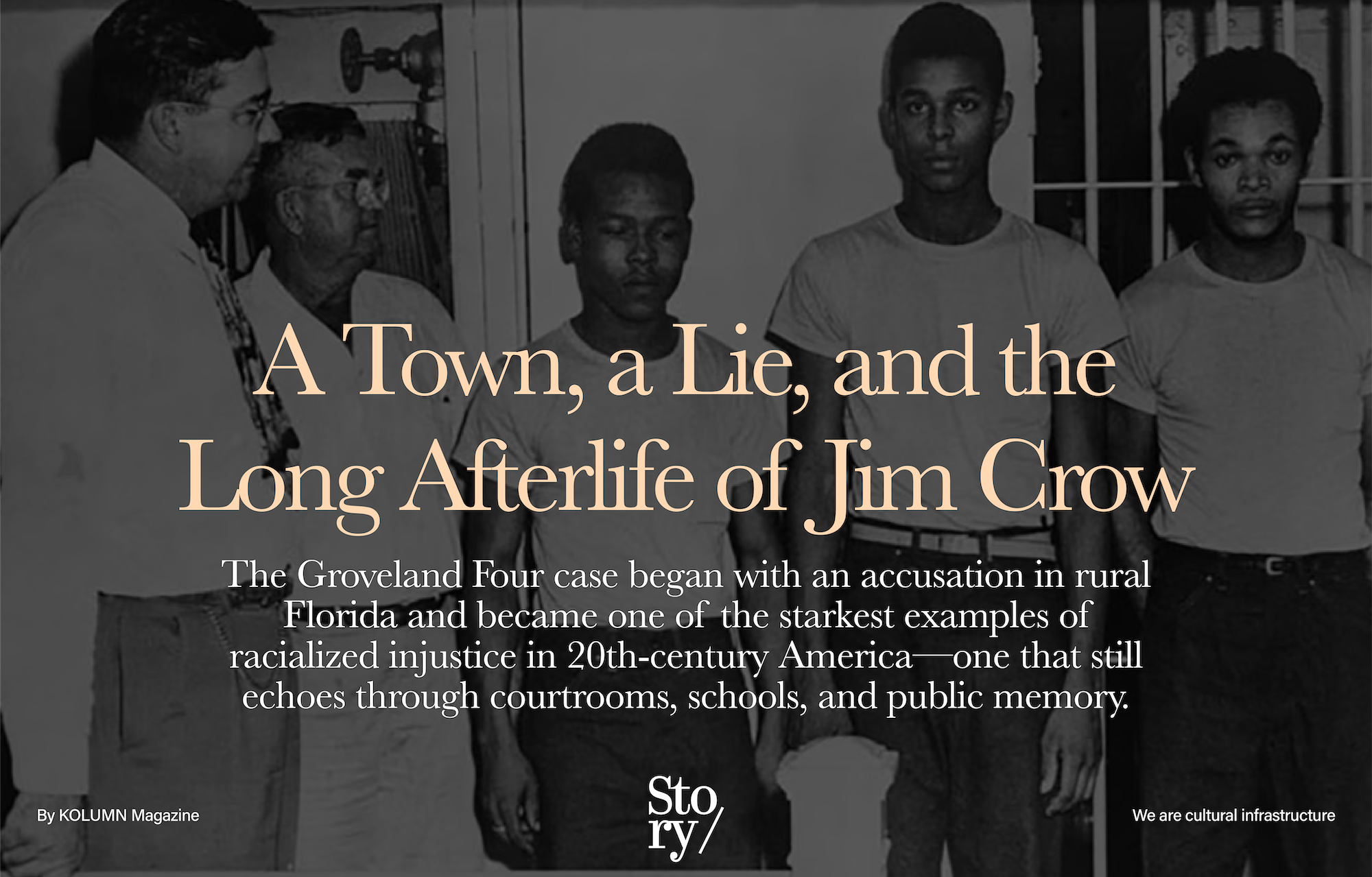
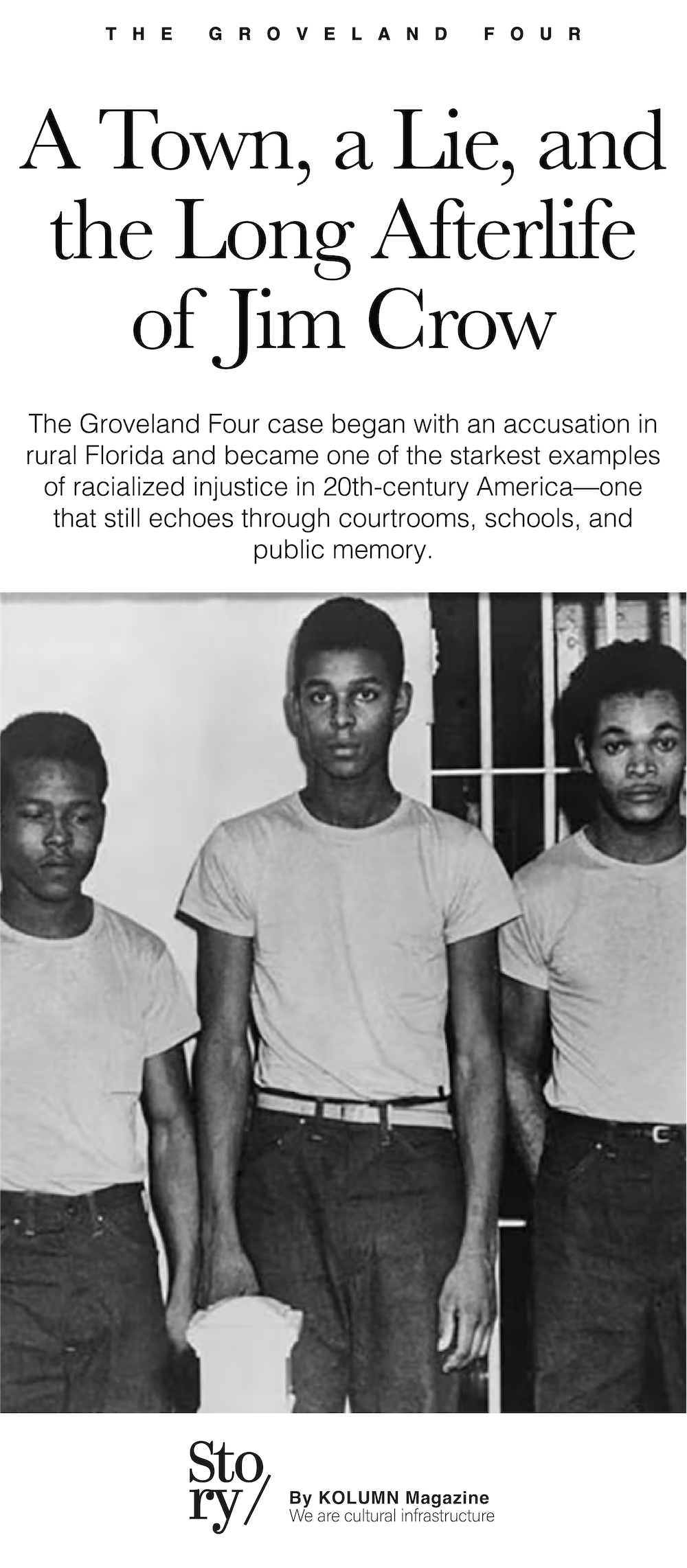
In the long ledger of American injustice, some cases stay alive because they are shocking, and some endure because they are clarifying. The Groveland Four case is both. It is shocking because of its brutality: four young Black men accused in 1949 of raping a white woman in Lake County, Florida; one killed in a manhunt, one gunned down by a sheriff, two condemned by all-white juries and forced to spend years behind bars. But it is clarifying because it shows, in almost unbearably crisp detail, how racial terror functioned in the mid-20th-century South—not as an occasional distortion of justice, but as a system that linked rumor, police violence, prosecutorial misconduct, white mob fury, courtroom bias, and political cowardice into a single machine.
That is part of why the case has never really gone away. It reemerged through family testimony, through the work of historians and journalists, through the archival persistence of the NAACP Legal Defense Fund, and through Gilbert King’s Pulitzer Prize-winning Devil in the Grove, which helped bring national attention back to the story and to Thurgood Marshall’s dangerous fight to challenge the convictions. It resurfaced again when Florida lawmakers apologized in 2017, when the state granted pardons in 2019, and when a judge finally vacated the convictions and dismissed the indictments in 2021. The state had taken more than seven decades to say, in legal language, what history had already made plain: these men had been denied even the basic presumption of innocence.
Yet even that sequence—apology, pardon, exoneration—can flatter the present if we are not careful. It can suggest a moral progress story neat enough to make the past feel closed. The Groveland Four deserve better than that. Their story is not simply about a wrong that was eventually corrected. It is about a society that built the wrong, defended the wrong, benefited from the wrong, and only grudgingly admitted the wrong after nearly everyone who suffered it was dead.
To understand Groveland, you have to start with Florida itself, and not the tourism brochure version. Mid-century Florida was not merely a sunny outpost of segregation. In many counties, it was a place where the color line was guarded with an almost paramilitary intensity. Lake County, where Groveland sits, had a reputation for especially hard-edged white rule. Black residents lived under constant threat, and the criminal legal system reflected that arrangement. Black citizens were systematically excluded from juries, voting restrictions reinforced white political control, and law enforcement often acted less like a neutral arm of the state than like an enforcement wing of the racial order. That broader context matters because Groveland was never just about four defendants. It was about what kind of community could hear such an accusation and instantly know what role everyone was expected to play.
The accusation came in July 1949. A 17-year-old white woman, Norma Padgett, and her husband reported that she had been abducted and raped after their car had trouble on a road near Groveland. Authorities quickly focused on four Black men: Ernest Thomas, Charles Greenlee, Samuel Shepherd, and Walter Irvin. Their ages and circumstances only sharpen the obscenity of what followed. Greenlee was just 16. Thomas fled and was hunted down. Shepherd and Irvin were arrested, beaten, and pressured into confessions. Greenlee, too, was brutally mistreated. The legal theory of the case was established almost immediately, but it was the social theory beneath it that did the real work: the old Southern presumption that white female accusation required Black male punishment, with evidence treated as optional.
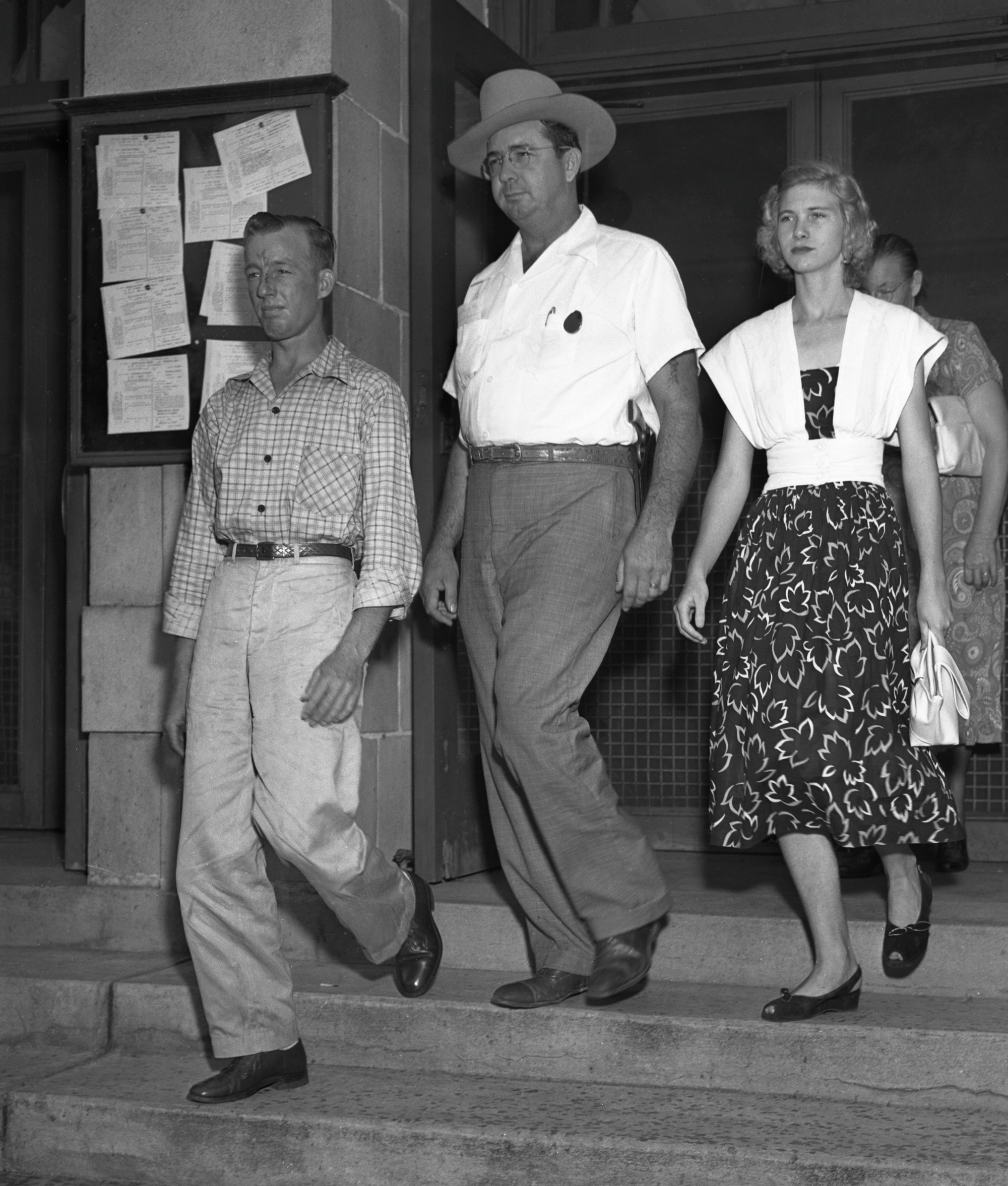
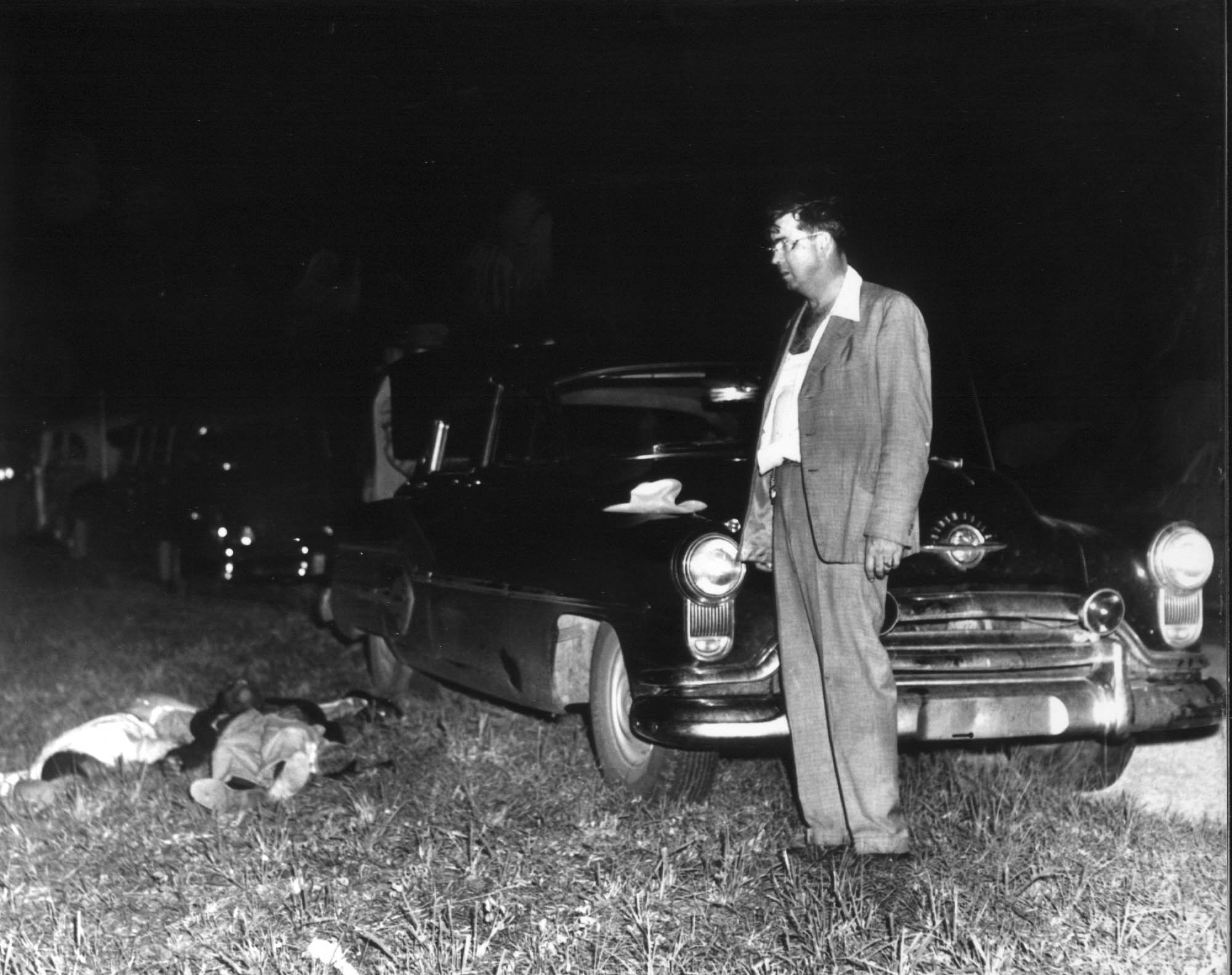
Ernest Thomas never made it to trial. A posse led by Sheriff Willis McCall hunted him down in Madison County days later and killed him in a hail of gunfire. Contemporary accounts and later retellings differ on some details, but the moral fact is not in dispute: Thomas was denied arrest, denied defense, denied court, denied life. A coroner’s jury called it justifiable homicide, which tells you nearly everything you need to know about the rules of credibility operating in Florida at the time. White official violence did not have to explain itself persuasively; it only had to explain itself to other white officials.
What happened to the three surviving defendants was, if anything, even more revealing because it passed through the formal rituals of law. Shepherd, Irvin, and Greenlee were beaten and coerced. According to later official reviews and the Florida Legislature’s own resolution, the defendants’ attorneys were denied access to exculpatory medical evidence regarding the alleged victim, and testimony about their brutal beatings was barred. In other words, the state did not merely rely on a poisoned investigation; it fortified that investigation by controlling what the jury could hear. The courtroom became an extension of the beating room.
The first trials played out before all-white juries in an atmosphere saturated with publicity, fear, and racial hostility. Shepherd and Irvin were sentenced to death. Greenlee, because of his youth, received life imprisonment. That sentencing spread tells its own story. This was not a careful weighing of individual guilt. It was a tiered distribution of racial punishment, calibrated by age but powered by the same underlying assumption that Black defendants accused of violating white womanhood existed outside the circle of ordinary legal protection.
“In Groveland, the verdict was not reached after the evidence. The evidence was arranged around the verdict.”
By then, the case had drawn the attention of one of the most consequential legal minds in American history. Thurgood Marshall, then working with the NAACP Legal Defense Fund, became involved in the appeals. That fact alone is a measure of how egregious the case was. Marshall was not some detached constitutional theorist drifting into local controversy. He was already deep in the hazardous, grinding work of civil rights litigation, and Florida was known to be dangerous terrain. The Groveland case, as LDF later reflected, unfolded while Marshall and his colleagues were also laboring under the extraordinary demands that would culminate in Brown v. Board of Education. Groveland was not a side note. It was part of the legal and moral battlefield on which modern civil rights strategy was being forged.
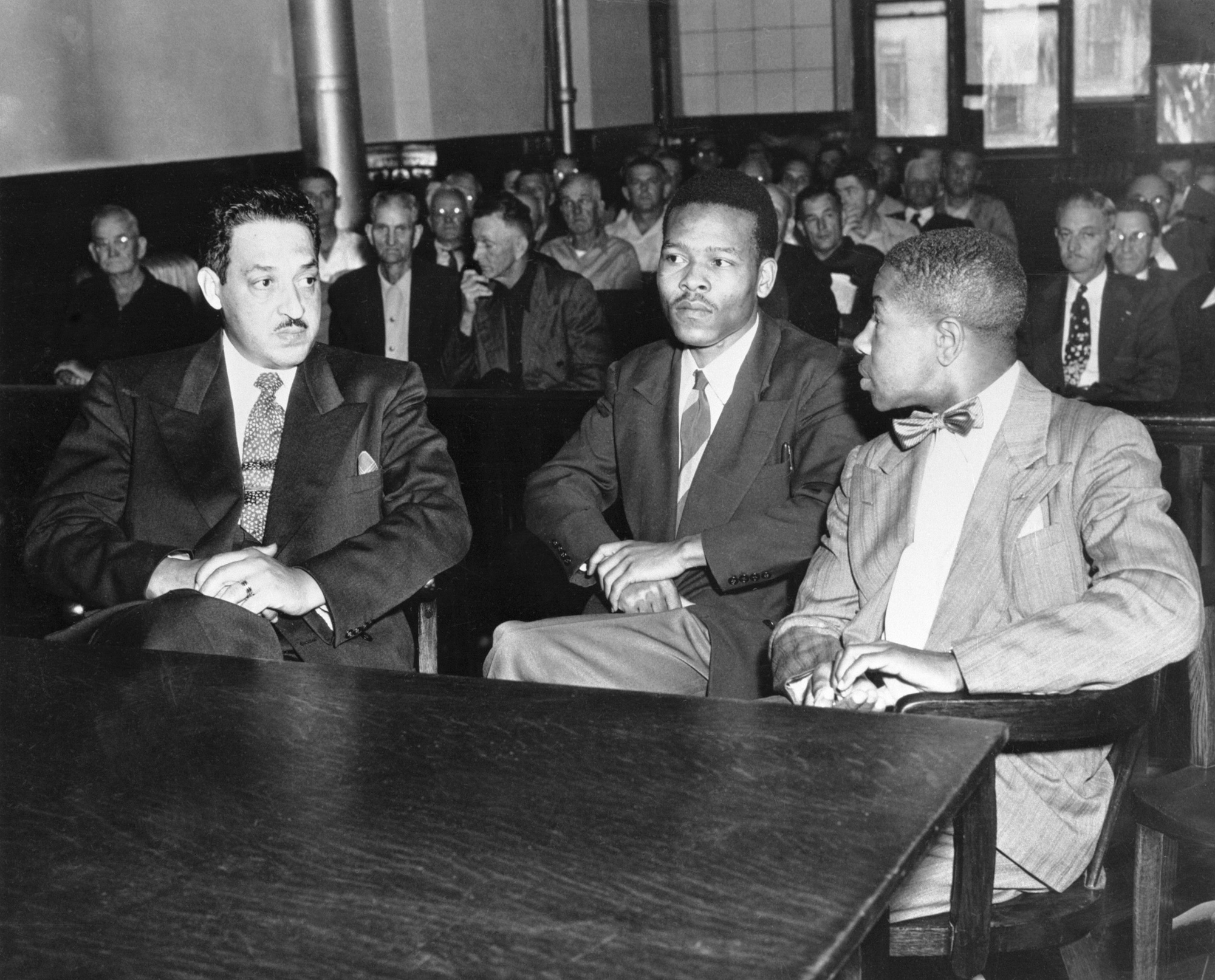
Marshall’s involvement also underscores something often lost in simplified civil rights storytelling: the movement was not built only through headline desegregation cases. It was also built through fights over criminal procedure, police violence, jury composition, coerced confessions, and the right of Black defendants to be treated as fully human in courts designed to deny exactly that. The Groveland Four case sits at that intersection. It was a local criminal case with national constitutional implications, and Marshall recognized that immediately.
In 1951, the U.S. Supreme Court reversed the convictions of Shepherd and Irvin in Shepherd v. Florida. The Court’s brief per curiam ruling rested on precedent involving exclusion of Black jurors, but the reversal mattered for a broader reason: it punctured the fiction that the Florida proceedings had been legitimate. The nation’s highest court was, in effect, forced to acknowledge that the normal operation of local justice in this case could not be trusted. Still, a reversal was not an acquittal, and not even close to safety. In the Jim Crow South, a legal win could simply reset the terrain on which violence resumed.
That is exactly what happened. While Shepherd and Irvin were being transported for the retrial, Sheriff Willis McCall claimed that he had stopped because of car trouble and that the two handcuffed prisoners attacked him. McCall then shot both men. Shepherd died on the spot. Irvin survived by pretending to be dead. The sheriff’s version was accepted by authorities, but the event has long stood as one of the most infamous episodes in the case: a lawman entrusted with custody becoming executioner. It was not simply a personal act of violence. It was the state revealing its truest instinct when ordinary legal process threatened to loosen its grip.
Walter Irvin did survive long enough to face retrial. That alone feels grotesque. A man almost killed by the sheriff transporting him back to court was then placed once more before the machinery of prosecution. Marshall represented Irvin in the renewed proceedings, but the basic racial structure of the courtroom had not disappeared. Irvin was again convicted by an all-white jury. His sentence was again death, later commuted to life by Governor LeRoy Collins. Greenlee, who had not appealed the way Shepherd and Irvin had, remained imprisoned until he was paroled in 1962. Irvin was paroled in 1968. He died the following year. Greenlee lived until 2012. Freedom, where it came, came partial, belated, and scarred.
There is a temptation, when recounting such cases, to isolate the grotesque figures—particularly McCall—as if the scandal can be contained in one exceptionally vicious man. McCall certainly earned notoriety, but Groveland was never only a sheriff story. It was also a judge story, a prosecutor story, a jury story, a legislature story, a governor story, a newspaper story, and a citizen story. Official reviews decades later would conclude that the sheriff, judge, and prosecutor effectively ensured guilty verdicts. That language matters because it shifts the frame from misconduct by rogue actors to a coordinated collapse of the system itself.
And outside the courthouse, racial terror continued to ripple. Harry T. Moore, one of Florida’s most important civil rights organizers, pushed aggressively for accountability in the case and demanded action against McCall. On Christmas night in 1951, Moore and his wife Harriette were mortally wounded when a bomb exploded beneath their bedroom. The killers were never brought to trial. The full causal chain between Groveland and the bombing exists within a larger landscape of anti-Black violence rather than a neat single-cause proof, but the historical link is unmistakable: Groveland was part of the climate of “Florida terror” in which civil rights advocacy itself could become a death sentence.
“Groveland did not end at the courthouse door. It bled outward—into homes, into movements, into memory.”
The case also matters because it sits at the center of a familiar but still underexamined American grammar: the idea that white accusation carries a presumption of civic protection while Black denial carries a presumption of deceit. In that grammar, the Black defendant is never just defending against a charge. He is battling a mythos—one in which the white social body imagines itself endangered and therefore entitled to any level of retaliatory force. Groveland belongs in the same national conversation as Scottsboro, Emmett Till, the Central Park Five, and so many other cases in which race determined not just how facts were interpreted, but which facts were even permitted to matter.
That is one reason the case remained alive in the families. For descendants, Groveland was not a chapter that ended with parole or death. It remained an inheritance of stigma, grief, and unfinished work. Reporting around the 2019 pardons and the 2021 exonerations captured relatives describing what it meant to live under the shadow of a false accusation that the state had never formally withdrawn. One daughter of Charles Greenlee spoke about carrying the emotional burden of the case from childhood onward. That dimension can be easy to flatten into rhetoric about “closure,” but closure is not really the right word. The state did not merely incarcerate and kill these men. It also imposed a story on their families, and stories, once official, can survive far longer than prison terms.
The modern campaign to clear the Groveland Four gained momentum in the 2010s, propelled by local organizing, descendants, elected officials, and historians, especially Gilbert King. In 2017, the Florida Legislature unanimously adopted a resolution offering a “formal and heartfelt apology” to the victims and their families and urging expedited clemency. The language of the resolution is striking because it openly identifies racial hatred, references the suppression of exculpatory evidence, and acknowledges the men’s brutal treatment by law enforcement. This was not merely commemorative symbolism. It was the state writing into its own record an account fundamentally at odds with the one it had enforced for decades.
Still, apology was not enough. A legislative resolution can recognize injustice without changing the legal status that encoded it. In 2019, Florida’s clemency board granted posthumous pardons to the Groveland Four. Governor Ron DeSantis called the case a miscarriage of justice. That action mattered, particularly for descendants who had spent years pressing the state to do something more than express regret. But pardons, as lawyers and families alike understood, are not the same as exoneration. A pardon can imply forgiveness where there should instead be repudiation. It can suggest mercy for the convicted rather than innocence for the accused. Groveland required the latter.
That final step came in 2021. Fifth Circuit State Attorney William Gladson filed a motion seeking to dismiss the indictments against Thomas and Shepherd and set aside the judgments and sentences of Greenlee and Irvin, citing newly discovered evidence and an overwhelming breakdown in the justice system. Judge Heidi Davis granted the request, restoring what one report described as the constitutional presumption of innocence. The significance of that phrasing should not be underestimated. The men were long dead. Nothing tangible could be restored to them. But the law could at least stop lying about them.
Even so, one should be careful with the language of redemption. Florida did not “solve” Groveland in 2021. It documented its own failure with greater honesty. That distinction matters because exoneration, while necessary, can also become a kind of civic self-absolution. It allows institutions to celebrate their eventual correctness without fully reckoning with the architecture that made the injustice possible in the first place. Groveland is meaningful not because Florida finally got around to correcting the record, but because the case continues to expose how fragile legal ideals become when racial hierarchy is treated as a public good.
The case also endures because it helped shape the broader civil rights struggle. Marshall’s work in Groveland formed part of the crucible in which constitutional litigation against segregation and racial subordination was sharpened. The LDF has repeatedly framed the case as central to its history of challenging racialized policing and capital punishment. Seen that way, Groveland is not only a local Florida atrocity. It is a hinge case in the development of a modern legal critique of state violence against Black Americans.
There is also the matter of memory. For decades, the Groveland Four were better known to specialists, local historians, descendants, and civil rights scholars than to the broader public. That relative obscurity is revealing. America often remembers racial violence more easily when it can be narrated as mob action outside the state. Groveland is harder because the state is everywhere in it: the sheriff, the trial judge, the prosecutor, the prison transport, the jury pool, the governor, the courts. It is a story in which the line between mob and institution nearly disappears. That makes it less convenient for a national mythology that prefers to imagine democracy occasionally interrupted by bigotry rather than democracy itself being administered through it.
“What makes Groveland enduring is not only the violence. It is the paperwork—the way injustice was stamped, filed, affirmed, and preserved.”
Public memorialization has begun to change that. Historical markers and monuments now stand in Lake County, and documentaries and longform reporting have introduced the case to new audiences. Those gestures matter, not because memorials substitute for justice, but because public memory has always been part of the contest. The original Groveland story was built through official narrative control. Revising that story in civic space—on courthouse grounds, in museums, in classrooms, in journalism—is one way of refusing the old arrangement in which the state got to define what counted as truth.
But memorials also raise a harder question: what do we do with historical cases once they are properly named? There is a version of remembrance that domesticates the past, treating it as settled tragedy rather than active inheritance. Groveland resists that treatment because its structure is recognizable. Coerced confessions, racially skewed jury selection, police dishonesty, prosecutors shielding weak cases, media atmospheres that contaminate adjudication, official resistance to admitting error—none of this belongs exclusively to 1949. The particulars change. The logic does not disappear. That is why Groveland still feels unnervingly current.
The case also forces a confrontation with a subtler issue: the difference between legal innocence and public innocence. By 2021, the legal record had finally been corrected. But history often works more slowly than court orders, and public understanding more slowly than both. Cases like Groveland linger in a liminal place where the documents have changed but the deeper cultural habits that produced them remain resilient. To tell this story responsibly, then, is not merely to repeat that the men were exonerated. It is to explain why it took so long for such an obvious truth to become legally speakable.
There is no shortage of American cases involving racial injustice. What distinguishes Groveland is the density of its meaning. It is a false accusation case, a capital punishment case, a police violence case, a jury discrimination case, a wrongful conviction case, a civil rights organizing case, and a public-memory case all at once. It connects courthouse procedure to mob psychology, local terror to constitutional law, family grief to state responsibility. It shows how the civil rights movement was fought not only in schools and buses and lunch counters, but in jails, back roads, appellate briefs, and the small, brutal spaces where officers decided what kind of body the law was allowed to protect.
And then there is the simplest fact of all: four lives were rerouted by a lie and a system prepared to honor it. Ernest Thomas was killed in a manhunt. Samuel Shepherd was killed by the sheriff charged with transporting him. Charles Greenlee lost years of his youth to prison and died decades before the state cleared his name. Walter Irvin survived beatings, prosecution, a shooting, retrial, and years of incarceration, only to die shortly after his parole. Even in a country saturated with wrongful-conviction narratives, that sequence still lands with special force because of how openly it displays the hierarchy of whose pain counted and whose death could be administratively rationalized.
For journalists, historians, and anyone trying to tell this story now, the ethical challenge is to resist two temptations at once. One is sensationalism—the impulse to render Groveland as lurid Southern grotesque, safely distant from the present. The other is flattening—the temptation to reduce the case to a shorthand example and thereby smooth away the lives inside it. The responsibility is to hold onto both scale and specificity: to name the structure and the men it consumed. Ernest Thomas. Charles Greenlee. Samuel Shepherd. Walter Irvin. Their names should not function as symbols alone. They should remain stubbornly personal.
The Groveland Four case is often described as one of the worst miscarriages of justice in Florida history. That is true, and still maybe too mild. A miscarriage implies failure to carry out the system’s intended function. Groveland is more disturbing because it reveals how the system’s intended function, under Jim Crow, often included the enforcement of racial order over factual truth. The scandal is not that every safeguard failed. The scandal is that many of the safeguards were never built for these defendants in the first place.
So the significance of Groveland is not exhausted by its eventual exoneration. Its significance lies in what it teaches about American democracy when stripped of sentimental cover. It shows that law can be impeccably procedural and still profoundly illegitimate. It shows that innocence can be visible long before institutions are willing to recognize it. It shows that memory itself can become a form of justice work. And it shows that when the state finally admits what happened, that admission is not the end of the story. It is a demand to examine how many other stories were told the same way.
In that sense, Groveland belongs not only to Florida or to Black history, but to the central American archive. It is about who gets believed, who gets hunted, who gets a jury, who gets a second chance, who gets remembered, and who must wait generations for the record to catch up with reality. The men known as the Groveland Four were failed by nearly every institution that touched their case. The least the present can do is refuse to let that failure be softened into an anecdote.
Their case should be taught not as a tragic exception, but as a lesson in method. This is how racialized injustice was assembled. This is how official truth was manufactured. This is how families carried the wound. This is how legal advocacy and historical excavation slowly pried open a sealed narrative. And this is why Groveland still matters: because the distance between accusation and annihilation was once frighteningly short for Black Americans, and because the institutions that enabled that distance have never entirely vanished—only changed form, language, and public relations strategy.
The Groveland Four were denied justice in life. The nation’s obligation now is not merely to honor them, but to understand them well enough that their story remains inconvenient. That is usually the beginning of real historical memory: when the past stops behaving like tribute and starts reading like indictment.
More great stories

What the Art World Missed When It Missed Vivian Browne
March 22, 2026
No Comments
The Painter Philadelphia Kept
March 21, 2026
No Comments