




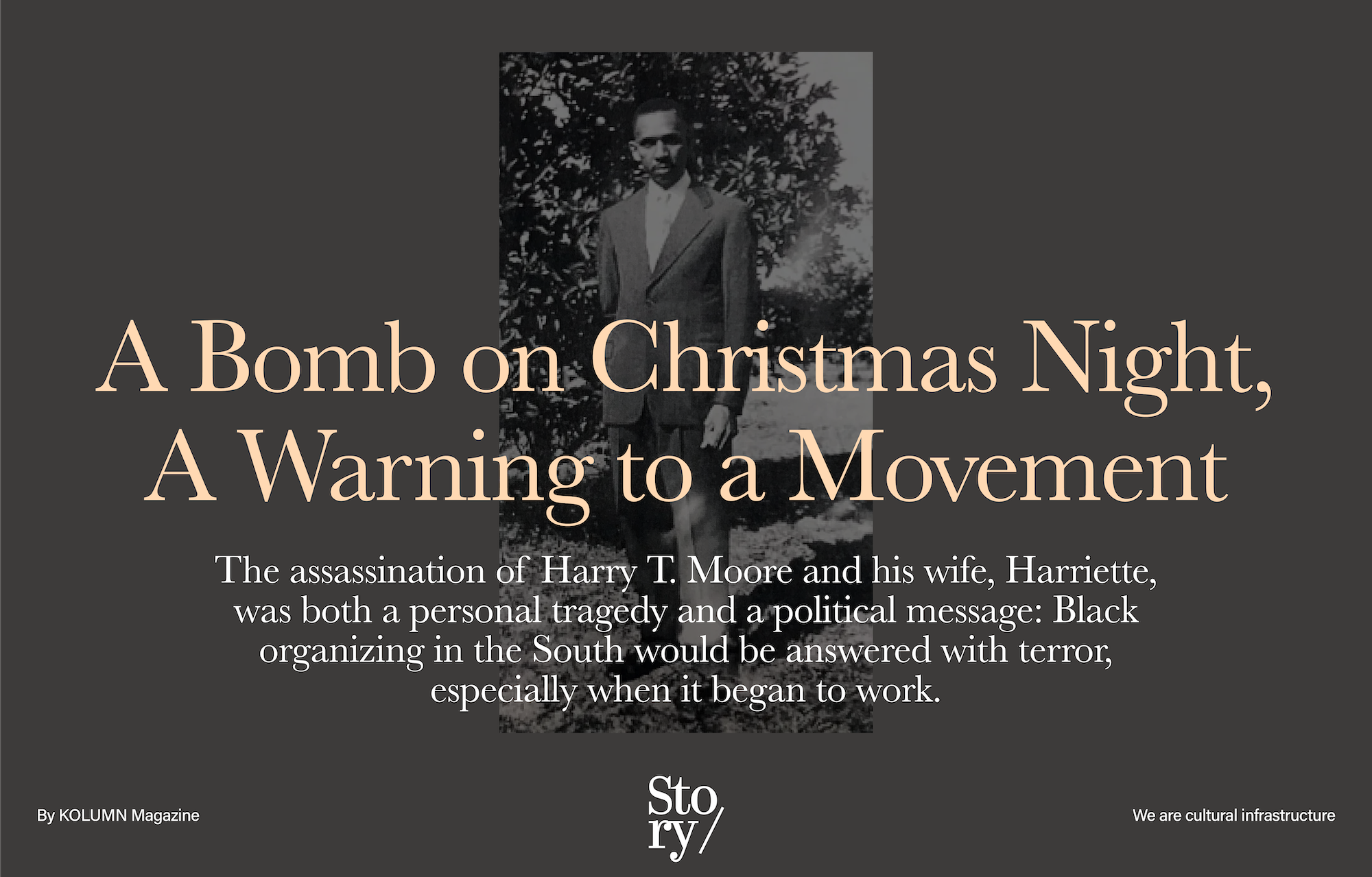
Harry T. Moore understood early that civil rights was never one fight. It was the schoolhouse, the ballot box, the courthouse, and the terror campaign designed to police them all.”
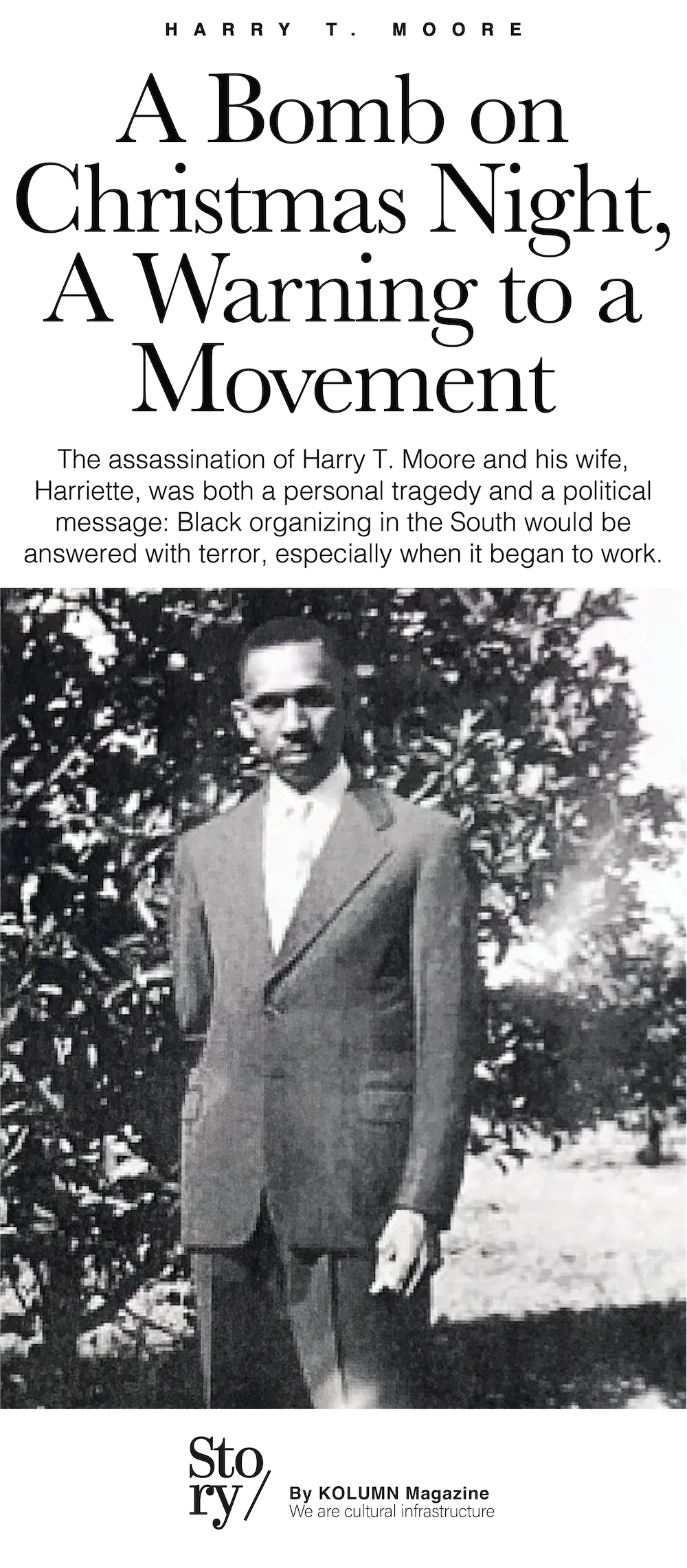
Harry T. Moore understood early that civil rights was never one fight. It was the schoolhouse, the ballot box, the courthouse, and the terror campaign designed to police them all.”
By KOLUMN Magazine
Harry T. Moore should be much more widely known than he is. That is the first thing that hits you when you begin tracing his life with any seriousness. Here was a Florida educator turned organizer who fought on multiple fronts at once: voting rights, equal pay for Black teachers, anti-lynching advocacy, police brutality, and fair treatment in the criminal legal system. He built institutions. He wrote letters that officials could not easily ignore. He understood membership, strategy, and numbers. He also understood something that would later define the civil rights movement at its height: moral appeal alone was never enough. You needed organization, pressure, litigation, turnout, and stamina. Decades before the movement’s most canonized victories, Moore was already doing that work in Florida.
That matters because Moore’s life disrupts a lazy version of civil rights history, the one that begins the story in the mid-1950s and treats the South as though Black political organizing suddenly appeared when television cameras did. Moore belonged to an earlier generation of movement builders, one forged in the long shadow of Reconstruction’s defeat and Jim Crow’s consolidation. He was born in 1905 in Houston, a small community in Suwannee County, Florida. He grew up amid both hardship and possibility: his father died when he was still a boy, and Moore spent formative years with aunts in Jacksonville, where he encountered a larger and more politically vibrant Black world. Those years helped sharpen both his academic gifts and his political imagination.
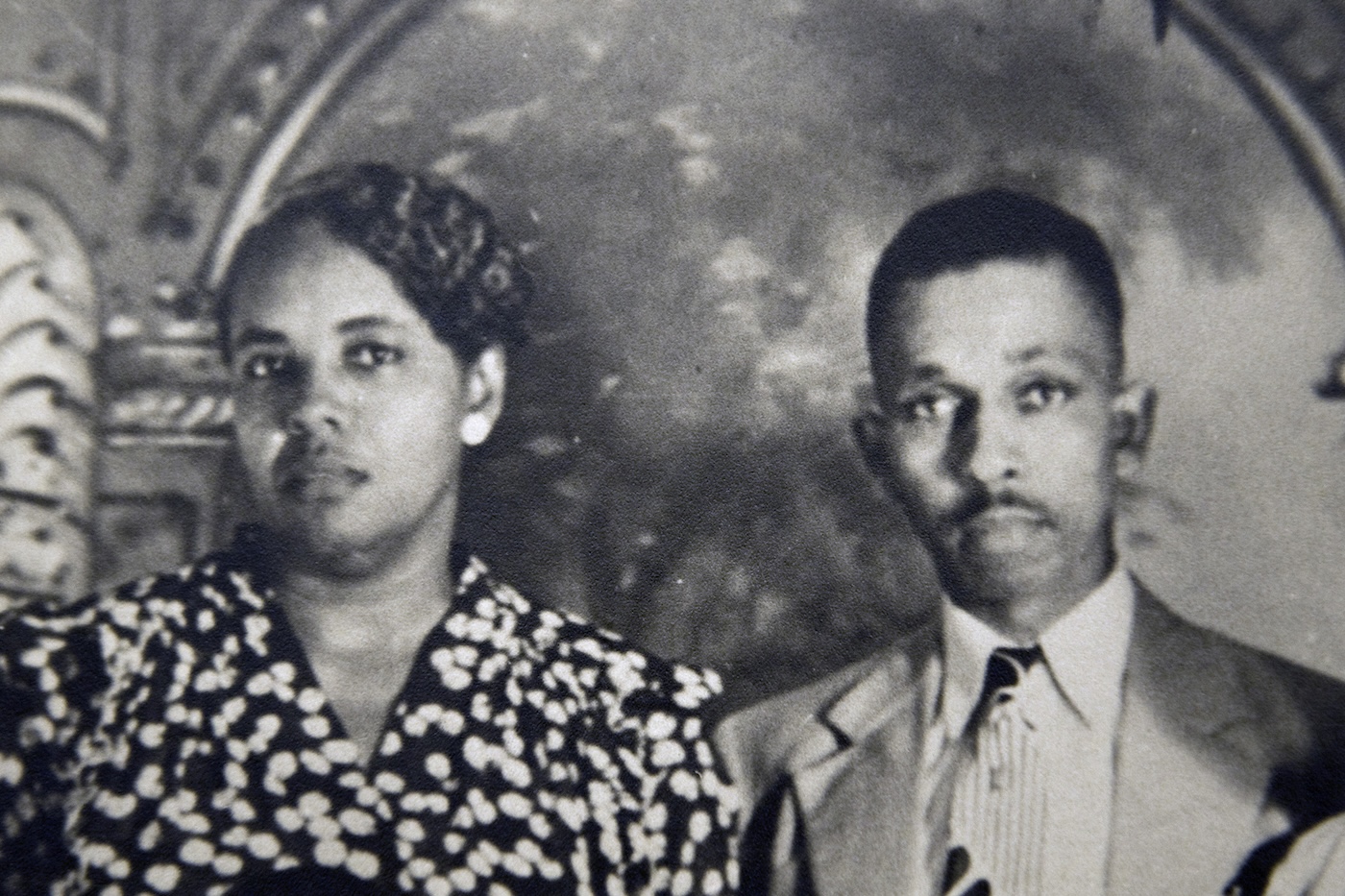
After returning to North Florida, Moore attended Florida Memorial College’s high school program and graduated in 1925 with a teaching credential. He soon took a teaching job in Brevard County, on Florida’s Atlantic coast, where he met Harriette Vyda Simms. Their partnership would become one of the great, if underappreciated, partnerships in civil rights history. They married, built a family, continued their education, and taught in segregated Black schools. Later, both completed college work at Bethune-Cookman. The basic facts here are important, but the larger point is even more important: Moore did not enter public life as a celebrity activist or courtroom star. He entered it as a Black schoolteacher in Jim Crow Florida, which meant he knew from the inside how segregation worked as a daily system—underfunded schools, unequal salaries, constrained political power, and the ever-present threat of retaliation.
That classroom background shaped the way he organized. Moore understood that education was not just about reading and arithmetic. In the segregated South, education was also about citizenship, self-possession, and political consciousness. He saw schools as part of a larger structure of racial control, which is one reason he became deeply involved in the campaign for equal pay for Black teachers. In 1937, working with the all-Black Florida State Teachers Association and backed by NAACP lawyer Thurgood Marshall, Moore filed what PBS describes as the first lawsuit in the Deep South seeking salary equalization for Black and white teachers. The initial suit did not bring a clean, immediate victory, but it helped open the door to additional litigation that pushed Florida toward pay equity. In other words, Moore was helping build a rights strategy long before Brown v. Board or Montgomery made such fights nationally iconic.
The temptation with figures like Moore is to treat them as “ahead of their time,” which is true, but incomplete. He was not simply ahead of his time; he was in active conflict with it. By 1934, Moore had helped found the Brevard County NAACP chapter, and over the next decade he became a central organizer in the state. In 1941, he organized the Florida State Conference of NAACP branches and became its unpaid executive secretary before later serving as its first full-time paid executive secretary. During these years, he was doing the kind of unglamorous work that makes movements real: building branches, keeping records, sending circulars, writing protest letters, recruiting members, and translating local grievance into statewide power. The NAACP says statewide membership grew to roughly 10,000 members in 63 branches during his tenure. Those are not just bureaucratic details. They are evidence of infrastructure.
Moore’s organizing also grew sharper and riskier in the 1940s. PBS notes that by 1943 he had moved aggressively into investigations of lynching and police brutality, taking affidavits from family members, making his own inquiries, and pressuring officials. The National Museum of African American History and Culture similarly emphasizes that he fought for better schools, voting rights, and an end to lynching, while waging a letter-writing campaign to state and national authorities. This was dangerous work in any part of the South, but especially in Florida, a state too often left out of popular narratives about racial terror despite its long, bloody record. Moore was forcing that violence into official view, and in doing so he made himself visible to people who preferred Black suffering to remain local, deniable, and unrecorded.
If there is one arena where Moore’s impact can be measured with unusual clarity, it is voting rights. After the Supreme Court’s 1944 decision in Smith v. Allwright struck down the white primary, Moore moved fast. He organized the Progressive Voters League, a voter registration and education effort designed to convert legal opening into political power. According to PBS and later Justice Department and Florida investigative summaries, Black voter registration in Florida more than doubled between the mid-1940s and 1950, with Moore and the PVL credited with registering more than 100,000 Black voters; the NAACP notes that by the time of the Moores’ deaths, Florida had the highest number of registered Black voters of any Southern state. That is not a symbolic accomplishment. That is a reconfiguration of power. It also helps explain why white supremacists saw Moore as a genuine threat.
The way Moore approached voting tells you a great deal about his political intelligence. He did not romanticize the ballot. He operationalized it. The Progressive Voters League was not just about civic virtue; it was about organized leverage. The Justice Department’s later review described the PVL as a force large enough to affect election outcomes. Moore and his allies were not merely asking white officials to behave better. They were trying to alter the incentive structure of Southern politics. That distinction matters. A lot of public memory flattens early civil rights work into uplift rhetoric. Moore’s work was tougher than that. It was systems work. He wanted Black Floridians registered, educated, and positioned to punish hostile politicians and reward responsive ones.
That, of course, put him on a collision course with local power brokers and the Ku Klux Klan. The Justice Department’s 2023 notice closing the federal file on the Moore case concluded that his civil rights advocacy made him a known Klan target. Florida’s attorney general site and DOJ review both summarize multiple investigations that eventually implicated four high-ranking Klansmen in the bombing, even though no one was ever arrested and all the principal suspects died before prosecution could occur. The significance here is not only that Moore was hated by violent white supremacists. It is that his activism had become consequential enough to provoke strategic retaliation. He was not being targeted because he was merely visible. He was being targeted because he was effective.
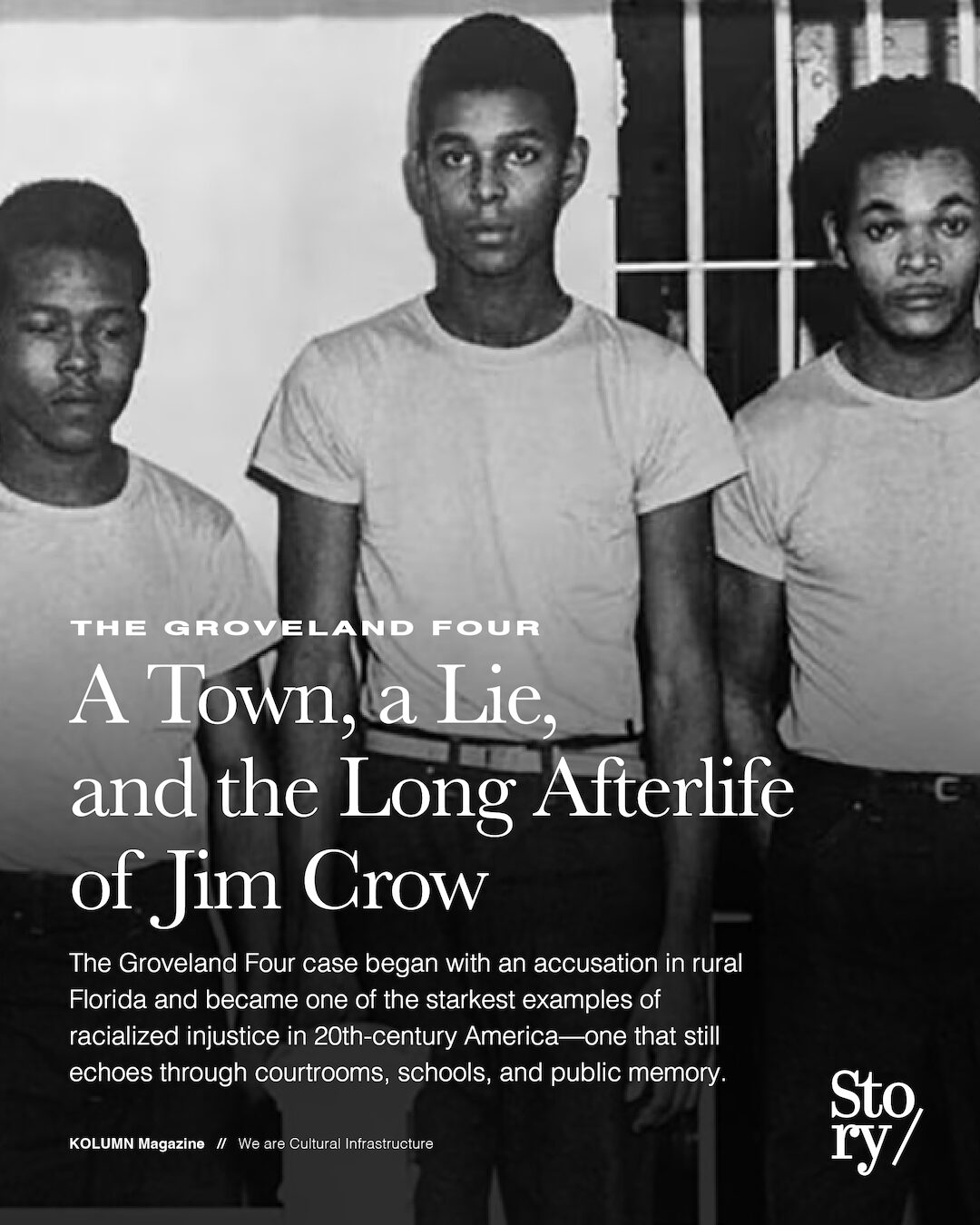
To understand the final phase of Moore’s life, you have to reckon with the Groveland case. In 1949, four young Black men in Lake County, Florida—later widely known as the Groveland Four—were accused of raping a white woman. The case unfolded in a frenzy of racist hysteria. Ernest Thomas was killed by a posse. The remaining suspects faced brutal treatment, coerced confessions, mob terror, and all-white juries. A white mob of more than 400 attacked Groveland’s Black neighborhood, prompting authorities to call out the National Guard. Moore threw himself into the case, bringing national attention to it and working with the NAACP to pursue justice. PBS and Washington Post commentary alike identify him as a key figure in pressing the case and in bringing Sheriff Willis V. McCall’s conduct to wider notice.
The Groveland case clarified something Moore had understood for years: legal injustice in the South was not an isolated malfunction. It was a regime. Policing, courts, mobs, political officials, and local rumor all worked together. When Thurgood Marshall and the NAACP Legal Defense Fund secured a Supreme Court victory that overturned two of the defendants’ convictions, it should have marked a correction, however incomplete. Instead, Sheriff McCall shot two of the handcuffed defendants while transporting them, killing Samuel Shepherd and severely wounding Walter Irvin. Moore responded by demanding accountability. He called for McCall to be suspended and indicted. That campaign intensified his public profile and, according to later official reviews, likely increased the danger surrounding him in the weeks before his assassination.
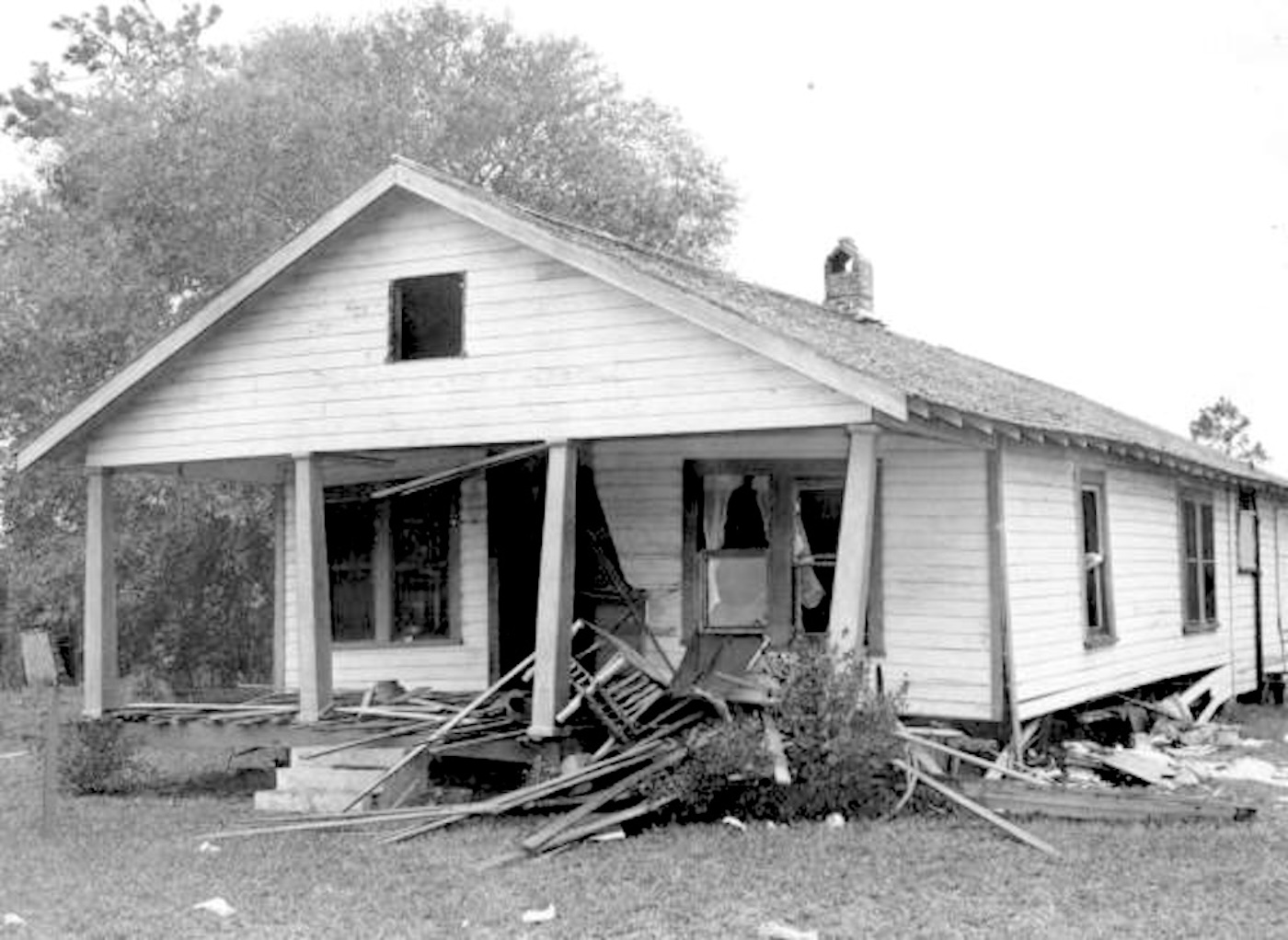
Then came Christmas night, 1951. The Moores had marked their twenty-fifth wedding anniversary that day. A bomb placed beneath their home in Mims exploded under their bedroom. Harry T. Moore died on the way to the hospital. Harriette Moore, also gravely injured, died nine days later. The NAACP identifies Harry as the first NAACP official to be assassinated; PBS states that Harry and Harriette Moore were the only husband and wife to give their lives to the movement; the Smithsonian describes the attack as the first killing of a prominent civil rights leader after World War II. These descriptions vary slightly in emphasis, but together they underline the same reality: the Moores’ murders were an early and devastating political assassination at the dawn of the modern civil rights era.
The bombing was not just a killing. It was a message. It warned Black organizers across the South that progress in voter registration, teacher pay, anti-lynching work, and criminal justice advocacy would be met with terror. The fact that the bomb exploded beneath a family home on Christmas night only intensified the symbolic cruelty. It fused domestic intimacy with public violence. The point was not merely to eliminate Moore. The point was to stage an act of racial domination so brazen that everyone would understand what kind of price could follow principled organizing. The South had long used spectacular violence in exactly this way. What makes the Moore case so important is that it illuminates how that older tradition of racial terror carried directly into the supposedly more modern, postwar civil rights period.
The national response was immediate and substantial, though not ultimately sufficient. There was public outrage, major press attention, a large FBI investigation, and national organizing in the Moores’ memory. The Library of Congress holds Langston Hughes’s 1952 “Ballad of Harry Moore,” and archival records show the poem became part of the NAACP’s public commemoration of the murder. Accounts cited by the Library of Congress and research summaries note major rallies, including one at Madison Square Garden. The NAACP later awarded Moore the Spingarn Medal posthumously in 1952. All of this signaled that the Moores’ deaths were understood, at least in the moment, as nationally significant. But commemoration and justice are not the same thing. However loud the outcry, no prosecution followed.
That failure is one of the most revealing parts of the story. The FBI investigation began almost immediately and, according to PBS and the later Justice Department review, it was extensive—dozens of agents, hundreds upon hundreds of interviews, surveillance, informants, and a sustained focus on Klan activity in central Florida. Yet no one was brought to trial. Later investigations by Brevard County, the Florida Department of Law Enforcement, the Florida Attorney General’s Office, and the federal Cold Case Initiative all returned to the same core conclusion: Klan members were responsible, and Moore’s civil rights activity was the motive. By then, though, the most likely perpetrators were dead. The record, in other words, moved closer to historical clarity without reaching criminal accountability.
There is a familiar American pattern here. The state often becomes most articulate about racial terror only after punishment is impossible. In the Moore case, later investigations named likely participants and reconstructed elements of the conspiracy: Earl J. Brooklyn, Tillman H. Belvin, Joseph Cox, and Edward L. Spivey all emerged as central figures in official reviews. Yet the naming came decades late. The system could produce retrospective truth, but not timely justice. That distinction should not be softened. When a state solves a moral puzzle after the perpetrators have died, it has not exactly vindicated the victims. It has documented its own delay.
The other reason Moore matters so much is conceptual. He broadens the definition of what a civil rights leader looks like. He was not primarily a preacher, though faith-inflected moral language surrounded his era. He was not a courtroom celebrity, though he understood litigation’s power. He was not a national media icon, though his death briefly made him national news. He was a strategist in local clothes: a teacher, organizer, letter-writer, institution-builder, and political technician. That profile can sometimes appear less glamorous than the charismatic leadership model the public prefers. But movements do not survive on charisma alone. They survive on administrators, tacticians, membership builders, and people who are willing to keep files, track names, and turn diffuse grievance into durable structure. Moore was one of those people.
He also helps correct another distortion in public memory: the tendency to treat Florida as peripheral to the Black freedom struggle. Moore’s life insists on Florida’s centrality to several overlapping histories—Jim Crow schooling, anti-Black labor inequality, voter suppression, lynching, postwar civil rights activism, Klan terrorism, and the criminal legal abuse dramatized by the Groveland case. The state was not some strange side corridor to Southern history. It was one of its key theaters. Moore knew that. So did the people who wanted him silenced.
There is also no honest way to tell Harry T. Moore’s story without Harriette Moore. Too often she is reduced to the tragic fact of dying nine days after the bombing. But the record shows that she was a teacher, organizer, and collaborator in the work. The NAACP, Smithsonian, and Florida archival materials all position the Moores as a political partnership, not merely a famous activist and his spouse. That matters because the domestic sphere in Black freedom history is regularly misread as separate from movement labor. In reality, homes were offices, planning spaces, sanctuaries, and targets. The bombing of the Moores’ house was thus also an attack on a Black organizing unit rooted in marriage, family, and community respectability.
Why, then, is Moore still not as widely recognized as he should be? Part of the answer is timing. His death came before the media architecture of the mid-century movement fully matured. Part of it is geography; Florida does not occupy the same mythic space in civil rights memory as Alabama or Mississippi. Part of it is genre; Moore’s work was organizational and political in ways that do not always translate into simple public legend. And part of it is the cruel efficiency of the assassination itself. The murder interrupted a career still in motion. It prevented Moore from becoming his own witness to history. He could not move into the television era, write a memoir, lead a nationally famous campaign, or become a statesman of the movement. He was taken before the canon settled.
Still, the legacy never entirely disappeared. Interest revived through archival work, local memorialization, documentary film, state investigation, and museum stewardship. The Moores’ home site became a Florida Heritage Landmark, and Brevard County developed the Harry T. and Harriette Moore Memorial Park and Interpretive Center. Personal belongings and records have entered public archives, including collections at the Smithsonian. A Washington Post report in 2007 described the discovery of Moore’s long-missing briefcase, still filled with clippings and letters pressing officials about anti-Black mistreatment. That detail feels almost too perfect, except that it is real: even in absence, the object testified to the man’s habits. He documented. He pressed. He kept records. He worked.
And maybe that is the clearest way to understand his significance. Harry T. Moore was not significant only because he was killed. He was significant because of the political method that killing tried to erase. He believed that rights had to be organized into being. He treated Black citizenship as something to be defended in schools, in payroll ledgers, in registration rolls, in anti-lynching files, and in court appeals. He saw the link between local terror and statewide policy. He saw the ballot not as abstraction but as leverage. He understood that the fight against white supremacy required both moral clarity and logistical skill. Those insights would become foundational to the civil rights movement as it entered its better-known phases. Moore was not outside that history. He was one of the people who helped write its first chapters.
So when we talk about Harry T. Moore today, the goal should not be to rescue a forgotten figure simply for the sake of completeness, as though the civil rights pantheon needs one more plaque. The goal is sharper than that. Moore helps us see the movement more truthfully. He shows that Black freedom struggles in the twentieth century were already sophisticated, statewide, and deeply dangerous before the nation began paying close attention. He shows that teachers were political actors, that local organizers could transform state politics, and that white supremacist violence often surged most viciously when Black organizing became structurally effective. Above all, he reminds us that history’s quieter architects are often the ones who did the hardest work.
Harry T. Moore should be remembered not only as a martyr, though he was one, and not only as an early victim of civil rights-era terror, though he was that too. He should be remembered as a builder. A builder of chapters, campaigns, voter rolls, legal pressure, and political consequence. A builder whose life makes the movement look older, broader, and more strategically sophisticated than the simplified national story usually allows. That is his historical significance. It is also his challenge to the present: to recognize that durable change is rarely spontaneous, almost never safe, and always dependent on people willing to do the patient work before the cameras arrive.
More great stories
A Town, a Lie, and the Long Afterlife of Jim Crow
March 22, 2026
No Comments
Where Black Love Lived on the Dial
March 22, 2026
No Comments