






The case was supposed to test whether the state could be held accountable not just for the shot, but for the lie that made the shot possible.”
The case was supposed to test whether the state could be held accountable not just for the shot, but for the lie that made the shot possible.”
By KOLUMN Magazine
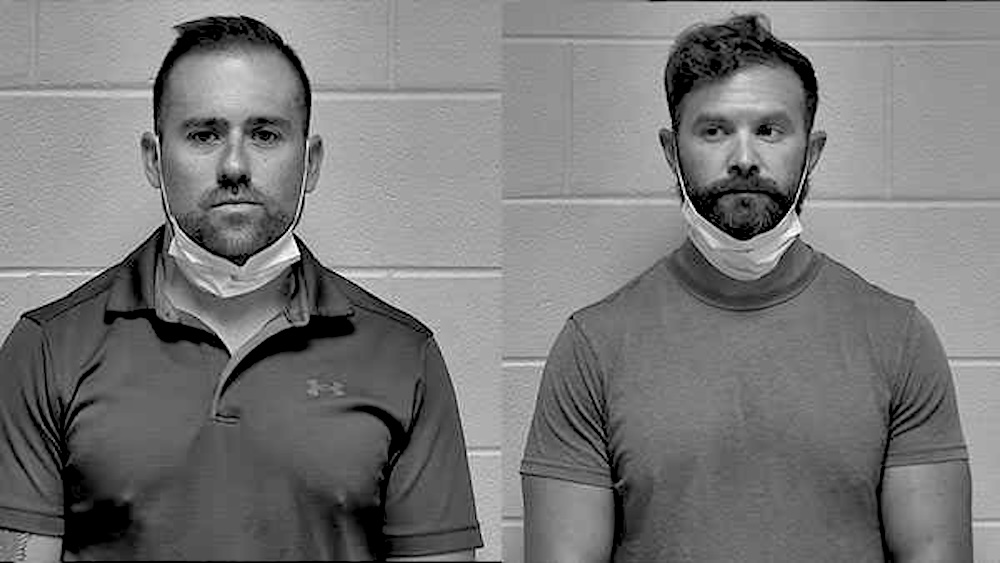
On March 20, 2026, the U.S. Department of Justice under President Donald Trump asked a federal judge to dismiss the criminal case against former Louisville officers Joshua Jaynes and Kyle Meany, the two men accused of helping secure the warrant that sent police into Breonna Taylor’s apartment in the middle of the night. Prosecutors said the charges should be dismissed “in the interest of justice,” after a review of the case and after judges had already pared back the most serious allegations. The move landed with the force of an old wound reopening. It did not merely revive a legal debate. It revived a national memory.
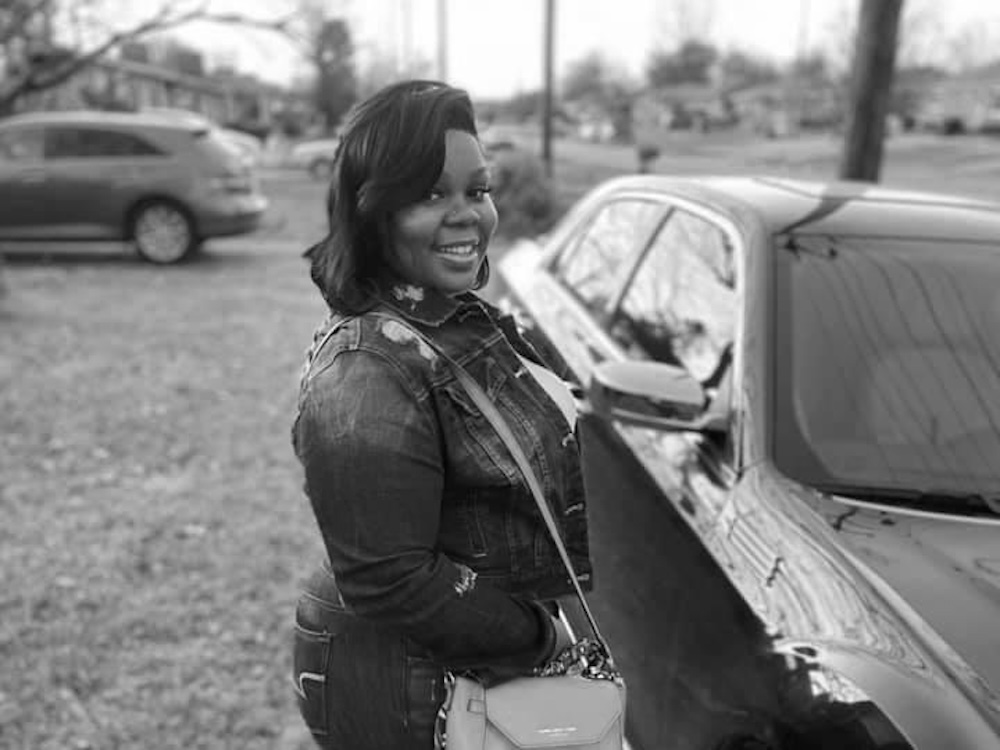
That is because Breonna Taylor’s death has never been only about one raid, one city, or one set of officers. It became one of the defining moral and political symbols of 2020: a 26-year-old emergency medical worker killed in her own home during a late-night police operation, her name carried on protest signs, murals, chants, legislative proposals, campaign speeches, and family demands that refused to die quietly. Her killing came just weeks before George Floyd’s murder, and together those cases reshaped the language of policing, race, and public accountability in America.
So when the federal government first charged Jaynes and Meany in 2022, the case was understood as more than a prosecution. It was treated as a referendum on whether the law could reach backward, beyond the bullets, to the bureaucratic machinery that makes police violence possible. The Justice Department under Merrick Garland argued that Jaynes and Meany had knowingly used false and misleading information to obtain a warrant for Taylor’s home, omitting key facts and including claims that were not true. Garland said the conduct violated Taylor’s Fourth Amendment rights and set in motion the events that led to her death.
Now that same department, under a different president and a different political philosophy, is trying to walk away from the case.
To understand why this reversal matters, you have to begin with what happened, what prosecutors once said happened, what judges later said the law would allow them to prove, and what it means when the government changes its theory of justice in the middle of history.
The warrant before the gunfire
The federal case against Jaynes and Meany always turned on a question that sounds dry until you sit with its consequences: what was in the warrant application, and what should have never been there?
According to the 2022 federal indictment, Jaynes and Meany were involved in obtaining a search warrant for Taylor’s apartment during a narcotics investigation focused on a former boyfriend. Prosecutors alleged that police lacked probable cause to search her home and that Jaynes and Meany nonetheless helped present a warrant affidavit containing false and misleading claims, stale information, and material omissions. Among the key allegations was that officers falsely claimed they had verified that the drug investigation’s target was receiving packages at Taylor’s address. Federal prosecutors said that was not true, and that the defendants knew it was not true.
The federal court’s 2024 memorandum opinion summarized the theory cleanly: the government alleged that police did not have sufficient facts to establish probable cause for Taylor’s apartment, and that Jaynes and Meany falsified the affidavit to make it appear as if probable cause existed. The opinion also noted separate allegations that, after Taylor was killed, Jaynes tried to help cover up what had been done, while Meany allegedly lied to federal investigators about who requested no-knock authority.
That part matters because the public conversation around Breonna Taylor has often collapsed several legal questions into one. There was the raid itself. There was the gunfire by officers. There was the no-knock aspect. There was the question of whether officers announced themselves. And there was the earlier paperwork stage, the legal prelude in which a judge was asked to authorize entry into a private home. Jaynes and Meany were not the officers accused of firing the shots that killed Taylor. They were accused, instead, of helping build the legal fiction that opened her door.
That is precisely why the case mattered to civil rights lawyers and police-accountability advocates. Prosecuting police for excessive force is already difficult. Prosecuting police for the upstream conduct that authorizes the force is rarer still. Reuters noted in 2022 that the case was notable because it showed officers could be charged not just for pulling a trigger, but for lying in a warrant process. In plain terms, the government appeared to be saying that falsified paperwork is not a technicality when it leads armed officers to a person’s home at midnight. It is the front end of state violence.
Breonna Taylor was killed on March 13, 2020, when police executed the warrant at her apartment. Officers were looking for a former boyfriend who no longer lived there. Kenneth Walker, Taylor’s boyfriend at the time, fired at officers because he believed intruders were breaking in; police returned fire and Taylor was struck and killed. Authorities found no drugs or cash in her home. Those facts became part of the public outrage almost immediately, because they gave the case its unbearable shape: a wrong house in spirit if not in paperwork, a dead woman, no contraband, and a family left to watch officials explain procedure as if procedure were not the point.
When the federal government finally acted
For more than two years after Taylor’s killing, many critics argued that state-level accountability had been painfully narrow. Then, in August 2022, the Justice Department announced federal charges against four current and former Louisville officers. Jaynes and Meany were charged with civil rights and obstruction-related offenses tied to the warrant. Kelly Goodlett, another officer, later pleaded guilty to conspiring to falsify the affidavit and to help cover it up. Brett Hankison was separately charged in connection with firing into Taylor’s apartment through a covered window and glass door.
At the time, Garland framed the charges in broad constitutional terms. He said officers had falsified the affidavit used to obtain the warrant, that doing so violated federal civil rights law, and that the violations resulted in Taylor’s death. Kristen Clarke, then leading DOJ’s Civil Rights Division, was even more direct, saying the false affidavit “set in motion events” that led to Taylor’s death. That phrasing became the heart of the prosecution: no false warrant, no raid; no raid, no deadly confrontation.
The federal action gave many people in Louisville and beyond a sense that, however late, the government had finally named the deeper wrong. TIME’s reporting on the indictments captured that emotional shift: for Taylor’s supporters, the charges felt like a long-delayed acknowledgment that what happened in Louisville was not just tragic but unlawful. The case suggested that the system might be willing, however imperfectly, to follow causation where the public had long seen it.
“For years, the nation was told to separate the raid from the warrant, the death from the deception. The federal case briefly refused that separation.”
But the law is not memory, and it is not always morality. The prosecution soon ran into the harder terrain of criminal causation.
What the judges said the government could not prove
In August 2024, U.S. District Judge Charles Simpson III dismissed the felony component of the civil-rights charge against Jaynes and Meany, ruling that the government had not established the direct legal link necessary to hold them criminally responsible for Taylor’s death. Reuters reported that Simpson concluded the officers’ conduct in securing the warrant was not the direct cause of Taylor’s death. The judge reasoned that even had the warrant been valid, the forced entry likely still would have produced the same outcome after Walker, believing intruders were entering, fired at officers and they fired back.
The court’s own opinion was unsparing in some respects and limiting in others. Simpson wrote that the allegation at the heart of the case was “a lie” and said the accused falsities, if proven, “should not be condoned.” He recognized that the alleged misconduct struck at the core of Americans’ rights to be secure from unreasonable searches. But he separated that constitutional injury from the later shooting. The judge allowed the misdemeanor civil-rights theory to survive and kept other counts alive, including conspiracy and false-statement allegations, while rejecting the government’s attempt to tie the defendants to the death-resulting felony.
That ruling did two things at once. First, it rejected the broadest version of the government’s moral narrative. Second, it left standing a narrower but still serious case: that officers may have lied to obtain a warrant and later lied about it. In other words, the court did not say the alleged falsification was acceptable. It said the law drew a different line when prosecutors tried to convert that falsification into criminal responsibility for Taylor’s death.
Federal prosecutors did not immediately abandon the case. Instead, they returned in October 2024 with a superseding indictment that sharpened the theory. According to AP, the revised charges alleged that Jaynes and Meany knowingly included false, misleading, and stale information and omitted key facts, and that the issuing judge would not have approved the warrant had she known the truth. That reframing tried to keep the focus on the invalid search itself, even after the court rejected the death-resulting enhancement.
But in August 2025, Simpson again dismissed the most serious felony allegations in the superseding indictment. Local reporting and the text of the 2025 opinion indicate the judge remained unconvinced that the alleged unlawful search could legally be said to have caused Taylor’s death in the way the felony statute required. Jaynes still faced conspiracy and falsification-related counts. Meany still faced a false-statements charge. But the government’s more expansive causal theory was once again cut down.
That second ruling mattered. Once a judge has twice rejected the strongest part of your theory, the case changes. The question becomes whether you still believe in the remaining prosecution enough to keep going.
Under Garland’s Justice Department, the answer appeared to be yes. Under Trump’s Justice Department, the answer is now no.
The Trump administration’s turn
Friday’s motion to dismiss was legally framed as an “interest of justice” decision after case review. Politically, it sits inside a much larger pattern. The Trump administration has already faced criticism over its handling of Breonna Taylor-related matters, most notably when DOJ asked for a one-day sentence for Brett Hankison, the only officer convicted in connection with the raid. A judge rejected that recommendation and sentenced Hankison to 33 months in prison, with Reuters and The Washington Post describing the DOJ’s one-day request as a dramatic retreat from the prior administration’s posture.
The Jaynes-Meany dismissal effort therefore does not read as an isolated call made by exhausted prosecutors after a difficult case. It reads, to critics, as part of a broader repositioning: away from aggressive federal police-accountability litigation and toward a more skeptical view of such cases. AP reported that Taylor’s mother expressed disappointment and blamed the Trump Justice Department. Local reporting in Louisville said the filing sought dismissal with prejudice, meaning the charges could not simply be revived later, and noted that the Taylor family had been notified.
There is a difference, of course, between saying a case is hard and saying it should disappear. Hard cases remain cases all the time. Prosecutors lose theories, adjust strategies, narrow charges, and proceed on what remains. That is what makes this decision feel so consequential. After the 2024 and 2025 rulings, Jaynes and Meany still faced surviving charges tied to the alleged falsification and aftermath. The department could have tried those. Instead, it decided even those remaining counts were no longer worth pursuing.
For supporters of the dismissal, the argument is straightforward enough. Criminal cases should not proceed on moral symbolism alone. If the central causal theory has failed twice, and if courts have repeatedly rejected the government’s attempt to link the warrant misconduct to Taylor’s death, then walking away may be seen as prosecutorial realism rather than surrender. That position will appeal to people who believe DOJ overreached in the first place by trying to fit a complex, chaotic tragedy into a criminal civil-rights framework that could not survive appellate-grade scrutiny.
But for critics, that framing is far too neat. It understates what remains unresolved and overstates the neutrality of DOJ’s change in posture.
Because the issue was never just whether Jaynes and Meany could be convicted for causing Taylor’s death. It was also whether police officers who allegedly lie to obtain a warrant, then allegedly mislead investigators, should face criminal consequences for that conduct on its own terms. The courts did not erase those allegations. The department did.
Louisville, the federal government, and the meaning of reform
The dismissal motion arrives in a city where the case has already altered law and public life. In 2020, Louisville agreed to pay Taylor’s family $12 million to settle a wrongful-death lawsuit and pledged reforms. The city also passed Breonna’s Law, banning no-knock warrants. Later, the Justice Department’s broader civil investigation into Louisville found reasonable cause to believe the city and LMPD had engaged in a pattern or practice of unconstitutional policing, including searches based on invalid warrants and unlawful discrimination against Black people. In December 2024, DOJ announced an agreement with Louisville on reforms, though the fate of that reform effort has since grown more uncertain.
That wider context matters because the Jaynes-Meany case has always operated on two levels. On one level, it concerns the criminal liability of two specific officers. On another, it sits inside a documented institutional pattern in which warrant practices and police conduct were already under scrutiny. Garland’s DOJ did not imagine Louisville’s problems out of thin air; it investigated and publicly concluded that the department had systemic civil-rights problems.
This is where the dismissal may feel especially jarring in Black Louisville and in communities that saw Taylor’s killing as emblematic, not aberrational. If federal investigators say a police department engaged in unconstitutional searches, and if federal prosecutors say officers lied to obtain a warrant in one of the department’s most notorious cases, and if an officer has already pleaded guilty to participating in falsifying the affidavit, then the idea that the government should now simply leave the remaining case behind can sound less like legal restraint than institutional retreat.
“The law may distinguish between a false warrant and a fatal shot. Public memory does not. Neither does distrust.”
That gap between legal doctrine and public meaning is the story here. Courts ask about proximate cause, statutory text, intervening acts, and elements beyond a reasonable doubt. Families ask who put the machinery in motion. Communities ask why the people who helped create the conditions for a deadly raid should be treated as if the paperwork were somehow separate from the human outcome.
The law is entitled to its distinctions. But government is still accountable for the choices it makes within them.
The case for dismissal, and the case against it
A fair reading requires taking the legal counterargument seriously. Judges did not merely trim the prosecution; they twice rejected its most serious causal theory. Simpson’s opinions made clear that he viewed Kenneth Walker’s gunfire, and the officers’ response, as breaking the chain needed to pin Taylor’s death on the allegedly false warrant in the way prosecutors wanted. Even critics of the ruling have to contend with the fact that criminal law is often narrower than public morality. A prosecutor has obligations not to press forward simply because a case is politically resonant.
Yet the argument against dismissal is stronger than some defenders admit. First, the surviving counts were not imaginary leftovers. They dealt with alleged false statements, conspiracy, and cover-up conduct. Second, Kelly Goodlett’s guilty plea gave the government an inside witness who had already admitted to conspiring to falsify the affidavit and lie afterward. Third, the Justice Department itself once emphasized that warrant fraud is a civil-rights harm in its own right, not merely a stepping stone to something worse.
So the real question is not whether prosecutors were guaranteed to win. They were not. The question is what the federal government now believes counts as worth trying.
That question becomes sharper when placed beside the Hankison episode. Trump’s DOJ sought one day for the only convicted officer in the broader Breonna Taylor saga; the judge imposed 33 months instead. Now DOJ seeks to end the remaining case against the officers tied to the warrant. The pattern is difficult to ignore. Whatever the department says about internal review and legal prudence, the public can reasonably conclude that a new administration has taken a much dimmer view of using federal civil-rights law to hold police accountable in one of the country’s most important policing cases.
What Breonna Taylor still asks of the country
Six years after Taylor’s death, one of the most painful realities of the case is how familiar the cycle has become. A Black woman is killed in an encounter with police. Facts emerge slowly, then publicly, then selectively. Officials insist on complexity, as if complexity is the opposite of harm. Protest creates momentum. Reform is promised. Some charges are filed. Some are dropped. A settlement is paid. A law is renamed. An institution says it will do better. Then, over time, the machinery cools, narrows, and begins to restore itself.
Breonna Taylor’s case changed policy. It changed rhetoric. It changed the national vocabulary around no-knock warrants and police raids. Louisville banned no-knock warrants. Federal lawmakers reintroduced the Justice for Breonna Taylor Act in late 2025. The Justice Department’s own investigation documented unconstitutional practices in Louisville that went beyond Taylor’s case. Those are not small things. But policy change and legal accountability are not interchangeable, and symbolic recognition is not the same as sustained institutional consequence.
This is why the latest move feels so heavy. It threatens to leave behind a version of the story in which everyone agrees something terrible happened, everyone agrees the warrant process was deeply compromised, everyone agrees Louisville policing needed reform, and yet the federal government no longer wishes to test the remaining criminal allegations in court. That is the kind of ending that satisfies legal minimalists and devastates people who thought the state, once having finally named the wrongdoing, might at least follow its own argument to the end.
It is also the kind of ending that reinforces a cynical but durable lesson in American life: the state is often most fluent in the language of accountability when speaking in press conferences, and least committed to it when the process becomes difficult, prolonged, or politically inconvenient.
The unfinished ledger
Nothing about Friday’s motion changes the central facts that made the Breonna Taylor case historic in the first place. She was killed during a late-night police operation tied to a warrant that federal authorities once said was built on falsehoods. Her death helped ignite a national reckoning over policing and Black life. Louisville paid her family $12 million and changed its laws. Federal investigators found broader constitutional violations within the city’s police department. One officer, Brett Hankison, was convicted and sentenced to 33 months despite DOJ’s push for a far lighter punishment. Another officer, Kelly Goodlett, pleaded guilty. And now the department wants to end the case against Jaynes and Meany altogether.
The law may yet have the final word in the case, depending on how the judge rules on DOJ’s motion. But legally final is not the same as historically settled. Breonna Taylor’s name is not carried by this story because every question has been answered. It is carried because the country still knows, even through the haze of procedure and delay, that something foundational was violated: the promise that home is home, that warrants mean what they say, that rights exist before an officer reaches the threshold, and that when the state admits it may have lied to get inside, it should not be so easy for the same state to decide it no longer wants to explain itself in court.
In that sense, the Trump administration’s move is bigger than a motion and smaller than closure. It is bigger because it signals what kind of Justice Department this is choosing to be. It is smaller because it cannot erase what the Breonna Taylor case revealed about Louisville, about American policing, and about how fragile the promise of accountability can look once the cameras thin out.
That is the real story now. Not simply that charges may be dropped, but that a case once presented as proof that the federal government would finally confront the paperwork of police violence is being unmade by that same government. The retreat is procedural. The meaning is not.
More great stories
A Town, a Lie, and the Long Afterlife of Jim Crow
March 22, 2026
No Comments
Where Black Love Lived on the Dial
March 22, 2026
No Comments