


The archive here is not just academic. It is familial. It is civic. It is a way of putting people back into the landscape.
The archive here is not just academic. It is familial. It is civic. It is a way of putting people back into the landscape.
By KOLUMN Magazine
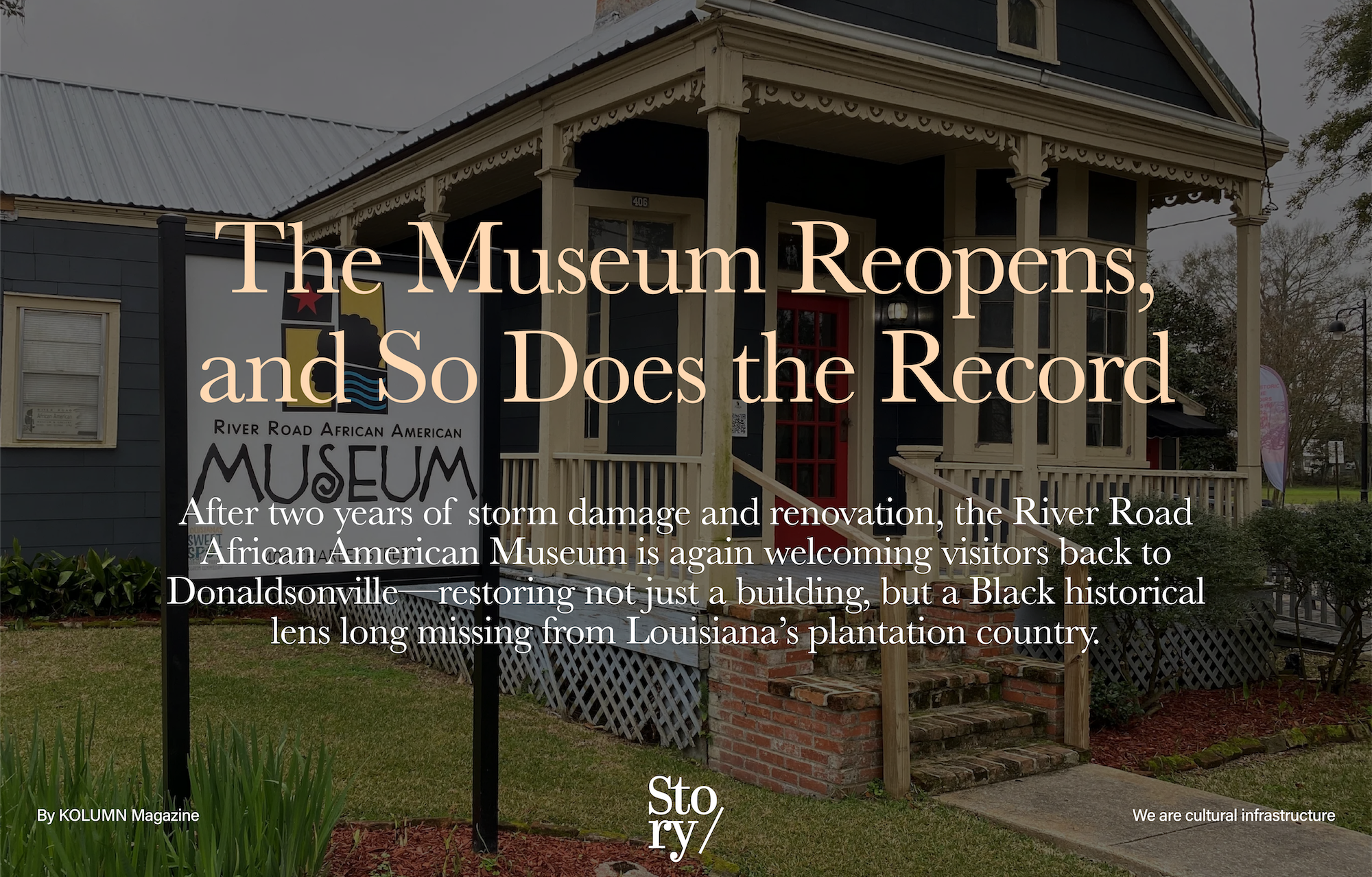
In Donaldsonville, Louisiana, where the Mississippi bends through a region still widely marketed as “plantation country,” the reopening of the River Road African American Museum feels bigger than a local cultural event. It feels like a corrective. After two years of closure caused by storm damage and renovation work, the museum reopened in March 2026 with a two-day celebration marking its 32nd anniversary and welcoming the public back to 406 Charles Street. Organizers called the weekend “Preservation, Place & People,” which sounded less like a slogan than a statement of method: save the physical site, honor the community around it, and insist that the people who built the region remain at the center of its story.
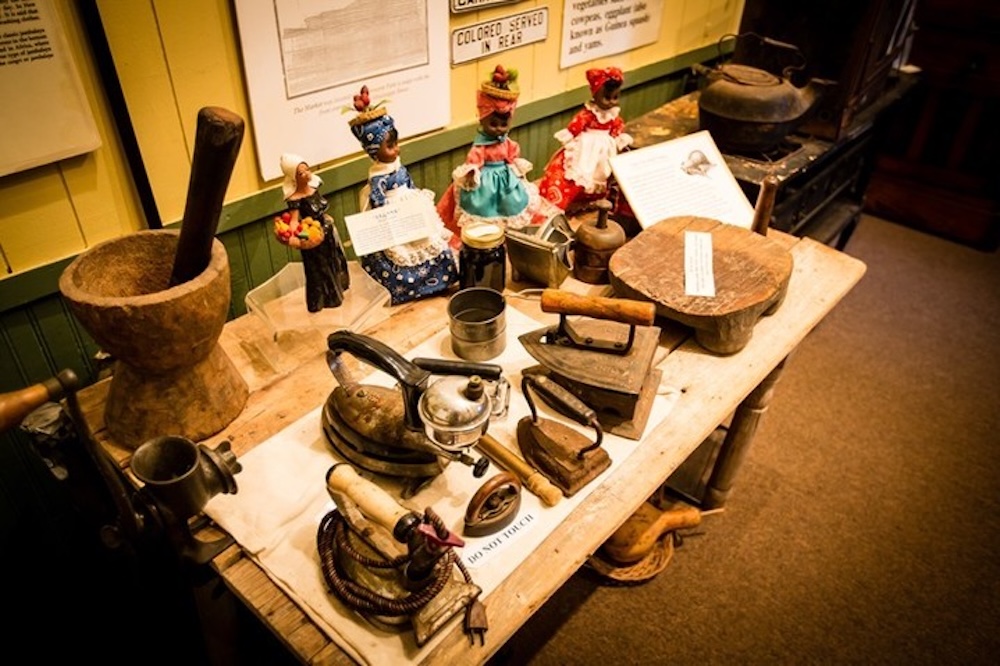
That framing matters because the River Road African American Museum, or RRAAM, has always operated against the grain of Louisiana heritage tourism. Officially, the museum says it exists to ensure that Black history in the River Parishes is told “accurately, completely, and from a Black perspective.” It situates itself quite intentionally in the heart of a landscape long defined by plantation architecture, white planter mythology, and carefully managed nostalgia. The museum’s mission is not simply to add Black people back into the narrative. It is to re-center the narrative around the labor, leadership, culture, and daily life of African Americans whose work made the region possible.
That distinction is the key to understanding why this reopening matters. A shuttered museum can be described as an unfortunate pause in cultural programming. But the reopening of a museum like RRAAM is something closer to the reactivation of civic memory. When a place like this is closed, the loss is not just tours, school visits, and special events. The loss is interpretive authority in one of the most distorted historical landscapes in the United States. When it is open, it offers a different grammar for reading the region: not just plantations, but parishes; not just owners, but workers; not just architecture, but kinship, resistance, politics, music, education, religion, and survival.
The River Road African American Museum was founded in 1994, making it one of Louisiana’s early institutions devoted explicitly to African American history and among the first in the state to foreground the stories of Africans and African Americans—enslaved and free—in the River Road region. The museum’s official history says it was established to address the absence and misrepresentation of African American history in conventional narratives, especially in an area where tourism often concentrated on plantation homes, architecture, and landowners. That corrective mission remains explicit today. The museum describes itself as a “community anchor” and a “Cultural Campus of Living History,” which is another way of saying it sees history not as sealed behind glass, but as active, social, and still unfolding.
To understand the power of the reopening, it helps to understand the audacity of the original project. Founder Kathe Hambrick started the museum after recognizing an enormous void in how the region interpreted itself. By the early 1990s, Louisiana’s plantation corridor drew substantial tourism, yet visitors often left with little real understanding of the African-descended people whose labor had produced the sugar wealth, shaped the culture, and sustained the place long after emancipation. Hambrick founded the museum in 1994 at Tezcuco Plantation, a loaded location for an institution determined to speak back to plantation mythology from within plantation geography itself. Later accounts describe RRAAM as Louisiana’s first African American museum, and Hambrick herself has been recognized nationally as a past president of the Association of African American Museums.
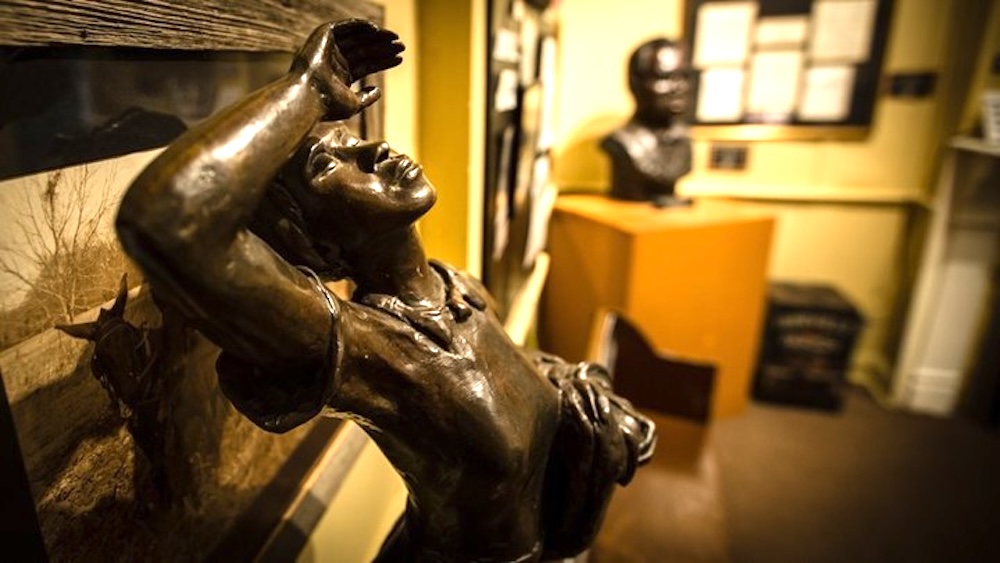
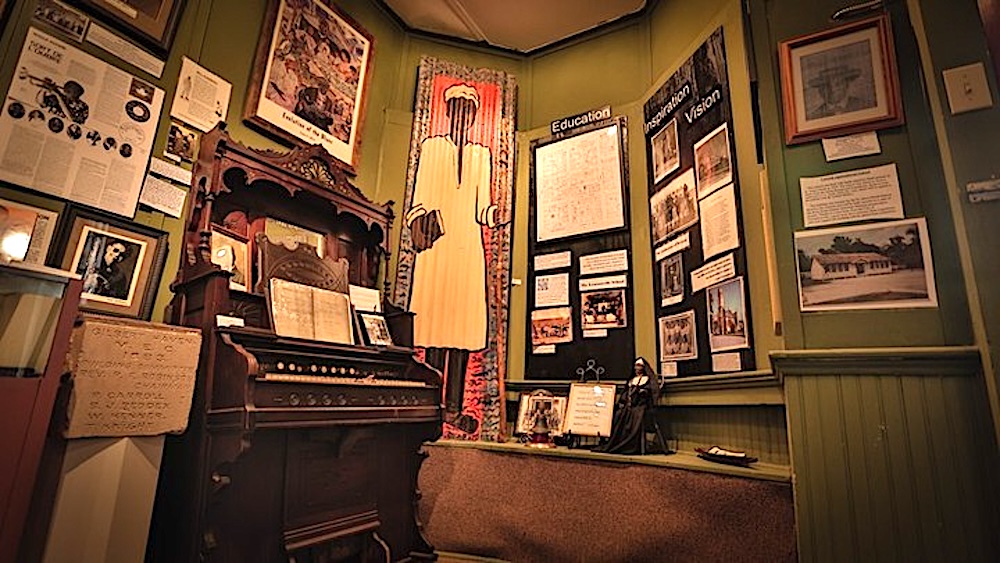
Tezcuco did not remain home forever. In 2002, the plantation house that first housed the museum was destroyed by fire, and the owners chose not to rebuild. The museum relocated to Donaldsonville in 2003, a move that proved historically resonant. Donaldsonville is not just another small Louisiana town. It is a place with unusually deep Black historical significance, including its association with Pierre Caliste Landry, who was elected mayor there in 1868 and is widely recognized as the first Black mayor elected in the United States. The city’s Reconstruction-era Black political life, its free people of color, and its post-emancipation community formation make it an especially fitting home for an institution dedicated to telling a fuller Black history of the region.
That Donaldsonville context is not incidental; it changes the museum’s meaning. The museum does not stand isolated from history. It sits inside it. Census Bureau materials describing the institution note that Ascension Parish had a substantial population of free people of color dating back to 1809 and that the museum uses census records to tell stories of notable local residents, including Landry. In other words, RRAAM’s approach to history is archival, local, and deeply place-based. It links family history to parish history, and parish history to larger national questions about slavery, Reconstruction, citizenship, and Black self-determination.
This is part of what makes the museum different from more generalized Black history institutions. Its scale is local, but its implications are national. The official Louisiana tourism site describes it as offering a particularly detailed and intimate portrait of African American life in the neighboring sugar parishes, adding that no other venue in the state provides quite that kind of portrait “in a particular place and time.” That level of specificity is not smallness. It is rigor. It is what allows a museum to move past abstraction and into the texture of actual lives.
In a broader sense, the reopening arrives at a moment when the Mississippi River corridor between Baton Rouge and New Orleans is increasingly understood not only as plantation country but also as a site where histories of enslavement, extraction, and environmental injustice overlap. Reporting in The Atlantic has described how the region’s sugar plantation economy transitioned into a petrochemical economy, with the same geography of Black labor and vulnerability often carrying forward into the present. “One oppressive economy begets another,” Virginia Tech scholar Barbara L. Allen told the magazine. That observation matters here because RRAAM does something many heritage institutions do not: it places the past and present in the same frame. The museum’s insistence that history continues to shape contemporary life is not metaphorical. In the River Parishes, it is visible on the land.
The renovation closure itself sharpened that reality. According to WAFB and local tourism materials, the museum’s main site had been closed for two years because of storm damage and related renovations. That alone tells a story about the precarity many Black cultural institutions live with. Major museums in major cities are often discussed in the language of expansions, capital campaigns, and blockbuster programming. Community-rooted institutions like RRAAM are more likely to face a harsher calculus: weather vulnerability, deferred maintenance, fundraising strain, and the constant labor of proving their indispensability, even when the communities around them already know it. The reopening, then, is a triumph, but it is also a reminder of how fragile memory work can be when it depends on under-resourced institutions carrying outsized historical responsibility.
Still, the museum did not return quietly. The reopening was folded into its 32nd anniversary, and the language around the celebration suggested a deliberate refusal to treat reopening as mere recovery. The public invitation emphasized not just the repaired site but the broader “Cultural Campus of Living History” in downtown Donaldsonville. That phrase points to a larger institutional vision. RRAAM is not only a single house museum or gallery. It is an evolving campus that includes preserved structures, community programming, exhibitions, and a wider preservation agenda.
Some of that vision is visible in the museum’s historic buildings. Earlier accounts of the institution describe its relocation to Donaldsonville alongside the preservation of significant structures connected to Black life in the area, including a Rosenwald-era school building, the meeting house of an early African American insurance agency, and the home of the parish’s first Black doctor. More recently, attention has focused on True Friends Benevolent Society Hall, a historic Donaldsonville site associated with Black mutual aid, politics, entertainment, and music. The museum describes the hall as a reminder of the “strength and stature” of the African American community and notes that it functioned as a space for aid, gathering, amusement, and political change.
That matters because one of RRAAM’s greatest strengths is that it treats Black history not as a set of isolated famous people but as an ecosystem of institutions. Schools. Benevolent societies. Churches. Family homes. Performance spaces. Political offices. Archival records. Oral histories. This is a richer and more accurate frame than the simplified plantation-tour script that has historically dominated the region. It shows Black life as organized, strategic, creative, and infrastructural.
The True Friends Hall restoration project, though separate from the main reopening, underscores the same larger theme. Reporting from Fox 8 described the hall as a once-vibrant hub of Black community life and music, a place that offered support during segregation and hosted major performers on the chitlin’ circuit, including Fats Domino, Irma Thomas, and James Brown. The report said the hall is believed to be the oldest and largest benevolent society hall still standing in Louisiana, and that restoration work is being supported by a $1.3 million state allocation and additional private contributions, including a $175,000 donation from Air Products to support revitalization plans. Those plans envision not just stabilization, but a future cultural center and music-focused programming.
That restoration effort also reveals something essential about the museum’s significance. RRAAM is not just interpreting history. It is literally keeping pieces of Black public life from disappearing. In communities across the South, Black-built institutions have often been demolished, neglected, rezoned, bypassed, or made legible only after they are nearly gone. The museum’s work pushes against that cycle. Its campus model suggests that preservation is not ornamental; it is political. To keep a building standing is to keep evidence standing.
There is also a methodological seriousness to the museum’s work that deserves more attention. The Census Bureau’s profile of RRAAM highlights the museum’s use of census records to help tell the story of Ascension Parish and its inhabitants. It notes that visitors can use those records to better understand their own family histories. That kind of genealogical and documentary engagement is powerful in a place where so much Black history was systematically obscured, misfiled, or narrated through the perspective of ownership rather than kinship. The museum is not simply displaying objects. It is teaching people how to reconstruct lineage and place.
The significance of that work becomes even clearer in the context of how public memory functions in Louisiana. Plantation homes have long attracted tourists with promises of beauty, elegance, and old-world grandeur. But as many critics, scholars, and journalists have argued, those narratives have often minimized or aestheticized the violence that underwrote the landscape. RRAAM emerged as a rebuttal to that selective memory. Its official materials state plainly that while many sites focus on architecture and landowners, RRAAM centers the people who built and sustained the region. That sounds straightforward, but in practice it is a profound shift in historical authority.
That shift has never been just about slavery, either. One of the museum’s most important interventions is that it insists Black history in the River Parishes did not begin and end with bondage. Official descriptions of the museum emphasize leadership, innovation, resilience, education, medicine, entrepreneurship, and community life. The exhibits and campus narrative reach into Reconstruction, free people of color communities, music history, Black professional life, and local civic leadership. That broader frame refuses a common trap in American public history: reducing Black presence to suffering alone. RRAAM makes room for suffering, certainly, but it also makes room for achievement, institution-building, and joy.
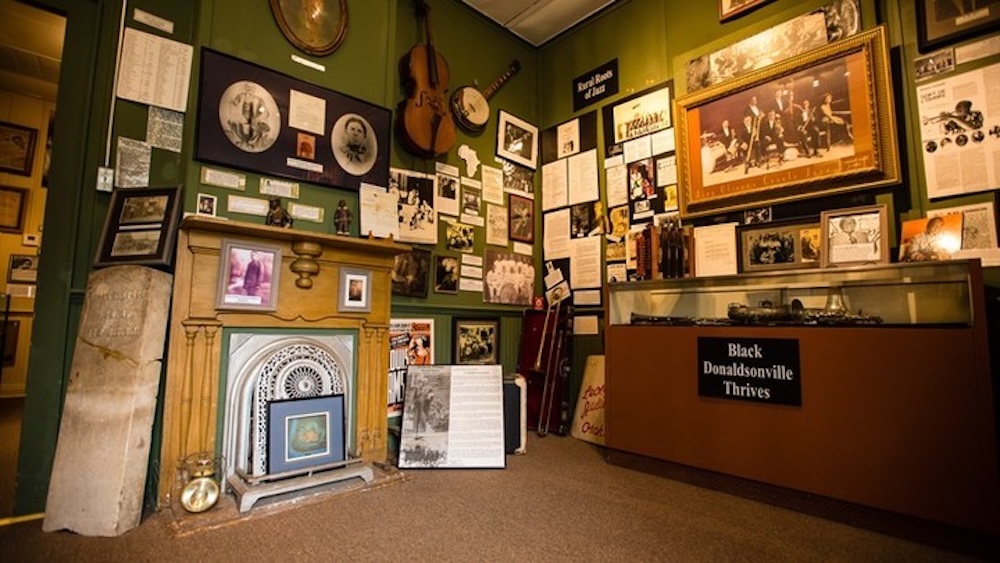
This is why the reopening resonates beyond Donaldsonville. Across the country, Black museums and grassroots historical organizations are doing work that larger institutions sometimes cannot do with the same depth or accountability. They are often closer to descendant communities, more fluent in local archives, and more willing to challenge the official story of a place. But they are also often more financially vulnerable and less visible in national cultural coverage. RRAAM’s return is a reminder that local Black museums are not marginal to the national memory project. They are among its most serious practitioners.
Kathe Hambrick’s own career helps illustrate that. Beyond founding RRAAM, she has been recognized by the Association of African American Museums and the Amistad Research Center as a museum professional, curator, and author with national standing. Those affiliations matter because they place RRAAM within a larger Black museum movement that has long argued for community-based interpretation, archival justice, and institutional self-definition. The museum’s reopening, then, is not just a local comeback story. It is also part of a longer tradition of Black cultural stewardship that has too often had to build itself without the benefit of abundant resources or broad institutional deference.
There is another layer here, too: tourism. Louisiana officially includes the museum on its African American Heritage Trail, and the state has for years promoted it as an essential stop for understanding the region. That recognition matters, but it also creates a challenge. Once a Black history site becomes part of a tourism framework, there is always the risk of symbolic inclusion without deeper structural change. A museum can be added to a trail while the broader regional narrative remains tilted toward plantation spectacle. RRAAM’s importance lies in the fact that it has not softened its premise to fit comfortably inside that tourism economy. It continues to insist on telling the full story.
And that full story is not abstractly “Southern.” It is specifically River Parish. Specifically sugar country. Specifically Donaldsonville. Specifically Louisiana. The museum’s granular focus gives it interpretive force. You can talk broadly about slavery in America, or broadly about Black culture in the South, and still miss how place works. RRAAM does the opposite. It shows how local conditions shape Black life and how Black life, in turn, shapes local history. It is attentive to the parish scale, the family scale, and the neighborhood scale. That is often where the most revealing truths live.
The reopening also matters symbolically because closure can produce its own kind of erasure. A museum that disappears from public life for two years risks being treated as dormant, peripheral, maybe even optional. Reopening interrupts that drift. It reasserts presence. It tells school systems, tourists, local officials, funders, and residents that this institution is not a nice-to-have. It is part of the intellectual and moral infrastructure of the place.
That is especially true in a political climate where public arguments over race, curricula, monuments, archives, and historical interpretation remain intense. In recent years, Americans have repeatedly fought over who gets to define the past in public. Museums have become part of that struggle, sometimes reluctantly and sometimes by necessity. A Black museum reopening in Louisiana’s plantation corridor cannot help but carry political significance, even if its leaders frame the event in the language of heritage and celebration. To reopen is to declare that Black memory work will continue, visibly and in public.
“Reopening is a form of argument. It says this history will not be weathered out, renovated away, or folded back into somebody else’s romance.”
There is also something elegant about the timing. Thirty-two years is not a flashy anniversary. It does not have the neat symmetry of 25 or 50. But maybe that is what makes it feel honest. This is not the language of ceremonial commemoration. It is the language of endurance. Three decades plus change. Enough time to survive fire, relocation, storms, tourism trends, interpretive fights, and the ordinary exhaustion of institution-building. Enough time to become not a novelty, but a fixture.
And endurance may be the museum’s deepest lesson. In official descriptions, in tourism copy, in institutional profiles, and in journalistic accounts, the same pattern keeps surfacing: Black communities in the River Parishes built institutions under constraint, preserved meaning under pressure, and found ways to maintain collective life in landscapes structured against them. That is true of the people the museum interprets. It is also true of the museum itself. Its history mirrors the very resilience it documents.
The reopening weekend’s title, “Preservation, Place & People,” now reads almost as a thesis statement for the institution’s next chapter. Preservation means repairing buildings, yes, but also defending archives, narratives, and sites of Black memory. Place means refusing to let the River Parishes be understood only through plantations and industry. People means insisting that descendants, residents, and Black communities are not decorative stakeholders in the story, but its core authors and inheritors.
For visitors, the reopened museum offers an opportunity to encounter a Louisiana that is both more complicated and more truthful than the state’s postcard version. For locals, it offers the return of a community institution that treats their history as substantial and worthy of preservation. For the wider country, it offers a case study in why local Black museums matter so much: because they often do the patient, place-specific, corrective work that national memory depends on but cannot outsource.
In the end, the significance of the River Road African American Museum’s reopening is not just that the doors are open again. It is that the museum’s founding argument remains intact and newly visible. In a region where history has often been curated to flatter power, RRAAM continues to tell a story organized around Black life, Black labor, Black leadership, and Black continuity. That is what has reopened on Charles Street. Not only exhibits. Not only a building. A lens. A method. A refusal to let the landscape speak in only one voice.
And maybe that is the clearest way to put it: the River Road African American Museum reopened, but what really returned was interpretive balance. In Donaldsonville, in Louisiana, and in the larger American argument over memory, that is no small thing.
More great stories
The Marriage That Threatened Jim Crow
March 21, 2026
No Comments
A Bomb on Christmas Night, A Warning to a Movement
March 21, 2026
No Comments