




Black women did not merely sew American elegance; they authored it.
Black women did not merely sew American elegance; they authored it.
By KOLUMN Magazine
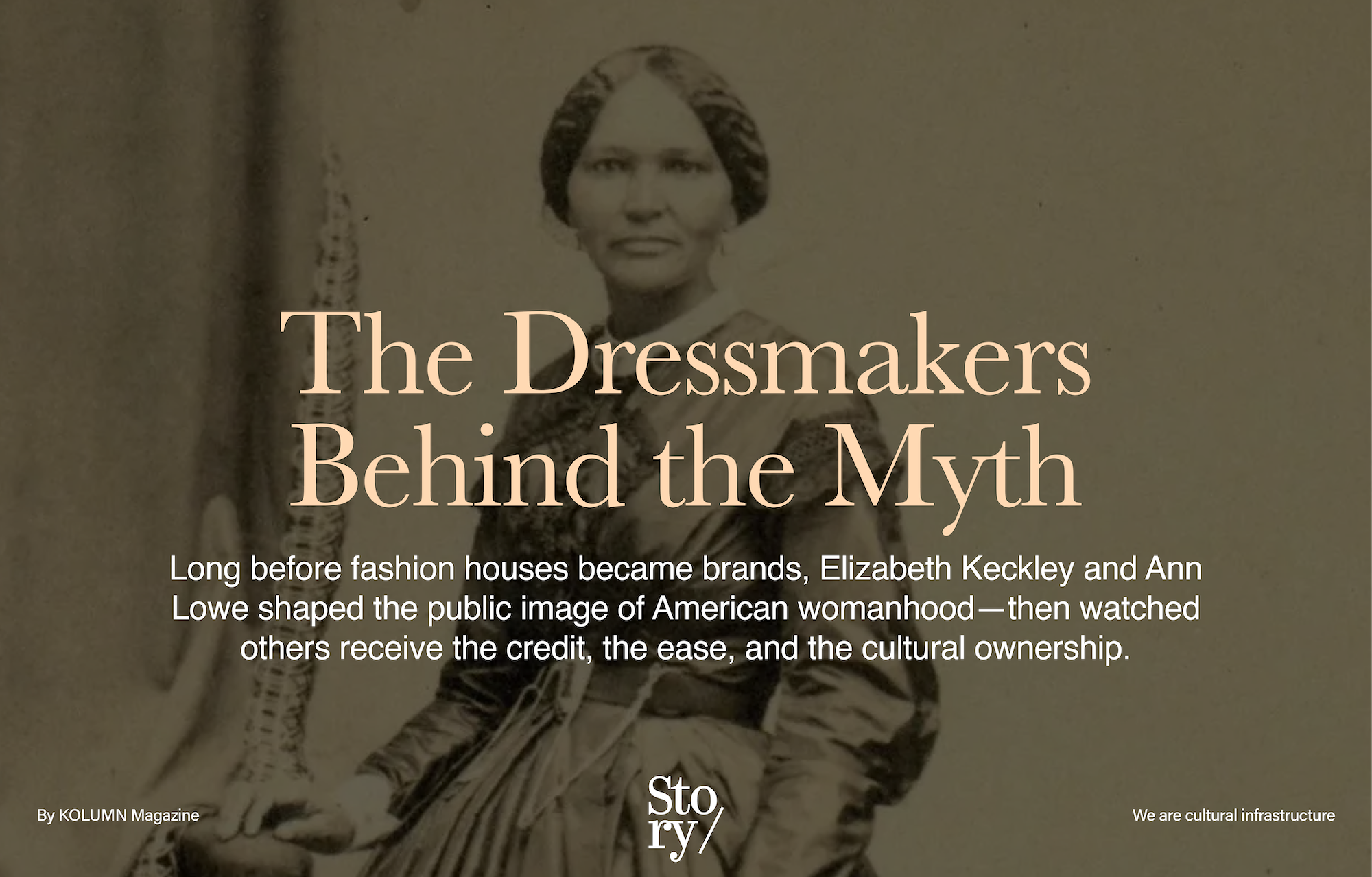
American history has a habit of treating clothing as decoration and the women who make it as background. That habit has always been a lie. Clothes are social language. They announce class, ambition, grief, belonging, aspiration, and power. They help build public myth. And if you want to understand how American power has been staged—especially feminine power—you have to look not only at the women who wore the gowns, but also at the women who cut them, fitted them, rescued them, and in many cases invented the look in the first place. Elizabeth Keckley and Ann Lowe are two of the clearest examples. One rose from slavery in the nineteenth century to become Mary Todd Lincoln’s dressmaker, confidante, activist, and memoirist. The other, born into a family of dressmakers in Alabama and forced to navigate Jim Crow in the fashion world, created couture for America’s social elite and designed Jacqueline Bouvier’s wedding dress before the public properly knew her name. Their lives were separated by decades, but their stories rhyme with almost eerie precision. Both inherited technical brilliance through Black women’s labor. Both built businesses by mastering the desires of wealthy white clients. Both were indispensable and under-credited. And both, in very different ways, left behind a record that tells us something larger about American culture: this country has long depended on Black women’s creativity to manufacture its image of refinement.
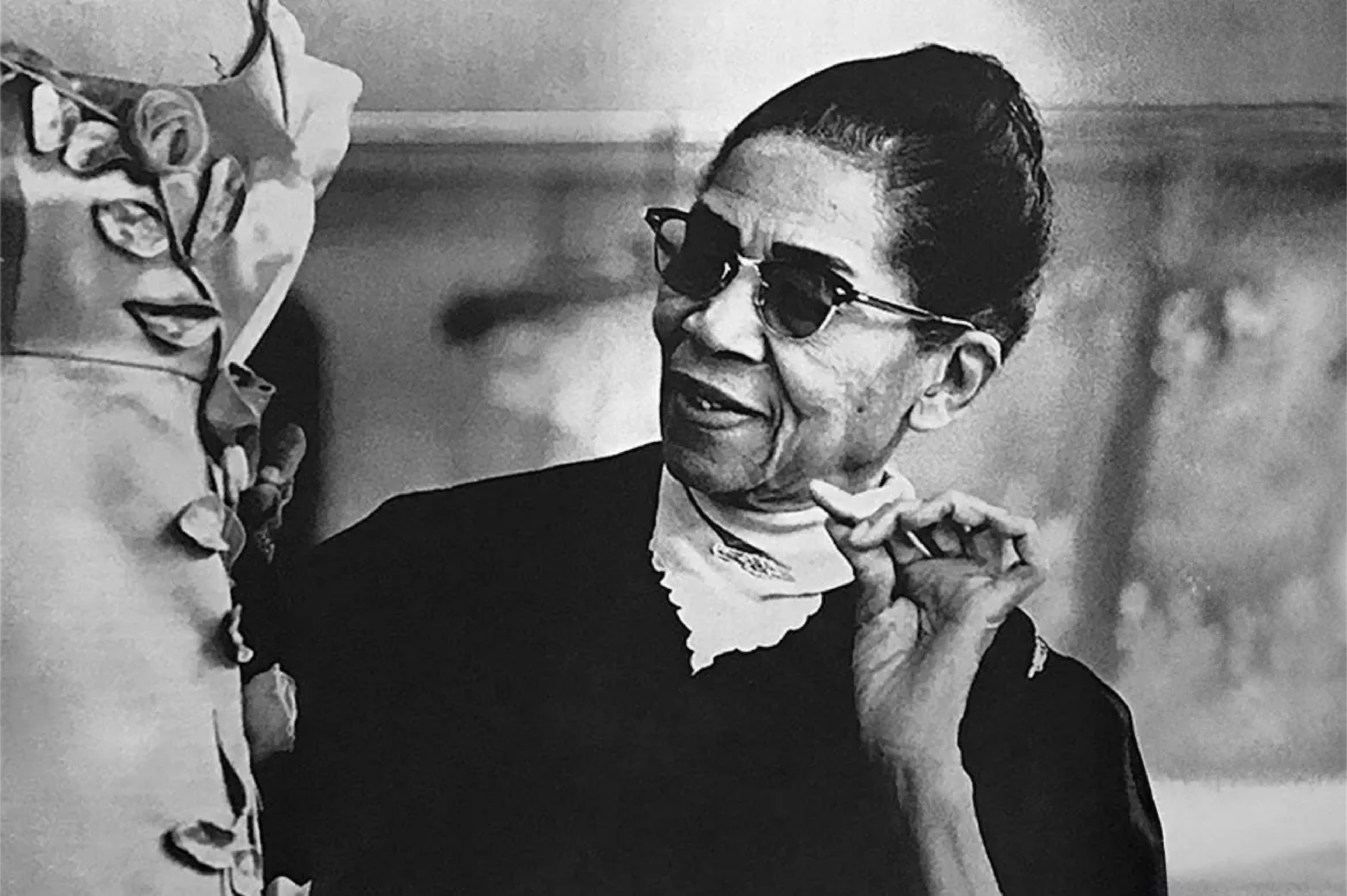
That is the surface-level summary. The deeper story is more revealing. Keckley and Lowe were not simply “dressmakers to the famous.” That phrase is too small, too polite, too quaint. Keckley was also a formerly enslaved woman who purchased her freedom and her son’s freedom, built a prominent Washington business, founded a relief organization for newly freed people during the Civil War, and authored one of the most important firsthand accounts of life around Mary Todd Lincoln and the wartime White House. Lowe was not only the designer behind one of the most iconic wedding dresses in American memory; she was also an architect of twentieth-century social ritual, crafting debutante gowns, wedding dresses, and evening wear for generations of elite families while surviving segregation, financial precarity, and an industry eager to enjoy her talent without fully acknowledging her authorship.
To place them side by side is to see more than coincidence. It is to see a lineage of Black women’s skilled labor moving from plantation economies into prestige economies; from enslavement and coerced domestic service into branded elegance and cultural cachet; from invisibility enforced by law to invisibility enforced by custom, race, and class etiquette. Keckley and Lowe both prove that fashion history is never just about taste. It is about structure: who is allowed to be called an artist, who is kept in the category of help, and who gets folded into the national story only after a generation of forgetting.
Elizabeth Keckley: from bondage to the executive mansion’s inner circle
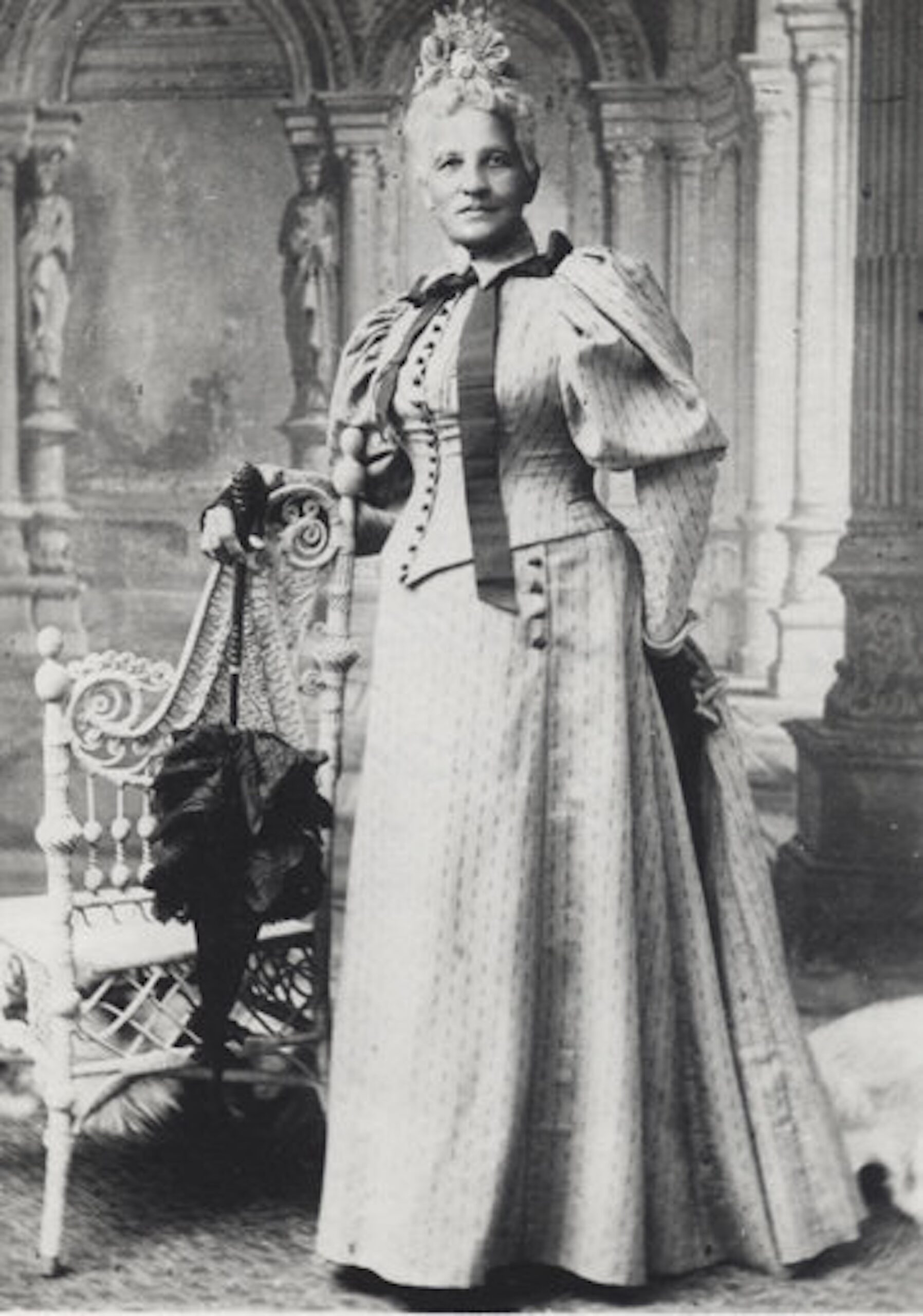
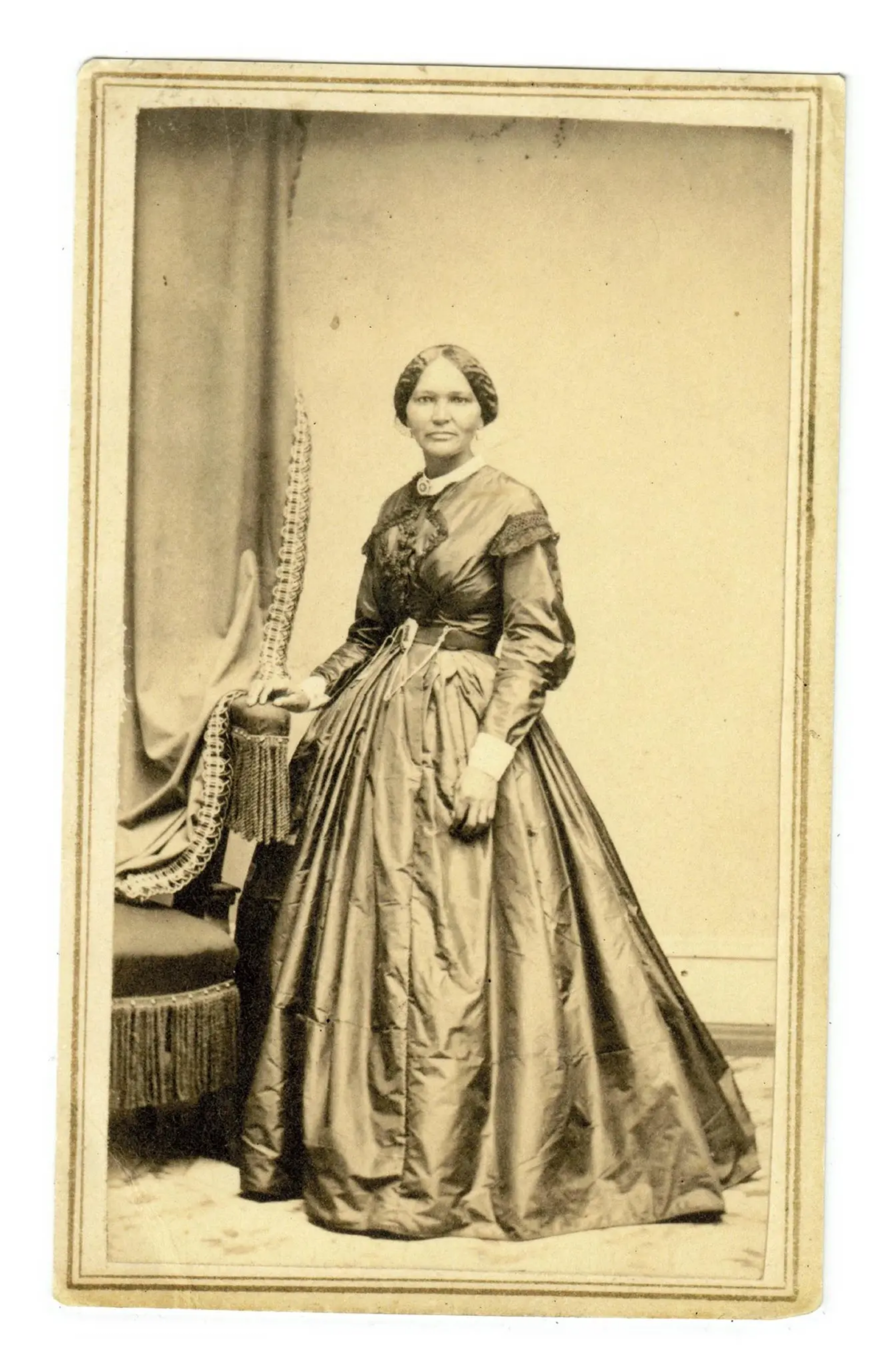
Elizabeth Hobbs Keckley was born in Virginia in 1818, the daughter of Agnes, an enslaved domestic worker and expert seamstress, and her enslaver, Armistead Burwell. That beginning matters because it captures one of the hardest truths in American social history: skill could be inherited without freedom, and brilliance could be cultivated inside a system designed to exploit it. Her mother taught her literacy and sewing—gifts that would later become the basis of her survival and her authority. But Keckley’s early life was marked not by sentimental apprenticeship but by violence. As a child she endured whippings; as a teenager, after being sent to North Carolina to serve Burwell’s son and daughter-in-law, she faced severe abuse and was repeatedly raped, leading to the birth of her only child, George. These facts are not incidental biographical darkness. They are central to understanding what Keckley became. Her later polish, discipline, and social intelligence were not evidence that she had transcended history. They were evidence of what she had to build in order to live through it.
In St. Louis, where the Garland family moved in the late 1840s, Keckley began to transform sewing into a business. Hired out as a seamstress, she built a clientele among prominent women and became valuable not just as labor but as revenue. That distinction sounds cold because it was. In slavery, talent could increase your market worth without changing your legal status. Yet Keckley used the opening anyway. She negotiated to buy freedom for herself and George for $1,200, a staggering sum. With help from loyal patrons, she secured the money, was emancipated in November 1855, and then insisted on repaying the funds rather than treating them as charity. That detail—her determination to repay what others meant as a gift—tells you almost everything about her sense of dignity and self-definition. Freedom, for Keckley, was not only legal status. It was authorship over her own story.
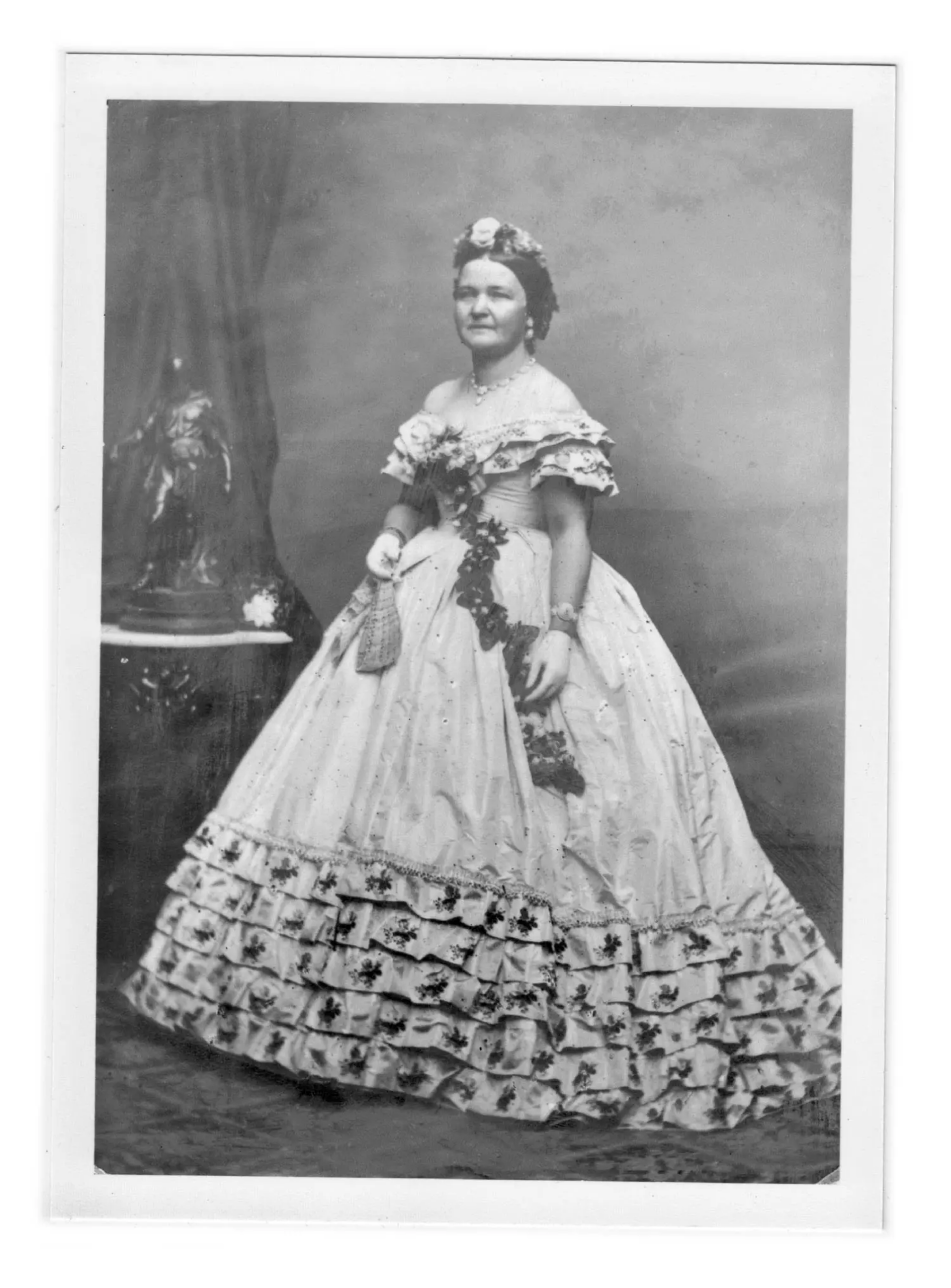
When she moved to Washington in 1860, she entered a city that was equal parts national capital, slaveholding borderland, and political theater. District regulations made it difficult for a free Black woman to establish herself, but Keckley did what expert networkers do: she converted reputation into access. She found elite clients. She dressed prominent southern women, including Varina Davis before the Civil War hardened all such relationships into historical symbolism. And through a chain of recommendation, she reached Mary Todd Lincoln just as Abraham Lincoln entered the presidency. The encounter was professionally perfect. Mary Lincoln wanted style, presence, and social control during years when she was intensely scrutinized. Keckley could provide all three.
Keckley became far more than a seamstress who delivered dresses to the White House. She became Mary Lincoln’s modiste, fitter, and trusted presence. In an era when clothing required intimate handling—measurements, fittings, physical adjustments, private conversations—the dressmaker could become a kind of unofficial counselor. Keckley occupied that role with unusual closeness. White House Historical Association materials and contemporaneous discussion of her memoir make clear that she was not formally a staff servant in the narrow sense, but an independent businesswoman whose professional relationship with the first lady placed her inside emotionally charged, politically fraught spaces. She saw Mary Lincoln’s volatility, grief, insecurity, and social ambition up close. And Mary Lincoln, when shattered by Abraham Lincoln’s assassination, explicitly asked for Keckley to be sent for. That request says as much about trust as any contract ever could.
There is a temptation, especially in popular treatments, to freeze Keckley inside the glamour of proximity: the Black dressmaker who became close to the tragic first lady. But that framing does her a disservice. During the Civil War, Keckley founded the Contraband Relief Association in 1862 to aid formerly enslaved people arriving in Washington. The Library of Congress notes that the association offered food, clothing, and shelter and drew support from Frederick Douglass, Wendell Phillips, and the Lincolns. This work matters because it places Keckley exactly where many conventional histories have failed to place her: not simply at the side of white power, but as a Black civic actor responding to Black need. She understood that emancipation without infrastructure meant hunger, exposure, and chaos. She also understood that respectability alone would not protect the newly freed. Organization would.
This is one of the most important correctives to the Keckley story. She is sometimes remembered as a fascinating accessory to Lincoln history, when in fact she should also be remembered as a Black organizer during wartime upheaval. Her memoir and later historical treatment make clear that she paid close attention to the precarious lives of freed people in Washington’s contraband camps. If the White House made her visible to posterity, the association she founded made her accountable to her own people. That dual position—inside the elite sphere, but also answerable to a broader Black public—gave her life its unusual moral and political complexity.
The memoir that made her indispensable to history and dangerous to memory
In 1868 Keckley published Behind the Scenes, or, Thirty Years a Slave, and Four Years in the White House. It remains one of the most revealing nineteenth-century accounts of presidential domestic life. It is also the act that effectively shattered her relationship with Mary Lincoln and clouded her public reputation. The White House Historical Association notes that the book’s publication was controversial and damaged both women. Another White House Historical Association essay emphasizes that the memoir remains one of the most important nineteenth-century accounts of the White House, even as it unsettled expectations about what a Black woman in Keckley’s position was permitted to say.
That last point deserves emphasis. Keckley did not merely sew garments; she wrote narrative. She moved from fitting bodies to framing history. And that transition made many readers uneasy. The Smithsonian American Women’s History Museum has argued that she has often been remembered as a dressmaker while excluded as an author. That phrase gets right to the heart of it. Americans were more comfortable with Keckley as a skilled Black woman who served than as an observant Black woman who interpreted. A dressmaker could be praised for taste. A memoirist could expose class performance, emotional instability, and political theater. One role was serviceable. The other was threatening.
The backlash also reflected a broader anxiety about intimacy and ownership. Who “owned” the private life of the White House? Did Mary Lincoln’s suffering belong to Mary Lincoln alone, even when witnessed by a Black woman whose labor had granted her entry into that world? Could Keckley claim narrative rights over events she had seen firsthand? The scandal around the book suggests that many contemporaries believed the answer should have been no. In effect, they wanted the labor but not the testimony. That pattern, too, would echo across generations.
Even now, Keckley’s memoir can make readers uncomfortable because it refuses easy categories. She is empathetic toward Mary Lincoln, but not blind. She is proud, but also conscious of the humiliations that structured her life. She writes not as a perfect heroine but as a self-made witness. That may be one reason the book still matters: it preserves the mind of a woman whom history had every incentive to flatten.
Ann Lowe: couture through Jim Crow
If Keckley’s story emerges from slavery and Civil War Washington, Ann Lowe’s belongs to another American order: the Jim Crow South, the Great Migration, and the prestige economy of twentieth-century fashion. Lowe was born around 1898 in Clayton, Alabama, and raised in Montgomery. She came from a family of African American dressmakers. The Met notes that her grandmother, Georgia Thompkins, and mother, Janie Cole, had both been enslaved until 1860, when Lowe’s maternal grandfather purchased their freedom. They built a dressmaking business that served white clients, including the wife of Alabama’s governor. Like Keckley, Lowe inherited not only skill but an entire lineage of Black women’s technical knowledge. Sewing, patternmaking, embellishment, handwork, fit: these were not hobbies passed down in leisure. They were cultural capital forged under unequal conditions.
When Lowe’s mother died, Lowe—still very young—stepped in to finish commissions, including gowns for Alabama’s first lady. That early test was brutal and clarifying. Talent in her world was not a charming juvenile sign of promise. It was an obligation. She had to be ready. She was ready. Later, after moving into work with the Lee family in Florida, she pursued formal training at the S. T. Taylor School of Design in New York. There, according to the National Museum of African American History and Culture, the school’s director segregated her because white classmates refused to share space with a Black student, even while her superior work was held up as a model for others. She completed the program in reduced time because her skill level was so advanced. That image—excluded physically, elevated technically—is the Ann Lowe story in miniature.
Lowe returned to Florida, developed a respected business in Tampa, trained assistants, and designed for elite events like the Gasparilla festival before relocating permanently to New York in 1928. The Met describes how she survived the Depression by working for larger manufacturers while cultivating private clients, eventually becoming a designer for prominent society families. Over time, her clientele included the Auchinclosses, du Ponts, Rockefellers, Roosevelts, and others. Winterthur’s major 2023 exhibition on Lowe calls her “Society’s Best-Kept Secret,” borrowing the Saturday Evening Post’s phrase from 1964 and underscoring how thoroughly she shaped elite American fashion while remaining largely outside the popular canon.
That phrase—best-kept secret—is flattering only if you ignore what it cost. Secrets do not receive full credit. Secrets are useful to those who benefit from them. Lowe’s career was built on exquisite visibility within a narrow world and broad invisibility outside it. She was known exactly where she needed to be known to keep working, but not always credited where public recognition might have produced security, leverage, or historical permanence.
The Jackie Kennedy wedding dress and the politics of omission
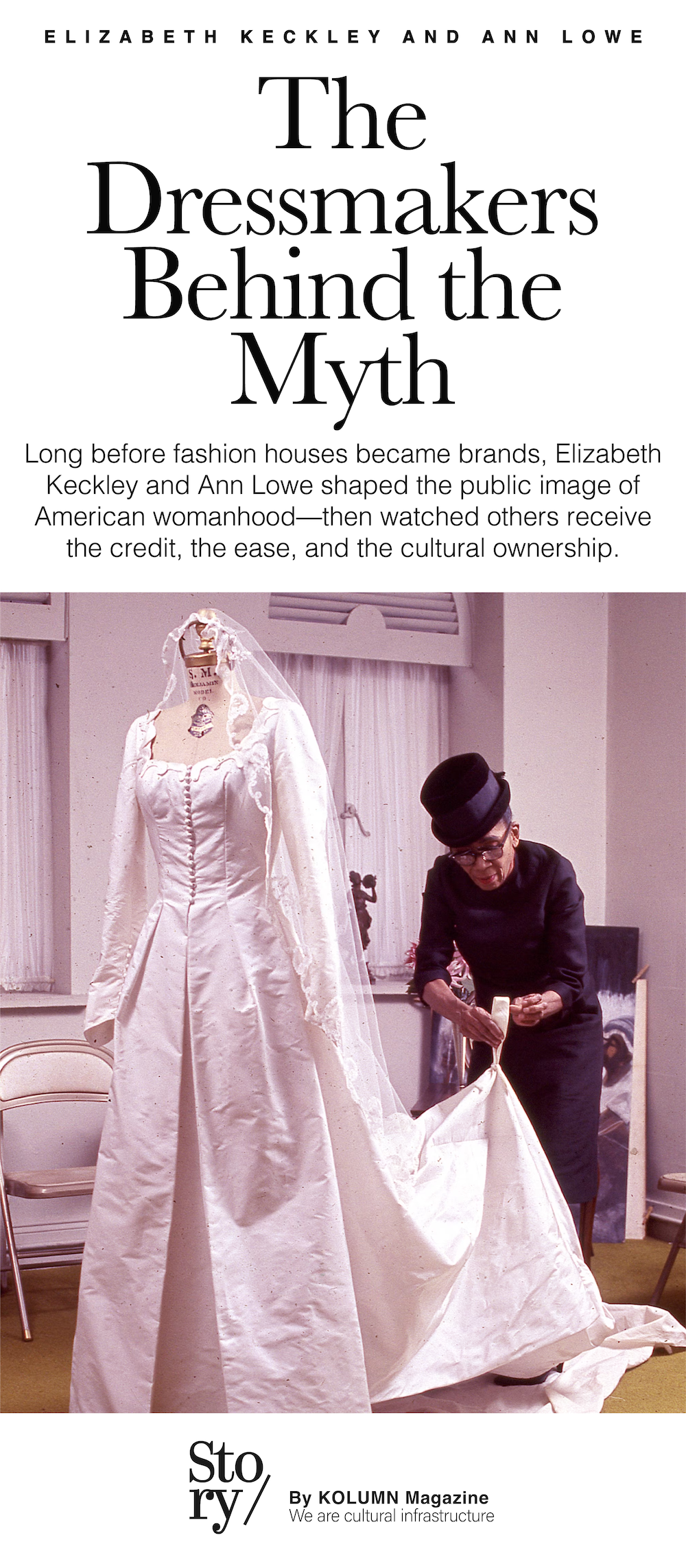
Ann Lowe’s most famous commission came in 1953, when Janet Auchincloss hired her to create the wedding gown and attendant dresses for Jacqueline Bouvier’s wedding to then-Senator John F. Kennedy. The dress has since been absorbed into American Camelot imagery, that polished archive of photogenic national memory. But the making of it was a near disaster. The Smithsonian’s National Museum of American History reports that a week before the wedding, Lowe’s workroom flooded, ruining 10 of the 15 gowns, including the wedding dress. Lowe and her staff remade them in a matter of days. What should have yielded a profit instead produced a significant financial loss, and she did not pass that cost along to the family. The Washington Post summarized the same episode starkly: the dress was destroyed 10 days before the ceremony, forcing Lowe to recreate it without additional pay.
This story is often retold because it is dramatic, but its real importance lies in what it reveals about the fashion labor behind high-society spectacle. Bridal mythology invites us to imagine inspiration, beauty, and applause. Lowe’s experience reminds us that couture can also mean sleeplessness, overhead, fragile margins, and the expectation that the Black woman making the miracle will absorb the damage herself. The crisis did not elevate her public standing. It intensified the pattern already governing her career: excellence was expected; recognition was optional.
Lowe’s under-crediting became part of the public record. NMAAHC and fashion-history sources note that the press did not properly name her at the time, referring instead to “a colored dressmaker.” In one of the most telling examples of how racism works through manners rather than only through law, Lowe’s race was treated as enough identification. Her name, which would have established authorship, could be omitted. The effect was both social and archival. It kept the gown inside the myth while leaving the maker partially outside it.
Yet Lowe’s achievement was bigger than that one wedding. She designed debutante dresses, evening gowns, and bridal wear across decades; her work appeared in magazines including Vogue and Vanity Fair; and her floral embellishments became a signature. Winterthur’s exhibition, the Met’s recent essay, and NMAAHC’s interpretive materials all insist on placing her where she belongs: among significant American designers, not simply among notable Black designers. That distinction matters. To relegate her to a side category is just a more polished form of the old omission.
A shared grammar of Black women’s labor
Putting Keckley and Lowe together clarifies how much had changed between the mid-nineteenth and mid-twentieth centuries—and how much had not. Keckley moved through a world structured by slavery, fugitive status, and the legal vulnerability of Black life. Lowe moved through a world structured by segregation, elite gatekeeping, and the coded exclusions of fashion commerce. The systems were different, but they produced a recognizable pattern. Black women’s skill made white femininity legible as prestige. Black women themselves remained vulnerable to erasure.
Both women also complicate simplistic narratives of uplift. Neither fits neatly into a feel-good story about “overcoming.” Keckley did not merely rise; she endured, negotiated, organized, witnessed, and paid dearly for speaking. Lowe did not simply break barriers; she navigated them, absorbed losses, trained others, and worked inside a market that loved exclusivity more than fairness. Their successes were real. So were the structures that limited what success could secure.
There is another shared feature worth noticing: both women worked in forms long dismissed as feminine craft rather than celebrated as serious design. The line between seamstress and artist, modiste and couturier, has often been drawn in ways that map directly onto race, class, and gender. A white male designer can be described as visionary. A Black woman doing comparably sophisticated work may be described as gifted with her hands. Keckley and Lowe expose the poverty of that vocabulary. Their work demanded business acumen, engineering logic, aesthetic discipline, historical awareness of silhouette, mastery of textiles, and intimate psychological reading of clientele. That is not decorative side labor. That is design.
Why historians keep returning to them now
The renewed attention to both women is not accidental. Institutions have been revisiting the archives of American fashion, presidential history, and Black women’s labor with greater seriousness. The Smithsonian American Women’s History Museum has emphasized Keckley as both dressmaker and author. The Library of Congress foregrounds her relief work during the Civil War. Winterthur mounted the largest exhibition of Lowe’s work to date in 2023–24, explicitly arguing for her centrality to American fashion history. The Met followed with a substantial essay in 2024. These are not merely commemorative gestures. They are attempts to repair the record.
Repairing the record matters because omission distorts more than individual biography. It distorts how we understand whole fields. If you erase Keckley, nineteenth-century White House style looks like something that simply emanated from Mary Lincoln’s taste. If you erase Lowe, mid-century American high-society fashion appears to be the product of white patrons and a few better-known houses. In both cases, the correction is not ornamental. It changes the causal story.
It also changes how we think about Black women’s relationship to modern American institutions. Keckley was embedded in the Civil War capital not as a symbolic presence but as a working, earning, organizing participant. Lowe was embedded in twentieth-century luxury culture not as a novelty but as a maker whose standards and silhouettes shaped the look of the elite. Recovering them means acknowledging that Black women have long been institutional producers, even when those institutions preferred to narrate them as help, support, or side note.
The question of credit
Credit is one of the quiet subjects running through both lives. Keckley got access, but authorship brought punishment. Lowe got commissions, but public naming lagged behind the work. Neither woman was fully denied success; that would make the story too simple. The deeper problem was conditional recognition. They could be welcomed as long as they remained useful in the proper register. Keckley could advise, fit, soothe, and solve. Lowe could astonish, embellish, and deliver. But when either woman’s identity threatened to move from service into full cultural ownership—writer, artist, historical subject—the terms grew unstable.
That instability still feels contemporary. Plenty of industries remain comfortable consuming Black creativity while hesitating to redistribute prestige, wealth, and citation accordingly. Keckley and Lowe belong to the past, but their careers still read like case studies in a familiar American arrangement: dependence without equal acknowledgment.
What survives
Very little survives of dressmakers’ work in the way people imagine artistic legacy should survive. Labels get lost. Garments are altered. Fabrics deteriorate. Credit slips off the hem. That is one reason institutions have had to work so carefully to reconstruct these women’s careers. For Keckley, surviving garments associated with Mary Lincoln and the continued life of her memoir help anchor her legacy. For Lowe, museum collections, magazine traces, client records, and exhibitions now help demonstrate the range of her output and technique. The archival fragility is itself part of the story. Women like Keckley and Lowe often worked in media that were historically undervalued, then worked under social conditions that made attribution inconsistent. They had to be rediscovered because the culture did not preserve them adequately the first time.
And yet enough survives. Enough to show Keckley as more than a footnote to Lincoln lore. Enough to show Lowe as more than the answer to a trivia question about Jackie Kennedy’s wedding gown. Enough to see a through line from enslaved Black women’s textile knowledge to the formal language of American elegance. Enough to understand that what looks effortless on the body can carry generations of disciplined, inherited, racialized labor behind it.
Their significance now
Elizabeth Keckley and Ann Lowe matter now because they force a more honest reading of American culture. They show that the nation’s aesthetic ideals were never produced only by the people who modeled them publicly. They were also produced by Black women whose names were easier to overlook than their workmanship. Keckley’s life reveals how a woman born into slavery could turn inherited skill into economic leverage, civic activism, intimate political access, and literary testimony. Lowe’s life reveals how Black design brilliance could shape twentieth-century luxury from within, even while the public narrative lagged behind the private consensus of elite clients who knew exactly whose talent they were buying.
They also matter because they expand the archive of Black women’s ambition. Neither woman accepted the role allotted to her without revision. Keckley insisted on freedom, enterprise, and interpretation. Lowe insisted on standards, beauty, and clientele on her own terms; one Washington Post archival piece memorably described her as a self-professed snob who preferred the old social elite to climbers with money. Whether one reads that as branding, self-protection, or taste politics, it suggests a woman who understood status as a language and knew how to manipulate it. Neither woman was asking merely to be included. Both were practicing authority.
For a publication culture increasingly interested in recovery, there is a risk of turning stories like these into simple redemption arcs: forgotten genius, now restored. But restoration is not the endpoint. The more demanding task is interpretation. What do these women tell us about the American economy of image-making? About Black women’s labor as infrastructure? About the thin line between intimacy and exploitation when wealth depends on beautifully managed appearances? Keckley and Lowe ask those questions just by being taken seriously.
In the end, both women leave us with the same lesson. Elegance is often narrated as if it springs naturally from wealth, breeding, and access. Their lives say otherwise. Elegance is built. It is cut, pinned, draped, corrected, rescued, and revised by people whose names the final story may try to compress or forget. Keckley and Lowe remind us that American glamour has always had makers, and that some of its greatest makers were Black women working with more genius than latitude. The least history can do is say their names with the same fluency it once reserved for the women who wore their clothes.
More great stories
The Marriage That Threatened Jim Crow
March 21, 2026
No Comments
A Bomb on Christmas Night, A Warning to a Movement
March 21, 2026
No Comments