



The tragedy of life doesn’t lie in not reaching your goal. The tragedy lies in having no goal to reach.
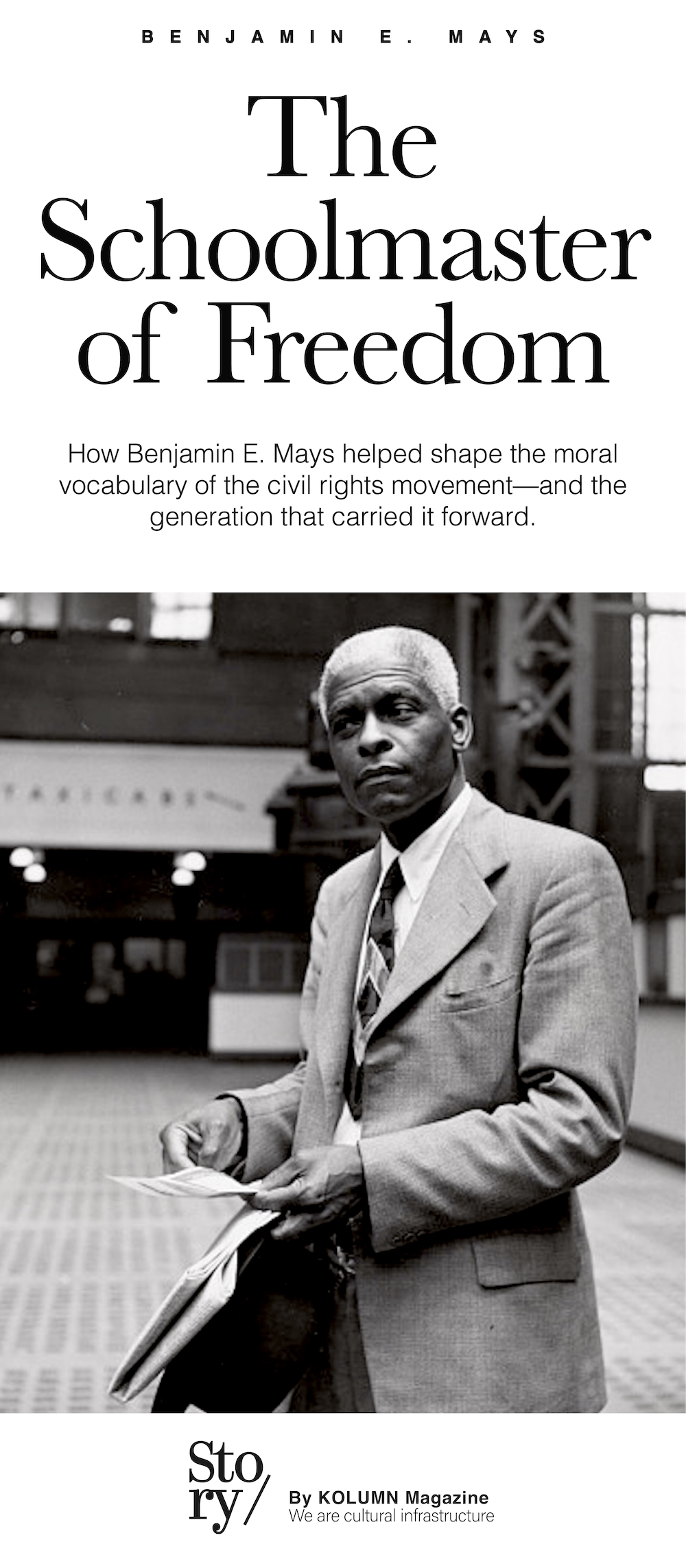
The tragedy of life doesn’t lie in not reaching your goal. The tragedy lies in having no goal to reach.
By KOLUMN Magazine
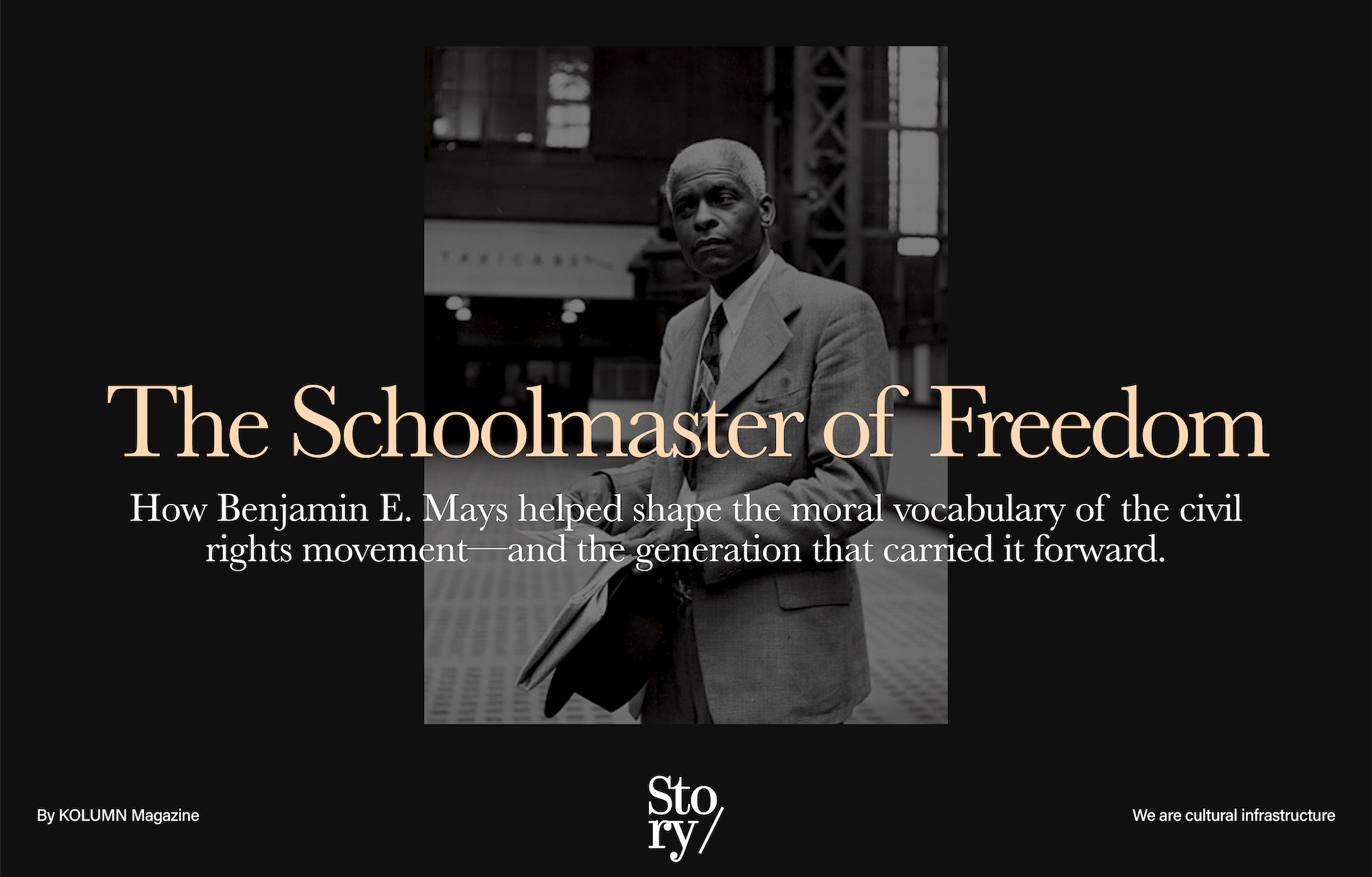
Benjamin Elijah Mays is often introduced through someone else’s greatness. He is described as Martin Luther King Jr.’s mentor, Morehouse College’s transformative president, or the minister-educator whose voice helped steady the civil rights movement. None of that is false. But it is incomplete. Mays was not simply adjacent to history. He was one of the architects of the moral and intellectual environment that made modern Black freedom struggle legible to itself. He helped teach a generation of Black leaders how to think about dignity, duty, democracy, discipline, and the uses of education in a country that had long withheld all five from them.
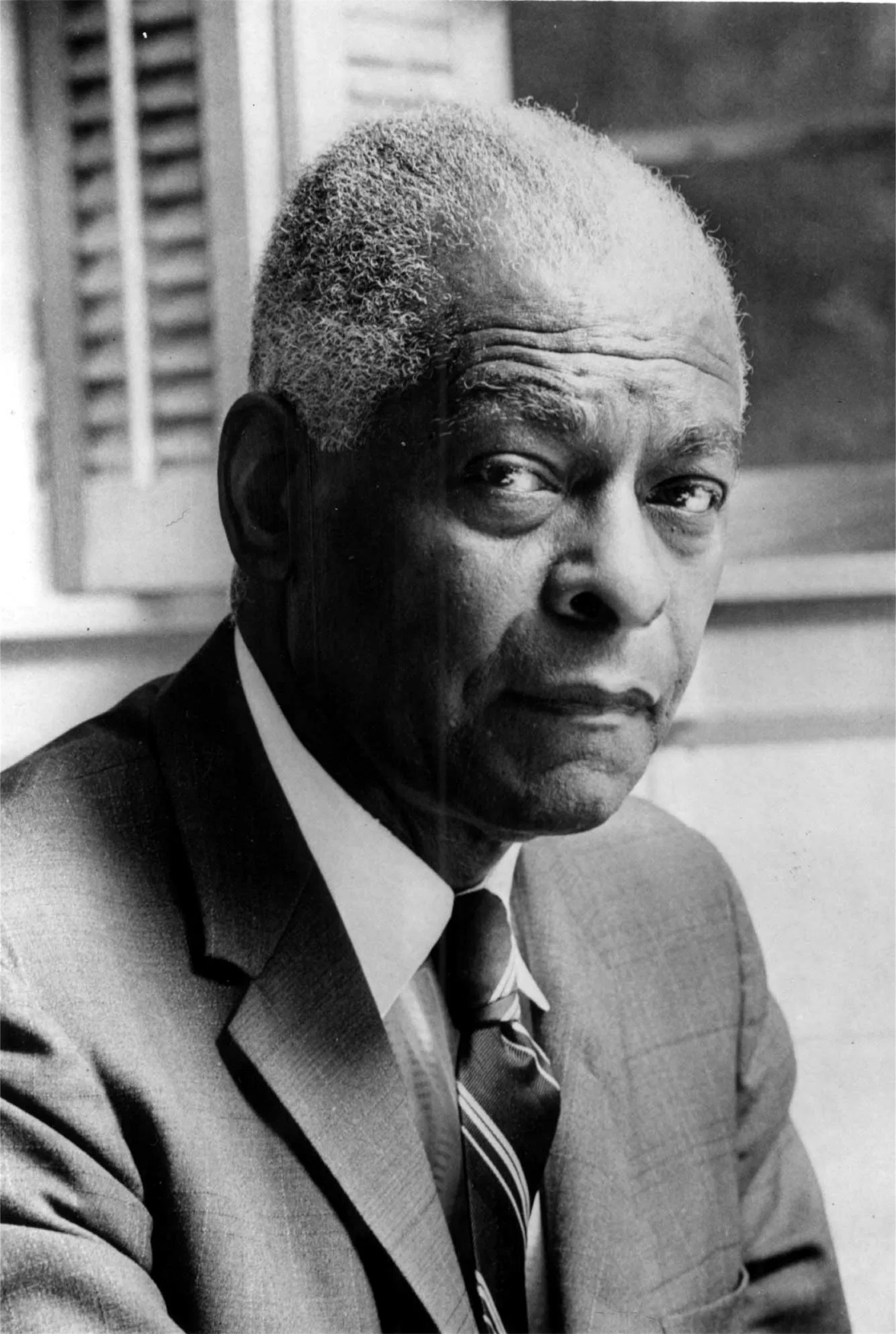
That distinction matters. America tends to celebrate the most visible men in a movement and forget the builders who formed them. It remembers the march, the speech, the court case, the funeral. It often forgets the chapel talk, the classroom challenge, the stern lecture delivered to a student who had talent but not yet a full sense of obligation. Benjamin Mays lived in that quieter but decisive space. He was a schoolmaster, a theologian, an administrator, a public intellectual, and a moral critic of American hypocrisy. He was also something harder to categorize: a constructor of interior life. He did not merely ask what Black people were fighting against. He kept asking what kind of people they had to become to fight well.
To understand Mays is to understand a particular theory of freedom. He did not see liberation as a burst of feeling or a symbolic victory. He saw it as a discipline, one that required institutions, ideas, courage, and standards. He believed that Black people deserved more than survival inside white supremacy. They deserved the full exercise of mind, citizenship, and human possibility. That conviction shaped his life from the red clay world of rural South Carolina to the campus of Morehouse College, from the pulpit to the public square, from the aftermath of slavery to the age of civil rights. By the time he died in 1984, his influence had already moved through some of the most important leaders and institutions in twentieth-century Black America.
And yet Mays still feels curiously under-read in the public imagination. Many know his name, but fewer grasp the scale of his significance. He is remembered as a mentor, which he was, but not always as a thinker in his own right. He is honored as an educator, which he was, but not always as a strategist of Black advancement. He is treated as a respectable elder, which he certainly became, but not always as a man whose beliefs were sharpened by fury at white supremacy and impatience with Black accommodation. To revisit Mays is to recover a figure who was far more demanding—and far more radical in his insistence on Black intellectual and moral excellence—than a softened commemorative culture sometimes allows.
Born in the Long Shadow of Slavery
Benjamin Elijah Mays was born on August 1, 1894, near Epworth, South Carolina, the youngest of eight children. His parents, Hezekiah and Louvenia Mays, had both been born into slavery. That fact is often stated quickly, like background scenery, but in Mays’s life it was foundational. He was not separated from slavery by myth or abstraction. He was raised by people who had lived under it. The violence, humiliation, vulnerability, and economic dependency that structured the post-Reconstruction South were not distant historical residues. They were part of the family memory, part of the landscape, part of the rules of the world into which he entered.
Mays later recounted an incident from his childhood that stayed with him for the rest of his life: white men, armed and commanding, forcing his father to bow and salute. The image mattered because it condensed the whole order of Jim Crow into a single scene. Power was not only legal. It was theatrical. It demanded submission. It wanted Black people not merely to obey but to perform their own inferiority. For the young Mays, this was a lesson in how domination worked. It was about land, labor, law, and terror, but it was also about spirit. White supremacy aimed to deform a person internally, to train them to accept a degraded place in the world.
That Mays refused that training is one of the central facts of his life. He grew up working on the farm and living inside the practical constraints that shaped Black Southern existence. His father, by many accounts, did not initially share Benjamin’s enthusiasm for extensive schooling. That skepticism was understandable. For many Black families in the rural South, education was morally attractive but economically disruptive. It took children away from labor. It offered no guaranteed protection from racist violence. It could even seem to prepare young people for possibilities the surrounding society had no intention of allowing.
Still, Mays pushed toward learning with unusual hunger. He attended local schools and then pursued further study in environments that promised broader intellectual horizons. What set him apart was not merely talent. It was appetite. He wanted books, ideas, language, scope. He wanted the kind of training that would let him interpret the world rather than simply endure it. Even then, the outlines of the man were becoming visible. Mays was not seeking education as ornament. He was seeking equipment.
The line would become one of his most quoted statements, but it was never empty inspiration. In Mays’s life, goals were not therapeutic affirmations. They were acts of defiance.
The Education of a Rebel
Mays’s educational journey took him far from South Carolina. He eventually enrolled at Bates College in Maine, graduating in 1920 as a Phi Beta Kappa student. That achievement alone would have been remarkable for anyone born Black in the South in 1894. But what Bates represented was larger than credentialing. It gave Mays a direct encounter with an academic culture that treated serious study as a norm rather than an indulgence. It widened his sense of what a Black intellect could claim.
The move North did not erase racism, of course. Mays was too perceptive, and the country too openly segregated in its habits and structures, for any such illusion. But the contrast between the South and the wider world sharpened him. He saw that some of what had been presented as natural in Southern life was in fact political, historical, and therefore challengeable. Geography helped strip inevitability from oppression.
After Bates, he continued graduate study at the University of Chicago, earning a master’s degree in 1925 and later a Ph.D. in 1935. The University of Chicago mattered because it placed Mays inside one of the nation’s most rigorous intellectual environments. There he deepened his interests in religion, ethics, sociology, and public thought. He became a scholar who could speak fluently across disciplines, and that breadth would define his later leadership. Mays was never just one thing. He was a minister who thought sociologically, an educator who thought theologically, and a public figure who brought both lenses to bear on race and democracy.
His scholarship also signaled something crucial about his temperament: he loved Black institutions enough to critique them. In 1933, with Joseph W. Nicholson, he co-authored The Negro’s Church, a landmark study that examined the Black church not simply as a sacred haven but as a complex social institution. The book was notable for its seriousness. Mays did not want pious clichés. He wanted honest assessment. He understood that the Black church had been one of the few institutions Black people could meaningfully control under segregation, but he also knew that control alone did not guarantee courage or vision.
This willingness to analyze internal contradictions would become a hallmark of his public life. He defended Black dignity without romanticizing Black institutions. He believed the church could be prophetic, but he also believed it could become timid, provincial, or too invested in compensation through status. He wanted ministers who could think. He wanted believers who could connect faith to justice. He wanted religion that did not ask the oppressed to postpone all hope until heaven.
Faith Without Submission
Benjamin Mays was a Christian, but he was not a quietist. He believed religion had to answer to the real conditions of human life. That meant any gospel that made peace with segregation was, to him, morally compromised. He had little patience for sermons that treated suffering as ennobling while ignoring the systems that produced it. He did not reject spiritual consolation, but he refused to let it become a substitute for social transformation.
This is where Mays becomes especially important to the genealogy of the civil rights movement. He helped articulate a form of Black Christianity that was intellectually serious, ethically demanding, and socially engaged. He belonged to a lineage of ministers and thinkers who insisted that the teachings of Jesus carried political consequences in a segregated democracy. If all persons were created in the image of God, then lynching, disenfranchisement, school segregation, and racial humiliation were not merely unfortunate customs. They were theological scandals.
Mays also drew from an international horizon. During the 1930s he traveled abroad, including a visit to India, where he met Mohandas Gandhi. The encounter deepened his interest in nonviolence as a disciplined moral and political practice. What attracted Mays was not softness. It was rigor. Gandhi’s example suggested that nonviolence could be militant without being murderous, sacrificial without being passive. That framework resonated with Mays’s own instincts. He believed struggle required discipline. He distrusted both cowardice and empty machismo. Nonviolence, properly understood, was not surrender. It was trained courage.
That distinction would echo through the civil rights movement, especially in the thought of Martin Luther King Jr. But before it echoed there, it existed in Mays’s own teaching. He was already working through the relationship between religion, conscience, resistance, and democratic accountability. He was already insisting that faith should produce agency rather than obedience to injustice.
Benjamin Mays did not preach escape. He preached stature.
Howard University and the Making of a Public Intellectual
Before he became synonymous with Morehouse College, Mays served at Howard University, where in 1934 he became the founding dean of the School of Religion. This chapter of his life is sometimes overshadowed by what came later, but it was indispensable. Howard placed him in one of the premier centers of Black intellectual life. It expanded his audience, sharpened his administrative experience, and allowed him to shape the training of future clergy and religious scholars.
At Howard, Mays worked to establish theological education as a space of real intellectual seriousness. He wanted ministers to be more than emotionally effective speakers. He wanted them historically literate, philosophically grounded, and socially aware. In his view, the Black pulpit carried enormous influence, which meant it also carried enormous responsibility. It could either widen the moral imagination of a people or narrow it.
The Howard years also strengthened Mays’s stature as a national voice. He was no longer simply a gifted scholar or minister in formation. He was becoming a public intellectual in the fullest sense: a person whose work crossed institutions and audiences, whose ideas mattered not only within the church or academy but in broader debates about Black life and American democracy.
That mattered because the 1930s were not a quiet decade. The Great Depression, the persistence of racial terror, debates over Black political strategy, and the global rise of fascism all pressed urgent questions onto American life. Mays was part of a generation of Black thinkers trying to make sense of these converging crises. His answer was neither retreat nor panic. It was formation. Build stronger leaders. Build stronger institutions. Build a moral language sturdy enough to withstand pressure.
Morehouse and the Architecture of Black Leadership
In 1940, Mays became the sixth president of Morehouse College in Atlanta. He would remain in that position for twenty-seven years. By the time he retired in 1967, he had transformed the institution’s academic culture, public standing, and sense of mission. Morehouse was already important, but under Mays it became something more distinct: a workshop in Black male leadership built on discipline, intellectual seriousness, and public responsibility.
This was not merely a matter of budgets, though Mays strengthened the college financially. It was not merely a matter of prestige, though Morehouse gained stature during his tenure. What defined his presidency was a theory of education. Mays believed Black students deserved rigor, not charity. He expected excellence because he considered lowered expectations another face of racism. He was not interested in training polished men to accommodate segregation. He was interested in preparing them to confront and outgrow it.
Students at Morehouse encountered a president who spoke plainly and demanded much. His chapel addresses became legendary. He challenged young men to think beyond personal advancement and toward service. He pressed them to cultivate character, ambition, and self-respect. He rejected excuses. He also rejected the narrow idea that education was mainly a route to individual comfort. For Mays, the educated person had obligations. Knowledge carried civic and ethical consequence.
That vision made Morehouse under Mays feel larger than a campus. It was an incubator for a Black leadership class shaped not simply by aspiration but by duty. The institution trained ministers, lawyers, educators, doctors, public servants, and thinkers who would move through the mid-century world carrying some version of Mays’s influence with them.
He did not merely ask students to become successful. He asked them to become answerable.
The Young Martin and the Elder Example
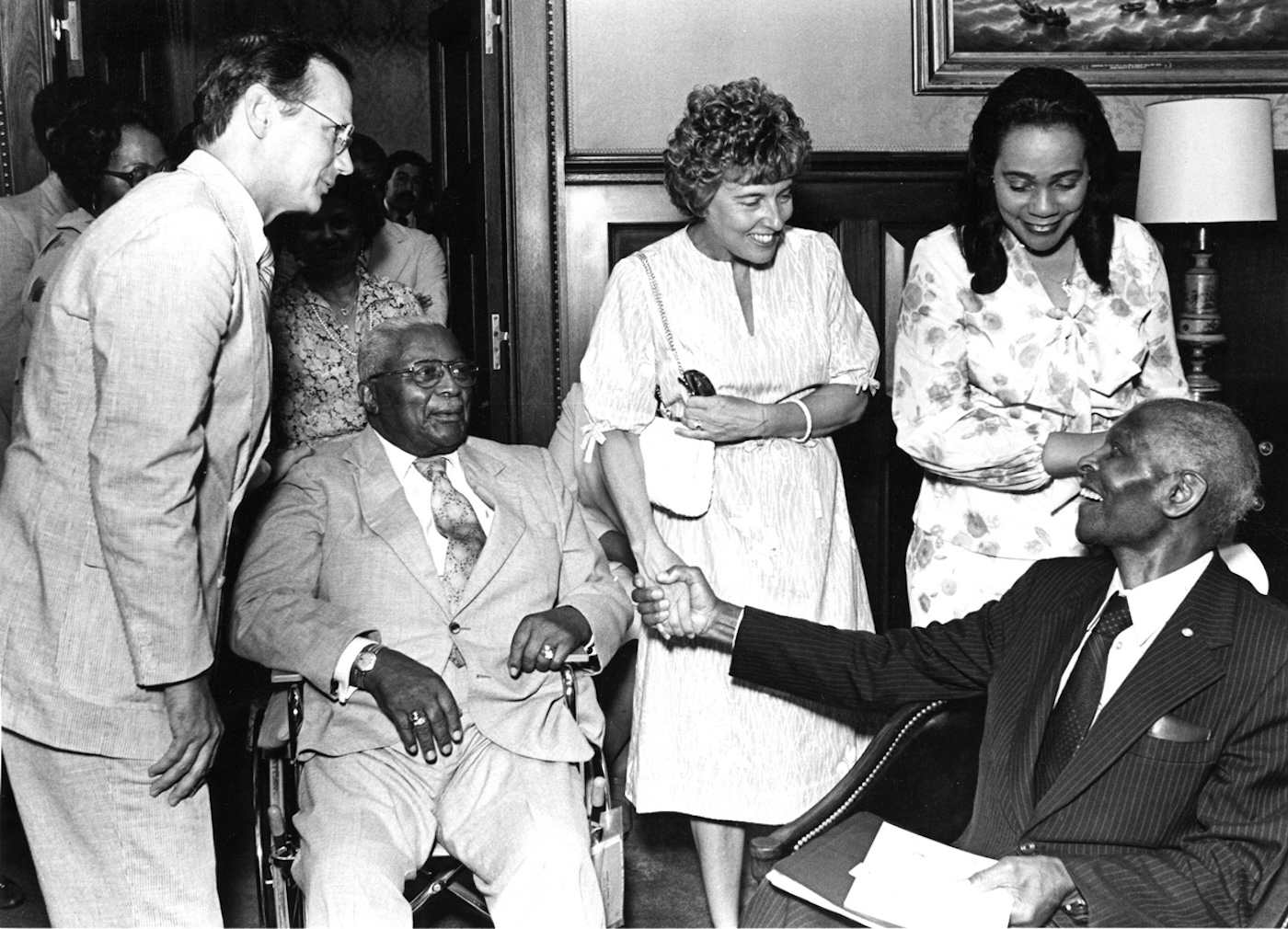
No discussion of Benjamin Mays can avoid Martin Luther King Jr., though the challenge is to discuss the relationship without reducing Mays to it. King entered Morehouse at age fifteen in 1944. He encountered in Mays a form of authority that was deeply instructive: intellectually sophisticated, spiritually serious, personally composed, and publicly unbowed. Mays embodied a type of Black leadership that did not apologize for its own brilliance.
King later referred to Mays as a spiritual mentor and intellectual father. That description makes sense. Mays showed King that ministry could be more than pastoral routine. It could be a vehicle for democratic struggle and moral witness. He modeled how a minister might move between the church, the academy, and the nation without shrinking in any of those spaces. He demonstrated that one could be deeply religious without being anti-intellectual, and fiercely critical of America without surrendering the language of its highest ideals.
Still, the relationship is most useful when understood as formative rather than magical. Mays did not manufacture King’s gifts. King was already King in seed form. But Mays gave those gifts a horizon. He offered an example of what cultivated Black manhood could look like under pressure. He widened the young student’s imagination of vocation.
Perhaps more than anything, Mays provided proof that seriousness itself could be a form of resistance. Here was a man who had moved from the farm to the doctorate, from the pulpit to the presidency of a college, from private memory of humiliation to public moral authority. He was not a fantasy of success detached from Black struggle. He was living evidence that one could refuse degradation without becoming spiritually small.
More Than a Mentor
To stop at Mays as “King’s mentor” is to misunderstand the scale of his work. He shaped far more than one famous student. His influence moved through generations of Morehouse graduates and beyond them into Black public life. He helped define what a Black college president could be. He showed that historically Black institutions could be simultaneously elite, mission-driven, and politically consequential.
This was no small intervention. Black higher education in the mid-twentieth century existed under constant pressure—from white philanthropy, state control, financial precarity, and the persistent assumption that Black students should be trained for subordinate roles. Mays pushed against all of it. He believed Black colleges had to prepare leaders, not merely survivors. He wanted institutions that would sharpen intelligence rather than manage expectations downward.
He also believed education itself was a site of democratic struggle. If white supremacy depended on restricting Black possibility, then any institution that expanded Black intellectual confidence was politically meaningful. Mays understood that segregation did not only separate bodies. It attempted to regulate imagination. It taught Black people to think small about themselves and taught white people to think of Black diminishment as natural. A serious Black college threatened that arrangement by producing graduates who could not be easily contained within it.
That is one reason Mays’s legacy remains so relevant. He offers a vision of education as formation rather than transaction. In a moment when colleges are often discussed in terms of branding, job placement, or cultural spectacle, Mays asks a more demanding question: what kind of human being is an institution helping to produce?
Against Jim Crow, Against Gradualism
Mays’s public life was marked by a steady refusal to accept white supremacy as a regrettable but manageable fact. He spoke out against segregation long before civil rights consensus became respectable in wider American life. He condemned racial terror, challenged white moderates, and argued that democracy without Black equality was a fraud.
But Mays was not a rhetorician of noise. He did not indulge in theatrical radicalism for its own sake. His critique was sharp, but it was disciplined by moral argument and institutional vision. He believed in protest, but he also believed in preparation. He knew outrage mattered, but he distrusted outrage that could not sustain itself in organization, thought, and strategy.
That balance gave his politics an unusual texture. He was impatient with gradualism, yet not seduced by gestures. He believed in nonviolence, yet not passivity. He believed in American democratic ideals, yet he used them as instruments of indictment against the country’s racial order. For Mays, patriotism without truth was sentimental dishonesty. But critique without constructive vision was also insufficient.
The result was a public voice that felt both principled and unsparing. He did not flatter Black audiences, and he did not reassure white ones. He demanded more of both. That may be one reason he still feels so contemporary. He refused the easy binaries that dominate so much public discourse. He was rigorous where others were vague, morally clear where others were evasive, and institutionally minded where others were content with symbolism.
The March, the Movement, the Moral Center
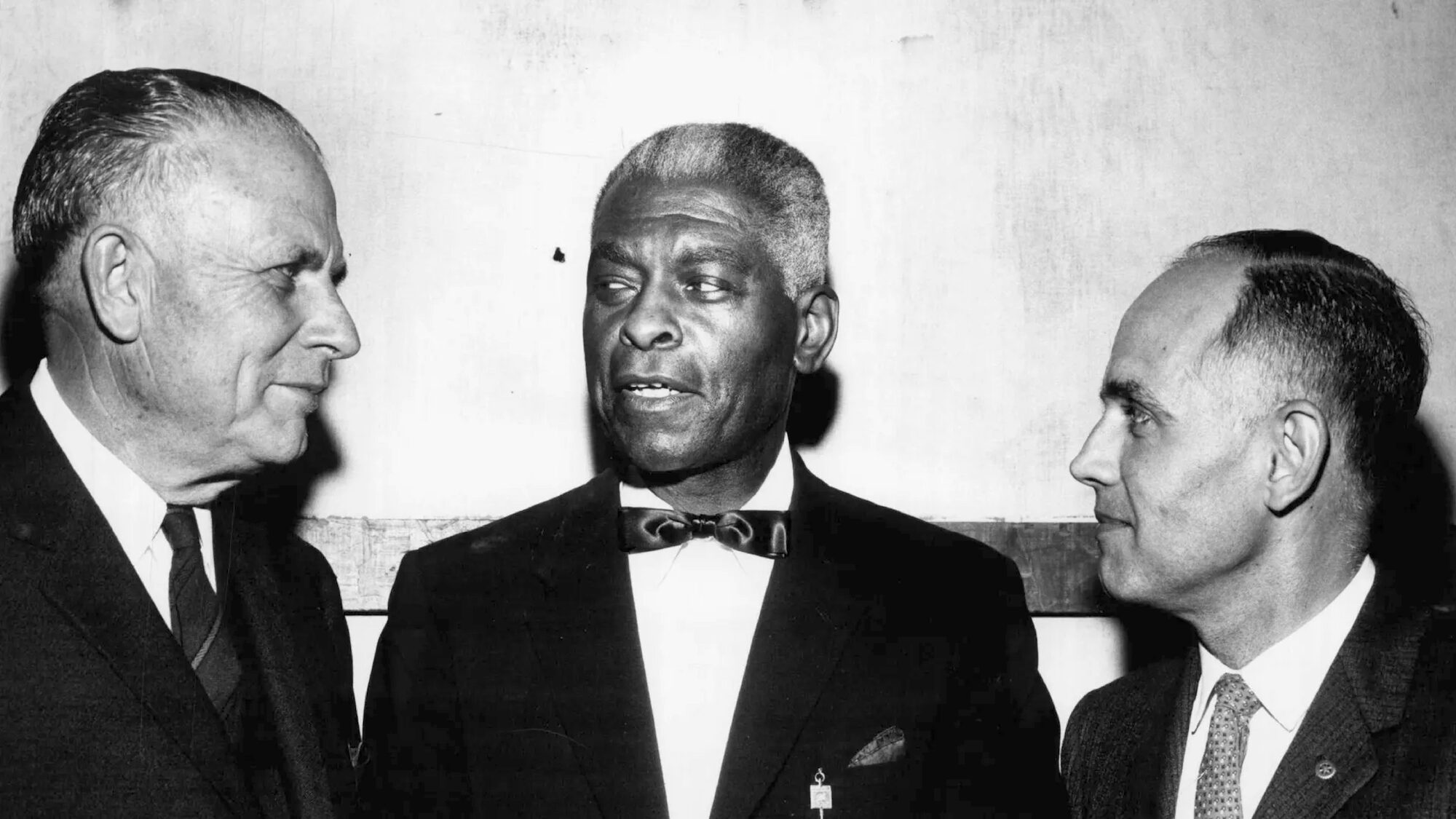
By the time the civil rights movement reached its most visible years, Benjamin Mays was already an elder figure—though “elder” can sound too placid for the role he played. He was not retired into reverence. He was active, speaking, writing, advising, and interpreting the movement as it unfolded. In 1963, he gave the benediction at the March on Washington, a role that was both ceremonial and symbolic. It placed him inside one of the defining public moments of the era, not as an ornament from an earlier generation but as one of the movement’s enduring moral voices.
His presence there made sense. The movement’s most famous leaders had emerged in an atmosphere shaped by the ideas Mays had long advanced: the fusion of faith and justice, the insistence on Black dignity, the moral use of nonviolence, the conviction that education and leadership formation mattered to social change. He was part of the intellectual soil from which the movement had grown.
And then came April 1968. After King’s assassination, it was Mays who delivered one of the defining eulogies of the twentieth century. At Morehouse, he spoke not as a public commentator performing grief, but as a man who had known King in youth and watched him become a world figure. Mays’s remarks preserved the seriousness of King’s witness. He refused to sentimentalize him into a harmless dreamer. He emphasized courage, discipline, sacrifice, and the costs of moral leadership in a violent society.
That eulogy matters because it was an act of historical protection. Mays understood, almost immediately, that America would try to sanitize King. He refused to help in that project.
Mays mourned King by telling the truth about him.
Institution Building as Movement Work
One of the most underrated aspects of Mays’s legacy is his devotion to governance. After retiring from Morehouse, he served as president of the Atlanta Board of Education, becoming the first Black person to hold that position. This was not glamorous work. It involved bureaucracy, conflict, desegregation policy, and the practical burdens of public administration. Mays took it on anyway.
That choice reveals a great deal about him. He did not think freedom work belonged only to the charismatic or theatrical dimensions of public life. He understood that policy, administration, and school governance were also battlegrounds. It was not enough to proclaim equality. Someone had to build systems capable of advancing it.
Too often, public memory favors spectacle over structure. It celebrates movement moments but neglects the patient, often frustrating labor of institutional change. Mays’s life corrects that imbalance. He cared about budgets, standards, leadership pipelines, and educational policy because he knew freedom without durable institutions remained fragile.
This is one of the clearest ways he speaks to the present. He reminds us that institution building is not secondary to justice work. It is one of its central forms.
The Writings of a Demanding Mind
Mays was also a prolific writer. His books, speeches, sermons, and autobiographical works reveal a voice that was measured but forceful, disciplined but unmistakably urgent. Among his most important works is Born to Rebel, an autobiography whose title alone captures the essence of his worldview. Rebellion, for Mays, was not mere defiance. It was a principled refusal to accept humiliation, limitation, or spiritual diminishment as the natural order of things.
His writing often returns to the interplay between memory and moral analysis. He wrote about the degradations of the South not as isolated personal wounds but as evidence of a broader structure. He wrote about education not as personal uplift alone but as a collective necessity. He wrote about religion not as comfort alone but as demand.
What emerges from his body of work is a distinctive sensibility: grave, exacting, hopeful without being naïve. He believed human beings could grow, institutions could improve, and societies could change. But he had no faith in improvement without pressure, and no faith in pressure without discipline.
That sternness is part of what makes him compelling. He does not fit neatly into the contemporary appetite for soft heroes. Mays was warm in influence but hard in expectation. He believed people should strive. He believed leaders should earn moral authority through character and labor. He believed institutions should stand for something larger than self-preservation.
Why Benjamin Mays Still Matters
Benjamin Mays matters because he helps answer a question every generation faces: what sustains freedom after the speech ends? His life suggests that movements require more than inspiration. They require training. They require standards. They require institutions that do not confuse representation with transformation. They require educators willing to tell students not merely that they are gifted, but that their gifts entail responsibility.
He also matters because he complicates contemporary assumptions about leadership. Ours is an age obsessed with visibility. Mays represents another model: authority rooted in depth, seriousness, and endurance. He was not interested in personality cults. He was interested in the long work of shaping minds and strengthening institutions. That kind of influence is less photogenic than charisma, but often more lasting.
He matters, too, for what he says about Black history itself. Mays’s life stretches from the world of formerly enslaved parents to the post-civil-rights era. He links generations that are too often narrated separately. Through him, one can see the continuity between slavery’s afterlife, Black institution building, the religious imagination of protest, and the modern struggle for democratic inclusion. He is a bridge figure, but not in a bland sense. He is a bridge built out of argument, discipline, and refusal.
Most of all, he matters because he insisted that dignity could be taught, practiced, and defended. Not performed for approval. Defended.
The Teacher Behind the Breakthrough
America prefers stories of breakthrough. It likes the dazzling arrival, the singular speech, the decisive march, the legal victory that appears to reorder the nation in one dramatic burst. Benjamin Mays reminds us that history also moves through formation. It moves through the teacher who refuses mediocrity, the administrator who builds an institution, the minister who insists faith has public consequences, the elder who tells the truth at a funeral, the thinker who keeps asking what freedom demands of character.
Mays was all of those things. He did not merely witness the making of modern Black freedom struggle. He helped prepare its leaders, refine its ethics, and strengthen its institutional backbone. He belonged to that class of figures whose greatness lies not only in what they did personally, but in what they made possible in others.
That is why his life resists reduction. He was not simply the mentor of a famous man, though he was that. He was not simply the president of a distinguished college, though he was that too. He was a moral architect of twentieth-century Black America, a man who understood that democracy without dignity was fraud, that education without purpose was wasted, and that leadership without discipline would eventually collapse under pressure.
Benjamin Mays did not just ask America to change. He helped prepare the people who would force it to.
More great stories
The Long Ledger of Black Banking
March 18, 2026
No Comments
Before Detroit, There Was Greenfield
March 18, 2026
No Comments