



For 13 months, I was the Jackie Robinson of television.
For 13 months, I was the Jackie Robinson of television.
By KOLUMN Magazine
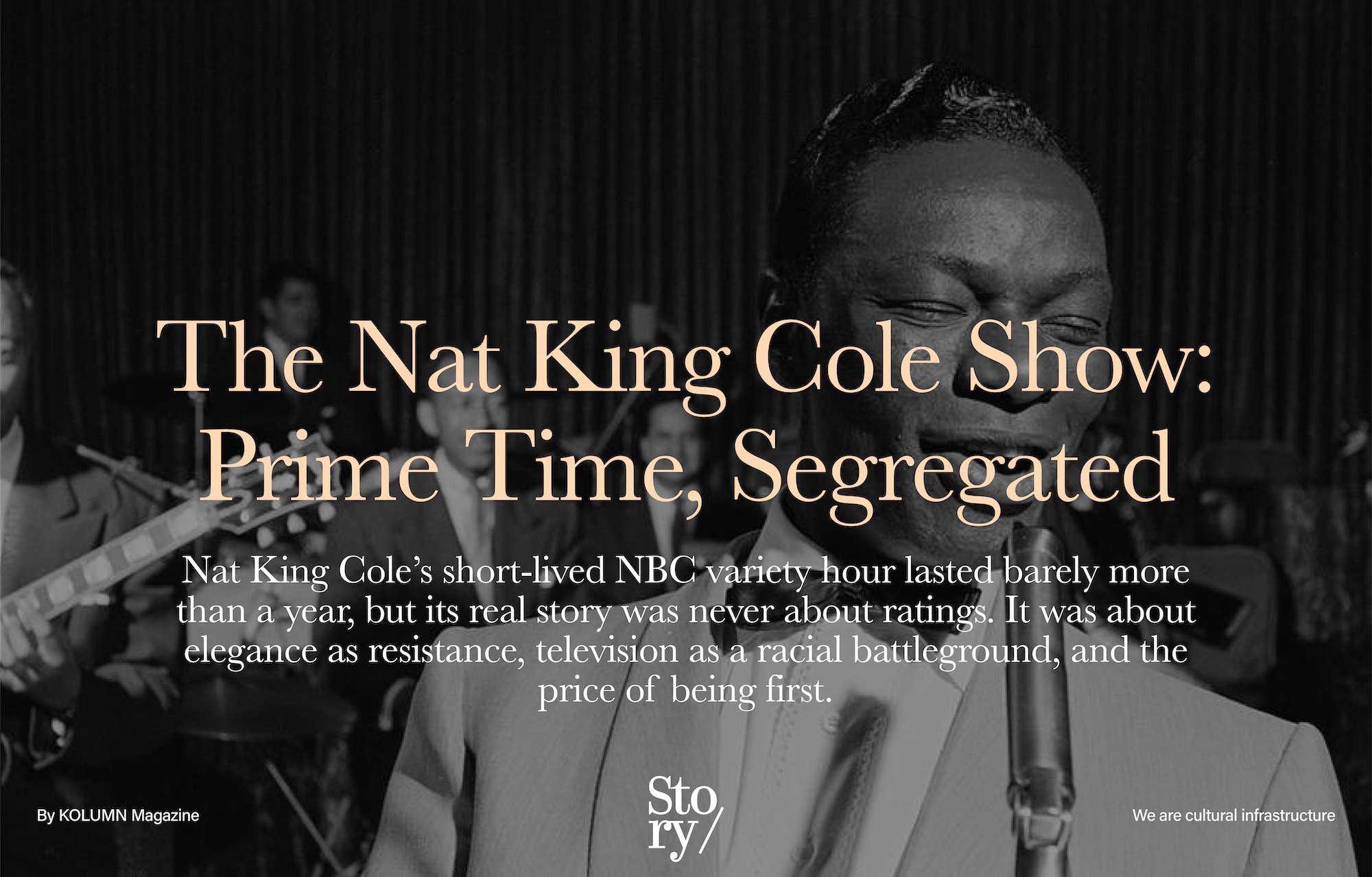
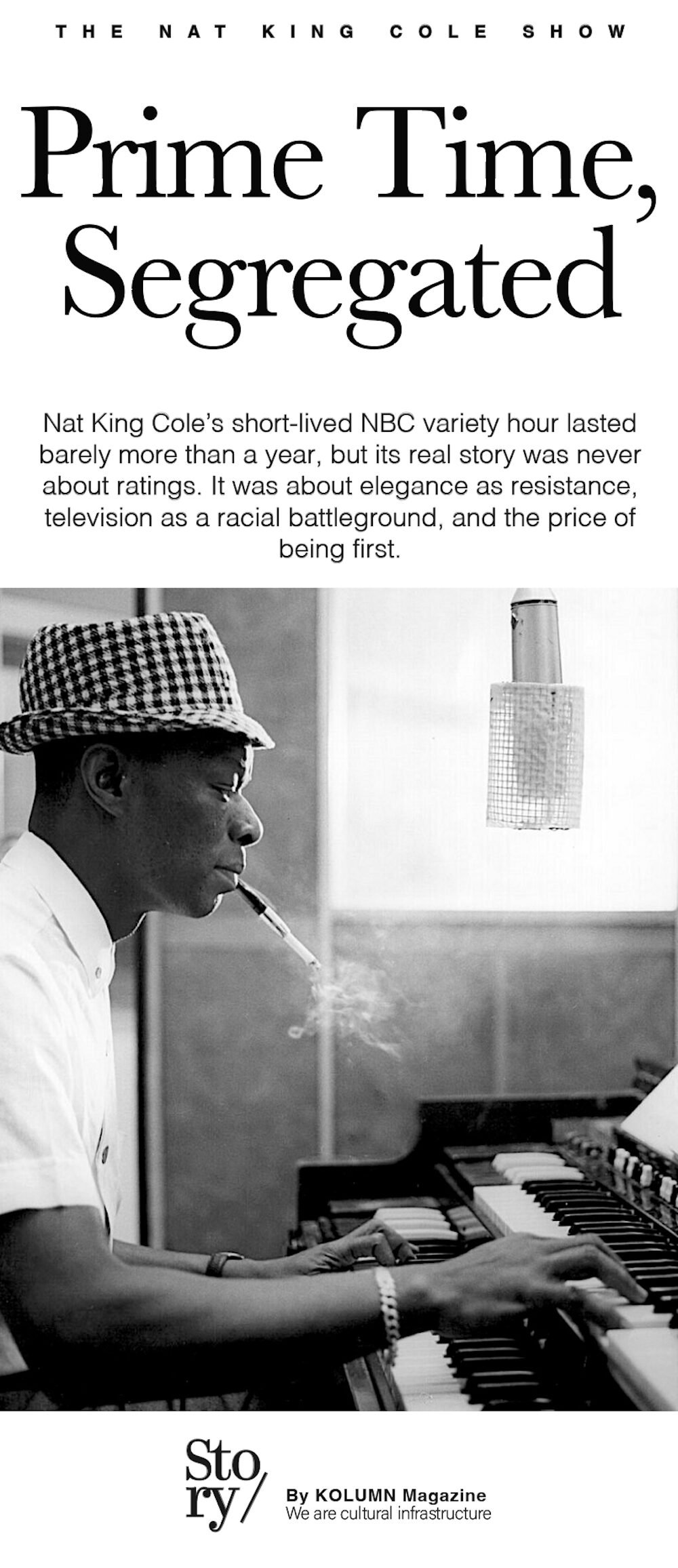
There are some cultural artifacts that matter because they lasted. There are others that matter because they didn’t. The Nat King Cole Show belongs firmly in the second category. It ran for just over a year, from November 5, 1956, to December 17, 1957. It began as a 15-minute NBC prime-time variety program and was later expanded to a half hour. It featured a host who was, by then, one of the most recognizable entertainers in the world: Nat King Cole, the velvet-voiced singer and formidable jazz pianist whose poise seemed to make the television camera behave itself. The show was elegant, musically rich, critically admired, and historically groundbreaking. It was also doomed.
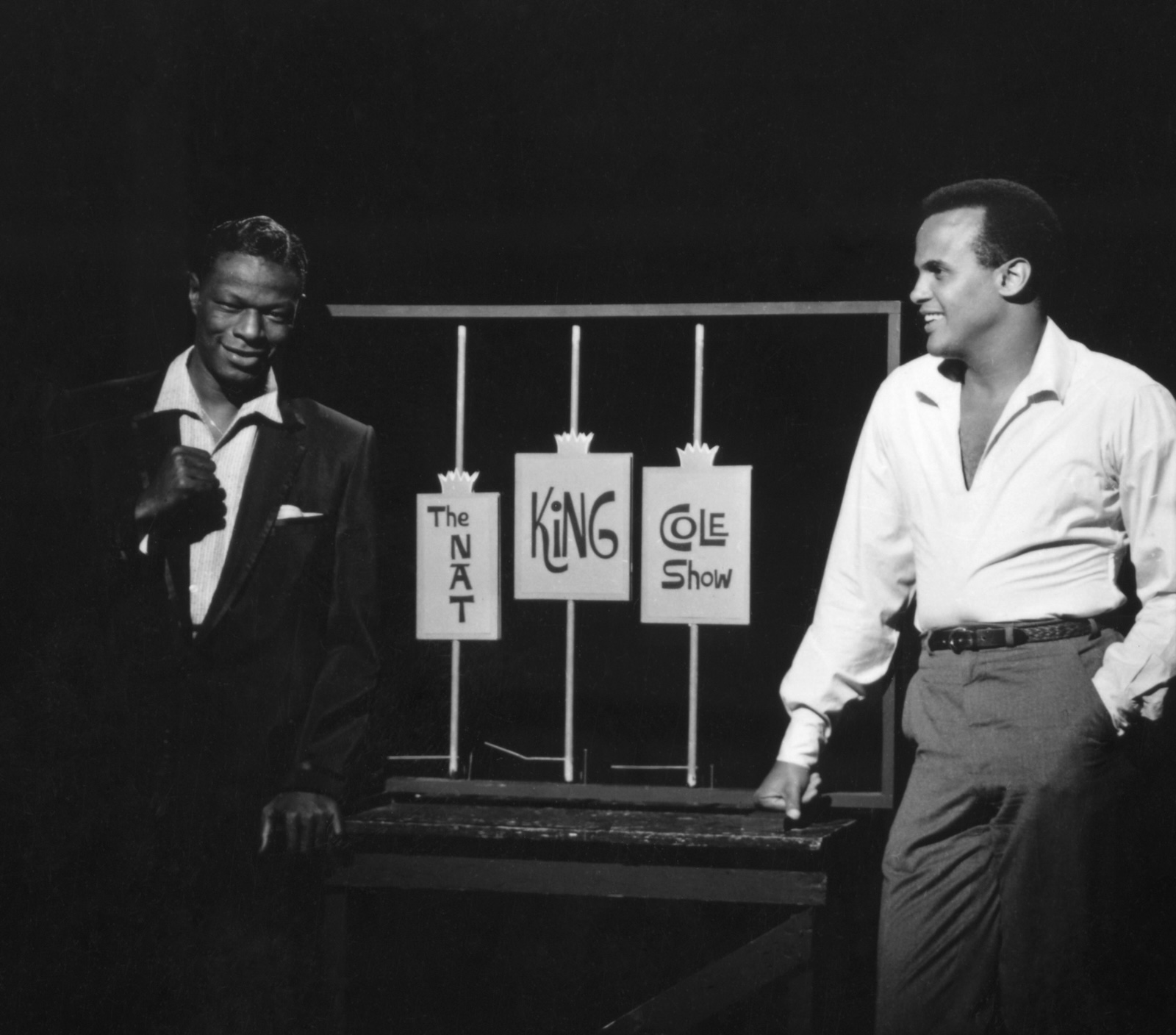
The usual shorthand is that Cole was the first Black American to host a nationally broadcast television variety show. That phrasing is useful, but incomplete. There had been earlier Black television hosts, including Hazel Scott and Billy Daniels, and Scott’s 1950 DuMont program predates Cole’s by several years. What made Cole’s show different was scale, visibility, celebrity, and the fact that NBC placed one of the biggest Black stars in America into a weekly national slot during the most image-conscious years of early television. He was not simply first in a technical sense. He was first in a way the industry could not hide from itself.
That distinction matters because The Nat King Cole Show was never only an entertainment program. It was a referendum. On any given week, viewers could watch Cole sing standards, sit at the piano with jazz greats, welcome star guests, and glide through a production styled with the polish networks reserved for prestige talent. But underneath the smoothness was a test of whether national television, national advertisers, and white middle America were prepared to accept a Black man not as comic relief, not as stereotype, not as novelty, but as the center of the frame. The answer, delivered in the language of sponsorship rather than editorial policy, was no.
That line, attributed to Cole after the show’s collapse, has survived because it compressed an entire era into one sentence. The obstacle was not talent. It was not even audience appeal in the narrowest sense. It was the racial logic of American commerce. The series could attract top-tier guests and strong notices, and still struggle because advertisers feared white backlash, especially in the South. In other words, the market behaved as segregation’s business partner.
The star NBC could not ignore
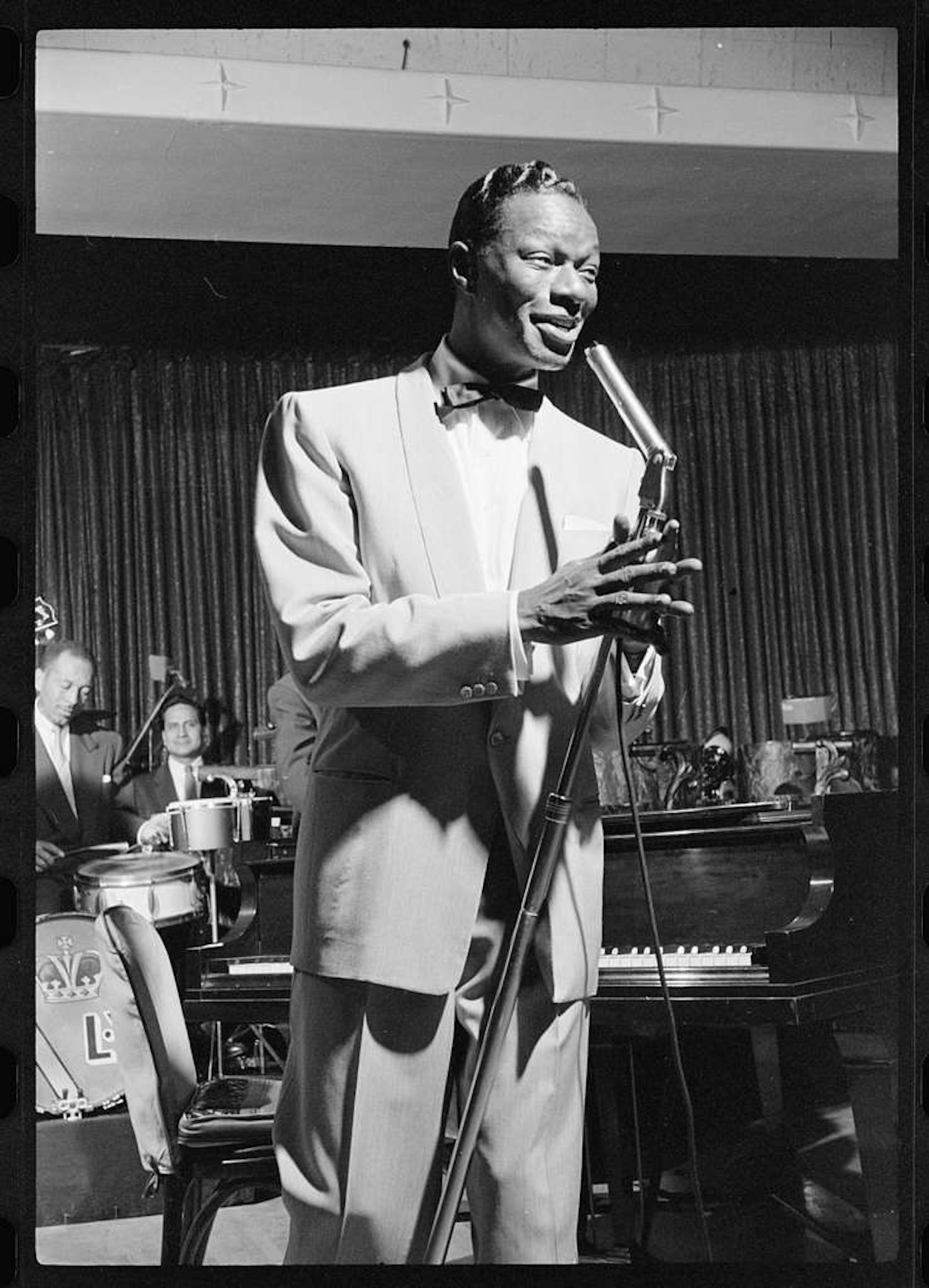
By the time NBC finally gave Cole his own program, he had already spent years becoming a kind of American contradiction: too famous to dismiss, too Black to be fully embraced on equal terms. He had risen first with the King Cole Trio, whose small-group sound helped reshape jazz ensemble playing, then crossed into enormous pop success with songs like “Nature Boy,” “Mona Lisa,” and “Too Young.” By the mid-1950s, he was an international star, a Capitol Records pillar, and a regular presence on major television programs hosted by white performers. If TV in the 1950s loved familiarity, polish, and star wattage, Cole had all three.
NBC understood the obvious. Variety television was one of the dominant genres of the decade, and Cole fit it beautifully. He had the voice, the timing, the charm, and, crucially, the ability to move between popular song and serious musicianship. The network brought in Nelson Riddle and Gordon Jenkins to help direct the music, a sign that this was not intended as a token experiment or a cheaply assembled curiosity. This was supposed to look like a real show, because it was a real show. Cole’s guests included major names: Ella Fitzgerald, Peggy Lee, Tony Bennett, Mahalia Jackson, Mel Tormé, Count Basie, and many more. Paley archive listings from surviving episodes show the caliber clearly, including appearances by Count Basie and, in a later broadcast, guests such as Cornel Wilde and the young Billy Preston.
That point is worth pausing on. Too often, the legacy of The Nat King Cole Show gets flattened into a sad parable about cancellation. But the series itself was not some brave but clumsy prototype. It was, by the standards of the day, sophisticated television. It had lush musical direction, strong booking, and a host whose manner on camera was almost unnervingly composed. Cole did not present himself as an agitator. He presented himself as indisputably at home. That was part of what made the show radical.
The Jim Crow Museum’s account of the program notes that Cole understood the stakes. He reportedly saw television as “a turning point,” one that might help make it possible for Black performers to be featured regularly on TV. At the same time, he was cautious about announcing himself too loudly as a racial pioneer, worrying that too much emphasis on “the first” could backfire. That instinct tells you a great deal about the period. Black breakthrough had to be legible enough to matter but understated enough not to frighten gatekeepers. Even progress had to be stage-managed.
A civil rights landmark disguised as a variety show
Cole is sometimes described as an uneasy or reluctant civil rights figure, and that’s basically true. He was not Malcolm X. He was not Martin Luther King Jr. He did not build his fame around movement rhetoric. He often described himself primarily as an entertainer, and he could draw criticism from other Black Americans for seeming too cautious, too assimilationist, or too willing to perform in compromised spaces. Yet history is full of people who changed structures whether or not they fit our preferred model of protest. Cole’s television show is one of those cases.
In April 1956, months before the NBC debut, Cole had been attacked onstage in Birmingham, Alabama, by white supremacists. Later accounts suggest that the assault sharpened the political dimensions of his public image. Indiana Public Media’s David Johnson, citing biographer Daniel Mark Epstein, argues that the Birmingham attack helped give Cole’s ambition for a TV show a more explicit civil-rights dimension. Johnson quotes Cole telling Ebony, “No Negro has a TV show. I’m breaking that down.” That statement feels almost startling in its plainness. It is not flamboyant. It is logistical. A barrier exists; I intend to remove it.
If that sounds like politics, it is because it was. Maybe not politics in the speechmaking sense, but politics in the older, more difficult sense: the struggle over who gets seen as fully human in public life. Television was fast becoming the dominant machine for manufacturing American normalcy. To place Nat King Cole at the center of a weekly network show was to make an argument about Americanness itself.
The Atlantic’s later reflection on Black TV history helps frame the larger context. In early television, Black Americans were either excluded or reduced to caricature, and the medium’s progress on representation was slow, uneven, and shaped by white executive assumptions about white audiences. A photograph from the 1963 March on Washington captured the hunger of the period with a protest sign that read, “Look Mom! Dogs have TV shows. Negroes don’t!!” The sign wasn’t literally true, as The Nat King Cole Show demonstrates. But its emotional truth was unmistakable: Black presence on television was thin, fragile, and rarely allowed to define the medium.
That is why Cole’s show matters beyond nostalgia. It was not just an example of representation. It was an early contest over whether Black sophistication, Black glamour, and Black authority could be presented without apology to a national audience. Cole understood that a caricatured Blackness was acceptable to many white viewers. A poised, impeccably dressed Black host who could stand shoulder to shoulder with Perry Como, Dinah Shore, or Eddie Fisher was a different proposition entirely. The Smithsonian’s National Museum of African American History and Culture makes this point directly: advertisers were more comfortable with familiar stereotypes than with Cole’s urbane, elegant image, and Cole wanted no part of those stereotypes.
The problem was not the audience. It was the business.
One of the most enduring myths around the show is that it failed because America simply “wasn’t ready,” as though the public’s cultural tastes formed in a vacuum. The evidence suggests something more specific and more damning. The central problem was sponsorship. NBC launched the program without a major national sponsor, apparently assuming one would materialize once advertisers saw the quality and appeal of the production. That assumption turned out to be spectacularly wrong.
The show did attract regional advertisers and, according to Indiana Public Media, even a fleeting national sponsor in Carter Products, but it never secured the kind of stable national backing required for long-term security. Regional support came from brands and local markets such as Rheingold Beer in New York, Gallo and Thunderbird in Los Angeles, Regal Beer in New Orleans, and Coca-Cola in Houston. That patchwork tells its own story. The show was sellable, just not in the fully national way the network needed. Racial risk was being priced market by market.
The Smithsonian account is blunt: major advertisers feared boycotts if they backed a show fronted by a Black host. WABE’s summary of the program’s fate similarly notes that NBC could not secure national sponsors because companies worried about backlash from Southern consumers. The result was a sustaining program, meaning NBC carried the financial burden itself. Cole also absorbed some of that strain. The Smithsonian reports that he told Ebony he had “plowed back part” of his salary into the series. Later reprints of Cole’s own reflections preserve the larger emotional charge: he saw himself as carrying the hopes of millions and sacrificing both time and lucrative bookings to keep the show alive.
There is a tendency in American media history to narrate advertising as a neutral response to popular demand. The Nat King Cole Show is a good reminder that advertisers also shape the public by deciding which images will be normalized, financed, and repeated. In the 1950s, advertising was aimed primarily at a white middle-class ideal, and television executives were reluctant to build stories and images that unsettled that imagined customer. The Atlantic puts it plainly: Black roles were limited, often stereotyped, and television was structured around white assumptions about what the white middle class wanted to see. In Cole’s case, that abstract system took the form of executives and sponsors who could admire him personally while still treating his presence as commercially dangerous.
One ugly anecdote survives because it says so much with so little. According to the Smithsonian, Max Factor executives told NBC that a “negro couldn’t sell lipstick.” Cole’s response was sharp and funny: “What do they think we use? Chalk? Congo paint?” It is a classic Nat King Cole comeback—cool enough to repeat, furious enough to cut. And it reveals something larger than one insult. The advertising industry was not merely hesitant; it was invested in a racial fantasy in which Black consumers barely counted and Black aspiration was somehow illegible unless filtered through stereotype.
Elegance under surveillance
If the sponsorship problem was the show’s economic burden, interracial optics were its day-to-day production burden. NPR’s Karen Grigsby Bates reported that television executives, fearful of backlash in a segregated America, took pains to keep physical distance between Cole and his white female guests. Indiana Public Media offers more texture, noting that when stars such as Peggy Lee appeared, care was taken to preserve a small physical separation on camera. The fact that such choreography had to be managed at all tells you how heavily race sat inside the image. Even intimacy had to be calibrated.
This is where the show becomes especially revealing as a document of 1950s America. On the surface, it was polished and graceful. Underneath, it was operating under an invisible code of racial containment. Cole could be a host, but not too familiar. He could be charming, but not romantically legible. He could sing duets with white women, but the camera and staging had to reassure anxious gatekeepers that this was art without social consequence. It was a segregated etiquette disguised as blocking.
That tension also clarifies why the show was so symbolically important. Cole’s very presence was already destabilizing television’s racial order, even before he said anything explicitly political. He was debonair, successful, articulate, musically commanding, and deeply associated with refinement. For viewers used to Black characters being reduced to comic servants, sidekicks, or minstrel hangovers, Cole presented another possibility: a Black man who was not asking to be let into American modernity because he was already there. The Smithsonian notes that white audiences had been trained to accept demeaning Black stereotypes, while Cole wanted a program on par with the biggest white-hosted shows of the era. That aspiration was, in itself, a challenge to the system.
Why the show still feels modern
Part of what gives The Nat King Cole Show its afterlife is that its central problem never fully disappeared. The precise mechanics have changed, but the underlying tension is familiar: a Black artist can be celebrated, even adored, and still be treated as a risk when money, control, and institutional image are involved. Cole’s show exposed the gap between applause and investment. America liked Nat King Cole. Madison Avenue did not trust what it meant to stand beside him.
That dynamic echoes through later television history. The Smithsonian explicitly places Cole in a lineage that runs forward to Flip Wilson, whose 1970 variety show succeeded in a changed racial climate and attracted top-dollar advertisers. The comparison is useful because it shows that Cole’s failure was not proof that Black-hosted national variety television was impossible. It was proof that the institutions around television were still enforcing the limits of the 1950s. By the time Wilson became a major network star, the culture had shifted enough for advertisers to follow. Thirteen years separated the two shows; politically, it might as well have been another country.
Cole’s series also deserves recognition as an ancestor of later Black television breakthroughs that looked very different in form. Not because every later Black-hosted show copied it directly, but because it forced a confrontation with first principles: who gets to host, who gets to set tone, who gets to be seen as nationally representative, and who gets financed as such. Before talk shows, sketch comedy empires, Black sitcom booms, and prestige dramas with Black leads, there was Cole stepping into a weekly spotlight and insisting, through sheer composure, that he belonged there.
The burden of grace
One of the hardest things about writing on Nat King Cole is the temptation to over-sanctify him. He was too complicated for that, and the record shows it. He was capable of strategic caution, occasional political ambiguity, and the kind of accommodation many Black public figures of his era felt compelled to practice in white-controlled industries. The Jim Crow Museum notes both his significance and the criticism he faced from some African Americans over integration politics and segregated performances. That complexity does not diminish the show’s importance. It makes it more interesting.
Cole’s burden was not simply to be talented. It was to be impeccable. Not just good enough to compete, but good enough to withstand the scrutiny that comes with being turned into a “test case.” He later described himself that way: “the pioneer, the test case, the Negro first.” That formulation is devastating because it captures the loneliness built into symbolic breakthrough. He was asked to open a door while also proving that opening it would not threaten the house.
The “Jackie Robinson of television” line, whether read as pride, exhaustion, or both, is an especially revealing piece of self-understanding. It acknowledges the heroic framing while also hinting at the grind behind it. Breakthrough narratives are often told from the vantage point of posterity, where firsts look inevitable and clean. In real time, they are expensive, stressful, and often humiliating. Cole had to keep smiling while sponsors hesitated, while executives staged interracial caution into the frame, while the industry effectively asked him to prove that Black visibility could be profitable without ever fully committing to him.
That is one reason the show’s ending still lands so hard. It did not go off the air in disgrace. It ended after a sustained struggle to make the numbers work in an environment rigged against it. Sources from the Smithsonian and Indiana Public Media indicate that Cole, not NBC, ultimately made the decision to stop. That distinction matters. The man at the center of the experiment understood, before anyone else needed to say it out loud, that dignity has a breaking point.
A short run, a long shadow
What remains now are fragments, archival holdings, scattered episodes, and the testimonies of historians, critics, and later artists who recognize the show for what it was: not a curiosity, not merely a lost program, but a hinge in American cultural history. Surviving archival listings confirm the breadth of the show’s guest roster and the length of its run across both 15-minute and 30-minute formats. Television historians continue to return to it because it exposes a set of truths that later narratives of progress sometimes soften.
One truth is that representation without structural backing is fragile. Another is that television has always been about more than programming; it is about the industries around programming, especially advertising, and those industries have often enforced racial hierarchy with polite language and budget logic. A third is that style can be political. Cole did not host as a scold or a provocateur. He hosted with ease, with polish, with a refusal to shrink. In 1956, that was enough to frighten powerful people.
The show’s significance also lies in what it asked of viewers, including white viewers. To watch Cole every week was to confront a version of national belonging that segregation could not comfortably explain away. Here was a Black man who did not need the nation’s permission to be suave, cultured, funny, gifted, or central. The industry’s resistance was a backhanded admission that television images matter because they do not merely reflect society; they tutor it. The Nat King Cole Show tried, however briefly, to tutor America in a more honest vision of itself.
And that may be why its short life still feels so large. Plenty of longer-running shows leave less of a mark because they never touched the structure beneath the entertainment. Cole’s did. It proved that a Black host could command prime time with grace and authority. It exposed the cowardice of advertisers who preferred stereotype to equality. It demonstrated how racial segregation could survive inside supposedly neutral business decisions. And it left behind one of the sharpest verdicts ever delivered on American media power. Madison Avenue was afraid of the dark. The tragedy of The Nat King Cole Show is that he was right. The triumph of The Nat King Cole Show is that he said it anyway.
More great stories
The Men of Engine 21
March 17, 2026
No Comments
Mississippi’s Quiet Power Broker of the Civil-Rights Era
March 16, 2026
No Comments