



You just can’t do it alone.
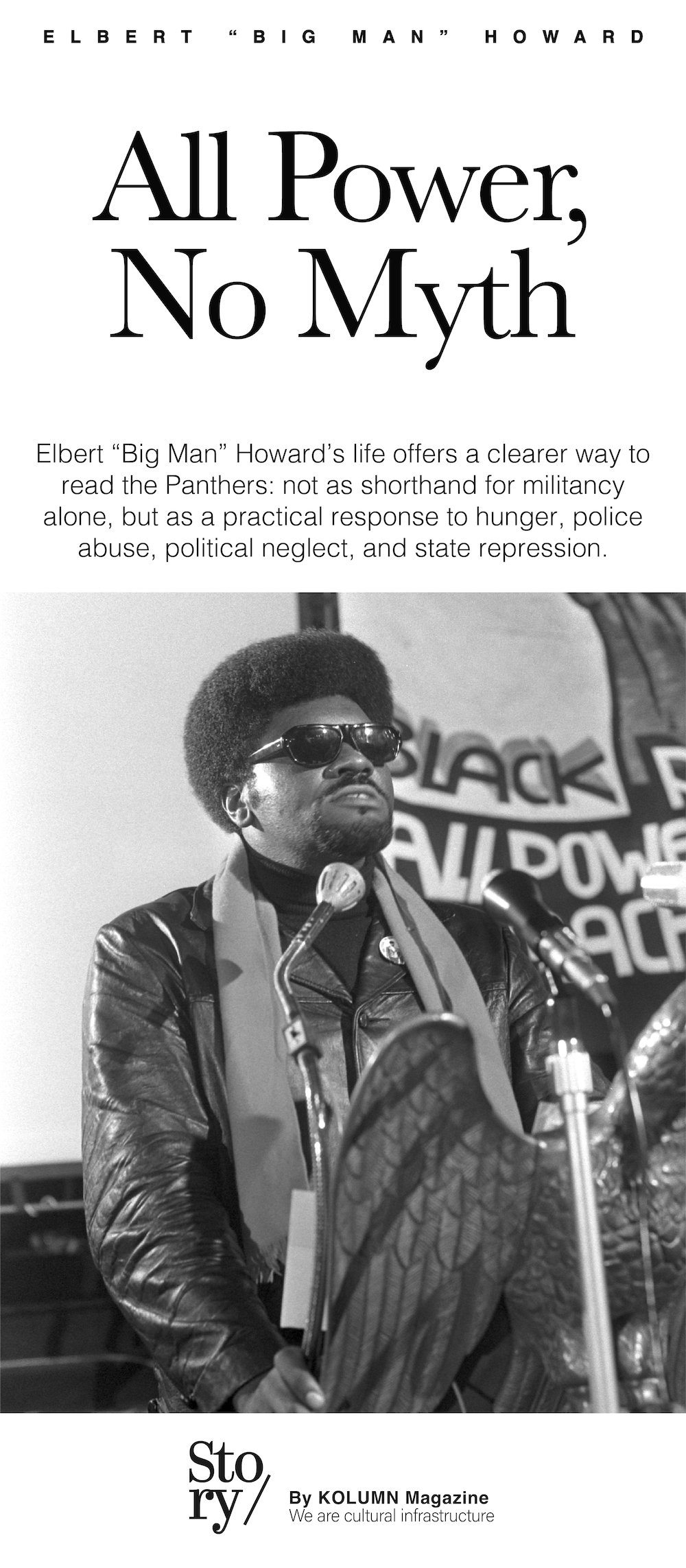
You just can’t do it alone.
By KOLUMN Magazine
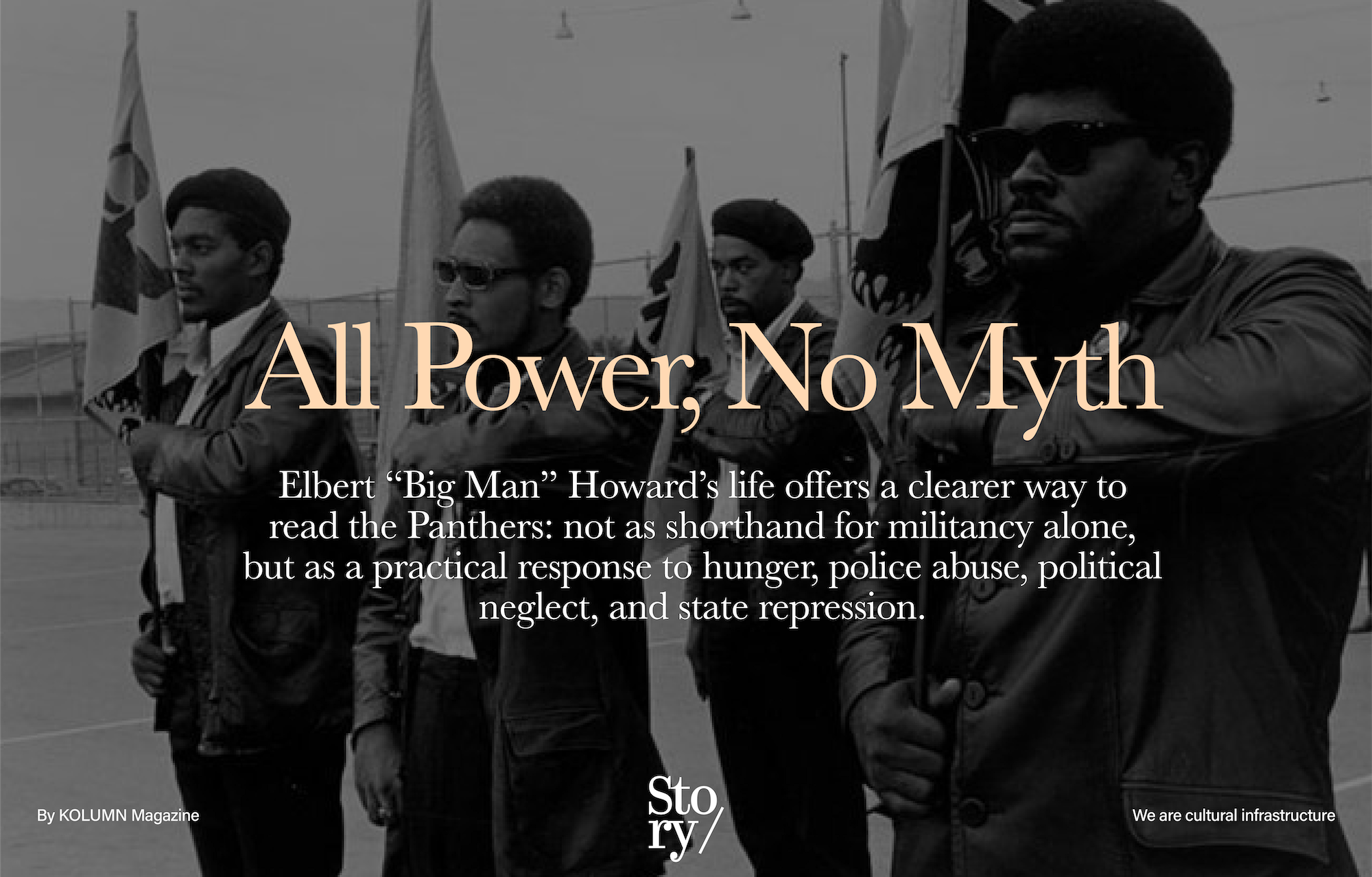
Elbert “Big Man” Howard occupies an unusual place in American political memory. He was there at the founding of the Black Panther Party for Self-Defense in Oakland in 1966, part of the small cluster of young Black organizers who helped transform the frustration of the post-civil-rights era into one of the most consequential political movements of the twentieth century. He edited the party’s newspaper, served as deputy minister of information, traveled internationally as a spokesperson, and became, by multiple accounts, a crucial organizer behind the very programs that made the Panthers matter to ordinary people: food distribution, community health efforts, educational initiatives, and the everyday logistics that turn rhetoric into structure. Yet compared with Huey P. Newton, Bobby Seale, Eldridge Cleaver, Kathleen Cleaver, Fred Hampton, or even the party’s visual mythology, Howard is often remembered in outline rather than in depth. That imbalance says as much about the way the country remembers Black radicalism as it does about Howard himself. America tends to canonize the dramatic, the armed, and the photogenic. Howard’s legacy insists that movements are also built by people who make the phones ring, the food arrive, the newspaper print, the classes happen, and the community trust the organization enough to call it before calling the police.

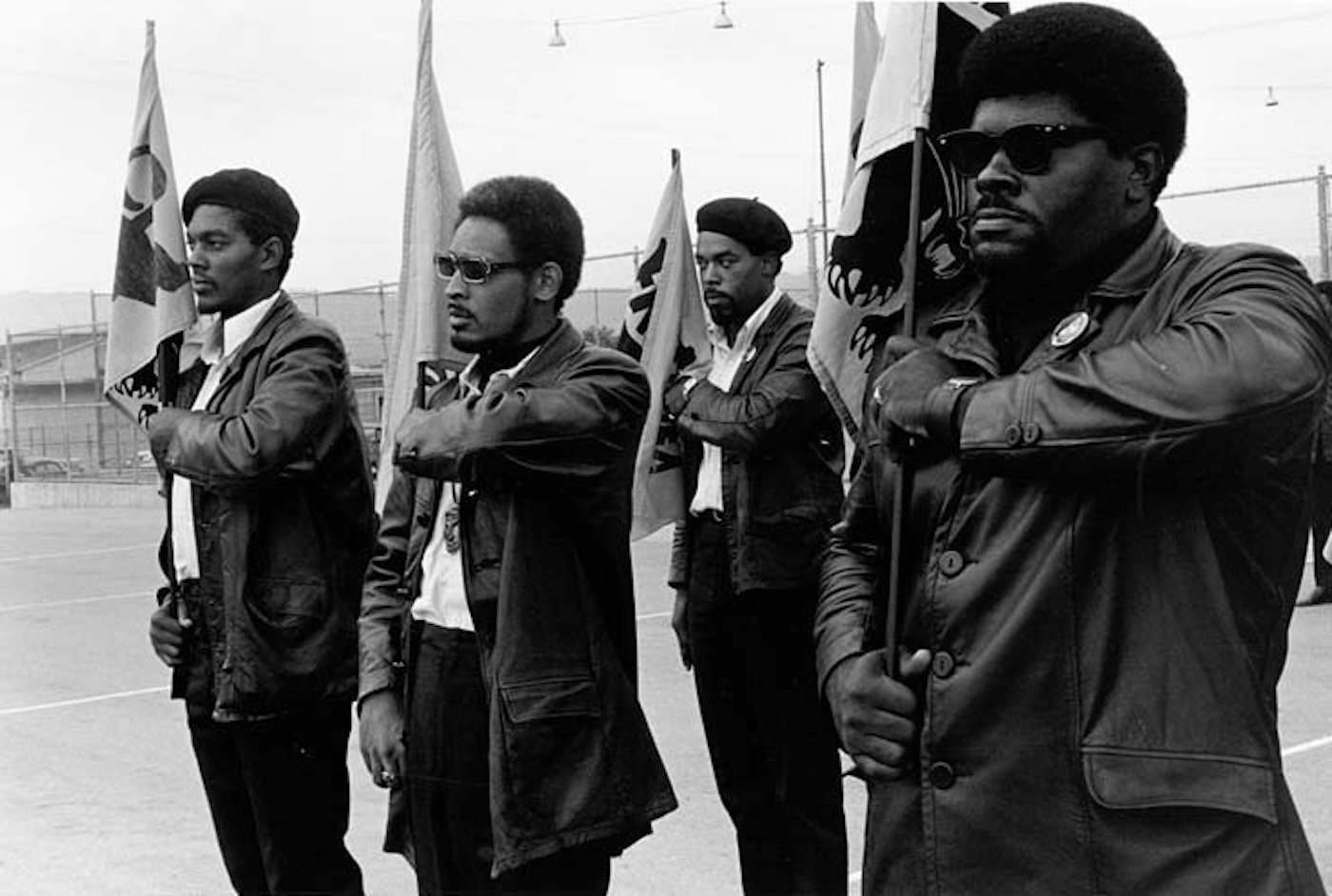
Howard’s life matters because it helps clarify what the Black Panther Party was, what it was not, and why its afterlife in public memory remains so contested. In shorthand, the Panthers are still often reduced to leather jackets, patrols with law books and firearms, and high-profile confrontations with police and the state. Those images were real, and Howard was part of the formation that produced them. But the archival and oral-history record around him points to something broader: a disciplined political project responding to police brutality, concentrated poverty, food insecurity, poor health care, and civic abandonment in Black communities. The Library of Congress summary of Howard’s oral history emphasizes the party’s accomplishments in free food programs, clinics, and related service initiatives, while Howard’s own later reflections stressed community organization as the core lesson newer activists should carry forward. That is the version of Howard that deserves more space—not because it sanitizes the Panthers, but because it restores the full architecture of what they were trying to build.
A Southern beginning, a California awakening
Howard was born on Jan. 5, 1938, in Chattanooga, Tennessee, and came of age in a country whose democratic claims were constantly contradicted by anti-Black violence, segregation, and exclusion. He joined the Air Force as a young man and served as a firefighter on a crash-rescue team at an air base near Verdun, France, according to the Stanford archival guide to his papers. After leaving the military in 1960, he enrolled at Merritt College in Oakland, where he met Bobby Seale and Huey P. Newton. That convergence matters. Oakland in the 1960s was not just a backdrop; it was a political laboratory shaped by migration, labor, racial segregation, police abuse, and the disillusionment that followed formal civil-rights victories which had not produced substantive safety or equality in Northern and Western cities. Howard arrived with military experience, discipline, and, as Seale later recalled, practical knowledge about weapons training and safety that became important in the party’s earliest phase.
That military background is often mentioned almost as a side detail, but it illuminates Howard’s usefulness inside the Panthers. He was not simply a founder in the ceremonial sense. He brought operational value. Seale said that he, Richard Aoki, and Howard were the ones with enough prior military experience to teach others the safe use and breakdown of weapons. In the mythology-heavy retelling of Panther history, it is easy to flatten such details into atmosphere. In practice, they reveal Howard as an early technician of the movement—someone able to convert anger into method. That is a recurring pattern in his life. Again and again, Howard appears not merely as a witness to history, but as one of the people who made its machinery work.
Founding the Panthers, defining the mission
The archival record is consistent that Howard was one of the six founding members of the Black Panther Party for Self-Defense, alongside Bobby Seale, Huey P. Newton, Reggie Forte, Sherman Forte, and Bobby Hutton. The Library of Congress notes also credit him with playing a key role in creating the Ten-Point Program, organizing defense committees, and developing opportunities for activism. Those details matter because they place him close to the party’s intellectual and strategic core, not merely its administrative edges. The Ten-Point Program was not a side manifesto. It was the grammar of the organization: a document that linked police brutality to employment, housing, education, military service, justice, and self-determination. Howard’s presence there underscores that his politics were never only reactive. They were programmatic.
It also helps explain why Howard becomes such a useful lens on the Panthers’ real significance. The party emerged in a moment when many Black Americans—especially the young—were losing patience with the idea that dignity could be achieved through symbolic integration alone. The National Park Service’s civil-rights framework describes the Panthers as part of the Black Power period that followed major legislative victories but continued racial inequity. In that climate, the Panthers’ insistence on self-defense drew attention, but their social analysis was the larger point. They argued that hunger, police abuse, failing institutions, and state neglect were not accidental conditions. They were the built environment of racial hierarchy. Howard’s later reflections track cleanly with that diagnosis. When he explained why the Panthers created programs, he kept returning to the community—its actual wants, its practical needs, and the necessity of building with, not merely for, the people.
That line, quoted after Howard reflected on what newer organizers could learn from the Panthers, sounds almost modest. It is also a political thesis. The best of Black radical organizing has often resisted the fantasy of the singular savior. Howard’s point was that community education works in both directions: organizers teach, but they must also be taught by the people they claim to represent. That idea is one of the clearest correctives to the caricature of the Panthers as all posture and confrontation. Howard’s emphasis was collective, reciprocal, and concrete.
The organizer behind the iconography
Howard served as the first editor of The Black Panther newspaper, and that role alone would secure his place in movement history. The paper was not just a communications organ. It was a political school, a recruitment tool, a fundraising vehicle, a visual brand, and a discipline-enforcing mechanism inside a fast-expanding organization. Howard later recalled that when the Panthers decided they needed a weekly paper, he essentially volunteered to learn the job on the fly. That spirit—less ego than necessity—captures something essential about the early party. It was improvisational, ambitious, and often built by people who accepted tasks before they had technical mastery because the political urgency felt too immediate to wait.
But Howard’s significance went beyond the newspaper. AP’s obituary described him as the “logistics genius” behind the Panthers’ popular social programs, and party archivist Billy X. Jennings credited him with negotiating lower food prices and organizing refrigerated trucks for giveaways. The North Bay Bohemian added that Howard was responsible for a free medical clinic for sickle-cell anemia and a work-study program for parolees at a college. Those are not decorative contributions. They represent the bridge between ideology and administration. Many movements can name the problem. Fewer can build institutions that temporarily answer it. Howard appears, repeatedly, as the person who helped make that answer real.
This is where Howard’s story becomes especially instructive for the present. Modern political culture is saturated with branding. Howard belonged to a generation that understood branding, certainly—the Panthers were brilliant at it—but did not confuse the symbol with the service. The breakfast program, the medical clinic, the re-entry and education efforts, the newspaper, the complaint structures around police abuse: all of this pointed to a vision of movement-building that treated care as political infrastructure. Howard’s observation that the Panthers’ breakfast work foreshadowed later government breakfast programs was not empty self-congratulation. It was a reminder that radical formations are often first dismissed, then demonized, then quietly copied.
Beyond Oakland: an internationalist
Howard’s political life was not confined to the Bay Area. As deputy minister of information and an international spokesman, he traveled to Europe and Japan, helping establish chapters and building relationships with movements abroad. The Stanford archival guide notes that he traveled around the United States to help establish party chapters and went to Europe and Japan as a BPP spokesperson. A later review of FBI files reported by MuckRock shows the extent to which federal authorities tracked Howard’s 1969 trip to Japan and subsequent travel to Scandinavia, monitoring his hotel information, speeches, and communications.
That surveillance is revealing for two reasons. First, it confirms how seriously the state took the Panthers’ international work. The party was not dangerous to authorities simply because it criticized American policing. It was dangerous because it made Black struggle legible as part of a global anti-imperial and anti-war politics. Howard’s travel to Japan, including appearances at anti-war conferences, connected Black liberation in the United States to wider currents of dissent. Second, the surveillance clarifies the costs of visibility. Howard did not just speak abroad; he did so while the FBI gathered records, tracked his movements, and treated international solidarity as a subversive threat. That pattern fits squarely within the broader architecture of COINTELPRO, the federal campaign of infiltration, misinformation, and disruption aimed at Black political organizations and other groups the government considered dangerous.
Howard later described how competition among activists abroad struck him as counterproductive because it clashed with the Panthers’ belief in solidarity. That recollection, preserved in the Bohemian profile, becomes even more poignant when placed next to what happened back home. Howard said that when he returned to the United States, the FBI and CIA were helping pit West Coast and East Coast Panthers against one another through spies and misinformation. Whether one is discussing factional conflict, internal mistrust, or outright state sabotage, the record is clear that the party was not only confronting police on the street. It was being systematically destabilized from multiple directions. Howard’s life offers a rare line of sight into both the hope of Panther internationalism and the attrition created by the national security state.
State repression and the burden of endurance
No fair account of Howard can avoid the pressures that consumed the Black Panther Party in the late 1960s and early 1970s. Even brief institutional summaries of his life refer to harassment by COINTELPRO, internal conflicts, and the pressures that contributed to the organization’s decline. AP’s obituary notes that by 1974 key members had quit after fatal fights with police and with one another, and that it later became clear the FBI had engaged in surveillance and harassment designed to undermine the party and incriminate its leaders. Howard’s oral-history summary likewise references harassment by COINTELPRO and his eventual departure due to mounting pressures and internal conflicts.
It is tempting, in retrospective writing, to narrate that unraveling as inevitability. It was not. The Panthers faced the brutal convergence of external repression, ideological splits, criminal prosecutions, surveillance, resource strain, interpersonal conflict, and the psychological consequences of constant attack. Howard’s account of being jailed repeatedly, including one episode in which he says he was effectively driven from an airport directly into jail, points to a movement living under siege. The casual absurdity of that memory—being driven in circles and then dumped into custody—captures how normalized extraordinary repression could become.
And yet Howard resisted the language of defeat. In the Bohemian interview, when asked whether he ever felt defeated, he answered with something close to irritation: he never felt that way, he said; he remained determined to push the programs forward. There is a lot packed into that response. It is not naïveté. It is not denial. It is a refusal to let the state define the meaning of political struggle solely through the register of punishment. Howard’s measure of success was not whether repression existed. It was whether people kept building anyway.
That determination may be Howard’s most durable lesson. He belonged to a generation of organizers who understood that repression is not an interruption of movement work; it is one of the conditions under which movement work happens. To write about Howard responsibly is not to romanticize suffering, but to recognize the stamina required to continue organizing while watched, targeted, jailed, misrepresented, and exhausted.
Attica, prison organizing, and the reach of his politics
Howard’s oral history also highlights his role in the Panthers’ failed attempt to negotiate a peaceful resolution to the 1971 Attica prison uprising. Even in summary form, that detail broadens the political map of his life. He was not confined to Oakland neighborhood organizing or Panther internal operations. He was also part of efforts to intervene in one of the defining prison rebellions in American history. Democracy Now’s brief remembrance noted Howard speaking about visiting with prisoners during the Attica rebellion, and the Library of Congress places Attica explicitly among the subjects of his oral history.
That involvement tracks with the Panthers’ wider understanding of the carceral state. For the party, police brutality, courts, prisons, and economic abandonment were not separate topics; they were part of a single governing structure. Howard’s later work organizing education programs for jail inmates and, later still, re-entry efforts for former inmates suggests that prison justice was not a temporary concern. It remained part of how he understood liberation work across decades. The through line is striking: from defense committees and Attica to college access for inmates and ex-offender programming, Howard’s politics kept returning to the people institutions had marked disposable.
Life after the Panthers was not an afterlife
One of the subtler distortions in American writing about the Panthers is the way former members are often narratively stranded in the early 1970s, as though their meaningful lives ended when the party fragmented. Howard’s story resists that flattening. After leaving the Panthers in 1974, he returned to the South and worked in retail in Virginia and Tennessee. But the archival and obituary record shows that he also remained active in education, health, community programs, and later social-justice work. Stanford’s archival guide notes that in Tennessee he worked with several organizations focused on improving education and health care. AP reported that he organized a program for jail inmates to take college courses. Other accounts place him in re-entry and reparations-related work in Memphis before he eventually returned to California.
That matters because Howard’s post-Panther years were not a retreat from politics so much as a migration of politics into different forms. American culture often privileges movements only at their most visible moment of conflict. Howard’s later life argues for another metric. What if the point is not to remain permanently in the most dramatic pose of revolt, but to keep serving people through local institutions, public education, broadcasting, complaint systems, and civic memory? By that measure, Howard remained profoundly political long after the newspaper photos became archival objects.
Sonoma County, jazz, and civic practice
In later life Howard made his home in Sonoma County, where the public descriptions of him become almost beautifully expansive: author, lecturer, activist, volunteer jazz disc jockey, journalist, community radio builder. These roles were not hobbies pasted onto a retired revolutionary. They were the matured expression of the same worldview. Stanford’s guide notes that he co-founded KWTF, a community radio station, worked as a radio DJ promoting jazz and blues, and remained involved in organizations focused on police brutality, peace, and social justice, including the Police Accountability Clinic & Helpline of Sonoma County. Local remembrances likewise described him as a founder of PACH and a board member of community radio.
There is something deeply coherent in that later-life combination. Jazz, journalism, radio, police-accountability work, and public lecturing all rely on listening as much as speaking. Howard seems to have understood that politics is not sustained by denunciation alone. It is sustained by relationship, by cultural life, by information channels outside official gatekeepers, and by local institutions people can actually touch. The same man who once helped launch an insurgent newspaper later helped build community radio. The technology changed; the democratic instinct did not.
And then there is the phrase repeated in obituary coverage: “gentle giant.” It can sound sentimental, but in Howard’s case it also appears to have been politically descriptive. Billy X. Jennings noted that while people might have had grudges against other Panther leaders, “nobody got a grudge against Big Man.” His wife, Carole Hyams, remembered him as huge and impressive but quiet, almost shy, and deeply dignified. These recollections do not erase the hardness required for political struggle. They suggest that Howard’s authority may have come partly from steadiness rather than spectacle. Movements need rhetoricians and theorists, yes. They also need people others trust. Howard seems to have been one of those people.
Why Howard’s legacy feels especially urgent now
Howard’s life resonates now because so many of the conditions that produced the Panthers remain unresolved. Police violence remains a defining fact of American life. Food insecurity persists. Public health disparities remain racialized. Schools are still stratified by neighborhood inequality. Prisons still function as warehousing systems for the poor, the traumatized, and the overpoliced. In that context, Howard’s legacy is not merely historical. It is methodological. He offers a model of activist seriousness rooted in service, analysis, and discipline rather than posture.
He also offers a corrective to how Black political memory is packaged. Howard is less famous than some of his peers, and that relative obscurity reveals something about the American appetite for digestible heroes and villains. The state once treated the Panthers as existential threats, and later mainstream culture often treated them as visual shorthand. In both cases, the complexity of what people like Howard actually built got blurred. The free breakfast program becomes a footnote; the newspaper becomes ephemera; the clinic becomes a trivia item; the local complaint system becomes invisible. Howard’s life asks us to reverse that emphasis. The infrastructure is the story.
That is especially true for younger activists inheriting a political world shaped by surveillance, fragmentation, platform dependency, and constant symbolic overload. Howard’s own lesson was disarmingly direct: organizers have to go into the community, learn what people actually need, and work collectively because “you just can’t do it alone.” That sentence should probably be read as more than advice. It is a warning against the isolating logic of celebrity politics and individualized resistance. Howard believed in organizations. He believed in programs. He believed in the slow, unglamorous mechanics of trust.
The measure of a life
Elbert Howard died on July 23, 2018, in Santa Rosa, California, at age 80, after a long illness, according to his wife. By then, he had lived several public lives: founder, editor, spokesman, organizer, author, lecturer, disc jockey, local accountability advocate, community radio builder, and elder witness to one of the most overinterpreted movements in modern U.S. history. If you line up those roles end to end, a fuller portrait emerges. Howard was not simply a man who was present at an origin story. He was a worker in the architecture of Black freedom struggle.
That may be the most important thing to say about him. For all the romance that still surrounds the Panthers, Howard’s real significance lies in what he teaches about how movements live or die. They live when somebody can edit the paper, book the travel, negotiate the food prices, organize the truck, open the clinic, teach the class, visit the jailed, answer the phone, hold the line against misinformation, and still imagine the future. They die when charisma outruns structure, when repression outpaces solidarity, when public image replaces community relationship. Howard spent his life on the living side of that equation.
There is a revealing story Howard told late in life. A woman from the community called Panther headquarters because her husband was abusive and angry, asking whether the Panthers could send someone over. For Howard, that moment mattered because it showed that people saw the party as a legitimate source of protection and intervention—not just a protest organization, but a community institution. The detail is almost startling in its intimacy. It also clarifies the scale of what the Panthers, at their most effective, represented. They were trying to become the place people called when the official system had either failed or never deserved trust in the first place. Howard understood the magnitude of that responsibility.
That, finally, is the clearest way to understand Elbert Howard. He helped build an organization that, for a time, convinced people abandoned by the state that they were not abandoned by one another. That is not a minor legacy. That is democratic work at its most radical and most practical. Howard deserves to be remembered not only as a founder of the Black Panther Party, but as one of the people who made its most human ambitions legible: feed people, protect people, inform people, organize people, and build something sturdy enough that a frightened stranger might believe help could come from down the block instead of from above.
More great stories
The Students Who Put Atlanta on Trial
March 16, 2026
No Comments
Alexander “Skunder” Boghossian and the Art of Crossing Worlds
March 16, 2026
No Comments