


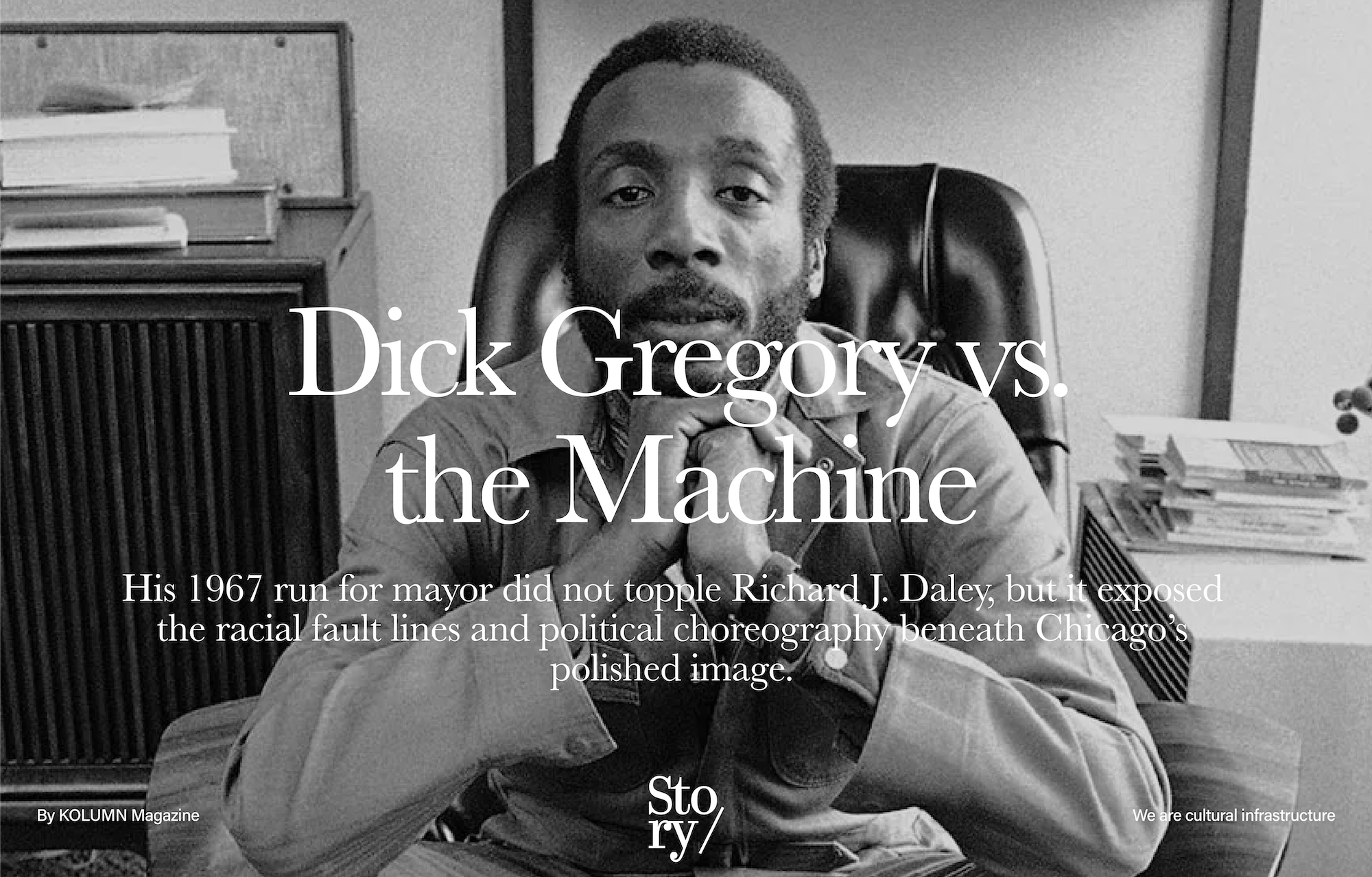
Gregory’s candidacy mattered precisely because it was aimed at a political system that seemed too fortified to challenge through normal channels.
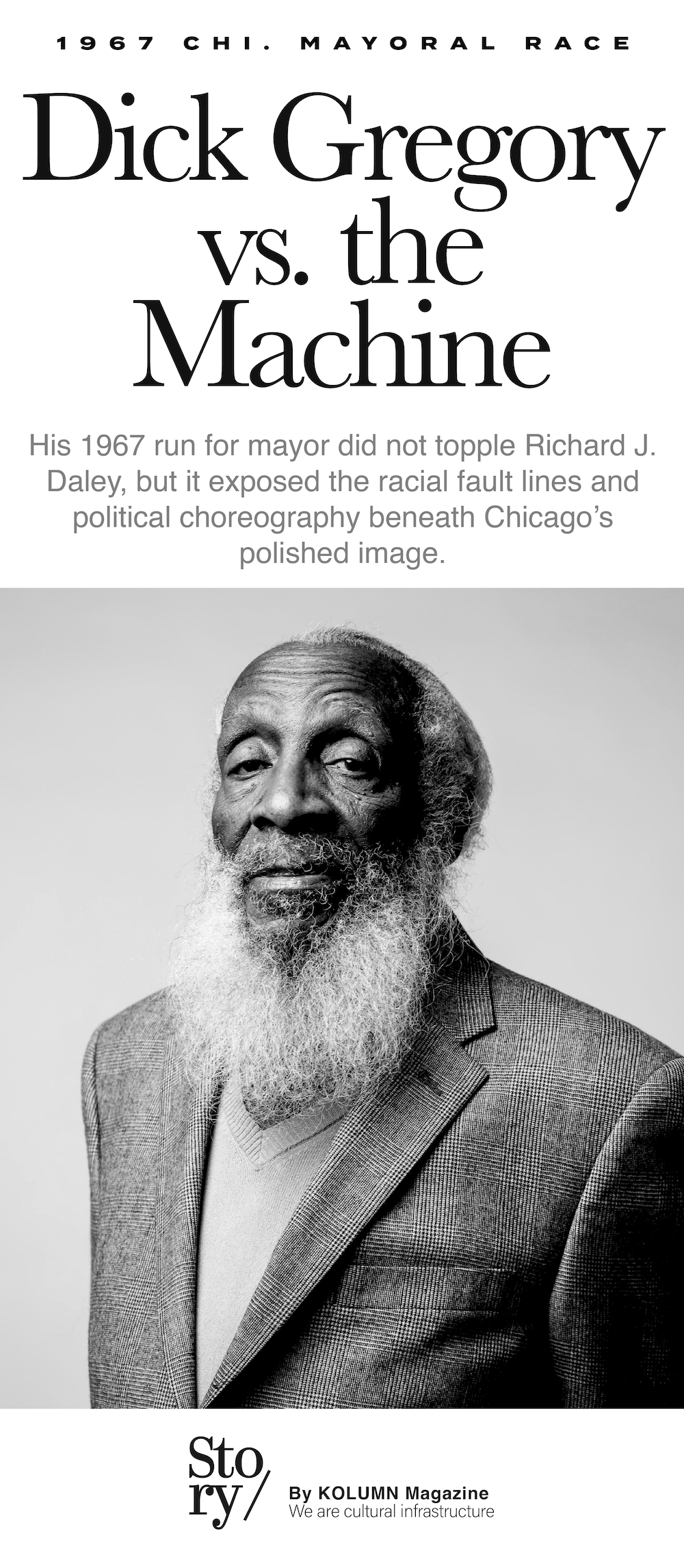
Gregory’s candidacy mattered precisely because it was aimed at a political system that seemed too fortified to challenge through normal channels.
By KOLUMN Magazine
Dick Gregory’s run for mayor of Chicago against Richard J. Daley is one of those episodes that can look small if you only glance at the scoreboard. Daley won reelection in a landslide on April 4, 1967, taking 792,238 votes and carrying all 50 wards. The Republican nominee, John L. Waner, finished far behind. Gregory, running as a write-in candidate rather than as a major-party nominee, did not come close to taking City Hall. But treating his campaign as a curiosity misses the point. Gregory’s candidacy mattered precisely because it was aimed at a political system that seemed too fortified to challenge through normal channels. It was part protest, part civic indictment, part moral theater, and part early experiment in insurgent Black politics in a northern city that liked to imagine its racial problems were milder, cleaner, and more manageable than those of the South. They were not.
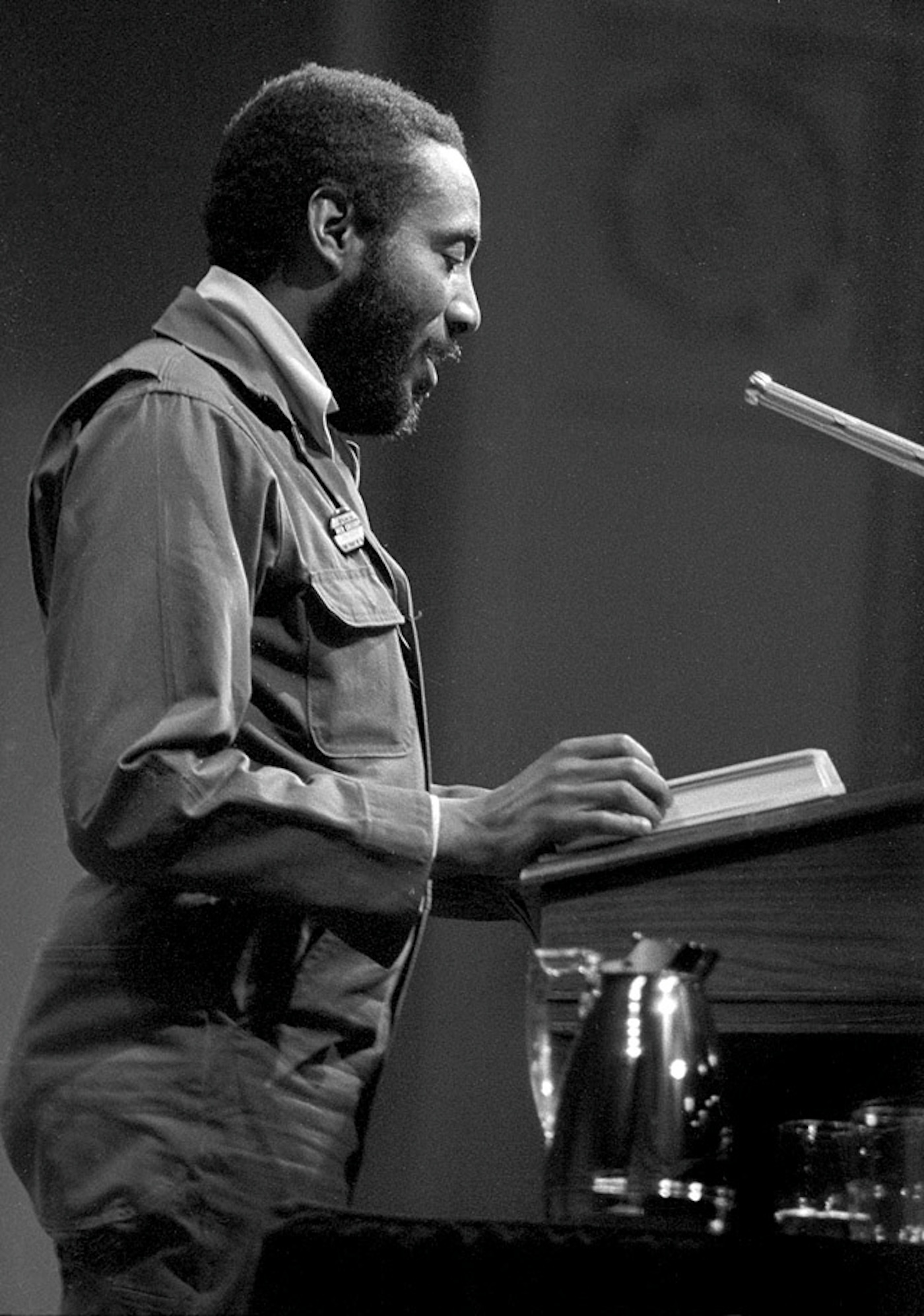
To understand why Gregory ran, you have to start with the unique combination that made him Dick Gregory in the first place. He was not simply a comedian who drifted into politics. He was one of the first Black comics to build a mainstream career in white America while refusing to sand down the truth about race for white comfort. His 1961 breakthrough at the Chicago Playboy Club made him a national figure, and his television appearances, records, and writing gave him a platform few Black activists possessed at the time. But as Gregory’s fame grew, he used it less like a ticket into elite society than like a battering ram against it. By the mid-1960s he had already marched, been arrested, and thrown himself into civil-rights struggles across the country. Chicago was not just where he got famous. It was where he tested whether celebrity could be converted into political leverage against a machine built to swallow dissent whole.
That machine was Richard J. Daley’s Chicago, one of the most disciplined urban political operations in modern American history. Daley was not merely a mayor. He was also the head of the Cook County Democratic organization, which meant his power ran through precinct captains, ward bosses, patronage jobs, city services, and the intimate neighborhood calculus of who got what and why. Chicago politics had long been associated with machine control, but Daley perfected a version that fused municipal government and party organization into something closer to a governing ecosystem. The result was a city where elections were real, but the range of viable outcomes could feel tightly managed. In that environment, running against Daley was never only a campaign. It was an act of exposure.
Gregory already knew the city’s racial order from the inside. Living in Hyde Park with his wife Lillian and their growing family, he became deeply involved in local struggles over segregated education, police conduct, and Black political power. Chicago in the 1960s was often sold as a northern success story, a city of opportunity that contrasted favorably with Birmingham or Jackson. But Black Chicagoans knew better. School segregation was entrenched. Housing discrimination was routine. Urban renewal often meant displacement. Public housing was used not as a path toward equality but as a mechanism for containment. Activists like Timuel Black later recalled Gregory throwing his energy into school boycotts, marches, and organizing efforts, including protests that went from City Hall to Daley’s home. John H. Bracey Jr. described Gregory’s comedy as carrying an edge that made racism look not only evil but absurd. That combination—ridicule and moral seriousness—was central to Gregory’s politics, too.
By the time Gregory’s mayoral ambitions were circulating publicly in late 1965 and into 1966, the city was already a battleground over race, schools, housing, and the limits of liberal reform. Archival traces show his candidacy was being discussed well before the 1967 general election, and images from Selma in April 1966 captured supporters holding signs reading, “Be quick! Vote for Dick Gregory, Mayor of Chicago.” Some later sources loosely date the campaign to 1966 because that is when it began to take visible shape, even though Daley’s reelection victory came in April 1967. That timing matters because Gregory’s run emerged from the same political weather system that produced the Chicago Freedom Movement, school protests, and mounting frustration with Daley’s management of Black demands.
The Chicago Freedom Movement had laid bare the city’s hypocrisy. In January 1966, Martin Luther King Jr. and the Southern Christian Leadership Conference launched a major northern campaign in Chicago focused on housing, jobs, and urban inequality. Demonstrators were met with extraordinary white hostility. During one march through an all-white neighborhood in August 1966, King was struck by a rock and remarked that he had not seen hatred this fierce even in parts of the South. Daley eventually negotiated a summit agreement that was presented as progress on open housing, but by March 24, 1967, King was publicly saying that public agencies had effectively reneged. That public break landed in the middle of Daley’s reelection moment. Gregory’s campaign did not create that tension, but it amplified it by insisting that Daley’s racial moderation was largely a performance resting on administrative delay, spatial segregation, and selective responsiveness.
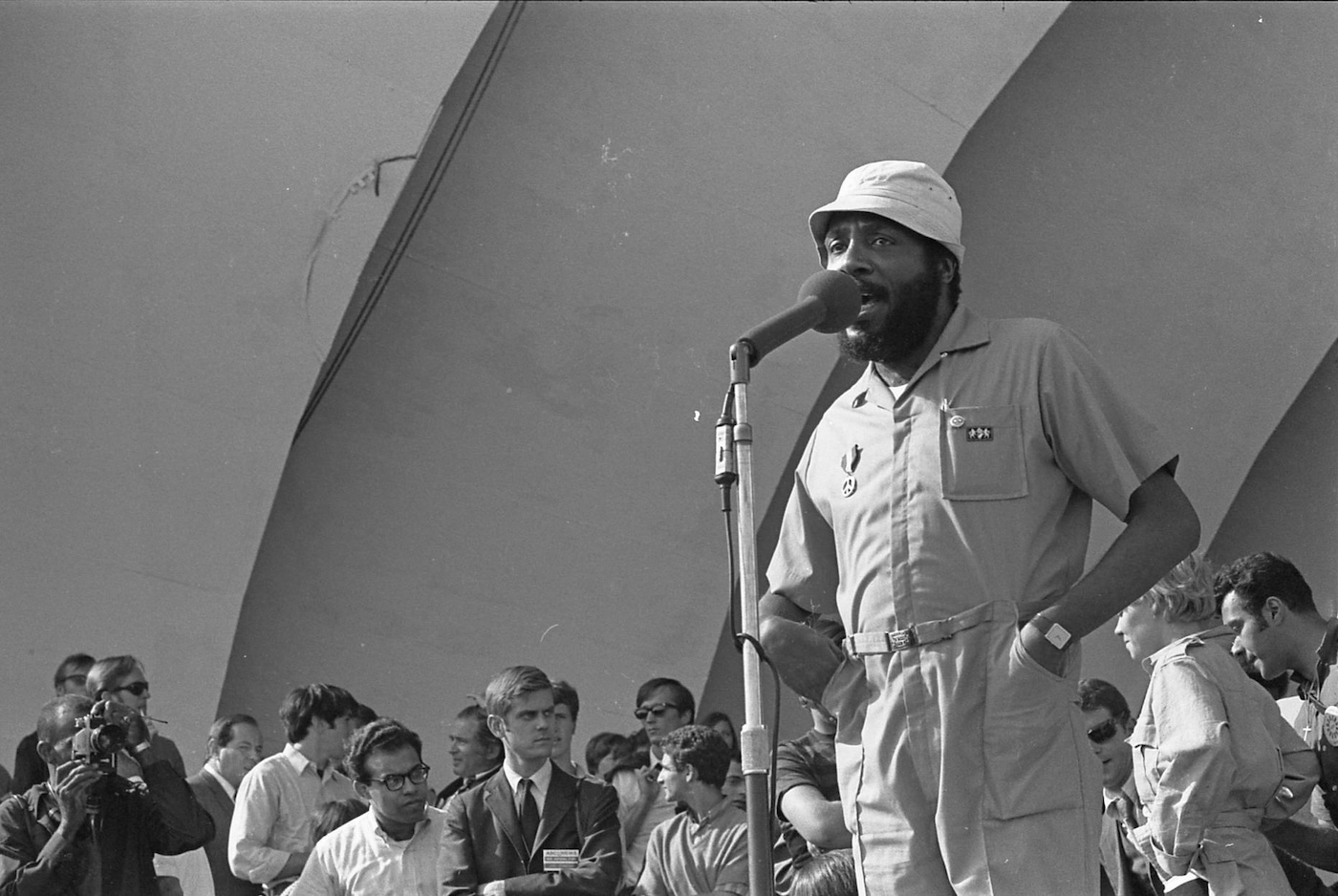
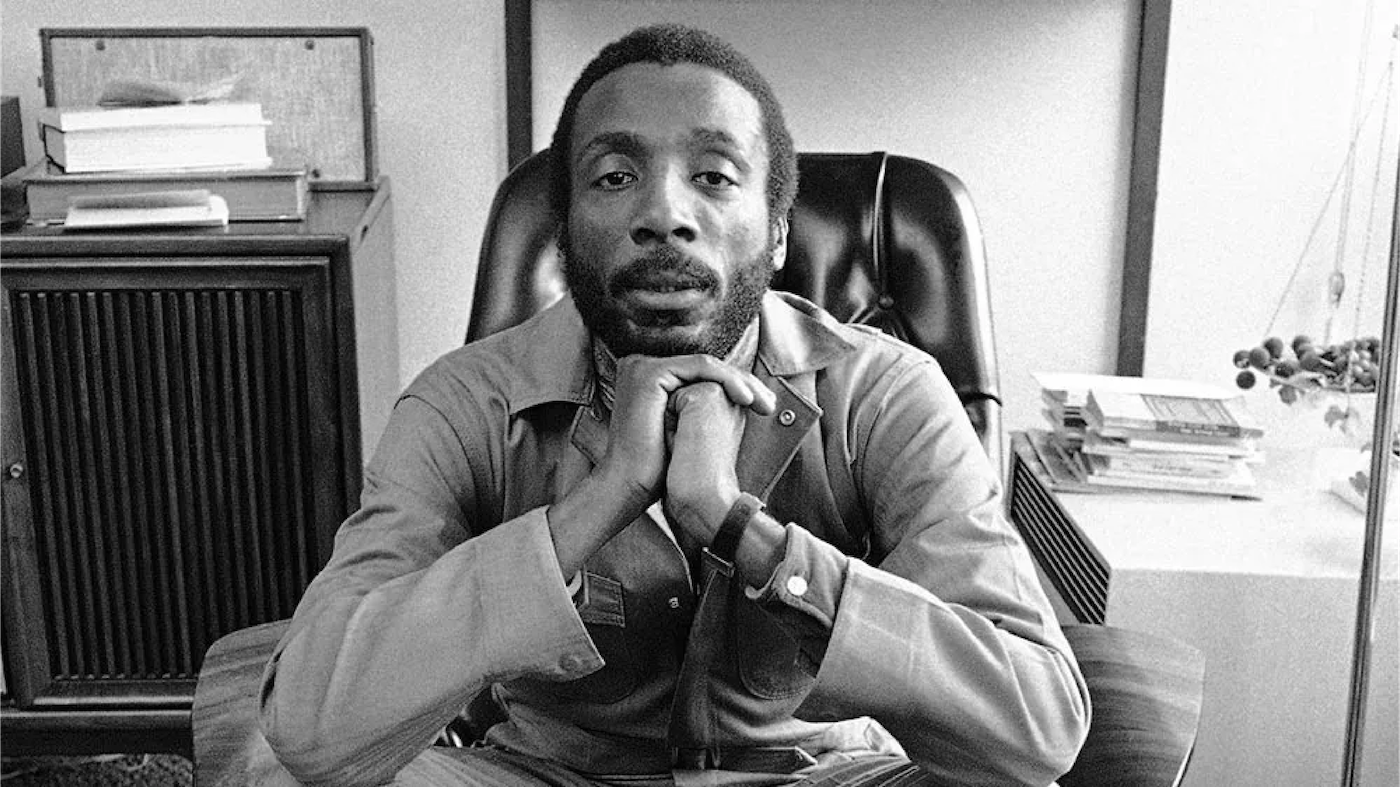
This is the part of the story that often gets flattened. Gregory was not running in a vacuum, and he was not merely freelancing as a celebrity candidate. His candidacy occupied a crowded and unstable space between movement politics and electoral politics. He had relationships with civil-rights organizers, labor figures, and antiwar activists. The Chicago Reporter later quoted Timuel Black recalling Gregory’s work with a diverse coalition of Black, Latino, and white Chicagoans connected to the Chicago Committee and, eventually, A. Philip Randolph’s Negro American Labor Council. That is important because it shows Gregory’s run as part of a broader attempt to knit together a moral opposition to Daley that was multiracial, labor-aware, and skeptical of machine paternalism. In other words, Gregory was not just saying Daley was wrong. He was trying to help build a constituency that could imagine the city outside Daley’s terms.
Still, this was a brutally hard proposition. Daley entered 1967 with enormous structural advantages. He had not only the power of incumbency but the full reach of the Democratic organization. The Encyclopedia of Chicago notes that after Daley’s narrower 1963 showing among white voters, he adjusted by taking more conservative stances on race and sending clearer signals to white backlash voters that he would protect neighborhood boundaries and resist aggressive open-housing change. During the 1967 campaign, he also leaned on infrastructure promises, federal grant announcements, and the city’s development story. He worked both ends of the electorate: enough platitudes about civil rights to keep some Black support, enough resistance to open housing and disorder to reassure anxious white ethnics. Gregory was challenging not just a politician but a whole operating method—one that knew how to metabolize protest without surrendering power.
Gregory’s advantage, if he had one, was that he understood the symbolic weakness inside Daley’s practical strength. The machine could win votes. It could not easily command moral legitimacy from those who had already seen too much. Gregory had spent years building a public voice that made him unusually dangerous in precisely that terrain. He was funny, but his comedy was not escapist. It kept returning to the architecture of American absurdity: a country committed to equality that organized daily life around humiliation; a democracy that treated Black citizenship as conditional; a modern city that called itself progressive while barricading housing, schools, and jobs along racial lines. When Gregory ran for mayor, he brought that same sensibility into politics. He treated the campaign as a way to force Chicago to look at itself.
There was also something distinctly northern about Gregory’s challenge. In the South, Black political struggle often confronted openly segregationist officeholders and laws. In Chicago, the problem was frequently one of deniability. Segregation was produced administratively, geographically, bureaucratically. It was in zoning, school boundaries, mortgage practices, urban renewal decisions, public-housing siting, and ward-level service disparities. That made Daley harder to attack in clean ideological terms. He did not need to sound like Bull Connor to preserve a racial order. Gregory’s candidacy therefore mattered because it named the northern version of the problem. It said, in effect, that polite machine liberalism could injure Black life just as surely as southern brutality, even if it used different paperwork and a better suit.
Gregory’s own political style helped make that critique legible. He was never a conventionally disciplined candidate. He was too improvisational, too restless, too committed to movement energy to fit neatly into electoral professionalism. But that looseness was also part of his appeal. He could reach people untouched by ordinary campaign rhetoric. He could turn a line into an indictment. He could make politics feel less like a dry contest among office-seekers and more like a fight over what kind of city Chicago wanted to be. Later recollections of Gregory’s life often mention the mayoral run in a sentence or two, but those brief references usually sit beside accounts of school protests, antiwar activism, police conflict, and civil-rights marching. That pairing is revealing. Gregory did not compartmentalize. For him, running for mayor was another form of direct action.
That also explains why the mechanics of the campaign look so odd from a traditional political perspective. Gregory was a write-in candidate, which meant he was not the formally recognized major challenger in the way Waner was. In practical terms, that dramatically limited his electoral ceiling. Yet the write-in nature of the campaign sharpened its meaning. Gregory was asking people not merely to choose among the available names but to reject the menu itself. He was inviting voters to step outside the sanctioned contest and assert another possibility. That move mattered in Black politics, where official systems often narrowed the field of acceptable dissent. Even losing, Gregory could demonstrate that there were Chicagoans unwilling to let machine democracy define democracy’s outer edge. Contemporary accounts and later summaries note that he received a record number of write-in votes for a Chicago mayoral candidate, a detail that speaks less to competitiveness than to the campaign’s ability to convert protest sentiment into measurable civic expression.
The final numbers were unforgiving. Daley won with more votes than in any of his previous three mayoral races. Waner took a distant second. Gregory did not threaten the outcome. But the election returns do not close the case. In fact, they open it. Daley’s sweep across all 50 wards underscored exactly how difficult it was to break machine dominance at the ballot box in 1967 Chicago. Gregory’s campaign illuminated the gap between moral energy and institutional power. It showed how much dissatisfaction could exist in the city without immediately translating into governing change. And it previewed a lesson that would echo through later Black urban politics: a charismatic critic can expose the system brilliantly, but exposure alone does not topple a machine that is fused to jobs, services, turnout operations, donors, and neighborhood loyalties.
Even so, Gregory’s campaign should not be measured only by whether it could have won. It helped widen the political imagination. That is no small thing. Black political life in Chicago would continue to evolve through the late 1960s and 1970s, shaped by civil-rights organizing, Black Power currents, antiwar activism, labor fights, housing struggles, and persistent dissatisfaction with the city’s racial arrangement. Gregory’s mayoral run sits at an early and revealing point in that trajectory. It was one of the clearest statements that Black protest in the North was not just about appealing to conscience; it was also about contesting power. In that sense, Gregory belongs in the genealogy that eventually leads toward later Black independent politics in Chicago, including the conditions that made Harold Washington’s victory in 1983 possible. Gregory did not build that coalition by himself, but he helped normalize the idea that Daley’s city was not untouchable in principle, even when it remained untouchable in practice.
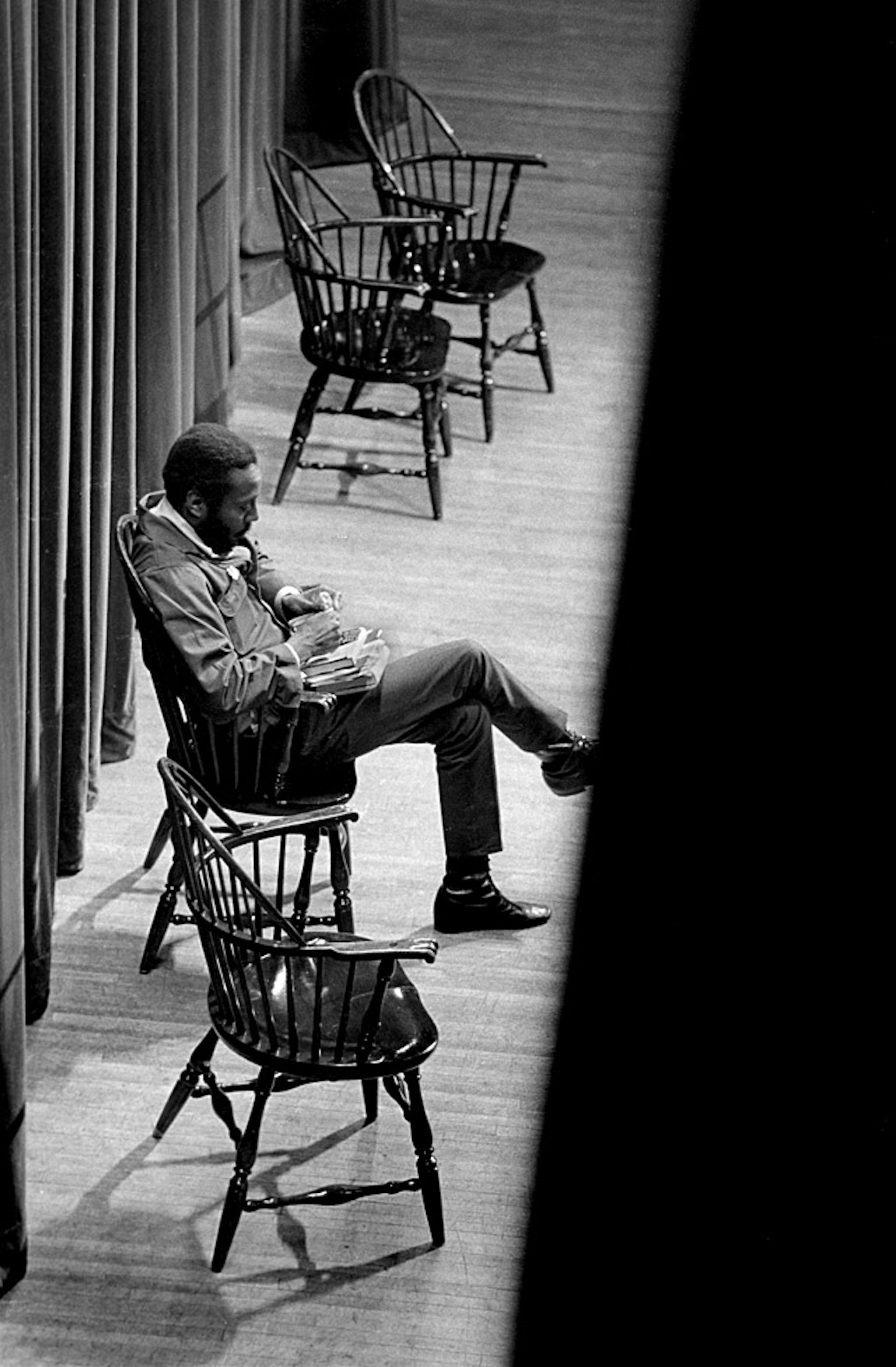
His candidacy also reveals something essential about Dick Gregory the man. Too often he is split into separate public selves: comedian, civil-rights activist, health evangelist, conspiracy-minded provocateur, presidential candidate, cultural icon. But the Chicago mayoral campaign reminds us that Gregory’s throughline was confrontation with power structures that claimed inevitability. He challenged them through the microphone, through marches, through fasts, through books, through television, and, when it made sense to him, through electoral insurgency. He was not interested in playing only the role that white America found easiest to consume. Success in comedy had given him money, attention, and access, but instead of stabilizing into celebrity comfort he kept moving toward conflict. That may be the most important thing about the mayoral run: it was perfectly consistent with the rest of his life. Gregory kept choosing arenas where the odds were bad but the silence would have been worse.
There is another reason the campaign deserves more attention than it usually gets. It complicates the way Americans tell stories about 1960s Black politics. The standard narrative often moves from civil-rights protest to legislative victories, then to urban unrest, then to Black electoral breakthroughs. Gregory’s run scrambles that sequence. Here was a nationally famous Black activist-comedian in a major northern city, running against a Democratic titan before the classic era of big-city Black mayoral victories had really arrived. He did so while the city was still reeling from open-housing battles and while King himself was publicly accusing Chicago authorities of retreat and bad faith. Gregory’s campaign stands as a reminder that Black electoral imagination was already active inside the movement years, not waiting politely for a later chapter.
And then there is Daley. Gregory’s run matters partly because of who he chose to confront. Richard J. Daley was not a fringe reactionary. He was a central figure in mid-century Democratic urban power, a man admired by many for administrative control and city-building while criticized by others for patronage, racial containment, and machine discipline. Challenging Daley therefore meant challenging the respectable face of northern Democratic governance. Gregory was not running against a caricature; he was running against a deeply institutional form of power that many liberals could live with, even if Black Chicagoans could not always live well under it. That distinction matters now because it helps explain why Gregory’s candidacy still feels relevant. It was a campaign against the politics of managerial reassurance—against the idea that order and progress, as defined from the top, should be enough.
What survived after the ballots were counted was less a campaign organization than a political message. Gregory would go on to run for president in 1968 as a write-in candidate with the Freedom and Peace Party, extending the same insurgent logic onto a national stage. That sequence is telling. Chicago was not an isolated detour; it was the beginning of Gregory’s more explicit experimentation with electoral protest as a vehicle for antiwar, anti-racist, and anti-establishment politics. He understood that even failed candidacies could create records of refusal. They could document the fact that somebody said no, loudly, in public, and with enough followers to register.
So what, finally, was the significance of Dick Gregory’s run for mayor against Richard J. Daley? It did not change who governed Chicago in 1967. It did not dismantle the machine. It did not produce immediate policy revolution. What it did do was mark a line in the city’s political history. Gregory made visible the moral exhaustion of Black Chicagoans who were told to wait, trust, and adjust to a city that kept reorganizing inequality instead of ending it. He used candidacy as critique. He made the mayoral race into a referendum on northern liberal hypocrisy before that language had fully hardened into academic shorthand. And he offered a model—messy, imperfect, brave, unmistakably Gregory—of how a public figure could risk ridicule in order to name a civic truth.
That is why the campaign still deserves to be remembered. Not because it almost worked, but because it clarified what Chicago was. Dick Gregory ran at a moment when City Hall wanted order, many white voters wanted reassurance, movement leaders wanted enforcement of broken promises, and Black Chicagoans were being asked yet again to believe that patience was politics. Gregory answered with a campaign that said patience was over. He lost the election. He won the argument that the city’s racial democracy was far more fragile, far more performative, and far more contested than the Daley machine wanted anyone to admit. In a city built on power, that kind of truth-telling was its own form of opposition.
More great stories
The Teacher of Everything
March 6, 2026
No Comments
Arkansas’s Deadliest Fire, America’s Familiar Story
March 6, 2026
No Comments