


That sequence is familiar in American urban history: Black communities build; the city discovers a reason the building is a problem.
That sequence is familiar in American urban history: Black communities build; the city discovers a reason the building is a problem.
By KOLUMN Magazine
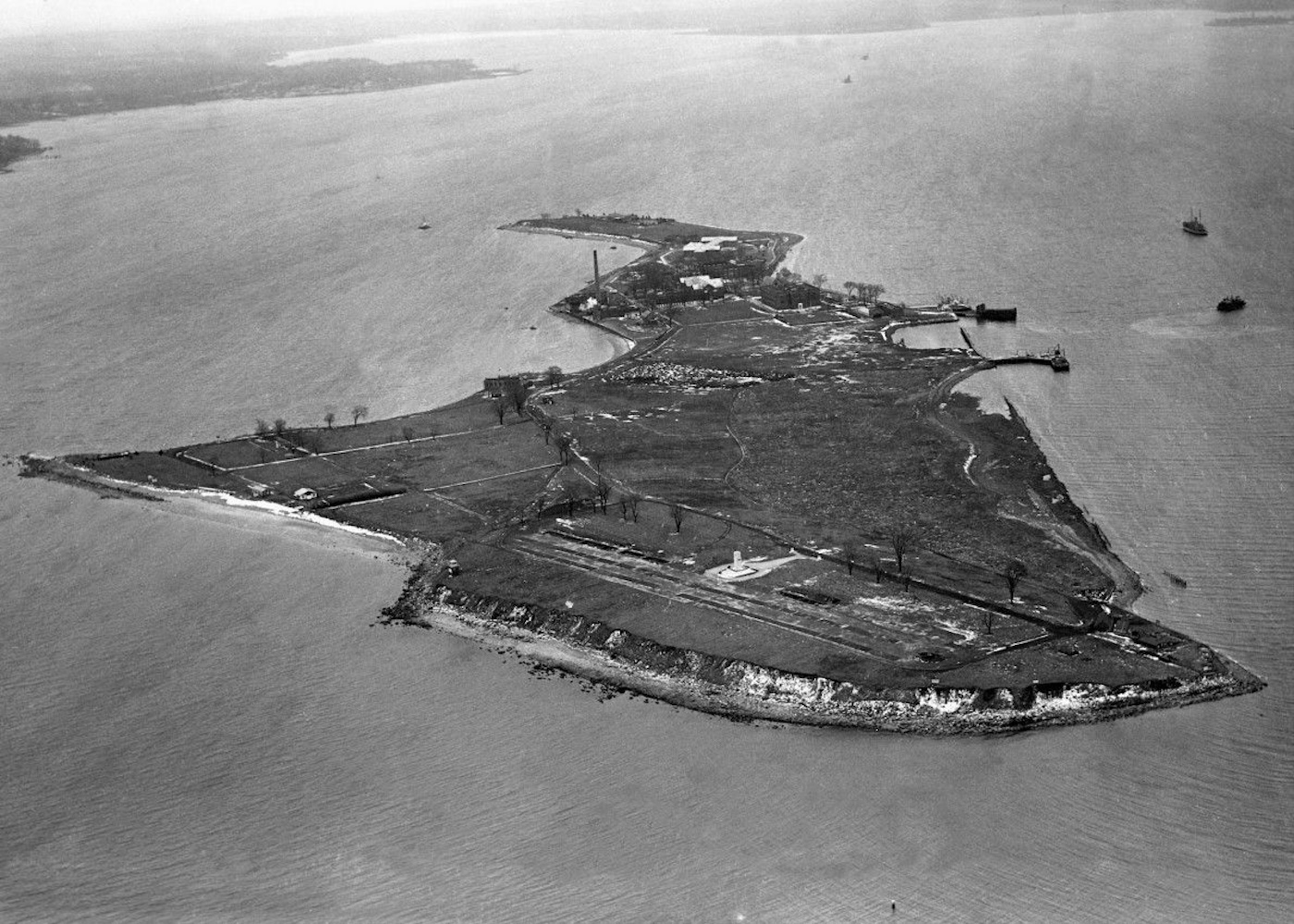
In New York, there are places that feel too loaded to hold only one meaning. Hart Island is one of them: an off-limits sliver of land at the edge of the Bronx in the Long Island Sound, long associated with institutions that manage people after society has decided they don’t belong anywhere else—prisons, hospitals, quarantine facilities, and, most famously, a public burial ground
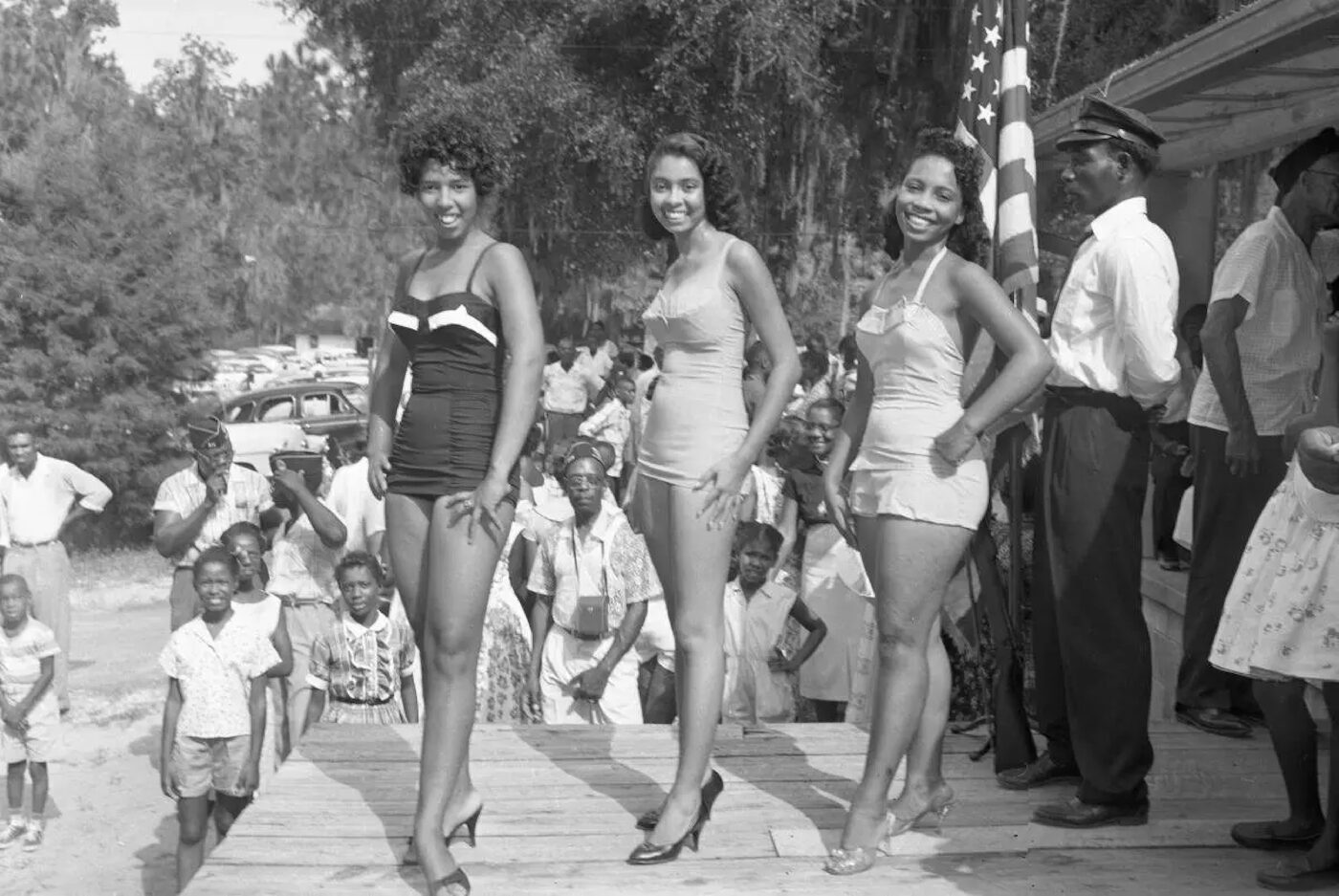
And yet, in the mid-1920s, Hart Island was also the site of a different kind of New York story—one about Black ambition, Black capital, and Black pleasure. It is the origin point for what many now refer to as “Black Coney Island”: a proposed (and partially built) amusement park and beach resort intended for Black New Yorkers who were blocked, formally and informally, from many leisure spaces in the region.
This story survives in fragments: a newspaper phrase—“Negro Coney Island”—and a paper trail of real estate deals, city decisions, and civic rhetoric about “safety.” It survives, too, in the way New York remembers selectively. The city has no shortage of memorials for its grand entertainments. Coney Island itself is a monument to mass leisure—hot-dog mythology, seaside crowds, roller coasters, spectacle—packaged as a civic inheritance. But the idea that a Black developer tried to build an alternative Coney Island, closer to Harlem, and that the city moved to stop it just before opening day, is not a story most New Yorkers grew up hearing.
To call it “Black Coney Island” is to do two things at once. It is to honor the underlying aspiration—to build something as iconic and democratic as Coney Island, but for people who were treated as if democracy had a dress code. And it is to name the mechanism that killed it: not merely a failed business plan, not merely bad luck, but a municipal system that could absorb Black labor and Black tax dollars while constricting Black enjoyment.
The history of Black Coney Island is, at core, a story about who gets to rest, where, and under what conditions. It is also a story about how easily a city can erase a built thing—structures, plans, public anticipation—and how difficult it can be to erase the need that built it in the first place.
The problem Solomon Riley was trying to solve
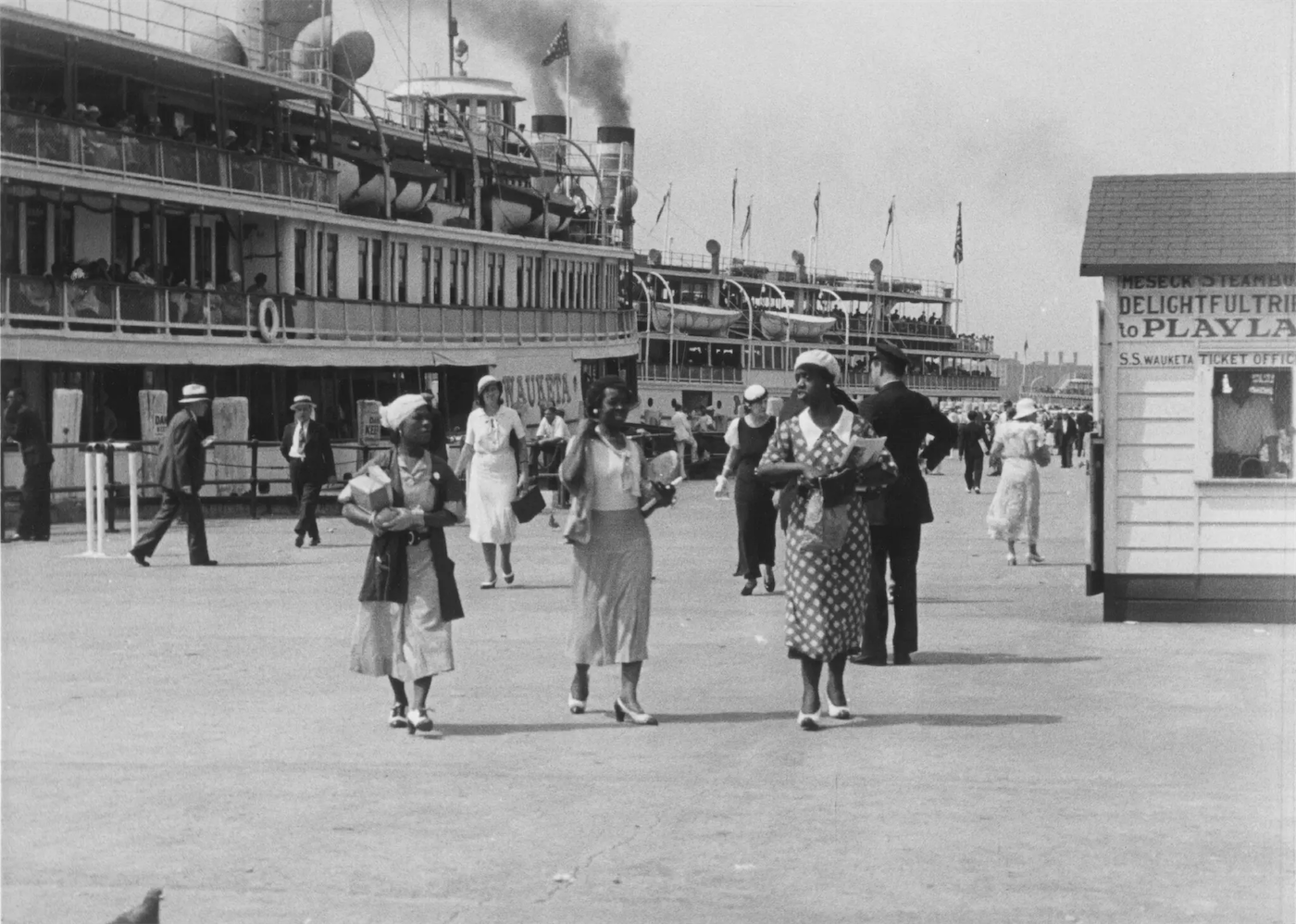
In early-20th-century America, leisure was not a neutral category. Beaches and amusement parks were public-facing stages where communities rehearsed the social order: who could enter, who could spend, who could be seen. Across the country, Black Americans faced a patchwork of Jim Crow laws and extralegal practices that limited access to recreation. When entry was possible, it was often conditional—restricted days, segregated sections, intimidation at the gate, violence in the parking lot. The result was not just exclusion from fun but exclusion from the social and economic networks that formed around leisure.
One response was to build alternatives: Black beaches, Black resorts, Black amusement parks—spaces where Black families could gather without performing deference or bracing for humiliation. The Smithsonian’s National Museum of African American History and Culture describes this as a history of both resistance and entrepreneurship: when alternatives were scarce, Black Americans sought access to white-only venues, and when that access was denied or dangerous, they created their own.
By the 1920s, Black “summer pleasure resorts” existed elsewhere in the United States—places that combined leisure with community and, often, middle-class aspiration. The New York Times’ recent reporting on Negro Coney Island situates Solomon Riley’s plan within that broader national landscape, noting comparable Black leisure spaces in other regions even as New York lacked an equivalent seaside amusement destination designed explicitly for Black residents.
In New York City, Harlem was not only a cultural capital but a dense and often overheated neighborhood where summer pushed people outward: to parks, to day trips, to beaches. The Rockaways—accessible by train—became a major destination for Harlem residents seeking seaside air, with Black visitors often concentrated in certain sections, a pattern shaped by segregation and custom as much as by geography. The Digital Harlem project describes Rockaway as “Harlem’s beach resort” in the 1920s, part of a seasonal rhythm of excursions and social club outings.
Solomon Riley’s plan can be read as a business proposition—meet demand, supply infrastructure—but it can also be read as an argument: that Black New Yorkers should not have to treat leisure as a negotiation. Riley did not propose a modest picnic area. He proposed a destination, complete with the architecture of arrival: boardwalk, bathhouse, dance hall, rooming facilities—the ingredients of a resort economy.
The making of Solomon Riley—and why his wealth mattered
Riley’s biography matters because it disrupts a convenient myth that Black exclusion was primarily a Southern story. Here was a Black man in New York, a real estate investor who amassed wealth in Harlem property, positioning himself not as a supplicant asking for access but as a builder creating an alternative. The Times describes him as a Black real estate magnate and notes his Harlem holdings, framing his Hart Island purchase as the next step in a career built on property and rental income.
The New York Public Library’s history of Hart Island adds texture: Riley, a native of Barbados, made his fortune in real estate, buying properties on predominantly white streets in Harlem and renting to Black tenants. The point isn’t merely entrepreneurial hustle; it’s strategy. Housing was one of the key battlegrounds where racial restriction shaped the city. Riley’s wealth came from navigating that battlefield and extracting value from a system that rarely handed Black people the benefit of the doubt.
That context makes his leisure project feel less like a detour and more like a logical extension. Housing and recreation are both forms of civic belonging. One determines where you can live; the other determines where you can be at ease. Riley’s resort plan suggested that Black New Yorkers deserved both—stable home lives and dignified rest.
Hart Island: An unlikely site for joy
If Coney Island is famous for its crowds, Hart Island has been defined, historically, by containment. Long before Riley’s plan, the island’s uses reflected the city’s impulse to remove certain populations from everyday visibility. It functioned at different times as a quarantine area, institutional campus, correctional site, and public cemetery.
The Washington Post’s 1986 reporting on Hart Island, framed through the logistics and atmosphere of the potter’s field, sketches an island where the city’s relationship to death becomes operational: ferry routes, coffins, trenches, a landscape shaped by public necessity and public discomfort. In that account, Riley appears as a haunting aside—one more unrealized plan floated over the island’s harsh realities—yet even as an aside, it’s striking that “Negro Coney Island” could be imagined at all in a place so associated with confinement.
That strangeness is part of the point. Riley’s proposal implicitly challenged the idea that certain landscapes were reserved for punishment and anonymity while other landscapes—boardwalks, beaches, pleasure piers—were reserved for white enjoyment.
He purchased four acres off the Bronx’s northeast coast—land on Hart Island—and set about developing it into an amusement park modeled after Coney Island for Harlem residents.
It is worth pausing on the practical imagination involved. A resort is not simply a set of buildings; it is a circulation system. People must arrive, change clothes, bathe, eat, dance, stay overnight, and return home with stories that make others want to come next weekend. According to the Times, Riley developed the property with a boardwalk, bath house, dance hall, and rooming facilities; the NYPL similarly notes a bathing pavilion, boarding houses, and a dance hall, and places his planned grand opening on the Fourth of July, 1925.
This is where “Black Coney Island” becomes more than a nickname. It describes an attempt to build Black leisure at scale, not as an occasional concession but as a durable institution.
“Safety concerns,” and the language cities use when they mean “no”
The most damning detail in the Negro Coney Island story is its timing. By the account in the Times, the project was close enough to completion that an opening was imminent—then, two weeks before it was to open in July 1925, the city moved to kill it. The Board of Aldermen voted to condemn the land, citing safety concerns, under pressure from a cluster of institutional and public actors.
That sequence is familiar in American urban history: Black communities build; the city discovers a reason the building is a problem.
The official rationale in these narratives often leans on neutral-sounding governance—zoning, safety, public health, institutional proximity—because neutral language launders the politics of exclusion. Riley’s site was near existing island institutions, including a prison and the potter’s field. The proximity offered an easy story: that an amusement park might be inappropriate “under the windows” of incarceration, that it might disrupt order, that it might create security vulnerabilities.
But the clean administrative story frays when you examine how frequently “safety” arguments have been weaponized against Black gathering. Beaches, in particular, became racial flashpoints precisely because they were public, embodied, and unruly—places where the social order could not be maintained by architecture alone. The Guardian’s reporting on segregated shorelines describes decades of regulations and practices designed to restrict Black use of beaches, a long history of racialized boundary-making in ostensibly open public spaces.
Even within Hart Island’s own lore, the “no prejudice here” language appears as part of the record. In a 1999 Guardian piece about the island, the Negro Coney Island episode is recounted with a quote from a contemporary newspaper report insisting there was “no question of racial prejudice,” even as officials argued that the presence of a resort near prison dormitories created an “awkward situation.” In the same passage, the Guardian cites an advocate suggesting race did play a role.
This is not proof in the courtroom sense; it is, however, the texture of civic denial—the rhetorical move that has accompanied countless racial exclusions. The insistence on neutrality is itself a tell.
And it mattered materially. The city condemned the land, effectively converting Riley’s leisure infrastructure back into municipal territory. The NYPL recounts that the land was condemned and purchased by the city for $144,000.
Condemnation is a bureaucratic word for a blunt act: the city can take what you built.
What was lost—and why it wasn’t only a business loss
It’s tempting to treat Negro Coney Island as an anecdote: a quirky, half-forgotten plan. But the elements that were already built—boardwalk, dance hall, boarding houses—signal that what was lost was not just a dream but an ecosystem.
Leisure spaces create jobs. They also create informal safety nets: social clubs, mutual aid, church outings, romantic networks, business connections. They offer children a geography of memory—“this is where we go in the summer”—and adults a sense that city life is not only labor and constraint. For a community that experienced the city as a set of limits, a resort would have been a place to feel expansive.
The Times situates Riley’s idea alongside the reality that Black Harlemites traveled to Rockaway Beach for segregated seaside leisure, underscoring that demand existed and that people were already improvising workarounds.
A resort on Hart Island would have altered the map of Black recreation in New York. It would have created a symbol: a Black-owned, Black-designed place of fun within the city’s orbit. That symbolic value is exactly why its destruction matters. Cities often tolerate Black presence as labor—service work, domestic work, transit work—while reacting with anxiety to Black presence as pleasure. Pleasure is harder to rationalize away. Pleasure asserts entitlement.
The Smithsonian’s account of Black beaches and amusement parks makes clear that these spaces were never only about entertainment; they were about dignity, autonomy, and the right to inhabit public life without negotiation.
Riley’s proposed park sat at the intersection of those stakes.
The afterlife: How an “urban legend” became an archive again
One of the most telling details in the contemporary retelling of Black Coney Island is that it has often been described as an urban legend—something half-known, half-doubted, floating at the edge of institutional memory. That status is not accidental. When a city demolishes a place before it opens, it also demolishes the ordinary mechanisms of remembrance. There are no postcards, no family photo albums stamped “Negro Coney Island, July 1925,” no generational tradition of “my grandmother met my grandfather on the Hart Island boardwalk.”
What remains is paper: newspaper archives, municipal records, scattered references.
That is why the story’s modern resurgence has been shaped not only by historians but also by artists who treat archives as contested territory.
In 2021, the artist and scholar Ayanna Dozier created a film, Solomon Riley Presents Negro Coney Island, shot on 16mm, that explicitly frames the project as a case of erasure in need of redress. On her project page, Dozier describes the film as working across archives and contemporary footage of Hart Island, using speculative interviews to reimagine what can be known about Negro Coney Island and its legacy alongside the island’s ongoing role as a potter’s field.
This is not a conventional documentary posture—Dozier is not simply presenting facts; she is confronting the conditions that made facts hard to hold onto. In that sense, her film is a kind of counter-condemnation: a claim staked in imagery and narrative, asserting that what the city tried to delete still has standing.
Other coverage of her installation at The Shed characterized the project as reconstructing the story of a “Black Coney Island” and its destruction, placing the Negro Coney Island episode within a broader meditation on how Black histories are forced into ruin.
To treat Riley’s park as an artwork subject is not to aestheticize the injustice; it is to recognize that erasure operates culturally as well as politically. When something is prevented from becoming normal, it requires a different kind of recovery.
Black leisure as an American fault line
If you widen the lens beyond New York, Negro Coney Island belongs to a long American struggle over what it means for Black people to rest in public.
Beaches have repeatedly become the sites where those conflicts play out. Part of the reason is elemental: beaches involve bodies, exposure, joy, noise—qualities that racial hierarchies have historically tried to police. The Guardian’s broader reporting on America’s “segregated shores” argues that officials imposed regulations to restrict African Americans’ use of public beaches for decades, and that the fight over access has never been only about sand and water.
Amusement parks, likewise, have functioned as laboratories of social mixing and, therefore, of social enforcement. The Smithsonian’s discussion of Black beaches and amusement parks emphasizes that when access to white-controlled spaces was limited or perilous, Black communities created their own venues—often vibrant, sometimes short-lived, always politically legible.
Riley’s project stands out because of how explicitly it used the language of one of America’s most famous leisure brands—Coney Island—and tried to translate it into Black civic life. It was not a hidden retreat. It was an attempt at a landmark.
And that is precisely why the name “Black Coney Island” resonates now. It captures both the scale of the ambition and the scale of the refusal.
Why the story matters in New York now
There is a tendency, in modern urban storytelling, to treat racial exclusion as a sepia-toned prelude—terrible, yes, but concluded—while treating present-day inequality as a different, more technical problem. The history of Black Coney Island resists that comfort.
First, it reminds us that New York’s racial politics have always included leisure. Who gets investment? Who gets infrastructure? Who gets the benefit of the city’s imagination? Riley had money and a plan. He built. The city still found a way to stop him.
Second, it exposes how “public interest” can be defined through the preferences of the powerful. Condemnation was not simply a market outcome; it was a governance choice.
Third, it reframes Hart Island itself. Public conversation about the island has often been dominated by its role as a potter’s field—a necessary focus, given the ethical and emotional weight of mass burial. The Washington Post’s portrait of the island makes clear how the city’s management of death can become both routine and unsettling. But Riley’s story adds another layer: Hart Island is also a place where Black joy was attempted and denied. The island becomes not only a symbol of abandonment but also a symbol of interrupted possibility.
Finally, the story illustrates how recovery happens. It is not only journalism that resurrects buried histories; it is librarians, archivists, scholars, community historians, and artists who insist that an “urban legend” deserves the dignity of documentation.
The paradox at the center of “Black Coney Island”
To read the story straight through is to feel the paradox. In the 1920s, during the Harlem Renaissance era—a moment often narrated as a flowering of Black cultural confidence—a Black developer attempted a physical, architectural expression of that confidence: a resort that would let Black New Yorkers be vacationers, not interlopers.
He chose an island that the city associated with its unwanted populations. He built the structures that make leisure feel legitimate. He planned an opening tied to the civic calendar—July 4—claiming national belonging through a holiday that had long excluded Black people in practice.
And then the city shut it down.
If you are looking for the “significance” of Black Coney Island, it is not only in the facts of what was built and condemned. It is in what the episode reveals about power: that Black freedom is often tolerated as aspiration until it becomes a place you can actually go, a door you can actually walk through, a beach where you can actually spread out towels without explanation.
A century later, the name survives because the need survives. Cities are still negotiating—through policing, planning, real estate markets, and cultural narratives—where Black people are allowed to gather without scrutiny. That struggle now takes different forms, but the underlying question is stubbornly consistent: who gets to treat the city as a place of pleasure rather than merely survival?
“Black Coney Island” is, in that sense, not just a lost amusement park. It is a blueprint for a more expansive public life—one that New York briefly allowed to be built, and then refused to let open.
More great stories
Columbia’s Forgotten Flashpoint
March 4, 2026
No Comments
After the Ballots, the Movement
March 4, 2026
No Comments