



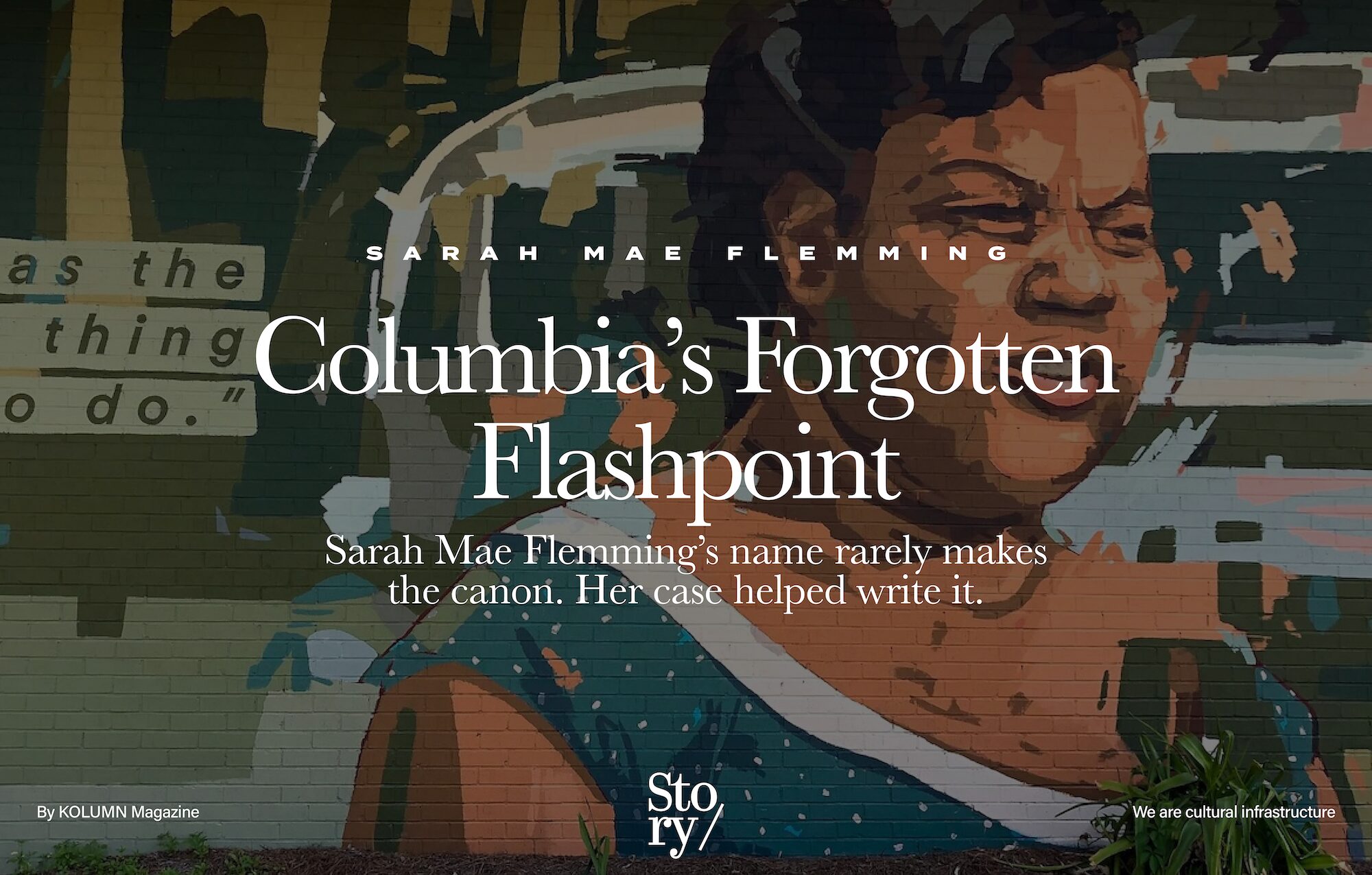
Flemming was a young woman with a job, a family counting on her wages, and a life that would continue long after reporters stopped calling.
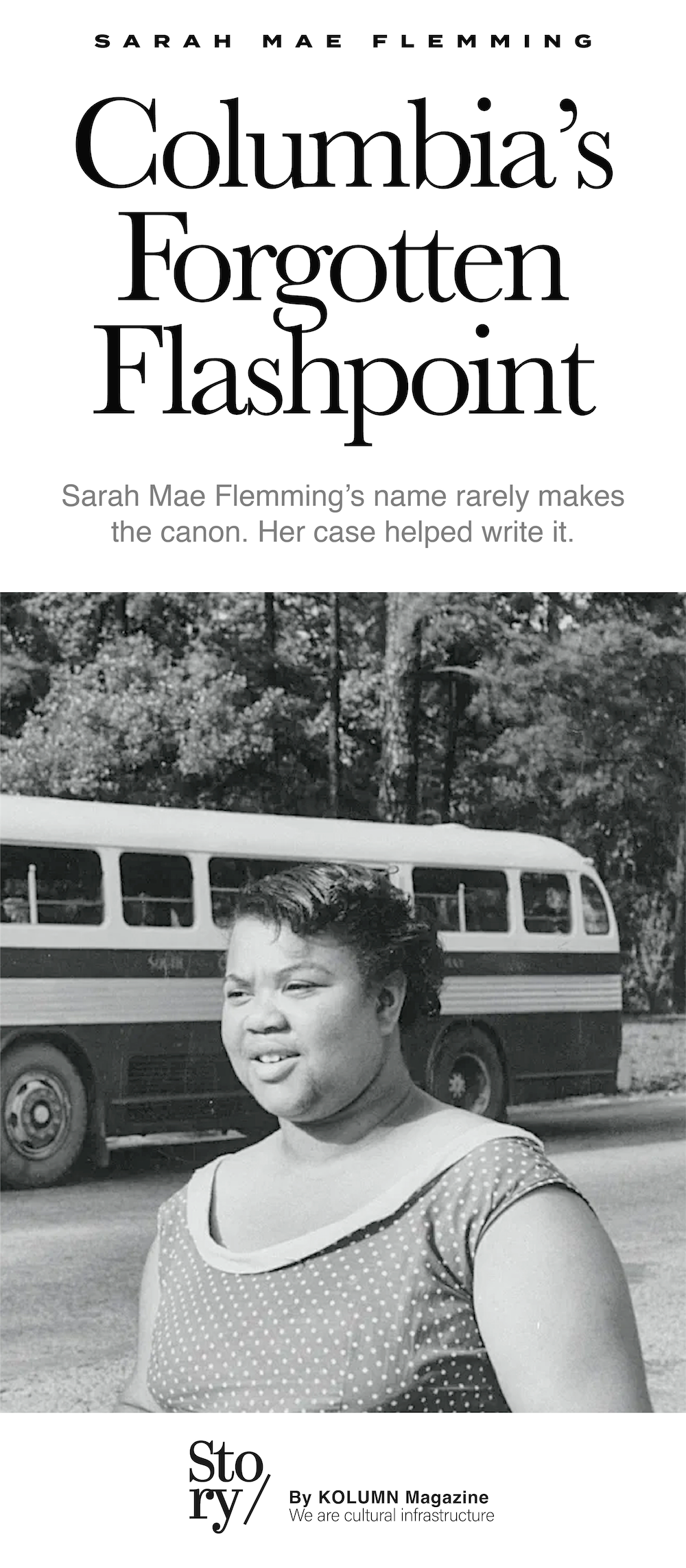
Flemming was a young woman with a job, a family counting on her wages, and a life that would continue long after reporters stopped calling.
By KOLUMN Magazine
The American civil rights narrative has a familiar rhythm: a single act of ordinary defiance, a dramatic arrest, a movement igniting in full view. That structure is tidy enough to teach, cinematic enough to remember, and incomplete enough to distort. Sarah Mae Flemming’s life is a corrective to the myth that the movement arrived suddenly, fully formed, in Montgomery in December 1955. In reality, change came by accumulation—through local organizers who recognized an opening, through plaintiffs who never asked to be symbols, through lawyers building precedent case by case, and through communities willing to absorb backlash long before national applause showed up.
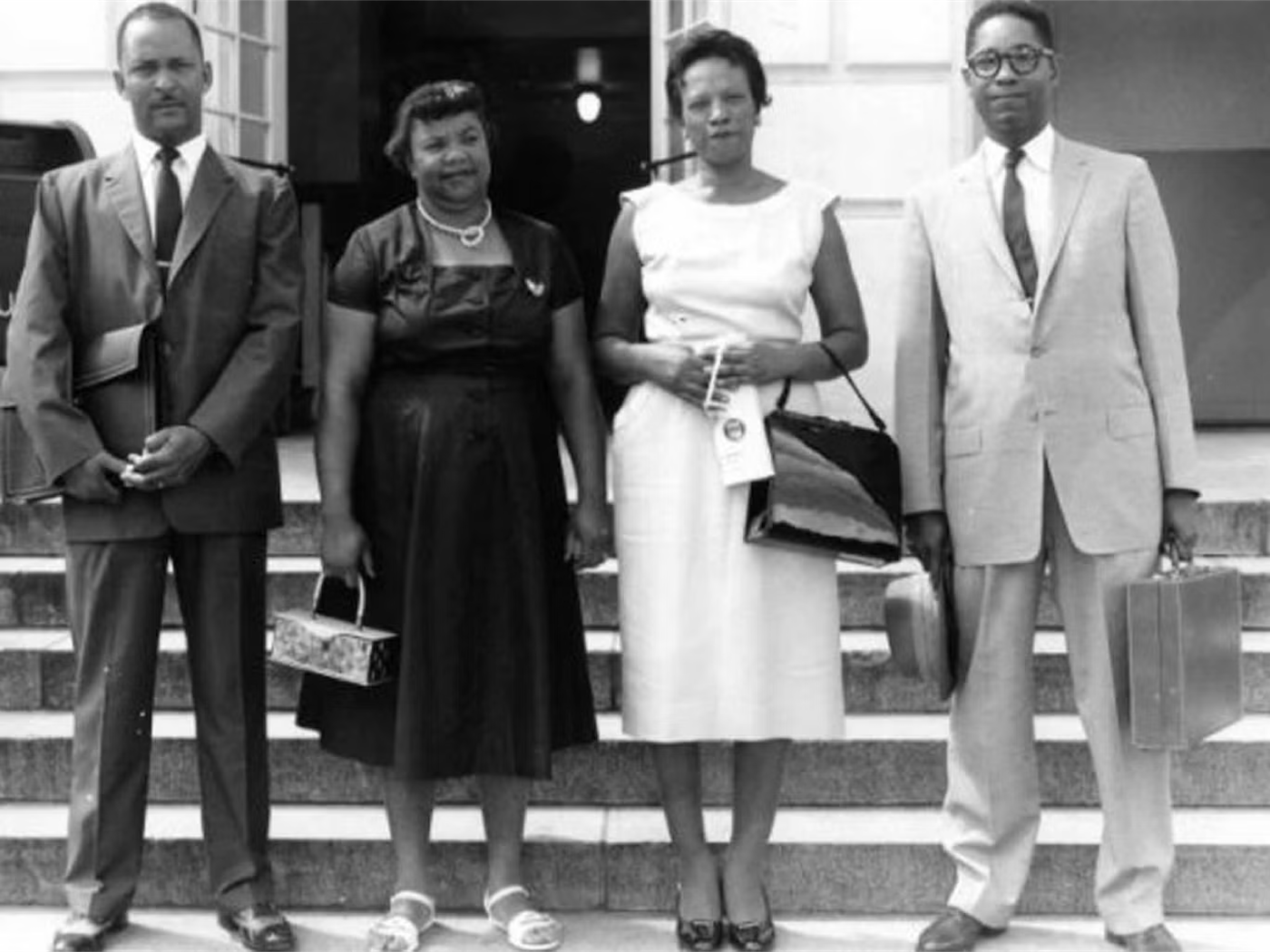
On the morning of June 22, 1954, Flemming boarded a segregated bus operated by the South Carolina Electric & Gas Company (SCE&G) in Columbia, South Carolina, as part of a weekday routine on her way to work as a maid. The timing matters: the Supreme Court had decided Brown v. Board of Education just weeks earlier, toppling “separate but equal” in public schools while leaving the rest of Jim Crow’s architecture—public transportation included—braced for a fight. In Columbia, as across the South, segregation was not merely custom; it was enforced daily by people who understood that public space was a political theater. Bus drivers, armed with both social authority and legal backing, served as street-level enforcers of the color line.
Flemming’s “offense” was small in description and enormous in implication. The bus was crowded. A white passenger got up and exited; Flemming sat in the newly vacated seat. The driver, Warren H. Christmus, ordered her to move. Accounts vary in the details people emphasize—whether she had sat “in front of” white women, whether the shifting “line” on the bus made her seat newly forbidden—but the core is consistent across the record: Flemming’s body in that seat was treated as a provocation, and the driver escalated from command to violence. When she pulled the cord to get off and tried to exit at the front, she said he blocked her and struck her in the stomach, forcing her down the aisle to the rear exit.
In the movement’s best-known stories, the refusal is the climax. In Flemming’s, the refusal is merely the spark—and the real drama is what comes after: the choice to litigate, the machinery of intimidation, the slow grind of appeals, and the way a legal victory can exist on paper while local power tries to make it irrelevant in life.
Within weeks, on July 21, 1954, attorney Phillip Wittenberg filed suit on Flemming’s behalf in federal court, seeking $25,000 in actual and punitive damages and alleging violations of the Fourteenth Amendment. That filing did not materialize out of nowhere. It came through the network of South Carolina civil rights organizing that had been operating long before Brown, and through a strategist who understood how one incident could become a lever.
Her name was Modjeska Monteith Simkins, the South Carolina NAACP’s state secretary—one of those movement architects who rarely becomes a household name, despite shaping the structure the household recognizes. Simkins heard about the altercation and saw it as an opportunity to strike at legalized segregation in yet another arena. In the public imagination, the movement is driven by charismatic men at microphones. In the archival record, it is just as often driven by women doing the patient work of building cases, recruiting plaintiffs, raising funds, coordinating counsel, and weighing risk against possibility. Flemming, a 20-year-old domestic worker, would become the public face of that strategy in South Carolina—willingly or not.
A young woman from Eastover, carrying a family’s future
Sarah Mae Flemming was born June 28, 1933, in Eastover, in Richland County, South Carolina, the oldest of seven children raised by Mack and Rosetta Flemming. Her family had substantial land—about 130 acres, according to historical accounts—but “substantial” did not mean secure in the Black rural South. Like many families whose roots ran through enslavement and sharecropping regimes, economic survival often depended on a patchwork: farming, seasonal work, and wage labor when it could be found. Mack Flemming also worked on WPA-funded road projects, a reminder that the New Deal’s public works programs touched Southern Black life, even as segregation narrowed the promise of citizenship.
Flemming’s schooling followed the contours of the era’s constraints. She completed tenth grade at the segregated Webber School in Eastover before entering the workforce. Domestic work—cooking, cleaning, childcare in white households—was a common destination for young Black women in mid-century Southern towns, less a “career” than a funnel created by exclusion from other labor markets. Flemming sent much of her pay back to her parents to support younger siblings, an arrangement that made her commute to Columbia not just personal routine but part of her family’s economic lifeline.
This is an important frame for understanding her significance. Flemming’s act is often narrated as a precursor to Rosa Parks, but that comparison can flatten the texture of her life into a single moment. Parks was a seasoned organizer with years of NAACP work behind her. Flemming was a young worker navigating a bus system designed to humiliate her as part of the fare. That difference is not a hierarchy of courage; it’s evidence of how many kinds of people powered the movement—from trained activists to ordinary citizens pushed into extraordinary roles by everyday cruelty.
Columbia’s buses as moving borders
Segregated buses were more than inconvenient. They were rolling demonstrations of racial hierarchy: who could sit, who must stand, who could enter and exit with dignity, who was forced to squeeze out the back as if their presence contaminated the front. In Columbia, the “color line” on buses could shift depending on the number of Black and white riders, a system that made Black passengers perpetually uncertain and therefore perpetually vulnerable. Drivers enforced these rules and, in Columbia’s system, were vested with quasi-law-enforcement power. That detail—drivers effectively deputized—helps explain why disobedience could trigger violence: the state had legitimized the driver’s authority as something like police power.
Flemming’s legal complaint, as described in the appellate record, was straightforward: the driver required her to change seats “in accordance with the segregation statutes of South Carolina,” and she challenged those statutes as unconstitutional under the Fourteenth Amendment. This legal framing mattered because it pushed beyond the individual assault toward a structural claim: the injury was not only the punch, but the regime that authorized the demand and normalized the harm.
The first court loss—and the way Brown began to travel
If Brown was a thunderclap, it was also, initially, a narrow one: it targeted public school segregation, not every segregated space. Southern officials tried to keep that boundary intact. In February 1955, U.S. District Judge George Bell Timmerman dismissed Flemming’s case, reasoning—per contemporary summaries—that Brown did not apply to “separate facilities” on buses, even if it applied to schools. It was an attempt to quarantine Brown, to prevent it from becoming a solvent for segregation elsewhere.
But Brown was already traveling. Flemming appealed. On July 14, 1955, the U.S. Court of Appeals for the Fourth Circuit reversed, explicitly tying the logic of Brown to public transportation and stating—again, as preserved in historical summaries—that the old doctrine of “separate but equal” could no longer be regarded as correct law. The shift is subtle in wording and seismic in meaning. When an appellate court says an old doctrine is no longer a “correct statement of the law,” it signals that legal reality has changed even if local practice refuses to recognize it.
The appeal also reveals a deeper infrastructure of movement lawyering. Wittenberg was joined, in coordination with the NAACP Legal Defense and Educational Fund led by Thurgood Marshall, by local attorneys including Matthew J. Perry Jr. and Lincoln C. Jenkins Jr. These names matter because they show how civil rights litigation was both national and intensely local: LDF strategy required plaintiffs and lawyers in Southern towns who could sustain pressure through years of procedural warfare.
News of the Fourth Circuit decision circulated widely in Black newspapers. Historical accounts note that the Chicago Defender touted the ruling with a headline announcing a ban on segregation on city buses in “Dixie.” In other words: the decision mattered to Black America even if mainstream white press attention did not elevate Flemming into national iconography.
“Frivolous” at the Supreme Court—and furious at home
South Carolina’s political leadership did not greet the appellate ruling as a moral correction. They treated it as an invasion. By the time the case’s trajectory intersected with higher courts, the backlash had an official cast: the governor, the state attorney general, and Columbia’s mayor pledged to aid the bus company’s appeal. When the U.S. Supreme Court dismissed the appeal on April 23, 1956, as frivolous, it effectively signaled that the constitutional question was settled against segregation in this context. But legal settlement is not the same as social compliance—especially in a region where resistance to desegregation was becoming a political identity.
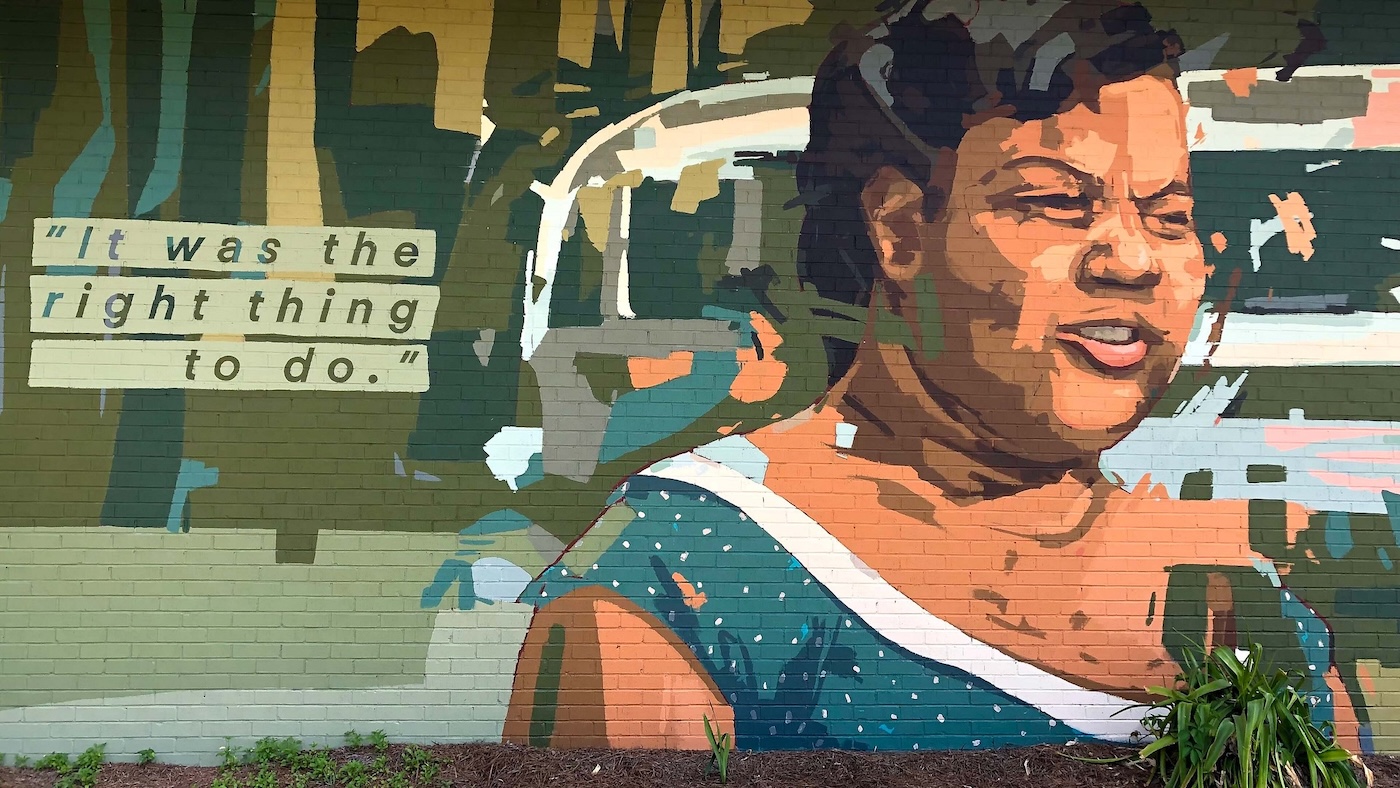
The response from segregationist organizations and officials was predictably incandescent. Historical summaries note denunciations of federal overreach and claims that the ruling was “dictatorial.” And yet Flemming’s own recorded public posture, when she spoke at all, was restrained, even wary about what consequences might follow. In one Associated Press–reported remark preserved in local historical material, she said: “It was the right thing to do. I only hope it won’t lead to trouble.”
There is a kind of bravery embedded in that sentence that American memory often ignores. It is not the bravery of a triumphant hero anticipating praise. It is the bravery of someone who understands, with clear-eyed realism, that doing the right thing can invite “trouble” not as metaphor but as retaliation—economic, social, physical.
The trials: When precedent meets an all-white jury
Even after the Fourth Circuit’s principles were clear, Flemming’s pursuit of damages and accountability continued through years of procedural wrangling and two trials. The point was not only symbolic; it was tangible. Damages mattered for a working-class woman whose income supported her family. Yet the courtroom—like the bus—was designed to maintain hierarchy.
In June 1956, the first trial began with Timmerman again presiding, and an all-white, all-male jury. The atmosphere was hostile enough that, that night, the Ku Klux Klan burned a cross in Wittenberg’s yard. The signal was unmistakable: advocacy would carry consequences. Timmerman dismissed the case the following day before the defense could present witnesses, according to historical summaries.
Flemming appealed again. On November 29, 1956, the Fourth Circuit sent the case back. The persistence is worth pausing over. Civil rights progress is often narrated as a march forward; in practice it was a grind of reversals, remands, and new obstacles, requiring plaintiffs to reenter hostile spaces again and again.
The final trial proceeded in June 1957, with Flemming represented by Jenkins and Perry. After roughly thirty minutes of deliberation, the jury found the bus company owed her nothing. In a system where white juries were asked to validate a Black woman’s dignity against a white man’s authority, the speed of the decision can read like a verdict rendered before the evidence was even heard.
Here is the paradox at the heart of Flemming’s story: she could lose personally while the law moved because of her. Courts could adopt the logic that segregation was unconstitutional while refusing to compensate the person who bore the blow that brought the issue to court. That paradox is not incidental; it is a feature of how American institutions have often managed reform—granting principle while withholding repair.
The case’s afterlife: A legal bridge to Montgomery
Flemming’s broader significance is inseparable from what her case did to the legal landscape. The South Carolina Encyclopedia notes that attorneys in Browder v. Gayle—the federal case that ultimately ended bus segregation in Montgomery and undercut the legal basis of the Montgomery Bus Boycott—cited the Fourth Circuit’s decision in Flemming’s case as precedent. That is not a footnote; it is connective tissue.
It helps explain how “local” cases become national turning points. Browder was not litigated in a vacuum; it was argued in a world where lawyers could point to other federal appellate courts already acknowledging that Plessy’s logic was collapsing. Flemming’s case offered exactly that: judicial language suggesting the old doctrine could no longer stand, now applied beyond schools.
This is also why Flemming complicates popular chronology. Rosa Parks’s arrest in December 1955 is often taught as the beginning of the end for bus segregation. In truth, by the time Parks was arrested, Flemming’s case had already been through a district court dismissal and was on appeal, with the Fourth Circuit’s reversal coming in July 1955. Flemming’s action occurred seventeen months before Parks’s, and her legal struggle was part of the same wider NAACP-backed offensive against segregation in everyday life.
Why her name faded
History does not forget at random. It forgets according to patterns: what is easy to narrate, what institutions choose to elevate, what archives preserve, and what the culture is prepared to hold.
One reason Flemming receded is that her case produced a complicated outcome. She achieved a doctrinal win at the appellate level but lost in the trial court’s world of juries and local judges. The movement’s public-facing story tends to prefer clean victories: a boycott that ends in desegregation, a law that passes, a figure who becomes a symbol. Flemming’s experience looks messier: victory and loss braided together, dignity asserted and then denied, precedent achieved without personal restitution.
Another reason is that she did not—or could not—inhabit the public role that history often demands. According to local historical material, she lived the rest of her life in Eastover, raising three children, and never spoke publicly about her role in ending segregated travel accommodations. Silence can be misread as absence, but it can also be protection. For a Black woman in South Carolina, the costs of visibility could stretch far beyond the courtroom. The backlash that reached her lawyer’s yard could just as easily reach her home life, her employment prospects, her children’s safety.
Gender and class also shape remembrance. The “respectability” politics that sometimes governed media portrayals of civil rights protagonists often favored certain kinds of plaintiffs: those whose biographies could be made to align with middle-class ideals, those who could be presented as impeccably composed, those with organizational pedigrees legible to journalists. Parks, famously, met those filters in a way that many others—especially younger, poorer women—did not, even when their actions were equally consequential. Contemporary scholarship and historical writing have increasingly emphasized this broader landscape of Black women’s activism and the way it has been selectively remembered.
Then there is the brute force of narrative gravity. Montgomery became a national stage: a mass boycott, a young Martin Luther King Jr., constant press attention, a dramatic constitutional showdown. Flemming’s Columbia case, by contrast, was less cinematic in public form—court filings, hearings, remands, juries. But if American memory is a theater, law is often the backstage machinery. Flemming was part of the machinery.
Her significance in the movement’s “middle layer”
If we measure significance only by fame, Flemming is marginal. If we measure by structural impact—how an action changes the legal and political environment for what comes next—she becomes central.
Her case sits in what might be called the movement’s middle layer: between grassroots indignation and national transformation. It demonstrates how the post-Brown period was not simply a pause between landmark decisions but an active battlefield over where Brown would apply, and how quickly. (It shows the NAACP ecosystem in practice: local intelligence and organizing (Simkins), a willing plaintiff (Flemming), cooperating counsel (Wittenberg, Perry, Jenkins), and an appellate strategy capable of converting one woman’s mistreatment into doctrine that other litigants could cite.
It also shows how violence operated as a daily enforcement tool of segregation—not merely lynch mobs or police dogs, but a driver’s punch, an attempt to force a woman out the back door, the humiliations embedded in mundane transit. In Flemming’s story, “public transportation” is not a neutral service. It is a contested civic space where citizenship is either affirmed or denied.
And her case illuminates a specific legal hinge: the crumbling of Plessy v. Ferguson’s logic beyond education. The appellate record explicitly notes that the district judge had dismissed her case on the ground that the segregation statutes were valid under Plessy, and the appeal challenges that premise in the wake of shifting constitutional doctrine. The Fourth Circuit’s willingness to treat the “separate but equal” doctrine as no longer correct law in this context is part of how civil rights law advanced: not only by one Supreme Court pronouncement, but by multiple courts applying the new logic across different domains of life.
The human cost of being “useful” to history
It is tempting to celebrate Flemming as a hero and stop there. The ethical task of telling her story is to keep the heroism in view without converting her into a mascot. She was a young woman with a job, a family counting on her wages, and a life that would continue long after reporters stopped calling. She received no financial compensation after years of legal struggle, according to local historical summaries. She endured the indignity of being described in court reporting in ways that diminished her individuality—reduced to “the Flemming woman,” “the Brown woman,” as if personhood were optional.
And yet her case became, in effect, a legal roadmap. The movement gained. The country gained. She did not gain in the ways a plaintiff might reasonably hope: safety, compensation, lasting public recognition within her lifetime.
That imbalance is a recurring pattern in American reform: the people whose harm makes change possible are often denied the benefits of the change. Flemming’s story invites us to ask not only what she did for history, but what history failed to do for her.
The belated honors—and what they’re trying to repair
In recent years, South Carolina has moved—slowly, ceremonially, significantly—to recognize Flemming more explicitly. Legislative resolutions have been introduced to honor her legacy and establish commemorations. Local institutions have framed her as a pivotal figure in desegregating public transportation in Columbia and as an undersung catalyst whose actions preceded more famous flashpoints.
Such honors do not rewrite the past, but they do reveal a present-day hunger to tell the story differently: to acknowledge that the movement was not a single lane of famous names but a network of brave people—many of them women—whose contributions were foundational even when they were not celebrated.
The point is not to displace Rosa Parks in the narrative, as if history has room for only one woman on one bus. The point is to widen the lens so the public understands what the movement actually was: a sustained, strategic, community-backed campaign that required repeated acts of courage in places the cameras rarely lingered.
What Sarah Mae Flemming leaves us
Sarah Mae Flemming died in 1993, at 59, in Eastover, having lived most of her post-lawsuit life outside the spotlight. Her legacy is not simply that she “did it first,” though chronology matters. It is that she demonstrates how civil rights victories are built: from an incident to a lawsuit, from a lawsuit to an appeal, from an appeal to precedent, from precedent to the next fight.
Her story also exposes the limits of legal triumphalism. Courts can declare principles; communities must enforce them. Supreme Court dismissals can be labeled “frivolous”; backlash can still be deadly serious. A young woman can be right and still lose—then help the nation win later.
To remember Flemming properly is to remember the movement as work rather than miracle. It is to honor the domestic worker who boarded a bus to get to her job, sat where she believed she could sit, took a punch meant to put her back in place, and—through a coalition of local Black leadership and national legal strategy—helped push a century-old doctrine closer to collapse.
History loves a single seat. Sarah Mae Flemming reminds us the struggle was an entire route.
More great stories
Pleasure and Leisure Policed
March 4, 2026
No Comments
After the Ballots, the Movement
March 4, 2026
No Comments