



Beasley’s work offers a lesson that reaches beyond the quilt itself: public history does not have to be a statue, and civic memory does not have to be bronze. It can be fabric—soft, portable, intimate—while still carrying sharp edges.
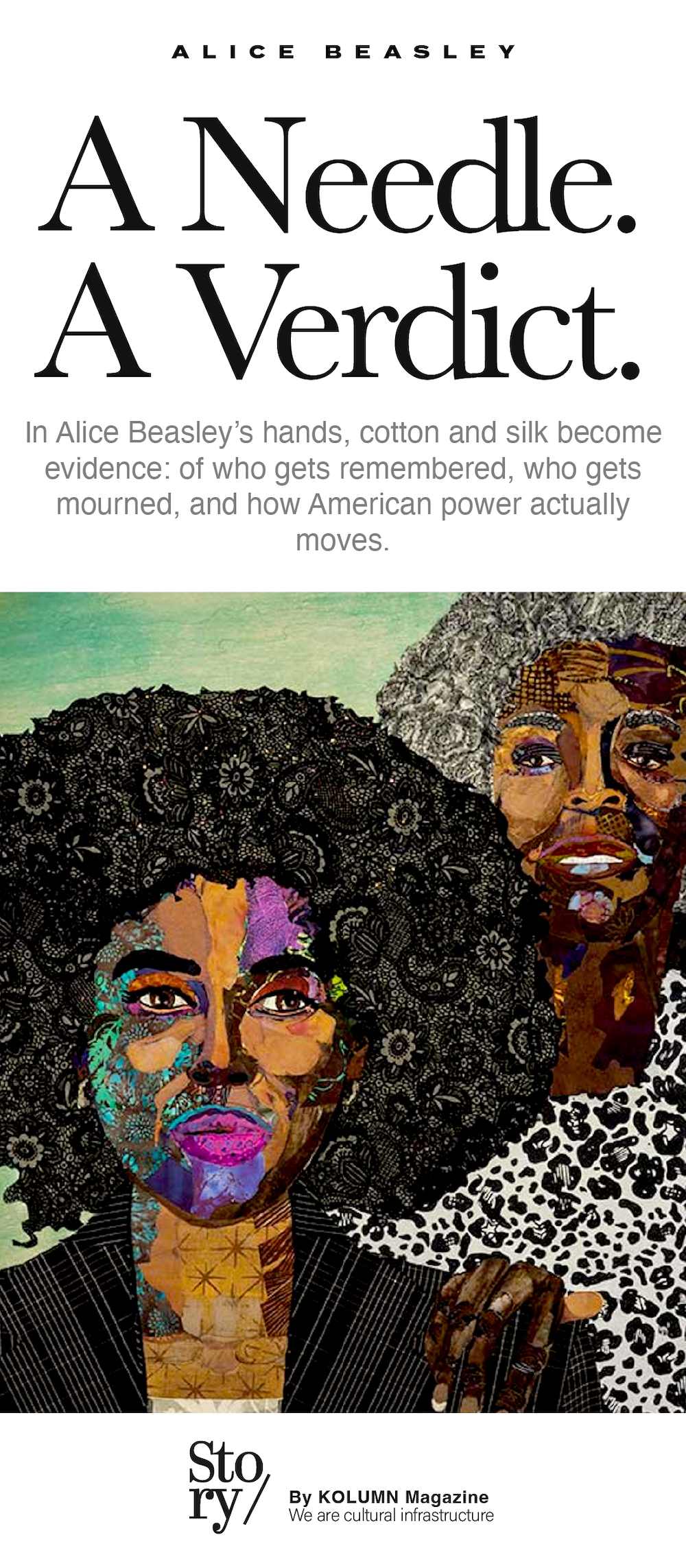
Beasley’s work offers a lesson that reaches beyond the quilt itself: public history does not have to be a statue, and civic memory does not have to be bronze. It can be fabric—soft, portable, intimate—while still carrying sharp edges.
By KOLUMN Magazine
The first surprise in Alice Beasley’s work is how insistently it refuses the usual hierarchy of materials. Fabric—domestic, familiar, historically feminized and often dismissed as “craft”—becomes, in her hands, a rigorous vehicle for realism and a delivery system for political witness. The second surprise is that realism itself: not the impression of a face, but the face; not the idea of atmosphere, but the fog; not a vague, symbolic nod toward history, but a specific and uncomfortable moment in it. Beasley’s portraits and narrative quilts—built from cotton and silk, assembled by appliqué, fused and machine-stitched into luminous layers—ask to be read the way you might read an archive: slowly, with attention to detail, alert to what is included and what is omitted.
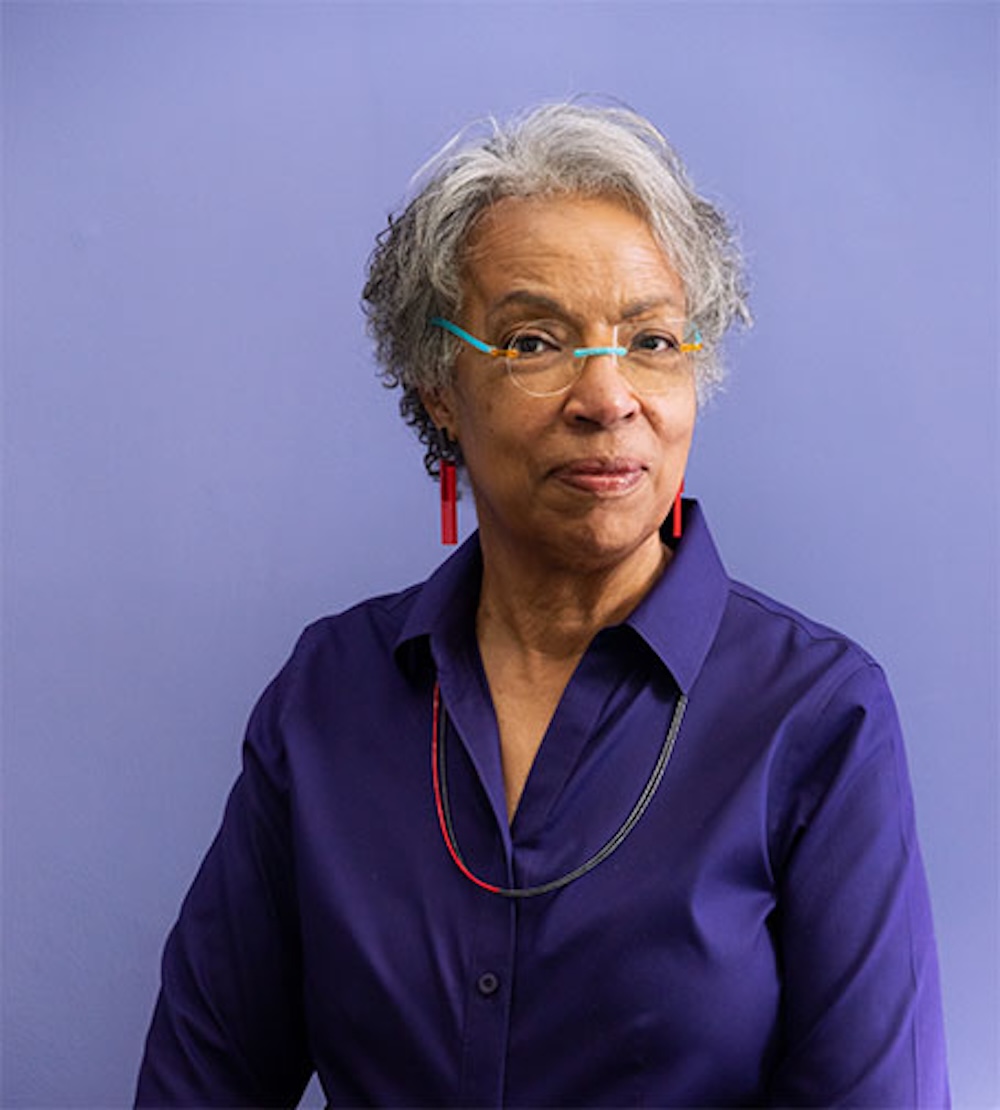
That method—close looking as an ethical act—helps explain why Beasley has become a distinctive figure in contemporary American fiber art. Her biography is unusually crosshatched: journalism, law, civil-rights litigation, and, later, an artistic practice that treats social history as both subject and obligation. Born in Tuskegee, Alabama, and raised in Detroit after her family moved north when she was a child, she came of age in a Black American migration story that shaped the twentieth century and continues to define the twenty-first.
Her early training was not in an art academy but in reporting. Beasley earned a journalism degree from Marygrove College in Detroit in the early 1960s and worked as a reporter—among other roles, she has been credited with work at The Detroit News and a stint at the San Francisco Chronicle. Her eventual pivot to law—earning a J.D. from the University of California, Berkeley—led into civil-rights and constitutional work, including association with the NAACP Legal Defense Fund in accounts of her career.
If this reads like an unusual apprenticeship for an artist, it is also, in retrospect, a perfect one. Journalism teaches attention to the evidentiary world—names, dates, contexts, the stubbornness of facts. Civil-rights law, at its best, teaches a second lesson: that facts alone do not win; they must be framed, argued, and made legible to an audience whose instincts may resist them. Beasley’s quilts sit at that intersection. They do not merely depict; they make a case.
The medium as message: “ordinary household fabrics” and the discipline of realism
Beasley describes fabric as her “chosen medium of expression,” emphasizing that she builds color, shadow, line, and value from the patterns of everyday textiles. Her process is materially humble and technically exacting: she snips small pieces, arranges and fuses them into figurative compositions, and stitches the image into coherence—constructing from within rather than applying pigment to a surface.
This is not an incidental preference; it is the core of her aesthetic argument. In a culture that often treats fiber work as decorative or secondary, Beasley insists on the full visual vocabulary of fine-art realism—light, depth, perspective—while also preserving what fabric uniquely offers: texture, the intimacy of the stitch, the knowledge that an image was assembled through time-intensive labor. In a featured statement for Berkeley Art Center, she has framed her practice in explicitly painterly terms—relying on the prints of commercial fabric and thread rather than paint or dye—aligning her quilts with the history of portraiture while refusing the gatekeeping that typically separates “art” from “textiles.”
The discipline of her studio practice is well documented in fiber-art circles. A SAQA Journal profile of Beasley’s working methods describes a large studio with design walls, prep tables, and specialized machines; it also details her approach to faces—building them gradually the way a painter might—alongside her later use of photo projection as a patterning aid, with the caution that lenses distort and ratios must be re-checked by eye. This is the kind of detail that matters when you’re trying to understand what Beasley is doing: she is not trading on the novelty of fabric portraits; she is pursuing mastery and then using that mastery to carry content that is frequently contentious.
From the courtroom to the quilt: Art as respite, then vocation
Accounts of Beasley’s career repeatedly return to the same origin story: she began making textile portraits as a respite from legal work, seeking something “peaceful and beautiful” to counter the day-to-day pressures of litigation. The pivot is telling. Many artists talk about their practice as a refuge; fewer make that refuge into a platform from which to address the public sphere with even sharper force.
Beasley began quilting in 1988, and over the following decades she developed the figurative appliqué approach that would become her signature. Over time, what started as relief became vocation. She ultimately retired from legal practice and moved into art full time—an arc described in multiple profiles and institutional pages. That timeline matters, because it places her mature artistic voice in direct conversation with late twentieth- and early twenty-first-century American political history: the erosion and revival of voting-rights battles, the post-9/11 security state, the Obama era and its backlash, the rise of social media as both connective tissue and weapon, the constant churn of headline tragedies and the quieter catastrophes—pollution, climate anxiety, civic cynicism—that accumulate below the surface.
Beasley’s work does not float above that world. It enters it.
The subjects: Portraits, politics, and a long Black American timeline
Beasley is often described as a politically engaged artist, but that shorthand can flatten what she actually does. Her politics are not primarily slogan-based. Instead, her work tends to operate through portraiture and narrative specificity: a face, a posture, an encounter. The politics arrive as implication and context—the way history arrives, usually, in lived life.
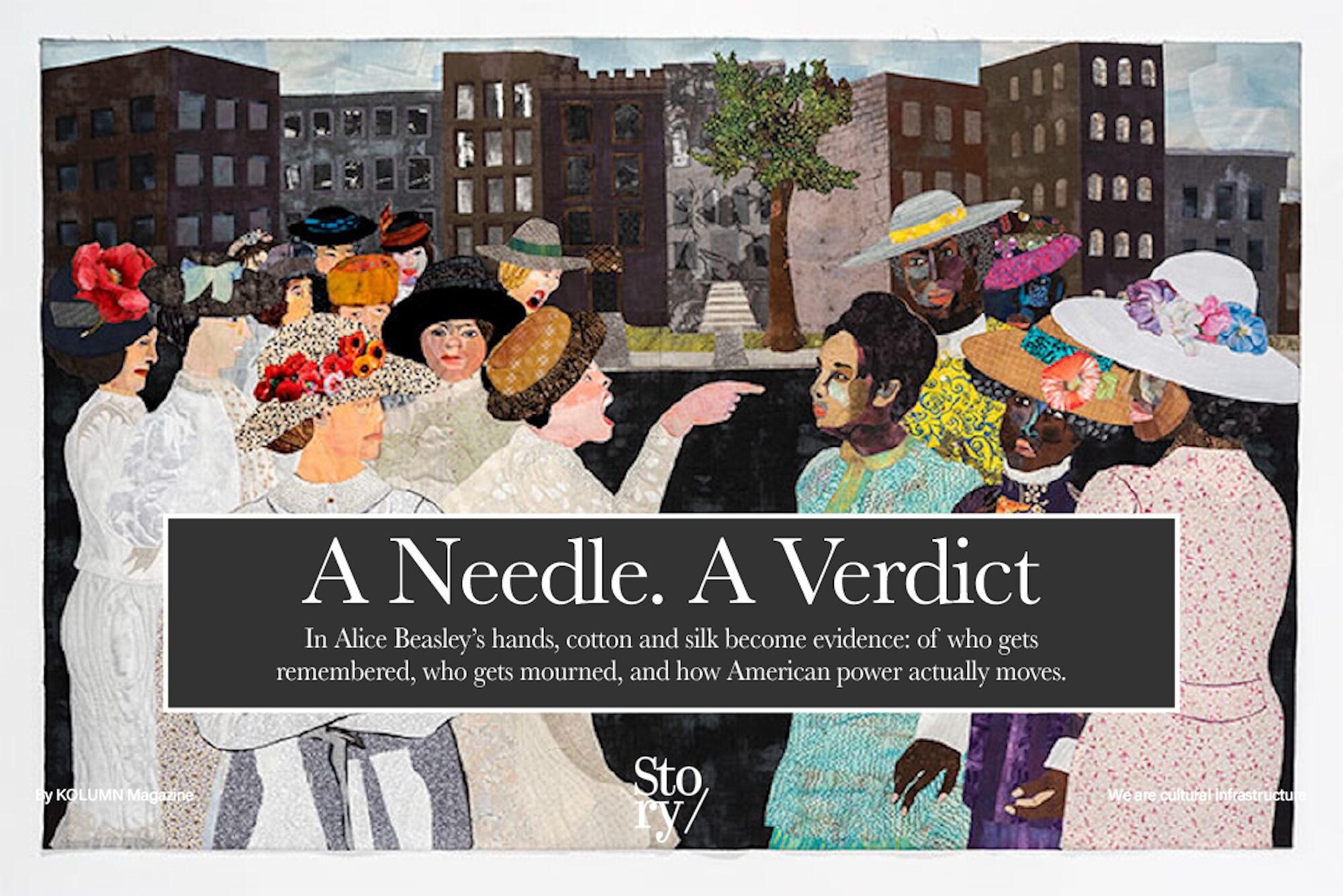
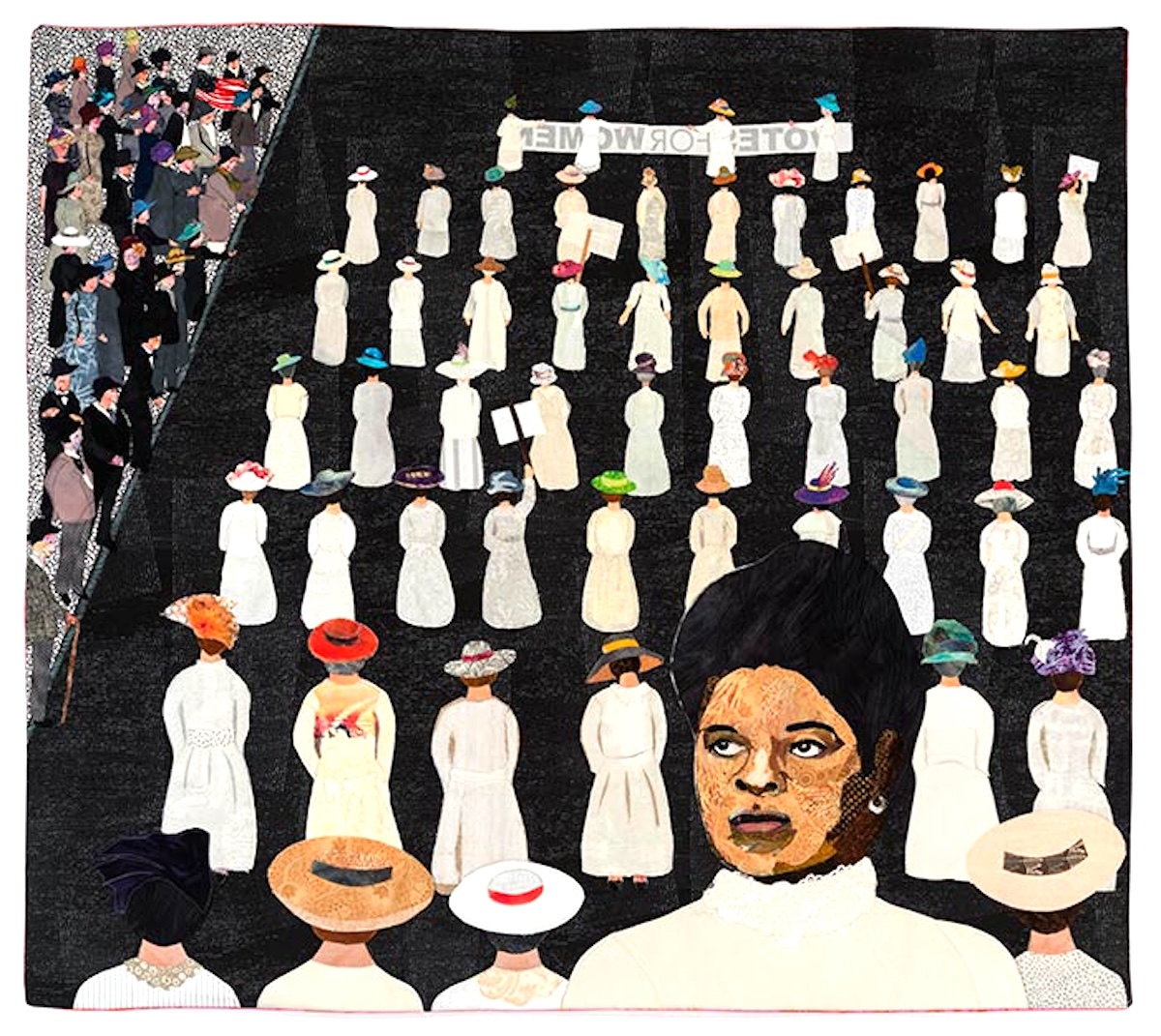
One of her most widely discussed works, “When and Where I Enter,” depicts a confrontation tied to the suffrage movement: the moment when white suffragists attempted to prevent Black women—associated in popular retellings with Ida B. Wells-Barnett’s refusal to be relegated—from marching with the Illinois delegation in the 1913 Washington parade. In a San Francisco Chronicle profile, Beasley explicitly rejects an “ice cream and roses” version of history and chooses conflict as the truth worth depicting.
This choice is quintessential Beasley. Rather than offering uplift without friction, she insists that emancipation narratives, women’s-rights narratives, civil-rights narratives—nearly all American narratives—contain internal boundaries about belonging. Who is invited to the center? Who is told to wait? Who is asked to disappear in order to preserve the comfort of the supposed coalition?
The Clinton Foundation’s documentation of its Women’s Voices programming includes Beasley and the “When and Where I Enter” title in the context of women’s suffrage history, reinforcing the work’s placement in a national civic-education ecosystem rather than a niche quilt world. That placement matters: it suggests that Beasley’s quilts are functioning as public history—visual scholarship made from cloth.
Beasley’s own presentation of the “Having My Say” body of work situates “When and Where I Enter” alongside “She Refused to Walk Behind,” explicitly connecting both pieces to Wells-Barnett and the demand that Black women not be forced to the back—literally behind the men or excluded entirely. In other words, Beasley is not merely illustrating a famous story. She is underscoring a structural lesson: progress movements frequently reproduce the same hierarchies they claim to oppose, unless they confront them head-on.
Elsewhere in her oeuvre, Beasley’s political commentary extends beyond suffrage history into contemporary governance and the machinery of power. The Myrtle Beach Art Museum’s materials on her include an account of “Follow the Money” (2002), a work framed as a response to then–President George W. Bush’s refusal to authorize release of the full SEC report on the Harken Energy scandal—an example of Beasley using textile portraiture to interrogate transparency, accountability, and the gap between official narratives and institutional behavior.
That impulse—follow the money, trace the hidden circuitry—links her to a tradition that includes investigative journalists and reform lawyers as much as it includes artists. It is also why Beasley’s biography as a civil-rights attorney isn’t an anecdotal flourish; it is a key to her sensibility. She understands power as something that moves through systems, not just through individuals. And she understands that systems prefer to remain unseen.
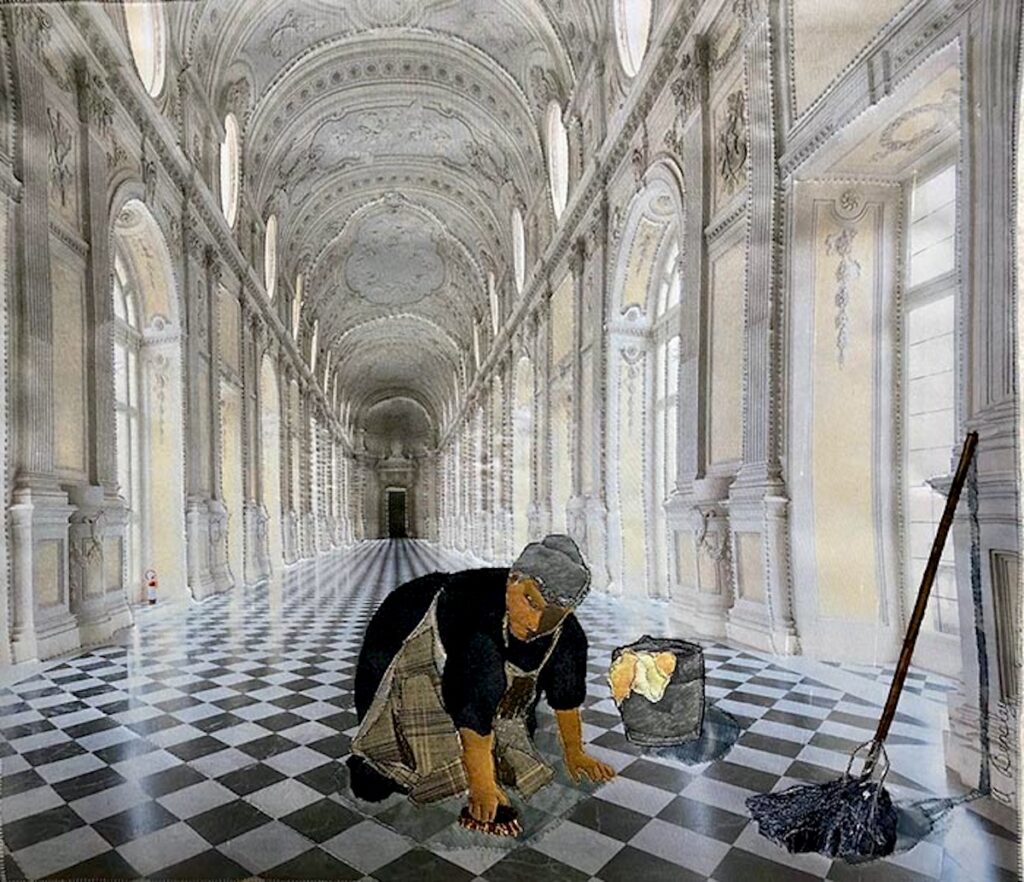
Black life as subject, and the ethics of depiction
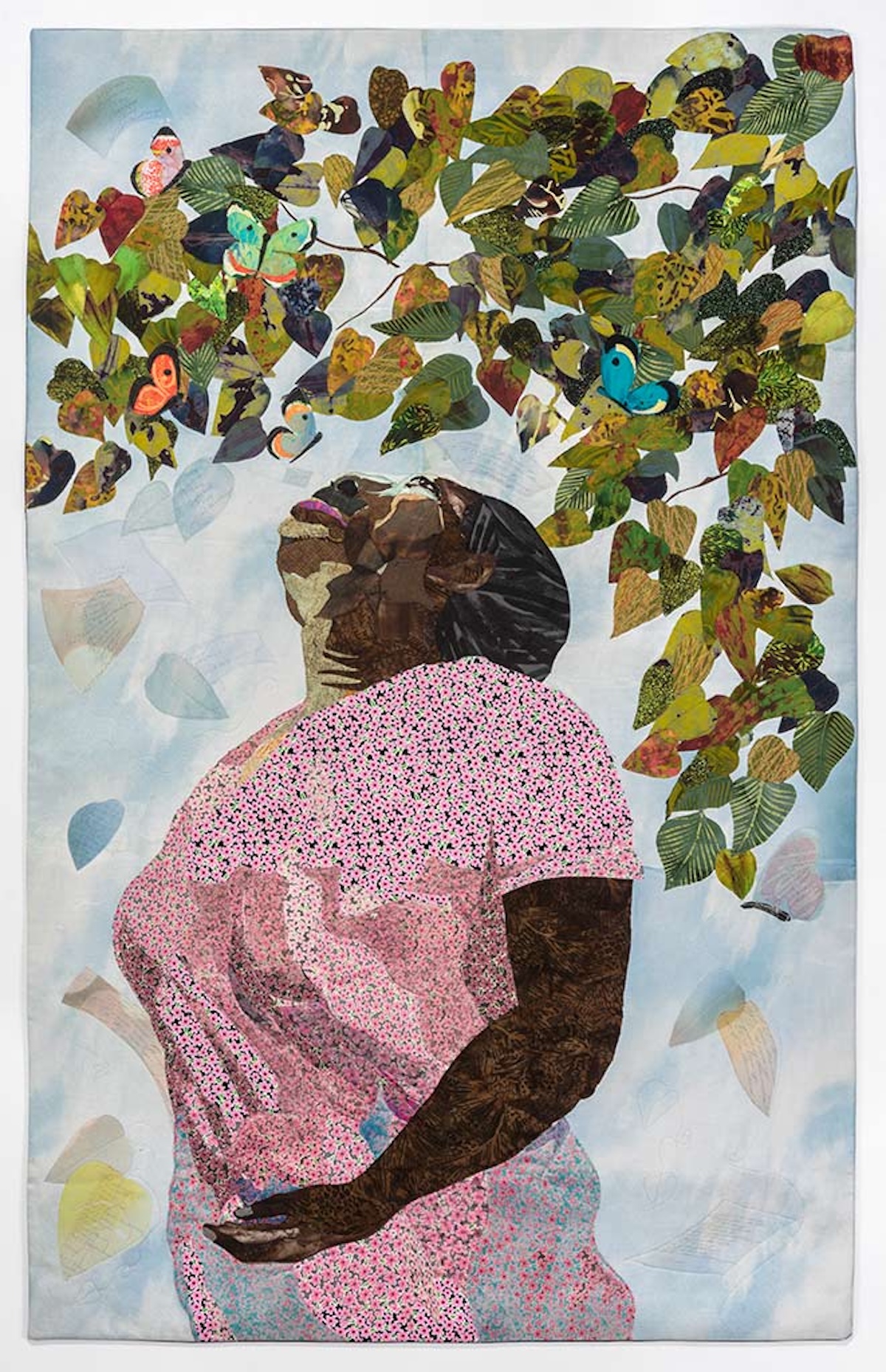
Beasley’s work is frequently described as speaking to the Black experience in the United States, and yet it’s important to specify how. Much of contemporary visual culture risks turning Black suffering into spectacle or turning Black resilience into branding. Beasley’s practice, by contrast, often insists on humanity through the ordinary: a gaze, a quiet interior moment, the subtlety of skin tone rendered through layered fabric rather than flattened into a single color field.
In a SAQA profile and related materials, Beasley is described as known for figurative appliqué quilts built from commercial and hand-printed fabrics, with themes that include social commentary. Her “juried artist” presence within SAQA situates her among the leading practitioners of art quilting as a contemporary fine-art field, a category that itself has long struggled for institutional recognition.
That struggle parallels, in a different register, a broader cultural struggle over which stories and which forms are granted seriousness. The quilt, historically, is both functional object and storytelling technology—an intimate archive. For Black Americans, quilting traditions carry additional historical weight, from enslavement-era constraints to community-based transmission of skill and memory. Beasley does not simply inherit that lineage; she updates it, engaging museum spaces and civic commissions while retaining the craft’s attention to touch, labor, and domestic materials.
Her social-justice portraits are among her most direct interventions. Works referenced through SAQA’s collection pages and related materials include “Remembering Trayvon,” and institutional write-ups and reviews have highlighted the impact of her needlework detail. Her CV also documents critical attention from outlets as varied as San Francisco Magazine and local press, as well as an NPR-related video feature on her work “Blood Line” at The Textile Museum, indicating that her work circulates through both specialized and mainstream-adjacent cultural channels.
The point is not merely that Beasley makes political quilts. It is that she makes political quilts through portraiture—through the ethics of looking at a person long enough to render them carefully. In an era of rapid-feed images, that slowness becomes a form of resistance.
Community and institution: Where the work lives
Beasley’s significance is also institutional and civic. Her work has been exhibited widely, and her practice sits at the intersection of community-based quilt traditions and museum validation. The public record—aggregated in artist bios, institutional profiles, and her CV—places her work in venues and contexts that signal both breadth and seriousness: Quilt National, art centers, museums, and international exhibitions.
Collections matter because they function as a kind of forecast: what cultural objects a society expects to preserve. Beasley’s work is documented as being held by institutions connected to the Bay Area, including the de Young / Fine Arts Museums of San Francisco (with at least one work described on her site as in the permanent collection), along with other public-arts contexts. Her CV also describes works in notable collections and civic settings, including a U.S. Embassy collection and various public or private holdings.
The civic reach of her work is visible in the kinds of commissions and placements she takes on—projects that put textile imagery into public space, not only gallery space. Her “Where’s Alice” page, for instance, references professional affiliations and board service in arts institutions, positioning her not simply as an exhibiting artist but as a cultural worker embedded in organizational life.
Then there is community in the literal sense: Beasley’s work is often discussed alongside the broader Bay Area quilt ecosystem. KQED’s Forum episode about “Oakland’s Stories, Told Through Quilts” includes Beasley’s “Lake Merritt Foggy Morning” among featured works, placing her inside a conversation about place-based storytelling through cloth. That matters because it frames Beasley not as a lone genius but as part of a living tradition—artists in dialogue with each other, with local history, with the city as both muse and battleground.
“Lake Merritt, Foggy Morning” and the politics of atmosphere
Not all of Beasley’s work is explicitly political in the usual sense. Some pieces are anchored in landscape, still life, or quotidian beauty. But even those works can be read as political through their attention to place, and through the very act of insisting that fabric can carry atmosphere at the level of fine art.
“Lake Merritt, Foggy Morning” is a key example. The work has been described—via a quotation preserved in Beasley’s CV—as being praised in The New York Times for its moody treatment of a Bay Area fog phenomenon, accomplished through layers of blue silk and painted organza. Even without direct access to that NYT page in this environment, the citation’s presence in her professional CV signals how the work has circulated in the discourse of art reviewing—and how Beasley’s technical command earns attention outside the fiber-art niche.
On Beasley’s own site, the piece is contextualized in intimate, local language: Lake Merritt as a “sparkling glory,” fog as a blanket that makes buildings “play peek-a-boo,” and the sense that “anything can happen” on mornings when visibility collapses. It’s easy to read that as simple lyricism. But it is also a philosophy of uncertainty: the way a city can feel mutable, the way atmosphere rewrites the familiar, the way beauty can be a condition that prepares you to witness harder things.
This balance—between tenderness and critique—is one of Beasley’s defining achievements. She does not make a single kind of quilt. She makes a world, and that world contains both grief and radiance, indictment and praise.
“When and Where I Enter”: A history painting in cloth
To understand Beasley’s significance as a contemporary American artist, it helps to treat “When and Where I Enter” as what it essentially is: a history painting, rendered in cloth rather than oil. History painting, in the European fine-art tradition, was considered the highest genre—grand, moralizing scenes meant to shape civic memory. Beasley borrows the ambition of that genre and swaps out its biases.
Instead of kings and generals, she centers Black women suffragists and the conflict that reveals who was permitted to be seen. Instead of a triumphant march forward, she stages a moment of exclusion. In doing so, she aligns with Black feminist historiography—work that insists the suffrage movement, like most movements, is not a single narrative but a contested field.
The San Francisco Chronicle account of the piece emphasizes Beasley’s refusal to soften the story, and her choice to show confrontation rather than a sanitized commemorative vignette. That decision carries a journalistic ethos: tell what happened, not what a sponsor might wish had happened. It also carries a legal ethos: reveal the conflict, because conflict is where the truth is legible.
Beasley’s own framing of the “Having My Say” project reinforces this, naming the attempted relegation of Wells and her delegation and underscoring the refusal. The Clinton Foundation’s Women’s Voices materials further contextualize the piece as part of broader public programming around women’s rights, helping situate Beasley’s quilt as an educational artifact as well as an aesthetic one.
In that sense, Beasley’s work offers a lesson that reaches beyond the quilt itself: public history does not have to be a statue, and civic memory does not have to be bronze. It can be fabric—soft, portable, intimate—while still carrying sharp edges.
The wider arc: What Alice Beasley represents now
Alice Beasley’s life and work represent a convergence that is increasingly important in American cultural life: the collapsing of boundaries between “fine art” and “craft,” between political discourse and aesthetic experience, between private labor and public meaning. Her story also represents a model of second (or third) vocation as social contribution. She did not begin as an artist in the conventional sense. She arrived through other disciplines—journalism and law—then built a practice that absorbed those disciplines’ strengths: evidence, clarity, argument, and an insistence on the stakes of representation.
In the fiber-art world, Beasley is significant as a realist portraitist working at high technical level, pushing appliqué toward painterly outcomes while maintaining the medium’s tactile truths. In the broader cultural world, she is significant as an artist who uses that technical authority to address subjects many institutions prefer to keep at arm’s length: racial violence, political hypocrisy, historical erasure, environmental grief, and the constant negotiation of Black visibility in America.
If you want a single sentence summary of her achievement, it might be this: Beasley makes quilts that function as both images and arguments—objects you can admire from across a room, then read up close like a document.
That dual function is not a gimmick. It is the point. A quilt asks you to come closer. It slows you down. It rewards attention. In a culture built to monetize distraction, that is already a kind of politics.
And then, once you are close enough to see the seams, Beasley asks you to face what the country has done, what it keeps doing, and what it insists on forgetting.
More great stories
Harlem, in Bronze
February 28, 2026
No Comments
Sojourner Truth, Detroit, and the Price of a Key
February 28, 2026
No Comments