



The project represents how a city attempted to solve a material problem while preserving a racial order.
The project represents how a city attempted to solve a material problem while preserving a racial order.
By KOLUMN Magazine
Detroit did not invent the American housing conflict, but in the early 1940s it refined it—under the pressure of war, migration, and a manufacturing economy running hot enough to be nicknamed the “Arsenal of Democracy.” Thousands of workers arrived to build bombers, tanks, engines, and the industrial infrastructure that would help defeat fascism overseas. The city needed labor quickly, and it recruited it broadly, including from the South, where Jim Crow’s violence pushed Black families northward even as the promise of a paycheck pulled them toward factory gates. Yet Detroit’s housing market—shaped by restrictive covenants, exclusionary lending, and deeply racialized neighborhood politics—was not designed to absorb Black newcomers as neighbors. It was designed to contain them.
The Sojourner Truth Project, more formally the Sojourner Truth Homes, was conceived as an answer to an urgent material problem: where to put people. It became famous because it revealed a different, more durable problem: how, in mid-century America, housing policy could operate as civil rights policy by another name—administered through zoning, financing, siting decisions, and, when necessary, force. The project’s significance is not limited to Detroit. It is a case study in how a federal program aimed at alleviating shortage could be captured by local segregationist power, and how the resulting conflict helped normalize “racial pattern” thinking—an approach to public housing that promised stability while cementing inequality.
A wartime city with a peacetime housing system
By the early 1940s, Detroit was already carrying unresolved housing pressures from the Great Depression and the uneven recovery that followed. War production accelerated growth, but it did not automatically produce homes. Building materials and labor were constrained; private development could not keep up with the swelling population. The result was overcrowding, rising rents, and intensified competition for space—especially in areas where Black Detroiters were already hemmed in by discriminatory practices. In the language of policy, it was a supply crisis. In the lived experience of families, it was a daily negotiation between dignity and desperation: doubled-up households, subdivided units, long commutes, and constant vulnerability to eviction or exploitation.
Public housing, in this environment, looked like an emergency valve. In Detroit, the federal government and local authorities pursued housing for war workers as part of the broader mobilization effort. The Sojourner Truth Homes were built specifically for Black auto and defense workers—workers essential to war production but routinely excluded from housing opportunities available to whites. That official recognition matters, because it counters a persistent national myth: that segregation was merely the outcome of private preference, or the incidental byproduct of “where people chose to live.” Detroit’s own historical documentation and later preservation records frame the project as a response to discriminatory constraints facing Black workers, while also acknowledging the backlash that followed.
Still, the city’s public housing story was not a simple arc from exclusion to inclusion. The Sojourner Truth Homes were entangled with the era’s prevailing logic that neighborhoods had “racial identities” that government should preserve. That logic circulated through professional real estate organizations and through federal lending and appraisal standards. In practice, it meant that a project could be “for” Black residents, yet still be sited, structured, and administered in ways meant to minimize the risk of white resistance—or, more bluntly, to reassure white homeowners that the state would not disturb their claims to space. The Sojourner Truth Homes exposed how brittle that reassurance was, and how quickly it could become coercive.
Naming the project: Sojourner Truth as symbol and provocation
The project was named in September 1941 for Sojourner Truth, the abolitionist and women’s rights advocate whose life story—enslavement, self-emancipation, itinerant preaching, political insistence—offered a kind of moral electricity. For Black Detroiters, the name carried dignity and aspiration: a claim that Black war workers deserved not only jobs, but stable homes and the civic recognition attached to them. For opponents, the name did not soften the underlying fear: that public resources would be used to move Black families into physical proximity with whites, and that such proximity would have consequences for property values, social status, and the racial hierarchy itself.
Names do cultural work, and in Detroit the work was immediate. The “Sojourner Truth Homes” became shorthand for a confrontation between two visions of the city. One vision treated housing as infrastructure for democracy: if workers were needed to build the nation’s weapons, the nation owed those workers shelter. The other treated housing as a boundary mechanism: a way to preserve racial ordering by controlling where Black families could settle, and by policing any perceived “encroachment.” The conflict that followed showed that in 1942, the second vision could mobilize crowds, influence policy, and bend institutions.
Where the homes stood, and why it mattered
The Sojourner Truth Homes rose in northeast Detroit near the Seven Mile–Fenelon area, adjacent to neighborhoods with distinct racial and ethnic identities. The siting is often described as “near” a Black community (Conant Gardens) but also close enough to a white neighborhood to trigger organized opposition. That adjacency was not accidental in its consequences. Public housing siting decisions frequently attempted to balance access to jobs, available land, and the political calculus of resistance. But “balancing” often meant placing Black housing at or near the edges of white space—close enough to keep Black workers near factories, but not so integrated as to challenge the racial map across a broad area.
The backlash that formed around the project included neighborhood groups like the Seven Mile–Fenelon Improvement Association, which opposed Black occupancy and framed their position as the defense of community rights. Historical accounts describe how federal policy and financing practices—particularly those that treated integration as a risk—helped seed local fears. Residents worried, in effect, that Black neighbors would make it harder to finance improvements or protect “investment.” That language, with its veneer of economics, functioned as a proxy for racial exclusion.
Even before families moved in, the conflict was visible: protests, intimidation, the ritualized spectacle of asserting a “white community.” A now-famous sign photographed across from the development—“We want white tenants in our white community”—has circulated for decades as a piece of documentary evidence that the conflict was openly racial, not merely about density or design.
The occupancy fight: Policy reversals and a neighborhood in motion
One of the project’s most instructive elements is how quickly official decisions shifted under pressure. Accounts of the controversy describe designation changes—moments when authorities, responding to white protests, attempted to promise one outcome, then reversed course as political and wartime realities asserted themselves. The story that emerges is not just of racism “in the streets,” but of governance under threat: decision-making shaped by the perceived likelihood of violence, the demands of war production, and the willingness of white neighborhood groups to apply pressure until they got a hearing.
Black Detroiters did not respond passively. Civil rights advocates and community supporters mobilized to defend the right of Black families to occupy the homes. The public record and archival collections emphasize that the conflict drew crowds on both sides—white opponents and Black supporters—turning the move-in into a public drama.
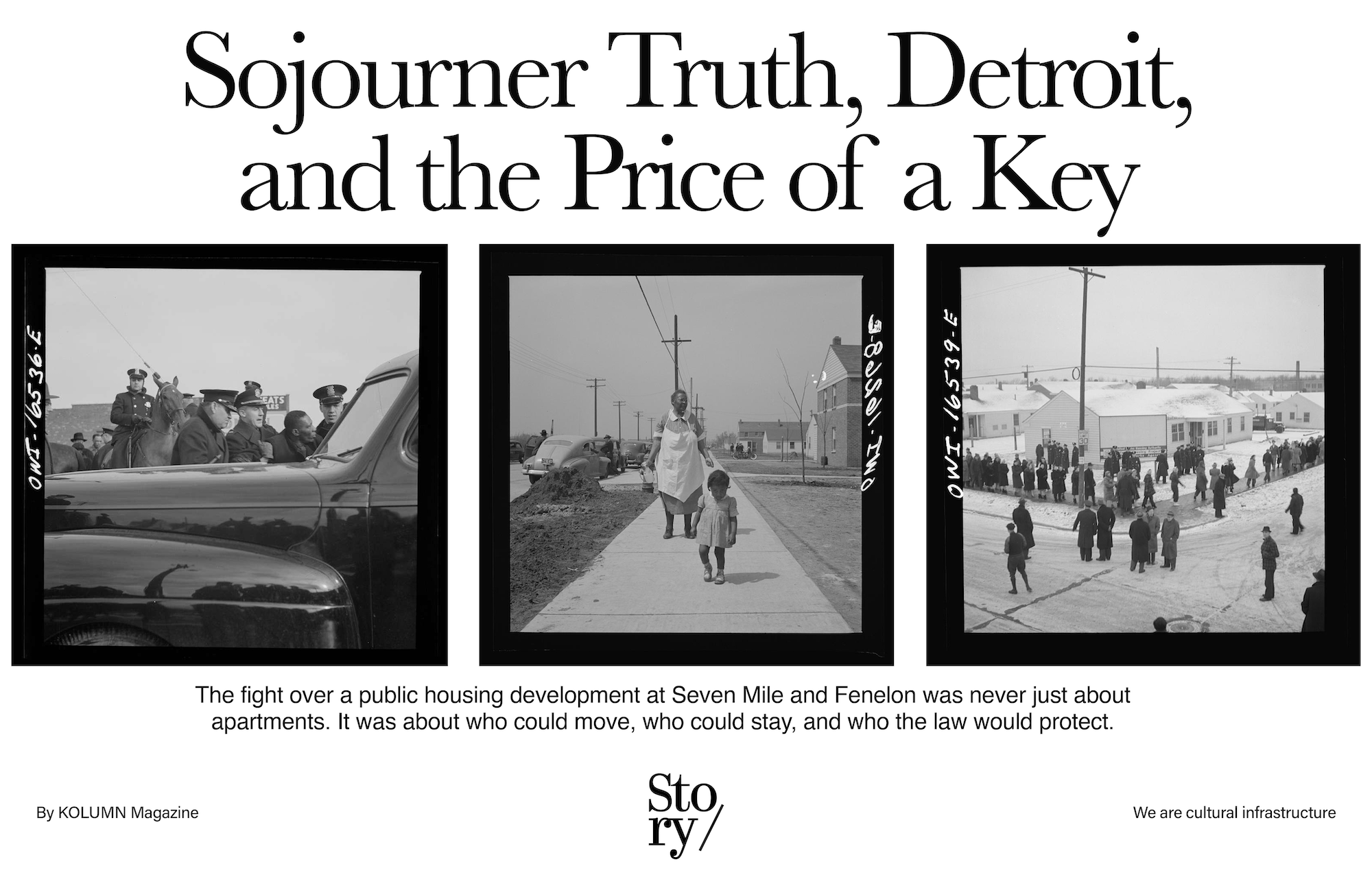
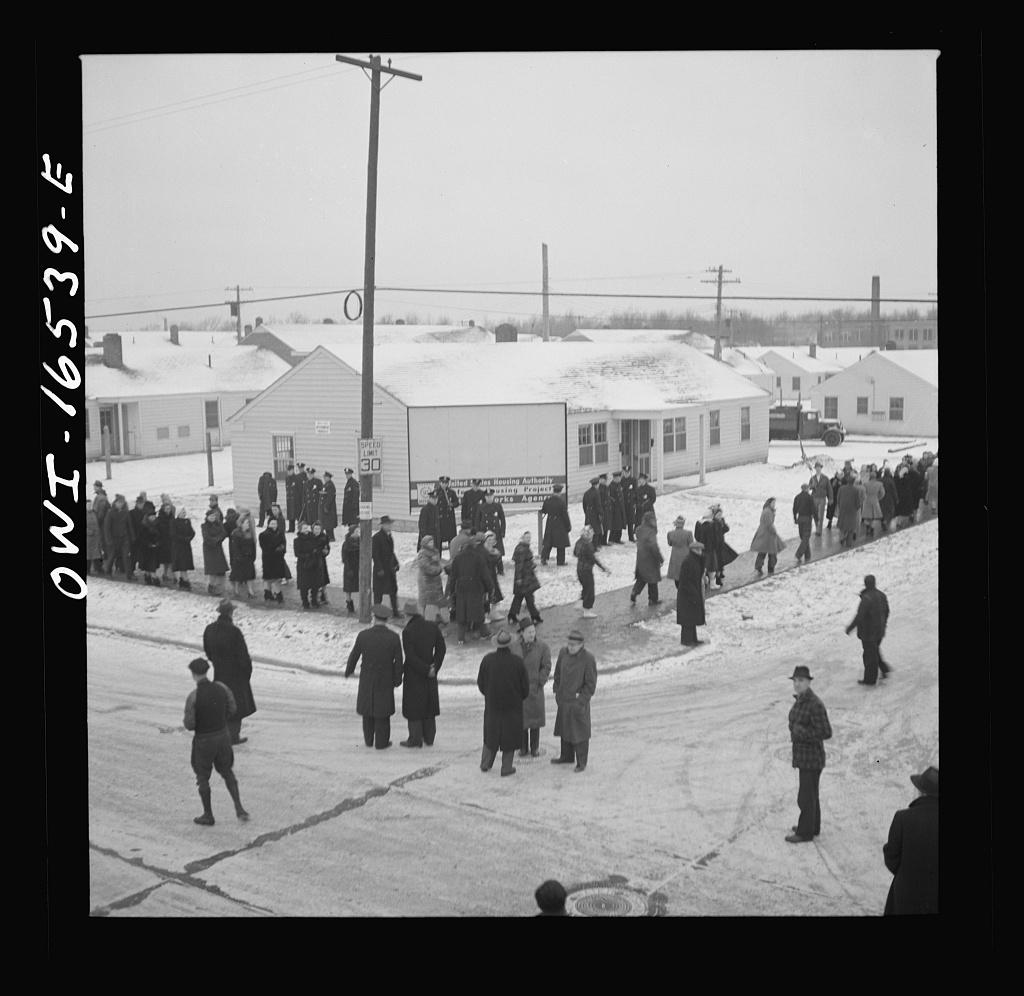
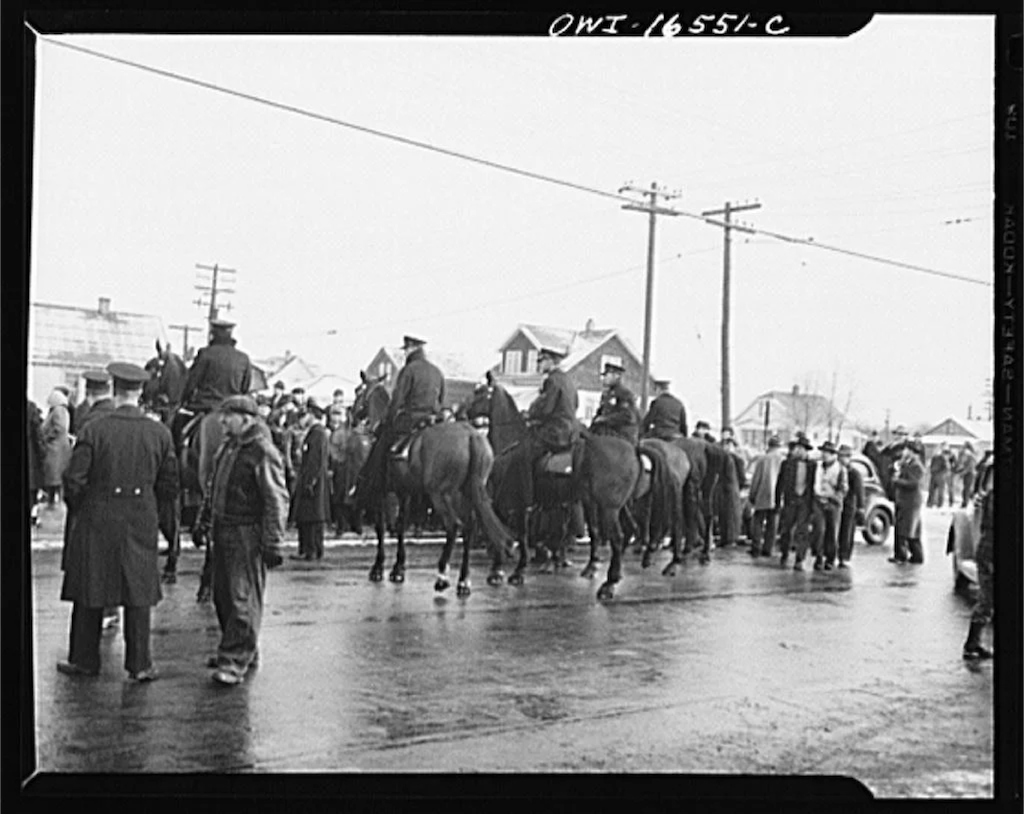
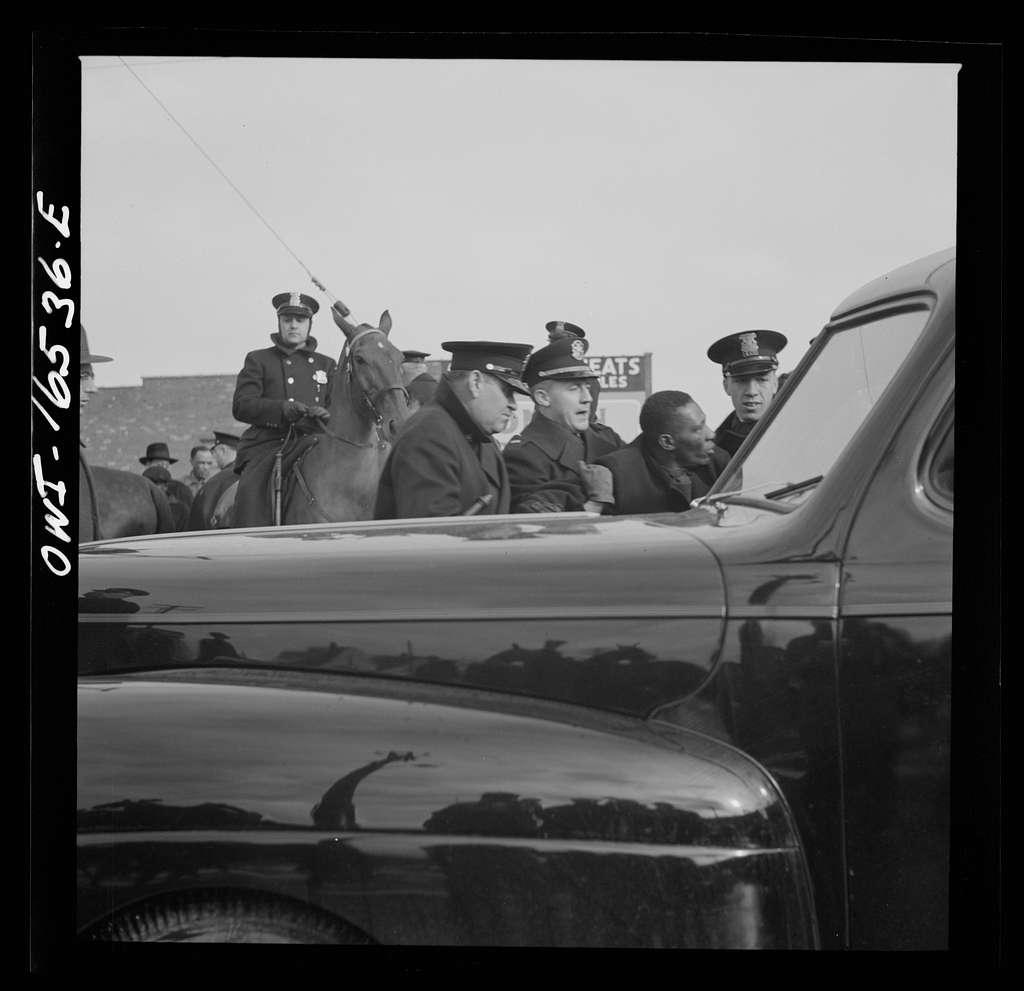
The crucial moment came in late February 1942. When Black families attempted to move into the newly built homes, the streets filled with people. What followed is widely described as the Sojourner Truth “riot,” though the label can obscure the asymmetry embedded in the event: a white effort to block Black tenancy, the resulting confrontation, and a law enforcement response that produced a stark disparity in arrests. Archival descriptions and later historical summaries note that injuries and arrests mounted, and that those arrested were overwhelmingly Black—even though the underlying conflict involved white resistance to Black occupancy. (The Library of Congress)
The Library of Congress preserves photographs from February 1942 showing police action in the conflict. The images, taken for the Office of War Information by photographer Arthur Siegel, carry an almost clinical clarity: uniforms, bodies in motion, a public housing landscape newly built and already contested. The photographs are not simply illustrations. They are records of the state’s presence in a neighborhood struggle—and of how quickly a housing policy question became a policing question.
The second move-in: Escorted tenancy and the theater of “order”
The February confrontation did not end the occupancy issue. It hardened it. Subsequent move-ins required extraordinary security measures—state troopers, police, and large-scale coordination—turning the simple act of moving furniture into an operation. Later summaries of the episode describe Black families being escorted into the homes in the face of hostile crowds, a scene that underscores the contradiction at the heart of American wartime rhetoric: a nation fighting authoritarianism abroad while deploying force at home to enable—or contain—the civil rights claims of its own citizens.
This “escorted tenancy” is part of the project’s significance because it demonstrates that integration, even partial and limited, was not a natural drift but a contested outcome requiring state intervention. And yet, the same state that could escort Black families into a public housing development could also accommodate white resistance through subsequent policy. The Sojourner Truth story, then, is not a simple tale of triumph. It is a portrait of a system capable of both enforcement and appeasement—often in the same breath.
From one project to a citywide doctrine: “Racial patterns” as policy
The most consequential legacy of the Sojourner Truth Homes may be what happened after the immediate conflict: how the episode became a precedent. Preservation documentation and historical analyses describe the way Detroit officials, reacting to the violence and the political pressure surrounding it, leaned into a doctrine that public housing should not “change the racial pattern” of neighborhoods. That phrase, echoed in professional real estate language of the era, functioned as a policy shield. It allowed officials to present segregation as prudence, as conflict prevention, as civic management. But the effect was to normalize segregation inside the very programs that were supposed to mitigate hardship.
The Sojourner Truth controversy thus sits at a hinge point between the New Deal/war-era expansion of public housing and the postwar entrenchment of metropolitan segregation. If you want to understand how a northern industrial city could be both a destination for Black opportunity and a machine for Black containment, the Sojourner Truth Homes offer a concentrated view. Scholars of Detroit’s development have used the city as a lens on national patterns: how white homeowners mobilized politically, how institutions treated integration as a risk, and how these choices helped produce durable inequality.
A precursor to larger rupture: The shadow of 1943
It is difficult to write about the 1942 housing conflict without acknowledging what came next. Sixteen months later, Detroit would experience the deadly 1943 race riot, an eruption shaped by many forces—workplace tensions, policing, overcrowding, and the combustible logic of segregation. Some histories explicitly frame the Sojourner Truth conflict as a prelude: a rehearsal of the city’s capacity for mass racial confrontation, and an early signal that wartime Detroit was living with unresolved, institutionalized inequities.
But the relationship between 1942 and 1943 is not only chronological. It is structural. The same housing pressures that made public housing necessary also made neighborhood boundaries feel existential to many residents. The same state that had expanded capacity to build and manage housing also had the capacity to police and control movement. And the same ideology that framed white space as something to be defended—by association, by intimidation, by policy—remained active.
The built environment as a racial instrument: Walls, lines, and infrastructure
Detroit’s segregation was not purely an attitude; it was engineered. Later physical artifacts—like the Birwood Wall (also known as the Eight Mile wall or Wailing Wall)—became literal embodiments of how development, lending, and federal requirements could produce barriers. Preservation records for the Birwood Wall connect its existence to institutional discrimination and federal policy, underscoring that segregation was not accidental. It was built.
The Sojourner Truth Homes belong in this same category of evidence. They are not a wall, but they are a boundary event—an episode where lines were tested and then reinforced. The Guardian’s broader reporting on infrastructure and inequality highlights how man-made lines—roads, boundaries, divisions—become mechanisms that harden inequality over time. The Sojourner Truth conflict shows that such mechanisms were not only concrete and asphalt; they were also administrative and social, enforced through the coordination of neighborhood groups, real estate interests, and public institutions.
What the homes were like—and what survival looked like inside them
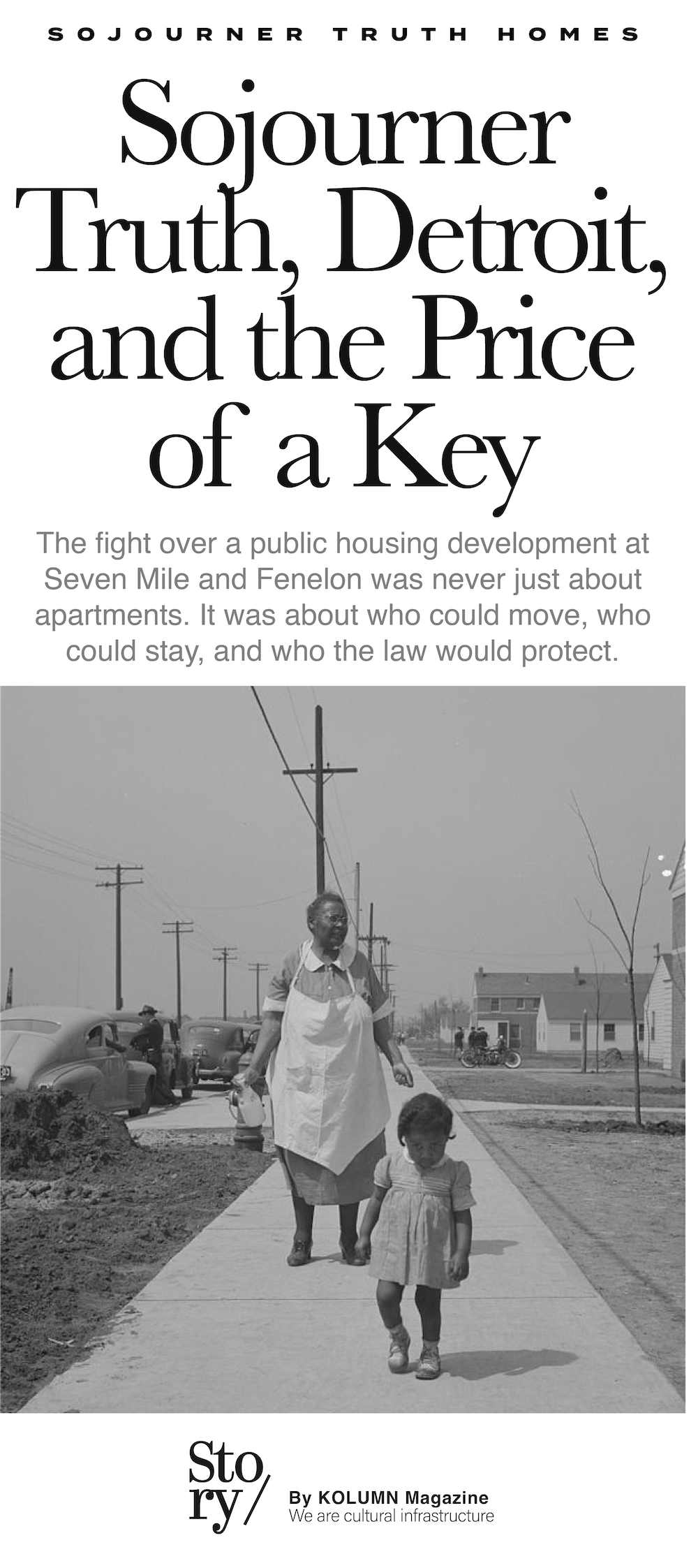
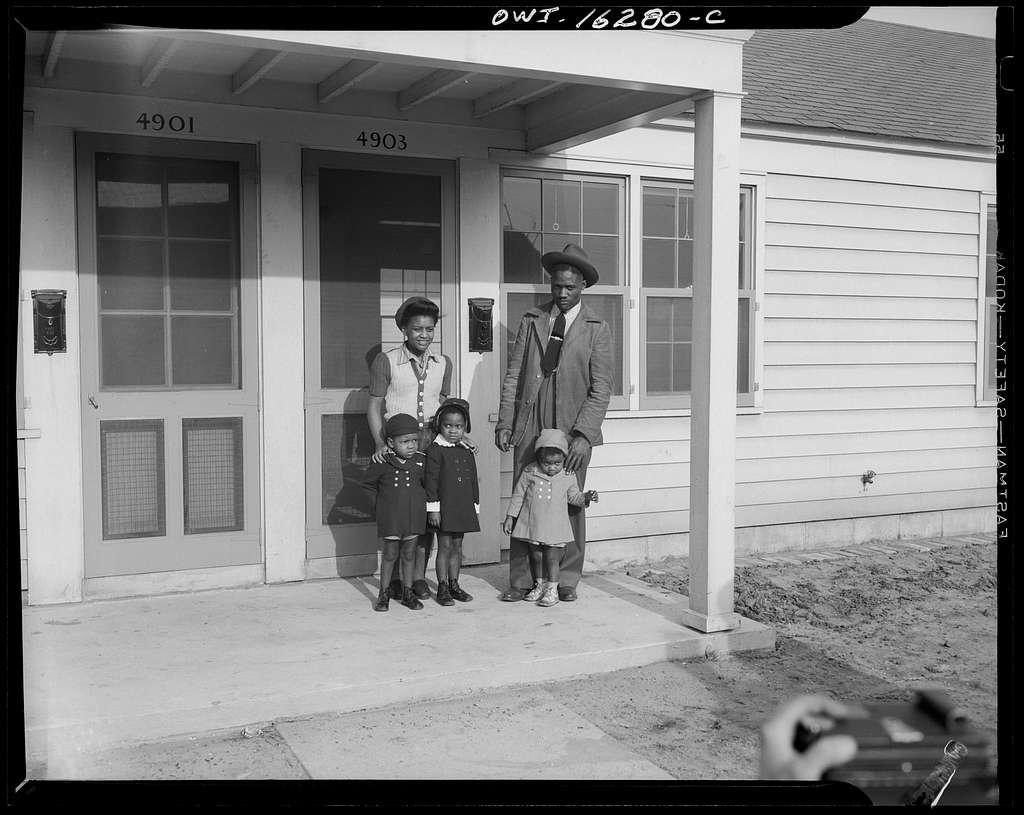
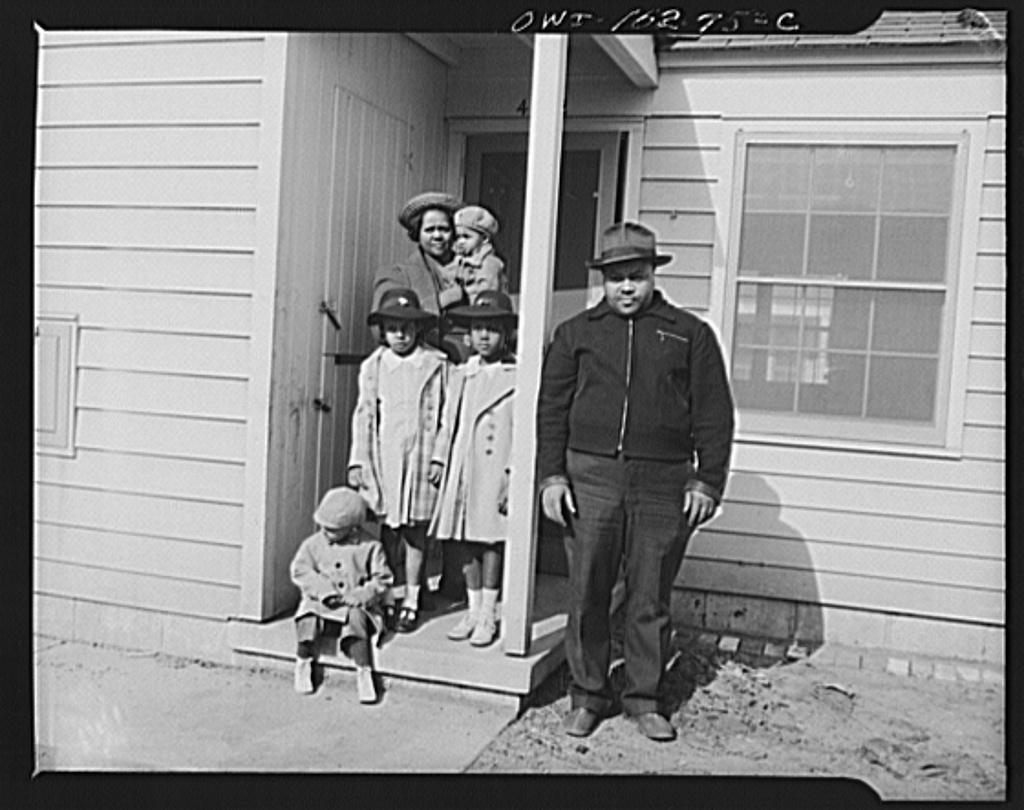
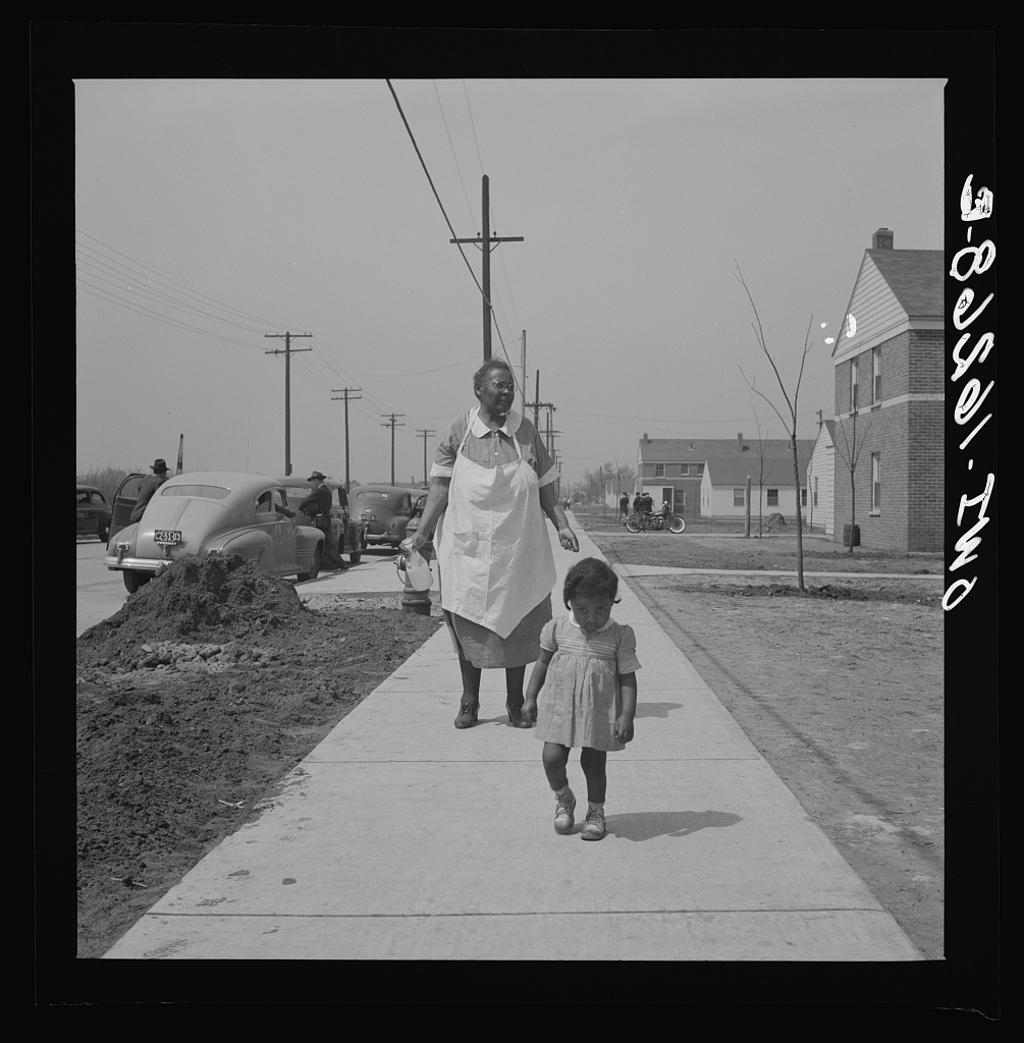
It is easy, in retelling the story, to treat the Sojourner Truth Homes as a symbol and forget that they were also housing—kitchens, stairwells, sidewalks, children’s routines. The National Register documentation describes the surviving historic buildings as two-story red brick rowhouses arranged in a grid, with multiple entrances and repeated unit patterns—architecture built for scale and function, not luxury. These details matter because they remind us that the conflict was over ordinary domestic life: the right to come home, to raise children, to live near work, to have reliable heat and plumbing and space.
Oral histories and community storytelling help restore that dimension. A 2021 feature about the “Sojourner Girls,” for example, frames the project not only as a site of conflict but as a place where friendships formed and endured—where childhood unfolded inside a development famous for its controversy. The story is a corrective to purely crisis-driven history: it insists that even in contested spaces, people made lives.
Later decades: Demolition, rebuilding, and the politics of preservation
The project did not remain frozen in 1942. Like much public housing, it moved through cycles—maintenance challenges, redevelopment plans, partial demolition, rebuilding, and changing administrative approaches. Preservation and city documentation note that portions of the original complex were demolished in the late twentieth century, and later construction added new buildings. Yet a set of original structures remained and ultimately gained formal historic recognition, including listing on the National Register of Historic Places and the dedication of a historical marker.
The significance of that recognition is twofold. First, it treats the site as historically important not because it is beautiful architecture, but because it is the location of a struggle over civil rights in the North—a struggle often misremembered or minimized in national narratives that locate “real” segregation somewhere else. Second, it frames the homes as an educational site: a place where the public can confront evidence that discriminatory housing practices were not merely private, but policy-embedded and state-mediated.
The City of Detroit’s own announcement about the historical marker emphasizes both the wartime purpose—housing for Black workers essential to war production—and the project’s role as a battleground against housing discrimination. That dual emphasis is important. It locates Black labor at the center of the war economy, and it acknowledges that the right to safe housing was contested even for those performing “essential” national work.
Why this history still sits in the present tense
The Sojourner Truth Homes are sometimes framed as a period piece: a shocking artifact from a time when racism was crude enough to announce itself on a signboard. But Detroit’s housing story did not end with signs. It evolved into subtler mechanisms—mortgage markets, municipal boundaries, school attendance zones shaped by residential segregation, infrastructure routes, and property tax practices that could destabilize Black homeowners even after formal civil rights gains.
A Washington Post reflection on school segregation and Detroit underscores how residential segregation can be reproduced through institutional choices even without explicit Jim Crow law—because neighborhood-based systems translate housing boundaries into educational boundaries. That is part of the Sojourner Truth legacy: the reminder that the map is not neutral, and that housing fights have downstream consequences in schooling, wealth, health, and political power.
The broader scholarship and public history work on segregation makes a similar argument: mid-century housing policy was not simply biased; it was structured to produce and preserve separation. A widely circulated explanation of New Deal–era housing programs notes how federal policy could enforce segregation and highlights the Sojourner Truth site as an emblematic example, including the photographed sign across from the project.
And Detroit remains a particularly sharp lens because the metropolitan story—city/suburb divides, uneven investment, racially patterned opportunity—has been measurable for decades. Even older reporting on Detroit’s segregation and suburban hostility framed the city as among the most segregated by census tract, tying political conflict to residential patterning. While the metrics and demographics shift over time, the basic point endures: housing is a battleground where inequality can be manufactured and maintained.
The Sojourner Truth Project as a journalistic assignment
To write the Sojourner Truth story responsibly is to resist the temptation to reduce it to a single riot, a single sign, or a single morality play. The ethical challenge is that the most photogenic elements—the police, the crowds, the slogans—can eclipse the quieter but more consequential pieces: the policies that made the conflict predictable, the administrative reversals that rewarded pressure, the structural logic that treated Black mobility as a threat.
The record supports several clear conclusions. The project was built in a wartime emergency to address a real housing shortage, particularly for Black workers who faced discriminatory barriers. The opposition was explicitly racial, organized, and willing to use intimidation and violence to block Black tenancy. The law enforcement response and subsequent policy consequences helped strengthen a doctrine of preserving neighborhood “racial patterns,” shaping public housing decisions for years.
But a journalist also has to tell the story of people—not only “rioters” and “officials,” but families who wanted a functional home near work, and children who grew up inside a place that the city treated as a crisis. That is why the later community narratives—like the “Sojourner Girls” story—matter. They are not sentimental add-ons; they are evidence of what was at stake.
What the Sojourner Truth Homes ultimately represent
The Sojourner Truth Project is often summarized as a cautionary tale about northern racism. That summary is correct as far as it goes, but it does not go far enough. The project represents how a city—under federal partnership, wartime pressure, and local political constraint—attempted to solve a material problem while preserving a racial order. It represents how “public” in public housing did not mean universally accessible, and how “emergency” did not suspend discrimination but sometimes intensified it.
It also represents the fragility of rights when they collide with property regimes. In the Sojourner Truth conflict, “neighborhood” became a kind of citizenship credential, and whiteness functioned as a claim on space. The contest was not merely whether Black families could live in a particular development; it was whether the city would accept Black mobility as legitimate.
And finally, the project represents the long afterlife of these fights. The homes are now marked and historically listed, which signals a public willingness to remember. But memory is not the same as repair. The lesson of Sojourner Truth is that housing is where a democracy’s promises either become domestic reality or remain abstract. A nation can draft lofty principles, but if families cannot live safely where opportunity exists, the principles will not survive contact with daily life.
In Detroit, the Sojourner Truth Homes made that truth visible in 1942. The fact that we are still returning to the story—through archives, preservation, scholarship, and community memory—suggests that the underlying question has not disappeared. It has simply taken new forms: who gets access to stability, who gets protected by policy, and who is asked to endure the costs of “order.”