



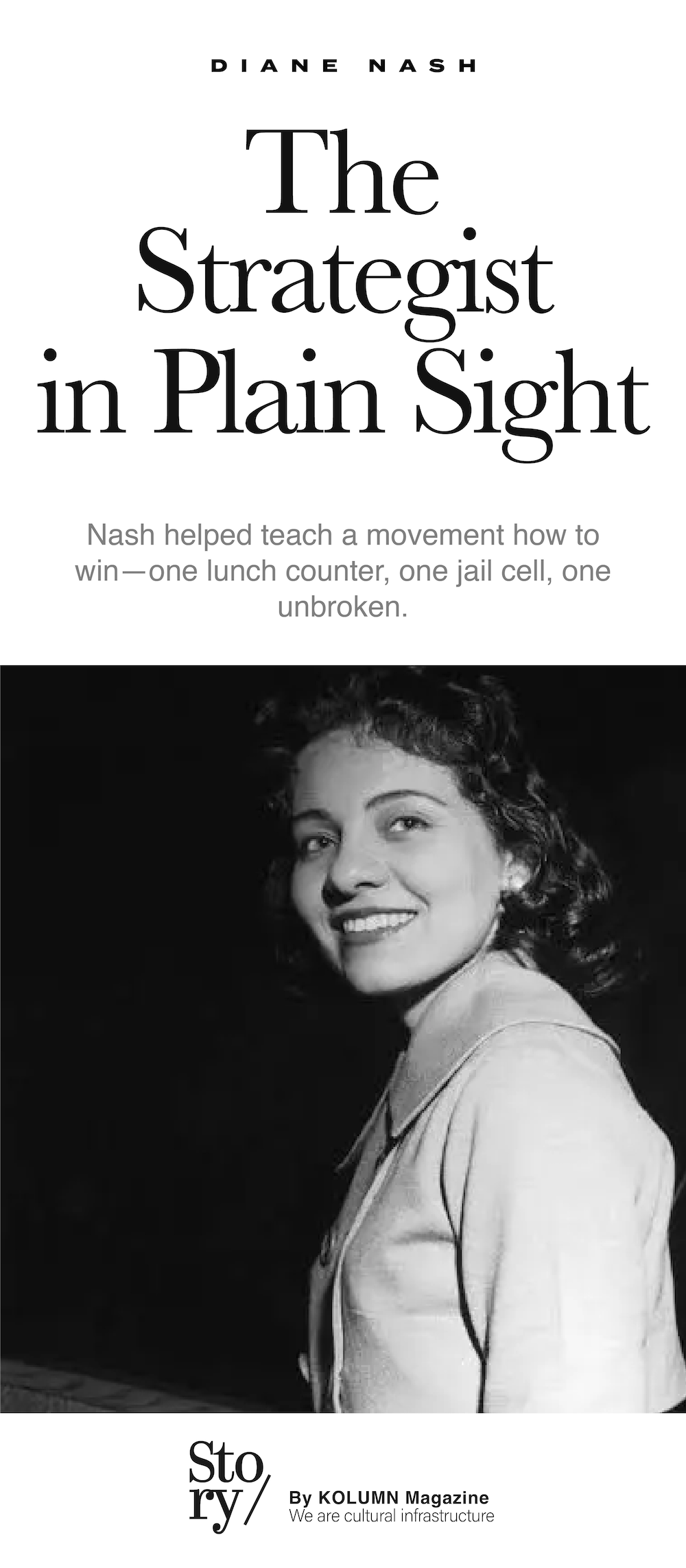
Her story is not simply that she fought segregation. It is that she helped teach America how segregation could be defeated—and what it would cost to do it.
Her story is not simply that she fought segregation. It is that she helped teach America how segregation could be defeated—and what it would cost to do it.
By KOLUMN Magazine
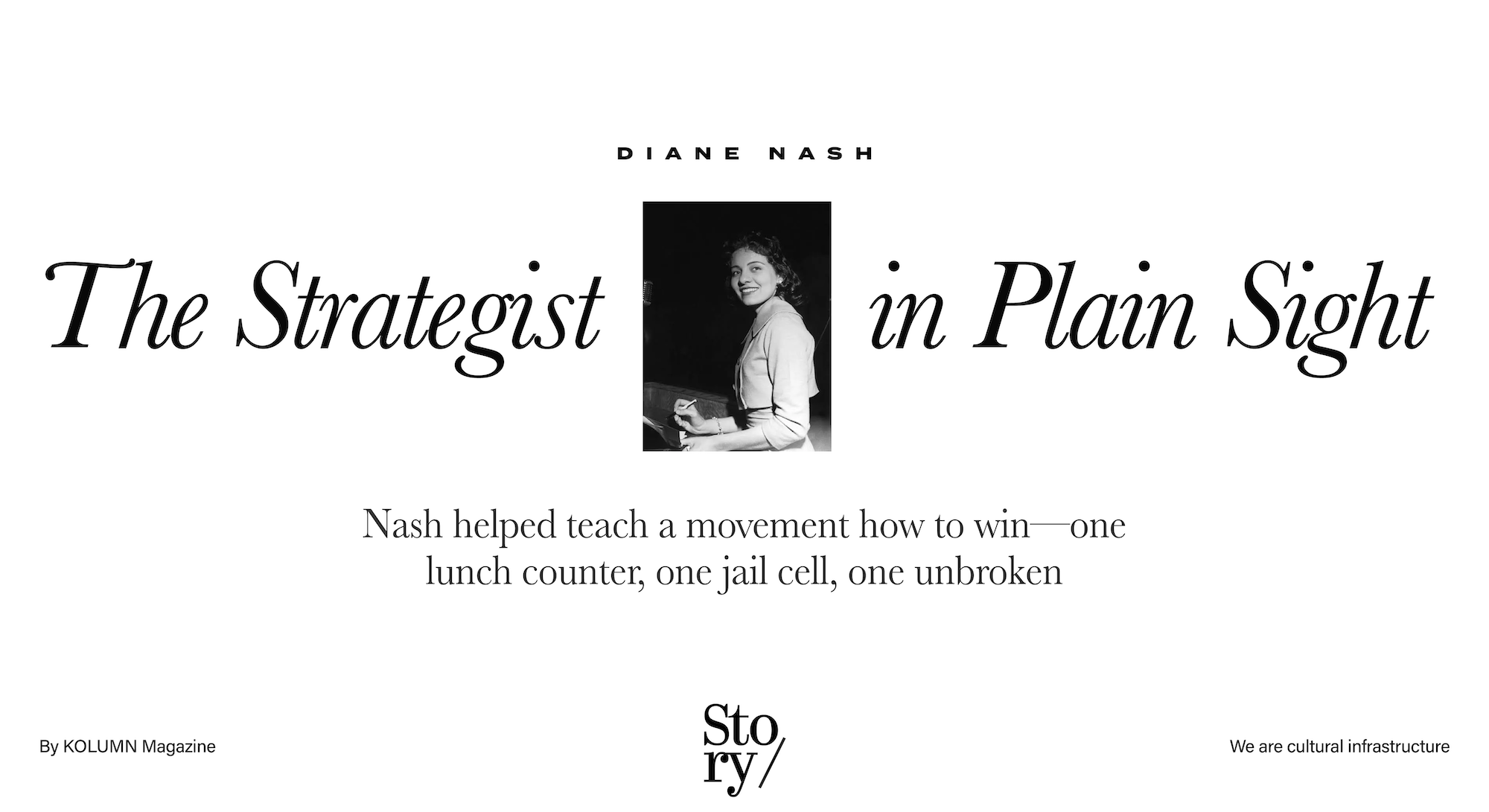
Diane Nash is often introduced with the kinds of labels American memory knows how to reward: Freedom Rider, student leader, civil rights heroine. Each is true, and each is incomplete. Nash’s significance is not only that she was present at pivotal scenes—at lunch counters, on buses, in jails—but that she helped design the logic binding those scenes together. The civil rights movement, at its best, treated public space as a classroom and moral crisis as an organizing tool. Nash emerged as one of its sharpest teachers: someone who could translate a philosophy of nonviolence into operational decisions under pressure, and who understood—early, and more clearly than many—that the movement would be judged not just by its righteousness but by whether it could sustain a campaign long enough to force the state to change.
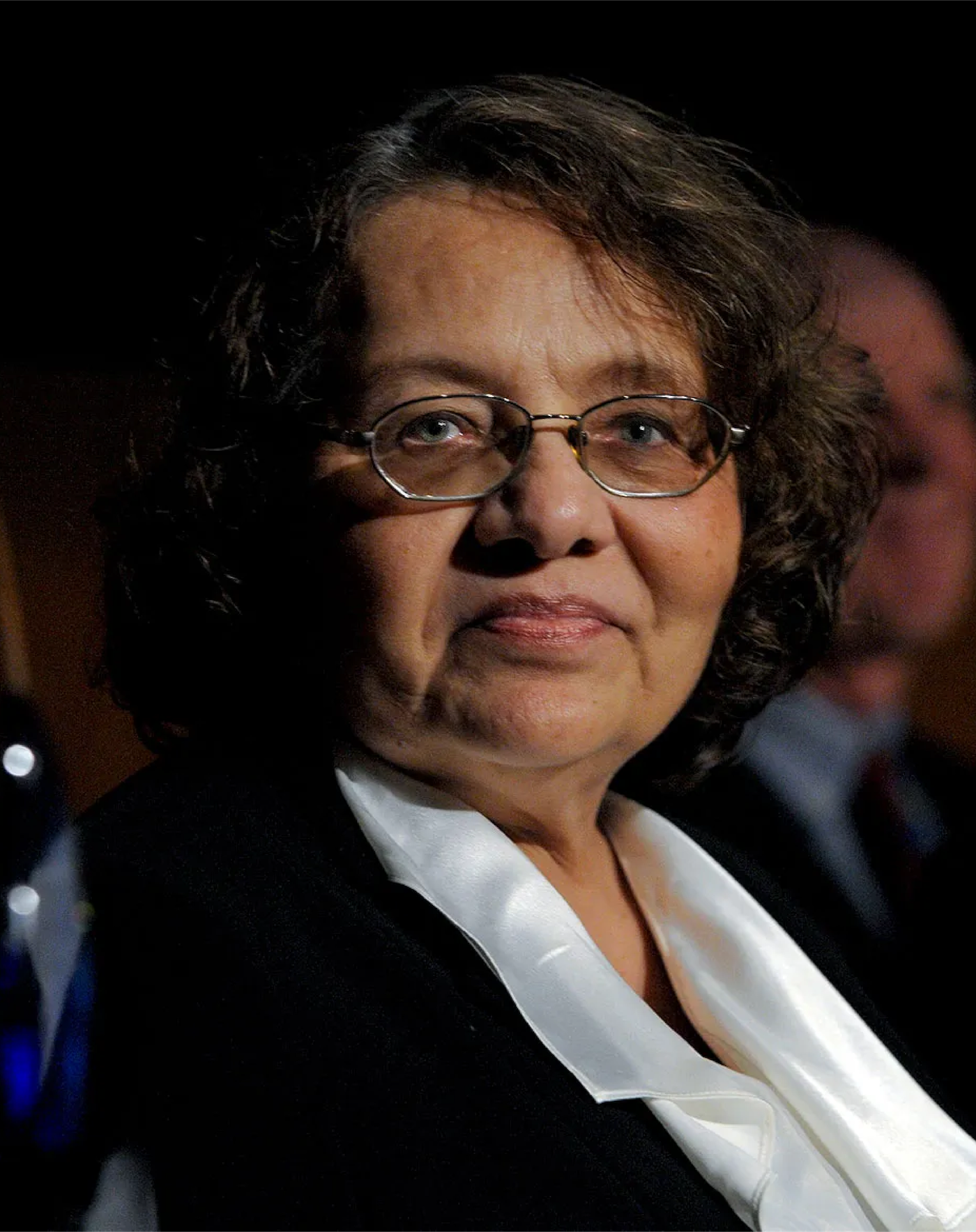
Her story begins far from the mythology of the Deep South. Born in Chicago in 1938, Nash grew up in a comparatively more integrated northern city than the world she would encounter later. Multiple biographical accounts note her upbringing in a middle-class family and her Catholic schooling—details that matter not because they make her exceptional, but because they complicate the popular assumption that the most effective Southern movement leaders were “trained” by Southern segregation from birth. Nash’s initial political education, in other words, did not come from lifelong familiarity with Jim Crow. It came from the shock of encountering it in a place where it was enforced as a civic religion.
That encounter happened when Nash transferred to Fisk University in Nashville at the end of the 1950s. It is difficult, now, to reconstruct the full violence of that moment without flattening it into a storybeat. She arrived in a city where segregation was not merely custom but choreography, with separate entrances, separate counters, separate bathrooms, and separate expectations. Contemporary accounts and later interviews describe her reaction not as gradual awakening but as immediate confinement—a sense that public life had narrowed around her, that the city’s rules demanded she shrink.
Nash’s name became inseparable from Nashville because Nashville produced a particular kind of movement professionalism. This was not the spontaneity of outrage, though outrage was plentiful. It was a discipline assembled through workshops and repetition—a political method drilled into young people before they tested it on the street. In Nashville, the method bore the mark of the Rev. James Lawson Jr., who had studied Gandhian nonviolent resistance and returned to teach it as both moral practice and tactical system. Lawson trained students to withstand abuse without returning it; to remain coherent when threatened; to accept arrest without losing purpose. The point was not sainthood. The point was leverage. A movement that could remain orderly under attack could make its attackers look like what they were, in public, on camera, without exaggeration.
Nash absorbed Lawson’s teachings and, more importantly, learned how to operationalize them. The Nashville sit-ins that began in early 1960 were not simply acts of defiance but coordinated tests of the city’s segregationist apparatus. Students took seats at lunch counters they were forbidden to use, asking for service and refusing to leave. The response was predictable: harassment, arrests, and public debate. But the predictability was part of the strategy. The sit-ins were designed to force a confrontation between the city’s self-image and its policies.
One of Nash’s signature qualities—remarked upon in multiple accounts—is how she spoke to authority. In an era when white officials expected Black deference or explosive anger, Nash often offered something more destabilizing: calm, pointed clarity. During the Nashville campaign, she was part of the effort to press Mayor Ben West on whether racial discrimination was morally wrong. West’s public admission that discrimination was wrong became, in movement lore, a hinge moment—an example of how direct action could corner power into acknowledging its own contradictions. Nashville’s lunch counters began to desegregate soon after.
The temptation is to treat that story as a local triumph. But Nash and her cohort were already thinking beyond city limits. The sit-in movement, spreading across the South, raised a strategic question: would student activism remain auxiliary to older organizations, or would it become its own engine? In April 1960, students gathered in Raleigh, North Carolina, in a meeting encouraged by Ella Baker—who urged them to build an organization with its own leadership and independence. Out of that gathering came the Student Nonviolent Coordinating Committee, SNCC, which would become one of the movement’s most dynamic and, later, most internally contested organizations. Nash was among those associated with SNCC’s early formation and with the student insistence on autonomy.
SNCC mattered not just because it existed, but because it represented a theory of leadership: participatory, youth-led, suspicious of charisma as a substitute for structure. Nash’s career in the early 1960s can be read as an argument for that theory. She was not interested in being “the” face of a struggle. She was interested in whether the struggle could win.
No episode shows this more starkly than the moment the Freedom Rides nearly collapsed.
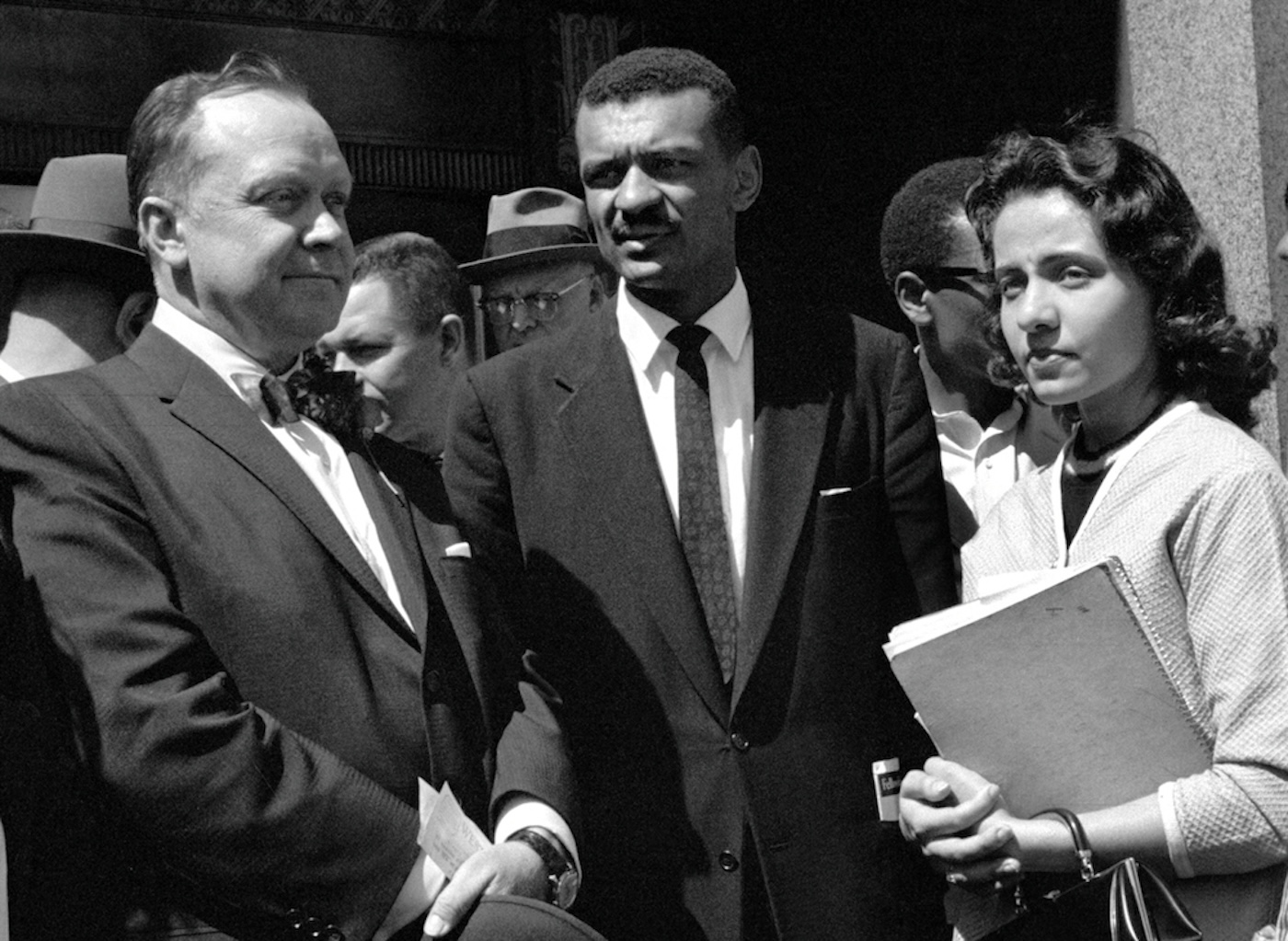
In May 1961, interracial Freedom Riders—organized initially by the Congress of Racial Equality (CORE)—rode buses into the Deep South to challenge segregation in interstate travel. The riders were met with mob violence, including the firebombing of a bus near Anniston, Alabama, and brutal attacks in Birmingham. After the violence, there was serious discussion about suspending the rides. The logic was human: people could be killed. The logic was also political: if the rides ended under terror, the lesson to segregationists would be that violence works. Nash grasped that second logic with uncommon immediacy. Accounts of the period repeatedly return to her insistence that the rides continue, and to her role in recruiting and organizing new riders—many from Nashville—to pick up the campaign where blood and smoke had tried to end it.
This is where Nash’s story moves from bravery, which is abundant in movement history, to strategy under coercion. It takes courage to get on a bus headed into danger. It takes a different kind of courage to decide, in the aftermath of catastrophe, that the only way forward is repetition—that you respond to an attempted shutdown by increasing the campaign’s scale. Nash’s reasoning, as recorded in later interviews and accounts, was brutally clear: if stopping could be achieved through violence, every nonviolent campaign would carry an expiration date determined by the other side’s cruelty. In that sense, continuing the Freedom Rides was not just about buses; it was about the credibility of nonviolence itself.
It is easy to forget how young Nash was during these decisions. She was in her early twenties—an age when many people are still learning the contours of adulthood. In the movement, she was helping determine the contours of national confrontation. The federal government was forced into response. The Kennedy administration, worried about international embarrassment and domestic escalation, tried to manage the crisis. Nash’s interactions with officials became part of the story. A Washington Post feature on women of the Freedom Rides recounts an anecdote that captures the gendered contempt Nash faced even as she shaped events: Attorney General Robert F. Kennedy reportedly demanded, “Who the hell is Diane Nash?”—a question that reads, decades later, as both insult and inadvertent recognition.
Nash’s leadership did not occur in a vacuum; it occurred in a movement still infected with the sexism of the society it was trying to transform. That contradiction—the struggle for liberation conducted within patriarchal assumptions—shows up across civil rights history, but it carries a particular sting in Nash’s case because her work was so foundational and yet so often backgrounded. Later retrospectives and essays have emphasized how women were essential to movement logistics and strategy while being denied equal public platform. A TIME account of the 1963 March on Washington, for example, notes that Nash was recognized in the event’s “Tribute to Negro Women Fighters for Freedom,” yet she was not present and, more broadly, women were rarely allowed to speak despite their labor and leadership.
This tension helps explain why Nash’s legacy can feel simultaneously celebrated and under-credited. The movement has room for martyrs and orators; it has less room for organizers whose genius appears in meetings, phone calls, and decisions made before the cameras arrive.
Nash paid for those decisions in the currency the movement spent most: freedom. Arrests were routine. Jail became not a threat but a tactic—“jail, no bail,” a refusal to treat bail as a return to normalcy. Nash’s willingness to accept incarceration was not a performance of purity; it was a form of protest against the idea that the state could price resistance. Her story includes a particularly searing episode in Mississippi, where she faced punishment for teaching nonviolent tactics and encouraging young people to persist. Accounts from the King Institute note that she chose jail over paying a fine even while pregnant—an act that, stripped of romance, is a cold confrontation with the state’s willingness to endanger a Black woman’s body to preserve white supremacy.
If the early 1960s made Nash a national figure within movement circles, the mid-1960s placed her at the center of the struggle that would reshape American democracy: voting rights.
The standard popular narrative of Selma focuses on a single day of violence—“Bloody Sunday,” March 7, 1965—when state troopers attacked marchers on the Edmund Pettus Bridge. But Selma was not a day; it was a campaign. It was built by local activists, by organizations including SNCC and the Dallas County Voters League, and then joined by the SCLC. The King Institute’s account of the Selma to Montgomery march emphasizes how the campaign emerged from sustained local organizing and an environment in which Black residents were systematically blocked from the ballot.
Nash’s role in voting rights work is sometimes described as less photogenic than the Freedom Rides, and that is precisely why it matters. Voting rights campaigns required patient organizing, logistical endurance, and strategic escalation—skills that Nash had been sharpening since Nashville. Biographical summaries credit her with work on the Alabama Voting Rights Project and with deep involvement in Selma-era organizing.
The Voting Rights Act of 1965 did not arrive as a gift from enlightened governance. It was forced by the collision of local courage and national embarrassment: by the spectacle of citizens being beaten for demanding a constitutional right; by the persistence of activists who made it impossible for the federal government to claim ignorance. Government archives and institutional histories describe the Act’s purpose plainly: to outlaw discriminatory voting practices and dismantle barriers used to prevent Black citizens from voting.
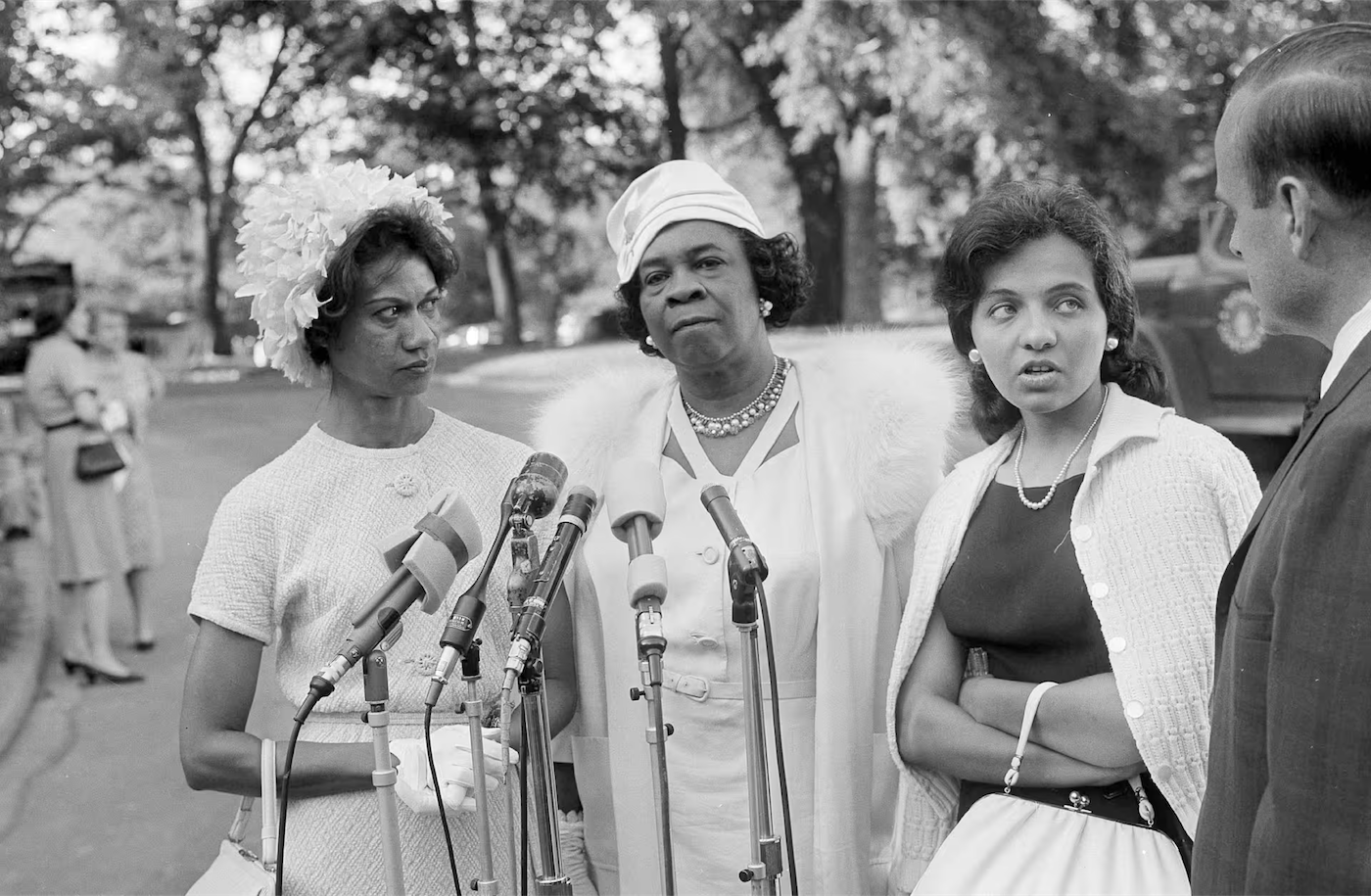
To understand Nash’s significance in this sphere, you have to understand her as an architect of escalation. The civil rights movement was not one tactic; it was a ladder. Sit-ins attacked the everyday segregation of commerce. Freedom Rides attacked segregation in transit and forced federal intervention. Voting rights campaigns attacked the political root: who gets to decide, at all, what a community is allowed to become. Nash moved along that ladder with uncommon coherence. She did not treat each campaign as an isolated moral drama. She treated each as a step in dismantling a system.
Her language about nonviolence underscores that point. In later years, Nash has resisted the way “nonviolence” can sound passive or purely prohibitive. A Middlebury account of her reflections notes her argument that English lacked a word for the kind of force Gandhi developed—an energy generated from love rather than harm—and that she has used terms like “agapic energy” to describe the ethic driving such campaigns. This is not rhetorical flourish. It is Nash insisting that nonviolence is not the absence of action, but the presence of a particular kind of action: disciplined, confrontational, and strategic.
The Guardian, in an interview framing Nash’s philosophy and history, captured the blunt stakes of her approach: she understood nonviolent protest as “the most important weapon” for civil rights activists. The phrasing is instructive. Weapon. Not symbol. Not plea. Weapon—something designed to win.
Winning, however, has always been complicated by recognition. Nash’s reputation among historians and movement veterans is formidable, yet her name still does not circulate as widely as it should in mainstream civic memory. That gap is not accidental. It reflects how American storytelling rewards certain forms of leadership—especially male, charismatic, and pulpit-adjacent—over the quieter authority of organizing.
Recent decades have seen a recalibration. Scholars and journalists have increasingly foregrounded women’s centrality to movement victories. The Atlantic, in a piece about Coretta Scott King and “hidden women” of the era, explicitly situates Nash as one of the figures who helped keep the Freedom Rides going—a reminder that even within elite narratives, her role is now harder to erase.
Local and institutional recognition has also grown. Nashville has moved to honor her legacy in civic space, and she has received major national awards. In 2022, Nash was awarded the Presidential Medal of Freedom, the nation’s highest civilian honor, with coverage from institutions including Fisk University (her alma mater) and Smithsonian Magazine, which emphasized her leadership across the sit-ins and Freedom Rides and her long commitment to the principles that shaped the movement.
Awards, of course, can be both tribute and replacement—substituting ceremony for deeper understanding. The question is what, exactly, is being honored when Nash is honored. If the Medal of Freedom recognizes “courage,” it risks turning her into a generalized icon of bravery. If it recognizes “leadership,” it risks folding her into the same simplified leadership narrative that obscured her in the first place. Nash’s true legacy is more precise and more challenging: she modeled a form of democratic militancy rooted in disciplined love, yes, but also rooted in analysis. She demonstrated that moral clarity and strategic rigor are not opposites; they are allies.
That combination is why her work remains relevant in the present tense. Not because contemporary movements should copy the 1960s as nostalgia, but because Nash’s example offers a framework for thinking about power.
First, she understood that violence is not just physical harm; it is a political message. The attempted shutdown of the Freedom Rides was a message: we can end your campaign by hurting you. Nash answered with a counter-message: you cannot. That logic applies beyond buses. It applies whenever intimidation is used to shrink civic participation.
Second, she understood that spectacle without structure dissipates. A sit-in is a scene. A campaign is the discipline that makes scenes accumulate into change. Nash was a campaign thinker.
Third, she understood that movements must interrogate themselves as well as their opponents. The sexism that sidelined women’s voices was not an external problem only; it was internal. Retrospective accounts of the March on Washington and broader movement dynamics show how women were both celebrated and constrained—praised in tribute while denied microphones. Nash’s story forces an honest reading of the movement as human, flawed, and still magnificent.
It is also worth noting how Nash’s public choices later in life reflected her unwillingness to let history be staged as comfort. When anniversary commemorations turn struggle into pageantry, Nash has sometimes resisted participation. Coverage around Selma commemorations has highlighted moments when she refused to be part of symbolic reenactment under political conditions she found unacceptable—a reminder that, for her, the movement was not theater. It was confrontation, and it demanded moral seriousness even in remembrance.
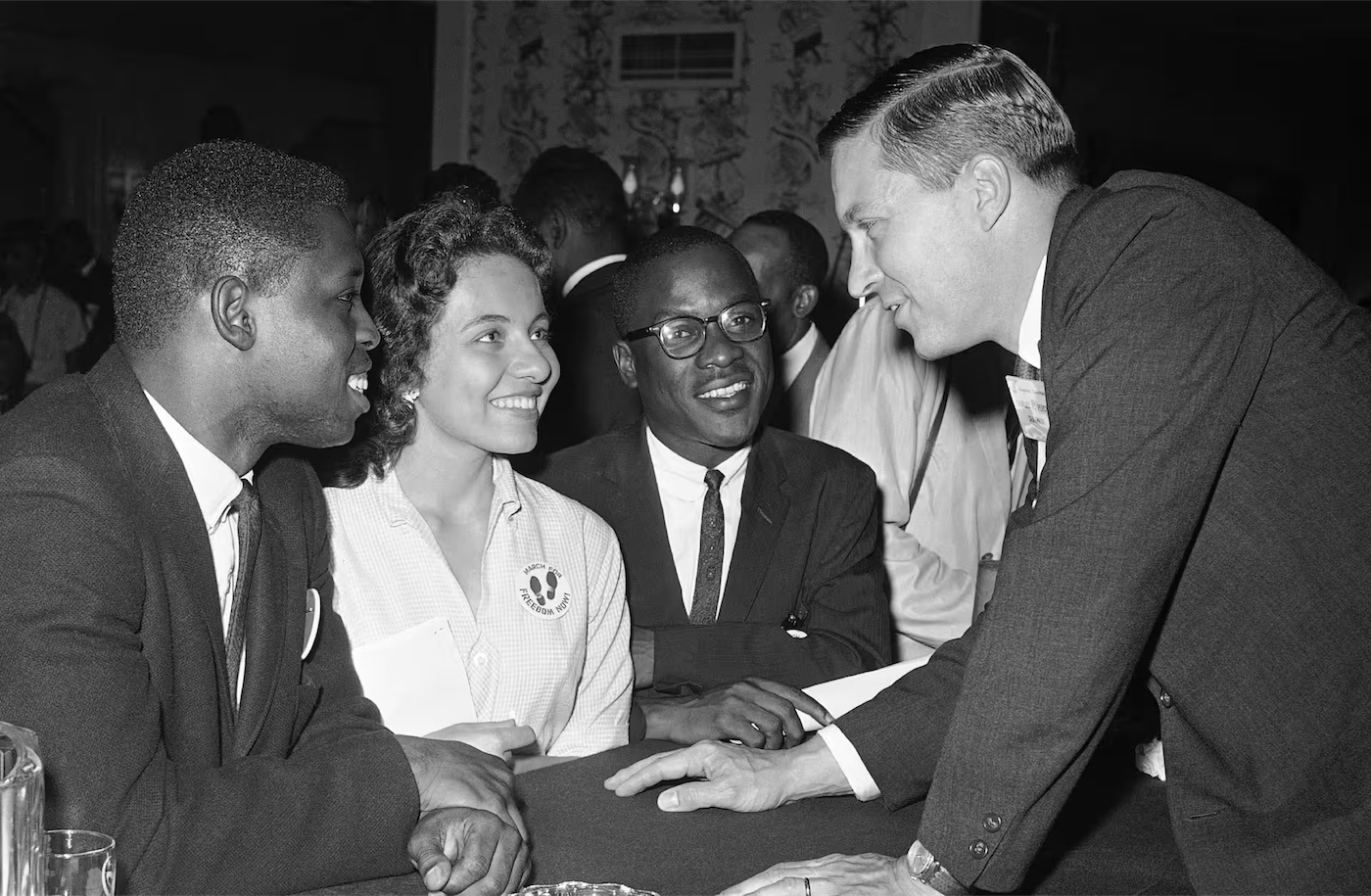
In 2023, Word In Black ran a piece naming Nash among “underappreciated” Black history makers—framing her as a Tennessee freedom fighter whose fearlessness deserves greater public recognition. The phrasing is contemporary, even informal, but the underlying point is sober: the archive of the civil rights movement is still contested. Who gets remembered, and how, is part of the struggle’s afterlife.
That afterlife matters because Nash’s life offers a corrective to two distortions: the distortion that the movement was inevitable, and the distortion that it was the product of singular heroes.
Nothing about Nashville’s lunch counters desegregating was inevitable. It required students willing to endure abuse, leaders willing to coordinate risk, and a strategic intelligence capable of turning local action into citywide change. Nothing about the Freedom Rides succeeding was inevitable. The rides could have ended in Birmingham in smoke and fear. They did not, in part because Nash treated “continuation” as a political principle. Nothing about voting rights legislation was inevitable. The Voting Rights Act came after sustained organizing and public violence that forced federal attention. Nash moved through all these arenas as a connective figure—one who helped translate local resistance into national consequence.
And because she did so without the trappings of celebrity leadership, her story also reveals something about the movement’s internal ecology. The civil rights era was powered by thousands of people whose names are rarely said. Nash has repeatedly emphasized that reality in her reflections: that change was collective, that credit is often misassigned, that the movement’s victories were the product of ordinary people doing extraordinary things in sustained coordination. Biographical summaries and interviews echo this humility as a core feature of her public memory.
If you want to measure Nash’s impact, you can do it through events: Nashville, Freedom Rides, Selma. But you can also measure it through methods, because what she helped develop was a reusable approach to social change.
That approach begins with preparation. Nashville’s workshops rehearsed confrontation. They treated dignity not as a feeling but as a practice—how you sit, how you speak, how you respond when someone tries to humiliate you in public. PBS materials based on interviews with Nash emphasize this combination of training and memory: the fact that the movement’s actions were not impulsive but crafted, and that Nash could narrate them decades later with the clarity of someone who knew why each step mattered.
It continues with escalation: the willingness to raise stakes when the opponent raises violence. Nash’s decision to continue the Freedom Rides after Birmingham is the clearest example, but the pattern appears elsewhere—in the willingness to embrace jail, to reject bail, to treat punishment as proof of injustice rather than a signal to retreat.
It relies on narrative discipline: presenting the movement not as chaos but as moral order. The insistence on being “overly dressed,” as Nash recalled in an Eyes on the Prize interview excerpt, was not respectability politics for its own sake. It was a strategic rejection of stereotypes used to justify violence. If segregationists wanted to portray protesters as unruly, the protesters would show up as composed citizens demanding rights—forcing the public to watch who, exactly, was disorderly.
And it ends, ideally, with institutional change—new policies, new laws, new enforcement. A movement that produces catharsis but no structural shift may still matter culturally, but the civil rights movement that Nash helped lead was relentlessly structural. It targeted the systems that made segregation durable: the rules of public commerce, the rules of transit, and ultimately the rules of political participation.
All of this raises a question that Nash’s life invites readers to ask: what does it mean to be an “activist” in a country that often romanticizes activism but resists its demands?
In popular culture, activism can be framed as expressive: speaking out, marching, witnessing. Nash’s activism was managerial in the deepest sense: assembling people, directing actions, anticipating responses, and deciding what to do when the plan met brutality. That kind of activism is less cinematic, but it is how movements win. Nash’s story is therefore not only about what she did, but about what she teaches: that the moral arc of the universe bends because people put their hands on it and pull, together, with method.
Her example also refuses the comforting idea that progress is linear. The Voting Rights Act of 1965 stands as a monumental achievement, and institutional sources continue to describe its sweeping intent and impact. But the fact that voting rights remains a live controversy in American politics—invoked repeatedly in Selma commemorations and contemporary reporting—underscores the fragility of gains. Nash’s life spans that arc: from the era when Black citizens were beaten for attempting to register, to an era when the fight is often waged through legislation, litigation, and administrative restrictions. The form shifts; the stakes remain.
There is a final irony in Nash’s story: her work was designed to make herself unnecessary. Successful movements institutionalize rights so that future generations do not need the same sacrifices to access them. Nash helped make lunch counters ordinary. She helped make integrated travel enforceable. She helped make federal voting protections possible. The measure of her success is how easily Americans can forget how hard those realities were won.
And yet forgetting is not neutral. Forgetting distorts the present. When history is reduced to a few famous names and a few famous speeches, the public loses access to the movement’s actual technology: the training, the organization, the tactical patience, the refusal to be terrorized into retreat. Nash’s life restores that technology to view. She is not simply a heroine of the past. She is a case study in how democracy is built when democracy is denied.
In recent years, as Nash has been honored publicly, she has also been reintroduced to audiences who never learned her name in school. Smithsonian Magazine’s coverage of her Medal of Freedom, Fisk’s tribute, and renewed interest in women’s leadership in the movement all point to a broader cultural correction: the slow process of naming the architects, not just the orators.
But the correction remains incomplete, and that is partly because Nash’s legacy is demanding. To take her seriously is to accept that nonviolence is not gentle. It is forceful. It is organized. It is willing to suffer without surrendering. It is, as she has described it, an energy directed toward freedom.
The civil rights movement is often narrated as a morality play with a happy ending. Diane Nash’s life complicates that. It shows a movement that won by thinking, by training, by refusing to stop, by recognizing that the point was not to be admired but to be effective. It shows a woman who carried enormous responsibility in her twenties, who faced contempt and danger without yielding her composure, and who helped write a blueprint for democratic change that still, if read honestly, can unsettle the present.
Her story is not simply that she fought segregation. It is that she helped teach America how segregation could be defeated—and what it would cost to do it.
More great stories
Power, and a New Kind of Politics
February 27, 2026
No Comments
What Happened to Laura Nelson’s Baby?
February 27, 2026
No Comments