

Bibbs has painted dignity as if it were ordinary.
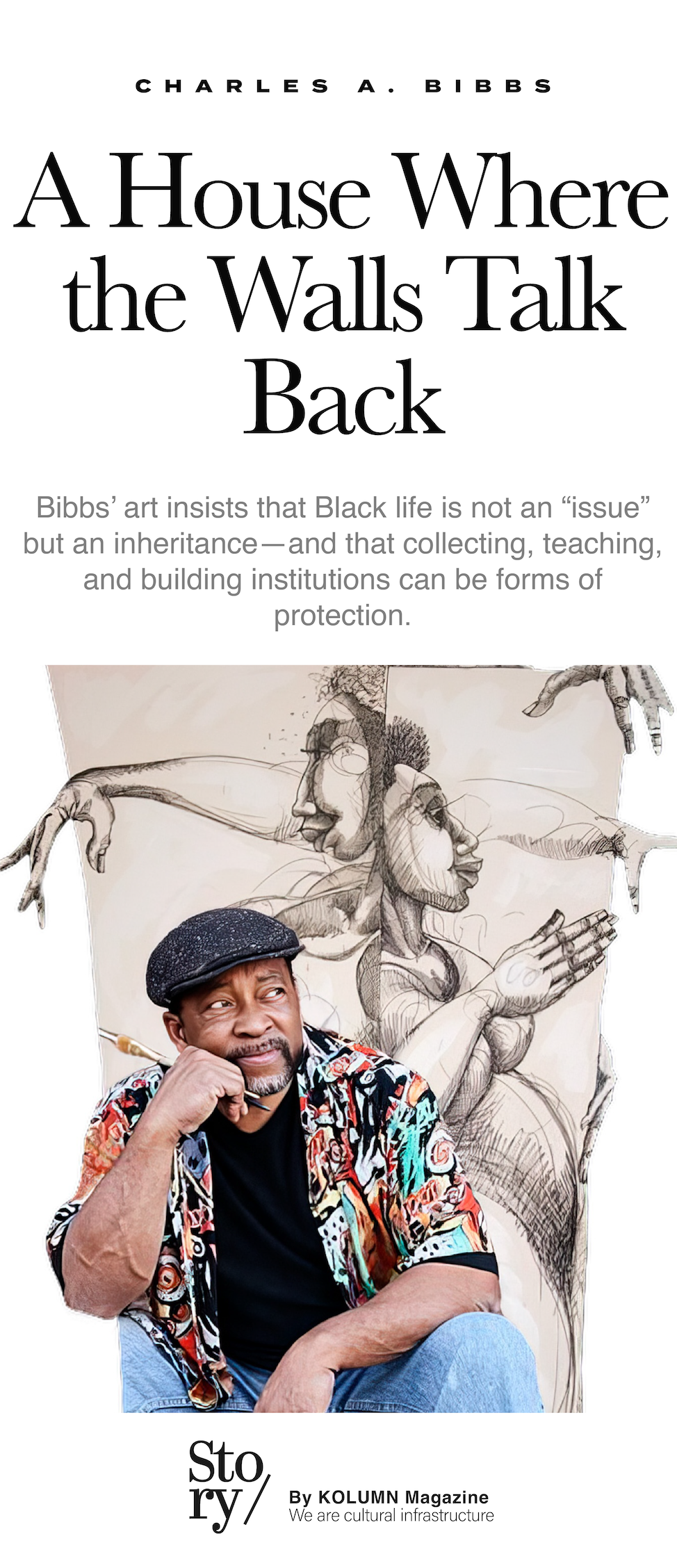
Bibbs has painted dignity as if it were ordinary.
By KOLUMN Magazine
In the Washington area in the late 1990s, a columnist for The Washington Post described a small, seismic shift that many Black Americans recognized before they had language for it: the moment when images on the walls started to resemble the people living beneath them. The Post’s Donna Britt, writing about the rising visibility of African American art—posters, prints, paintings, the slow drift from taped reproductions to framed work—located a cultural turning point in an everyday act: buying an image because it looks like you, then keeping it because it reminds you that being seen can feel like warmth. In that accounting of a booming market, Britt listed artists whose work had become familiar in living rooms and galleries alike—names such as Ernie Barnes, Paul Goodnight, William Tolliver, and Charles Bibbs—artists whose accessibility was sometimes treated as proof of their cultural reach and, more unfairly, as evidence against their seriousness.
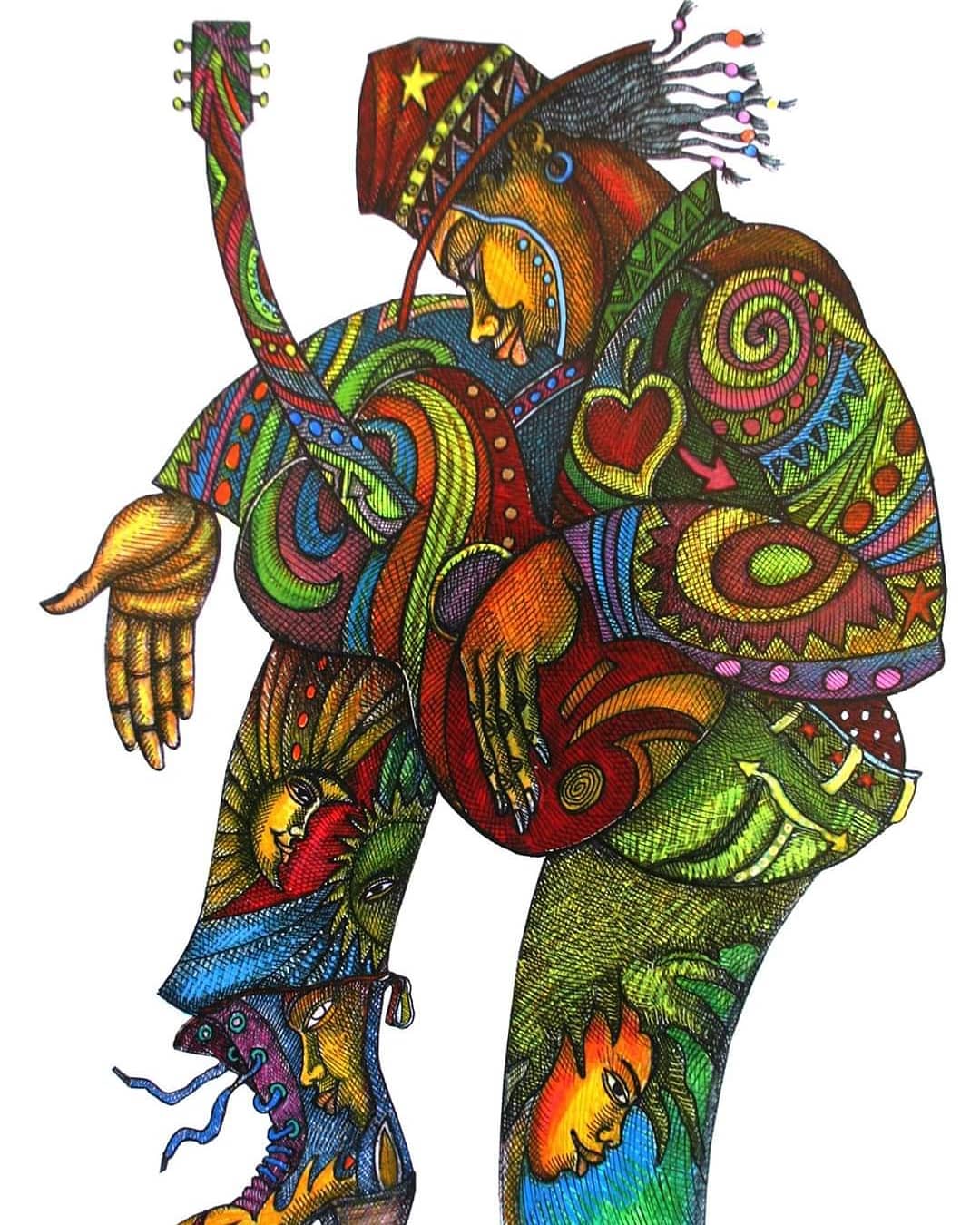
To write about Charles Bibbs is to write about that argument—about who gets to define “fine art,” who gets to decide whether popularity is a virtue or a stain, and what it means when an artist’s work migrates not only into museums but into the private sanctuaries where families gather, grieve, celebrate, and pass down story. Bibbs’ career has unfolded in the space between those worlds. His art is widely collected and frequently described, even by institutional supporters, in terms that sound almost liturgical: spirituality, dignity, strength, grace. But his significance is not merely aesthetic. It is infrastructural. Bibbs has spent decades treating art as a cultural utility—something that can adorn, yes, but also instruct, affirm, and organize. In a field where gatekeepers often demand scarcity as a condition of value, he has pursued the opposite logic: circulation as a form of empowerment.
A style built from reverence and refusal
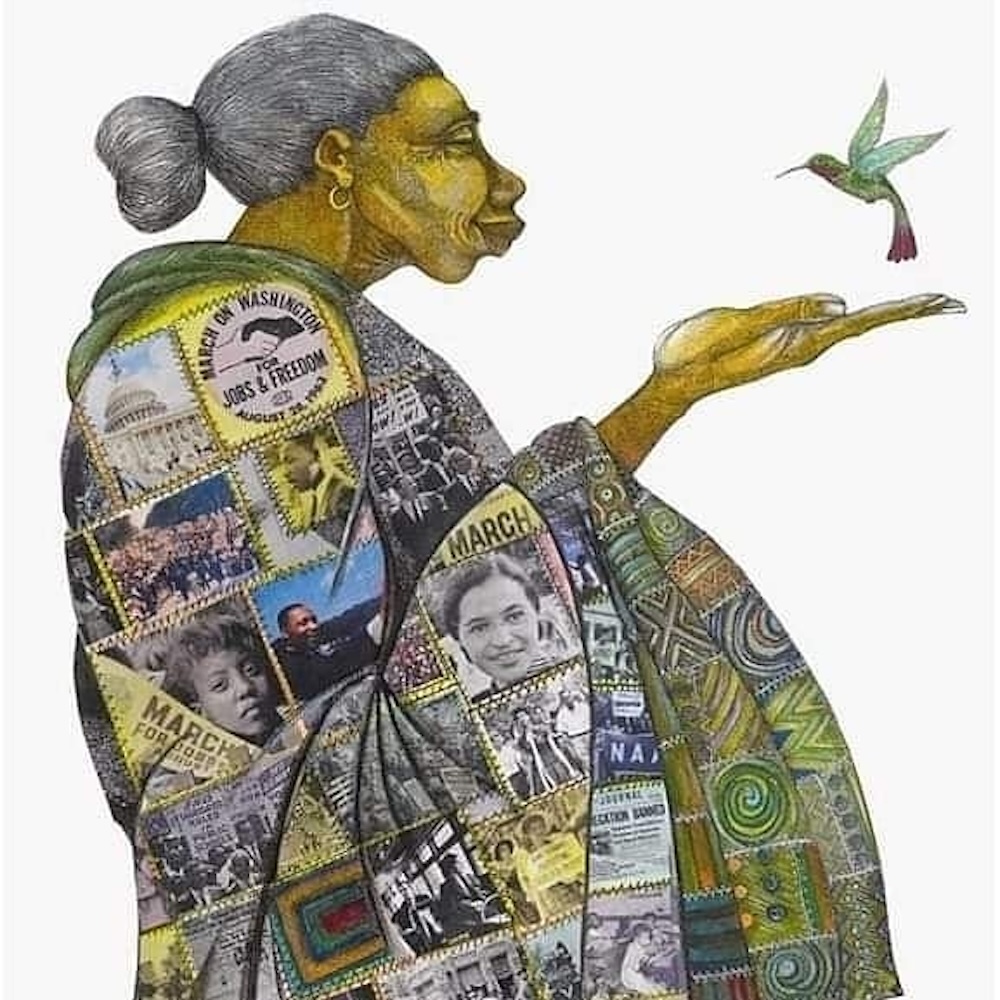
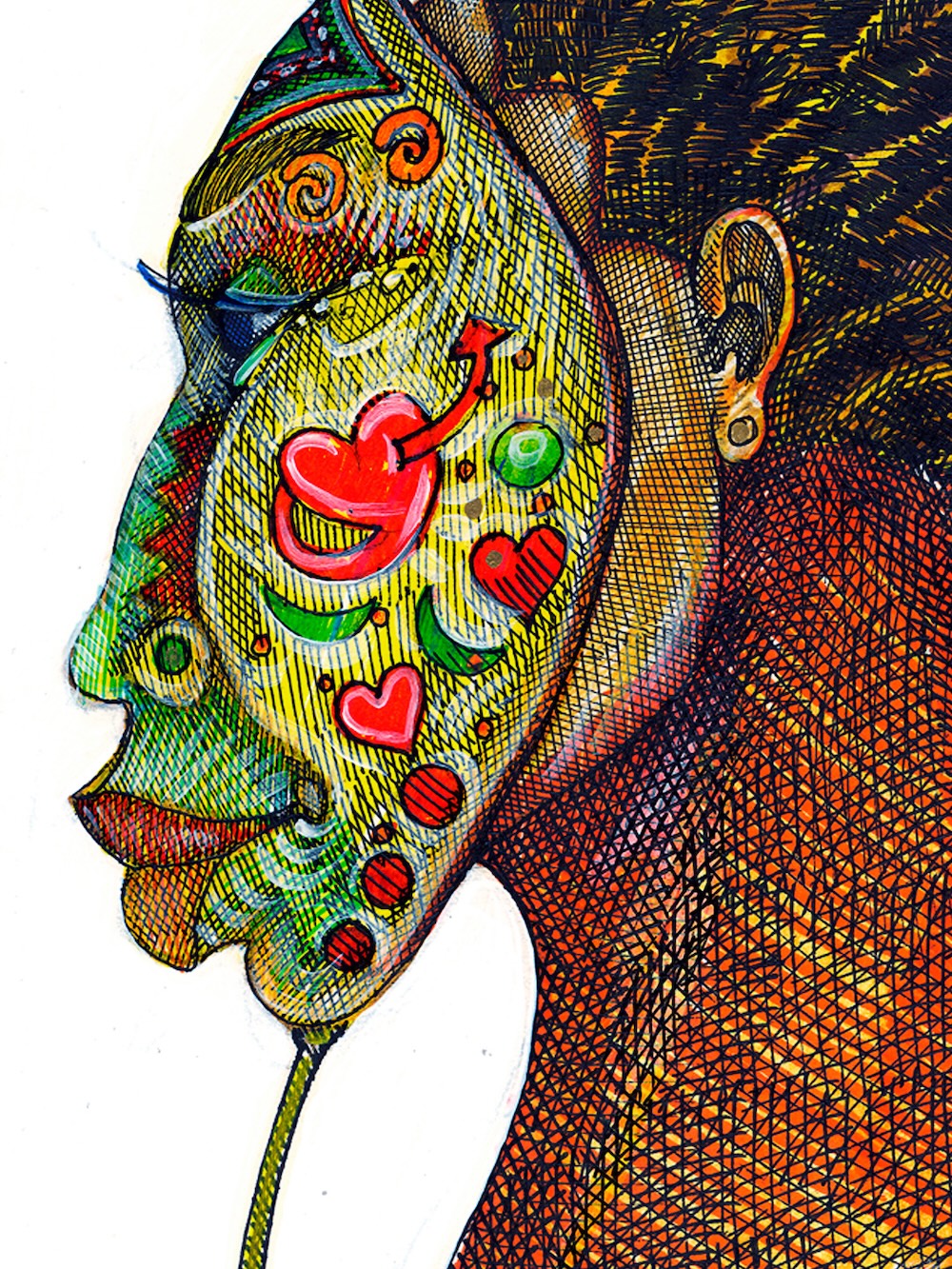
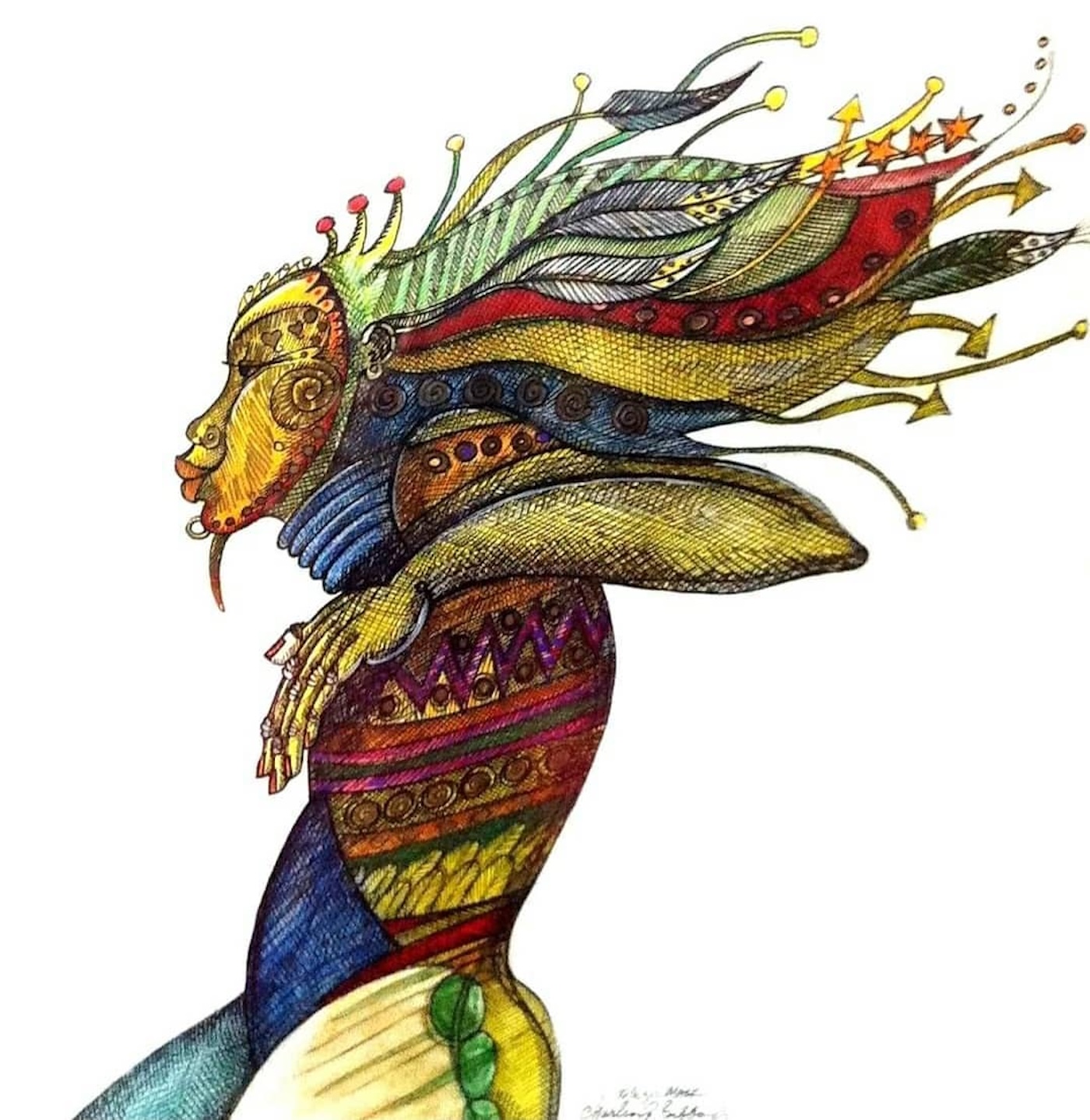
Bibbs’ work is frequently described as “stylized” rather than strictly realistic, but that word can be a polite understatement. His figures often feel elongated and iconic, engineered to communicate presence more than anatomy—bodies as vessels for attitude, posture as declaration. Institutional descriptions of his practice repeatedly emphasize an ethic embedded in the images: “Spirituality, Majesty, Dignity, Strength and Grace,” rendered through “realistic and larger-than-life interpretations of contemporary subjects that are ethnically rooted.” The NAACP, in language that reads like a civic blessing, highlights his “noble compositions” and a signature technique that “fuses acrylic paint and ink” with African and contemporary African American themes, guided by “spirituality” and a “commitment to empowerment.”
Those descriptors matter because they signal what Bibbs refuses to do. He is not primarily interested in depicting Black life as pathology or spectacle. He does not build his reputation on the shock of Black suffering, even when the historical record would justify it. Instead he returns, again and again, to Black interiority: to beauty as an ordinary right, to women as carriers of cultural memory, to music—especially jazz—as both metaphor and structure. In the Congressional Record, Sen. Barbara Boxer noted Bibbs’ “dedication to music and art,” and described him as an artist recognized for “ethnic and cultural themes,” whose work had appeared in exhibits and on local and national television. In another passage of that same tribute, Boxer connects his artistic practice to “passion for jazz music,” suggesting that sound is not decoration in Bibbs’ world but a kind of blueprint.
If you follow the arc of his public statements, you see that the aesthetic and the mission are inseparable. Bibbs has been associated for years with the phrase “keeper of the culture,” a framing used in profiles and exhibition materials that cast him less as a solitary genius than as a custodian—someone accountable to history and to community. That phrase can be sentimental in the wrong hands. In Bibbs’ case, it has also been operational. A keeper is not only someone who celebrates a culture; a keeper maintains the conditions under which culture survives.
Corporate America, the side-hustle years, and the decision to bet on art
One of the most revealing facts about Bibbs’ early career is that it reads like the biography of countless working artists—except that he later turned those constraints into a philosophy.
Both his official biography materials and the Senate tribute emphasize that Bibbs spent a significant period working outside the art world, using a steady job to underwrite the slow development of his studio practice. Boxer’s 2006 recognition describes him as someone who “worked in corporate America and funded his artistic cultivation through that work,” and then, in 1985, “fuse[d] his strengths in business with his passion for artistic expression” by forming B Graphics and Fine Arts to publish and distribute his own artwork.
Other biographical summaries, including his official “About” page, tell a closely related version: born in San Pedro, California and raised in Harbor City, he worked “an eight-hour job” while using his “God-given talent” in spare time; then, in 1991, he left a management position of 25 years to form his publishing and distribution company, B Graphics and Fine Arts, Inc. The dates can be read as contradictory until you consider what many artists recognize as the real timeline: the business can exist before the leap, and the leap can occur long after the first infrastructure is built. The Senate record suggests an initial formation in 1985; the artist’s own materials emphasize the moment in 1991 when art became the primary wager.
This is not a minor detail; it is foundational to his significance. Bibbs did not merely enter the art market—he engineered a route around dependency. Self-publishing and distribution are not romantic acts. They are tedious, logistical, and often invisible. But for Black artists in particular, the infrastructure of validation has historically been unstable: galleries that appear and vanish, institutions that offer visibility as a seasonal program, collectors who are encouraged to treat Black art as trend rather than lineage. By building a publishing and distribution arm, Bibbs treated the market not only as a threat but as a tool—and he insisted that access itself could be principled.
The print market question, and why Bibbs became a reference point
To understand why Bibbs’ name appears in debates about African American art’s value, you have to return to the 1990s and early 2000s, when a booming Black middle class, a rise in Black-owned galleries, and a mainstream appetite for “multicultural” aesthetics reshaped the economics of art buying.
In 2001, The Washington Post quoted a gallery owner posing a question that has haunted print-based art markets for decades: “The print market is really the thing that is thriving. The question is, is the print market really art?” The speaker used Bibbs as shorthand for a particular kind of success—work that was fashionable to buy, that appreciated, that moved through Black gallery ecosystems—while arguing that collectors might see greater “return” by purchasing originals from more experimental artists.
Four years earlier, Britt’s 1997 essay described a different angle on that same market: a hunger among Black buyers for images that did not solely depict “struggle and rebellion,” but also “family, commitment,” and the everyday desire “to look at our walls and be recharged.” In that telling, the Black art boom was partly catalyzed by popular culture—Britt reports artists suggesting that The Cosby Show normalized Black art as a functional part of home décor, giving viewers “permission” to put Black images on the wall. Bibbs appears in that piece as one among several “nationally recognized” artists who prospered in the period.
Taken together, the articles outline the frame into which Bibbs has often been placed: a successful artist within a thriving print market, celebrated by collectors and sometimes dismissed by critics who equate accessibility with aesthetic compromise. But that framing can obscure the more radical claim embedded in Bibbs’ career: that prints are not an inferior category of art, but a different distribution model—and that distribution is itself political.
There is a reason Bibbs has been described, even by institutional allies, as an “entrepreneur” as readily as an artist. He does not treat business as a shameful necessity; he treats it as cultural strategy. And if you take seriously his repeated emphasis on empowerment, the question “is the print market really art?” begins to sound like a narrower version of a larger question: who is art for?
“Sacred Spaces”: The home as gallery, the gallery as lesson
A 2023–2024 exhibition at the Riverside Art Museum, titled Sacred Spaces: The Work and Collection of Charles Bibbs™, offers one of the clearest institutional articulations of Bibbs’ philosophy. The museum framed the show as a “landmark exhibition” occupying three galleries, presenting not only Bibbs’ original paintings and drawings but also works from his personal collection. That curatorial choice is significant: it positions Bibbs not only as maker but as collector and interpreter, someone whose taste and mentorship are part of the story.
The museum’s description names “iconic works celebrating the black community,” including a totemic piece titled The Keeper, the “wistful Bagman paintings,” and “a majestic series honoring Black women.” It also explicitly links Bibbs’ artistic development to other figures—Samella Lewis, John Biggers, Synthia Saint James, Frank Howell—artists whose work appears in his personal holdings and whom the museum presents as shaping Bibbs’ “unique vision and perspective.”
But the most revealing language in the museum text is its insistence on the home as a legitimate site of aesthetic formation. Sacred Spaces, the museum writes, carries Bibbs’ belief in “a vital connection between the art that people see in public spaces and the lives they live in the spaces they inhabit every day,” hoping visitors will take that connection back “into the sacred spaces of their own homes.”
That is, in effect, a manifesto for why his work has circulated so widely as prints. The aim is not simply to place art in museums—though Bibbs’ work has been shown in museum contexts and international venues, including mentions of the California African American Museum and international art expositions in his official biography. The aim is to normalize art as a daily companion, to treat the living room as a place where culture is rehearsed and reaffirmed. If you want to understand why collectors return to images of Black women rendered with ceremonial calm, why jazz scenes recur as both celebration and architecture, why dignity becomes a repeated motif, consider what walls do: they hold memory. Bibbs paints for walls that have to endure.
Art 2000 and the insistence on independence
If Bibbs’ distribution model made him influential, his teaching and organizing helped turn influence into infrastructure.
The Riverside Art Museum describes Art 2000 as a nonprofit visual art association founded by Bibbs to encourage artists and patrons to “further engage in the arts,” teaching skills aimed at “becoming financially independent” while making art “more affordable.” Even in the museum’s brief event copy, the emphasis is unmistakable: independence, affordability, routes into “artist independence.”
A 2016 feature about Bibbs and an exhibition called The Evolution of the Visual Voice goes further, describing him as not only celebrated but “a committed activist on behalf of economic development and empowerment,” someone who holds seminars and workshops with young people, and who founded Art 2000 as part of “his quest to preserve and develop the visual arts.”
This is where Bibbs’ significance begins to look larger than the work itself. In many art-world narratives, the artist is presented as a singular producer, surrounded by a halo of myth, with institutions and markets treated as external forces. Bibbs reverses that. He treats institutions as something an artist can build—or at minimum, something an artist can pressure into existence through persistence and politics.
The cultural center: “It’s like churches…where you go to praise your culture”
In 2022, in an extended interview with Black Voice News, Bibbs talked about a venture that, if realized at the scale described, would represent a capstone to his long-running philosophy: the Charles Bibbs African American Cultural Center in Riverside, California.
He was explicit that it would not be merely a gallery for his work. “It’s more than that,” he said. “It’s an African American Cultural Center. It’s not a Charles Bibbs gallery, so it comes full service. It’s music, it’s literature, it’s spoken word, it’s sculpture, it’s visual arts… all the art disciplines.” He described plans for a library—“Anything you want [to know] about African American history will be there”—and framed cultural centers as analogous to spiritual institutions: “Church is where you go to praise your God. A cultural center is where you go to edify and praise your culture, who you are as a people.”
The interview also revealed Bibbs’ fluency in civic strategy. He discussed Riverside’s desire to become “a destination, not just a drive through city,” and described the cultural-center proposal in terms of demographics and regional draw—how an African American cultural institution could pull visitors from across the Inland Empire and help anchor the city as a cultural hub. In other words, he spoke like a builder arguing for public value.
That same year, the NAACP passed a resolution endorsing and supporting what it called the “Charles A. Bibbs African American Museum & Cultural Center,” praising his technique and themes, noting his formation of a publishing and distribution company, and stating an intention to open the institution in Riverside in 2023. Whatever the eventual timeline, the resolution matters as a marker of how Bibbs’ work has been positioned not only as art but as cultural property worthy of institutional protection.
To be clear: many artists dream of museums bearing their names. Bibbs’ rhetoric is different. He frames the institution less as a monument to him than as an engine for collective edification—an answer to the recurring American problem of cultural amnesia. His theory of change is blunt: “What [helps] dispel racism is knowledge,” he told Black Voice News, arguing that learning about people’s culture and desires can interrupt prejudice. It is a moral argument, but it is also an educational one. He is trying to build a place where that education becomes unavoidable.
The art itself: Women, music, and the everyday sacred
It is possible to admire Bibbs’ institutional ambitions and still miss what makes the work resonate: its insistence that Blackness can be depicted without apology.
In the official language used to describe his images, a few terms recur: “ethnically rooted,” “cross cultural,” “spiritual emotions,” “empowerment.” Those terms can feel vague, but they begin to sharpen when you consider the motifs that institutions highlight. Riverside Art Museum, for example, emphasizes his “majestic series honoring Black women.” The NAACP emphasizes African and contemporary African American themes rendered through acrylic and ink, and explicitly names “empowerment” as a source for the work’s creative process. His official biography materials highlight fusions of African, African American, and Native American cultural themes designed to make “powerful cross cultural statements,” and insist that he prefers viewers to form a “personal vision” from his work rather than receiving a single didactic message.
This last point is a subtle but important clue. Bibbs’ work is often read as affirmational, and it is. But it also resists the narrowing of Black art into singular messages designed for white consumption. By inviting “personal vision,” he affirms multiplicity within Black experience and across audiences—an approach consistent with his stated desire, in the cultural-center context, to welcome “other nationalities” to learn while still centering African American self-knowledge.
Jazz appears not only as a subject but as a logic. The Senate tribute’s mention of Bibbs’ “passion for jazz music” suggests that music functions as a recurring reference point in his life as well as his imagery. Jazz, as a form, is built on structure and improvisation—discipline and freedom, tradition and rebellion. It is not hard to see why a visual artist committed to dignity and cultural continuity would be drawn to it. Jazz allows celebration without naivete. It acknowledges pain without surrendering to it. It is American and insistently Black, mainstream and still undervalued in the very country that profited from it. If Bibbs’ figures often appear poised—upright, controlled, luminous—it may be because jazz taught him that composure can be its own defiance.
Then there is the recurring emphasis on “sacred spaces.” When Riverside Art Museum uses that phrase, it is describing an exhibition, but it is also describing a worldview: the idea that the spaces where people live—their homes, their routines, their private rituals—are not separate from cultural history but are where history is metabolized. Bibbs’ art, in this sense, is not only representational. It is domestic architecture. It is meant to live with you.
Recognition, respectability, and the complicated politics of acclaim
Bibbs’ accolades, as listed in his official biography, include awards such as an “Entrepreneur Of The Year” honor (from an African American Chamber of Commerce), a United Negro College Fund honoree award, and other civic recognitions, including “Key to” multiple cities. The Congressional Record recognition in 2006 adds another layer: formal acknowledgment of him as an “entrepreneur and philanthropist,” praised for contributions to ethnic art and work in multicultural communities, as well as for youth-focused seminars and workshops.
This kind of recognition can be double-edged in the art world. Civic praise sometimes gets read as “soft” validation—evidence of popularity rather than critical esteem. But that distinction often rests on a narrow understanding of what art is supposed to do. Bibbs’ career suggests an alternate metric: usefulness. If an artist’s work helps a community see itself, helps fund scholarships (as in Alabama A&M’s 2025 commission events that included scholarship-supporting sales), helps teach younger artists to build independent careers, and helps justify a cultural institution that preserves history, then “seriousness” begins to look less like a judgment made by critics and more like a practice sustained over time.
There is, too, a politics in how Bibbs has been discussed as a “top-selling” artist and a leader in the African American art print market. In an American art ecosystem that has often treated Black artists as exceptional when they are rare—and suspect when they are widely loved—sales success can be interpreted as a threat. The implication is that if too many people can afford the work, it must be less “important.” Bibbs’ career refuses that logic. It argues, instead, that wide ownership can be a form of cultural redistribution. If art functions as a repository of memory and a rehearsal space for identity, then making it affordable is not a concession; it is a cultural policy.
The larger significance: A bridge between visibility and permanence
In the end, Charles Bibbs’ life and significance can be understood as a long effort to move Black art from visibility to permanence.
Visibility is what Britt described in her 1997 essay: the warmth of recognition, the sudden abundance of Black images in daily life, the move from posters on grass to framed work on walls. Permanence is something else. Permanence is when the market boom fades and the work still matters. It is when an artist’s name is not simply a brand but an archive. It is when the infrastructure exists—publishing, distribution, mentorship, institutions—so that cultural memory doesn’t rely on luck.
Bibbs’ strategies—self-publishing, building a distribution company, founding a nonprofit association aimed at independence, organizing workshops, curating exhibitions, and advocating for a full-service cultural center—are all variations on a single theme: self-determination. They echo an older Black tradition in which artists have often had to be their own patrons, publicists, archivists, and institution builders because mainstream institutions were unreliable stewards of Black cultural value.
This is why the “print market” debate, while real, is not the most interesting lens through which to understand him. The more important question is not whether prints are “really art,” but why certain communities had to create parallel markets in the first place—and what happens when those markets become the primary vehicles through which a people sees itself.
Bibbs has spent a lifetime insisting on an answer. He has painted dignity as if it were ordinary. He has treated entrepreneurship as a means of cultural protection. He has talked about cultural centers the way some people talk about sanctuaries. And he has asked viewers to do something deceptively simple: take the art home, let it live with them, and allow their walls to become witnesses.
That may be his most lasting contribution. In a country where Black representation has so often been contested terrain—controlled, stereotyped, withheld—Charles Bibbs built a body of work that does not ask permission to exist. It blesses. It remembers. It teaches. And, in the most literal sense, it hangs around.
More great stories
Power, and a New Kind of Politics
February 27, 2026
No Comments
What Happened to Laura Nelson’s Baby?
February 27, 2026
No Comments