





Success is not about how far you go, but how many people you bring along with you.
Success is not about how far you go, but how many people you bring along with you.
By KOLUMN Magazine
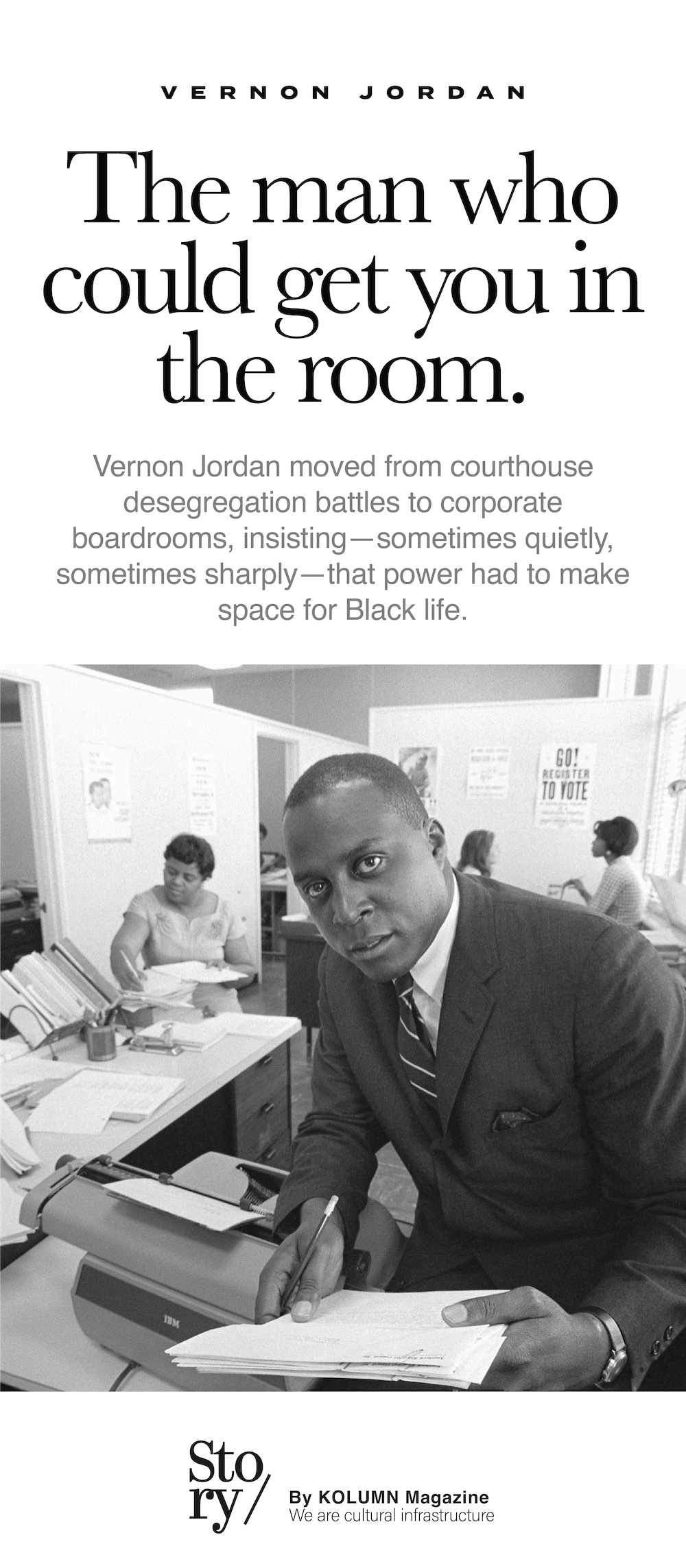
Vernon E. Jordan Jr. lived long enough to become, in the public imagination, a kind of American contradiction: a civil rights lawyer who mastered the etiquette of elite boardrooms; a movement veteran who became a confidant of presidents; a man whose résumé promised moral clarity, yet whose later proximity to political and corporate influence made him a magnet for suspicion. When he died on March 1, 2021, at 85, the obituaries tried to solve him in a paragraph: leader, lawyer, insider, mentor, “power broker.”
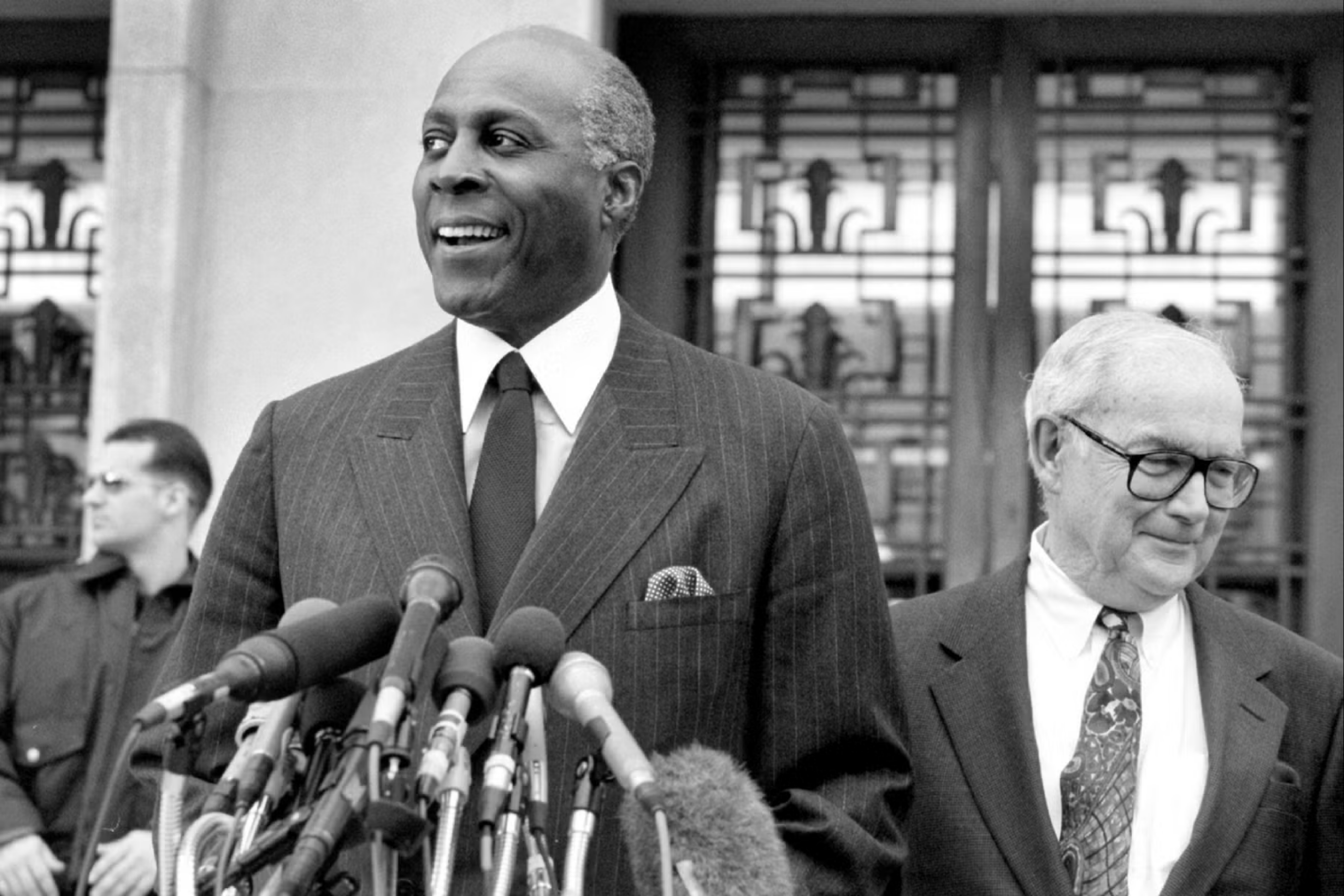
But Jordan’s story resists tidy categories, partly because it tracks the evolution of Black political strategy across the second half of the 20th century. He came up in the movement’s legal infrastructure—where courtroom victories were hard-won and bodies were still on the line—then helped steer civil rights organizations into the post–Voting Rights Act era, when the central question shifted from whether Black people could legally enter spaces to whether they could afford to stay, advance, and lead. Later, he became a figure who could make a phone call and change someone’s career, not because he held office, but because he understood how influence actually circulates in America: through relationships, institutions, capital, and trust.
That arc made him admired and, at times, controversial. It also made him historically significant. Jordan’s life offers a blueprint—and a warning—for anyone trying to translate social justice into structural power. He believed in protest. He also believed that if the movement did not cultivate decision-makers and infiltrate gatekeeping institutions, those institutions would remain what they had always been: efficient machines for reproducing inequality, even after the laws changed.
Atlanta’s lessons: Segregation as a training ground
Jordan was born in Atlanta on August 15, 1935, into a segregated world that was not merely separate but pedagogical. It taught Black children, early and often, the meaning of boundaries and the cost of crossing them. Atlanta, a city that marketed itself as “too busy to hate,” still enforced a racial order that defined ambition as an act of defiance. Jordan attended David T. Howard High School, a pillar of Black Atlanta, and later left the South for DePauw University in Indiana—an experience that made him, by his own account, both conspicuous and alone.
What mattered was not only that he went north, but what he learned there: how institutions protect their comfort, and how a lone Black student is often expected to represent a race rather than simply be a person. Those were not just emotional lessons. They were strategic lessons—early instruction in the social psychology of power.
From there he went to Howard University School of Law, where the legal tradition he inherited was explicitly movement-oriented: law as a tool, not as an ornament. Howard trained lawyers for a particular kind of American work—litigation designed to chip away at the architecture of segregation. Jordan graduated into a decade when the law was rapidly changing and violently contested.
In later profiles, Jordan was often described as smooth, even elegant, in the way he moved through rooms. But the elegance was not a personality quirk. It was armor, and it was tactic. He had come of age in a country where Black anger was often treated as evidence of Black unfitness, and where Black civility was sometimes demanded as the entry fee to spaces that never intended to share authority. Jordan learned to perform command without telegraphing threat. That ability would become a signature—useful, but never without cost.
The movement’s legal engine: NAACP work and the grind of desegregation
Jordan’s early civil rights work ran through the organizations that made the movement durable: the NAACP and its network of legal and field operations, the Southern Regional Council, and the voter education apparatus that treated registration as both civic practice and confrontation. He served as a field secretary for the NAACP in Georgia and later worked with the Southern Regional Council and the Voter Education Project—roles that placed him close to the movement’s daily realities, where victories were incremental and the danger was ambient.
This was not the glamorous side of civil rights history. It was the administrative, tactical work of pushing institutions to comply with the law and pushing people to believe their participation mattered. It required persuasion—of local communities, of reluctant officials, of frightened would-be voters. It required stamina, because backlash was not episodic; it was a climate.
Jordan also participated in legal efforts associated with desegregating the University of Georgia—work that placed him within a lineage of Southern civil rights attorneys who fought not only hostile governments but also the inertia of universities that could claim neutrality while preserving exclusion.
These experiences shaped his later worldview. Jordan did not romanticize institutions. He had seen how they resisted. But he also saw something else: that institutions, once pressured, could be made to change—and that the people who understand their internal mechanics are often the ones who can force the most durable reforms.
A pivot after the big laws: UNCF and the question of capacity
By 1970, Jordan became executive director of the United Negro College Fund (UNCF), a role that signaled a shift from protest-era emergency to the long-term work of building Black capacity. If the movement’s earlier battles were about access—desegregating public spaces, dismantling explicit barriers—UNCF’s mission was about infrastructure: sustaining institutions that educated Black students when many other institutions still resisted them.
Jordan’s work with UNCF also placed him in the philanthropic and corporate ecosystems that help determine which communities have resources and which are told to improvise. It was one of the arenas where he learned to speak the language of donors and executives without abandoning the needs of the people those donors rarely had to face.
Decades later, Ebony would still reference Jordan as a kind of establishment civil rights figure—someone invited to deliver keynote addresses and symbolize a tradition of leadership tied to institutional advancement, not only street protest. That public perception, however, obscured the harder truth: raising money for Black education often meant selling the future to a country that had a long record of underinvesting in it.
The National Urban League years: From civil rights to economic rights
Jordan’s most historically consequential leadership role came when he became president (and executive director) of the National Urban League, serving from 1971 to 1981. The timing mattered. The Civil Rights Act, Voting Rights Act, and Fair Housing Act had reshaped the legal terrain. But the promise of those laws was colliding with economic reality: deindustrialization, urban disinvestment, white flight, and the entrenchment of poverty in neighborhoods that were now “open” in theory but still segregated in practice.
Jordan framed the challenge in terms that refused to let the nation declare victory. The National Urban League later recalled his view of the post–civil rights era with a line that captured both irony and indictment: Black Americans could check into any hotel, but many did not have the “wherewithal” to check out. The quote lands because it translates legal equality into material inequality—rights into resources, access into agency.
Under Jordan, the Urban League emphasized employment, training, and economic inclusion. It was a strategic bet that the next frontier of civil rights would be fought through jobs, wages, and institutional participation. That focus now reads as prescient. It also reads as a reminder that civil rights victories can become symbolic trophies when not paired with economic power.
The Urban League’s institutional legacy includes the State of Black America report, which the organization has described as arising from Jordan’s insistence that Black life could not remain invisible in national policy narratives. In Urban League accounts, he responded to official speeches that ignored urban poverty and Black Americans with a blunt resolve to create his own accounting—an act of narrative power as much as political critique.
Jordan’s Urban League years also made him a national figure in the complicated space between movement advocacy and establishment negotiation. He believed in confrontation when necessary, but he also believed in building relationships with those who controlled capital and policy. That dual approach made him effective—and made him a target for those who feared accommodation more than exclusion.
Violence and survival: The attempt on his life
In 1980, Jordan survived an assassination attempt in Fort Wayne, Indiana. It is one of the pivotal moments in his biography, not only because it nearly killed him, but because it underscored the stakes attached to his kind of leadership. Even as he moved in organizational and policy circles, he remained a Black civil rights leader in a country where such visibility could still invite lethal hostility. The attack also became part of the mythology around Jordan: the man who could walk into a boardroom, but who had once had to fight simply to live.
The broader lesson is uncomfortable: America’s racial conflicts were never confined to marches and counters. They followed leaders into parking lots and hotel lobbies, into the spaces where strategy and capital met.
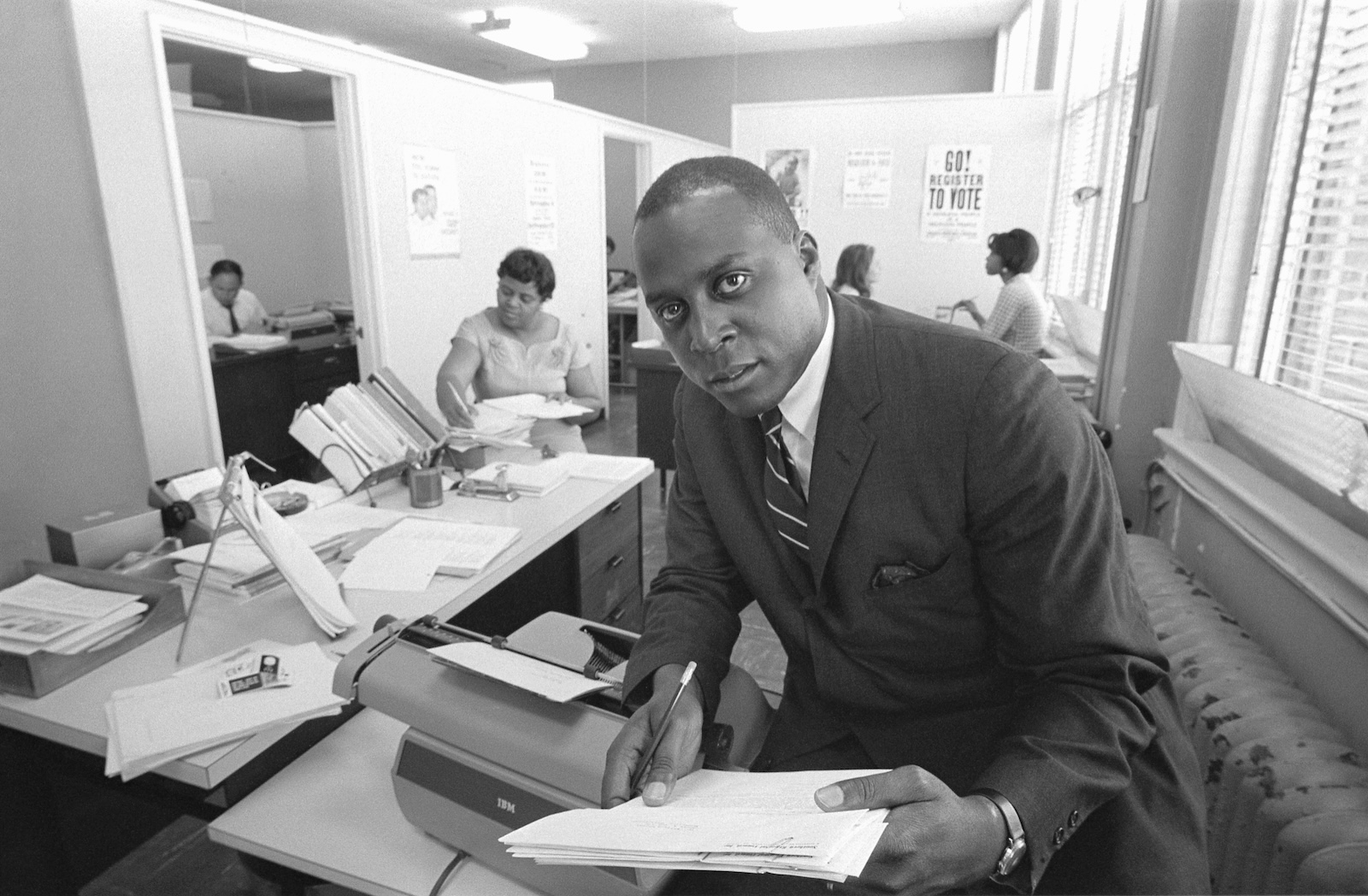
The Washington turn: Akin Gump and the professionalization of influence
After leaving the Urban League in 1981, Jordan joined the Washington office of Akin Gump Strauss Hauer & Feld. This move is often narrated as a pivot from activism to power-brokering, but that framing misses something. Jordan did not abandon civil rights. He shifted the battlefield.
In Washington, law firms and lobbying shops are not merely service providers; they are part of the governing ecosystem. They interpret policy, shape regulation, and broker relationships between corporations and the state. For a civil rights leader, entering that world can look like surrender. Jordan treated it as reconnaissance and leverage. He understood that if racial justice advocates remained outside the rooms where deals are made, the deals would continue to be made without them.
This period also coincided with the broader national turn toward corporate influence and neoliberal governance. The 1980s were not only the Reagan era politically; they were a time when the vocabulary of public life shifted toward markets, privatization, and “efficiency.” Civil rights organizations had to navigate a landscape where moral arguments were increasingly translated into cost-benefit analyses. Jordan’s skill was that he could speak both languages—and he could translate between them.
The Clintons and “First Friend”: Loyalty as political currency
Jordan’s relationship with Bill Clinton—often described as a friendship and advisory bond—became one of the most visible symbols of his Washington influence. The Washington Post obituary captured the way Clinton spoke about Jordan’s loyalty, treating it as a defining trait. In the Clinton era, Jordan was sometimes referred to as an unofficial ambassador to Washington’s power elite, a figure who could bridge the gap between a Democratic administration and corporate America, between political ambition and establishment gatekeeping.
It is easy to mock the phrase “power elite” until you’ve watched how it works. Jordan’s role was not simply to attend dinners. It was to make introductions, vouch for people, interpret personalities, and create pathways—especially for Black professionals—into spaces that still treated whiteness as the default credential.
This is where Jordan’s legacy becomes most contested. Some critics saw his proximity to the Clintons as evidence of co-optation, a civil rights leader turned establishment fixer. But that critique assumes that influence itself is inherently corrupting. Jordan’s defenders argued that influence is neutral; it is what you do with it that matters. The question was whether he used access to redistribute opportunity, or whether access used him to launder legitimacy.
The historical record suggests he did a great deal of the former—often quietly. Howard Magazine later described him as a “connector” who could talk to presidential candidates and then pick up the phone for a student seeking a chance. That kind of work rarely shows up in formal histories because it is interpersonal rather than legislative. But it can be structurally significant. Careers become institutions. Appointments become policy. One introduction can seed a generation of leadership.
Mentorship as strategy: Building a Black leadership pipeline
If you want to understand Jordan beyond the caricature of the suave insider, you have to take mentorship seriously as a political act. The idea that he served as a father figure to younger Black leaders appears repeatedly in accounts of his life. A reprint of the New York Times obituary, for instance, emphasized how he fostered the careers of prominent Black executives and leaders.
Mentorship, in Jordan’s hands, was not sentimental. It was movement strategy adapted to the late 20th century. In the era of formal segregation, Black advancement was blocked by law. In the era Jordan helped navigate, advancement was often blocked by networks—who knew whom, who could be trusted, who would be taken seriously in rooms where decisions were made. To mentor someone into those rooms was to disrupt the quiet reproduction of elite power.
Jordan’s genius was recognizing that diversity initiatives without sponsorship often become performative. A corporation can hire a Black executive and still isolate them from real decision-making. Jordan’s interventions—his introductions, his recommendations, his advice—were a way of supplying what institutions refused to provide: a credible pathway into influence.
It’s telling that Word In Black, in an article about the creation of a new Howard University center, references a “Vernon E. Jordan” endowed chair associated with law and democracy work, an institutional marker of how his name has been attached to the ongoing project of civic power.
The Lewinsky scandal and the hazards of proximity
Jordan’s most public controversy came during the Monica Lewinsky scandal, when his efforts to help Lewinsky find work became part of the larger political storm. His involvement prompted legal scrutiny and public criticism, not because helping someone find a job is inherently scandalous, but because the context was combustible and his relationship with Clinton made every action read as political. Accounts of his career commonly note that he testified in connection with the scandal’s investigation.
This episode reveals something essential about Jordan’s life in Washington: proximity to power is never neutral. It offers leverage, but it also creates vulnerability. The same networks that allow a person to open doors can also become traps, pulling them into conflicts not of their making. For a Black civil rights leader, the stakes are even higher because the culture is often eager to interpret Black proximity to elite institutions as evidence of corruption rather than as evidence of earned authority.
Jordan’s defenders saw in this episode the risk he always ran: being judged not on his lifetime of movement work but on the optics of his friendships. Critics saw confirmation that he had drifted too far into the role of fixer. Both views contain an element of truth, and Jordan’s life forces a more difficult question: how do you remain effective inside institutions without being defined by their scandals?
A complicated public image: Elitism, respectability, and the politics of style
Jordan’s style—his polish, his comfort in elite spaces—was both a tool and a lightning rod. There is a temptation to treat style as superficial, but for Black leaders in America, style is often political. It becomes a proxy for arguments about authenticity, class, and legitimacy. Jordan’s critics sometimes treated his elegance as evidence that he preferred the company of the powerful to the needs of the marginalized. Supporters saw the same elegance as proof that Black leadership could not be confined to protest aesthetics—that the movement also needed negotiators, institutional strategists, and people who could stare down corporate boards without flinching.
The Washington Post, in a reflective opinion piece after his death, described him as both “great” and “complicated,” emphasizing his discretion and loyalty while acknowledging the layered nature of his legacy. That word—complicated—often appears when a public figure cannot be easily reduced to hero or villain. But complication is not a flaw in the story. It is the story.
Jordan’s career unfolded during a time when Black America itself was negotiating internal debates about strategy. Was integration into elite institutions a goal or a trap? Was corporate advancement a betrayal of grassroots struggle or the fulfillment of it? Jordan did not merely witness those debates; he embodied them.
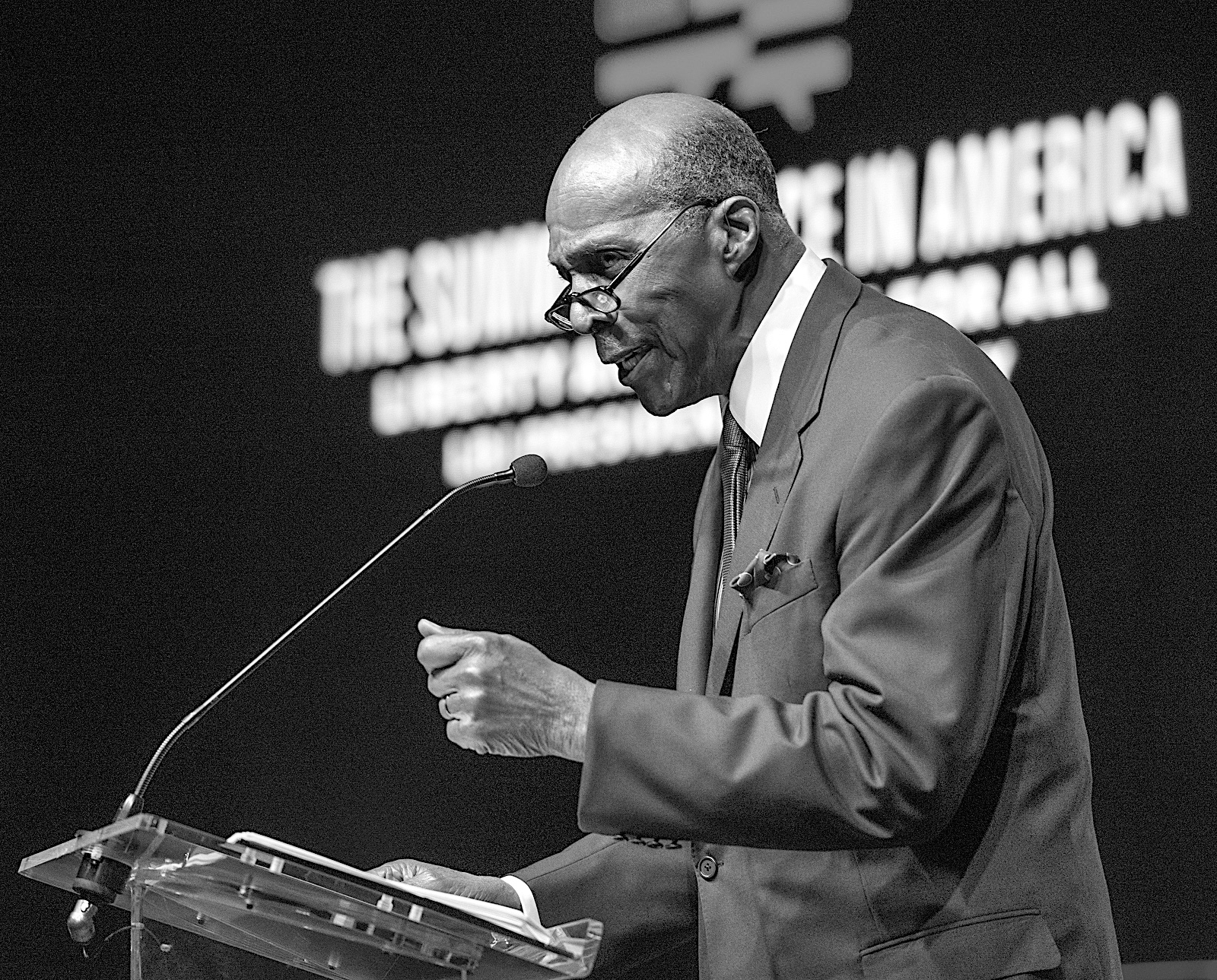
The civil rights movement’s evolving terrain: From courts to corporations
Jordan’s significance becomes clearer when placed within the broader history of civil rights strategy. The movement’s early phase leaned heavily on courts, federal intervention, and mass mobilization to dismantle de jure segregation. By the 1970s and 1980s, however, the most stubborn forms of inequality were embedded in housing markets, employment networks, and capital flows. Those were not problems that could be solved solely through Supreme Court decisions. They required shifting resources, building institutions, and changing who sat at the table when budgets were written.
Jordan anticipated this shift. His work at the Urban League emphasized employment and economic justice. His later work in Washington centered on corporate boardrooms and policy networks, the places where economic outcomes are shaped long before they show up in community statistics.
This does not mean he believed capitalism was benevolent. It means he believed it was powerful, and therefore it had to be confronted—and, when possible, redirected. Some activists are builders of movements outside institutions. Jordan was, in many ways, a builder of pathways inside them.
Relationship to Black media and historical memory
Jordan also understood, perhaps instinctively, that historical memory is a form of power. Being written out of the story is one way a society denies responsibility. The Urban League’s State of Black America report—born from frustration at political speeches that erased Black communities—was one attempt to force the nation to look.
Black media, too, played a role in narrating Jordan’s image. Ebony’s coverage of Jordan over the years often positioned him as a public-facing elder statesman of Black leadership, a figure invited into major institutional moments like UNCF events. The Root, in its obituary, described him as both civil rights icon and political adviser, highlighting the sweep of his leadership roles across movement organizations and Washington influence.
Even KOLUMN Magazine, in a post referencing a documentary project on Black leadership, places Jordan’s name alongside a roster of major civil rights figures—an index of how he is remembered within a tradition of public service and movement politics.
These references matter because they show how Jordan is situated across different narrative communities: mainstream obituaries that emphasize power-brokering; Black media accounts that stress movement legacy; institutional tributes that highlight mentorship and organizational leadership. Together, they suggest that Jordan’s life cannot be captured by a single storyline.
What his critics got right
A fair account of Jordan’s legacy has to grant that some criticisms were not invented. Jordan did move comfortably among elites. He did hold positions that placed him close to corporate power. He did become, for some observers, a symbol of the civil rights generation’s absorption into the establishment. And in America, where racial inequality often persists behind the façade of progress, the fear of co-optation is rational.
Jordan’s career forces the uncomfortable recognition that access can become a substitute for justice. You can have Black faces in high places and still have Black neighborhoods starved of investment. You can have diversity on boards and still have wage gaps on factory floors. If Jordan’s model becomes merely aspirational—if it encourages people to chase proximity rather than redistribution—then his legacy can be misused.
Jordan himself appeared aware of this tension. His Urban League framing of “wherewithal” suggested he understood that access without resources is a hollow victory. The challenge is that his later public identity often centered on his access, not on the economic critique he never entirely abandoned.
What his admirers understood
Jordan’s admirers saw a different truth: that symbolic purity does not change institutions. Institutions change when people inside them decide—or are forced—to decide differently. Jordan devoted much of his life to increasing the number of Black people who had the credibility, relationships, and authority to compel those decisions.
The NAACP Legal Defense Fund, in mourning him, emphasized the breadth of his career across movement organizations and his role as an attorney and board leader who helped drive civil rights advancement. The National Urban League, in its tributes, framed him as a transformational leader who brought the movement into a new era. Howard’s account of him as a “connector” captures the practical dimension of that legacy: he did not simply make speeches; he moved people.
In a society where Black ambition is often required to be twice as excellent for half the permission, a person who can make permission less necessary is doing political work—even if it doesn’t resemble a march.
The deeper significance: Jordan as a map of post–civil rights America
Vernon Jordan’s life is a map of the period after the movement’s most famous victories, when the country wanted to believe the story had ended. Jordan insisted it had not. He carried civil rights into the terrain where inequality is more sophisticated: hiring committees, board votes, donor networks, informal conversations, the quiet forms of exclusion that survive legal reform.
That, ultimately, is why his story matters for the present. The debates that surrounded Jordan—about respectability, about corporate power, about the risks of becoming an insider—are still the debates that shape Black public life today. They are also debates that shape every modern social justice movement trying to decide whether to build outside the system, infiltrate it, or do both at once.
Jordan did both. And he paid for it with a complicated reputation.
Legacy as an unfinished assignment
When Jordan died, institutional tributes described him as a champion of racial and economic justice and a mentor whose passing left a void. Obituaries emphasized his trajectory from civil rights lawyer to Washington power broker. Black media framed him as an icon who held leadership roles across key civil rights organizations and served as a presidential adviser.
All of these are true. But none are sufficient on their own.
To treat Jordan only as a power broker is to miss his movement roots and his economic critique. To treat him only as a civil rights saint is to ignore the real tensions created by his embrace of establishment pathways. The more honest reading is that Jordan represents a generation’s attempt to solve a problem America refuses to solve cleanly: how to convert legal rights into lived equality.
Jordan believed the answer required access to power, not as an end, but as a means. He spent his life building that access, one relationship at a time, one institution at a time, one introduction at a time. The question his legacy leaves behind is whether the rest of us will treat access as a trophy—or as a tool to finish the work he understood was never finished.
More great stories

John Biggers’s America Was a Shotgun House, a Mother’s Hands, a Vast Geometry
February 24, 2026
No Comments
Where History Checked In
February 24, 2026
No Comments