





Rights are often recognized only after they are demanded in a way that creates inconvenience.
Rights are often recognized only after they are demanded in a way that creates inconvenience.
By KOLUMN Magazine
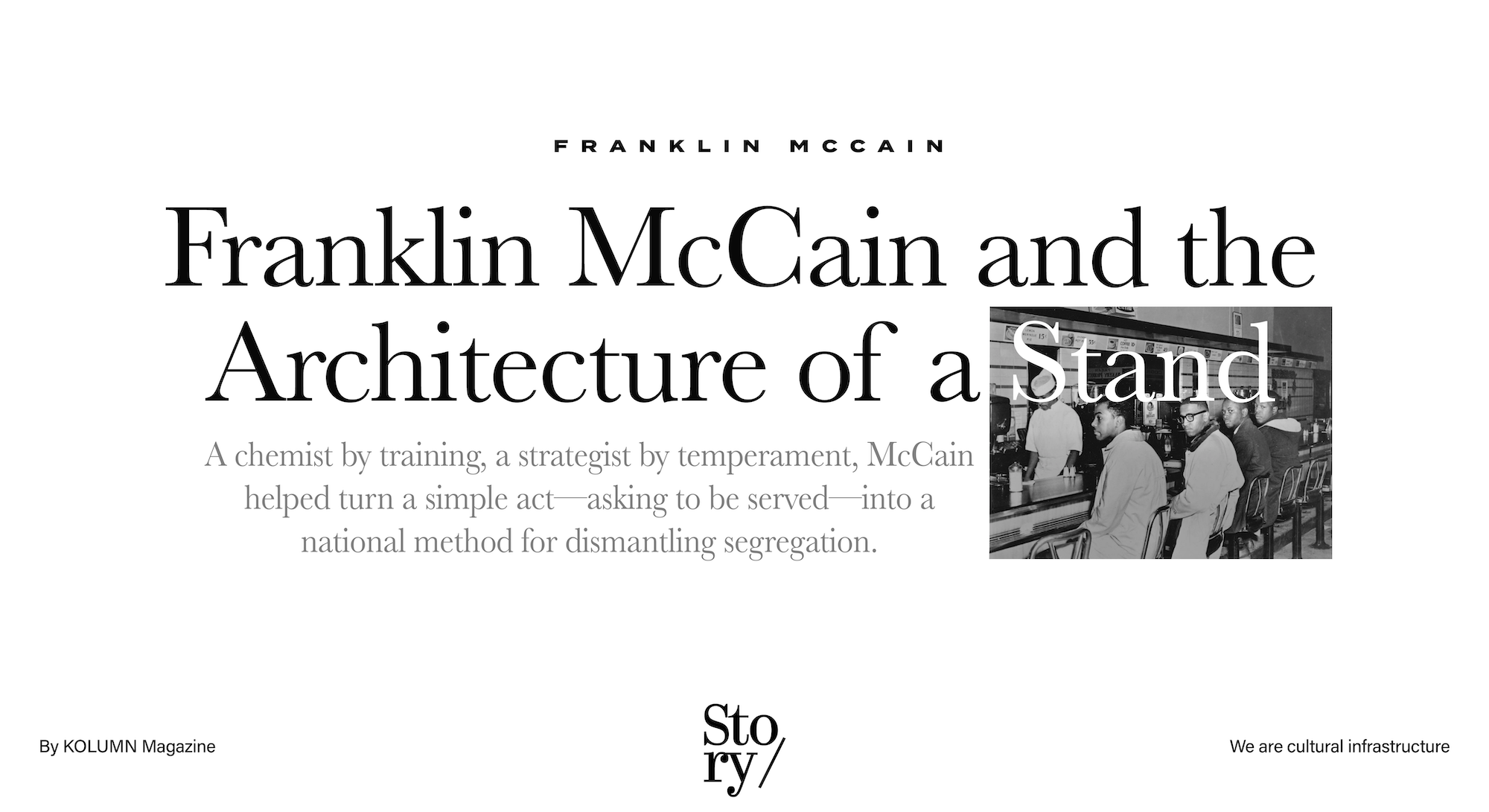
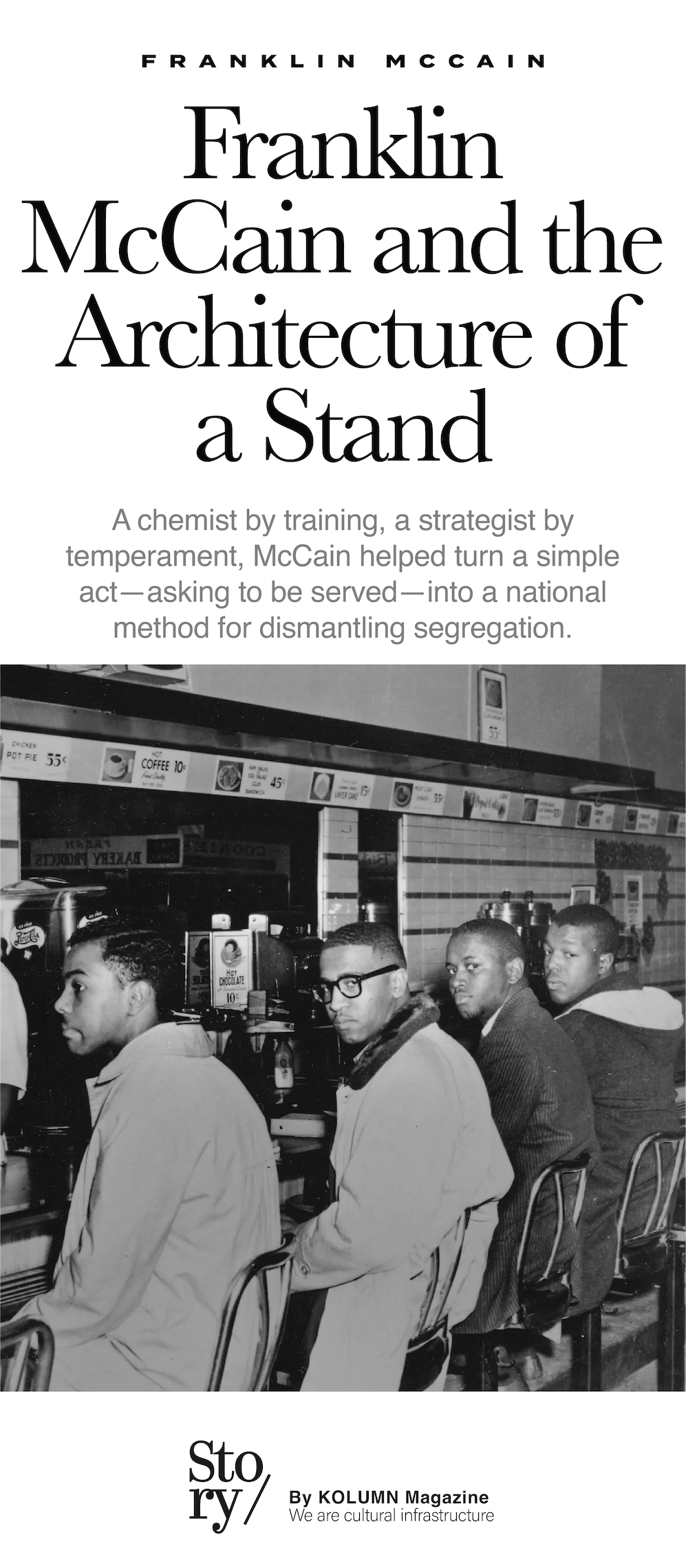
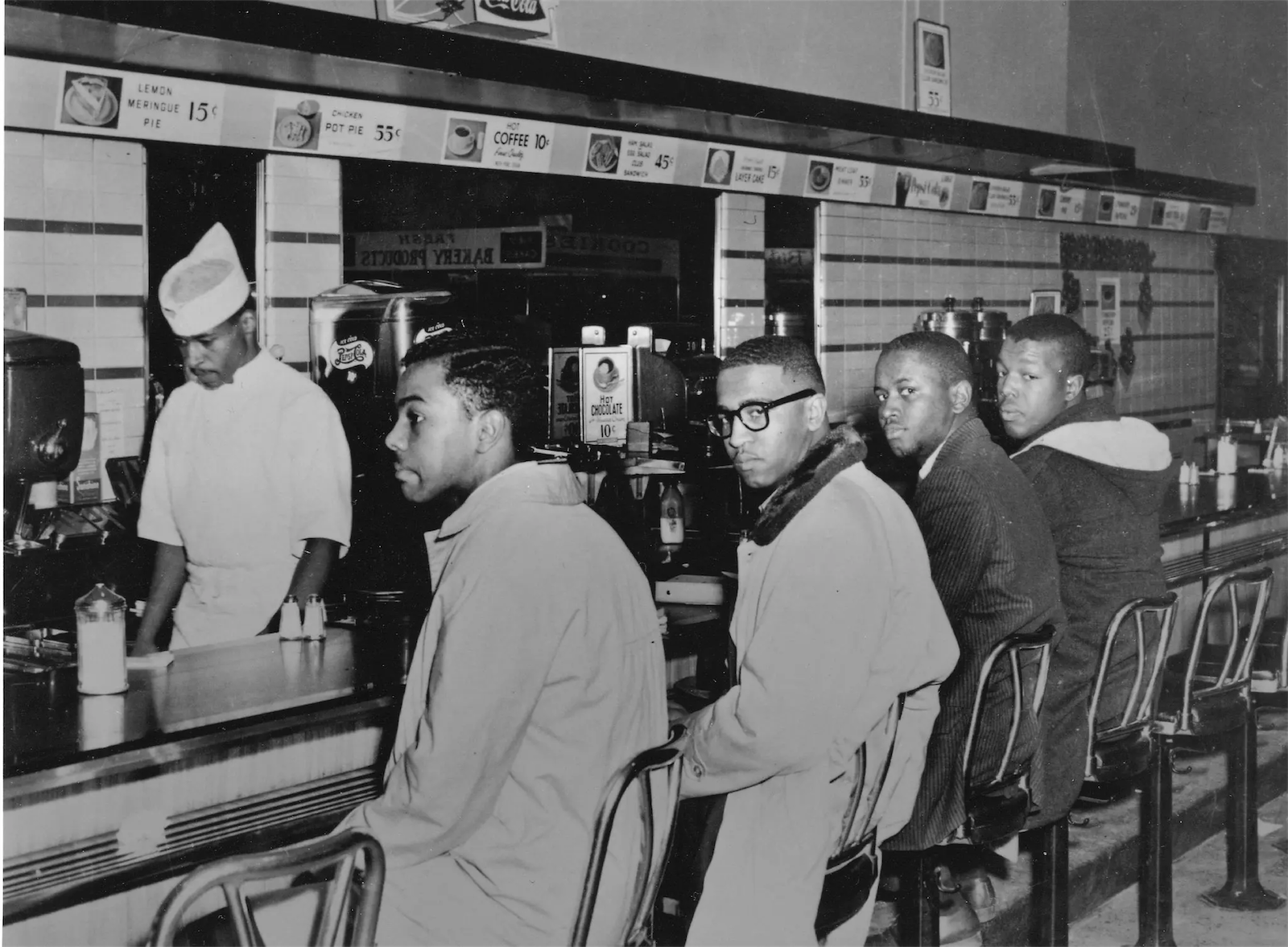
Franklin Eugene McCain is remembered first as one of the Greensboro Four—the four Black freshmen from North Carolina A&T State University who sat down on February 1, 1960, at a “whites-only” lunch counter inside the F.W. Woolworth store in Greensboro, North Carolina, and refused to leave when service was denied. That act, modest in logistics but seismic in consequence, helped spark a wave of sit-ins that spread quickly across the South, pushed local power structures into visible crisis, and accelerated a civil rights movement that had already been building through courtrooms, churches, and boycotts.
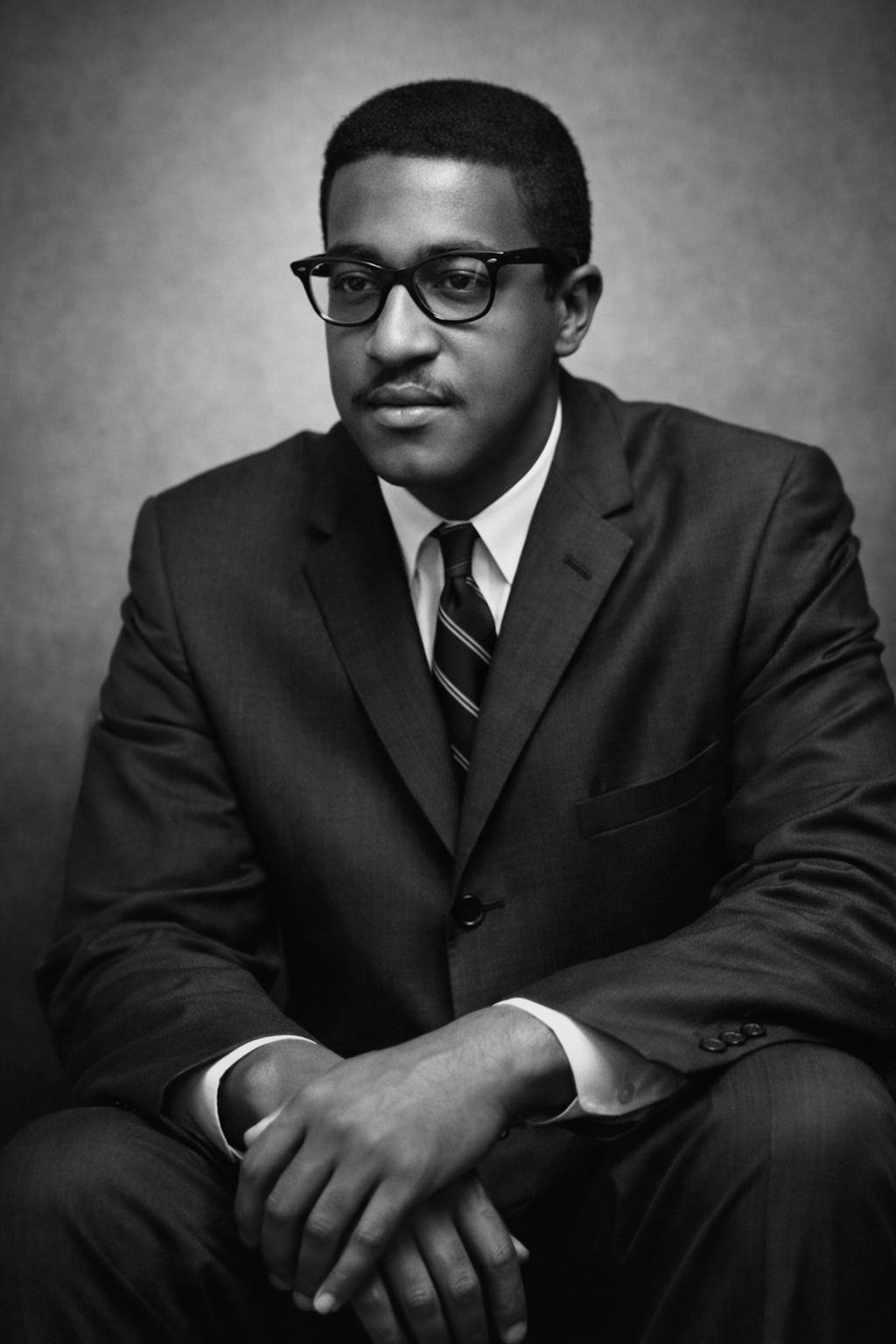
But McCain’s significance cannot be confined to the photograph of four young men in pressed jackets or campus sweaters. The larger story—his upbringing, his temperament, his later career, and the way he spoke about those years—complicates the myth in useful ways. It reminds us that nonviolent protest is not merely an aesthetic of calm; it is an instrument that requires training, discipline, and an unusually exact understanding of how public shame moves through a society. It also clarifies something else: why student activism, particularly at historically Black colleges and universities, became such a potent accelerant of political change, and why that model continues to echo in contemporary movements.
A childhood shaped by the geography of segregation
McCain was born in 1941 in North Carolina, but much of his formative life unfolded in Washington, D.C.—a city that, in the mid-20th century, offered a particular education in American contradiction. The nation’s capital could present itself as cosmopolitan and democratic, yet it was threaded through with the same customs and exclusions that governed daily life across the Jim Crow South. D.C. was not the Deep South, but it was not outside the system, either. That ambiguity—living close to power while being reminded that power was not built for you—produced its own kind of political clarity.
Accounts of McCain’s youth often emphasize his seriousness, his clarity of speech, the fact that he would later become, by training, a chemist. Those details matter because they suggest an important corrective to how the public sometimes narrates civil rights history. Movements are too often told as eruptions of feeling: anger finally boiling over, courage suddenly discovered. In reality, many of the people who changed the country were methodical—students who read, argued, mapped consequences, and developed the patience to let a system reveal its brutality on camera.
McCain attended Eastern High School in Washington, D.C., graduating in 1959, according to major obituaries and institutional accounts. A year later, he would be back in North Carolina, enrolled at North Carolina A&T (then the Agricultural and Technical College of North Carolina). The decision placed him inside one of the country’s most consequential political laboratories: the postwar HBCU campus, where young Black students were increasingly unwilling to accept the slow pace of change promised by “respectable” incrementalism.
KOLUMN Magazine has recently explored how Black colleges—alongside churches, businesses, and civic institutions—helped form the backbone of movement infrastructure in the 20th century. McCain’s story sits inside that same framework. The sit-in was not a spontaneous miracle; it emerged from an ecosystem that made courage thinkable and made strategy discussable.
The dorm room as incubator: How decisions get made
One of the most persistent—and most revealing—details about McCain and the other three young men is that the sit-in was not invented at the lunch counter. It was argued into existence. On campus, late at night, the four freshmen—McCain, Joseph McNeil, David Richmond, and Ezell Blair Jr. (who later became known as Jibreel Khazan)—talked and talked and talked. They were not the first Black students to feel humiliation at segregation’s daily theater. What distinguished them was the way they began to treat that humiliation as an accusation: not only against the white establishment, but against their own willingness to keep adapting.
The Washington Post obituary captures a key phrase McCain offered later, reflecting on those conversations: “We finally felt we were being hypocritical… Up to then, we were armchair activists.” The line is bracing because it refuses the comfort of nostalgia. McCain is not patting himself on the back; he is describing shame as a motivator, a moral friction that made inaction feel like complicity.
There is also, in that phrase, an implicit theory of how social change happens. Movements do not begin only when oppression becomes unbearable. Oppression is often unbearable for generations. Movements begin when people decide that enduring the unbearable is no longer compatible with their self-respect.
February 1, 1960: The simple action that forced a complicated crisis
The basic facts have been repeated so often that they risk becoming ceremonial. On February 1, 1960, the four students walked into the Woolworth’s in downtown Greensboro and sat at the lunch counter reserved for white customers. When staff refused to serve them, they remained seated until the store closed.
That was the first day. The second day, they returned, and more students joined them. Then more. Within days, the sit-in swelled, and the pressure on local authorities, business leaders, and the store itself escalated.
The story is sometimes told as if the sit-in “worked” because it was morally right—and it was. But its effectiveness also came from its structural brilliance. It weaponized normalcy. It exposed the absurdity of segregation by refusing to treat the lunch counter as a battlefield. The students did not burst in. They did not destroy property. They performed the role of ordinary customers, and in doing so, they forced everyone around them to confront the truth: the system required constant enforcement precisely because it was irrational.
The A&T library’s digital history of the “A&T Four” notes that their action helped lead to the desegregation of the Woolworth’s lunch counter by July 1960. The timescale is important. The sit-in did not produce instant victory; it produced sustained confrontation. It demanded endurance from students who risked arrest, expulsion, violence, and social isolation. It demanded a willingness to keep showing up, letting the country watch.
When later generations refer to “nonviolence,” they sometimes treat it as passive. Greensboro was not passive. It was controlled escalation. The point was not to avoid conflict; the point was to manage conflict in a way that exposed the moral bankruptcy of the segregationist order.
How the sit-ins spread—and what they changed in the movement itself
After Greensboro, sit-ins proliferated across the South. Contemporary summaries and historical accounts describe a rapid expansion—students in other cities adopting the tactic, returning day after day, creating a new kind of movement tempo.
This matters because Greensboro didn’t only desegregate a counter. It changed the civil rights movement’s center of gravity. Legal victories and organizational campaigns had already laid groundwork, but the sit-ins made student-led direct action the movement’s most visible engine. Later in 1960, student activists would form the Student Nonviolent Coordinating Committee (SNCC), an organization that became central to the decade’s freedom struggles.
One way to understand McCain’s significance, then, is to see him as part of a hinge moment: the point at which civil rights activism shifted from being primarily driven by established institutions—church networks, national legal organizations—toward a movement where young people insisted on their own agency, with their own tactics, at their own pace. Greensboro did not replace the older institutions; it forced them to reckon with a new generation that would not wait for permission.
The Atlantic, in reflecting on McCain’s death, framed the Greensboro students as “the black students who wouldn’t leave the lunch counter”—a phrasing that underscores the tactic’s stubborn simplicity. Refusal, sustained over time, became the method.
McCain’s own account: courage without romance
A temptation in civil rights storytelling is to treat participants as if they always knew they were making history. In reality, they often didn’t know what would happen next—whether they would be beaten, expelled, arrested, or simply ignored. Later reporting on the Greensboro Four’s experience captures that uncertainty as part of the act’s risk.
The Guardian’s Gary Younge, writing years earlier, drew attention to McCain’s own description of what happened and why he did it—an effort to let McCain speak not as a museum exhibit but as a political actor recalling choices. That kind of first-person framing matters because it counters the flattening effect of commemoration. The point is not merely that McCain was brave; it is how he understood bravery: as a corrective to self-deception, as a way to stop accommodating a lie.
If you read McCain’s public reflections across sources, you repeatedly encounter a man who resisted being turned into a caricature of a “radical.” The Los Angeles Times obituary notes that he did not see himself as a radical out to change the world, even though his actions helped do exactly that. This is not false modesty; it is, in a way, a moral argument. McCain’s stance suggests that the real scandal was not that four students sat down at a lunch counter. The scandal was that they had to.
The sit-in as a model: Why it kept working
There are reasons the Greensboro tactic traveled so well. First, it required minimal resources—no expensive equipment, no formal political power—only bodies, discipline, and the willingness to accept consequences. Second, it made segregation costly. A lunch counter is not just a social space; it is a commercial asset. When protest targets a business’s ability to operate normally, it forces economic and reputational calculations.
Third, the sit-in created a kind of public theater that segregationists could not easily control. If authorities arrested students for sitting quietly, they made the system look monstrous. If they did nothing, they risked losing control of the social script that kept segregation stable. This is what nonviolent strategy aims for: forcing an opponent into choices that damage them either way.
Historical summaries emphasize that Greensboro was part of a larger chain of events that contributed to the climate leading toward landmark civil rights legislation, including the Civil Rights Act of 1964. It is difficult to draw a straight line from one lunch counter to federal law, and responsible history avoids simplistic causality. But it is accurate to say that mass direct action changed national attention, changed political pressure, and changed what was thinkable. Greensboro helped make “public accommodations” a national moral issue rather than a local custom to be politely ignored.
What happened after the cameras moved on
One of the most revealing facts about Franklin McCain is that, after Greensboro, he did not spend the rest of his life as a full-time celebrity activist. He built a career, largely outside the spotlight, while continuing civic engagement.
Multiple accounts note that he worked for decades at Celanese, a chemical company, after moving to Charlotte, North Carolina. He also served in significant governance and educational roles, including service connected to the University of North Carolina system and boards associated with higher education institutions.
This trajectory is not an epilogue; it is part of his significance. It complicates a common misconception about movement history: that activists either become martyrs or become leaders of organizations, and that anything else is a kind of fading away. In reality, many civil rights actors carried their political commitments into professional life—into boardrooms, universities, mentorship, and local institutions. The movement did not only live in marches; it lived in the slow remodeling of who got to occupy authority.
McCain’s dual identity—as activist and chemist—also disrupts another stereotype: that political courage comes only from those who are culturally or professionally “built” for protest. McCain was trained in a discipline that rewards method, precision, and patience. Those traits translate surprisingly well to nonviolent action, where the ability to maintain composure under pressure becomes a strategic resource.
Mentorship and the ethics of legacy
Accounts of McCain’s later life often mention his engagement with young people—meeting with students, encouraging them to stay in school, and speaking about the sit-ins in ways that did not flatter his own role.
That posture matters in the present, when civil rights history is both celebrated and contested. The sit-in can become a safe symbol—an event that everyone can praise without confronting modern equivalents of exclusion. McCain’s insistence on the emotional truth behind the action—shame at being “armchair activists,” a refusal to keep performing patience—pushes against that sanitization. His legacy is not only bravery; it is the demand that people stop narrating themselves as allies while doing nothing.
The Root, reflecting on the Greensboro Four across anniversaries, has repeatedly framed the sit-in’s significance as both historical and instructive—an origin story for a method that later activists would adapt, remix, and redeploy. That framing aligns with what scholars of social movements argue: tactics matter because they create teachable templates. Greensboro was a template for disciplined disruption.
Museums, memory, and the object that became evidence
If you want to see how a democracy treats its dissidents after the fact, look at what it puts behind glass.
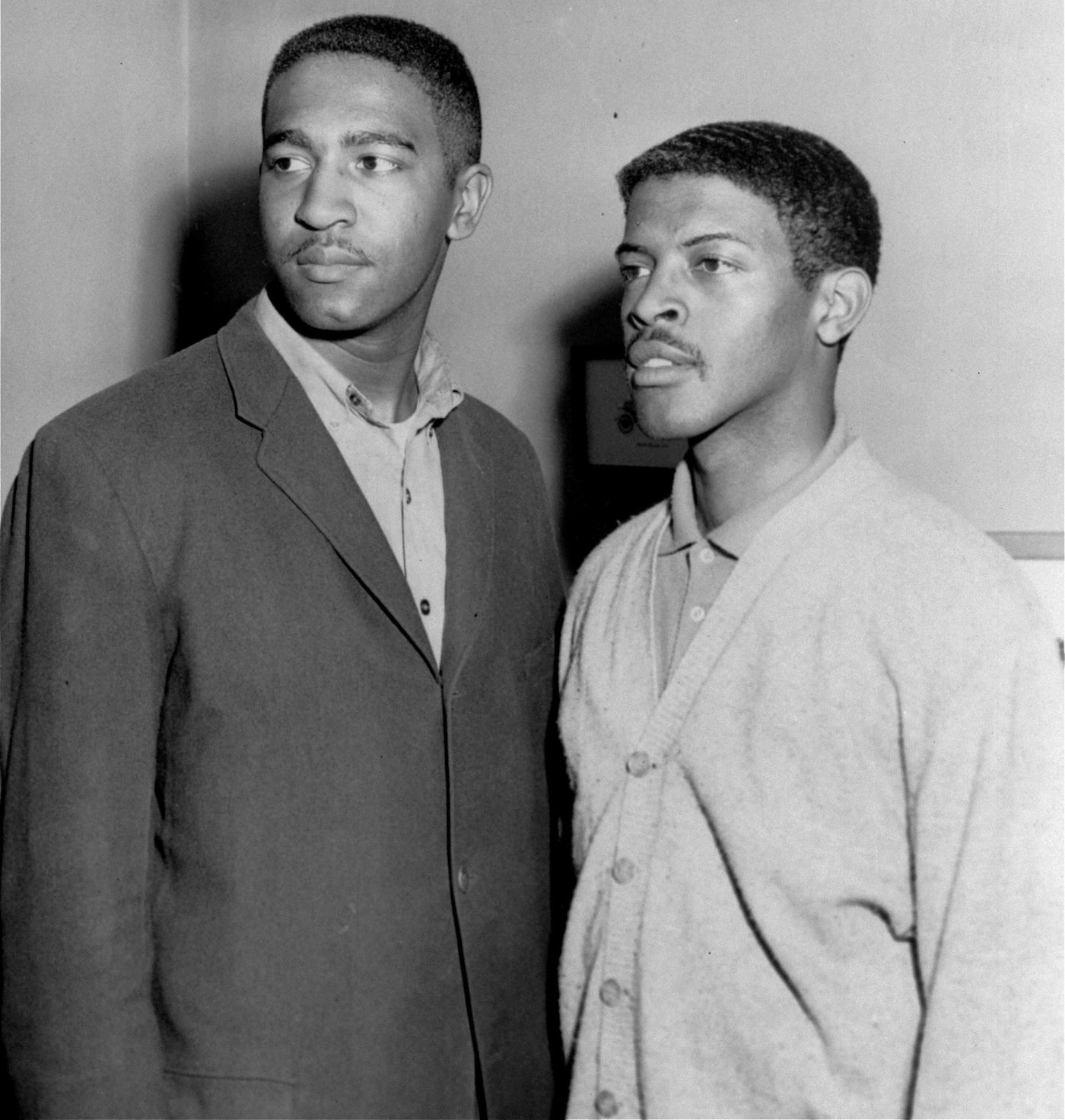
A section of the original Woolworth lunch counter—where the Greensboro Four sat—was eventually preserved by the Smithsonian’s National Museum of American History, an institutional decision that signals an official embrace of what was once condemned as troublemaking. This transition—from criminalized action to curated artifact—is one of the most important dynamics in American memory. It can be honoring, but it can also be disarming: once an act becomes an exhibit, it risks becoming less dangerous as an idea.
The Smithsonian’s remembrance of McCain framed him explicitly as “a true champion of democracy,” placing his action inside the country’s civic self-definition. That kind of language is meaningful—especially from an institution tasked with narrating national identity—but it also raises a question: if McCain is a champion of democracy, what does that say about the society that required him to fight for a hamburger and a cup of coffee like a human being?
The International Civil Rights Center & Museum in Greensboro, located at the former Woolworth’s site, extends this dynamic. It takes the place where a local system was forced to reveal itself and turns it into a space where visitors can examine, with some discomfort, how ordinary segregation really was. And it turns the Greensboro Four into more than names: into a doorway for understanding how direct action reorganized public life.
The longer arc: Why McCain still matters now
Franklin McCain’s story persists not only because it is inspirational, but because it exposes a durable American pattern: rights are often recognized only after they are demanded in a way that creates inconvenience.
In every era, there are voices arguing that change should come slowly, that disruption is rude, that protest should be more “respectful,” more “polite,” more “constructive.” The Greensboro sit-in remains a rebuke to those arguments. It shows that the demand for politeness is often a method of control. The students were polite. They sat quietly. They dressed neatly. They asked to be served. And the system still treated them as a threat, because their existence at the counter undermined the lie segregation depended on: the idea that unequal treatment was normal.
This is why the sit-in model has been invoked again and again across decades—by labor movements, antiwar activists, disability rights advocates, climate organizers. Even Ebony, in reporting on modern protests described as “sit-ins,” has pointed explicitly to Greensboro as the historical reference point—a shorthand for disciplined occupation as moral pressure. The point isn’t that later movements are identical; it’s that Greensboro clarified something about leverage.
And McCain’s particular role in that history matters because he articulated, better than most, the internal moment that makes external action possible: the point when you realize that being privately outraged is not the same as being publicly committed.
A more precise understanding of heroism
The mythology of the civil rights movement sometimes does harm by making its heroes appear superhuman. If McCain is remembered only as a legend, then his example becomes unusable—something to admire rather than something to learn from.
A more accurate reading of his life suggests a different kind of heroism. McCain and his peers were not immune to fear; they decided fear would not make their decisions for them. They were not free of doubt; they chose action anyway. And they were not operating in a vacuum. They were shaped by an institution—an HBCU campus—where debate, friendship, and collective strategy made courage contagious.
When historians and journalists revisit Greensboro, they often note how quickly the tactic spread and how it reenergized the movement’s public face. But perhaps the most important legacy is quieter: Greensboro taught ordinary people that direct action could be planned, repeated, scaled, and won. It taught students—especially Black students—that youth was not a reason to wait. It could be a reason to move first.
Franklin McCain lived long enough to see the sit-in become national scripture—taught in textbooks, commemorated in museums, referenced in political speeches. He also lived long enough to see how easily scripture can become performance: the way a country praises past courage while resisting present demands.
His life, then, is not merely a chapter in civil rights history. It is a standard the country keeps failing and keeps needing.
Franklin McCain sat down in 1960 because standing by had become unbearable. The question his legacy leaves behind is brutally practical: when does that moment arrive for everyone else—and what do they do when it does?
More great stories

Velvet Hammer
February 23, 2026
No Comments
The Night They Tried to Break Fannie Lou Hamer
February 23, 2026
No Comments