


NAACP was born from the recognition that American democracy, left to itself, was capable of accommodating racial terror.
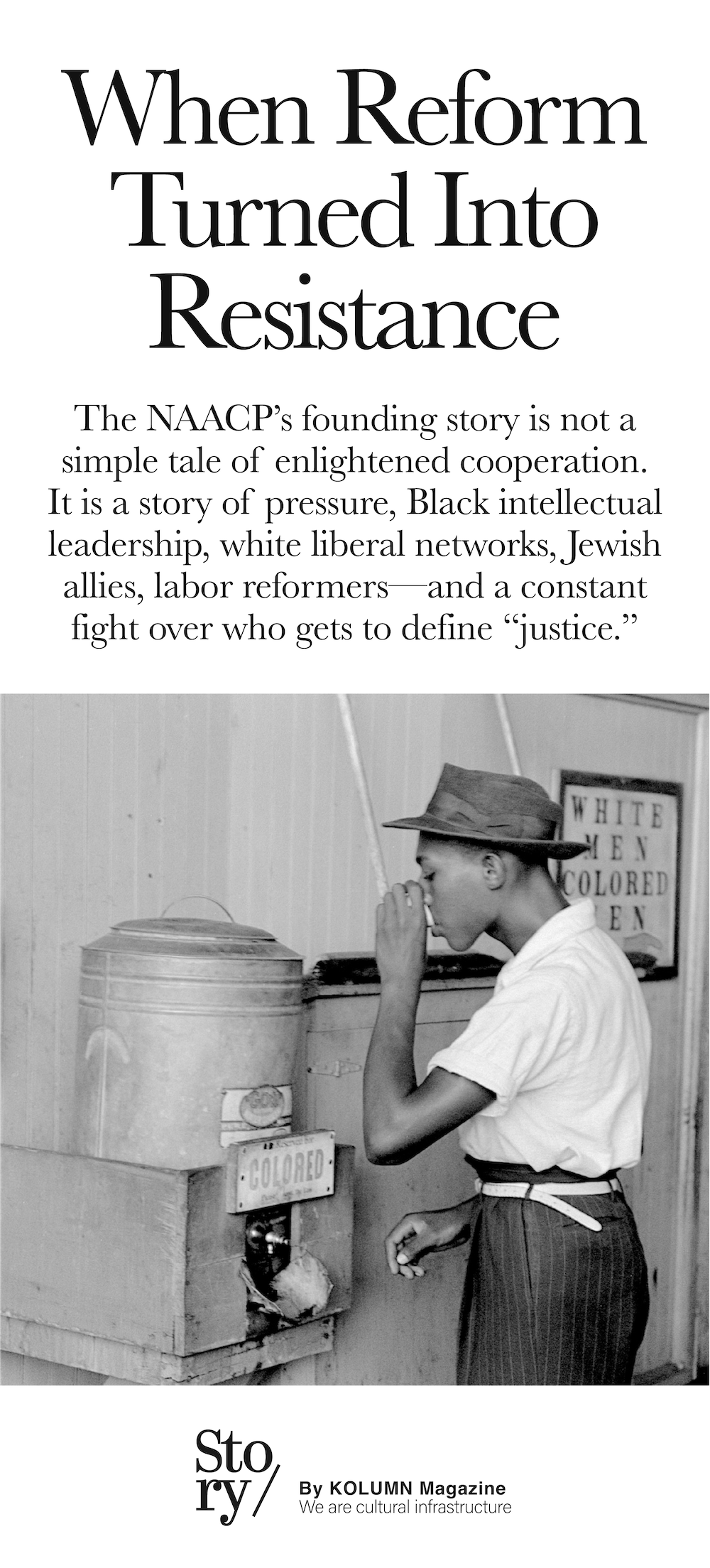
NAACP was born from the recognition that American democracy, left to itself, was capable of accommodating racial terror.
By KOLUMN Magazine
In the origin story the NAACP tells about itself, there is a moment of recognition—one that feels less like inspiration than indictment. A riot. A lynching. A city that should have known better. And then, a decision that the old tools were no longer enough.
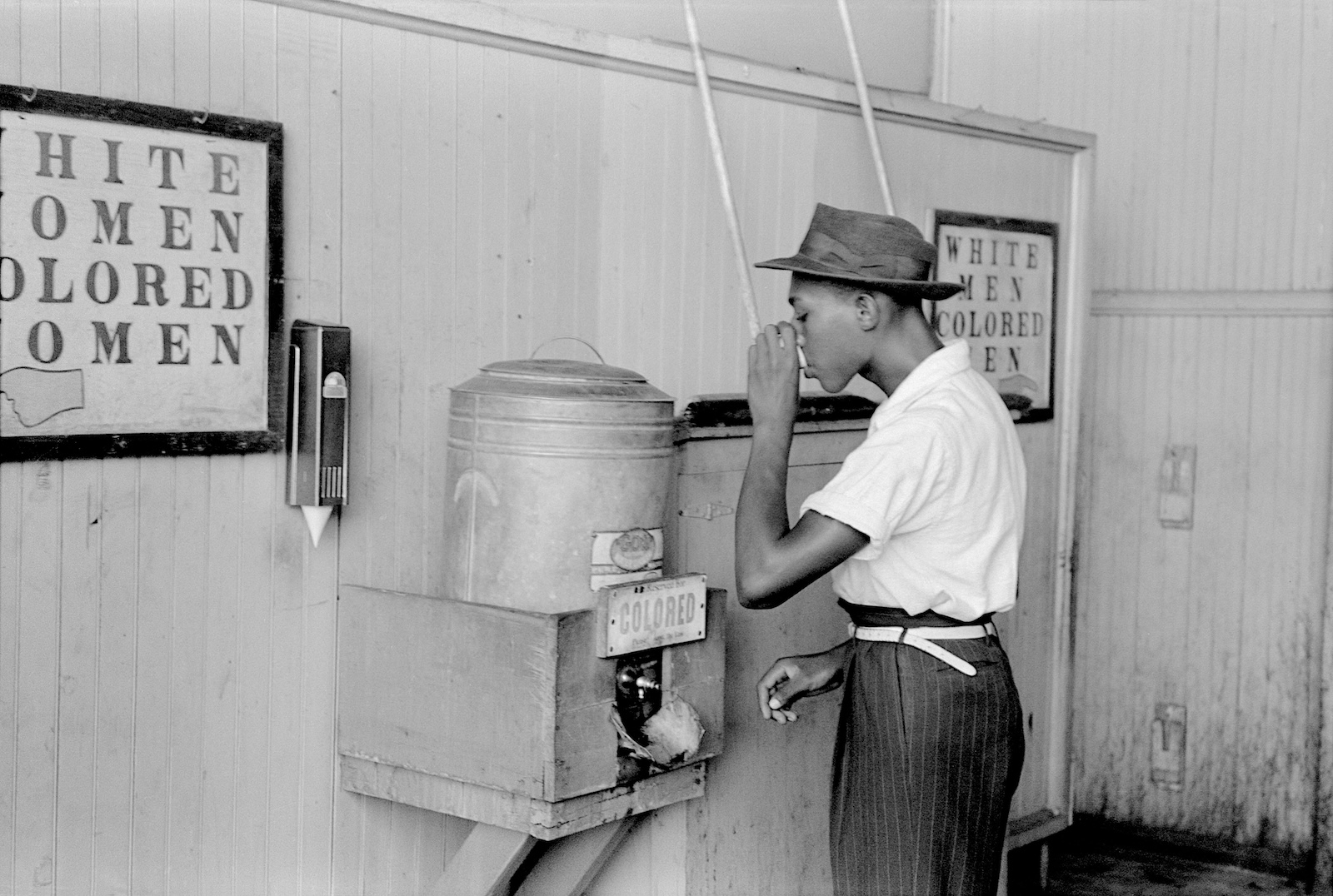
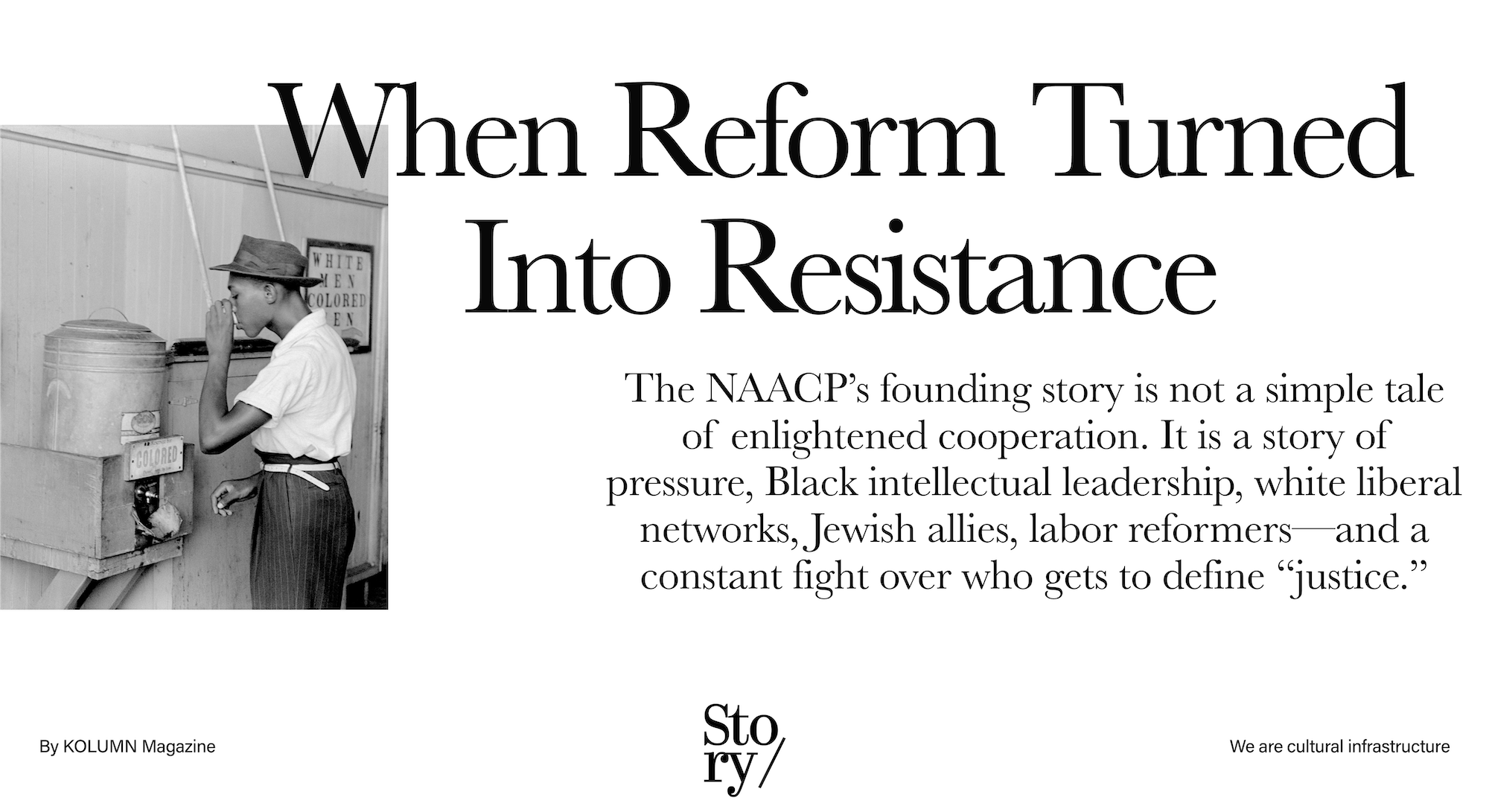
The National Association for the Advancement of Colored People did not materialize as an inevitable “next step” in American reform. It emerged from a collision of crises: the hardening architecture of Jim Crow after Reconstruction; the routinization of racial terror in the form of lynching; the political disenfranchisement of Black citizens; and a national press ecosystem capable of describing that terror as either regrettable “disorder” or justified “mob justice,” depending on the day and the editor. In early 1909, a cluster of reformers—Black and white, Protestant and Jewish, socialist and liberal, academic and activist—decided that the country’s racial settlement was not merely unfair, but structurally violent. They resolved to create an organization that would treat civil rights as a national problem requiring a permanent national response.
Springfield was not an aberration. That was the point.
If the NAACP has a catalytic event, it is the 1908 race riot in Springfield, Illinois—Abraham Lincoln’s hometown, a symbolic detail that mattered because symbolism is a form of political currency. Springfield was where the nation’s myths about freedom could be put on trial. In the NAACP’s own institutional history, the riot is described as a tipping point: a bloody illustration that anti-Black violence was not a Southern pathology alone, and that the country’s democratic self-image could coexist comfortably with terror.
Springfield’s violence did not invent the racial order; it revealed it. Across the United States, lynching had become a ritualized tool of racial domination, and “race riots” were often less spontaneous eruptions than organized acts of collective punishment. But Springfield carried an additional charge. If racial terror could roar through the hometown of Lincoln, then the post-Reconstruction settlement—segregation, disfranchisement, and unequal justice—was not merely a betrayal of Black freedom. It was a national project.
Later retellings sometimes compress what happened in Springfield into a clean causal chain—riot, outrage, founding. The reality was messier, and the mess matters. The riot and its aftermath were not just an event to be mourned; they became an argument about what kind of response was required. A local tragedy might be answered with local charity. A national pattern required national infrastructure.
And so, even in the earliest planning, the founders aimed at permanence.
The meeting in a New York apartment
In January 1909, an interracial group met in the New York apartment of William English Walling, a journalist and socialist organizer with the kind of reform résumé that reads like a map of Progressive Era institutions. Mary White Ovington, a settlement worker and suffragist, was there. Henry Moskowitz, a social worker associated with New York’s reform networks, was there. In the Library of Congress’s account, these three—Walling, Ovington, and Moskowitz—formed the nucleus. Their purpose was not to stage a single protest, but to plan an organization that would advocate for Black civil and political rights.
They were, crucially, not starting from nothing. Black activists had already built organizations, newspapers, mutual-aid societies, and political campaigns under punishing conditions. The Niagara Movement—co-founded by W.E.B. Du Bois and others in 1905 as a direct challenge to accommodationist politics—had articulated a sharper demand for full rights than many mainstream reformers were prepared to endorse.
But the January meeting reveals a key founding tension that would never fully disappear: the relationship between white liberal reform networks and Black-led political demands. The interracial coalition was real, but it formed inside a country where power, wealth, and institutional access were unevenly distributed. The NAACP would spend its earliest years trying to convert moral outrage into leverage—legal, political, and cultural—while negotiating the constraints of its own coalition.
“The Call”: Choosing Lincoln’s birthday as a stage
To expand beyond a small circle of planners, the group decided to issue a public summons—what became known simply as “The Call”—timed for February 12, 1909, the centenary of Lincoln’s birth. The date was not chosen at random; it was chosen as a rebuke wrapped in commemoration. If the nation was going to celebrate Lincoln, then it could be made to confront what emancipation had not secured: safety, suffrage, equality before the law.
The text of the appeal, as summarized by the Library of Congress, ended with an invitation to “all believers in democracy” to join a national conference that would diagnose “present evils,” voice protests, and renew the struggle for civil and political liberty. The Call circulated to prominent Americans for endorsement. Roughly sixty people signed, including Jane Addams and John Dewey, and also W.E.B. Du Bois, Mary Church Terrell, Ida B. Wells-Barnett, and the Rev. Francis J. Grimké.
Even this list is a portrait of what the founders were attempting. Addams represented settlement-house progressivism and the politics of social work. Dewey represented the moral authority of the public intellectual. Wells brought the uncompromising investigative force of the anti-lynching crusade. Du Bois brought scholarship, agitation, and a theory of race as a structural feature of American democracy. Terrell represented a lineage of Black women’s club leadership that had long fused respectability politics with radical demands when needed. Grimké represented a Black prophetic tradition in American religious life.
The Call was an organizing document, but also a branding decision: democracy, not charity; rights, not benevolence; national, not local.
The National Negro Conference: Science as a weapon, organization as a strategy
The first major gathering that followed The Call was held May 31 and June 1, 1909, at Charity Organization Hall in New York City. About 300 people attended—an interracial assembly structured not simply to emote, but to argue. The sessions were designed, in the Library of Congress’s phrasing, to “scientifically refute” the popular belief in Black inferiority. Speakers included Du Bois, the anthropologist Livingston Farrand, the economist Edwin Seligman, and the neurologist Burt G. Wilder.
This is one of the founding details that can sound quaint until you remember what it was up against. The late 19th and early 20th centuries were saturated with “scientific” racism—pseudo-eugenic theories, racial typologies, and academic respectability for the idea that inequality reflected natural hierarchy. The conference treated that ideological scaffolding as something to be fought with counter-evidence and counter-authority. In effect, the founders were preparing to litigate race not only in courts, but in the court of public reason.
Yet the conference also moved beyond debate. From it emerged a working body—the National Negro Committee, sometimes called the Committee of Forty—created to plan a permanent organization.
A crucial nuance: 1909 was the launch; 1910 was the naming
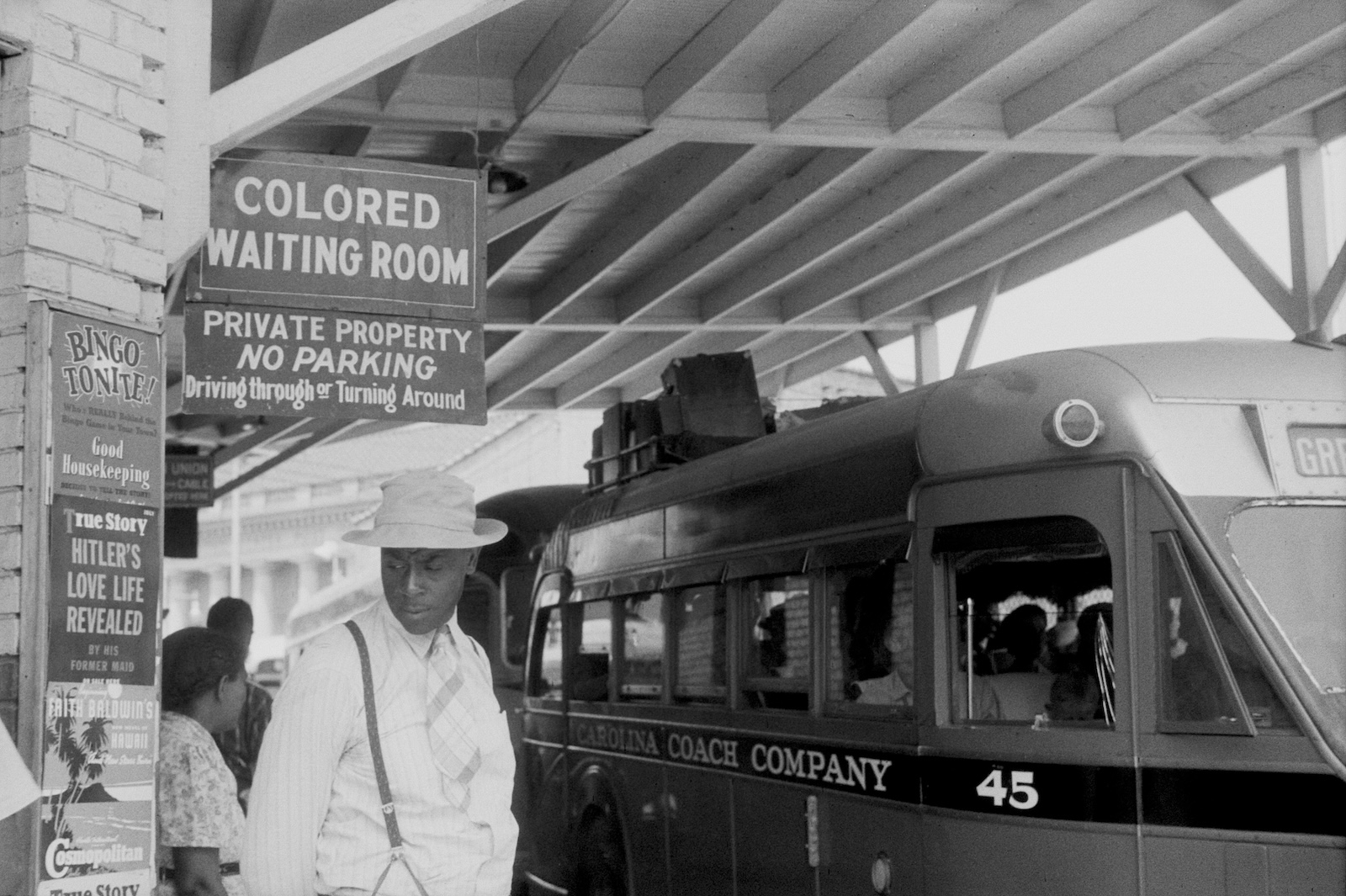
In popular memory, the NAACP is often described as “founded” in 1909, and in an important sense it was: the organizing call went out; the conference convened; the committee formed; the public project began. But the formal name—National Association for the Advancement of Colored People—was adopted the following year.
At the committee’s second annual meeting on May 12, 1910, the body adopted the organization’s formal name. In a revealing detail, Du Bois recommended “Colored” rather than “Negro” to signal an interest in advancing the rights of “all dark-skinned people.” The stated goals included the abolition of segregation, discrimination, disenfranchisement, and racial violence, particularly lynching.
This was not a minor semantic tweak. Naming is strategy. “National” announced scale and ambition. “Association” implied structure. “Advancement” suggested forward motion rather than mere defense. And “Colored People”—a term we now recognize as historically contingent and politically fraught—was, in Du Bois’s view, expansive in scope, a refusal to be boxed into narrow categories in a country already building bureaucratic and cultural boxes for race.
In other words: 1909 created the vehicle; 1910 affixed the plate.
Who founded the NAACP—and what that question can obscure
Ask who founded the NAACP and you will often get a short list: Du Bois, Ovington, Walling, Villard, Wells. Sometimes the list adds Moorfield Storey, the constitutional lawyer who became the organization’s first president, serving from 1910 to 1929.
But the fuller story looks less like a small band of heroes and more like a cross-section of Progressive Era reform infrastructure colliding with Black freedom struggle. The Library of Congress describes the founding coalition as including veterans of the Niagara Movement, suffragists, social workers, labor reformers, philanthropists, anti-imperialists, educators, clergy, and journalists—“Jews and gentiles,” as the exhibit pointedly notes—some with roots in abolitionism.
That mix mattered because it shaped what the NAACP could do. Organizations are not only ideas; they are networks. They draw their capacities from who can raise money, who can publish, who can hire lawyers, who can command attention, who can hold meetings without being arrested or murdered for doing so.
Mary White Ovington, for example, was deeply embedded in New York’s settlement-house world and reform philanthropy. The Library of Congress’s exhibit positions her as central from the beginning.
William English Walling brought both investigative instinct and a willingness to frame racial injustice as a national disgrace requiring collective action.
Henry Moskowitz represented the social-work and municipal-reform wing of Progressive politics, a world that understood institutions—housing, policing, labor—as levers that could be contested.
Oswald Garrison Villard, descended from abolitionist lineage and positioned in the world of publishing, helped supply a megaphone.
And then there was Du Bois—arguably the most indispensable architect of the NAACP’s early intellectual and media strategy. The organization that would become famous for legal briefs also needed a story about itself and the world it sought to change. Du Bois understood narrative as power.
Ida B. Wells-Barnett’s presence—often noted but not always fully integrated into the “founding” mythology—also complicates easy tales of interracial harmony. Wells had spent years exposing lynching as a political instrument. Her work was fearless and, to many white reformers, unsettling. Including her among the signers and early participants suggested that the new organization could not afford to be timid on racial terror—not if it wished to be credible to Black America.
The NAACP’s early presidency: Law as the spearpoint
When the NAACP adopted its formal name in 1910, it also clarified the kind of institution it would be. Moorfield Storey, a prominent constitutional lawyer and former president of the American Bar Association, became the NAACP’s first president and held the post until 1929. The Library of Congress emphasizes Storey’s role in prosecuting early Supreme Court victories and notes his broader civil-liberties commitments—opposition to U.S. imperial rule in the Philippines, defense of Native American and immigrant rights.
Storey’s prominence was not decorative. It signaled that the NAACP would treat the Constitution as terrain worth fighting over, even in an era when courts frequently upheld segregation and tolerated disfranchisement. Put differently: the organization was building legitimacy not only through moral argument but through legal stature—a choice that would later define its most famous mid-century work.
The Crisis: Building a national readership, building a national “we”
If the NAACP was going to be national, it needed a national public. In November 1910 it launched The Crisis, edited by Du Bois, as the organization’s official publication. The Library of Congress describes it as a vehicle through which Du Bois reported NAACP activity, rallied support, and offered an open forum for discourse on race relations and Black life and culture.
It is hard to overstate what this meant in an early 20th-century media landscape where mainstream coverage routinely erased Black perspectives or rendered them only as problems. The Crisis functioned as movement journalism, cultural archive, and organizing tool. It did not just announce what the NAACP did; it helped define what the struggle was. In practice, it turned “membership” into something more than dues: it became shared language.
The first legal work: Making the promise of rights operational
Even in its infancy, the NAACP treated litigation as a way to convert principle into consequence. The Library of Congress notes that one of its first major legal efforts came in 1910 with the defense of Pink Franklin, a Black South Carolina sharecropper accused of murder after a pre-dawn confrontation with police serving a warrant under an invalid state law.
This detail—often overshadowed by later landmark school desegregation cases—matters because it shows what the NAACP believed “civil rights” included from the start: due process, protection from abusive policing, the right to not be crushed by illegitimate legal machinery. The organization was not only thinking about formal segregation statutes; it was thinking about the everyday coercions that made second-class citizenship real.
Interracial coalition, unequal society: The NAACP’s central balancing act
From its inception, the NAACP was a coalition organization in a country structured by racial hierarchy. That meant it could do things many Black-led organizations struggled to do in an era of white control over capital and institutional access: it could attract philanthropic support, command mainstream attention, hire prominent lawyers, and build a national administrative structure. It also meant it had to constantly negotiate the difference between allyship and control.
The Library of Congress’s founding account frames the coalition as broad and purposeful—suffragists, reformers, clergy, labor advocates, anti-imperialists. The NAACP’s own history foregrounds white liberal founders like Ovington and Villard alongside Black leaders, while emphasizing that anti-Black violence and lynching were a key impetus.
But “interracial” did not mean frictionless. It meant that strategy debates—about direct protest versus legalism, about respectability versus confrontation, about the pace and tone of public demands—were built into the organization’s DNA. Those debates were not distractions. They were the mechanism by which the NAACP decided what kind of power it wished to build.
The organization’s “new abolition movement” framing
One of the most telling phrases in the Library of Congress exhibit is its description of the founders proposing to fight a “new color-caste system” with a “new abolition movement.” That framing did two things at once.
First, it treated Jim Crow as systemic, not incidental. A “caste system” is not a collection of bad attitudes; it is an architecture of enforced status.
Second, it tied the NAACP to the moral authority of abolition without pretending the problem had ended in 1865. The phrase implies continuity: emancipation was not sufficient; Reconstruction was reversed; abolition’s unfinished work demanded new institutions.
This was an audacious rhetorical move in 1909 and 1910, because it positioned civil rights not as a special-interest plea from a marginalized minority, but as the democratic project itself.
A founding story that keeps resurfacing in the present tense
Founding narratives become most visible when societies revisit the conditions that produced them. That is part of why the Springfield riot continues to be publicly re-marked. In 2024, President Joe Biden designated the Springfield race riot site as a national monument, and coverage explicitly linked the riot to the founding of the NAACP in 1909.
These acts of commemoration are not just historical housekeeping. They are political statements about what the country chooses to remember. The NAACP itself has treated Springfield as foundational, not peripheral—evidence that racial violence, when tolerated, becomes policy by other means.
And this returns us to what makes the NAACP’s founding endure as a case study in American institution-building: it was a deliberate attempt to make outrage reproducible. To create a structure that could outlast a single crisis cycle. To turn individual moral shock into collective capacity.
What the founders built, in plain terms
Strip away the myth and the NAACP’s founding achievements are remarkably concrete.
They created a national membership organization with a clear mission: equality of rights and the eradication of race prejudice; protection of suffrage; justice in the courts; education; equal opportunity in employment; equality before law.
They built an interracial coalition at a time when interracial political work could invite violence.
They treated “publicity” as a tool equal to lobbying and litigation, launching a publication that could circulate ideas, document abuses, and recruit members.
They framed racial injustice not as a local aberration but as a national crisis tied to the nation’s self-definition.
And they anchored their legitimacy in multiple forms of authority at once: moral authority (abolition’s legacy), scientific authority (refuting racist pseudoscience), and legal authority (constitutional litigation).
The paradox at the heart of the founding
The NAACP is often described as a civil-rights “pillar,” which can make it feel inevitable—like a stone column that must have always been there. But the founding was improvisational in the way most durable institutions are: it was assembled from available materials under pressure.
Its central paradox is this: the organization was born from the recognition that American democracy, left to itself, was capable of accommodating racial terror. And yet it was also built on the claim that the country’s own democratic language—rights, citizenship, equality before the law—could be used against the regime of caste.
That paradox is not a flaw. It is the logic of reform movements in the United States: holding the nation to its stated ideals while insisting those ideals are meaningless without enforcement.
The NAACP’s founders understood enforcement as plural. You fight in courts. You fight in Congress. You fight in newspapers and magazines. You fight in public memory. You fight with data when the culture pretends cruelty is “common sense.” And you fight with organization when the country tries to make every act of resistance feel solitary.
In January 1909, that understanding sat in a New York apartment as an argument about what to do next. By February, it became a Call. By late spring, it became a committee. By 1910, it became a name. And the name—however historically situated its language—announced an ambition that remains legible more than a century later: advancement, not accommodation; citizenship, not permission; permanence, not reaction.
That is what the NAACP’s founding ultimately represents: a decision to build the kind of institution that a democracy should not need, but that a democracy like ours has repeatedly required.
More great stories
Afro Sheen, Wall Street, and the Architecture of Black Possibility
July 6, 2026
No Comments
The Fire Inside the Fourth
July 5, 2026
No Comments