


Put on one of the classics and listen for the way the room changes.
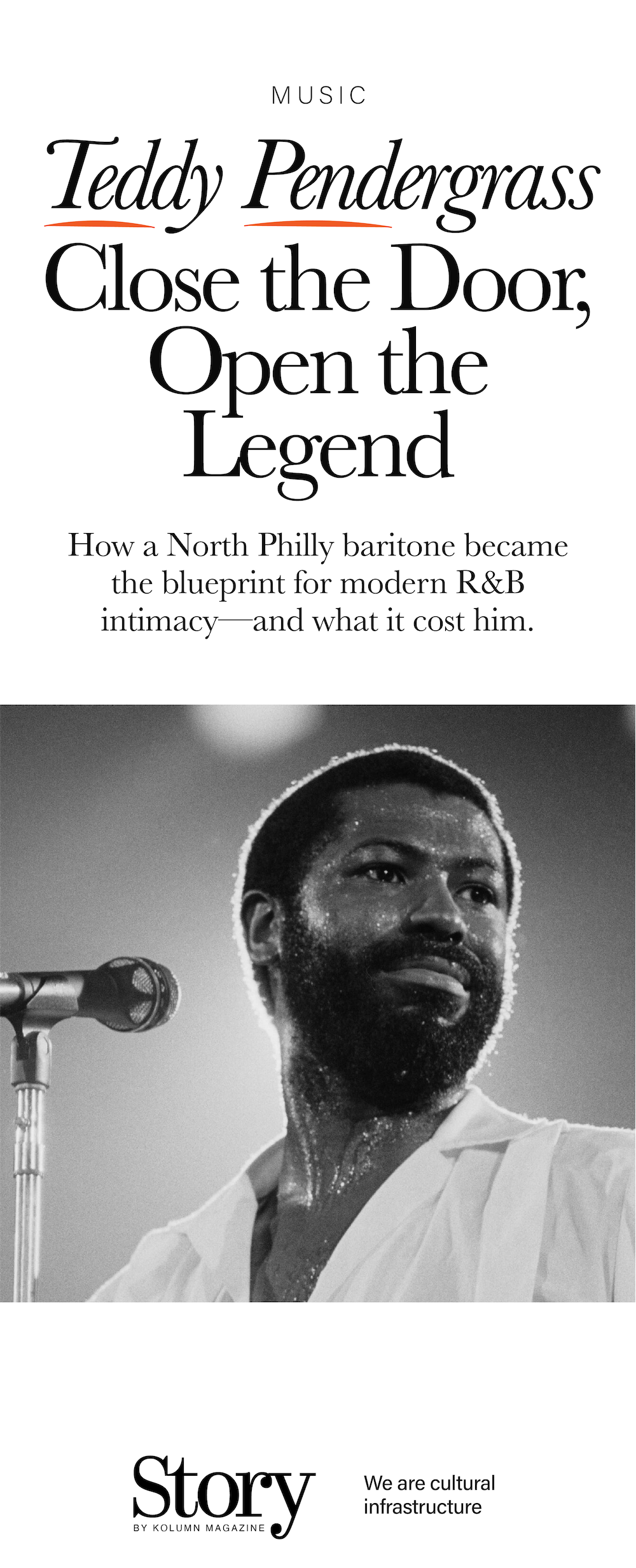
Put on one of the classics and listen for the way the room changes.
By KOLUMN Magazine
There are singers whose greatness is measured by range, singers whose greatness is measured by technique, and singers whose greatness is measured by something harder to quantify: the way they reorganize the atmosphere in a room. In the 1970s and early 1980s, Theodore DeReese Pendergrass belonged to that last category. Even his best records—those slow-burning declarations of devotion and desire—sound like more than songs. They are rooms with the lights dimmed, the door latched, the world muffled into a hush. He didn’t merely sing romance; he staged it.
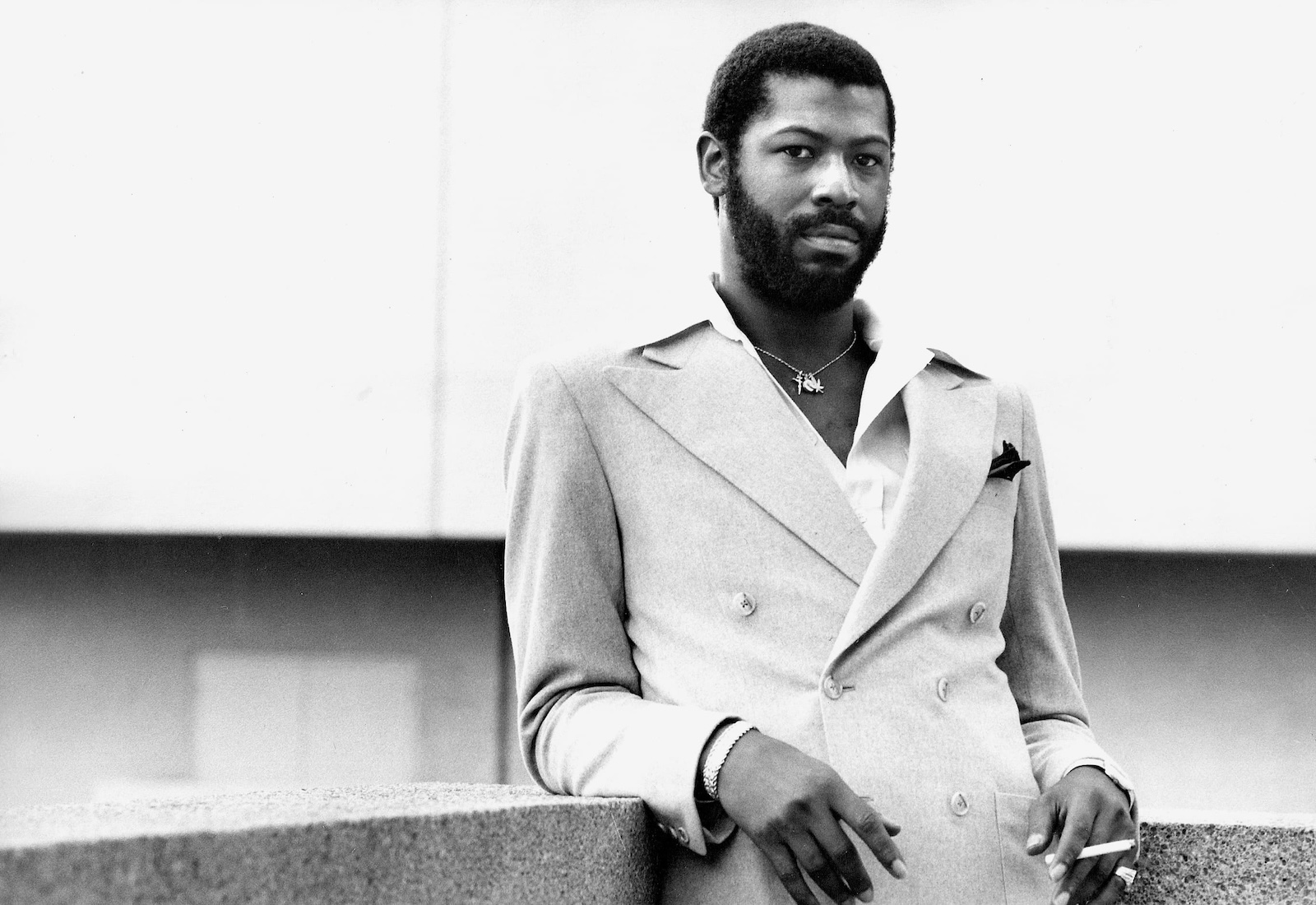
That staging turned him into a phenomenon: the lead voice fronting Harold Melvin & the Blue Notes at the exact moment when Philadelphia soul was becoming an international sound; then a solo star whose success recalibrated what Black male sensuality could look and sound like on the other side of the civil-rights era.
And then, on March 18, 1982, the plot turned brutal. A car crash on Lincoln Drive left him paralyzed, transforming the public meaning of his body overnight. The singer whose brand had been virility, stamina, and heat would spend the next decades in a wheelchair, publicly surviving not only disability but also the cultural impulse to reduce his life to a before-and-after headline.
The long story of Teddy Pendergrass is not just a story about seduction, fame, tragedy, and recovery. It is also a story about how American culture consumes Black genius: how it canonizes the voice while sensationalizing the person; how it asks artists to be symbols and then punishes them for the symbolism; how it converts complicated human lives into simple genres—sex symbol, cautionary tale, inspirational figure—so the rest of us don’t have to sit in the discomfort of complexity.
North Philly formation: Church, drums, and the city’s second education
Pendergrass was born March 26, 1950, in Kingstree, South Carolina, and was raised largely in Philadelphia. His early musical schooling ran through church: gospel singing, the discipline of performance, the call-and-response logic that teaches you how to hold a room. Multiple biographical accounts emphasize how early he began singing and how deeply the church shaped his sensibility—both the fervor and the restraint, the ache and the release.


But the story that matters as much as church is the city itself. Philadelphia is not just a backdrop in this life; it’s an engine. It trained him in the practical realities of music as work—singing in groups, playing drums, moving between neighborhood stages, learning what it means to be tight, dependable, show-ready. Before he was known as a vocalist, he was a drummer, building time and stamina, absorbing what good bands require: steadiness, listening, an ability to push without rushing.
That rhythm section education—earned in churches and local groups—would become part of his later power as a singer. When Pendergrass leans into a phrase, he does it like a drummer accenting a backbeat. When he rides a groove, it’s with the confidence of someone who has lived inside the pocket.
And there was another education too: the Philadelphia performance circuit and its aspirational mythology. For a gifted Black kid with ambition, the city’s venues and touring acts could feel like both invitation and dare. The idea of “making it” wasn’t abstract. It was literal—voices coming through town, hits on the radio, the sense that a local could leave the neighborhood and still carry it in his sound.
Becoming the lead: When the drummer starts singing
The now-classic narrative of his break hinges on a moment that reads like destiny: he joins the band as a drummer, then begins singing along, and the group’s leadership recognizes what’s standing right in front of them. The details vary by source, but the essential point holds: the voice was too consequential to keep behind the kit.
What followed was less fairy tale than machinery—an alignment of talent, timing, and infrastructure. The band’s move into the Philadelphia International Records universe mattered because that label, guided by producers and songwriters Kenny Gamble and Leon Huff, specialized in turning street-level vocal power into polished, radio-dominant records.
The Pendergrass voice arrived as a kind of instrument the Philly sound was built to amplify: husky, commanding, textured with grit. If earlier soul stars often expressed longing with sweetness, Pendergrass expressed longing with force—like wanting was an action, not a feeling.
In the Blue Notes years, that force became a signature on records that have outlasted decades of changing tastes. A key part of the mythology—and a source of persistent public confusion—is that the group name placed Harold Melvin at the front, leading many casual listeners to assume the lead voice belonged to the namesake. Pendergrass’s voice, in other words, often traveled through the world mislabeled. The irony is that the very anonymity of a group format made him more mythic: you didn’t have to know his name to know what he did to a chorus.
The Philly-soul laboratory: Precision, politics, and tenderness in the same song
To understand what Pendergrass helped popularize, you have to understand the Philadelphia soul aesthetic: orchestration that could feel like silk and steel at once; grooves engineered for both dance floors and living rooms; lyrics that toggled between personal desire and collective conscience. The city’s sound, in that era, excelled at making aspiration audible.
This is the context for records that didn’t merely entertain but instructed. In the Blue Notes catalog, romance and social concern shared the same studio air. It is difficult to separate the singer from that message system because Pendergrass’s voice is what gives the message its urgency. When he sounds desperate, the stakes rise. When he sounds soothing, the world feels briefly fixable.
The point is not that he was a political singer in the narrow protest-song sense, but that he worked inside an ecosystem where Black popular music carried social meaning by default. Even a love song, in that environment, could be a claim about dignity: about what Black intimacy deserved—space, seriousness, production value equal to anything on the pop charts.
Going solo: A star is manufactured, and then he takes control
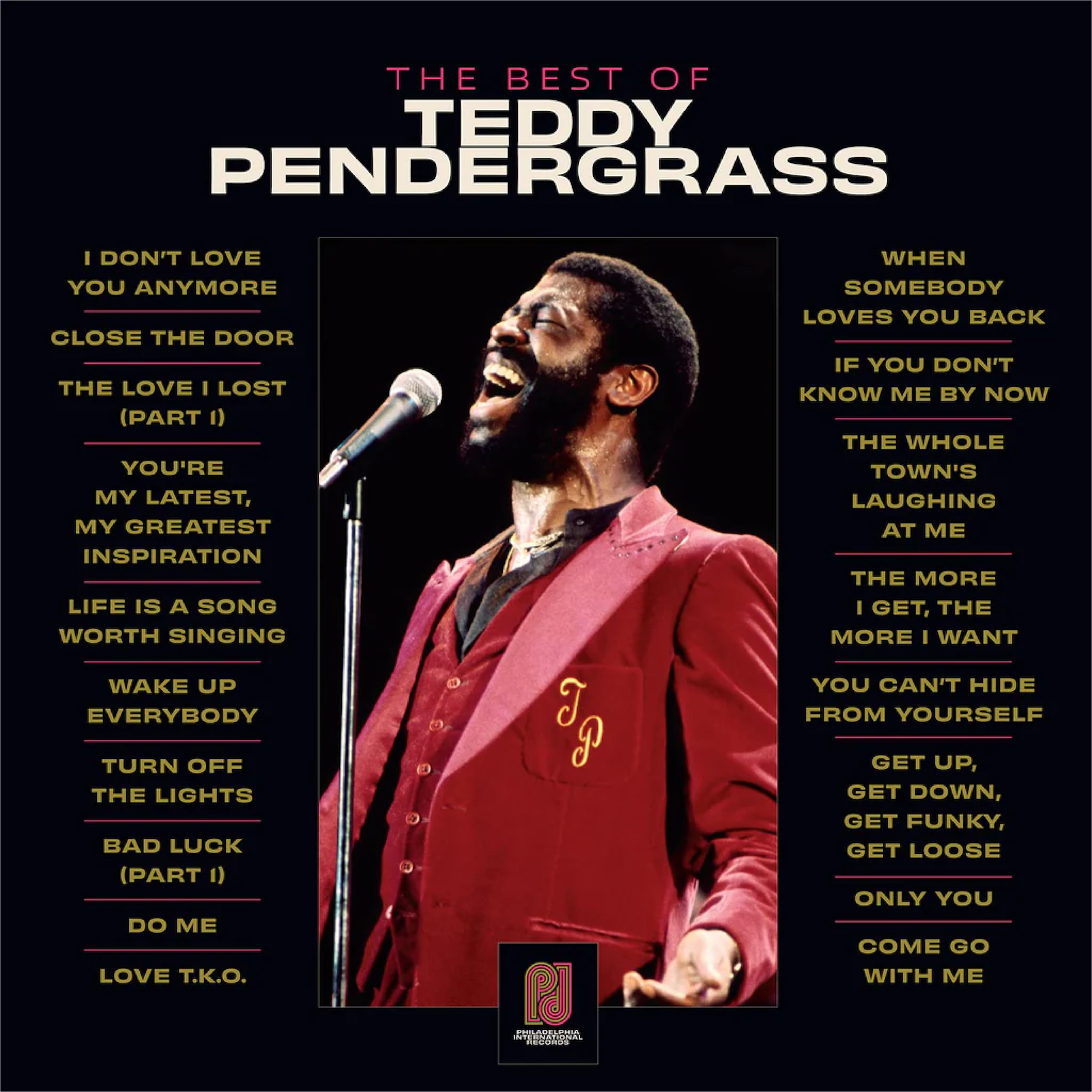
When Pendergrass left the group and launched his solo career, the result was not just a successful rebrand; it was an entire template for how a Black male R&B singer could be marketed: direct, grown, physically confident, emotionally insistent. By the late 1970s, he was not merely famous—he was culturally positioned as a phenomenon, a kind of erotic authority.
One measure of that phenomenon is commercial: sources widely note that he achieved a run of five consecutive platinum albums, a milestone that is repeatedly described as record-setting for an R&B artist at the time.
But the deeper measure is aesthetic. Pendergrass’s solo work refined a sound that would later be absorbed into what radio and listeners would call “quiet storm”—slow jams designed for late-night listening, music that treated intimacy as a serious genre. The singer’s baritone did not float over arrangements; it sat inside them, muscular and close-mic’d, like a confession spoken directly into someone’s ear.
The persona that emerged—equal parts tenderness and command—was not accidental. His management, including Shep Gordon, was attentive to audience composition and to the theatrics of access. The “brand” wasn’t only the voice; it was the ritual: the grown-up mood, the sense that a Pendergrass record was an event you prepared for.
The “Ladies Only” concerts: Power, performance, and the politics of desire
If the records were the private ritual, the concerts became the public proof. Pendergrass’s live shows in that era are remembered not only for vocal performance but for the atmosphere: the kind of crowd response that becomes part of the legend, the kind of intensity that reshapes how an industry thinks about audience and desire.
His “Ladies Only” concerts have become an emblem of that time: midnight events designed explicitly for female audiences, engineered as both celebration and marketing innovation. The cultural point wasn’t simply that he catered to women; it was that he treated women’s desire as a central, respectable market force rather than an embarrassing footnote. In a music business that often reduced female fandom to screaming teenage caricature, he built a grown, erotic space and dared the culture to take it seriously.
Those concerts also carry a more complicated subtext. The “Ladies Only” framing can be read as empowerment—women claiming a space for pleasure on their own terms. It can also be read as the careful commodification of fantasy: Pendergrass as safe danger, accessible idol, the loverman who belongs to the crowd. Both readings can be true simultaneously, and part of his genius was understanding how to stand at that intersection without seeming cynical.
The stage persona—shirt damp, voice thick, dialogue with the audience teasing and controlling—made him a prototype for a later generation of R&B stars. When contemporary artists build “ladies night” tours or market seduction as a performance mode, they are, knowingly or not, working with a grammar he helped popularize.
The crash: One night on Lincoln Drive, and the story becomes a headline
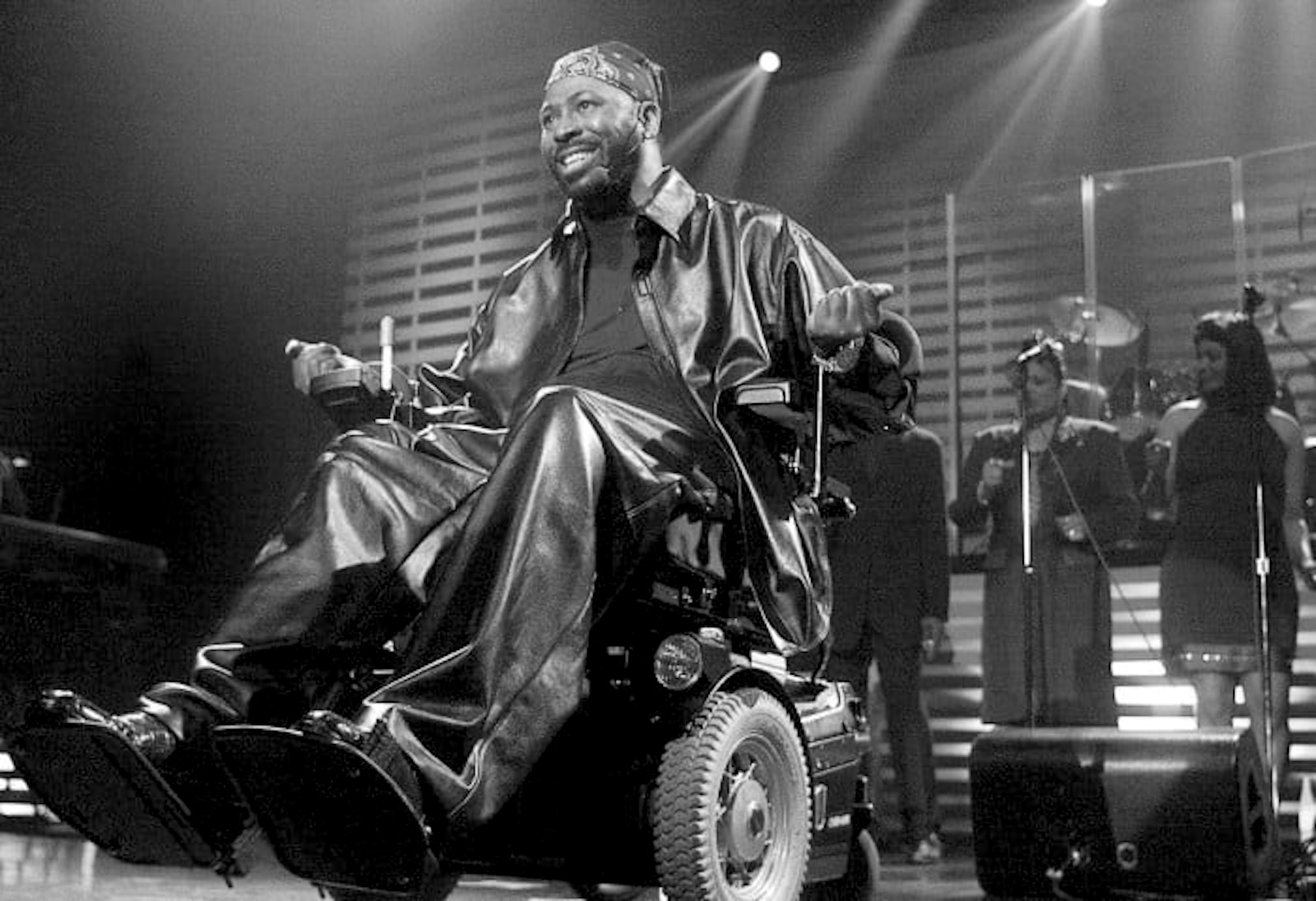
In the early morning of March 18, 1982, Pendergrass crashed his Rolls-Royce on Lincoln Drive in Philadelphia, suffering a severe spinal cord injury that left him paralyzed. Contemporary reporting and later accounts emphasize the violence of the impact and the immediacy of the transformation: the star at the height of his powers suddenly facing the practical and existential realities of life with quadriplegia.
From the moment the crash became public knowledge, the incident attracted not only concern but speculation—an almost predatory curiosity. The identity of the passenger, Tenika Watson, became a focal point of media attention and rumor, and later narratives around her gender identity were often handled by outlets and commentators with varying levels of accuracy and respect. What can be said, responsibly, is that the crash produced a swirl of sensationalism that sometimes treated the singer’s private life as a public puzzle to be solved, rather than as a human life under pressure.
The crash did something else too: it collapsed the distance between celebrity myth and physical reality. Pendergrass had been sold as an embodiment of male potency. After the crash, the culture had to decide what to do with a sex symbol in a wheelchair. The uglier answer is that many people tried to turn him into either tragedy or inspiration—anything that would let them avoid confronting disability as an ordinary part of human variation.
The better answer—one he spent years insisting upon—was that he remained himself: a man with ambition, frustration, pride, humor, ego, and a voice that still belonged to him, even if his body now required new forms of care and negotiation.
Aftermath: Depression, reinvention, and the long work of staying here
In the popular imagination, comeback stories often skip the hardest part: the time when there is no narrative yet, only pain and adjustment. Multiple accounts of Pendergrass’s post-crash years describe periods of depression and uncertainty, and the slow, non-cinematic work of rebuilding a life and career.
This is where the ethics of telling his story matter. It is tempting to treat disability as plot—catastrophe as punctuation that turns a musician into a moral lesson. But Pendergrass’s post-crash life is more interesting than a lesson. It is a case study in agency under constraint: the way he fought to keep working, to keep recording, to keep defining himself in public.
He returned to music, and the very act of returning challenged the assumptions built into his earlier image. If his 1970s fame was partly about a fantasy of unbreakable masculine control, his later career forced audiences to confront a different kind of control: the discipline of persistence, the refusal to disappear, the insistence that art is not canceled by injury.
In interviews and profiles, he could be combative, funny, guarded, and blunt about the media’s appetite for simplification. A later interview published by Wax Poetics highlights that toughness—his resistance to being turned into a soft-focus inspiration poster, his insistence on being treated as a complicated adult.
Advocacy: Turning survival into infrastructure
If the post-crash Pendergrass story were only about music, it would already be substantial. But it is also about advocacy and institution-building. Alongside his wife, Joan Pendergrass, he became associated with efforts to support people with spinal cord injuries, including the establishment of a nonprofit mission aimed at outreach, resources, and pathways to independence.
The language of that mission is revealing: education, employment, independence. This is not charity as sentiment; it is support as infrastructure—an attempt to coordinate help in a landscape where disabled people are often left to navigate fragmented systems alone.
In other words, the later Pendergrass legacy is not confined to records. It includes the quieter work of leveraging celebrity for a constituency that rarely gets spotlight unless it can be made inspirational. He understood the difference between being celebrated and being served—and he pushed, in his own way, toward service.
For audiences, this shift can feel like a moral pivot: the sex symbol becomes the advocate. But framing it as a pivot risks implying the first life was frivolous. In truth, the throughline is agency. Early on, he insisted that Black romance and Black desire deserved serious production and serious attention. Later, he insisted that disabled lives deserved serious resources and serious respect. Different arenas, same insistence.
Late career and endurance: Singing in a changed industry
Even without the crash, Pendergrass would have faced the normal challenges of longevity: shifting radio formats, generational turnover, the industry’s tendency to fetishize newness. With the crash, he faced those challenges plus the physical demands of performance and the public’s changing expectations of him.
Yet accounts of his later years emphasize that he remained a significant figure in Philadelphia and beyond—an artist whose presence carried civic meaning. When the The Philadelphia Inquirer wrote about him after his death, the paper framed him as a musical legend rooted in the city and admired for how he lived after the accident, not only for what he sang before it.
This matters because it suggests a different kind of fame: less about chart dominance and more about communal ownership. Philadelphia claimed him, and he, in turn, remained part of the city’s cultural memory.
The end of the story: Illness, death, and what remains
Pendergrass died on January 13, 2010, in the Philadelphia area after a long illness; major obituaries reported colon cancer among the causes and emphasized the decades he lived with paralysis after the crash.
The obituary language across outlets tends to split his life into eras: the seduction era, the crash, the survival. That structure is understandable, but it can also be flattening. A more faithful structure might be this: the church-trained musician who found his instrument; the working drummer who became a lead singer; the group star who stepped out alone; the solo artist who engineered a new mass-market intimacy; the disabled man who refused disappearance; the advocate who tried to build support systems; the Philadelphian whose city heard itself in his voice.
And then there’s the simplest truth: the records still work. They work because they are not nostalgia objects; they are engineering. When modern R&B borrows the architecture of late-night desire—breathy proximity, slow tempos, the sense that romance is a scene being directed—it is drawing from a lineage in which Pendergrass is foundational.
Legacy: What he built for everyone who came after
It is fashionable to call artists “influential,” but influence is often described vaguely, like perfume in the air. Pendergrass’s influence is more structural. He helped formalize a market category: grown Black romance as blockbuster. He helped normalize the idea that male vulnerability could be voiced with force rather than fragility—that longing could sound like command without turning into parody. He helped stage the live show as a gendered space where women’s pleasure was central.
He also, in the aftermath, offered a public model of disability that refused saintliness. Accounts that discuss his post-crash life often emphasize not only inspiration but also difficulty: the depression, the anger, the friction with the press, the insistence on being treated as fully human. That insistence is, arguably, a form of advocacy as meaningful as any formal nonprofit structure.
For a publication like KOLUMN—committed to cultural infrastructure—the deeper lesson is about how legacies are curated. The easy version of the Pendergrass story is “sex symbol becomes inspiration.” The true version is “artist becomes institution”: a man whose voice shaped an era, whose misfortune tested the limits of public empathy, and whose response was to keep producing, keep speaking, and, eventually, help build scaffolding for others navigating spinal cord injury.
A secular gospel, still playing
In gospel, the singer testifies—tells you what happened, what hurt, what saved them, what they still don’t understand. Pendergrass’s career, taken whole, reads like testimony stretched across decades: the early church training turned into mass romance; the romance interrupted by catastrophe; the catastrophe transformed, imperfectly, into survival and service.
He is often described as a “prototype” for modern R&B, and that is accurate as far as it goes. But prototypes are rough drafts. Pendergrass was not a draft. He was a finished thing: a specific voice from a specific city in a specific era, carrying the tension between polish and grit, fantasy and responsibility, pleasure and pain.
The story ends where it began: in the atmosphere. Put on one of the classics and listen for the way the room changes. That is the real legacy—less a biography than a physics. The voice enters, the world slows down, and for a few minutes you remember what it sounds like when desire is treated as sacred.