


The man who endured bombings, beatings, and arrests in Birmingham and kept organizing anyway.
The man who endured bombings, beatings, and arrests in Birmingham and kept organizing anyway.
By KOLUMN Magazine
In the long American habit of simplifying moral drama into neat casts, the civil rights movement is often narrated as if it were a single voice with a single strategy—nonviolence as a hymn, persuasion as a march, redemption as a law passed and signed. The myth is not exactly false; it is simply incomplete. The movement had many voices, and some of its most decisive victories came from a kind of courage that read, to allies and adversaries alike, as blunt-force insistence.
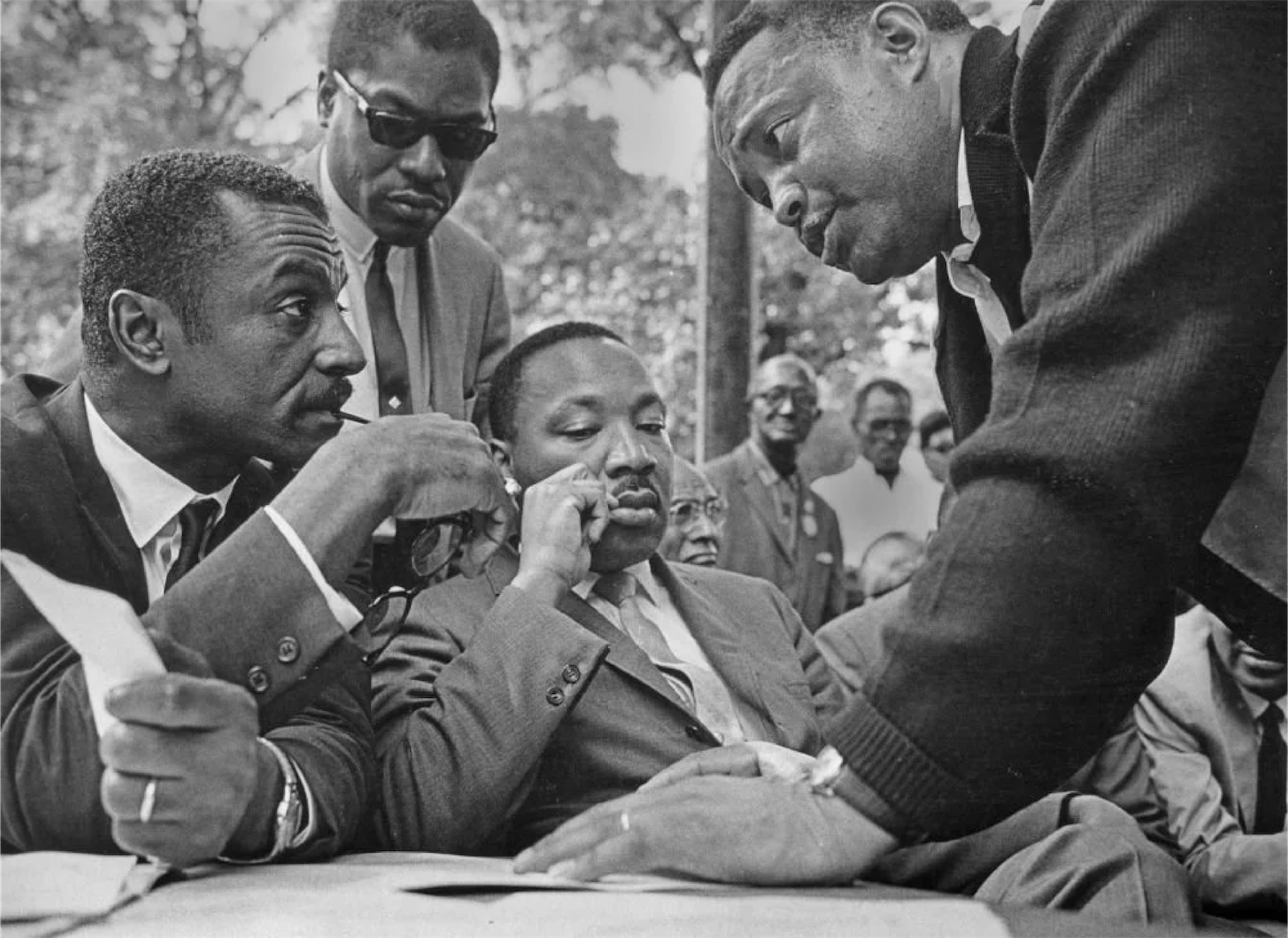
Fred Shuttlesworth belonged to that harder register. He was a Baptist minister whose faith did not soften him into politeness. It sharpened him into refusal. He is remembered, when he is remembered at all, as the man who endured bombings, beatings, and arrests in Birmingham and kept organizing anyway—sometimes in concert with Martin Luther King Jr., sometimes in tension with him, and often ahead of the country’s attention.
Birmingham in the 1950s and early 1960s was not merely segregated; it was engineered to punish any attempt to undo segregation. The city’s violent reputation earned it the grim nickname “Bombingham,” and it wasn’t metaphor. The enforcement arm of Jim Crow included not only police power and municipal ordinance but also private terror—bombs, mobs, and the everyday threat of what might happen to your job, your home, your children. Shuttlesworth’s distinctive role was that he treated this climate not as a reason to wait, but as proof that waiting would only sanctify the system.
That difference—between those who saw time as an ally and those who saw it as the segregated South’s best weapon—runs through his life like a wire. Shuttlesworth’s story is not simply that he was brave. It is that he insisted Birmingham was the place to force a showdown, and he built the local machinery to make such a showdown possible.
A preacher made in Alabama
Fred Shuttlesworth was born in Alabama, formed in Alabama, and—despite later years outside the state—defined by the particular moral weather of Alabama segregation: its intimacy, its ferocity, its insistence on hierarchy as a kind of civic religion. He entered the ministry and eventually became pastor of Bethel Baptist Church in Birmingham, a pulpit that would become, in practice, a command post.
The minister’s authority in Black Birmingham was never only theological. In a city where formal political power was closed off, churches provided infrastructure: meeting space, communication networks, financial pooling, and the legitimacy that could shield—sometimes imperfectly—organizers from the charge that they were merely troublemakers. Shuttlesworth understood that. He also understood something else: infrastructure means nothing without mass participation, and mass participation means people must believe the risk is shared.



That is why so much of his early leadership reads like a series of tests—of the city, of the movement, and of himself. If Birmingham’s segregationists believed violence would end organizing, he would answer by organizing more visibly. If officials believed permits and procedural rules could smother dissent, he would push demonstrations into the open, daring the city to reveal the true purpose of its “order.”
Building the Alabama Christian Movement for Human Rights
When Alabama officials moved to suppress the NAACP’s operations in the state, Shuttlesworth and other local leaders responded not by accepting the vacuum but by inventing around it. The Alabama Christian Movement for Human Rights (ACMHR) was founded in Birmingham in June 1956, with Shuttlesworth at its center—an explicitly local, church-rooted organization built to continue the fight under conditions meant to make organized resistance legally and financially impossible.
The significance of that organizational move is easy to miss if you treat the movement as a sequence of famous speeches and iconic marches. Birmingham’s story, in reality, was also a story of sustaining capacity: raising money, retaining lawyers, managing fear, keeping people coming back on weeknights to mass meetings that were part worship, part strategy session, part collective therapy. Institutions like the Stanford King Institute describe ACMHR as a crucial replacement mechanism after the state’s effort to hobble NAACP activity, and they point to Shuttlesworth’s immediate pivot—calling ministers and community leaders together and anchoring the organization in the moral language of church life.
ACMHR’s early program did not depend on the romance of spontaneity. It combined boycotts, lawsuits, and direct action, operating with an understanding that Birmingham’s system was not merely a matter of individual prejudice but a lattice of law, commerce, and enforcement.
This is where Shuttlesworth’s long-term importance begins to come into focus. National narratives often begin in 1963 with the Birmingham Campaign and the images of fire hoses and police dogs. But those images were the flowering of roots laid years earlier: legal challenges, mobilized churches, and a leader unafraid of escalation.
Christmas night and the theology of survival
On Christmas night in 1956, Shuttlesworth’s home was bombed. The attack was not subtle; it was meant as a message to anyone who thought desegregation activism could be conducted safely, quietly, or on the city’s terms. He survived. And the survival became part of his public meaning—not as miracle story alone, but as political communication.
To survive a bombing and then return to the work is to flip the intended narrative. Violence is supposed to reorder your priorities. It is supposed to make you choose your family over the fight. Shuttlesworth’s response—continuing the struggle and urging others to do the same—made the bombing backfire as intimidation. Accounts of Birmingham’s movement history regularly treat that moment as formative: not because it made him invincible, but because it made visible the stakes Birmingham’s segregationists were willing to embrace.
A minister’s survival can be interpreted as providence; Shuttlesworth often spoke in religious terms about fear and calling. Yet even without theological framing, the political effect was clear. He became, to supporters, proof that you could be targeted and still stand. To opponents, he became the kind of figure violence could not reliably remove—a dangerous thing in a system that assumed terror was final.
The movement’s “combative” man—and why that mattered
Shuttlesworth’s admirers frequently describe him with words that are not always offered as praise: fiery, blunt, combative, headstrong. Even sympathetic summaries note that he could antagonize colleagues and opponents alike, and that his approach could put him at odds with leaders whose instinct leaned toward careful coalition management.
But Birmingham required a certain kind of personality. A city built to humiliate Black residents daily did not merely enforce segregation; it enforced deference. Shuttlesworth’s refusal of deference—his unwillingness to act grateful for small concessions—was itself an organizing tool. It modeled a posture: we are not negotiating our humanity; we are demanding recognition of it.
The Washington Post obituary captured this quality by emphasizing his fearlessness amid repeated bombings, beatings, and arrests, casting him as one of the “bravest and most dynamic” leaders of the era. The Guardian, in its own obituary, noted his late-life illness and the symbolic weight of Birmingham naming its airport for him—an act that would have seemed impossible half a century earlier.
Those are retrospective honors. In the middle years, his style could be controversial even within the movement, not because it rejected nonviolence but because it rejected the idea that nonviolence meant softness. Shuttlesworth’s version of nonviolent direct action was confrontational by design: it sought to expose the brutality beneath “law and order” by forcing the system to respond publicly.
Bringing King to Birmingham—and shaping what America would see
If Shuttlesworth’s life has a single strategic signature, it is this: he understood Birmingham as a stage the nation needed to witness. The Stanford King Institute biographies emphasize his role in drawing King and the Southern Christian Leadership Conference (SCLC) into Birmingham for a decisive confrontation in 1963.
That detail matters, because it reverses a common hierarchy in popular memory. The simplified story says King “came” to Birmingham. The truer story is that Birmingham’s local movement—built by people like Shuttlesworth—created conditions that made King’s presence both useful and, in a sense, inevitable. Shuttlesworth had the local base; SCLC had national visibility. The alliance was strategic, not decorative.
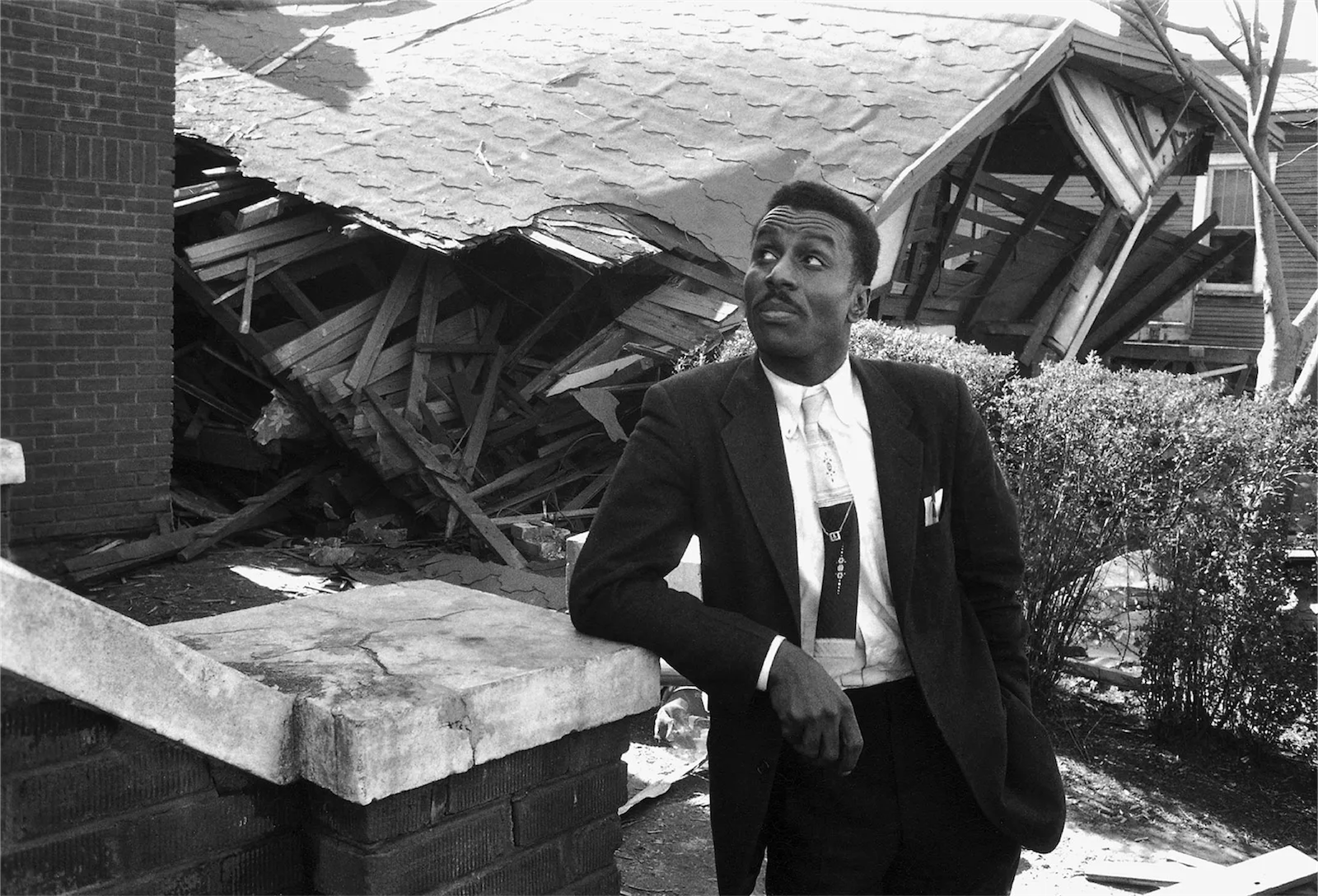
The Library of Congress preserves images of that moment: Shuttlesworth at a press conference alongside King and Ralph Abernathy during the Birmingham Campaign—three men who, together, represented different facets of the movement’s public face.
The Birmingham Campaign itself was not a single march but a sustained sequence of demonstrations and boycotts aimed at dismantling segregation in downtown commerce and public accommodations. It was designed to generate crisis—what Shuttlesworth called “Project C,” with “C” for “confrontation,” a label that clarifies his theory of change.
Confrontation in this sense was not violence; it was pressure. It was the forcing mechanism that could make business leaders, politicians, and the broader public reckon with costs they had outsourced to Black citizens’ daily suffering. When local white religious leaders urged patience, King wrote his “Letter from Birmingham Jail” partly in response to that posture. But the very existence of the campaign—the reason Birmingham became the crucible that produced such a letter—was rooted in local insistence that patience had become a trap.
The Atlantic’s brief notice of Shuttlesworth’s death in 2011 framed him as someone who survived bombings and beatings and who, by his own estimation, went to jail dozens of times—underscoring the relentless cost of his organizing life.
Violence as policy, and the movement’s answer
Birmingham’s police commissioner, Bull Connor, is now remembered as a villain with a snarl, a man who helped turn dogs and hoses into icons of state cruelty. But Connor was not an exception; he was an expression. The point of a segregationist system is that it can rely on official violence and plausible deniability at the same time—claiming restraint while permitting, and sometimes encouraging, terror.
Shuttlesworth’s genius was that he forced that denial to break down in public. When police attacked demonstrators, when mobs threatened activists, when bombs went off, the system could no longer pretend its peace depended on “good order.” It depended on Black submission.
This is part of why Shuttlesworth can feel under-credited in mainstream memory. A movement needs symbols, and King became the era’s most luminous symbol—rhetorically gifted, morally expansive, able to frame the struggle in language that traveled. Shuttlesworth was different. His gift was not primarily lyrical. It was infrastructural and tactical. He was the man who kept asking, in effect: what will make them move?
The Root, in a 2011 remembrance, called him a “civil rights lion” and argued that it was difficult to name anyone more courageous—a striking claim in a movement crowded with bravery. (The Root) That emphasis on courage is not mere hagiography; it is an attempt to measure a particular kind of risk. Many leaders faced danger, but Shuttlesworth lived in a city where danger was ambient, and he chose repeatedly to raise his visibility rather than lower it.
Freedom Rides, local protection, and the ethics of shelter
Shuttlesworth’s Birmingham work connected to other movement flashpoints, including the Freedom Rides of 1961. The story of the Freedom Rides is often told through the riders themselves—young activists testing federal rulings against segregation in interstate travel. But that story is also about local networks that provided shelter, communication, medical attention, and rapid response when mobs attacked. Birmingham and Montgomery were among the most volatile places the rides passed through, and movement leaders in Alabama played crucial roles in sustaining the effort when violence threatened to end it.
Word In Black’s recent cultural writing, even when not focused specifically on Shuttlesworth, continues to invoke him as a symbol of the Black church’s sanctified but materially risky public leadership—an implicit recognition that the movement’s “church” story was not merely about sermons, but about buildings becoming sanctuaries under siege.
One way to understand Shuttlesworth is as a man who treated shelter as strategy. To house a rider, to host a meeting, to keep a church open despite threats—these were not peripheral acts. They were the preconditions for public confrontation.
Law as a battlefield: Shuttlesworth v. Birmingham
Shuttlesworth’s confrontation did not end in the street. It moved into courtrooms, where Birmingham’s permitting and parade ordinances functioned as censorship dressed up as traffic control. The U.S. Supreme Court case commonly known as Shuttlesworth v. Birmingham (1969) centered on the city’s use of permit systems to suppress demonstrations—an example of how “neutral” administrative power can be weaponized against dissent.
Even summaries that are not legal treatises capture the core point: that the legal architecture of segregation included procedural tools designed to make protest illegal on demand. Shuttlesworth’s insistence on challenging these systems in court as well as in the street helped establish precedents limiting the ability of local governments to use permitting regimes as viewpoint discrimination.
This dimension is vital for contemporary readers because it connects Birmingham’s history to current debates about protest, permits, and public space. The question is perennial: who gets to assemble, where, and under what conditions? Shuttlesworth’s legal battles insist that “order” is not a neutral value when the state defines order as obedience.
The complicated afterlife of a movement leader
Great movement leaders are often remembered as if they were always perfectly aligned with later public consensus. But one of the marks of a real human life is complication. Shuttlesworth’s later years included public positions that did not fit neatly into the civil rights canon, including his involvement in contested social debates in Cincinnati politics decades later. He was a man formed by a specific moral framework—one that could be radical on race and conservative on other matters.
This does not erase his achievements. It clarifies that his life cannot be reduced to a statue without losing the sharpness that made him effective. He was not a generic avatar of justice; he was a particular person with a particular theology and temperament, operating under conditions that required not only moral conviction but stamina.
What remained consistent was his insistence that civil rights were not gifts. They were claims.
Recognition—late, symbolic, and still instructive
In 2008, Birmingham renamed its airport Birmingham-Shuttlesworth International Airport, a symbolic act loaded with historical irony: a city once synonymous with anti-Black terror attaching its most prominent civic gateway to the name of a man who forced it to change.
Ebony’s own cultural coverage has noted the airport renaming as part of a broader pattern of Black civic commemoration—airports and public institutions becoming sites where a nation narrates who it honors. These gestures matter, but they also raise an uneasy question: why does recognition so often arrive only after the fight is over, when the risk has been fully absorbed by the people who took it?
The Birmingham Civil Rights Institute’s Fred L. Shuttlesworth Human Rights Award extends that recognition into an annual ritual of legacy, tying contemporary honorees to Shuttlesworth’s model of courage. Recent local reporting around the award shows his family and civic leaders continuing to frame his name as shorthand for “defending” justice as active labor, not nostalgia.
Even KOLUMN Magazine’s own social storytelling has highlighted the coalition moment—King, Shuttlesworth, Abernathy—emphasizing that the movement’s public victories were rarely the product of a single figure.
Why Shuttlesworth still matters in 2026
The temptation, in contemporary public life, is to treat the civil rights movement as a completed chapter: a moral drama whose ending we already know, whose heroes we can name, whose lessons we can recite. Shuttlesworth resists that treatment. He is a reminder that progress often requires people who are willing to be disliked, to be called disruptive, to be accused of moving too fast. He is a reminder that the “moderate” posture—wait, be patient, trust the system—can function as a form of violence when the system is the problem.
This is precisely why his name recurs in modern commentary about civic courage. The Atlantic, reflecting on Birmingham’s memory decades later, has pointed out how mainstream remembrances sometimes reduce Shuttlesworth to a footnote—despite his foundational role in shaping what Birmingham became in the public imagination.
In 2026, as communities continue to fight over voting access, protest rights, education narratives, and whose history is taught, Shuttlesworth’s life offers a usable lesson: moral clarity without organized pressure is easily ignored. Birmingham’s segregationists did not wake up kinder. They were forced to confront costs—economic, political, reputational—that made segregation harder to sustain.
Shuttlesworth’s approach also unsettles a comforting idea: that nonviolence is inherently safe. Nonviolence can be lethal for those who practice it when the state and private actors respond violently. The difference is not in whether danger exists, but in whether activists refuse to let danger decide the terms.
The man behind the legend
To speak of Shuttlesworth only as “fearless” is to risk turning him into a mythic character rather than a human being. He was a husband and father. He was a pastor responsible for a congregation’s spiritual life. He was a leader who carried guilt as well as pride: guilt when people were hurt, when families suffered, when the work demanded more than any individual should have to give.
Oral history interviews and documentary resources preserve the texture of his voice—his sense of calling, his blunt assessments of what Birmingham was, and his conviction that faith required action in the face of humiliation. The National Park Service biography places him within the broader ecosystem of movement leadership, underscoring not just his courage but his centrality to the era’s major campaigns.
The Washington Post obituary’s emphasis on survival—bombings, beatings, repeated arrests—can read, at first, like an action list. But the deeper story is what survival did to him and to the movement. Survival became credibility. Every time he returned, he signaled to Birmingham’s Black citizens that terror was not destiny.
The Guardian’s portrait of his later life—his illness, his final sermon, the lingering respect—adds the counterpoint: even the most relentless fighters are mortal. The body that absorbs the movement’s violence eventually demands rest.
Legacy as a contested space
There is no such thing as a neutral legacy for a man like Shuttlesworth. Legacy is a battlefield of interpretation: Was he too militant? Not militant enough? Too blunt? Too uncompromising? The truth is that Birmingham required uncompromising people simply to make compromise possible.
That may be his most durable contribution. By forcing the city into confrontation, he widened the realm of the politically possible. The concessions that followed—desegregated lunch counters, shifts in hiring, legal reforms—did not materialize from goodwill. They materialized from the arithmetic of pressure.
In that sense, Shuttlesworth’s story is not only a civil rights story. It is a civic story: about how power responds when a community organizes itself into a force that cannot be ignored.
The closing lesson: Courage is a system, too
We often imagine courage as an individual attribute, as if history turns on rare personalities who happen to be brave. Shuttlesworth suggests another way of seeing it. Courage can be organized. It can be rehearsed in mass meetings. It can be financed in small donations. It can be sustained by rituals of song, prayer, and testimony. It can become, in the best sense, a system—a counter-system to the one designed to crush you.
That is the enduring image of Shuttlesworth in Birmingham: not merely the man who survived, but the man who built something that could outlast a bombing.
He did not ask segregation for permission to end. He treated it like a structure with weak points—legal, economic, moral—and he aimed his city at those weak points until the structure began to fail.
And if, in January 2026, his name circulates again—sometimes accurately, sometimes not—the deeper fact remains intact: Fred Shuttlesworth’s life is one of the clearest demonstrations that America’s most celebrated victories were secured not only by speeches, but by organized, local, confrontational faith.