

By KOLUMN Magazine
There’s a specific kind of silence that happens right after landing: the engines spool down, people wake up from their cramped, half-sleep, and the cabin becomes a low democracy of zippers and apologies. Overhead bins snap open. Someone laughs too loudly, like they’ve been holding it in since takeoff. You step into the jet bridge with that strange airport mix—industrial carpet, recycled air, the faint sweetness of cinnamon from a kiosk you can’t see yet—and the city is suddenly near enough to touch.
I have a habit in those first minutes on the ground, before I check messages, before I let an app tell me where to stand and when to walk: I press play. Not on something algorithmic, not on a “Top Hits of…” package. I want one song that feels like local weather—something that tells the truth about the place in a language the body understands. The kind of track that makes the taxi ride feel pre-scored. The kind that gives you a thesis without a lecture.
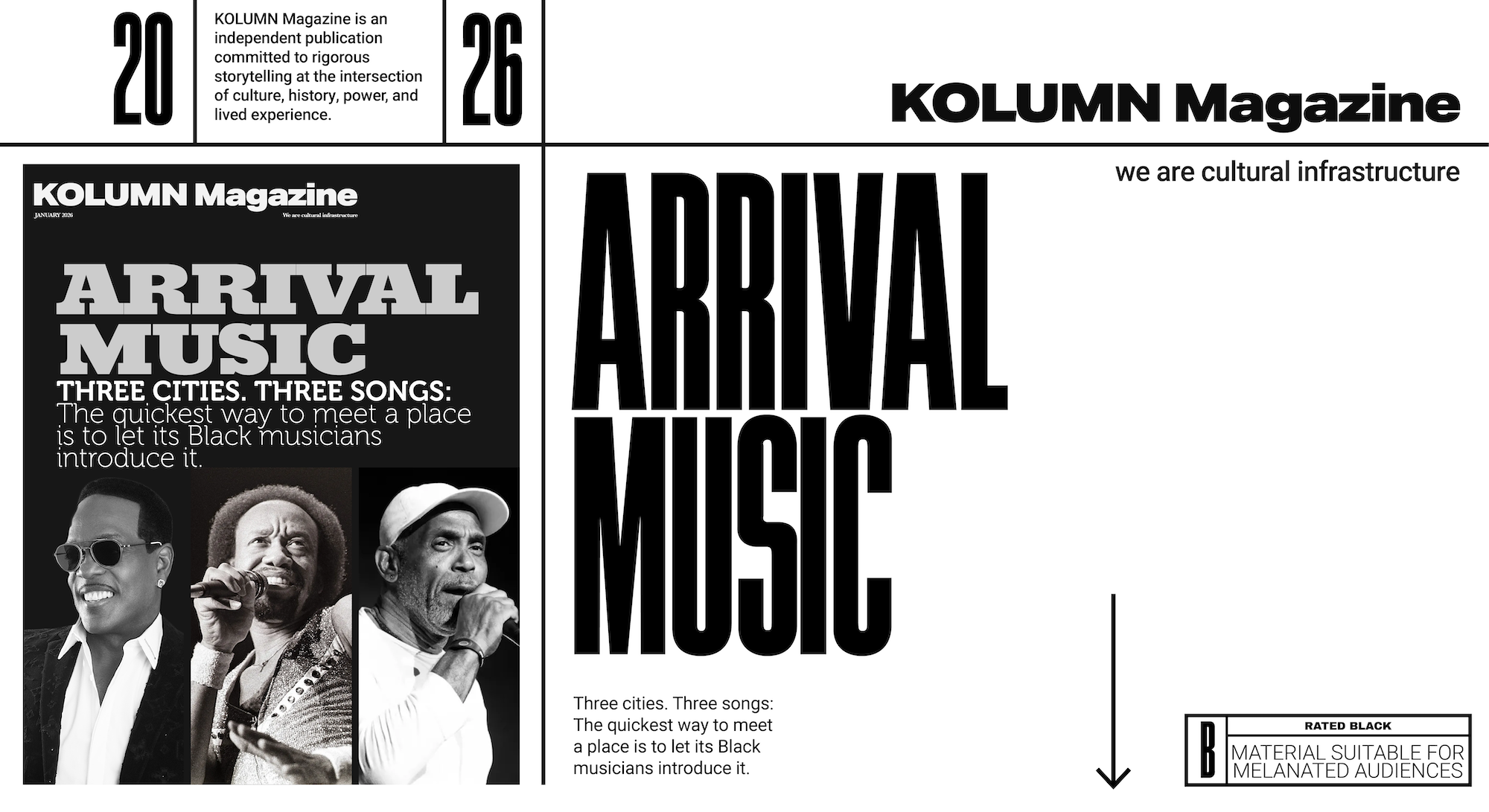
In Tulsa, Oklahoma, I want The Gap Band’s “Yearning for Your Love,” a slow-burn ballad that proves tenderness can be as regional as barbecue. In Philadelphia, Pennsylvania, I want Frankie Beverly and Maze’s “We Are One,” a record that doesn’t just ask for unity—it stages it, calmly, insistently, like a neighborhood cookout that refuses to be canceled. And in Chicago, Illinois, I want Earth, Wind & Fire’s “September,” a song so joyful it has become a secular holiday, a piece of communal infrastructure as dependable as trains and summer. “September,” released in 1978, is also literally tied to a civic date—one that listeners keep reenacting because the song makes time feel friendly.
This is not a contest for the “best” song from each city. It is a more personal exercise, and in its way, more demanding: What do I want to hear first, the moment my shoes meet that city’s floor? What track can translate a place—its history, its grief, its brag, its flirtation, its unspoken rules—into four or five minutes?
To answer that, you have to treat music not as decoration but as document. You have to listen for the city inside the production choices: the horns arranged like a skyline, the rhythm section built like a block, the vocal timbre that carries local weather in it. And you have to listen for what the songs do socially—how they gather people, how they teach a crowd to move together, how they allow a community to see itself as a “we” instead of a set of separate “I”s.
In three cities—Tulsa, Philadelphia, Chicago—Black musicians did precisely that. They took local experience and made it portable. They built records that function like passports: you can carry them anywhere, and they still stamp you with the place they came from.



Tulsa, OK: The Gap Band’s “Yearning for Your Love” and the tenderness inside a hard history
Tulsa has a reputation, depending on who is speaking, for oil money, for prairie light, for the uneasy romance of reinvention. It is also a city where history does not sit politely in museums; it has street names and neighborhoods and long arguments about what gets remembered and what gets paved over. The Gap Band understood that kind of city in a way that was both explicit and sly.
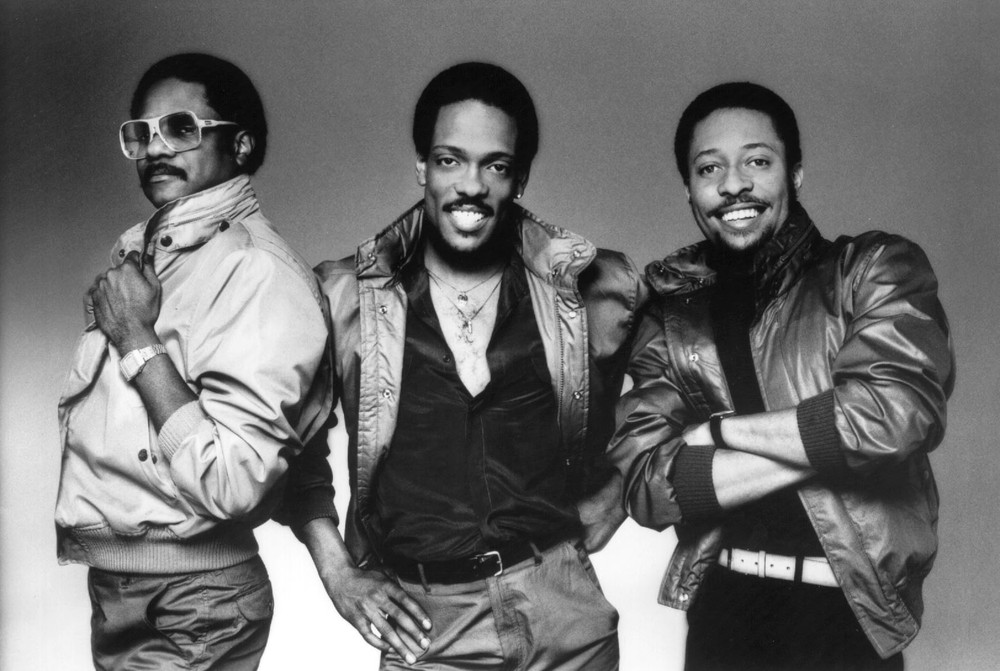
Start with the name: GAP—Greenwood, Archer, and Pine—streets in Tulsa’s historic Greenwood District, a center of Black business and culture that was devastated in the 1921 Tulsa Race Massacre. The band named itself after those streets as a hometown marker and, inevitably, a kind of memorial. In later years, members of the group spoke openly about carrying that story on the road, explaining the name while touring—turning a pop act’s brand into a recurring history lesson.
That context matters when you press play on “Yearning for Your Love,” because the song’s great trick is how gently it insists on feeling. The Gap Band is often remembered for muscular funk—songs that hit like a grin and a shove. But “Yearning” is a slow, polished, quiet-storm ballad: romantic, unhurried, built for night drives and living-room dancing. It was released as a single in early 1981 from the album The Gap Band III (released in 1980), and it reached No. 5 on Billboard’s Hot Soul Singles chart and No. 60 on the Hot 100.
The song’s authorship already tells you something about The Gap Band’s internal architecture: it was written by keyboardists Oliver Scott and Ronnie Wilson. The track is a study in restraint—proof that a band known for party-starting could also do atmosphere with surgical precision. The rhythm section doesn’t announce itself; it settles in. The guitar lines are clean and patient, leaving space for the vocal to do the real work: a plea delivered with confidence rather than desperation.
Charlie Wilson—“Uncle Charlie” to later generations—sings as if the microphone is close enough to pick up thought. His voice is not simply smooth; it is disciplined. He avoids melodramatic runs, letting the melody carry emotion the way a well-built sentence carries meaning. The lyric is straightforward—someone recognizing time wasted, love delayed—but the performance makes it feel like a confession that has been rehearsed privately for weeks.
Listening to it as “arrival music” in Tulsa reframes the city in a way tourism brochures rarely do. Tulsa is not only a place of rugged reinvention; it is also a place that produces softness as craft. “Yearning for Your Love” carries that particular Midwestern confidence: no need to overstate, no need to beg. The groove says: I will wait, but I will not pretend I don’t feel.
It also sounds like a city that learned, repeatedly, what it costs to be misunderstood. The Greenwood District’s history—prosperity, violence, suppression, and the long afterlife of both trauma and resilience—sits behind the band’s very name. When you know that, a love song from a group named after Greenwood streets starts to read differently. Not as allegory in a simplistic way, but as a reminder that Black art often contains more than one kind of longing at once: romantic yearning, yes, but also a longing for safety, for continuity, for the right to simply enjoy a slow night without catastrophe.
The recording itself—made in 1980, released into the early Reagan era—arrives like a soft answer to a hard decade. The production’s sheen is not escapism so much as insistence: we deserve beauty that is not constantly interrupted.
And Tulsa is, in fact, deeply musical in precisely this layered way. The Gap Band formed in the city and built its identity from local geography, then carried that identity outward until it became global pop vocabulary. They are the kind of group that proves how a “regional” band becomes universal: by being specific enough to be true.
On the taxi ride from the airport—your bags thumping in the trunk, the highway lanes widening as the city comes into focus—“Yearning for Your Love” does something subtle. It doesn’t hype you up for Tulsa. It introduces you to Tulsa’s interior life. It says: before you see the murals, before you hear the boosterism, before you encounter the city’s debates about memory and repair, you should know that Tulsa also makes room for a man singing gently about missing someone. That tenderness is part of the place, too.
Philadelphia, PA: Frankie Beverly’s “We Are One” and the city as fellowship practice
Philadelphia is a city of institutions and impatience. It can be intensely civic and intensely suspicious of civic performance. It is a place where people love you by telling you the truth quickly. It is also, unmistakably, a Black music city—a place that has exported sound and sensibility for decades, from vocal groups to DJs to a certain kind of streetwise sophistication.
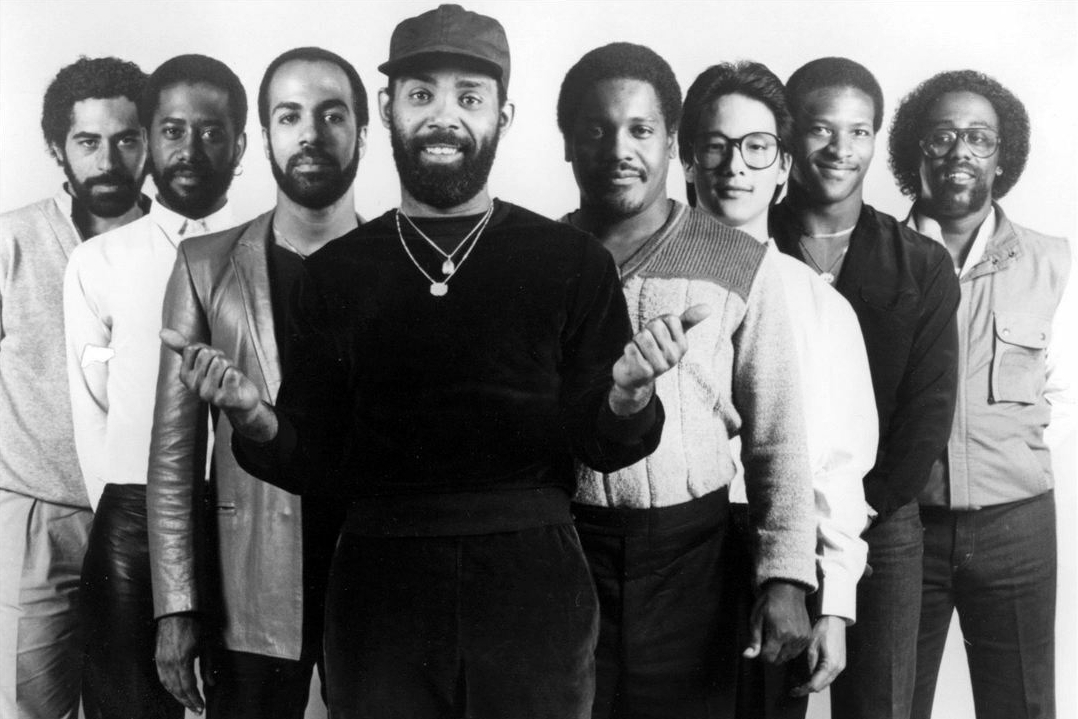
Frankie Beverly belonged to Philadelphia not only by birth but by temperament. Beverly—born Howard Stanley Beverly—was born in Philadelphia, and his long arc from local musician to national icon always carried that hometown stamp: self-contained, steady, allergic to gimmick. His career began early—gospel, doo-wop, the apprenticeship circuits—and then expanded into bandleading and songwriting that built a devoted audience across generations.
To understand why “We Are One” is the song I want upon landing, you have to understand Maze’s unique cultural role. Maze Featuring Frankie Beverly did not always dominate the pop charts in the way some contemporaries did; their power was different. Maze became a live institution, a group that could sell out venues and generate a particular kind of Black joy—intergenerational, dress-up, communal—without needing constant radio validation. That devotion is documented in the way Beverly is spoken about as a “Philly icon,” including tributes that frame him as part of the city’s identity, not merely its entertainment.
“We Are One” is not just a song title; it is a claim. It is also the title track of Maze’s 1983 album We Are One, written by Beverly and produced under his guiding hand. The album performed strongly on R&B charts and, notably, had a substantial UK presence as well—evidence of how this particular brand of American soul traveled.
But the airport test is not about chart positions. It’s about immediate usefulness. The moment you land in Philadelphia—at PHL, with its practical corridors and its sense of getting you out into the city quickly—“We Are One” functions like a behavioral instruction manual delivered as a groove.
The track is built around steadiness. It does not rush to its message. It repeats it. The arrangement gives the vocal room to sound like a leader speaking to a room rather than a soloist performing for strangers. Beverly’s voice is famously warm—grainy in a way that suggests lived experience, not studio polish. He sings with the authority of someone who expects you to listen because the message has already been tested in real rooms.
And “We Are One” is, fundamentally, a real-room song. It sits naturally in the world of Black family reunions, cookouts, block parties, step shows, and the kind of outdoor amphitheater nights where you can look across the crowd and see entire families moving as one organism. Philadelphia’s Dell Music Center—an iconic summer venue—has hosted exactly that kind of collective experience for decades, and Beverly’s final hometown shows were treated not as mere concerts but as civic events.
In interviews, Beverly came across as someone who treated music less as celebrity and more as service—an orientation consistent with the way his audience treated him: not as a fleeting star, but as someone whose songs were embedded in life rituals. That relationship matters when “We Are One” begins. The song is not begging for unity in a sentimental way. It is stating unity as an achievable practice—something you do, not something you wish.
As arrival music, it’s also a corrective to how outsiders often misread Philadelphia. The city is frequently reduced to its sports aggression or its founding-era iconography. But “We Are One” introduces another Philadelphia: the city as a place where Black social life has long required sophisticated forms of togetherness—mutual aid, neighborhood loyalty, institutional building, and culture as glue.
Listen closely, and the song’s calm confidence feels like the musical equivalent of a Philadelphian giving you directions: direct, no flourish, but deeply invested in you getting where you’re going. It does not romanticize unity; it operationalizes it.
The timing of the album—early 1980s—also matters. These were years of economic shift, political retrenchment, and the long shadow of deindustrialization across many Northeastern cities. Against that backdrop, a song like “We Are One” reads as both affirmation and strategy: a reminder that cohesion is how communities survive pressure.
When I land in Philadelphia, I want that reminder early. Before I encounter the city’s speed, before I feel its bluntness, I want to be met by a voice that says: you are entering a place where people have practiced belonging like a craft. Beverly’s Philadelphia is not soft—but it is devoted. It believes in the “we” not as a slogan, but as a survival technology.
Chicago, IL: Earth, Wind & Fire’s “September” and the city as kinetic joy
Chicago does not have to introduce itself loudly; it has always been loud in the world’s imagination. The skyline declares, the lakefront opens like a stage, the grid organizes you whether you want it to or not. Chicago is also, historically, a Black music engine—blues, jazz, gospel, house, soul—each genre leaving behind infrastructure: clubs, labels, studios, musicians who trained other musicians.
Earth, Wind & Fire is often spoken of as universal—cosmic even—but its origin story is distinctly Chicago. The band was formed in Chicago in 1969 by Maurice White, who had worked in the city’s music ecosystem before moving west. This matters because Chicago musicianship has a certain built-in seriousness: a respect for arrangement, for horns as architecture, for rhythm as engineering. EWF took that seriousness and turned it into uplift.
“September,” released in 1978 as a new track on The Best of Earth, Wind & Fire, Vol. 1, is the song I want the moment I land at O’Hare, because it does something almost impossible: it makes a massive city feel friendly. It’s a song that behaves like a street festival—instant community, no invitation required.
The basic facts are part of the mythos. “September” was released as a single in November 1978. It was written by Maurice White and Allee Willis, built on a musical sequence developed by guitarist Al McKay. Commercially, it was enormous: No. 1 on Billboard’s Hot Soul Songs, No. 8 on the Hot 100, and a major UK hit. Decades later, it still surges annually in streams and sales around September 21, like a recurring cultural appointment.
But the airport test isn’t about longevity alone. It’s about the first ten seconds—whether a track can reorganize your body after travel, after lines, after the small indignities of modern transit. “September” begins with a kind of clean momentum: rhythm guitar locked in, horns poised, the groove already smiling before the vocal arrives. It is not a “slow build.” It is a door flung open.
Allee Willis, one of the song’s co-writers, has spoken about the unusual alchemy of the record and the way it came together—how a song can be meticulously constructed and still feel effortless. That paradox is part of the Chicago-ness of “September”: the craft is serious, the result is joy.
And joy, in Chicago, has never been frivolous. It has often been earned. The city’s Black history—migration, labor, segregation, political struggle, cultural innovation—produced art that knows how to hold complexity. EWF’s genius was not in ignoring that complexity but in translating it into celebration without losing intelligence.
Even the horn arrangements have a kind of municipal grandeur. They don’t merely decorate; they structure the song, like steel beams. Critics and historians have repeatedly noted EWF’s sophistication—how the band blended Black music traditions into pop forms with richness and polish. “September” is a perfect example: it is dance music with harmonic discipline, party music with architectural integrity.
Then there are the lyrics, famously containing words that do not “mean” in a literal way what people expect them to mean. The “ba-dee-ya” and the deliberately abstract phrasing function like percussion—sound designed to feel good in the mouth and in the room. This is not escapism; it’s a technique. It makes the song accessible across languages and contexts. It turns the hook into something you can participate in immediately, without explanation. In a city as international and segmented as Chicago, that matters: “September” is a song that makes strangers sing together.
As arrival music at O’Hare—a sprawling machine of gates and terminals—“September” performs a small miracle. It shrinks scale. It turns the long walk to baggage claim into choreography. It makes you feel, briefly, as if the city is not going to demand toughness from you right away; it will let you dance first.
The Chicago connection runs deeper than geography. Maurice White’s career arc—raised and musically shaped in Chicago’s scene, later expanding into global pop invention—mirrors the city’s long pattern: local rigor producing worldwide influence. And “September,” with its precision and its generosity, feels like Chicago at its best: built, intentional, and open.
A closing argument for “Arrival Music”
There’s a reason these three songs work as first contact.
The Gap Band’s “Yearning for Your Love” introduces Tulsa as a city with an interior—one that can carry history in its very name and still insist on romance and softness as a form of dignity. Frankie Beverly’s “We Are One” introduces Philadelphia as a city where community is not sentimental but practiced—where music functions as social instruction and collective reassurance. Earth, Wind & Fire’s “September” introduces Chicago as kinetic intelligence—craft so refined it passes as pure fun, joy so communal it behaves like public infrastructure.
All three are records made by Black artists who understood that a city isn’t only its skyline or its news cycle. A city is also its emotional defaults: how it loves, how it gathers, how it celebrates, how it remembers. These songs capture those defaults and make them portable.
So, yes: when I land, I press play. Because the fastest way to meet a city is not always through a guidebook. Sometimes it’s through a chorus that has already been living there for decades—waiting patiently to tell you, in the language of bass and breath, exactly where you are.