

By KOLUMN Magazine
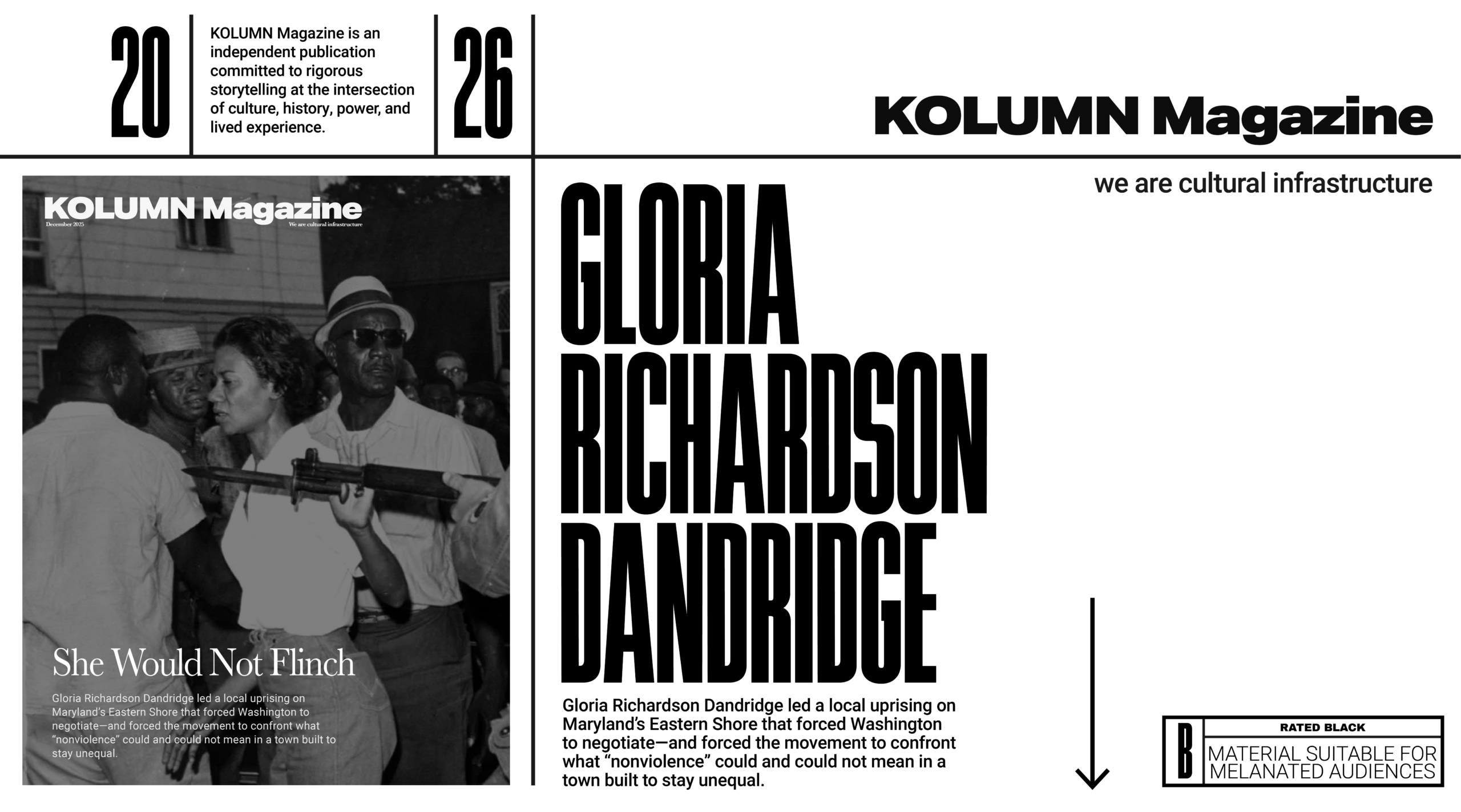
The photograph that followed Gloria Richardson for the rest of her life has the clean geometry of an American parable: a civil rights leader in a summer dress, her face fixed in concentrated disgust, pushing away the tip of a National Guardsman’s bayonet as if it were nothing more than an interruption. In the frame, her hand is not raised in surrender or prayer; it is raised in correction. The soldier looks like the state. She looks like a citizen who has read the Constitution closely enough to be offended by the premise that a weapon can tell her where she may stand.
But Cambridge, Maryland, did not become a national crisis because of a photograph. And Gloria Richardson—later Gloria Richardson Dandridge—did not become one of the most consequential, and least comfortably categorized, civil rights leaders of the 1960s because she made a Guardsman blink. The deeper story is what made the bayonet necessary at all: the stubborn architecture of an Eastern Shore city that kept Black residents poor and contained; the local political economy that treated segregation as a business model; and a leader who insisted the fight was never only about lunch counters. It was about wages. Housing. Schools. Medical care. The right to live without asking permission from the people profiting from your deprivation.
Richardson’s name is often invoked as a corrective—an unsung woman, a militant realist, a strategist who complicated the standard civil-rights script of polite suffering and saintly restraint. Those descriptors are not wrong. They are also incomplete. Because what Cambridge reveals, when you look at it closely, is that Richardson was not simply a “female leader” in a movement crowded with men. She was the architect of a particular kind of campaign—one that anticipated later debates about community control, the limits of moral suasion, and whether America responds faster to appeals to conscience or to the credible possibility of disorder.
Her legacy is a kind of argument, staged in the streets of a small city and addressed—sometimes directly—to the federal government: If you want peace, you must pay for it. Not with speeches. With structural change.


The making of a “race woman” in a place designed to keep Black people in their place
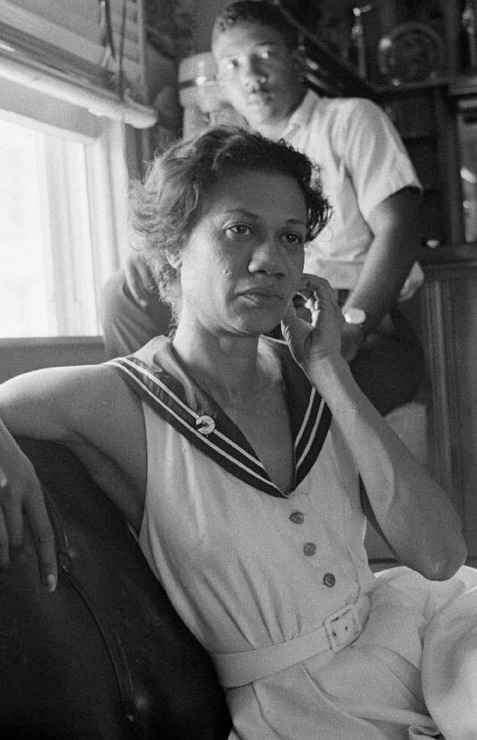
Gloria St. Clair Hayes was born in Baltimore in 1922, but Cambridge, Maryland—where her family had standing—became the geography that shaped her political adulthood. That standing mattered, not as insulation (it didn’t insulate) but as visibility: she could see how a Black family might be “respected” in the narrow, conditional way white towns sometimes grant to a few families, and still live under a system built to enforce Black disposability. “Respectability” in Cambridge was not citizenship; it was a leash that could be yanked tight the moment anyone mistook dignity for entitlement.
She attended Howard University, graduating in the early 1940s, and later recalled a college environment where the language of rights—of protest, of collective action—was neither alien nor romantic. In her 2011 Civil Rights History Project interview, she described learning through demonstrations and campus politics in Washington, then moving into government work before returning to Cambridge and taking on responsibilities in her family’s orbit.
By the time Cambridge erupted, Richardson was not a teenager with a newly discovered sense of injustice. She was a mother with a sober inventory of what the city’s racial order did to daily life. That vantage point gave her two things that show up repeatedly in her later choices: impatience with symbolism and a steady suspicion of reforms that arrive only after Black people prove they can suffer politely.
Cambridge in the early 1960s: Segregation plus poverty, enforced by local power and local police
Cambridge’s racial boundaries were explicit enough to be mapped. Race Street—the name itself a kind of civic confession—functioned as a line that separated Black Cambridge from white Cambridge in more than the geographic sense. The city’s Black residents were concentrated in neighborhoods with inferior services and limited opportunity. Employment for Black workers often meant the lowest-wage jobs; housing conditions and public services mirrored that inequality; and the promise of “equal protection” remained more theory than practice.
What made Cambridge strategically important is that its injustices were not only the theatrical kind—signs, counters, theater seating—that TV cameras could frame neatly. Cambridge’s injustice was also structural: jobs and housing and municipal power. Richardson would later emphasize how often outsiders tried to re-center the movement’s agenda onto public accommodations alone, as if the ability to sit at a lunch counter could substitute for the ability to buy a home or earn a living wage. In the 2011 interview, she recalled resisting the idea that Black people should even submit to a vote on whether they could enter restaurants—“we didn’t ever think we were supposed to vote on whether we could go into a restaurant,” she said, describing Cambridge’s longstanding Black presence and self-assurance.
This is the first essential key to her leadership: Richardson never framed civil rights as a request for inclusion. She framed it as enforcement of rights already owed.
SNCC arrives; youth move first; adults follow
When Student Nonviolent Coordinating Committee (SNCC) organizers arrived in Cambridge in 1962, they did not invent the city’s grievances. They gave structure and national connectivity to local anger and local need. Students led early demonstrations and sit-ins; arrests and harassment followed. SNCC’s model—organize locally, train for discipline, build community power from the ground up—matched the city’s moment.
But Cambridge also exposed the stress points in the movement’s dominant tactical theology. SNCC’s identity was built around nonviolence—moral witness as strategy. Richardson respected the organizational intelligence of SNCC and worked closely with it. Yet she did not accept the expectation that Black communities must be physically passive when threatened. In later recollections, she described Cambridge as a place where violence was not hypothetical, where “night riders” and white shooters were not metaphors but neighbors with access to guns, cars, and complicity.
That difference—nonviolence as discipline versus self-defense as survival—would become one of Cambridge’s defining tensions.
The Cambridge Nonviolent Action Committee: Adult-led, locally grounded, economically explicit
In 1962 Richardson helped create the Cambridge Nonviolent Action Committee (CNAC), an adult-led group aligned with SNCC’s work and rooted in the city’s Black neighborhoods. CNAC became the instrument through which protests were translated into demands and demands into negotiations. The organization’s focus—economic and material inequality alongside public accommodations—distinguished Cambridge from many other flashpoints of the era.
CNAC’s insistence on substance over symbols is visible in Richardson’s own retellings. In the Civil Rights History Project interview, she described outsiders—ministers, national groups, even sympathetic allies—pressuring Cambridge to treat public accommodations as the central issue, while local people experienced jobs, housing, and schools as equally urgent. Cambridge, she suggested, was being asked to stage the kind of struggle the nation understood, rather than the kind Cambridge actually needed.
This insistence made her effective locally—and difficult nationally. It also made Cambridge a prototype for later civil-rights arguments: that desegregation without redistribution is a partial remedy.
Courts, arrests, and the politics of making protest expensive
As demonstrations escalated, the city’s legal apparatus did what such systems often do: it monetized dissent. Arrests, fines, trials, and procedural delays were deployed to exhaust protesters and to send a message to families weighing whether activism was worth the risk. Richardson understood this as economic warfare by other means. The courtroom, in this view, was not the neutral arena; it was the state’s extension cord, plugged directly into white authority.
This is where Richardson’s leadership style sharpened into something that made officials uneasy: she refused to behave like a supplicant. She didn’t ask Cambridge for mercy. She insisted Cambridge comply with law and morality on the community’s terms.
1963: Escalation, National Guard, and the logic of “modified martial law”
By the summer of 1963, Cambridge could no longer be treated as a local disturbance. Protests, counter-protests, and violence increased; white mobs gathered; clashes became predictable rather than exceptional. Maryland Governor J. Millard Tawes declared martial law and sent the Maryland National Guard to Cambridge—first as a show of control, later as a semi-permanent presence that remade the city’s emotional weather.
“Martial law” can sound abstract until it arrives at street level. In Cambridge, it meant Guard trucks and armed men, curfews that turned ordinary evenings into regulated time, and a public signal that the state viewed Black demands not as legitimate civic claims but as a threat to order requiring military management. After renewed conflict, the Guard returned and, under Brigadier General George Gelston, imposed what was described as a “modified martial law”: a 9 p.m. curfew, a ban on further racial demonstrations, restrictions on firearms, and prohibitions on liquor sales—rules that did not merely keep peace but constrained political expression.
The impact was layered:
First, it changed the economy of the city. A curfew and early business closings are not neutral interventions. They redistribute the costs of “order.” Businesses lose revenue; workers lose hours; people who rely on evening commerce—often the poor—lose access. In a city already split by race and class, those costs rarely fall evenly.
Second, it deepened the sense of occupation in Black neighborhoods. Richardson’s oral history makes clear that Cambridge’s Black community experienced danger not only from white civilians but, at times, from armed actors associated with state power. She recalled nights when residents guarded their streets—literally—because “whites coming through the Black community, shooting” was not an exaggeration but a lived scenario.
In the 2011 interview, she described one especially frightening night: state police marching up and down; women in the streets insisting they would not allow police to “come through our community”; tires being slit; a neighborhood learning, in real time, that survival required vigilance. She then described a more severe episode involving National Guardsmen who “drove through shooting,” prompting local armed response—“they were protecting that street,” she said, and the community could hear the “clicks” of gun hammers being pulled back as people prepared for attack. “It was a bad night,” she recalled, describing smoke in the morning air and reporters hiding under tables in her uncle’s house as gunfire echoed.
She also described a crucial detail that complicates simplistic portrayals of the Guard as either villain or savior: her assessment of Gelston. She called him fair—someone who “did his job” without malice—and recalled that after investigation he court-martialed Guardsmen involved in shooting into the Black community. “Black folks in Cambridge loved him,” she said, laughing at the remembered intensity of that sentiment.
That ambivalence is the truth of the Guard presence: it was simultaneously a containment mechanism and, in certain moments, a check on the most reckless violence. It also made daily life feel provisional. Curfew times and weapons bans did not read as peacekeeping to those whose rights were being treated as negotiable; they read as the state’s reminder that rights could be suspended when inconvenient.
Third, it altered the movement’s internal dynamics. National organizations often needed local campaigns to remain “disciplined” in ways legible to national audiences and federal intermediaries. The Guard’s presence raised the stakes of every decision: whether to march, whether to obey dispersal orders, whether to carry on despite bans. A movement that accepts a ban on demonstrations under armed supervision is not merely pausing; it is consenting to the idea that the demand for rights can be timed and licensed.
Richardson resisted that idea. The state wanted quiet. Richardson wanted leverage.
Finally, it forced Washington to treat Cambridge as a problem requiring negotiation. The Guard’s deployment drew national attention and helped trigger federal involvement—including the Kennedy administration’s intervention that would culminate in the “Treaty of Cambridge.” The Library of Congress notes that violent encounters and the declaration of martial law prompted Kennedy administration engagement with Richardson as CNAC leader.
The paradox is that the Guard’s “order” was not evidence of stability; it was evidence that the normal civic system had failed. Cambridge had become ungovernable by ordinary means because a large share of its residents had stopped consenting to an ordinary life built on inequality.
The Kennedy administration arrives: Not to applaud, but to contain
When Washington paid serious attention to Cambridge, it was not because federal officials suddenly discovered injustice on the Eastern Shore. It was because Cambridge had become a national embarrassment and a warning: a border-state city where a civil rights conflict required troops, challenging the comforting national fiction that segregation’s ugliest forms lived only in the Deep South.
Here Richardson’s role becomes more distinct. Many local movements sought federal attention as protection. Richardson would negotiate, but she resisted being managed. In her 2011 interview, she described the atmosphere of fear and pressure so intense that rumors of assassination followed her movements; she recalled returning from a White House-related trip to find “the press… in my living room” because “the word had gone out we’d been killed.”
Washington’s interest was calm. Richardson’s interest was change.
The Treaty of Cambridge: A truce that revealed the cost of peace
The crisis pushed both sides toward a truce. The “Treaty of Cambridge,” brokered with federal involvement, sought to stabilize the city and commit to specific reforms. The Library of Congress frames the treaty as the product of Kennedy administration intervention with CNAC leader Richardson after the city’s violent encounters and martial law declaration.
But treaties are, by nature, documents of temporary alignment. They show what can be extracted from power under pressure. They also reveal the vulnerability of progress to backlash—particularly when local officials and white residents treat reforms not as moral necessities but as concessions to be undone later by elections, referenda, or delay. Richardson’s skepticism of this cycle would become part of her long-term significance: she understood that “peace” can be the enemy of justice when peace is defined as Black quiet.
The bayonet image, revisited: Why the gesture mattered—and what Richardson said about it
The photograph is frequently described as a “moment.” It was, in fact, a collision of two purposes: the state’s purpose to disperse and intimidate, and Richardson’s purpose to keep her community from being herded like a problem. Mississippi Today’s account situates the image on July 21, 1963, describing Richardson—head of CNAC—pushing aside a Guardsman’s bayonet as she moved among a crowd of African Americans urging them to disperse. Two days later, the account notes, she and others signed the Treaty of Cambridge in Attorney General Robert F. Kennedy’s office.
What makes the gesture matter is not only defiance. It is function. In that scene, Richardson was doing the kind of leadership work that rarely becomes iconic: crowd management, de-escalation, and persuasion under armed pressure. The bayonet is aimed at her not because she is violent but because she is effective—because she is between the state and the people, and the state wants a clear path.
Richardson’s own recollections, across interviews and oral history, consistently steer away from mythologizing the image as a personal stunt. Her deeper point is about what forced the city to that edge. In the Civil Rights History Project interview, she does not linger on the photograph as celebrity. Instead, she returns to the conditions that made such confrontations routine: armed threats, shooting into Black neighborhoods, residents organizing protection, and the ugly logic that the state will police Black protest more aggressively than it polices white aggression. She described the “bad night” when gunfire turned the streets into a battlefield and reporters hid under tables, and she emphasized that people—including those not deeply involved in formal movement structures—prepared to defend themselves because Cambridge had become unsafe.
That context is the interview material that best illuminates the bayonet moment: Richardson saw a weapon not as a symbolic prop but as the visible edge of a system that had already been violent.
Other accounts preserve her language on strategy in ways that map onto that gesture. Mississippi Today, drawing on reporting and on Richardson’s documented approach, quotes a core principle attributed to her in later reflections and in a biography: that if conventional methods fail, activists should make it “uncomfortable” for authorities and power brokers to keep opposing demands—“be in their faces ’til it gets uncomfortable,” the piece paraphrases and quotes from her described strategy.
The bayonet push is “in their faces” in the most literal way. It is also a refusal to be disciplined by the performance of state power. A bayonet is meant to trigger instinctive retreat. Richardson’s hand says: your intimidation does not define the limits of my citizenship.
There is also the quieter, more human layer: she did not claim fearlessness. In that same oral history, when asked about dealing with pressure and fear, she described relying on the community—“if they get me, those people in Cambridge will get them”—and reciting Claude McKay to steady herself, alongside the cadence of the 23rd Psalm (“though I walk through the shadow of death”) as she moved through danger.
So the gesture matters not because Richardson was unafraid, but because she was willing to move anyway.
A movement that tested nonviolence—and insisted on the legitimacy of self-defense
Richardson is often cited for her skepticism about nonviolence as a universal moral doctrine. Cambridge helps explain why. In a place where armed harassment could come through your neighborhood, where threats were nightly and credible, nonviolence could feel less like moral discipline and more like a demand for vulnerability. Richardson’s posture—nonviolence as tactic, self-defense as right—was a practical response to Cambridge’s conditions, and it placed CNAC in a distinctive position within the broader movement landscape.
This stance also made her difficult for officials who wanted predictable scripts: peaceful protesters, violent segregationists, federal saviors. Cambridge blurred that narrative. Richardson argued that the presence of armed Black men protecting demonstrators was not a betrayal of the movement; it was an acknowledgement that the state could not be trusted to protect Black life.
The March on Washington: Honored, sidelined, and emblematic of gendered power
Richardson’s movement visibility extended beyond Cambridge. She was present at the March on Washington for Jobs and Freedom in August 1963—an event that has become shorthand for unity and moral triumph. Yet her own recollections are edged with critique. In the 2011 interview, she described the March’s atmosphere as turning into “a big party” while people in places like Cambridge were “out in the streets… very threatened.” She also recalled realizing that her chair on the platform had been removed—evidence, to her, that women’s leadership was being managed and minimized intentionally, not accidentally.
This is not a side note; it is part of the pattern that shaped her legacy. Women were essential to the movement’s infrastructure and courage, and yet their authority was often treated as optional.
After Cambridge: Withdrawal from the spotlight, continued public service
Richardson eventually moved to New York City and married Frank Dandridge, a photographer who had covered the Cambridge protests. She stepped away from high-visibility movement leadership—an exit sometimes described as disappearance, but better understood as a refusal to be turned into a manageable symbol.
Her later life included public service and community engagement in New York—work that lacked the drama of street confrontations but aligned with her long-term theme: the conditions of ordinary life are political. She did not abandon the struggle; she shifted arenas.
Organizational roles: What she led and how she fit into the movement ecosystem
Richardson’s influence flowed through formal roles as much as through personal presence:
Leader and principal spokesperson, Cambridge Nonviolent Action Committee (CNAC): She helped found CNAC and served as its public face and strategist in the movement’s peak years.
Aligned collaborator and occasional tactical dissenter within SNCC’s organizing universe: CNAC worked in concert with SNCC’s presence while Richardson pressed a “modified” approach that accepted self-defense.
Treaty of Cambridge negotiations: She was a principal local leader in the crisis that drew federal mediation and produced the treaty.
National recognition with gendered constraints: Her visibility at the March on Washington came alongside deliberate sidelining of women’s public voice, as she herself recounted.
These positions matter because they counter a persistent distortion in civil-rights memory: local campaigns are treated as footnotes to national leadership. Cambridge was not a footnote. It was a case study in what happens when a local movement refuses to keep its demands “manageable.”
Why Cambridge mattered nationally—and why Richardson still matters
Cambridge sits at an intersection in the civil rights era’s evolution. The movement’s public accommodations campaigns exposed segregation’s cruelty. Cambridge insisted that access without resources is a partial victory. Richardson’s agenda—jobs, housing, schools, health care—anticipated later movement arguments about structural inequality and economic justice.
Cambridge also exposed the federal government’s recurring instinct: to treat civil rights conflict as a stability crisis, solvable by negotiated calm. The National Guard’s presence and the later treaty show a pattern that remains familiar—rights become urgent only when unrest becomes plausible.
Richardson’s enduring relevance is that she did not confuse calm with justice. She read power accurately. She refused to beg. And when a bayonet entered the story, she treated it as what it was: the state’s reminder that order comes first—unless citizens make equality the price of peace.