


By KOLUMN Magazine
Editor’s Note: Remembering the Year We Lost Them
In 2025, the losses felt cumulative—names arriving not as isolated headlines, but as a pattern, a reckoning, a forced pause in the cultural rhythm. In response, KOLUMN Magazine is committing to a three-part editorial remembrance project honoring Black lives whose influence shaped American public life and whose absence reshaped it. Across three dedicated editions—Arts & Entertainment, Activism and Public Service, and Sports—the magazine will chronicle the artists, thinkers, builders, and competitors lost in 2025, not as footnotes to history but as central figures whose work carried Black imagination, discipline, and moral clarity forward.
This first installment, focused on Arts & Entertainment, begins that work: documenting childhoods and origins, tracing careers with rigor, and situating each life within the broader ecosystems they helped create. What follows is not an exercise in nostalgia, but an act of record-keeping—an insistence that Black voices, once silenced, be remembered in full: their labor, their contradictions, their spirit, and the worlds they left behind.
There are years when loss feels like weather—one more alert, one more headline, one more name that makes you stop mid-scroll because it does not belong in the past tense. In 2025, the deaths of Black Americans across music and screen did not land as a single story so much as a sequence of quiet ruptures. A ballad singer whose restraint taught radio how to whisper. A funk architect who made togetherness sound like an engine. A former MTV host who carried an entire generation’s voices and anxieties in her posture. An actor who grew up in public and kept searching for adulthood’s true register.
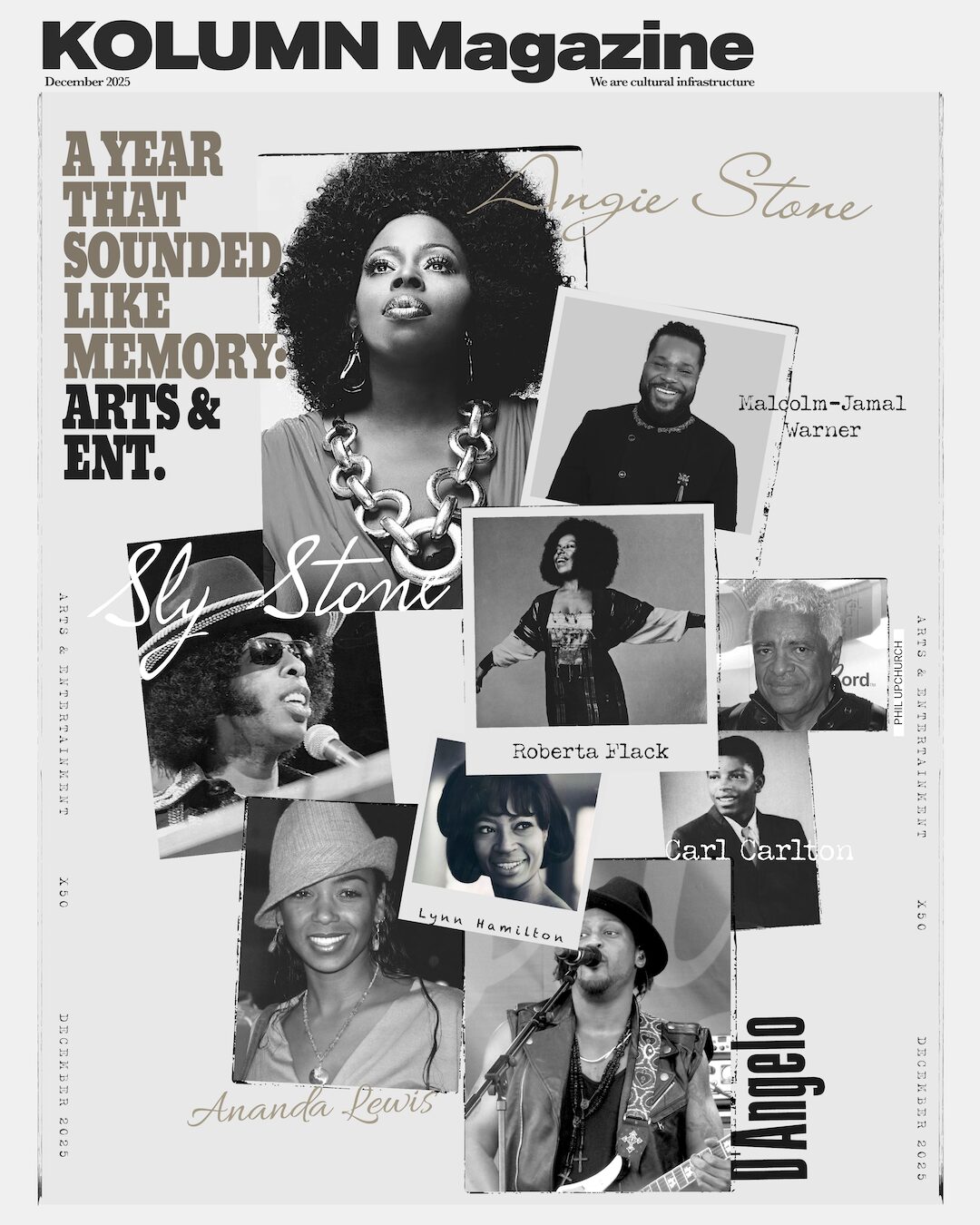
Obituaries tend to flatten people into milestones. But the lives below—Roberta Flack, D’Angelo, Angie Stone, Sly Stone, Malcolm-Jamal Warner, Carl Carlton, Ananda Lewis, Lynn Hamilton, Wayne Lewis and Phil Upchurch—read differently when you follow the through-line from childhood to craft: the early rooms where talent first became refuge; the first stages, choirs, basements, school plays; the long middle where work becomes identity; and the final years, when a public that felt like an audience sometimes becomes something closer to family.
What follows is a reported, biography-forward remembrance—less a roll call than a set of lives, each with its own origin story and its own kind of permanence. (Dates and core details of deaths are drawn from major obituaries and contemporaneous reporting.)



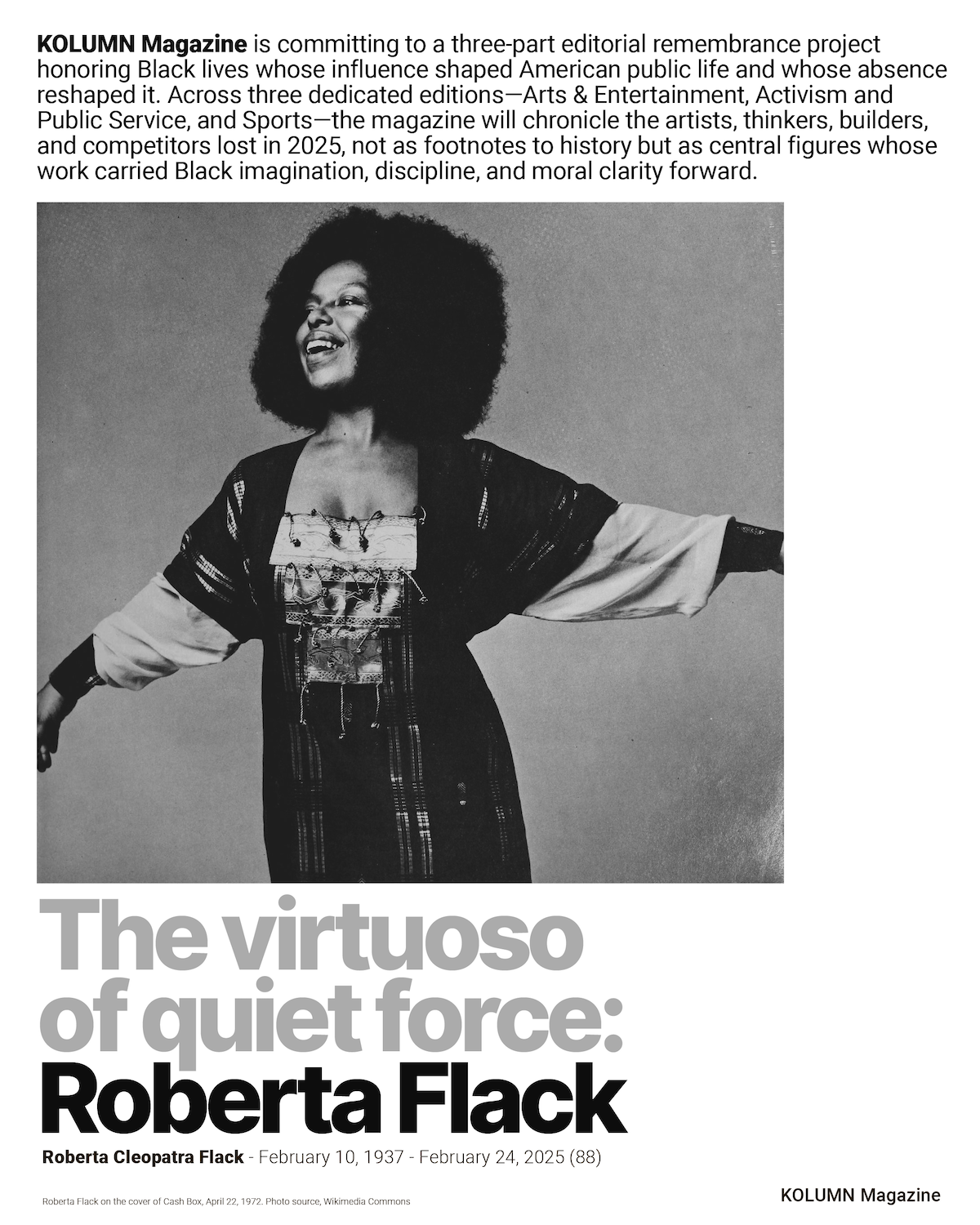
Roberta Flack: The virtuoso of quiet force
Roberta Cleopatra Flack – February 10, 1937 – February 24, 2025 (88)
Roberta Flack’s voice—measured, interior, seemingly unhurried—always sounded like it had chosen calm rather than stumbled into it. That choice, refined over decades, became her signature: a kind of emotional accuracy that made other singers sound as if they were overselling the line. When she died on February 24, 2025, at 88, the tributes often reached for the obvious superlatives—Grammy-winning, chart-topping, era-defining—but her artistry was, at its core, an argument for understatement as power.
Flack was born in Black Mountain, North Carolina, and raised in a household where music was not an extracurricular but a language—an inheritance. Her early training was classical; she studied piano seriously enough that, as a teenager, she earned admission to Howard University on a music scholarship at just 15, a detail that still reads like a dare. The discipline of that world—practice rooms, juries, standards that do not care about charisma—stayed in her phrasing long after she became a popular singer. Even at her most romantic, she sounded like someone who had done the homework.
Before the nation heard her, she worked in the practical middle class of Black artistic life: teaching, accompanying, performing in rooms where the pay was modest but the musicianship was not. The story of her “discovery” has been told in variations, but the shape is consistent: she was playing in Washington, D.C., when people with industry access heard something in her control, her harmonic intelligence, the way she could make a familiar lyric feel newly spoken. She signed with Atlantic Records and began recording in the late 1960s—music that didn’t fit neatly into the era’s louder narratives of soul because it insisted on intimacy.
Then came the moment pop culture loves because it looks like fate: Clint Eastwood used “The First Time Ever I Saw Your Face” in his 1971 film Play Misty for Me, and the song found a mass audience large enough to change the trajectory of her life. The record did not just succeed; it taught radio programmers that a slow song—sung softly, with no vocal acrobatics—could dominate a world addicted to volume. That sensibility reached its apex with “Killing Me Softly with His Song,” a performance that is technically precise yet emotionally porous, as if she were letting the listener overhear her thinking. (AP News)
Her collaborations with Donny Hathaway—most famously “Where Is the Love” and “The Closer I Get to You”—became templates for duet as conversation rather than competition, two voices braided into something sturdier than either alone. Their partnership ended tragically with Hathaway’s death in 1979, but the recordings continued to circulate like heirlooms, passed down through households that might not have owned her albums but still knew her tone.
In later decades, Flack’s work enjoyed renewed attention—helped, notably, by the Fugees’ 1990s reinterpretation of “Killing Me Softly,” which introduced her to listeners who had not lived through her initial run. In 2022 she disclosed she had ALS, which affected her ability to sing and speak; by the time she died, she had already been living with a public narrative that often confuses silence with disappearance. Her legacy argues otherwise. Flack did not need to be loud to be permanent. She built a career on the radical idea that feeling, delivered with care, could still fill an arena.
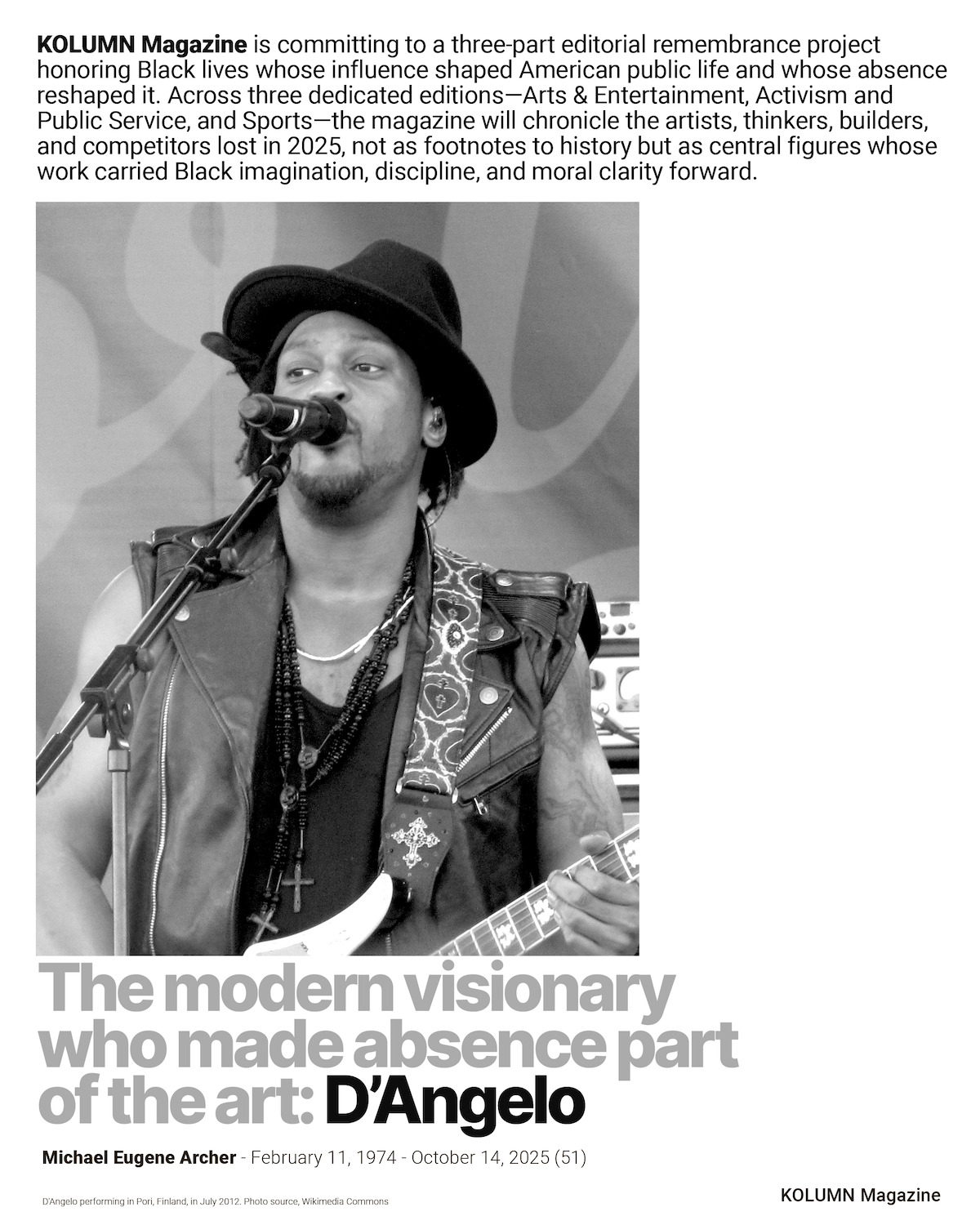
D’Angelo: The modern visionary who made absence part of the art
Michael Eugene Archer- February 11, 1974 – October 14, 2025 (51)
D’Angelo—born Michael Eugene Archer in Richmond, Virginia—rarely moved like an artist interested in maintaining momentum. His work arrived when it was ready, then vanished again into the private weather of process, pressure and self-protection. For fans, the gaps became part of the mythology: a musician so gifted that even his silence felt like a statement. When he died on October 14, 2025, at 51, after a private battle with pancreatic cancer, the grief carried an extra note of disbelief—because so much of his career had trained listeners to expect him to re-emerge.
He grew up inside church music—his father was a Pentecostal minister—and like many Black musicians shaped by that environment, he learned early that rhythm is not only entertainment; it is devotion, muscle memory, theology. The story of his beginnings is thick with instruments: piano, drums, bass, guitar—the kind of multi-instrumental fluency that doesn’t just produce songs but produces worlds. Before the industry had a label for “neo-soul,” D’Angelo was already building the sound: R&B that kept gospel’s emotional architecture, borrowed hip-hop’s swing, and treated funk like an internal organ.
His debut album, Brown Sugar (1995), arrived as a corrective to slickness—warm, analog, human, heavy with pocket. The title track and “Lady” did not simply chart; they announced a sensibility. In D’Angelo’s hands, sex could be playful without being cheap, devotional without being pious. His voice—grainy, intimate, capable of sounding both behind the beat and ahead of it—made the listener feel as if the microphone were a secret.
Voodoo (2000) turned that approach into a doctrine. Recorded with musicians who treated late-night jams like research, the album’s grooves seemed to live and breathe, not loop. The song “Untitled (How Does It Feel)” became a cultural event—helped, inevitably, by a video that turned him into a kind of reluctant sex symbol—but the deeper achievement was musical: D’Angelo made desire sound like craft. The album won major accolades, including Grammys, and helped define the Soulquarians-era ecosystem of Black musicians who treated the studio as laboratory.
Then, in a move that now reads as both tragic and prescient, he receded. Fame—especially the kind that rewrites your body into public property—can corrode. Reporting around his life has long documented struggles with addiction and the psychic costs of visibility; he became a symbol not only of talent but of what talent is asked to endure. When he returned with Black Messiah in 2014, the album sounded like a man refusing to be reduced: politically alert, sonically dense, built from funk and rock and gospel urgency. It won awards and reasserted his place—not as a nostalgia act, but as a living architect.
By 2025, D’Angelo’s influence was almost embarrassingly audible in contemporary R&B: in the drum feels, the stacked harmonies, the insistence that sensuality can be sophisticated. His death prompted tributes from across the music world and renewed attention to pancreatic cancer disparities, particularly among Black men—a grim public-health storyline braided into a cultural one.
He is survived by his children; his eldest son’s mother, the singer Angie Stone, died earlier in 2025, turning one family’s grief into a devastating double exposure. In the end, D’Angelo’s career—three landmark albums, countless imitations, a silence that still felt like presence—reminds you that innovation is not always loud. Sometimes it is simply the courage to make Black music as complex as Black life.
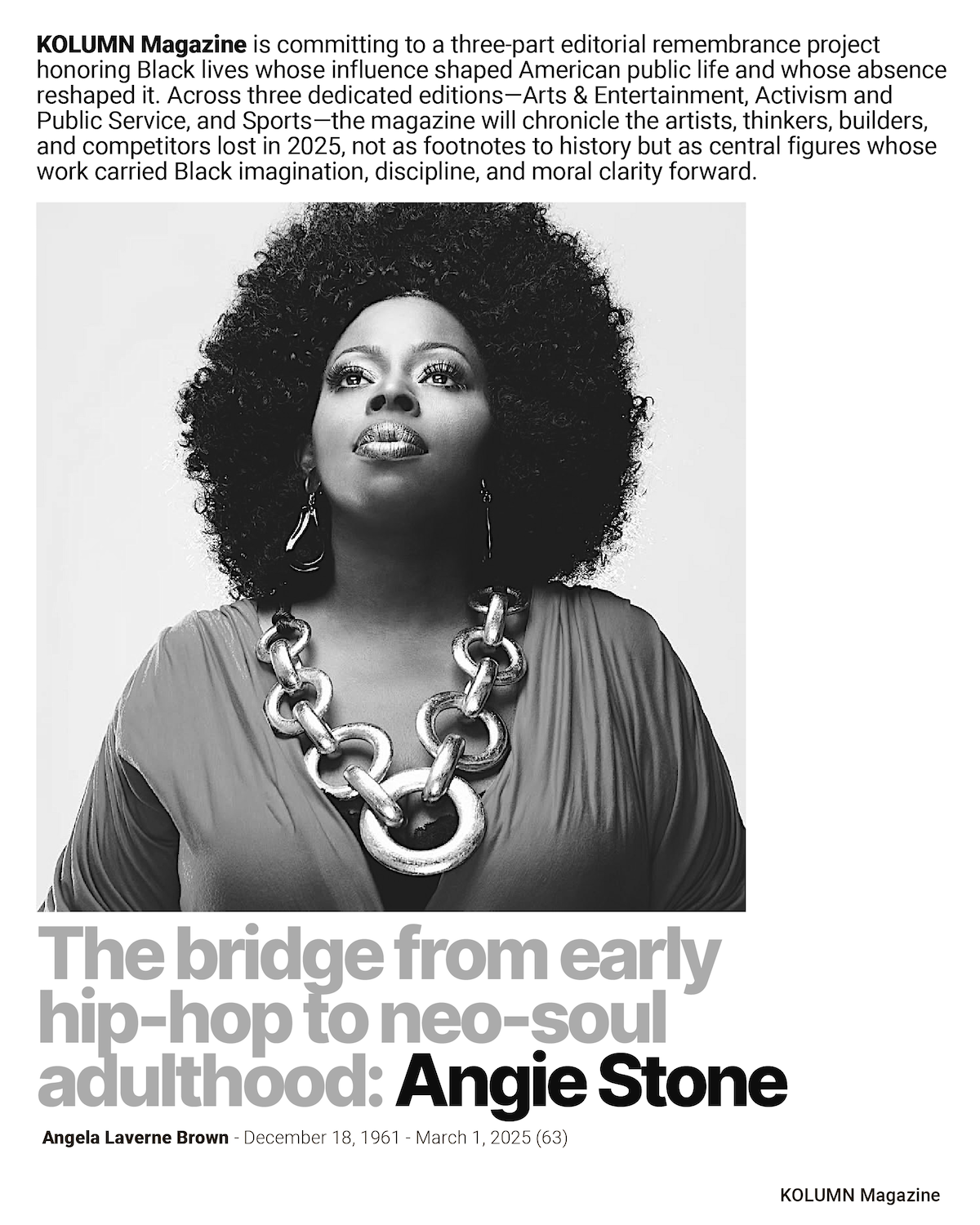
Angie Stone: The bridge from early hip-hop to neo-soul adulthood
Angela Laverne Brown – December 18, 1961 – March 1, 2025 (63)
Angie Stone lived at an intersection the culture often pretends is a straight line: she was there in the early days of recorded hip-hop, when women’s contributions were routinely minimized, and she was also central to neo-soul’s late-1990s re-centering of grown-up feeling. Her career was not a reinvention so much as a continuation—proof that Black women artists have always been asked to be versatile just to be permitted longevity. Stone died on March 1, 2025, at 63, from injuries sustained in a car crash in Alabama, a sudden end that felt especially cruel for an artist whose work was so invested in survival.
She was born Angela Laverne Brown in Columbia, South Carolina, in a community where the church remains one of the first credible stages. She sang early—first as a child with the kind of local recognition that can either inflate you or train you. For Stone, it trained her. Before national fame, there is usually a small network of adults who say yes: choir directors, teachers, older musicians who notice you’re not just singing notes but telling stories. Stone’s early life fits that pattern: talent shaped by discipline, voice shaped by neighborhood expectations and the gospel’s insistence on emotional truth.
In the late 1970s, she joined The Sequence, one of the first all-female rap groups signed to a major label. Their record “Funk You Up” became a landmark—both for its success and for what it represented: women in hip-hop not as novelty, but as architects of the sound. The irony is that cultural memory often treats early hip-hop as a boys’ club, while the facts—recorded, charted, sampled—tell a more complicated story. Stone’s presence in that era matters precisely because it disrupts the false narrative that women arrived later.
Her later evolution into neo-soul stardom in the late 1990s and early 2000s did not erase her hip-hop origins; it enriched them. Albums like Black Diamond and Mahogany Soul carried the rhythmic sensibility of rap but foregrounded singing—grown, bruised, tender. Songs such as “No More Rain (In This Cloud)” and “Wish I Didn’t Miss You” became staples because they spoke plainly about regret and resilience without flattening either into cliché. Stone’s voice had texture: a rasp that sounded lived-in, a warmth that suggested you could trust her even when she was confessing something unflattering.
She also wrote and collaborated widely, building the kind of career that is partly visible to fans and partly hidden in liner notes. In R&B, especially for women, authorship is political: to write your own story is to claim ownership of it. Stone’s songwriting and co-writing helped ensure she was not merely a performer delivered by an industry machine but an artist shaping the machine’s output.
If her music provided the soundtrack for adult heartbreak, her public life carried other burdens—motherhood, public scrutiny, the ongoing negotiation required of Black women celebrities who are expected to be both relatable and flawless. After her death, tributes emphasized not only her talent but her generosity and mentorship, the way she showed up for communities beyond the stage.
Stone’s story also sits inside a larger, harder truth: the women who build genres are too often forced to fight for their own footnotes. Her death in 2025 fixed her timeline in place, but it also sharpened her significance. She was not a detour in Black music history. She was a bridge.
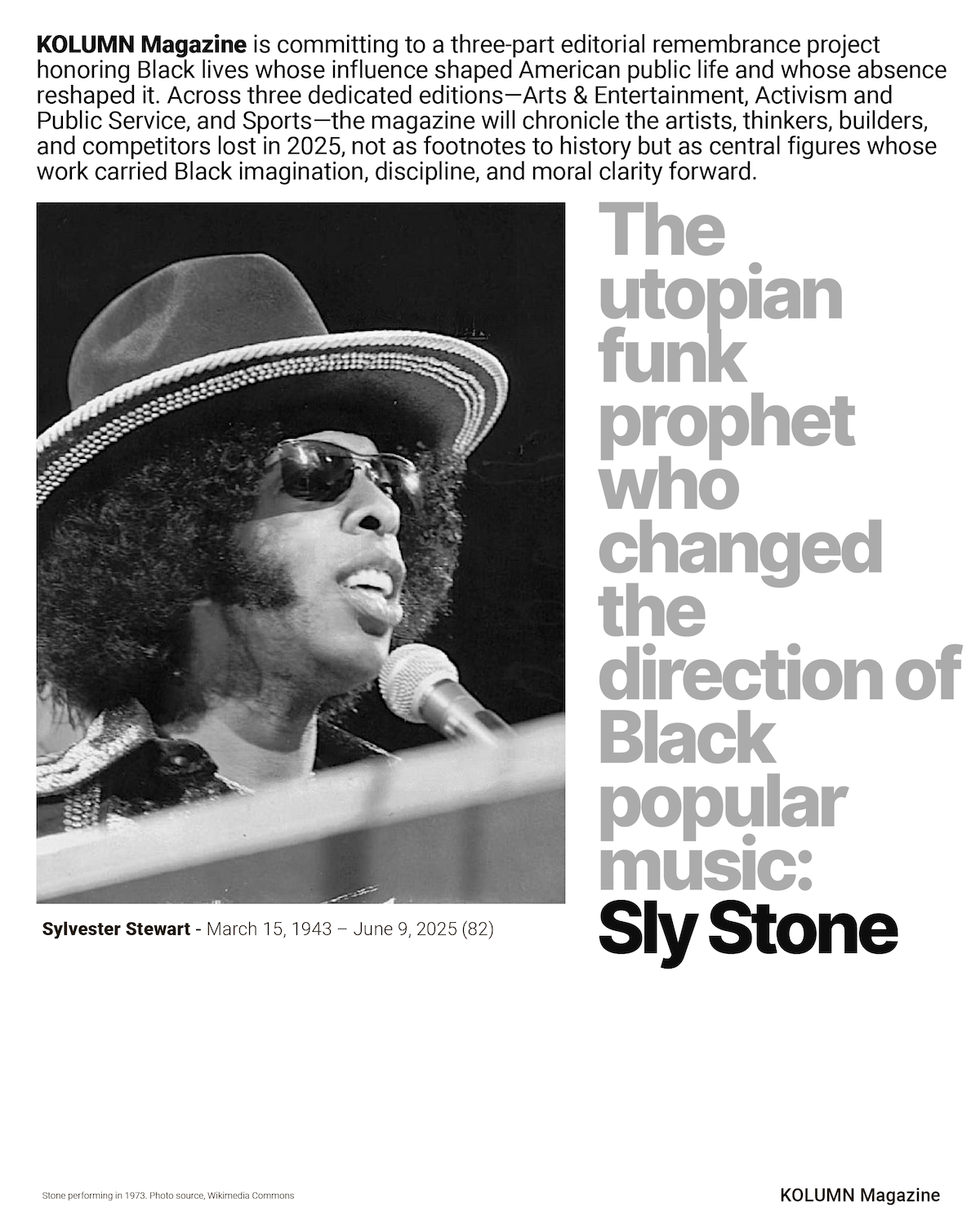
Sly Stone: The utopian funk prophet who changed the direction of Black popular music
Sylvester Stewart – March 15, 1943 – June 9, 2025 (82)
Sly Stone’s music always sounded like it was arguing with itself in public—joy wrestling with paranoia, togetherness colliding with control, optimism bruised but not defeated. Between 1968 and 1973, he did what only a handful of artists ever manage: he changed the direction of Black popular music twice, first with an ecstatic vision of unity and then with a darker, more disillusioned sound that mirrored the country’s unraveling. When he died on June 9, 2025, at 82, after a long battle with COPD, the tributes rightly treated him as foundational—not just influential, but structural.
Born Sylvester Stewart, he came up in a musical ecosystem that was both domestic and communal: family harmonies, church discipline, the Bay Area’s scene-making energy. He learned early how to be a bandleader, which is to say he learned how to translate imagination into other people’s labor. That skill—part charisma, part arrangement, part ruthlessness—made Sly and the Family Stone more than a group. They were a proposition: men and women, Black and white, sharing the stage in an era when the country was still arguing about whether such a vision was possible.
Their early records were bright, anthemic, engineered for collective release. Songs like “Everyday People” did not just entertain; they delivered a moral grammar—simple words carrying a complicated insistence that equality could sound like a chorus. Sly’s genius was that he could smuggle ideology into groove. You danced first, then realized you’d been recruited into a worldview.
But history changed and so did Sly. The early 1970s brought a new sound—heavier, stranger, sometimes haunted. The optimism of the late ’60s fractured under the weight of assassination, war, and the slow betrayal of political promises. Sly’s music reflected that shift with unsettling accuracy: funk that felt drugged, rhythms that staggered, lyrics that sounded as if they were being muttered from inside a locked room. If the earlier songs were utopian posters, the later ones were surveillance footage.
His influence expanded across genres: funk, soul, rock, pop, hip-hop—any music that values rhythm as a form of authority carries Sly’s fingerprints. Artists sampled him, covered him, copied his attitude. Even the idea of the band as a social experiment owes him a debt.
His later life has long been narrated through a familiar American tragedy: fame’s violence, addiction, isolation, the way genius can become its own cage. Yet reducing Sly to decline misses the deeper story. His innovations—multi-racial band leadership, the fusion of rock energy with Black rhythmic intelligence, the emotional range he allowed funk to hold—changed what music could be.
Sly’s death in 2025 closed one chapter, but the work remains aggressively alive. You can hear him whenever a bass line becomes political, whenever a party record carries dread in its back pocket, whenever a chorus tries to build a world big enough for everyone to fit.
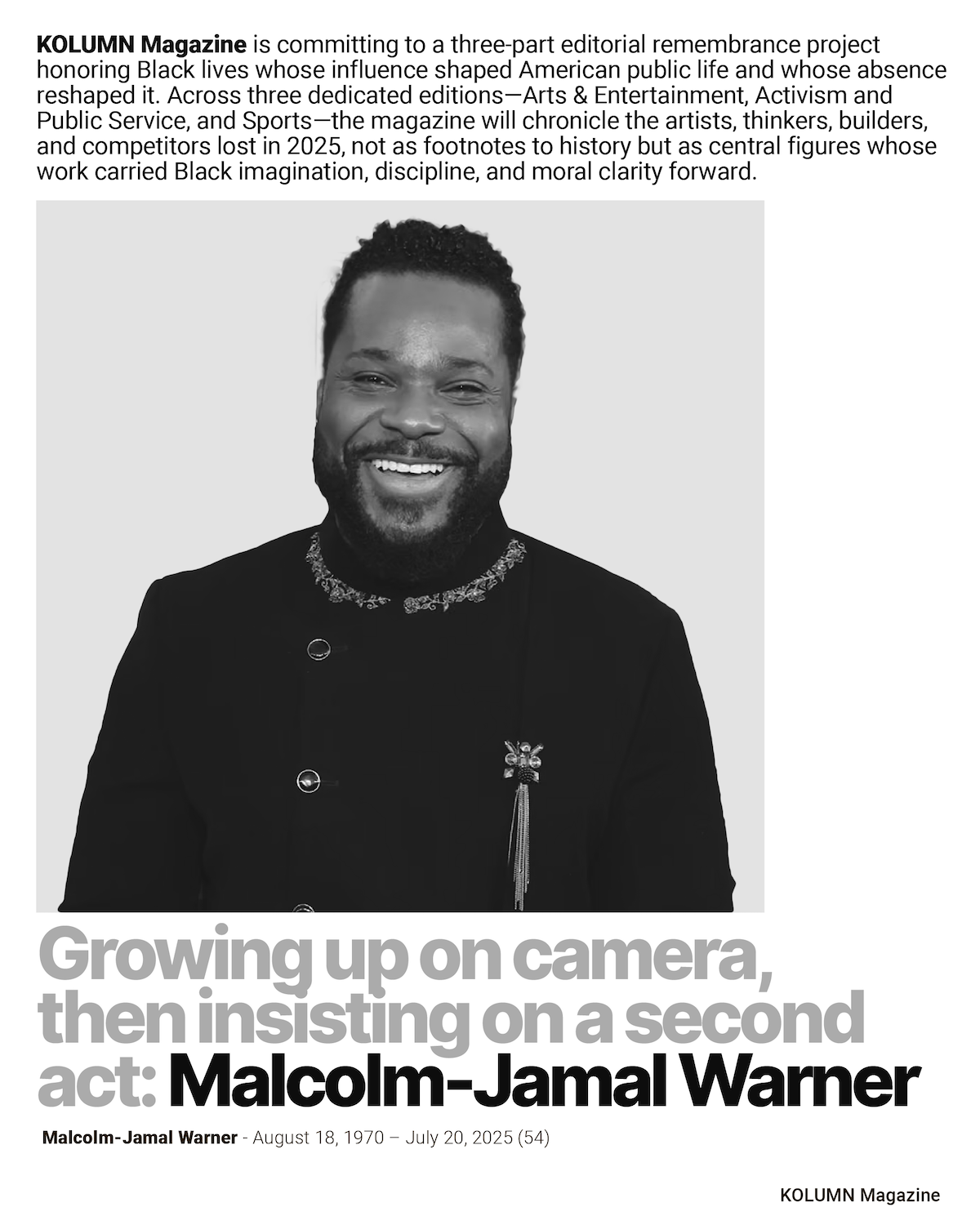
Malcolm-Jamal Warner: Growing up on camera, then insisting on a second act
Malcolm-Jamal Warner – August 18, 1970 – July 20, 2025 (54)
There was a particular kind of pressure reserved for child stars of iconic television: the audience believes it owns your adolescence, then demands that you grow up without changing. Malcolm-Jamal Warner, who became famous as Theo Huxtable on The Cosby Show, spent decades refusing that trap. He acted, directed, made music, and kept searching for roles that allowed him to be more than a memory. On July 20, 2025, he died at 54 after drowning in Costa Rica, a sudden death that felt like the kind of cruel punctuation reserved for people who had already survived one public life.
Born in 1970, Warner entered the industry young enough that his childhood and his career were essentially concurrent. The biography of a teen star is often told through episodes and awards, but the more revealing story is usually off-camera: the adults making decisions, the discipline required to deliver a performance on schedule, the psychological whiplash of being celebrated by strangers. As Theo, Warner played a character written to be lovable, sometimes foolish, often sincere—a Black middle-class teenager whose life was allowed to be ordinary on national television. That normalcy was, in the 1980s, quietly radical.
For years, the public saw him primarily through that role. But Warner kept working, pushing into projects that didn’t require nostalgia as an entry fee. He appeared in series like Malcolm & Eddie and later roles including The Resident and Sons of Anarchy, building a career defined less by a single iconic part than by steady craft.
He also pursued music—an aspect of his identity sometimes treated as a side project by the public but framed by those who followed him as a serious commitment. There is a pattern among actors who come up early: artistry becomes a way to reclaim selfhood from the role that made you famous. In Warner’s case, music and poetry offered a private register, a place where he could be heard without being cast.
His death, as reported, occurred while he was in Costa Rica; accounts describe a water incident that ended in tragedy. The details mattered not for spectacle but because they underscored how quickly a life can end away from the sets and stages that made it legible to the public.
The Warner story is also inseparable from the complicated legacy of The Cosby Show itself—how an artifact can hold genuine cultural significance while being shadowed by the actions of its star. Warner navigated that terrain with a careful dignity, rarely allowing the culture to trap him in its arguments. He kept working, kept evolving, kept insisting on a life larger than any single show.
In the end, Warner’s legacy is not only that he helped define an era of television. It’s that he demonstrated what a second act can look like when you build it deliberately: not as reinvention for reinvention’s sake, but as the ongoing work of becoming an adult in public without surrendering the private self.
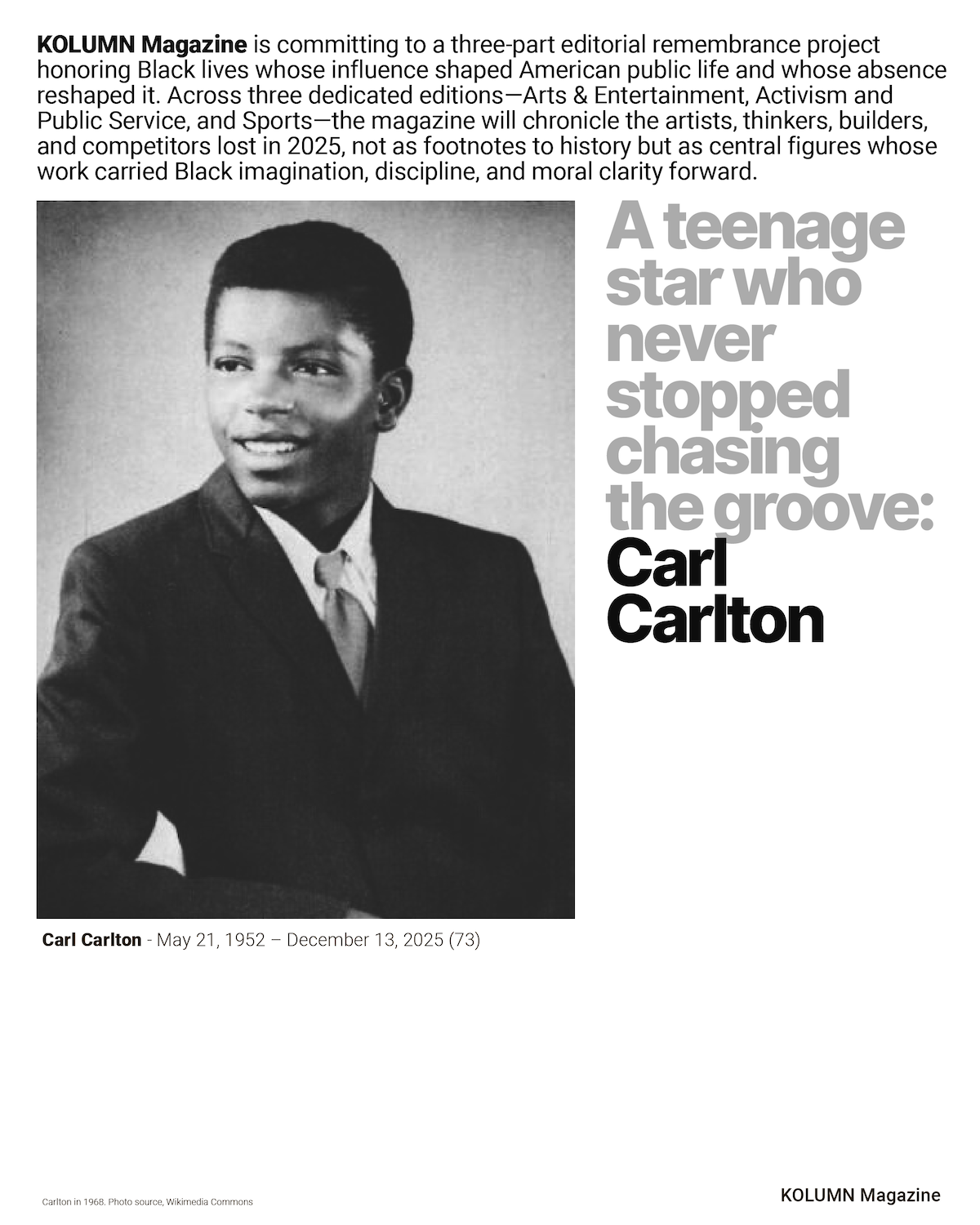
Carl Carlton: A teenage star who never stopped chasing the groove
Carl Carlton – May 21, 1952 – December 13, 2025 (73)
Carl Carlton’s career began with a strange kind of industry flattery: he was marketed as “Little Carl Carlton,” a nod to a young Stevie Wonder, an attempt to turn vocal resemblance into a business plan. But Carlton’s longevity came from something more durable than comparison. He could sing with the insistence of a man trying to pull joy out of thin air, and he had the kind of hit-making instinct that makes a chorus feel inevitable. When he died on December 13, 2025, at 73, the tributes returned to two signature records—“Everlasting Love” and “She’s a Bad Mama Jama (She’s Built, She’s Stacked)”—not because his career was small, but because those songs became cultural shorthand.
Born in Detroit in 1952, Carlton came up inside the city’s deep musical infrastructure—talent shows, local labels, the proximity of Motown’s gravitational field. Detroit in that era was not just a place; it was an education. You learned what a tight rhythm section sounded like because you could hear it everywhere. You learned that professionalism mattered because the competition was dense. Carlton started recording in the mid-1960s, still a teenager, and that early start shaped him: he became, in effect, a working musician while other kids were learning how to be kids.
His first successes were local, then expanded as he moved through labels and scenes. Over time, he became a singer whose voice could inhabit both romance and swagger. “Everlasting Love” (1967) offered a youthful sincerity that radio embraced; years later, the song’s durability was proven by how often it was revived, covered, and reintroduced to new audiences.
Then came “Bad Mama Jama” in 1981, a record built for the dance floor with the kind of confident humor that R&B sometimes forgets it can carry. The song turned admiration into celebration—loud, playful, flirtatious—and became a staple in the Black party canon: the kind of track that can resurrect an entire room. That particular achievement—making music that functions socially, that changes the temperature of a gathering—should be treated as a high art.
Carlton’s career also included the less glamorized parts of long-term musicianship: touring cycles, shifting industry trends, the challenge of remaining visible as radio formats change. Reporting around his later years notes health struggles following a stroke in 2019, a reminder that the bodies that make American music are often asked to keep working long after the industry has offered adequate care.
In the end, Carlton’s story is the story of the working-class pop star—the artist who may not be mythologized as revolutionary but who nonetheless shapes daily life. His songs did not just play on the radio; they played at weddings, cookouts, skating rinks, family reunions. He supplied the soundtrack for ordinary joy, which is its own kind of legacy.
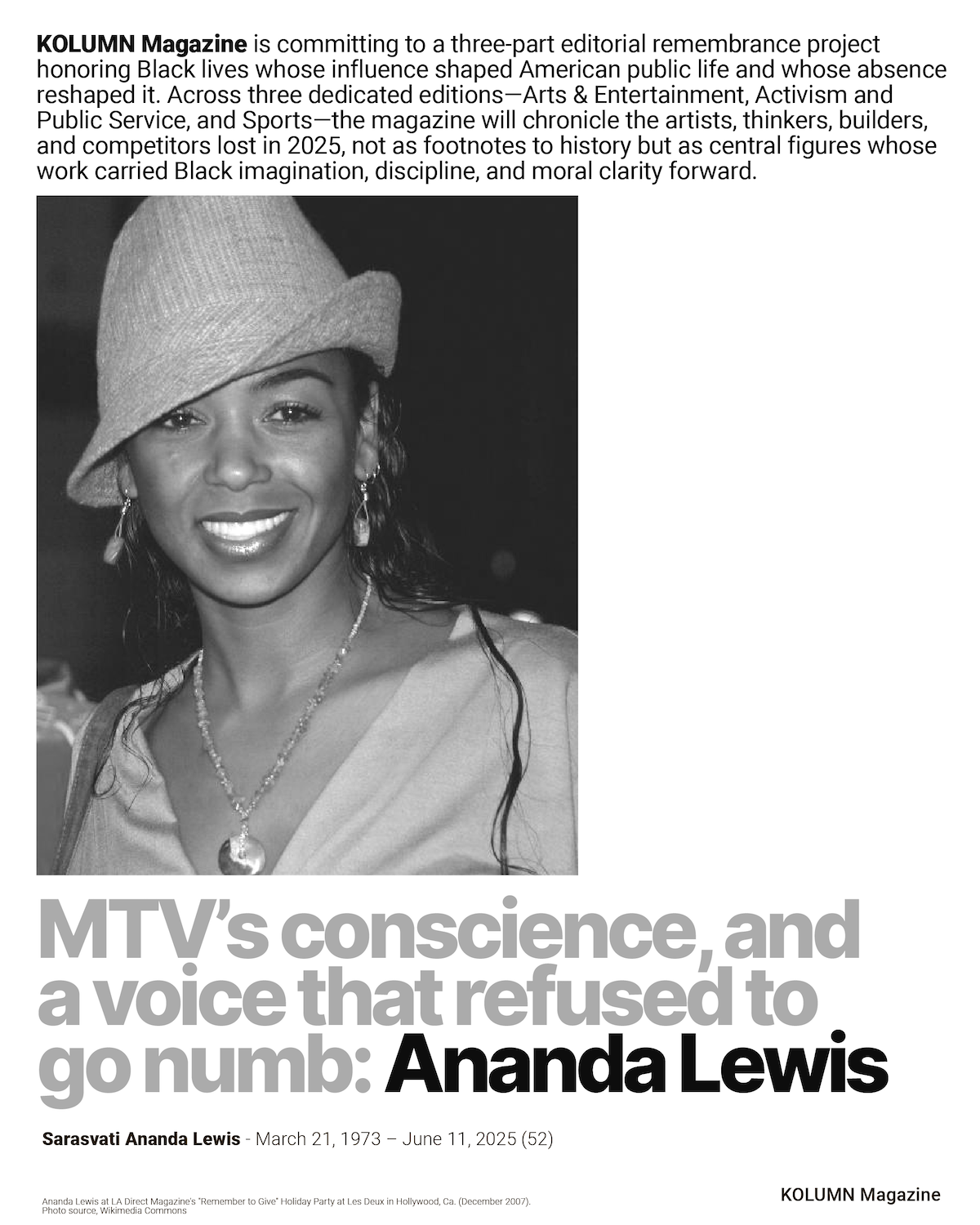
Ananda Lewis: MTV’s conscience, and a voice that refused to go numb
Sarasvati Ananda Lewis – March 21, 1973 – June 11, 2025 (52)
Ananda Lewis belonged to a generation of television personalities who did not merely host culture—they translated it. In the late 1990s, when MTV still functioned as a central nervous system for youth identity, Lewis appeared with a rare combination of glamour and moral seriousness. She could flirt with pop frivolity and then pivot, without condescension, to questions about race, sex, and self-worth. She died on June 11, 2025, at 52, after a long battle with breast cancer, a public health struggle she spoke about with a frankness that made her advocacy feel less like branding and more like responsibility.
Born in Los Angeles in 1973, Lewis’s early life included the kind of structured arts education that often shapes performers long before they enter professional stages. She studied creative and performing arts while still young—dance, theater, the disciplines that teach you how to stand in your body and speak through nerves. She later attended Howard University, graduating with honors, a detail that mattered because it signaled the seriousness behind the on-camera ease.
Her career began at BET with Teen Summit, a show that treated young Black people as citizens rather than punchlines. It aired conversations that mainstream television often avoided, and Lewis became known for an interviewing style that was both empathetic and firm. The skill is underrated: to create a space where teenagers will speak honestly, you have to be credible without being preachy, cool without being careless. Lewis built that credibility with her tone—curious, unafraid, respectful.
When she moved to MTV, she became a familiar presence in the network’s most visible ecosystem, including TRL and other programming, during an era when the channel’s hosts were as influential as its artists. Lewis was, in effect, a cultural authority figure for a cohort learning adulthood in real time. She dressed like the moment, spoke like the moment, but also insisted on something sturdier than moment-to-moment hype.
She later launched a talk show under her own name—an ambitious leap that revealed both her range and the limitations of daytime television’s appetite for seriousness. The show tried to cover substantive topics without the exploitative sensationalism that defined much of the era’s talk landscape. That effort—choosing dignity over ratings tactics—reads now like a quiet act of resistance.
In 2020, Lewis disclosed her cancer diagnosis; by 2024–2025, she was speaking more openly about treatment decisions, regret, and the structural issues—insurance, time, emotional exhaustion—that shape medical outcomes as much as biology. After her death, outlets framed her not only as an MTV star but as a person who tried to turn visibility into public good.
Lewis’s legacy is complicated in the best way: she was a pop-culture figure who refused to be hollow. She proved that being “a host” could mean being a guide—someone who helps a generation name what it is feeling, then challenges it to feel something better.
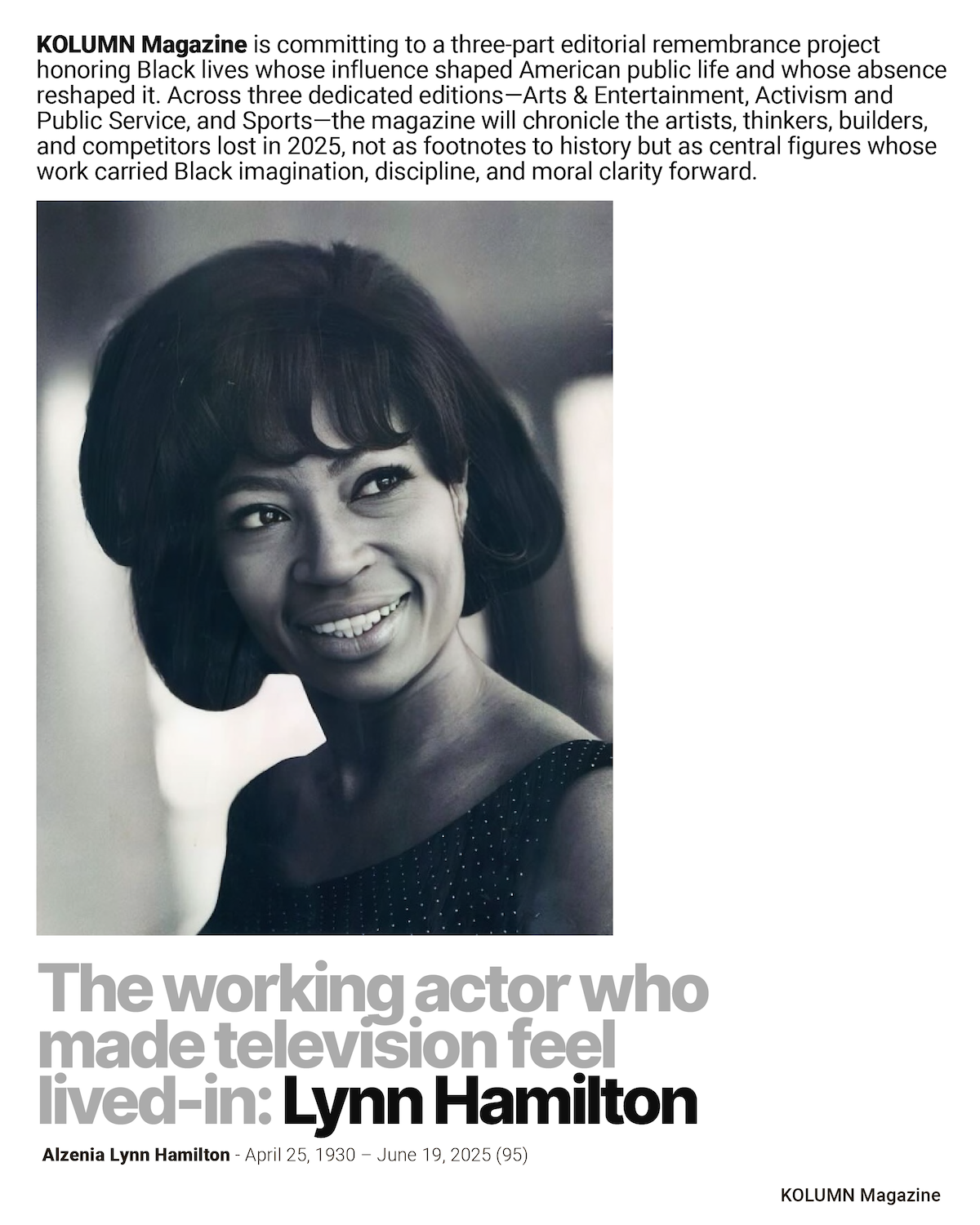
Lynn Hamilton: The working actor who made television feel lived-in
Alzenia Lynn Hamilton – April 25, 1930 – June 19, 2025 (95)
Lynn Hamilton never played fame like a solo. She moved through American television with the steadiness of a working actor—those essential performers whose faces become familiar not because they chase spotlight, but because they keep delivering truth inside whatever scene they’re handed. When she died on June 19, 2025, at 95, the headlines emphasized her best-known roles: Donna Harris on Sanford and Son, Verdie Grant Foster on The Waltons. But her deeper legacy is subtler: she helped make TV worlds feel inhabited.
Hamilton was born Alzenia Lynn Hamilton in Yazoo City, Mississippi, and moved to the Chicago area as a child—part of the broader Black migration story that reshaped American cities and, eventually, American culture. Chicago mattered. It offered both community and ambition, and for Black performers in the mid-20th century, it also offered a kind of tough realism about what the industry would and would not permit.
Her path into acting ran through training and theater work, the kind of background that rarely becomes glamorous copy but often produces longevity. When she appeared on Sanford and Son, her character Donna was not merely a romantic interest. She was warmth, steadiness, a counterbalance to the show’s chaos. Hamilton gave her a dignity that resisted caricature—a skilled performance in an era when Black women on sitcoms were frequently written into narrow lanes.
On The Waltons, she played Verdie Grant Foster, again bringing texture to a role that could have been flattened by stereotype. Hamilton’s gift was her ability to make secondary characters feel like full people with off-screen lives. She also appeared across a range of television work, including the landmark soap Generations, notable as the first Black daytime drama—a reminder that Hamilton’s career was stitched into several chapters of representation history, not just one.
In later years, Hamilton’s name circulated among those who study Black television not as a celebrity anecdote but as a case study in endurance. The industry often celebrates breakout stars while forgetting the performers who make the ecosystem function. Hamilton was ecosystem talent: reliable, precise, emotionally literate.
Her death was reported as occurring at her home in Chicago, surrounded by loved ones, a detail that feels fitting for an actor whose work always suggested the value of grounded life.
Hamilton’s legacy is not just the roles we can name; it’s the way she modeled a career built on craft rather than spectacle. In a culture obsessed with the lead, she showed what it means to be essential support—an art form in itself.
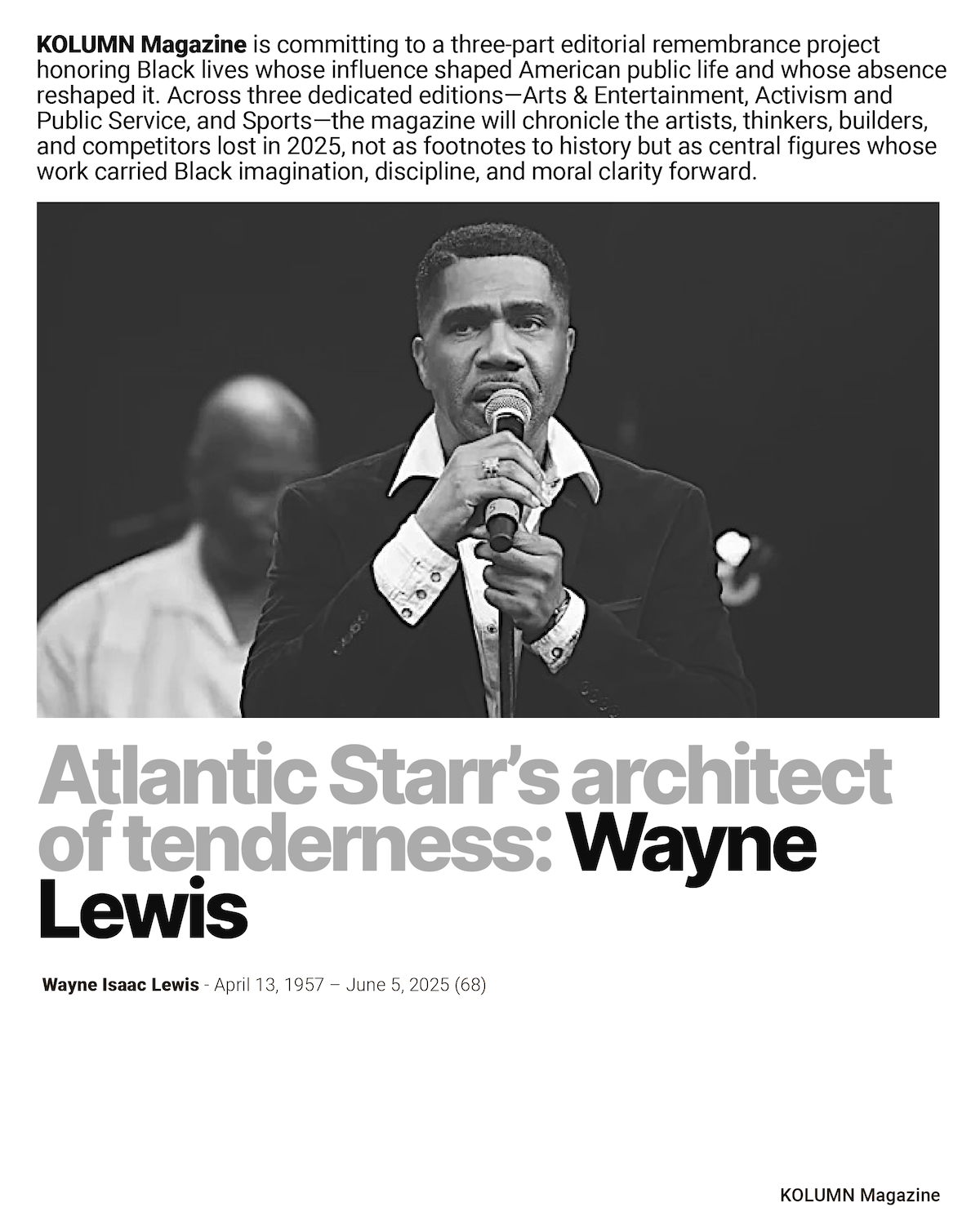
Wayne Lewis: Atlantic Starr’s architect of tenderness
Wayne Isaac Lewis – April 13, 1957 – June 5, 2025 (68)
Wayne Lewis helped write the vocabulary of quiet romantic R&B. As a founding member of Atlantic Starr—singer, keyboardist, songwriter—he specialized in a kind of musical intimacy that didn’t require melodrama to feel dramatic. The band’s biggest hits, including “Always” and “Secret Lovers,” are still shorthand for a particular era of Black radio: late-night dedications, slow dances, the soft insistence of desire. Lewis died on June 5, 2025, at 68; the cause was not publicly disclosed.
Born in 1957, Lewis came up in a family context that made band life feel less like a business arrangement and more like an extension of home. Atlantic Starr was formed by the Lewis brothers, and that familial core mattered to the group’s sound: their music often feels like conversation, voices and instruments arranged with a domestic patience.
Lewis began performing in the 1970s, when R&B groups were competing in a crowded field of harmony ensembles and funk bands. Atlantic Starr’s early work carried that era’s polish and groove, but their defining contribution was emotional: they became specialists in songs about commitment and secrecy, devotion and complication—adult themes delivered with melodic grace. Lewis’s keyboard work and songwriting helped build the band’s identity, and his voice—smooth, controlled—carried the kind of sincerity that makes a ballad believable.
By the time Atlantic Starr reached mainstream success in the 1980s, they were not just charting; they were soundtracking social life. “Always,” in particular, became a wedding staple, a cultural artifact that survives because it functions. There is a difference between a hit and a standard. Lewis helped write standards.
After his death, tributes emphasized his kindness and musical leadership, the way he shaped the group not only as a performer but as an anchor. The band’s own announcement framed the loss with family language—grief communicated from inside the community rather than by publicists.
Wayne Lewis’s legacy is inseparable from the ways people use music: to propose, to apologize, to remember. His work lives in the everyday rituals of Black love—the slow song that turns a room into a shared memory.
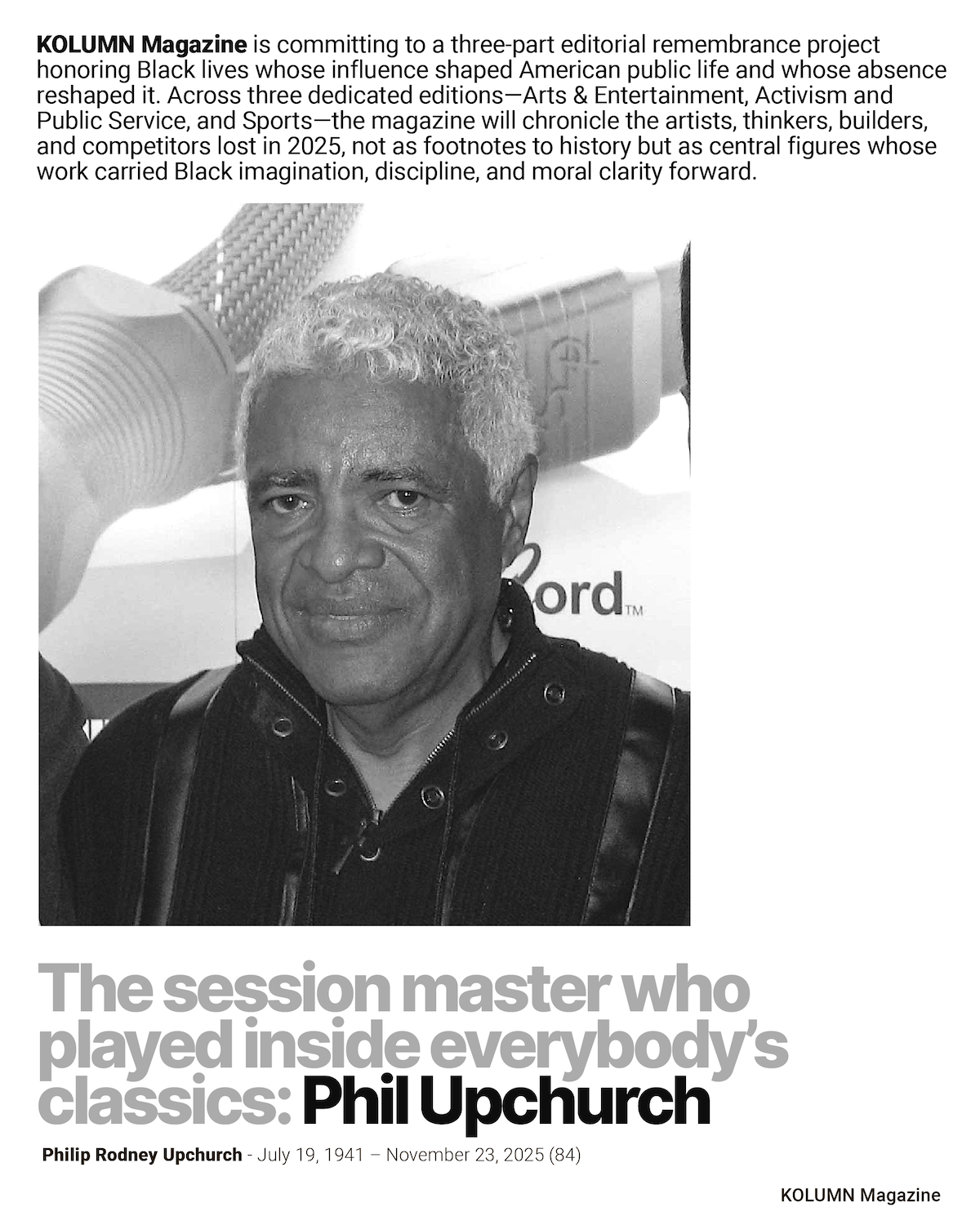
Phil Upchurch: The session master who played inside everybody’s classics
Philip Rodney Upchurch – July 19, 1941 – November 23, 2025 (84)
Phil Upchurch’s career is a reminder that American music is built not only by stars but by experts—musicians whose names are not always printed large, yet whose playing is permanently embedded in the culture’s bloodstream. Upchurch, a Chicago-born guitarist and bassist, worked across soul, blues, jazz and pop, leaving his signature on records by a who’s-who of artists. He died on November 23, 2025, in Los Angeles, at 84; his death was confirmed by his wife, Sonya Maddox-Upchurch.
Born in 1941, Upchurch came up in Chicago, a city that functions as a rigorous conservatory for working musicians. The scene demands versatility: you might play blues one night, jazz the next, and soul on the weekend, all while reading the room and staying employed. Upchurch learned to be fluent. He was the kind of guitarist who could deliver clean elegance or gritty urgency without making either feel like costume.
He began performing young and eventually became a first-call session player—one of those musicians producers trust because he can elevate a track without hijacking it. That skill is both musical and psychological: you have to understand the artist’s intention, then support it with taste. Upchurch’s credits spanned genres and decades; he played with and alongside major figures, and he also led his own projects, releasing albums that showcased his voice as a composer and bandleader.
Upchurch was also associated with notable groups and scenes, including Rotary Connection, and his work intersected with the era’s major innovations in soul and jazz. If you listen closely to the records that defined 1970s Black sophistication—the albums that turned groove into elegance—you can often find musicians like Upchurch doing the invisible labor of making everything feel inevitable.
After his death, tributes from outlets and musicians emphasized the breadth of his collaborations and the respect he commanded among peers. That peer-respect matters. In music, praise from other musicians is often the most accurate metric of greatness.
Upchurch’s story also clarifies a cultural truth: we tend to idolize voices, but instruments carry memory too. A guitar line can become a form of autobiography—someone’s touch preserved in sound. Phil Upchurch’s touch is now part of the permanent record, living on wherever those classic tracks are played and replayed, introducing him again and again to listeners who may never learn his name but already know his work.
What Comes Next
This Arts & Entertainment edition marks the first installment in KOLUMN Magazine’s 2025 remembrance series. In the months ahead, the magazine will continue this work with two additional editions honoring Black lives lost in 2025 whose influence extended far beyond headlines:
Activism and Public Service, focusing on organizers, advocates, elected officials, educators, and civic leaders whose labor shaped policy, protest, and public conscience.
Sports, documenting athletes, coaches, and sports figures whose discipline, visibility, and cultural impact redefined competition and representation.
Together, these editions form a single record—one year, many losses, and an enduring commitment to preserving Black legacy with accuracy, depth, and care.