


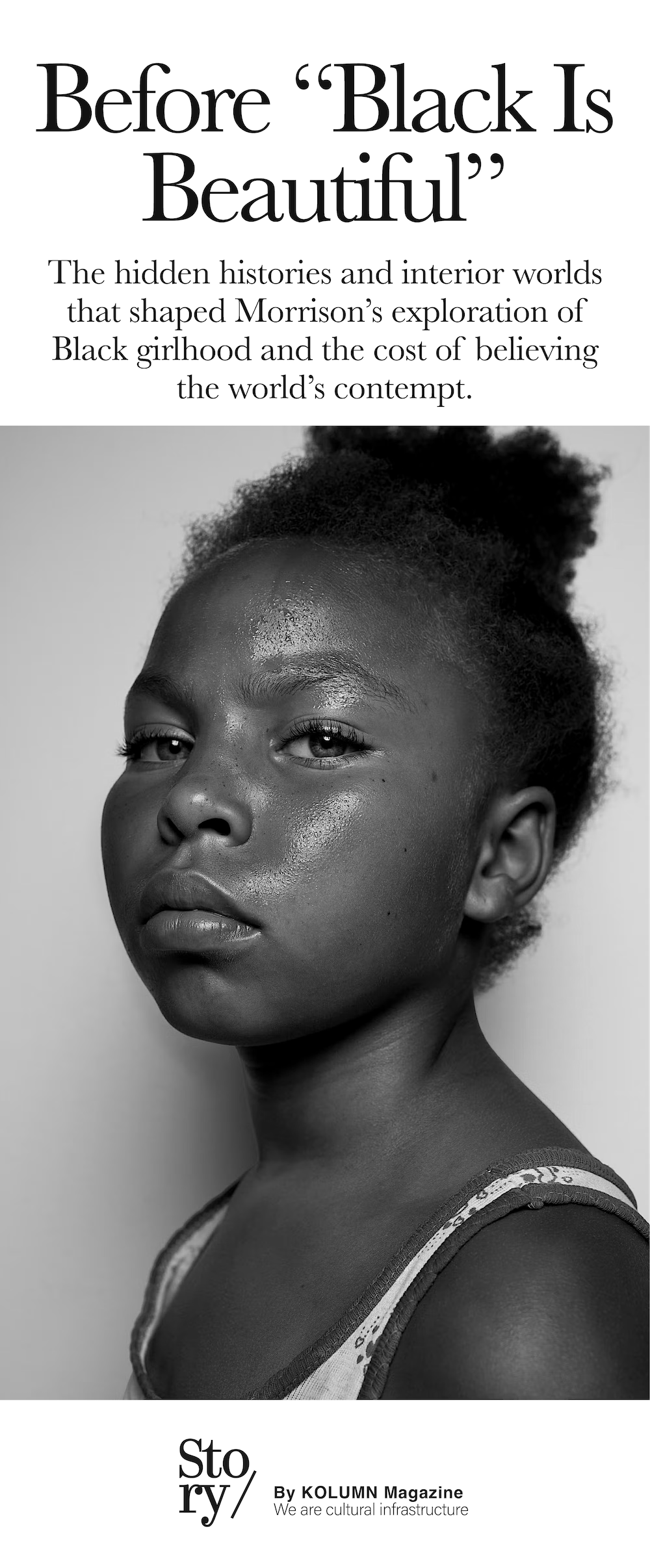
By KOLUMN Magazine
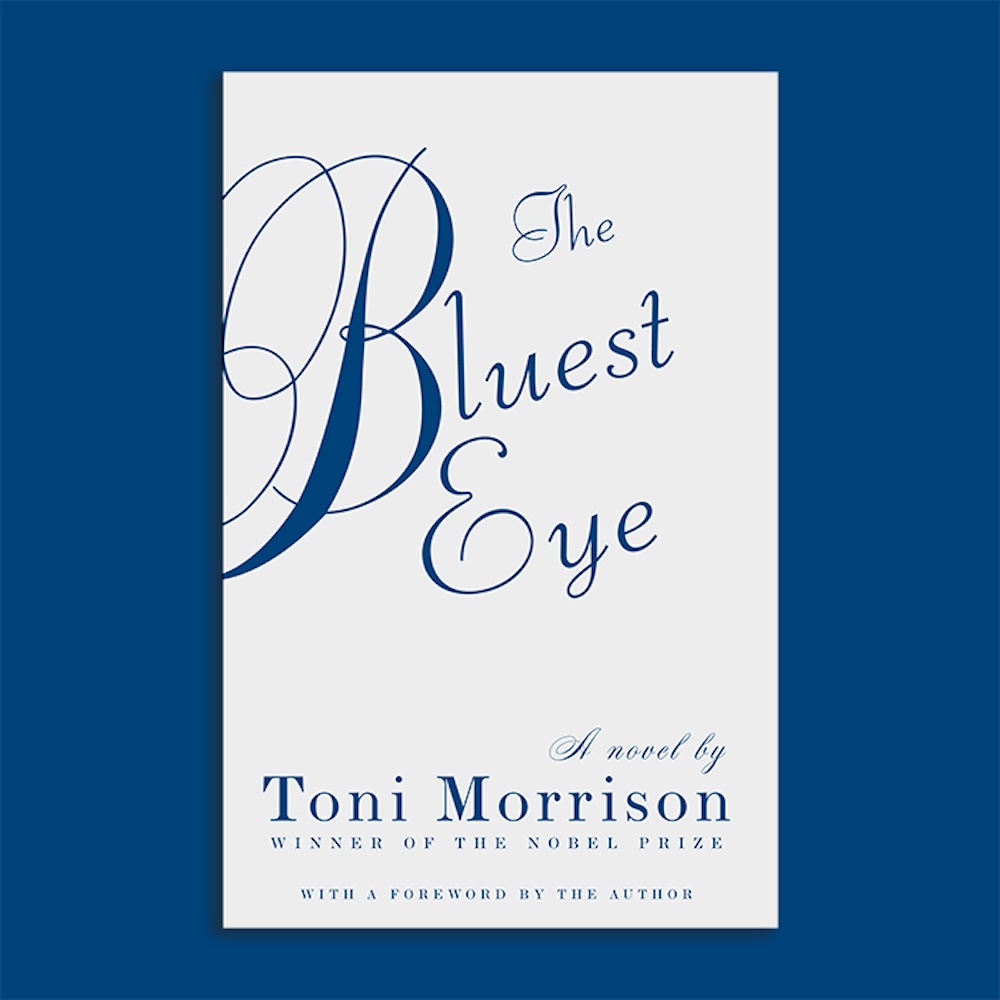
Toni Morrison said the image never left her: a Black girl she knew as a child, lowering her voice to confess that she prayed for blue eyes—and concluded God was not real when the prayer went unanswered. Decades later, Morrison would return to that moment again and again, in interviews, lectures, and the afterword to her debut novel, framing it as the spark that eventually ignited The Bluest Eye. The moment was small; the consequences, she insisted, were not.
What inspired The Bluest Eye, then, was not a single burst of genius but a constellation of experiences: a childhood anecdote as unsettling as it was unforgettable, a segregated steel town shaped by industrial expansion and redlining, the beauty culture of mid-century America, a Howard University writers’ group, and the gender politics of the Black Arts era. Morrison would later describe the novel as an “inquiry” into the interior lives of Black girls—a sustained investigation into how racism is absorbed into the psyche and how a child learns to hate her own reflection.
A girl, a prayer, and a pair of blue eyes
Investigative Integration
The official record of this moment comes to us obliquely—through interviews, essays, and the 2019 documentary The Pieces I Am, where Morrison describes a conversation from her childhood with the detached clarity of someone reconstructing an early case file. She was around eight; the girl was maybe eleven. They were walking in Lorain, Ohio, when the girl confided that she had been praying for two years for God to grant her blue eyes—and now believed God did not exist because the prayer had gone unanswered.
It is an anecdote Morrison told often, almost ritualistically, but her repetition of it functioned as more than authorial origin myth. For Morrison, this was primary evidence: a data point revealing the psychological reach of America’s racial beauty hierarchy.
To understand the significance of the moment, you must return to Lorain in the 1930s and 1940s, a Lake Erie steel town shaped by the Great Migration. Archival research shows a city in transition: waves of Black migrants from the South, Mexican and Puerto Rican laborers, and Eastern European immigrants arriving for foundry work. Redlining maps from the era—“hazardous” blocks marked in red—would later demonstrate how neighborhoods were racially coded and disinvested, defining where Black families could live, shop, and attend school. These patterns created an ecosystem in which a single ideal of beauty—white, blue-eyed, middle-class—spread through school primers, advertising, movie theaters, and the “Dick and Jane” readers Morrison would later weaponize in The Bluest Eye.
Within this environment, Morrison recalled being “violently repelled” by the idea of blue eyes in a Black face. But the source of that repulsion was not disgust for the child who voiced the wish—it was the horror that the wish existed at all. The desire revealed the extent to which the girl had internalized a racial hierarchy so thoroughly that only an impossible transformation could render her worthy of love.
Archival material supports the context Morrison evokes. Historical accounts of Black beauty culture from the early 20th century describe advertisements for skin lighteners and hair-straightening products promising social advancement—suggesting a broader system teaching Black girls that proximity to whiteness was a strategy for safety. Scholars of industrial America note how northern school systems in the 1940s were saturated with the same visual cues: blond paper-doll cutouts, blue-eyed storybook families, and children’s toys designed around white features.
In later writings, Morrison calls this a moment that revealed “how something as grotesque as the demonization of an entire race could take root inside the most delicate member of society: a child.” What the eight-year-old Morrison witnessed was not vanity or fantasy—it was a child conducting a kind of spiritual mathematics. If blue eyes were the key to being seen, protected, or cherished, then surely God would honor the request. That He did not confirm, for the girl, that she remained unseen.
Morrison herself, raised in a family steeped in Black folklore and resistant pride, believed she escaped this internalization. “I never believed I was ugly,” she later said. But that distance only sharpened the investigative question at the heart of her first novel: If I did not absorb these messages, why did she? What happens inside the child who does?
Pecola Breedlove becomes Morrison’s answer—a fictional reconstruction of what happens when a child accepts every external insult as internal truth. Claudia, the narrator who refuses to revere white dolls or Shirley Temple, echoes Morrison’s own outlook. Their juxtaposition is not symbolic contrast—it is the controlling structure of Morrison’s inquiry.
The girl’s prayer is the originating detail; the novel is the full forensic report.
Lorain, Ohio: when Black wasn’t “beautiful”
Lorain was a working-class city where the steel mill controlled the rhythms of daily life. Black and white families lived alongside immigrants from Mexico, Puerto Rico, and Eastern Europe, but social and economic life was rigidly stratified. Morrison’s father had witnessed a lynching in the South; those psychic residues shaped the racial caution with which he raised his children.
Beauty norms were narrow and aggressively policed. Shirley Temple’s curls were national currency. “Dick and Jane” children smiled from every primer. Black girls rarely appeared in children’s media; when they did, they were often caricatured.
Morrison did not internalize these definitions, but she was acutely aware that others did. “That’s why I wrote The Bluest Eye,” she later explained. “To find out how it felt.”
The Howard writers’ group and a “dashed-off” beginning
Morrison’s first attempt at telling the story of the girl who wanted blue eyes came during her years teaching at Howard University. She belonged to a writers’ group and, at one meeting, lacking older work to share, she “dashed off” a short story. It focused on a Black girl who longed for blue eyes.
She set it aside, returning years later once her marriage ended and she began raising her two young sons on her own. Only then—while editing the work of other Black writers at Random House—did she revisit the original idea, expanding it into a novel grounded in the emotional and historical terrain of her childhood.
The literary landscape Morrison entered was dominated by Black male writers whose work emphasized pride, strength, and revolutionary fervor. The “Black is beautiful” movement was cresting, offering a corrective to centuries of racial denigration.
But Morrison worried that the forward march risked erasing the very recent past in which Black children were not told they were beautiful. She sensed a gap: the literature of the era rarely centered the inner lives of Black girls, especially the ones most vulnerable to absorbing racism’s psychic toll.
Her mission became clear: she would explore the interiority of “the one least likely to withstand” the pressures of race, gender, and class.
Investigating self-hatred: “the consequences of accepting rejection”
In the afterword to The Bluest Eye, Morrison clarifies that her central concern was not resistance but capitulation. Not how Black people deflect racism, perform resilience, or cultivate pride—but what happens to those who cannot. She wanted to examine, she wrote, “the far more tragic and disabling consequences of accepting rejection as legitimate.”
This distinction reveals her investigative ambition: Pecola’s story is not about whether racism wounds. It is about what happens when its messages are believed—when the target of contempt begins to see herself through the eyes of those who disdain her.
Morrison approached this not as a novelist seeking drama but as a cultural diagnostician. Pecola’s unraveling is mapped with almost clinical detail:
The repeated micro-aggressions from store clerks.
The taunts at school.
The idolization of light-skinned beauty within her community.
The violence and instability inside her home.
The omnipresent media images that render her invisible or grotesque.
Rather than isolating any one factor, Morrison builds a case showing how these forces operate cumulatively, shaping a child’s understanding of her own worth.
In Pecola’s world, there is no counterweight. No parent or teacher affirms her beauty. No institution offers refuge. Morrison constructs the social architecture with forensic attentiveness: every character surrounding Pecola acts as a witness to her undoing—but none intervene. This absence becomes part of the indictment.
The narrator, Claudia, provides a crucial control variable. Where Pecola absorbs racist messages, Claudia rejects them. She dismantles white dolls, questions Shirley Temple’s appeal, and narrates Pecola’s tragedy with a blend of sorrow and retrospective insight. Claudia is the child Morrison once was—the girl who never internalized racism—while Pecola represents the one who did.
By pairing them, Morrison creates a comparative psychological study: two Black girls subjected to the same cultural conditions but responding in opposite ways. This narrative design underscores Morrison’s larger argument: self-hatred is not innate but learned, not inevitable but engineered.
In interviews, Morrison said she wanted to understand “the mechanics of the break”—the moment when a child shifts from questioning the world’s hostility to accepting it as a natural verdict on her own existence. Pecola’s desire for blue eyes becomes that fulcrum, the point at which external pressures fuse into an internal conviction that she is unlovable.
Morrison’s focus on acceptance—rather than resistance—marks a profound departure from contemporaneous Black literature. Her intent was not to celebrate triumph but to expose a system that punishes those least equipped to survive its demands. The tragedy, Morrison insisted, was not Pecola’s weakness but the world’s indifference.
Her ultimate investigative insight is devastating: when a culture teaches a child that she is unworthy, and no one contradicts it, the child eventually believes the culture is correct.
From marginal debut to contested classic
At its publication in 1970, The Bluest Eye received scant attention. Critics praised Morrison’s language but were unsettled by the novel’s bleakness. Over time, however, the book entered university syllabi across disciplines—Black studies, women’s studies, American literature—becoming a staple of conversations about race and representation.
It also became one of the most banned books in the United States. School boards objected to its depictions of sexual violence, missing the fact that Morrison included such scenes not for shock value but to expose the brutal mechanisms through which Black girls are rendered vulnerable.
What truly inspired The Bluest Eye?
After reviewing Morrison’s own statements, archival sources, and the sociohistorical landscape of mid-century America, several inspirations emerge clearly:
A friend’s childhood prayer for blue eyes—and her crisis of faith.
Morrison’s need to understand internalized racism from the inside.
The racialized beauty standards of the 1930s and 1940s.
The political shift from invisibility to the “Black is beautiful” movement.
The absence of literature centering Black girls’ interior lives.
Morrison’s determination to document the psychological cost not of resistance but of surrender.
The Bluest Eye, then, is less a story than a diagnostic instrument, an autopsy of a child’s stolen self-worth. Morrison was not merely inspired by a moment—she was compelled by the question it raised:
How does a child come to believe she is unlovable? And what happens when the world agrees?