

By KOLUMN Magazine
On a gray December afternoon, the front table of a Harlem bookstore looks like a family reunion.
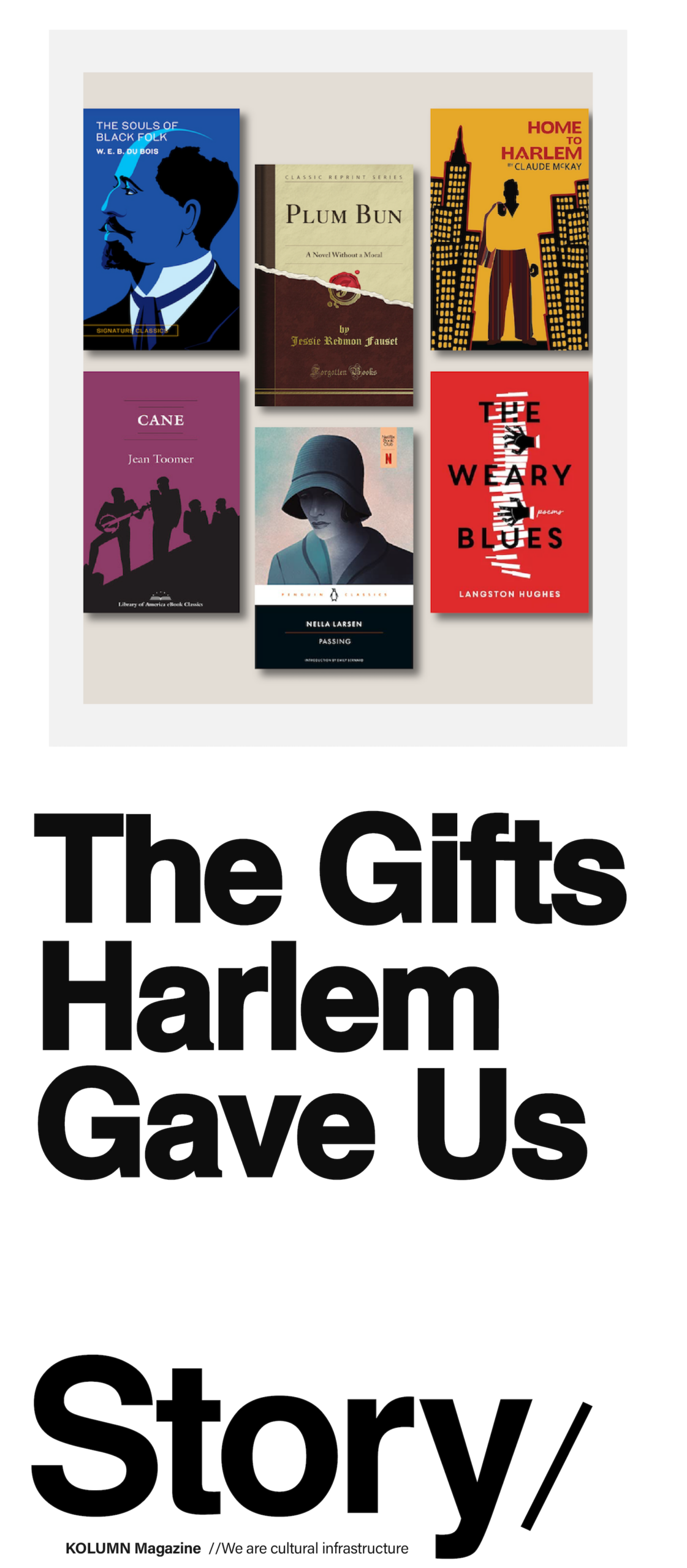
Snow-damp coats drip onto the floor as shoppers crowd around stacks of jewel-toned paperbacks: a sky-blue copy of Passing, all cheekbones and shadows on the cover; a new edition of Cane with its modernist collage; The Souls of Black Folk dressed in austere black and gold; Their Eyes Were Watching God radiant in citrus colors. Nearby, slim volumes of Langston Hughes’s poems are banded with red “gift pick” stickers, like ornaments.
Almost a century after the Harlem Renaissance’s peak, the writers who once argued about art and politics in uptown parlors and smoky cafés have become part of the American holiday ritual. Their books slip into stockings, appear in office Secret Santas, and anchor ambitious “New Year, New Reading” piles on bedside tables far from 135th Street.
It is tempting to see this as a simple canonization: the great names of Black modernity, finally granted the shelf space long denied them. But the annual December spike in sales for Harlem Renaissance classics hints at something else too. At a time when American politics, race and democracy again feel unsettled, these books offer a different kind of gift—an invitation into an era when Black writers insisted that their lives were not problems to be solved but worlds to be explored.
The movement that made that insistence famous, the Harlem Renaissance, was a burst of Black artistic and intellectual production centered in New York in the 1920s and early 1930s. Its poets, novelists, painters and critics fashioned a new image of Black life: urban, complex, cosmopolitan, unafraid. Langston Hughes, perhaps its most recognizable poet, became one of the movement’s central figures; his jazz-inflected lines helped define the era’s sound.
Today, their books still speak across time. As readers search for gifts that feel meaningful in a season of excess, eight writers—Hughes, Zora Neale Hurston, Claude McKay, W.E.B. Du Bois, Alain Locke, Jessie Redmon Fauset, Nella Larsen and Jean Toomer—offer a kind of syllabus for living with joy and clarity in a fractured world.
Below, a guided tour of the Harlem holiday stack: what to give, to whom, and why these voices endure.
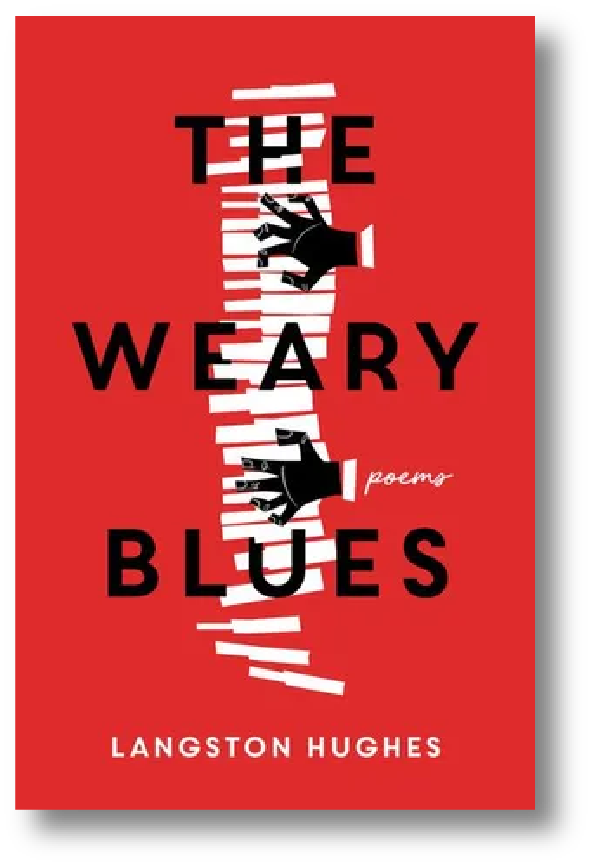
The Weary Blues (1926)
Langston Hughes
Langston Hughes: Poems for the Everyday Dreamer
There is perhaps no more approachable entry into the Harlem Renaissance than a volume of Langston Hughes.
Hughes wrote across genres—poetry, plays, columns, novels—but he is best remembered for the poems in early collections like The Weary Blues (1926) and Fine Clothes to the Jew (1927). His work translated the rhythms of blues and jazz, the cadences of street corners and church pulpits, into verse that felt both elevated and utterly familiar. The Poetry Foundation calls him “a central figure in the Harlem Renaissance, the flowering of black intellectual, literary, and artistic life in the 1920s.”
As a gift, Hughes works on multiple levels. For the relative who insists they “don’t really get poetry,” his shorter pieces are compact, musical, and instantly legible. Their concerns—work and weariness, love and money, freedom and frustration—are as recognizable in 2025 as in 1925.
For the reader who collects beautifully made books, recent editions of Selected Poems of Langston Hughes pair his work with archival photographs from Harlem—street scenes, stoops, ballrooms—that situate the poems in the textured reality he loved to document. And for the teenager trying to find language for a newly political consciousness, Hughes’s blend of anger and exuberance can be catalytic.
Slip a Hughes collection into a stocking, and you are not just giving poetry. You are handing over a portable soundtrack to Black modern life, one that insists, over and over, that ordinary people’s dreams matter.
Perfect for: the college student home for break, the jazz-lover in your life, anyone starting a new year determined to “hold fast to dreams.”



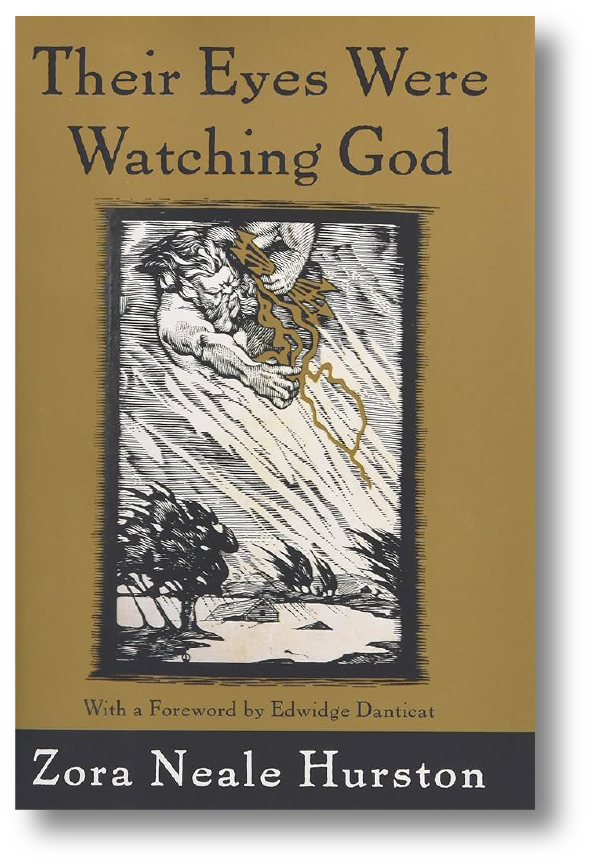
Their Eyes Were Watching (1937)
Zora Neale Hurston
Zora Neale Hurston: A Love Story That Refused to Behave
If one Harlem Renaissance novel has become a December ritual, it is Zora Neale Hurston’s Their Eyes Were Watching God.
Published in 1937, Hurston’s tale of Janie Crawford—a Southern Black woman who insists on defining love, work, and freedom for herself—was controversial in its time. It rejected what critics considered the proper duties of “race literature,” focusing less on protest than on one woman’s interior life and the Black folk culture of rural Florida. After decades of neglect, the book was rediscovered in the 1970s and has since become a staple of African American literature, widely regarded as Hurston’s finest work.
Recent readers are encountering Hurston in even broader range. A Guardian guide published to mark her 134th birthday recommends not only Their Eyes but also her folklore collection Mules and Men, her memoir Dust Tracks on a Road, and the posthumously recovered reportage of Barracoon, based on interviews with Cudjo Lewis, among the last known survivors of the transatlantic slave trade.
Taken together, these books form a gift bundle that reframes what we think of as “holiday reading.” Hurston is not cozy in the conventional sense; her characters endure hurricanes, grief, betrayal, and poverty. But there is warmth in her work—a lush, sensory joy in speech, food, flirtation, gossip—that feels almost like gathering around a kitchen table.
To give Hurston is to invite someone into that kitchen, to suggest that a Black woman’s attempt to reach for joy, on her own terms, is not just a syllabus requirement but a winter ritual.
Perfect for: the friend who loves lush prose and complicated heroines, the aunt who once dreamed of being an anthropologist, the book-club member ready for a reread that hits differently every decade.
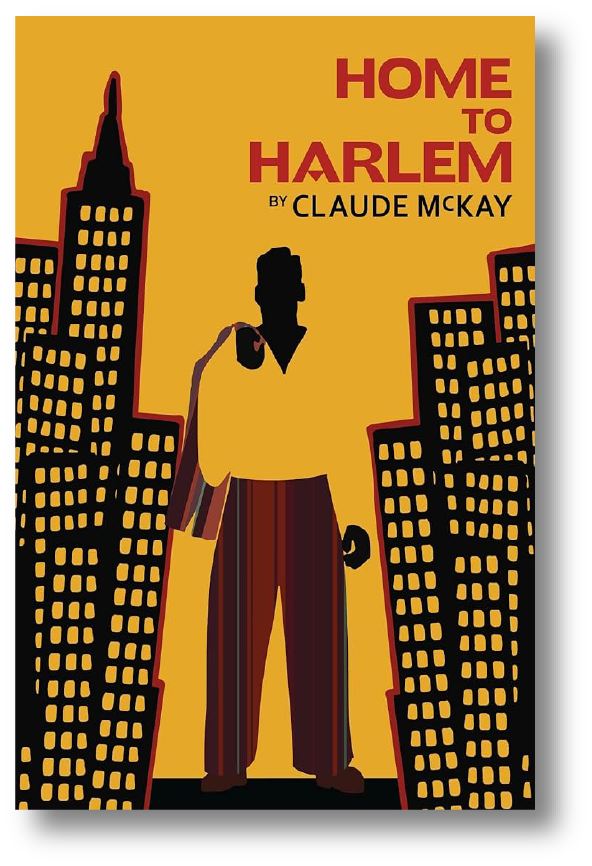
Home to Harlem (1928)
Claude McKay
Claude McKay: Radical Nights, Restless Mornings
If Hughes and Hurston provide the party’s soundtrack and confession booth, Claude McKay offers its most unflinching after-hours debrief.
The Jamaican-born poet and novelist, whose 1919 sonnet “If We Must Die” became an anthem of Black resistance during the “Red Summer” of racist violence, carried that defiant energy into his fiction.
His 1928 novel Home to Harlem plunges readers into the densest, rowdiest parts of uptown life—railroad yards, cabarets, cheap rooms, the docks. Historically, the book is important as the first African American novel published by a major white-owned U.S. press to win broad critical attention. Recent criticism emphasizes how Home to Harlem maps Black displacement and longing, following characters between Caribbean ports, war-haunted Europe, and New York’s streets as they search for a home that matches their ideals.
As a Christmas gift, McKay is not the obvious choice. His Harlem is bawdy, hungry, politically charged. But for the reader who feels skeptical about holiday brightness, Home to Harlem offers something richer: a reminder that joy and despair can coexist, that Black life in the 1920s was not just feathered headbands and jazz standards but also shipyards and strikes, fatigue and comradeship.
Wrap McKay for the history buff in your life, the one who keeps turning conversations to unions, migration, or global politics. You are placing under the tree a novel that insists the struggles of the 1920s—about work, belonging, and state violence—are still unfinished business.
Perfect for: the radical uncle, the friend who devours political history, the reader who wants their fiction smoky and unsentimental.
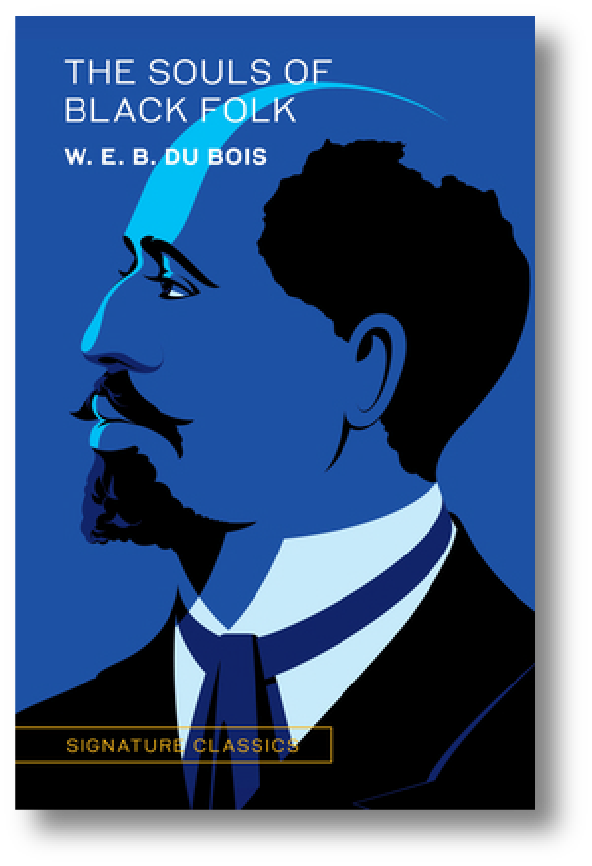
The Souls of Black Folk (1903)
W.E.B. DuBois
W.E.B. Du Bois: A Classic for the Newly Serious
In gift terms, The Souls of Black Folk might seem like a heavy lift. More than a century after its 1903 publication, W.E.B. Du Bois’s essay collection remains both a touchstone of African American letters and a foundational work in sociology, famous for introducing concepts such as “double-consciousness” and tracing the afterlives of slavery and Reconstruction.
But December is also a time when people make ambitious promises to themselves: this will be the year I read more seriously, understand history more deeply, think beyond the headlines. For that reader, Du Bois is less burden than compass.
In chapters that travel from Georgia’s Black Belt to the halls of power, Du Bois lays out what he calls “the problem of the color-line,” insisting that the future of American democracy hinges on whether the country can recognize Black humanity. His attention to Black schools, churches and music—the “Sorrow Songs”—planted seeds that Harlem Renaissance writers would later cultivate, from Hurston’s folklore collections to Alain Locke’s artistic manifestos.
A handsome edition of Souls—many presses now pair the text with scholarly introductions and archival documents—can function as a kind of anchor for a personal library. In a season when democracy can feel perilously fragile, Du Bois’s moral clarity is, paradoxically, a comforting gift.
Perfect for: the new graduate, the emerging activist, the relative who keeps quoting James Baldwin and is ready to read one of Baldwin’s intellectual forebears.
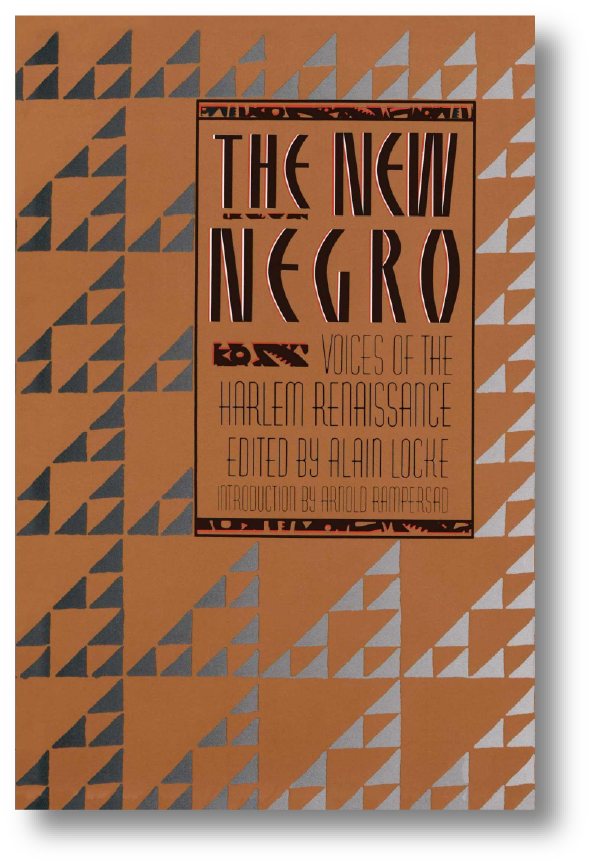
The New Negro (1925)
Alain Locke
Alain Locke: The Movement in One Volume
If Du Bois supplies the theory, Alain Locke provides the blueprint for the movement that followed.
In 1925, the Howard University philosopher edited The New God: An Interpretation, an anthology that combined essays, fiction, poetry and art into a manifesto for what was then being called the “New Negro” movement. The volume, which Henry Louis Gates Jr. later described as helping to form “the fundaments of the black canon,” gathered work by Jean Toomer, Langston Hughes, Zora Neale Hurston, Countee Cullen and others.
Locke’s idea was simple and radical: that Black Americans were stepping out of the caricatures imposed on them and into self-defined modern identities. An essay from Howard University’s “Reimagining the New Negro” centennial project notes how Locke framed this generation as “stepping out of stereotypes and into self-actualization.”
For a gift, a modern edition of The New Negro—many of which include restored artwork and scholarly notes—is a time capsule and toolkit in one. It introduces readers not just to individual authors but to the ecosystem that sustained them: salons hosted by patrons like A’Lelia Walker, political debates, cabaret performances, Sunday-afternoon lectures.
You might wrap Locke for the friend who keeps saying they want to “finally understand the Harlem Renaissance,” or for the young artist beginning to suspect that their own cohort is having a similar moment. It is the rare gift book that doubles as a syllabus and a spark.
Perfect for: the cultural omnivore, the art-school student, anyone who loves big anthologies and bigger ideas.
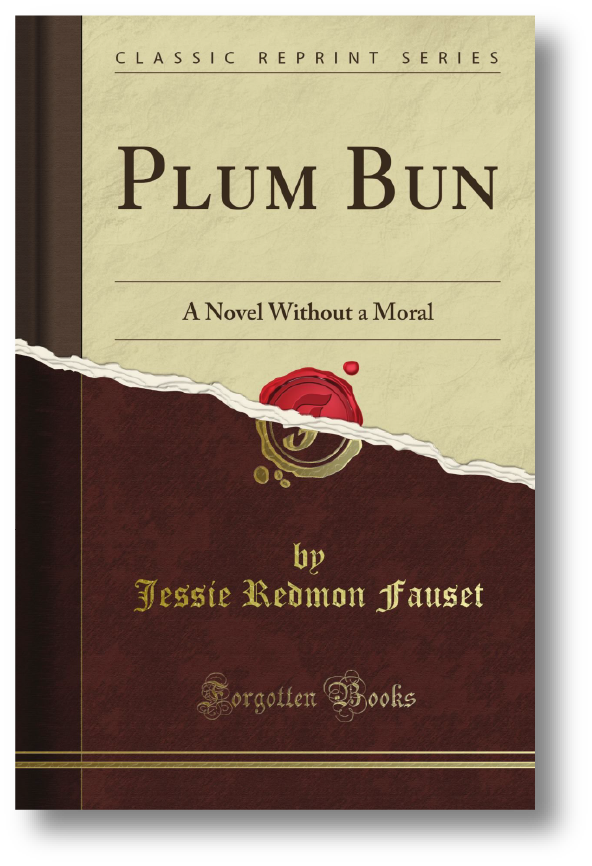
Plum Bun (1928)
Jessie Redmon Fauset
Jessie Redmon Fauset: Passing, Perfectionism, and the Price of Escape
Jessie Redmon Fauset worked mostly behind the scenes of the Harlem Renaissance, as literary editor of the NAACP’s The Crisis magazine. But her own fiction deserves a prominent place in any holiday stack.
Her 1928 novel Plum Bun: A Novel Without a Moral follows Angela Murray, a light-skinned Black woman who leaves Philadelphia for New York and attempts to “pass” as white in pursuit of artistic opportunity and romantic security. The book uses the familiar arcs of romance and fairy tale while quietly dissecting racism, sexism, and capitalism.
For a reader drawn to social novels—those where dinner parties and job interviews carry the weight of history—Plum Bun feels eerily contemporary. Angela navigates questions that still resonate in corporate offices and creative industries: How much of oneself can be edited out to access opportunity? What forms of betrayal are we willing to accept from the institutions that promise to nurture us?
As a gift, Fauset is a way to broaden the Harlem Renaissance beyond its usual headliners. Wrap Plum Bun with a note about the editor who quietly midwifed so many others’ careers and also wrote, herself, with precision and bite. It is a reminder that the movement’s power rested not only on dazzling public figures but also on women laboring at desks stacked with manuscripts, making sure Black voices reached readers at all.
Perfect for: the aspiring editor, the friend who loves Edith Wharton and is ready to see similar themes refracted through Black experience, anyone fascinated by stories of passing and performance.
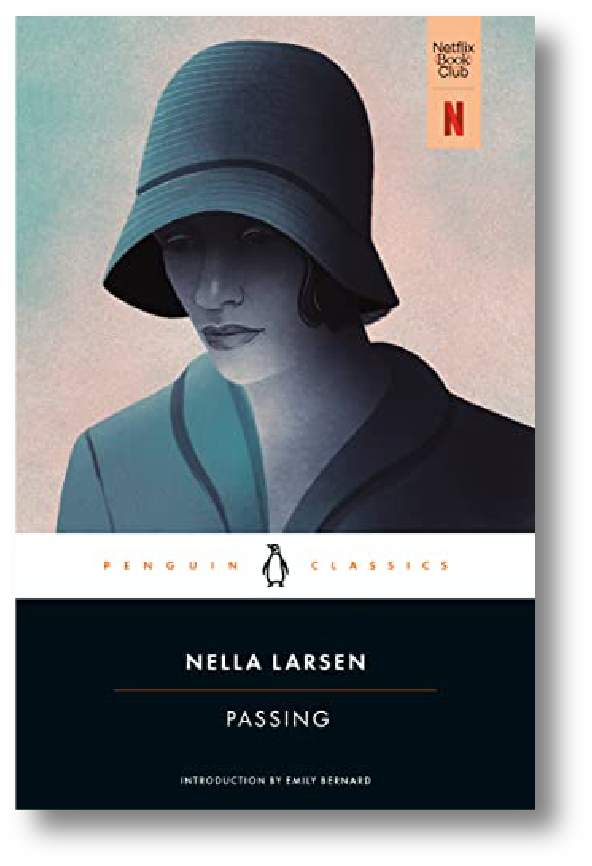
Passing (1929)
Nella Larsen
Nella Larsen: Intimacy at the Edge
If Hurston gave us Janie’s quest to define herself, Nella Larsen gave us the knife-edge tensions of what happens when identity is already in question.
Her 1929 novel Passing—often categorized as a novella because of its taut length—centers on the reunion of two childhood friends in 1920s Harlem: Irene, who lives as a respectable Black middle-class wife and mother, and Clare, who has chosen to “pass” as white and is married to an openly racist white man who does not know her ancestry.
As the women are drawn into each other’s orbit, Larsen chronicles the intoxicating and dangerous pull of desire, envy, and curiosity. The book’s title refers to racial passing, but the story also tracks other thresholds: between friendship and obsession, safety and self-annihilation.
Biographers note that Larsen herself, the daughter of a Danish immigrant mother and a West Indian father, had an ambivalent relationship to the Harlem literary scene and questions of belonging. That ambivalence lends her fiction a psychological complexity that feels startlingly modern.
For gift-givers, Passing has another advantage: it is short enough to be read over the quieter days between Christmas and New Year’s, yet layered enough to occupy the mind for months. Paired with her earlier novel Quicksand in a single volume, it offers a compact, devastating portrait of Black womanhood and respectability politics.
Perfect for: the friend who loved the recent film adaptation but has not yet read the book, the psychology major, the reader who gravitates to slim, emotionally dense novels.
Cane (1923)
Jean Toomer
Jean Toomer: Experimental Visions for the Aesthete
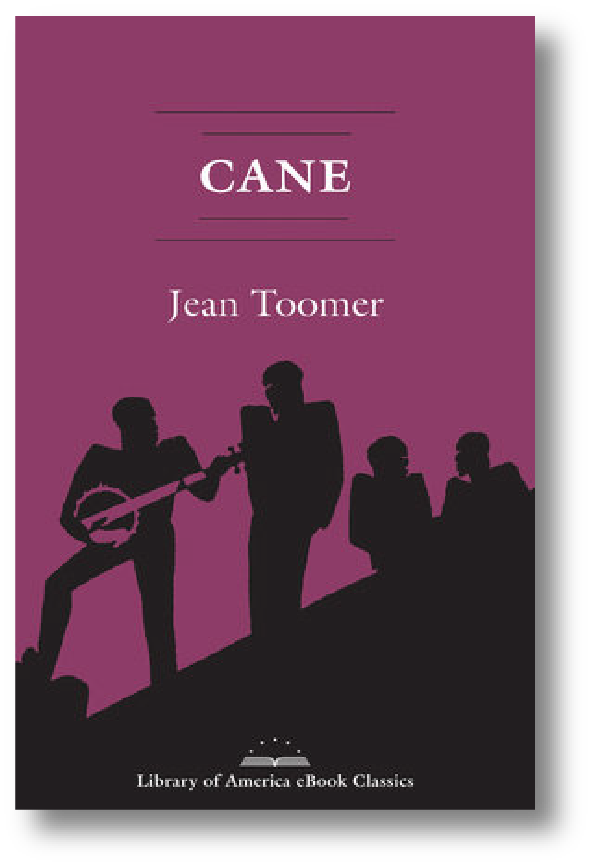
Jean Toomer’s Cane is the wild card of the Harlem gift pile—the book you give to the person who has already read everything else, or to the one who organizes their shelves by publisher imprint.
First published in 1923, Cane is often described as a “composite novel” or “short story cycle,” structured as a series of vignettes that move between rural Georgia and urban Northern landscapes. The pieces shift from lyric prose to poetry to dialogue, drawing from Southern Black folk culture and the avant-garde techniques of European and American modernism.
Scholars have hailed Cane as both a harbinger of the Harlem Renaissance and a model of experimental writing that defies easy categorization. Reading it feels like walking through a gallery: figures appear and recede, images repeat in altered form, themes—desire, labor, migration, spirituality—echo until they become a kind of music.
As a gift, Cane suits readers who relish form as much as plot. A beautifully designed edition, with generous margins and perhaps some accompanying essays, acknowledges that experimental Black writing is not a niche curiosity but central to American modernism.
Perfect for: the poet, the art-school cousin, the friend who writes in the margins and is always quoting lines about landscapes and ghosts.
How to Build a Harlem Renaissance Gift Stack
To turn these individual books into a coherent holiday gesture, think less like a shopper and more like a curator—an echo, perhaps, of Alain Locke’s method in The New Negro.
One approach is to build by theme:
For the emerging activist: Pair Du Bois’s The Souls of Black Folk with Hughes’s Selected Poems. One frames the stakes; the other supplies the emotional vocabulary.
For the Black feminist in your life: Bundle Hurston’s Their Eyes Were Watching God, Larsen’s Passing, and Fauset’s Plum Bun. Together, they stage a century-old conversation about love, respectability, self-fashioning and risk.
For the stylist and aesthete: Combine Locke’s The New Negro with Toomer’s Cane. Add, for good measure, a recent exhibition catalogue from a show on Harlem Renaissance art or Black fashion—many museums have revisited this period, highlighting how figures like Du Bois and Hurston used personal style as a form of intellectual and political expression.
For the history obsessive: Wrap McKay’s Home to Harlem alongside a modern history of the Great Migration or a biography of a Harlem Renaissance figure. The fiction grounds the data in flesh.
Another approach is intergenerational. The same book will not hit the same way at 17 and 70, but Harlem’s writers wrote with an eye on both posterity and the present. A grandparent might find in Hughes or Du Bois echoes of speeches they heard in childhood churches; a teenager might see in Janie, Clare, or Angela a template for asking harder questions in their own lives.
What unites these gifts is a refusal to treat Black literature as a niche category or seasonal trend. These are not “diversity picks” tucked into curated lists and forgotten come January. They are durable, demanding, gloriously readable works of art that changed what American letters could be—and still, in quiet ways, change their readers.
Why These Books, Now?
Every December, publishers and booksellers release new holiday guides promising the right title for every personality type. In a year when book bans proliferate, when debates over how to teach American history and literature rage from school boards to statehouses, choosing Harlem Renaissance writers as gifts is more than an aesthetic preference. It is a small act of resistance, an assertion that Black voices belong at the center of any story about the United States.
Standing in that Harlem bookstore—or in an indie shop in Tulsa or Oakland or Atlanta—you might watch a customer pick up Passing, flip through Cane, trace a finger along the spine of The New Negro. The choice they make will be idiosyncratic, shaped by taste and mood and the particular person they have in mind.
But whatever they carry to the register, they will leave with more than a wrapped object. They will leave with evidence that another world has been imagined before: a world in which Black life is abundant, contradictory, risky, funny, vulnerable, intellectual and sensual all at once.
To give these books at Christmas is to offer that world again—to say, in a season crowded with nostalgia, that the past is not just something to remember but something to read, argue with, and remake.