


When Black America Declared Its Power:
INSIDE THE 1972 GARY POLITICAL AWAKENING
By KOLUMN Magazine
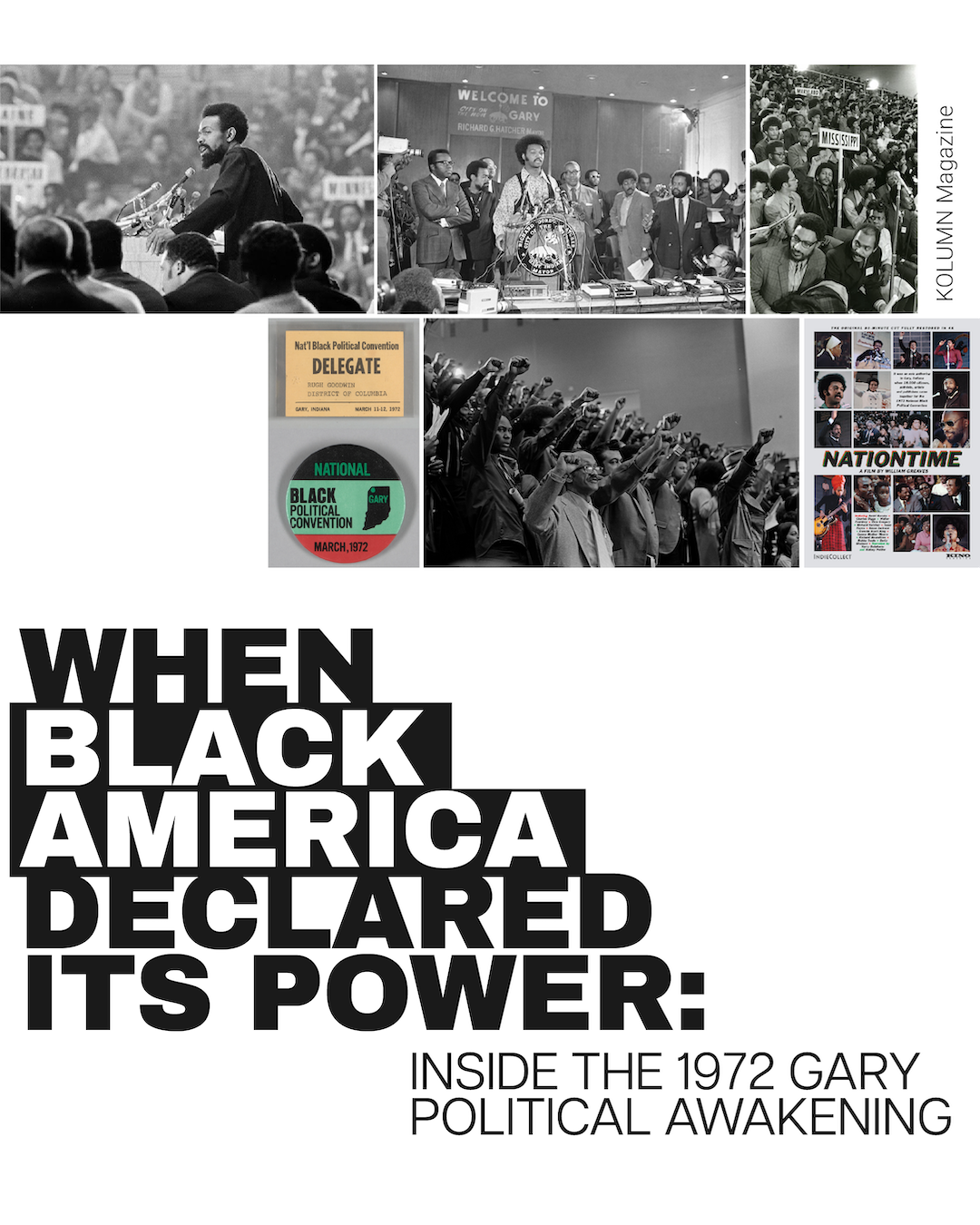
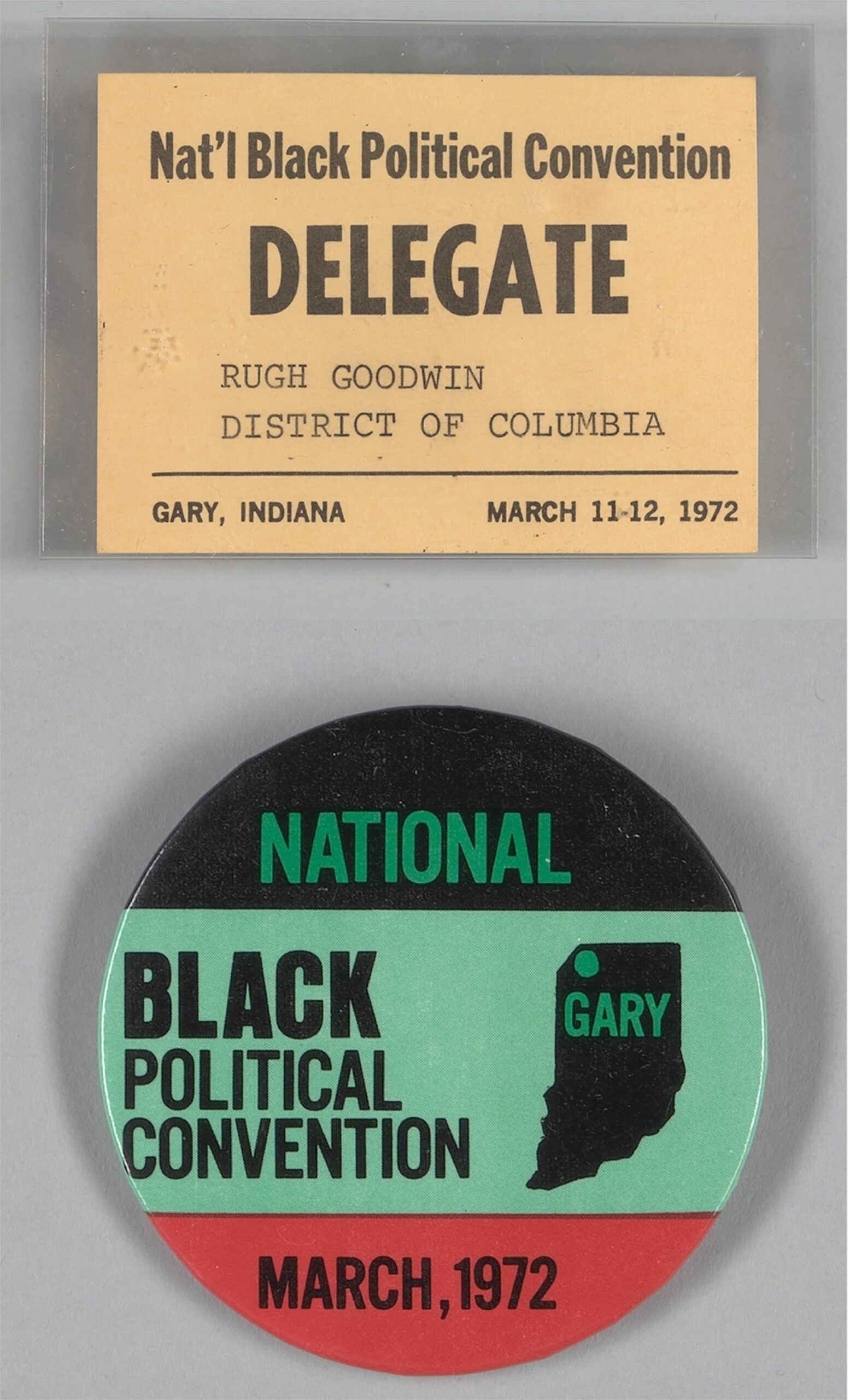
In March 1972, as winter hung stubbornly over Lake Michigan, planes and Greyhound buses and dented Chevys all funneled toward a steel town most Americans associated with smokestacks, not revolutions. Gary, Indiana—black-run, cash-poor, ringed by mills—became, for three days, what Chicago’s WGN-TV called “the hub of the Black universe.”
They came by the thousands: church mothers in fur-collared coats, college activists with Afros picked high, southern precinct captains still hoarse from voter registration drives, veterans of sit-ins and Freedom Rides now wearing delegate badges. Between 7,000 and 10,000 people—about 3,000 of them official delegates—crammed into Gary’s West Side High School for the first National Black Political Convention.
For a generation that had buried Medgar Evers, Malcolm X, and Martin Luther King Jr., the gathering felt like one last chance to turn grief into power. One North Carolina delegate, the young organizer Ben Chavis, later remembered why he came: after years of assassinations, prison beatings, and funerals, Gary felt like “a good shot in the arm for the Movement.”
It was, as the filmmaker William Greaves titled his documentary about those days, Nationtime—a moment when Black America tried to imagine itself as a single political nation, even as profound internal divides made that unity fragile.
A City on the Edge, a Movement at a Crossroads
To understand why Gary was chosen, you have to understand what Gary had become. Founded in 1906 by U.S. Steel, the city was a company town that promised steady wages and a place in the industrial middle class. By the late 1960s, automation and foreign competition were undercutting that bargain. Layoffs and white flight hollowed out neighborhoods, even as Black migrants from the South continued to arrive, chasing mill jobs and fleeing Jim Crow.
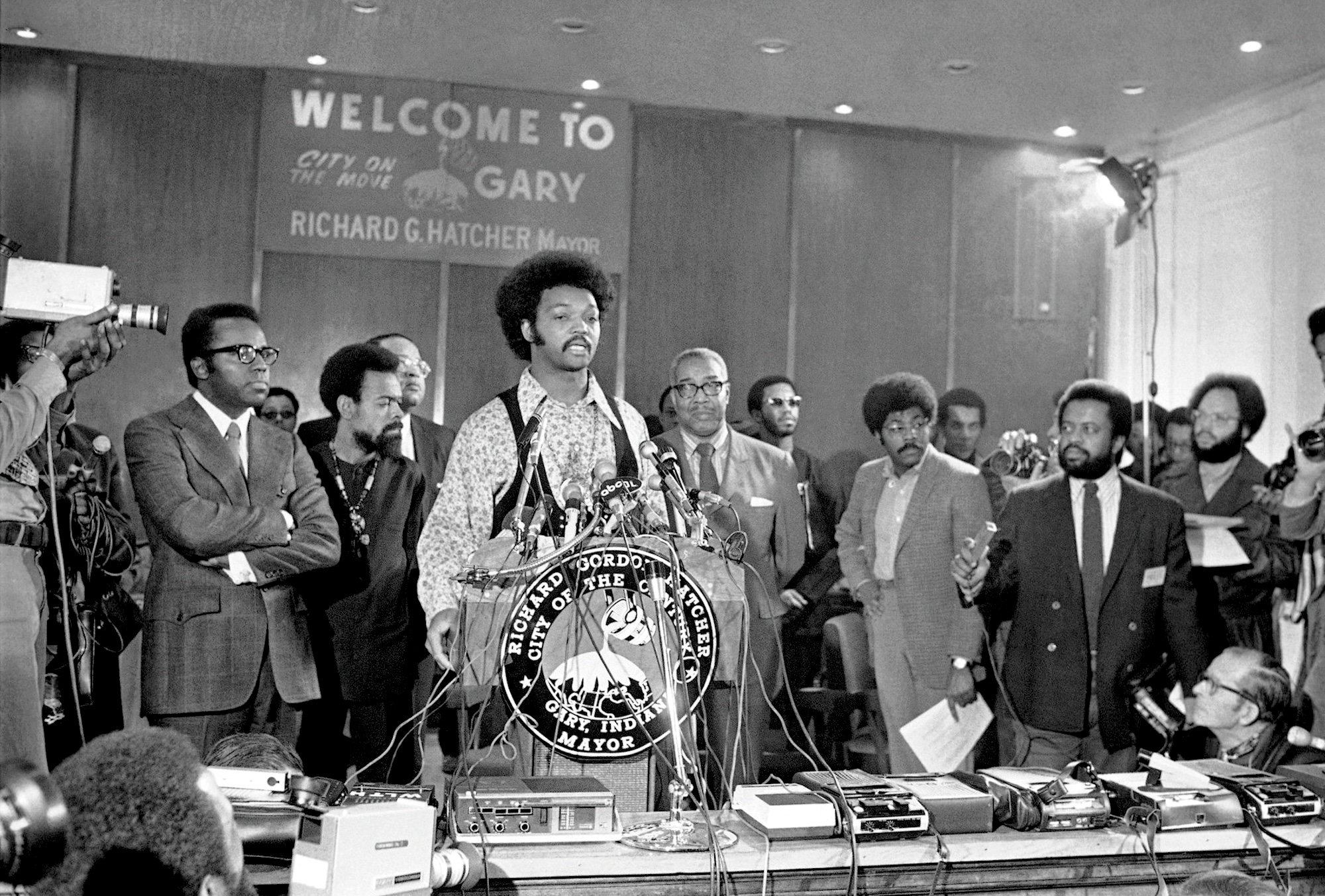
In 1967, Gary elected Richard Hatcher as one of the first Black mayors of a major U.S. city, part of a wave that included Carl Stokes in Cleveland and soon, Maynard Jackson in Atlanta. Hatcher’s victory was historic—and almost immediately besieged. He faced a hostile white business establishment, shrinking tax base, and a police force suspicious of Black political power.
When national organizers began looking for a host city for a Black political convention, many mayors quietly balked. They worried about white backlash, riot headlines, and the optics of thousands of Black militants descending on their downtowns. Hatcher, by contrast, volunteered. Gary needed investment and attention; the movement needed a place where a Black-led City Hall would open the doors.
The timing was equally fraught. The Civil Rights Act of 1964 and the Voting Rights Act of 1965 had outlawed Jim Crow on paper and opened the door to Black elected officials. But they had not stopped police bullets or closed the yawning wealth gap. Between 1964 and 1971, uprisings in Watts, Newark, Detroit, and dozens of smaller cities signaled a new, angrier phase: what scholars now call the Black Revolt.
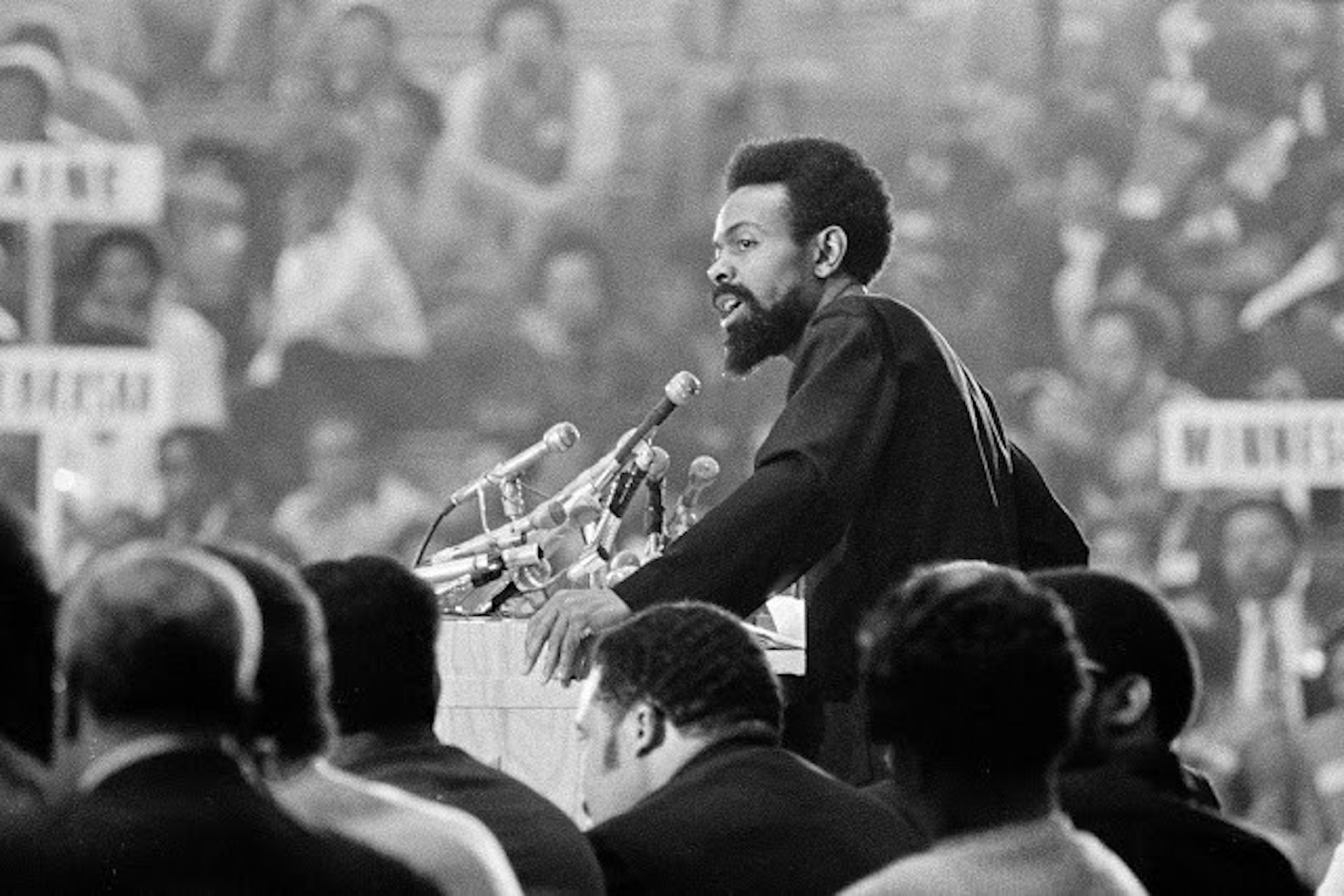
By 1972, the old consensus around integration had splintered. On one side were moderates—ministers, local officials, members of the emerging Congressional Black Caucus—who believed in leveraging new voting rights inside the Democratic Party. On the other were nationalists and radicals, from Amiri Baraka’s Congress of African People to Black Panther organizers and Black Marxist workers’ groups, who talked openly of self-determination, third parties, and even a separate Black nation.
The Gary convention was supposed to bridge that divide or at least hold it in tension long enough to craft a shared agenda.
Inside West Side High School
The logistics alone edged on impossible. Hotels in nearby Merrillville and Chicago filled quickly. Many delegates bunked with Gary residents or slept on church pews. Local families signed up through community groups to host out-of-towners from places they’d never visited—Jackson, Mississippi; Oakland, California; Newark, New Jersey.
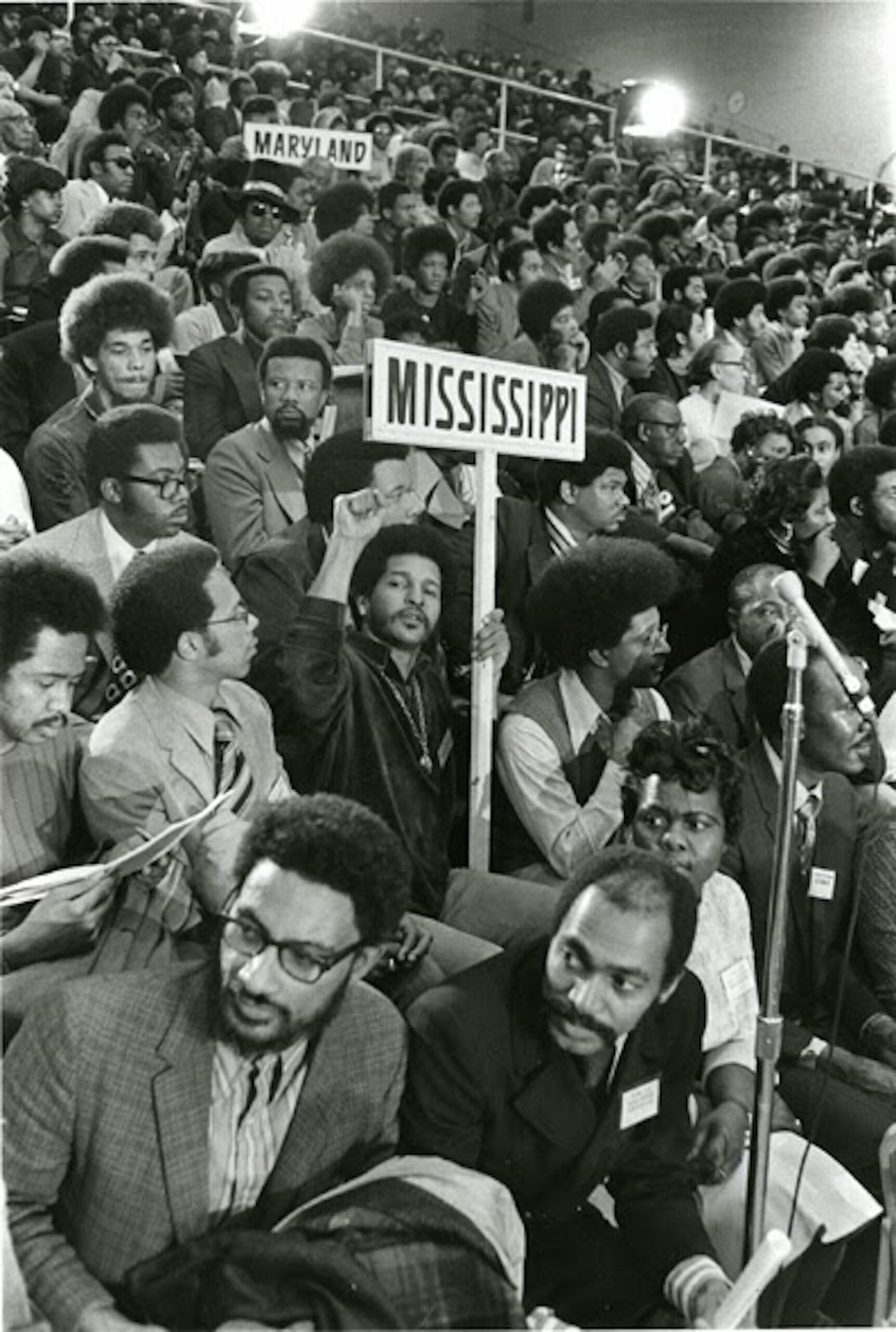
On the first morning, school buses and borrowed city trucks ferried people to West Side High, a sprawling, modern building on Gary’s west side. Inside the auditorium, hastily hung state placards—“MISSISSIPPI,” “MARYLAND,” “OHIO”—helped the crowd sort itself into delegations. One surviving photograph shows a young man hoisting the Mississippi sign above a sea of Afros and dark suits, his expression half-proud, half-awed.
The soundtrack was as much a part of the politics as any speech. Delegations marched in singing freedom songs remixed with Black Power lyrics. Between sessions, Isaac Hayes’s lush soul and the jazzy funk of Parliament poured from portable speakers. Vendors in the hallways sold buttons—“Black Is Beautiful,” “Free Angela Davis”—and newspapers from groups like the Black Panther Party and the League of Revolutionary Black Workers.
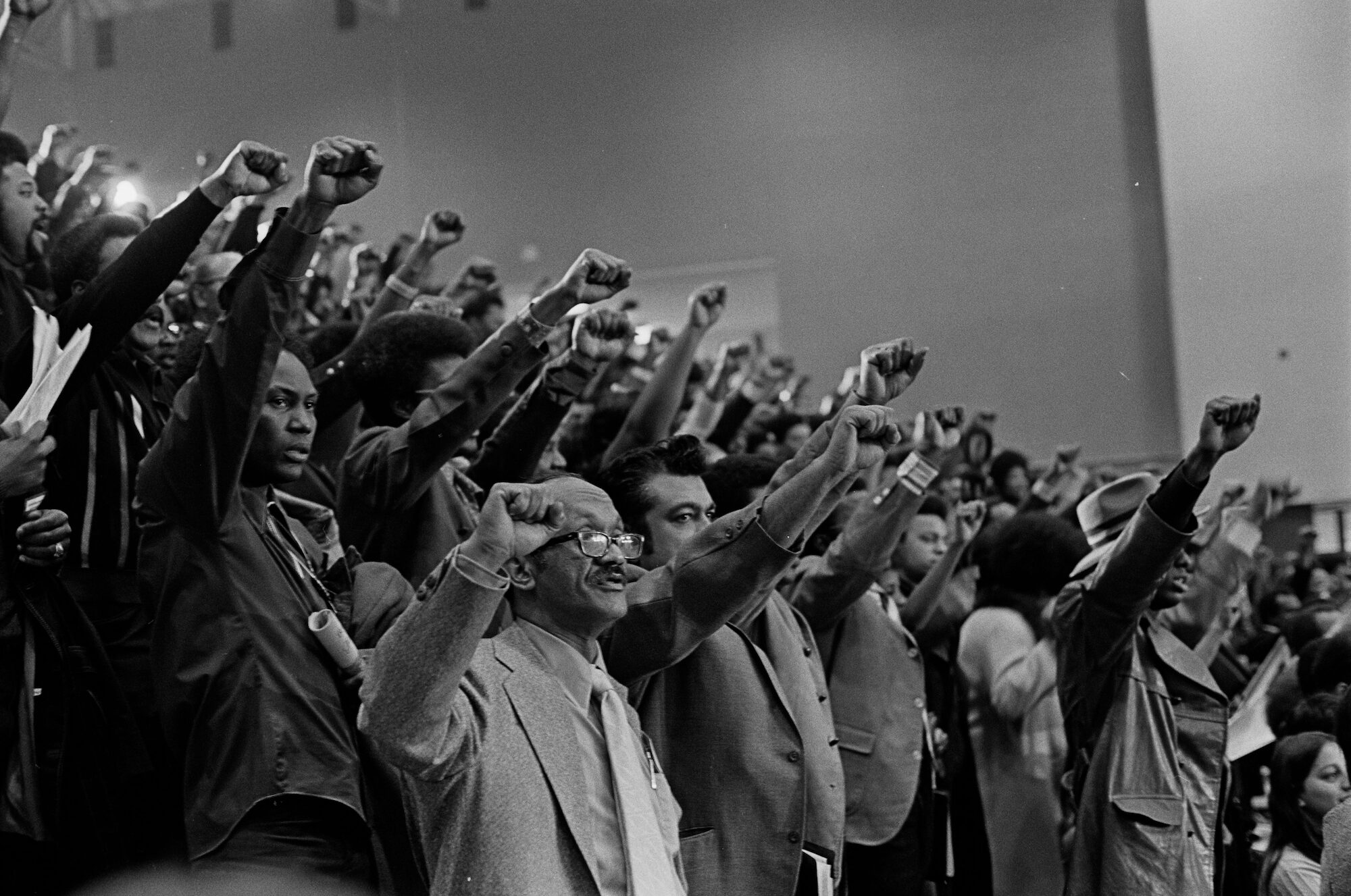
If you watched Greaves’s documentary Nationtime, you’d see the camera linger not just on the podium but on the faces in the crowd: a middle-aged woman in a church hat nodding along to Amiri Baraka’s fiery call for “unity without conformity”; a young man scribbling notes as Coretta Scott King speaks about widows and wages; a group of teenagers from Chicago standing on their seats, fists raised, shouting back at Jesse Jackson’s refrain:
“What time is it?”
“Nationtime!”
Onstage, the official hosts—Hatcher and Representative Charles Diggs of Michigan—worked to keep the program moving. Offstage, a delegation of Black elected officials huddled in side rooms with NAACP lawyers, while Baraka’s cadre, Panther representatives, and grassroots organizers drafted resolutions until the early morning hours.
Personal Journeys to Gary
The archival record of Gary is thick with platforms, resolutions, and declarations. Less visible, though no less important, are the personal journeys that brought ordinary people to that high school. Oral histories and memoirs fill in some of that texture.
The young organizer who’d buried too many friends
Ben Chavis, then a 24-year-old field organizer for the United Church of Christ, boarded a bus in North Carolina with other local activists. They’d weathered Klan violence during school desegregation fights and had seen colleagues killed or jailed. Chavis later recalled that by 1972, he was “tired of going to funerals,” but Gary felt like “gathering up our wherewithal” again.
The Midwestern steelworker watching his city change
In interviews held decades later, older Gary residents described the convention as both exhilarating and unsettling. One steelworker, who spent three decades at U.S. Steel before being laid off in the 1980s, remembered volunteering to direct traffic outside West Side High. “You’d see these plates from everywhere,” he said—Arkansas, California, New York. “It was like the whole country had come to our doorstep.” But he also noticed what wasn’t there: “A lot of white folks stayed home that weekend. Some of them never really came back,” a perception echoed in later reporting on the city’s steep white flight in the 1970s.
The student radical with one foot in City Hall
For Ron Daniels, then an aide to Mayor Hatcher and a rising activist, the convention was formative. He helped wrangle delegations and navigate security worries, racing between City Hall and the high school. Decades later, he would call the Gary convention “one of the defining moments” in his political life—a rare time when Black grassroots organizations, elected officials, and national civil rights groups were all in the same room, arguing over the same future.
The mothers who came for their children’s future
Church women, many of them grandmothers, rarely appear in official delegate lists. But they are visible in photos and remembered in local histories. One Gary resident, interviewed for a state historical project, recalled her mother turning their living room into a makeshift dorm, laying out blankets for three women from Mississippi. “They sat up late talking about schools and food stamps and the draft,” she remembered. “It wasn’t just speeches—it was kitchen-table politics.”
These narratives don’t resolve the ideological tensions that would ultimately fracture the convention. But they ground it: Gary was not just a summit of famous names, but a convergence of everyday lives shaped by segregation, industrial labor, poverty, hope, and an urgent sense that history would not wait.
The Gary Declaration: “We Are an African People”
The formal output of the convention was the National Black Political Agenda, introduced with what became known as the Gary Declaration. Drafted by a committee that included Baraka and moderated by more moderate figures, the declaration opened with an audacious statement:
“We are an African people…”
From there, it laid out a sweeping indictment of American racism—police brutality, substandard housing, inferior schools, environmental hazards, a war in Vietnam that drained resources and lives—and insisted that “anyone who claims to be serious about the survival and liberation of Black people must be serious about the implementation of the Black Agenda.”
The agenda that followed made concrete demands:
- Full employment and a living wage
- Community control of schools and police
- An end to the Vietnam War and redirection of military spending to social programs
- Protections for Black political prisoners and fairer criminal justice
- Support for majority-Black districts and independent Black political institutions
For many delegates, especially younger activists and those from the South, these planks sounded less like radicalism and more like common sense. They mapped closely onto the daily crises that had pushed them into politics in the first place.
Yet even as the agenda took shape, fault lines sharpened. Some Black elected officials worried that the rhetoric of “independent Black politics” and the flirtation with a third party would isolate them from white liberal allies and leave Black communities vulnerable to backlash. Nationalists and radicals, for their part, feared being reduced to a dependable Democratic voting bloc without real leverage.
Unity Without Conformity—Or Unity at All?
In the popular memory, Gary is sometimes remembered as a brief, shining unity summit. The reality was messier. Over three days, debates over strategy, class, and gender roiled the convention.
Moderates from the Congressional Black Caucus clashed with Baraka’s camp over whether to endorse a third-party run in 1972 or try to bargain with the Democrats. Chicago’s powerful Black machine politicians worried about being outflanked by militant organizers who had no stake in city patronage networks. Black business leaders argued for growth and entrepreneurship; socialists and labor organizers warned that capitalism itself, not just discrimination, was the problem.
One underreported tension ran along gender lines. Many of the most visible speakers were men, even as Black women—Fannie Lou Hamer, Coretta Scott King, Shirley Chisholm, local organizers—had anchored civil rights campaigns. Feminist scholars note that while the agenda addressed welfare, childcare, and health disparities, it did not fully reckon with sexism in Black political life. That omission would echo in later critiques from Black feminists who insisted that “the liberation of Black people” had to include women’s freedom as more than an afterthought.
Still, there were moments when “unity without conformity,” Baraka’s mantra, felt real. When word spread that a Black teenager had been beaten by police outside the convention, delegations that had spent hours arguing over resolutions poured into the hallway together to demand answers from the mayor’s office. When plane delays threatened to strand dozens of delegates at Chicago’s airport, volunteer drivers from Gary and Chicago’s South Side coordinated late-night caravans to bring them in.
The closing session captured that ambivalence. Delegates adopted the agenda and Gary Declaration by voice vote, but several state delegations walked out rather than be associated with language they saw as too radical. Within months, key figures in the Congressional Black Caucus would distance themselves from the document, and Jesse Jackson, who had thundered at Gary about independent Black politics, would pour his energy into campaigning for Democratic nominee George McGovern.
What Gary Changed
Measured purely by immediate policy wins, Gary was a frustrating experience. The National Black Political Assembly that grew out of the convention struggled to maintain momentum. No unified third party emerged; there was no sweeping legislative package branded as the Black Agenda. Some historians, like Leonard N. Moore in The Defeat of Black Power, argue that Gary marked the end of a certain phase of Black radical politics—its internal contradictions exposed, its ambitions overwhelmed by the realities of American electoral life.
But to stop there is to miss the deeper legacy.
First, Gary normalized the presence of Black political power on a national scale. For three days, television cameras and newspaper photographers presented an image rarely seen in mainstream media: a packed arena where Black delegates set the rules, ran the microphones, and argued openly about strategy. Ebony, Jet, and other Black outlets saturated their pages with images from Gary—crowds of delegates, young people at the mic, mayors and radicals on the same stage—helping to “cover Black America” in ways that made such gatherings part of the visual canon of the era.
Second, the convention’s agenda and declaration planted seeds that would sprout decades later. When the Movement for Black Lives released its sweeping policy platform in the 2010s, scholars and activists immediately heard echoes of Gary—in its demand to “end the war on Black people,” in its attention to housing, environmental justice, and political representation.
Third, and perhaps most importantly, Gary left an imprint on the lives of those who were there. In a 2021 study that interviewed dozens of surviving participants, researcher Allyson Clere found that many went on to careers in public office, community organizing, and law. For them, Gary was less a failed summit than a training ground—a place where they learned to navigate between grassroots demands and institutional constraints.
One former delegate, later a city council member in the Midwest, described the convention as “the first time I saw us argue like everybody else argues in politics, but about our own agenda.” That memory—of Black political conflict as a sign not of weakness but of maturity—has quietly shaped subsequent generations of organizers.
Gary’s Long Shadow
Today, Gary’s population is less than half of what it was when delegates packed into West Side High School. U.S. Steel has shed tens of thousands of jobs. Block after block of abandoned houses mark the city’s long economic slide, a story chronicled in recent reporting on the “long shadow” of U.S. Steel.
Yet the memory of those three days in March has not vanished. In 2012, on the convention’s 40th anniversary, veterans gathered in Washington, D.C., for a symposium titled “It’s Nation Time,” organized by Ron Daniels’s Institute of the Black World 21st Century. A decade later, on the 50th anniversary, a new generation of activists invoked Gary as they debated whether to build independent Black electoral vehicles or continue fighting within the Democratic Party.
For younger organizers shaped by Black Lives Matter, Ferguson, and the 2020 uprisings, Gary is both inspiration and cautionary tale. It shows the power of convening: what becomes possible when Black communities pool their grievances and imaginations across geography, class, and ideology. It also shows how quickly that power can dissipate without durable institutions and a shared strategy.
The Unfinished Agenda
In one of the most quoted lines from the Gary Declaration, delegates warned that their agenda was not “only for the future of Black humanity, but is probably the only way the rest of America can save itself from the harvest of its criminal past.”
Half a century later, as debates over police violence, voting rights, environmental racism, and economic inequality continue to roil American politics, the line feels less like a period piece than a dispatch from an unfinished struggle.
Gary did not deliver a unified Black political party or a permanent national convention. It did not resolve the tension between those who see salvation in ballots and those who put more faith in protests, mutual aid, or economic withdrawal.
What it did do—what still matters—is this: it insisted that Black people had the right, and the responsibility, to gather and argue over the terms of their own survival; that their lives could not be reduced to test cases in someone else’s party strategy.
On an old photograph from March 1972, a young man in a wide-lapel jacket stands in the West Side High bleachers holding a simple sign: “MISSISSIPPI.” Around him, dozens of other homemade signs rise into view—“MARYLAND,” “NEW YORK,” “GEORGIA.” Their bearer today is likely a retired grandfather, if he is alive at all. But the image captures the quiet radicalism of that weekend:
For once, the states were coming to Black people on Black terms. And for three days in a battered steel town, amid fierce arguments and fragile coalitions, Black America tried to decide not just what it wanted from the United States—but what kind of nation it wanted to be to itself.