


Out of Office,
Out of Bounds
How Black Americans Are Rewriting What It Means to Travel Abroad
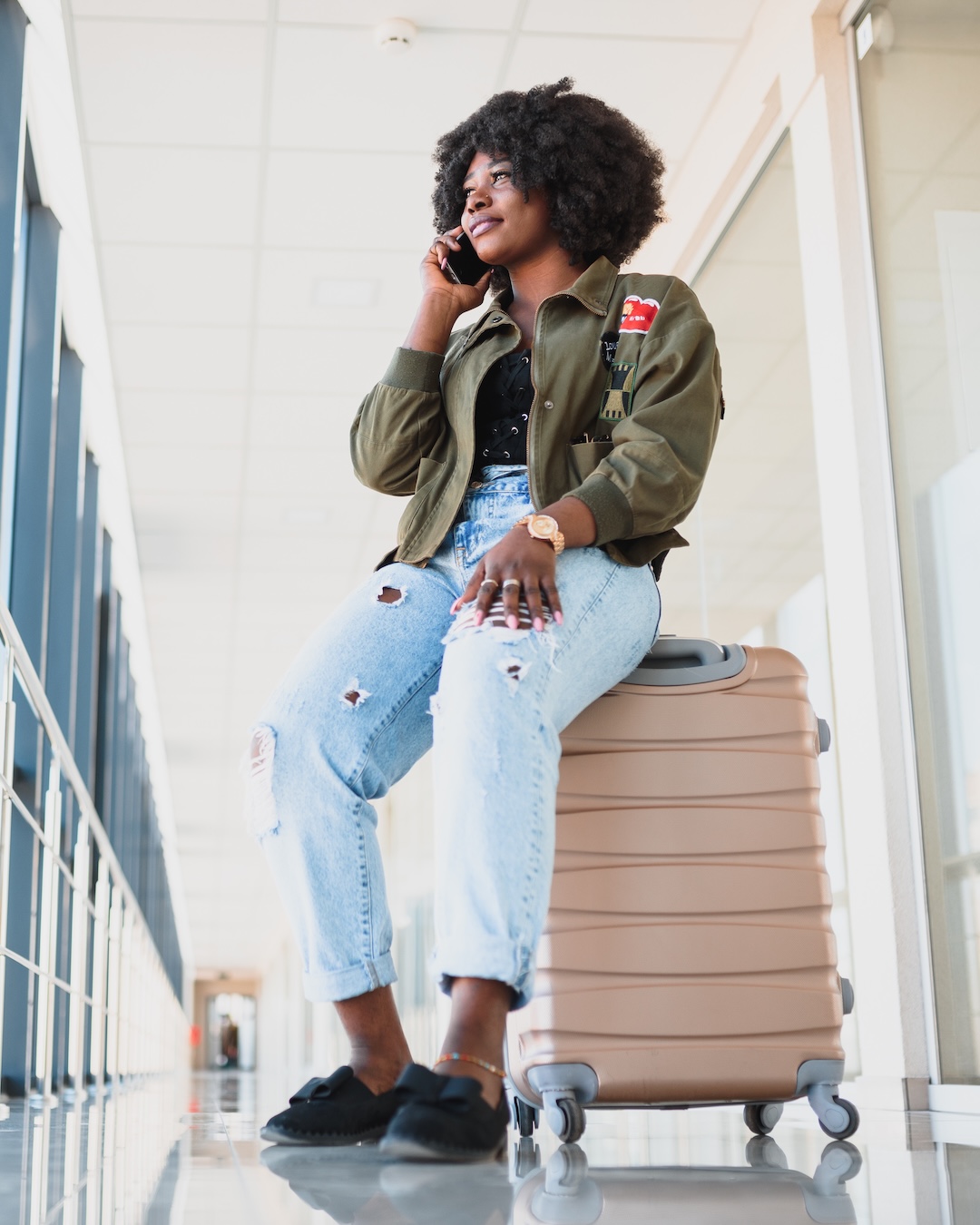
On a busy afternoon at Hartsfield–Jackson Atlanta International Airport, it’s not unusual to see a cluster of young Black travelers huddled around a departure board, passports in hand, debating whether Lisbon or Accra has better nightlife. Their phones ping with WhatsApp messages from group chats named things like Black Girls in Bali or Cousins in Cartagena. Someone’s mother is on FaceTime, making sure her child has a screenshot of their passport “just in case.”
For a growing number of Black Americans, this ritual is no longer rare. It’s routine.
New research suggests Black U.S. travelers are not just boarding more flights — they’re reshaping the global travel industry, even as they navigate old fears about safety and new anxieties about rising racism at home and abroad.
The $145 Billion Travel Question
For years, Black travelers were either ignored or treated as a niche curiosity by mainstream tourism boards. The numbers now tell a different story.
In early 2025, MMGY Travel Intelligence, working with the Black Travel Alliance and the National Coalition of Black Meeting Professionals, released new data showing that U.S. Black travelers took about 184 million leisure trips in 2023 and spent an estimated $145 billion — a sharp jump from pre-pandemic estimates.
A companion analysis for travel trade audiences noted that spending and trip volume are still climbing, with average projected leisure spend per Black traveler nearing $3,000 in 2025, and 87% saying they’re willing to pay for premium upgrades when they feel safe and welcomed.
That kind of money gets attention in an industry still recovering from the shocks of COVID-19. But this economic footprint sits alongside a stubborn reality: Black Americans are still less likely than other racial groups in the U.S. to have traveled abroad at all.
A Pew Research Center analysis found that only 49% of Black adults reported ever leaving the country, compared with 75% of white adults and 73% of Latino adults. Income and education play big roles: low-income and non-college-educated Americans — groups where Black households are disproportionately represented — are significantly less likely to have a passport or history of international travel.
So the story of Black Americans abroad is both one of explosive growth and persistent gaps: a booming market driven by those who can go, shadowed by the many who still can’t.
From the Green Book to Global Boarding Passes
Black Americans’ relationship to travel has always been political. Long before Instagram made “Black travel” a hashtag, mobility was a battleground.
During Jim Crow, traveling while Black inside the United States meant facing “Sundown Towns,” whites-only hotels, and the constant threat of humiliation or violence. The Negro Motorist Green Book, first published in 1936 by Harlem postal worker Victor Hugo Green, listed hotels, gas stations and restaurants where Black travelers could safely stop, expanding over time to cover much of North America and even parts of the Caribbean and Europe.
Historian Mia Bay, in Traveling Black: A Story of Race and Resistance, argues that access to movement — being able to ride trains, drive, fly, and later, travel freely — has been central to the Black freedom struggle from Reconstruction onward.
Today, physical Green Book sites are vanishing: Axios recently reported that fewer than 20% of locations once listed in the guide are still standing, prompting efforts by preservationists and the National Park Service to document what remains.
That history echoes every time a Black traveler pulls out a boarding pass to Barcelona or bus ticket to Busan. The risks are different, but the core question hasn’t changed: Where can we go and be safe, free, and fully ourselves?
Why Go? Rest, Resistance and Reimagining Home
If you ask contemporary Black travelers why they love heading overseas, you’ll hear familiar reasons — food, adventure, art — but also themes that rarely show up in glossy brochures.
In a 2025 essay for Word In Black, reporter Nadira Jamerson described international travel for Black Americans as a kind of “balm” for the wounds of racism. Rest and distance, she wrote, can briefly soften the psychological toll of anti-Black violence in the U.S. and “reignite the drive to fight for justice at home.”
Another Word In Black piece, “Black Travel: How to Get Involved,” notes that travel has clear mental-health benefits — easing stress, boosting creativity — but has historically been framed as a luxury “Black people were just not allowed to enjoy.” Founder of Black Travel Summit Anita Francois told the outlet that travel is often seen “as quite inaccessible,” especially for those who didn’t grow up flying.
And yet, survey data show Black travelers are particularly motivated by experiences that affirm identity and history. Earlier research by Mandala Research, widely cited in travel media, found that about 64% of Black American leisure travelers choose destinations in part based on Black culture and heritage attractions — everything from festivals and freedom trails to Afro-diasporic neighborhoods and nightclubs.
In other words, for many African Americans, travel abroad isn’t just leisure; it’s racial healing, political education and joy-work rolled into one.
Ghana, “Year of Return,” and the Pull of the Continent
Nowhere is that clearer than in West Africa, and especially Ghana.
In 2019, Ghana’s government launched the “Year of Return,” inviting descendants of enslaved Africans to visit and reconnect. The campaign drew an estimated hundreds of thousands of visitors, many of them African Americans, and sparked a wave of “heritage tourism” stories in outlets like The Root and Ebony that linked passport stamps to ancestral recovery.
That momentum hasn’t faded. A June 2025 essay in Word In Black by a U.S. writer chronicled her “pilgrimage to Ghana,” describing walking through slave dungeons on the Cape Coast while recognizing that she was part of a growing number of African Americans flocking there to “reconnect with their African roots, or settle there permanently.”
Travel outlet Travel Noire, which has built a large audience around Black millennial and Gen-Z travelers, recently followed up with Black Americans who had relocated to Ghana or acquired citizenship. They described lives that are not utopian — there are still bureaucratic headaches and culture clashes — but often feel freer from the daily, grinding suspicion they experienced in the U.S.
Big tour operators have noticed, too. In 2022 Ebony covered a partnership between EF Go Ahead Tours and a Black travel curator to offer an immersive 12-day Ghana trip, blending historical sites with contemporary art, nightlife and Black-owned businesses.
What’s emerging is a new pattern: diaspora travel that blends tourism, spiritual pilgrimage and, for some, soft trial runs for long-term relocation.
“Travel Tribes” and the Rise of Black Travel Infrastructure
The surge in Black American travel isn’t just individual wanderlust. There’s now a loose but powerful ecosystem sustaining it.
Group Trips and “Travel Tribes”
In recent years, Black-owned travel companies and communities — Nomadness Travel Tribe, Tastemakers Africa, Up in the Air Life, Black & Abroad, Black Girls Travel Too, and dozens more — have built businesses around curated group trips and community-driven itineraries.
A Condé Nast Traveler feature chronicled how Black group trips create spaces where travelers aren’t the “only one” at a resort or on a tour, easing anxiety and building solidarity. Founders explained that safety in numbers matters, but so does the ability to immerse in local Black culture — from DJs in Accra to artists in Johannesburg — without feeling like an afterthought.
Black & Abroad, for example, highlights the benefits of group travel for Black travelers: community, safety, access to culturally significant experiences and lasting friendships that extend long after the trip ends.
Academic research has started catching up. A chapter on “Black Travel Tribes” traces how historical exclusion from mainstream travel led Black travelers to form their own networks and communities, both online and offline, to share information, pool resources and claim joy in spaces that weren’t built for them.
The Black Travel Summit and a Growing Industry
At the industry level, organizers like Black Travel Summit and advocacy groups like Black Travel Alliance now convene travel brands, tourism boards and Black creators in a more formal way.
Since 2019, Black Travel Summit has hosted dozens of events and summits, reaching thousands of travel professionals and enthusiasts. Its mission, as described in hospitality industry coverage, is to “support, empower and foster opportunities within the Black travel community” and connect Black-owned businesses, influencers and tourism boards across the supply chain.
In 2023 and 2024, Black Travel Summit partnered with MMGY and travel trades to launch National Black Travel Day and unveil new data on Black travelers’ preferences and spending — positioning Black travel explicitly as both a cultural force and a business imperative.
These networks are doing work that major travel companies long neglected: gathering data, mentoring new travel entrepreneurs, and pressuring airlines, hotels and destinations to treat Black travelers as core customers, not a seasonal marketing trend.
Joy and Jeopardy: The Realities of Traveling While Black Abroad
Ask ten Black Americans whether they feel safer abroad than at home, and you’re likely to get a complicated answer — sometimes yes, sometimes no, always with an asterisk.
Feeling Safer — Until You Don’t
In a 2024 feature for World Footprints, a Black travel platform, writer Tonya Fitzpatrick collected stories from Black Americans who described feeling “glad to be outside the U.S.,” enjoying periods of relative anonymity and relief from being endlessly read through America’s racial lens.
Similarly, WHYY, a public media station in Philadelphia, interviewed Black travelers who cherish the freedom of seeing the world but remain acutely aware that “traveling while Black” is never risk-free. One mother described the tension of encouraging her grown son to explore abroad while worrying constantly about his safety.
Survey work backs up those concerns. MMGY’s Black Traveler studies have repeatedly found that Black U.S. travelers are more influenced by safety concerns and representation in marketing than white travelers or even Black travelers in Europe, and that previous experiences of discrimination strongly shape where they feel comfortable booking.
Racism Without Borders
Going overseas doesn’t mean leaving racism behind. A widely discussed Guardian column noted that Black travelers abroad often “bring home an unwanted souvenir: racist abuse,” reflecting on the 2017 killing of Black American tourist Bakari Henderson in Greece and the author’s own experiences with hostility from locals.
More broadly, reporting on race in Europe has highlighted the persistence of anti-Black racism, even in places that pride themselves on liberal values. A Guardian analysis pointed out that understanding of racism among many white Europeans — including those who consider themselves progressive — can be “woefully low,” with Black people often encountering ignorance and denial alongside overt prejudice.
In Japan, a landmark government survey found that about a third of foreign residents reported racist verbal abuse and around 40% reported discrimination in housing, underscoring that xenophobia and colorism can shape experiences far from U.S. shores.
These dynamics fold into a digital conversation that academics have dubbed #TravelingWhileBlack. Researchers studying tweets and social media narratives argue that Black travelers use these platforms to swap safety tips, call out discrimination, and build a “counter-narrative” that both warns and empowers others.
It’s a twenty-first century version of the Green Book: less a printed guide, more a constantly updating feed of lived experience.
Practical Safety, Emotional Preparation
Contemporary Black travel publications respond to this reality with both caution and encouragement. Word In Black, for instance, recently published “5 Black Travel Safety Tips,” urging travelers to research local racial dynamics, share itineraries with trusted contacts, and document incidents of discrimination — while also insisting that fear shouldn’t cancel the joy of seeing the world.
Many group-trip operators treat safety as part of the product: they vet local partners, steer groups toward Black-friendly spaces, and create structured opportunities to debrief after negative encounters. The message is not “don’t go” but “go informed, go together, and know when to tap out.”
Who’s Still Grounded?
As inspiring as the images of Black travelers in Santorini and Seoul can be, they mask another truth: international travel remains sharply stratified by class in Black America.
Pew’s data make that plain. Nearly half of Americans earning under $30,000 a year have never left the country; the share drops to 10% among those earning $80,000 or more. Given the racial wealth gap, that economic barrier falls hardest on Black households.
Travel costs aren’t the only issue. Black Americans are less likely to receive paid vacation, more likely to work multiple jobs, and more likely to be caregivers, all of which limit the ability to take weeks off for international travel. For many, “abroad” is not Paris but a cousin’s place in another state.
Writers and advocates inside the Black travel space are increasingly vocal about this fracture. In a 2017 essay at The Root, “Black Travel: A Tradition and Rite of Passage,” travel journalist Damon Young argued that elite images of “doing it for the ‘Gram” can obscure a long, rich tradition of Black travel that included everything from HBCU band trips to freedom rides — and risk turning heritage into just another lifestyle brand.
Other voices, including columnists at Word In Black, point to deeper barriers: mass incarceration (which can restrict passports), student-loan debt and rising housing costs, all of which can make saving for a single international ticket feel impossible.
For Black travel to be more than a market segment, they argue, the conversation has to include policy — around wages, time off, and mobility rights — not just bucket lists.
How the Travel Industry Is (Slowly) Responding
Still, the industry response today looks very different from a decade ago.
Travel and hospitality trades now regularly carry headlines like “U.S. Black Travel Market Is Now a $145 Billion Audience,” urging hotel chains, airlines and destinations to invest in representation and inclusive practices.
Anita Francois, writing in a 2022 industry essay on “Better Ways to Welcome Black Travelers,” traced the legacy of the Green Book and reminded hoteliers that “Black travelers matter” not only morally but financially — citing research estimating Black travelers globally contribute well over $150 billion annually. She urged brands to go beyond stock photos by diversifying staff, fixing discriminatory booking practices and building authentic partnerships with Black-owned businesses and creators.
At the same time, the Black Travel Alliance has pushed mainstream travel brands to publish data on their hiring, marketing spend and partnerships with Black creators. After the 2020 racial justice uprisings, BTA publicly graded companies on whether their #BlackOutTuesday solidarity posts matched real commitments. Some responded by funding scholarships, apprenticeships and targeted campaigns; others faded back into silence.
Newer research from MMGY and partners suggests that brands still have work to do. Black travelers consistently report that they want to see themselves reflected in ads and on websites, and they’re more likely to book when staff are diverse and clearly trained to handle discrimination complaints — not ignore them.
Authenticity, in other words, is not a buzzword here; it’s a line item on the balance sheet.
The Future: Joy, Data and a Digital Green Book
Looking ahead, a few trends seem poised to shape the next decade of Black American travel abroad:
- More data, less invisibility. Ongoing MMGY/Black Travel Alliance studies and Black Travel Summit research projects are giving policymakers, tourism boards and Black entrepreneurs clearer pictures of who’s traveling, where and why — reducing guesswork and excuses.
- Diaspora reconnection 2.0. From Ghana and Senegal to Brazil and the U.K., more destinations are crafting specific Afro-diasporic itineraries and citizenship or residency pathways aimed at Black Americans, extending the logic of Ghana’s Year of Return.
- Digital safety tools. Inspired by the historical Green Book, technologists are experimenting with digital guides and AI-enabled platforms that help Black users navigate hostile environments — not just offline, but online. One recent example, the “Digital Green Book,” uses curated, Black-led sources to help users identify reliable information and avoid disinformation, explicitly borrowing the symbolism of the original guide.
- A broader conversation about who gets to rest. As outlets like Word In Black keep emphasizing, travel is increasingly framed not just as a luxury but as part of Black mental-health and healing strategies — even as advocates argue that this cannot substitute for structural change in healthcare, housing and policing.
At the center of all of this are ordinary Black travelers — students on their first study-abroad semester, retired postal workers finally taking a Paris cruise, digital nomads logging onto U.S. Zoom meetings from Lagos.
They are not a monolith. Some feel safer in Lisbon than in Louisville; others experience their first brutal racial slur on a European street. Some join curated group trips; others backpack alone. Some see travel as a temporary escape; others as a path to a different life.
What they have in common is the simple, radical insistence that their right to move freely — to rest, to explore, to get lost and found again — is non-negotiable. In a world that has long tried to contain them, that’s no small thing.