

KOLUMN Magazine
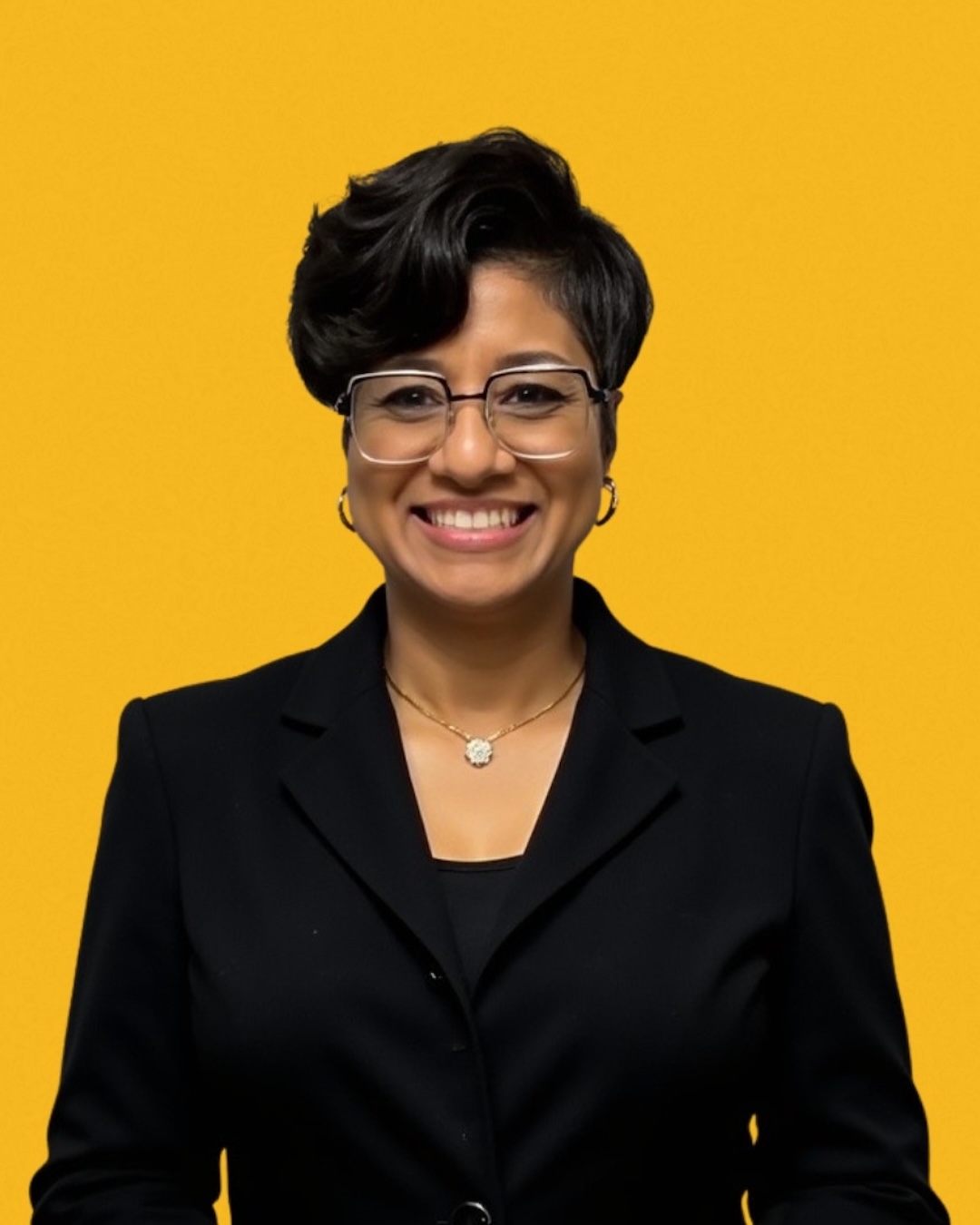
Christal Watson Makes History: How a Hometown Advocate Became the First Black Woman to Lead Kansas City, Kansas
Christal Watson Makes History: How a Hometown Advocate Became the First Black Woman to Lead Kansas City, Kansas
On a cool Tuesday night in early November, as precincts around Wyandotte County finished counting ballots, Christal Watson stepped to a microphone and did something no Black woman had ever done in Kansas City, Kansas: claim victory as the city’s next mayor.
By the time the votes were tallied, Watson had won 9,465 votes to opponent Rose Mulvany Henry’s 8,050 — 54% to 46% — in a race decided by fewer than 1,500 ballots.
The margin was narrow, but the symbolism was sweeping. Watson will become the first woman — and the first Black woman — elected mayor and CEO of the Unified Government of Wyandotte County and Kansas City, Kansas (UG).
Her win caps a tumultuous political era in a county grappling with deep poverty, heavy public debt and uneven development — booming on the western edge near the Kansas Speedway, fragile and underinvested in many older neighborhoods east of I-635.
Now, as Watson prepares to be sworn in on December 15, she inherits both a fiscal crisis and a mandate to “reset, renew, rebuild,” as she puts it in her campaign branding and on her social media profiles.
A hometown daughter of “the Dotte”
In November 2020, at just 21, Smith ran for and won the Ward 3 council seat, becoming the youngest elected official in Anniston’s history and, soon after, its vice mayor.
While serving on the council, she stepped into a role that symbolically foreshadowed what was to come. At the city’s 60th-anniversary commemoration of the Freedom Riders in 2021, Smith — then the youngest council member — served as master of ceremonies. Addressing surviving Riders Hank Thomas and Charles Person at the Greyhound Bus Station, she told them that her ability to serve “in an official elected position” was possible because of their courage, and promised to keep “breathing” for them after they were gone.
In a city where a burning bus once defined Anniston’s image, a young Black woman in an official city role publicly tying her political life to that legacy was a striking inversion of history.
A sudden promotion
In a political year dominated by national headlines, Watson’s story begins on a much smaller scale — in hospital rooms, church pews and school hallways familiar to generations of Wyandotte County families.
Watson was born at the University of Kansas Medical Center and grew up in Kansas City, Kansas. Her home church, 8th Street Baptist, sits just a few blocks from where she now does television interviews as a mayor-elect.
In a 2024 community interview, Watson described herself as “a native of Kansas City, Kansas” whose career has been “rooted in serving this community” — a theme that threads through her resume as a nonprofit leader, economic development advocate and public official.
Before running for mayor, Watson spent years in roles that rarely make headlines but often shape residents’ daily lives:
- United Way of Wyandotte County: Early in her career, she worked on study circles and campaign organizing for the local United Way, grappling directly with the realities of poverty and limited resources in the county.
- Heartland / Kansas Black Chamber of Commerce: She later led what became known as the Heartland Black Chamber of Commerce, building support systems for Black and minority-owned businesses in Kansas and Missouri.
- City Hall insider: Watson served as deputy chief of staff to then-Mayor David Alvey in the Unified Government, gaining a close-up view of how the city-county government manages everything from economic incentives to basic services.
- Kansas Human Rights Commission: In 2020, Governor Laura Kelly appointed Watson to the Kansas Human Rights Commission and later elevated her to chair, placing her at the center of statewide conversations on discrimination and civil rights.
- Kansas City Kansas School Foundation for Excellence: Most recently, she has served as executive director for the foundation that raises money and support for Kansas City, Kansas Public Schools (USD 500), working closely with educators, students and families.
Her civic agenda has consistently emphasized using institutional leverage to help people who, as she has phrased it in past interviews and podcasts, “don’t always have a seat at the table.”
A city of contrasts — and a high-stakes mayor’s job
The job Watson is stepping into is unusually powerful. Since Wyandotte County and Kansas City, Kansas consolidated in 1997, the mayor also serves as CEO of the Unified Government, overseeing a jurisdiction of about 165,000 residents with responsibilities that include policing, infrastructure, economic development and budgeting.
Wyandotte County is one of the most diverse communities in Kansas: roughly 36% White, 34% Hispanic and about 20% Black, with nearly one in five residents born outside the United States.
That diversity sits alongside stark inequality. Kansas City, Kansas’ poverty rate — around 17–18% — is significantly higher than the state and metro averages, and educational attainment lags the broader region.
Meanwhile, Wyandotte’s west side has become a poster child for ambitious public finance. State lawmakers allowed the county to use STAR bonds — a form of tax-increment financing repaid by future sales tax revenues — to build the Kansas Speedway and Village West retail district in the late 1990s. That strategy helped spark major destination developments but left the Unified Government with more than $850 million in bonded debt; today, about 44% of its general fund goes to debt service.
In September, just weeks before the election, local public radio station KCUR reported that even with a property tax increase, the budget was “in peril,” and one commissioner called the situation a “systematic fiscal problem.”
It is into this mix of growth and strain that Watson has been elected.
The campaign: “Make Kansas City, Kansas work for working people again”
The 2025 mayoral race began with a crowded, nonpartisan field of six candidates after incumbent Mayor Tyrone Garner announced he would not seek reelection.
Watson and Rose Mulvany Henry, a longtime telecommunications executive and member of the local Board of Public Utilities, emerged as the top two in the August primary.
From the outset, Watson framed her campaign around a blend of fiscal accountability and neighborhood investment. On her campaign website and in public forums, she pledged to:
- “Open every budget” and “clean up City Hall,” promising greater transparency and oversight of how public money is spent.
- Lower taxes and cut waste while pursuing long-term strategies to stabilize the Unified Government’s finances.
- “Fix our streets” and modernize infrastructure, from potholes and sidewalks to aging water and sewer systems.
- Support small businesses and revive commercial corridors, especially in the historic downtown core and long-neglected eastside neighborhoods.
In a pre-election interview with KSHB 41, Watson emphasized that revitalization must extend beyond west-side retail and entertainment hubs.
“We’ve seen a lot of progress out west,” she said, standing in downtown KCK. “We just want to distribute that among all areas in Wyandotte County.”
In a separate voter guide interview with The Beacon, Watson highlighted three issue clusters:
- Breaking the “cycle of poverty,” including through workforce development and pathways into good-paying jobs.
- Public safety, with an emphasis on prevention and community trust alongside law enforcement.
- Welcoming immigrants, recognizing that nearly one-fifth of county residents were born outside the United States.
Her message — “make Kansas City, Kansas work for working people again,” as her campaign literature put it — drew on decades of relationships in churches, schools and neighborhood organizations, as well as her network in economic development and minority business circles.
Winning in a low-turnout year
If the campaign was about big ideas, the election itself was a reminder of how small numbers can shape local government.
Only about 19.6% of eligible Wyandotte County voters participated in the mayoral election, according to Axios’ analysis of unofficial results — roughly one in five eligible voters.
Watson entered the race without the fundraising edge or major newspaper endorsement that favored Mulvany Henry, according to reporting by The Kansas City Star. Still, her coalition — anchored in long-standing civic relationships — proved enough to carry her across the finish line in a close contest.
The result, as one Axios analysis put it, was a textbook example of how “local election outcomes can hinge on a small number of votes, especially during off-year elections with limited participation.”
Officially, the race is nonpartisan, but national election trackers classify Watson as a Democrat in the broader landscape of 2025 U.S. municipal contests — part of a cycle that saw a wave of new mayors, including several candidates breaking racial, gender or religious barriers in cities across the country.
Governing challenges: debt, development and distrust
Watson will take office amid intense scrutiny of how the Unified Government spends money and who benefits.
A recent state performance audit of Kansas’ STAR bonds program underscored both the promise and peril of the tool that helped finance Kansas Speedway and Village West. While the districts did generate major attractions, the report warned that STAR bonds can pose “significant risks” to local government finances if revenues fall short, effectively tying up future tax income that might otherwise fund basic services.
At the same time, the Unified Government’s debt load — with nearly half the general fund devoted to paying bond interest — leaves limited room for new investments without raising taxes or cutting services.
Residents’ frustration has boiled over in recent budget cycles, as property tax bills climbed even while roads crumbled and core neighborhoods struggled with vacant homes and aging infrastructure.
Watson’s promise to “open every budget” and clean up City Hall is, in part, a response to that anger. But translating campaign rhetoric into structurally balanced budgets will require tough trade-offs — especially if she wants to both chip away at debt and invest in things like street repairs, housing and small business support.
In an exclusive post-election interview with KSHB, Watson sketched early priorities: assembling teams focused on infrastructure, workforce development, housing and community engagement, and committing to more visible communication with residents about what the Unified Government can and cannot do in the short term.
Representation and the rise of Black women in local power
Watson’s win is not just a local story; it sits within a national pattern of Black women reshaping municipal leadership.
A 2025 report by the Higher Heights Leadership Fund and the Center for American Women and Politics at Rutgers University found that Black women’s representation has grown across levels of government over the past decade, but remains disproportionately low relative to their share of the U.S. population.
At the city level, only a small fraction of mayors in major U.S. cities are Black women — most famously in places like Atlanta, Chicago and New Orleans.
Against that backdrop, a mid-sized, majority-minority city like Kansas City, Kansas electing its first Black woman mayor carries outsized symbolic weight.
Local and regional Black organizations were quick to frame Watson’s victory in those terms. Social media posts from community groups and civic leaders hailed her as the “first Black female mayor of Kansas City, Kansas,” often pairing her photograph with images of other newly elected Black women around the country.
For many residents, the milestone is less about symbolism than about lived experience. Watson is a product of the same public schools, churches and streets that define everyday life in “the Dotte.” Her long tenure in local institutions — from the Human Rights Commission to the school foundation — has given her a visibility and accessibility that some say have been missing from recent administrations.
At the same time, advocates caution that representation alone will not solve longstanding disparities in housing, health, policing or economic opportunity. The same report on Black women in politics points out that these leaders often govern places with entrenched structural challenges, limited fiscal capacity and sky-high expectations.
Watson will face that paradox immediately: her presence at the dais will be historic, but her power to transform material conditions will depend on the tools a strapped local government can realistically deploy.
What residents will be watching
As Watson prepares to move from mayor-elect to mayor, several tests loom:
- Can she deliver visible improvements on “bread-and-butter” issues?
Potholes, streetlights, illegal dumping and parks maintenance dominated many citizen forums and neighborhood conversations, even as city leaders debated large-scale bond projects. Voters will likely judge Watson early on whether the basics feel better — or at least better managed — in their neighborhoods.
- How will she handle development and incentives?
With new STAR bond projects like the American Royal expansion already underway in western Wyandotte County, Watson will have to balance honoring past commitments with skepticism toward further long-term borrowing. Advocates in eastside neighborhoods will want to see whether future incentives are tied more directly to local jobs, affordable housing or small business support.
- Will she change the culture at City Hall?
Throughout the campaign, Watson critiqued what she characterized as a lack of transparency and accountability in the Unified Government’s decision-making. Her promises to open budgets, communicate more clearly and “listen to the people” will be judged not only on policy decisions but on how residents feel when they call, email or show up at commission meetings.
- Can she sustain a political coalition in a low-turnout environment?
With turnout below 20%, Watson’s winning coalition is both potent and fragile. Maintaining support will likely require continuous engagement beyond election season — particularly in neighborhoods where voting is historically lower but needs are high. Political scientists interviewed by Axios noted that wealthier, more educated homeowners are far more likely to vote in low-turnout local elections, tilting influence away from the very communities most affected by city policy.
A beginning, not an endpoint
In the days after the election, congratulations for Christal Watson poured in from across Kansas City’s fragmented metro and from national organizations tracking Black women’s political leadership. Some messages were exuberant; others, more measured, paired pride in the historic moment with clear-eyed lists of demands.
Watson, for her part, has called the victory “monumental” but framed it as a starting point rather than a prize. “The people have spoken,” she told KCTV5 on election night, “and now we get to work.”
The work ahead is daunting: stabilizing a precarious budget, rebuilding trust in a government many residents see as distant or opaque, and proving that a city long defined by its struggles can write a different story.
Kansas City, Kansas has bet on megaprojects, merged governments and creative financing. This fall, it placed a different kind of bet — on a hometown nonprofit leader and civic insider who ran on the promise that government can once again belong to the people who live closest to its consequences.
Whether Christal Watson can fulfill that promise will shape not only the future of “the Dotte,” but also the evolving story of who gets to lead American cities — and on whose terms.