No products in the cart.

monday Closed tuesday Closed wednesday Closed thursday Closed friday Closed saturday Closed sunday Closed
KOLUMN Magazine
A Mayor Shaped by Anniston
A Mayor Shaped by Anniston
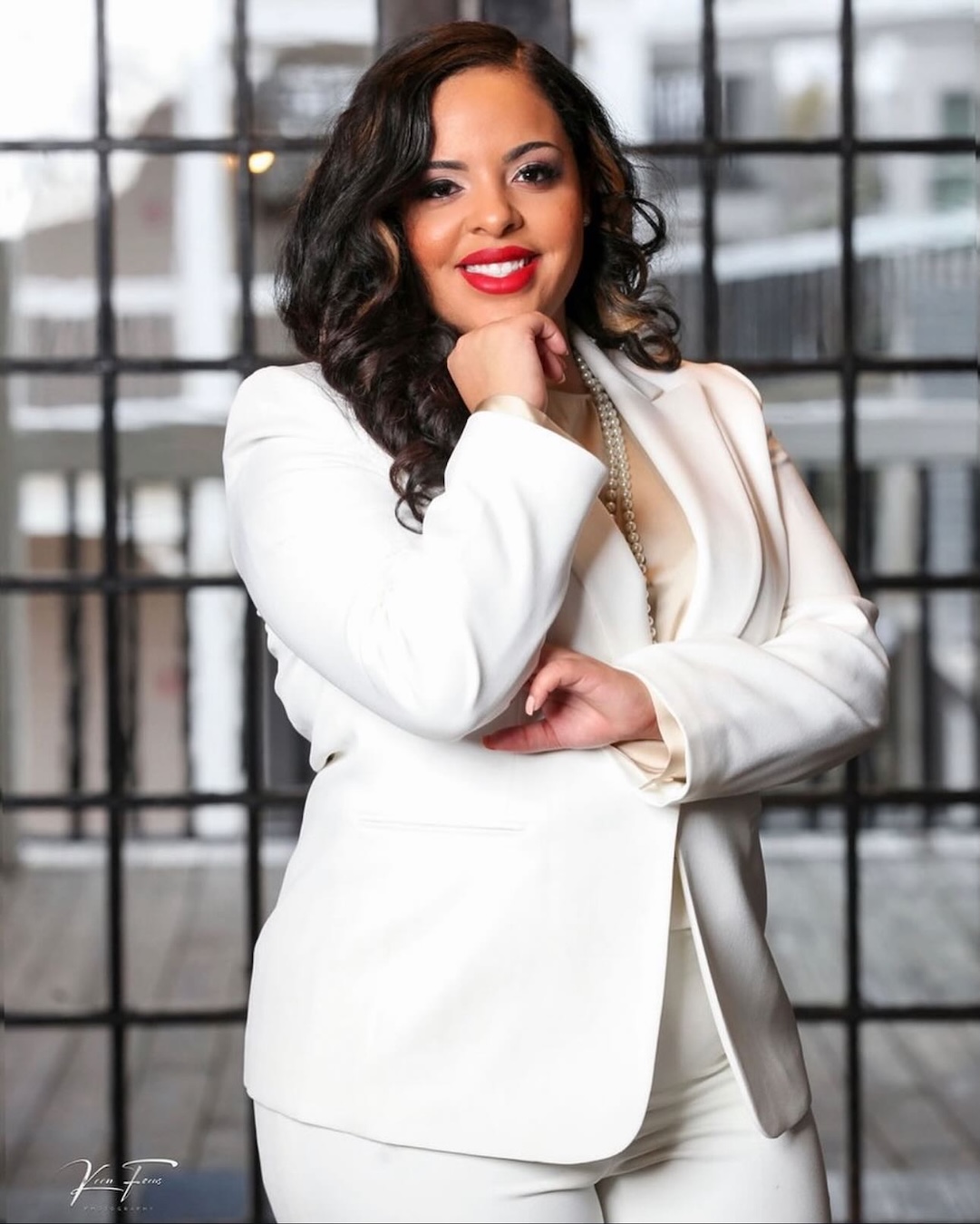
On Aug. 27, 2025, Ciara C. Smith was elected Mayor of Anniston, Alabama. For a city once known around the world as the place where a busload of Freedom Riders was firebombed by a white mob in 1961, the symbolism was impossible to miss.
By KOLUMN Magazine
On a humid August night in Anniston, Alabama, the crowd at a small event center burst into cheers as the numbers came in: 57% of the vote, enough to avoid a runoff and secure a full four-year term. At 26 years old, Ciara C. Smith had done what no one in the city’s 150-year history had done before — she became the first Black person, and the youngest ever, elected mayor of Anniston.
Yet if you ask Smith, symbolism isn’t enough. She’s quick to pivot from history-making headlines to the far messier work of governing a small Southern city still wrestling with poverty, crime, and distrust in institutions — and still searching for a path forward in a changing South.
Smith’s story starts just a few miles from City Hall. Born in February 1999 and raised in Anniston by her grandmother, Gertrude Nettles, she grew up in church basements and community meetings long before she ever saw the inside of a campaign office.
In an interview with Jacksonville State University, where she later earned her master’s degree, Smith recalled being as young as five at Southern Christian Leadership Conference meetings and listening to local Black women leaders like Deborah Foster, Anniston’s first Black woman city councilor, and Mary Harrington, now on the city school board. Those rooms taught her, she said, that you “stick up for others” and that politics is ultimately about people’s quality of life.
By 16, while most of her classmates were focused on driver’s licenses and football games, Smith had already landed her first job in City Hall — working in Anniston’s Finance Department.
She graduated from Anniston High School in 2017, then headed to Spelman College in Atlanta, one of the country’s premier historically Black women’s colleges. She finished her degree in 2020, all the while building a résumé that reads like a blueprint for a political career: a Forbes 30 Under 30 Fellowship, an internship in the U.S. House of Representatives with Georgia Rep. Hank Johnson, and training through the Congressional Black Caucus Institute in Washington, D.C.
“Everything I’ve had, I’ve had to fight 10 times harder for it,” she told JSU this year, describing growing up knowing she’d have to work “twice as hard to get half as much.”
That “fight” eventually pulled her back home.
From youngest council member to the city’s second woman mayor
In November 2020, at just 21, Smith ran for and won the Ward 3 council seat, becoming the youngest elected official in Anniston’s history and, soon after, its vice mayor.
While serving on the council, she stepped into a role that symbolically foreshadowed what was to come. At the city’s 60th-anniversary commemoration of the Freedom Riders in 2021, Smith — then the youngest council member — served as master of ceremonies. Addressing surviving Riders Hank Thomas and Charles Person at the Greyhound Bus Station, she told them that her ability to serve “in an official elected position” was possible because of their courage, and promised to keep “breathing” for them after they were gone.
In a city where a burning bus once defined Anniston’s image, a young Black woman in an official city role publicly tying her political life to that legacy was a striking inversion of history.
A sudden promotion
The path from vice mayor to mayor opened faster than anyone expected.
On May 1, 2025, Mayor Jack Draper resigned after more than eight years in office. As vice mayor, Smith was next in line. On May 6, she was sworn in as Anniston’s first African American mayor, its youngest, and only the second woman to hold the office.
The oath was administered by Gloria Floyd, Calhoun County’s first Black woman attorney and now Jacksonville State’s university counsel — a generational handoff from one local “first” to another.
In that June profile by JSU, Smith admitted she didn’t fully feel the weight of the title yet. She emphasized that she’d been performing many of the duties already as vice mayor and framed the step up as more continuity than transformation: “This is the work that I have been doing continuously.”
Still, she acknowledged the symbolism of being the one to “shatter the glass ceiling,” while stressing that others had “beat on it” before her.
Her appointment immediately set off a scramble down-ballot. When Smith moved into the mayor’s office, her Ward 3 council seat became vacant. The council later appointed Joe Nathan Harrington to replace her — one of several changes that signaled a reshuffling of political power in the city.
A historic election night
Appointment is one thing. A mandate is another.
On August 26, 2025, Anniston voters decided whether Smith would keep the job. She faced four challengers, including longtime city recreation director Steven Folks and former council member Ben Little.
When the ballots were counted, Smith had taken 57.31% of the vote — more than all of her opponents combined and far above the roughly 20% ceiling any challenger reached.
Local coverage, echoed by Yahoo News and regional broadcasters, underscored the stakes: at 26, Smith’s win made her both the youngest person and the first Black person ever elected mayor of Anniston.
Speaking to WBRC and WVTM-13 reporters at her election-night watch party, Smith framed the results as both humbling and clarifying: being mayor meant residents were trusting her with “their quality of life.” Over the next four years, she said, she wanted to focus on health care in the city and the long-debated future of Fort McClellan, the decommissioned Army base that looms over Anniston’s economic hopes.
The Alabama Gazette, in an analysis piece that leaned heavily on Smith’s own campaign messages, described the election as a “historic landslide” and highlighted three planks of her agenda: safer neighborhoods, new business development, and infrastructure investment, particularly in long-neglected areas.
The city she inherits
Anniston is a modest-sized city — just over 21,000 residents as of 2023 — but the issues on Smith’s desk would be familiar to leaders of much larger places.
The city is majority Black or very close to it: Black residents make up roughly 49–49.1% of the population, while white residents account for about 43–44%.
The economy, like that of many small Southern cities, is fragile. Median household income hovers around $44,800, and about one in five residents live below the poverty line — a higher rate than Alabama overall.
Anniston also carries the weight of overlapping histories:
- Civil rights violence – The 1961 attack on the Freedom Riders, memorialized today at the Freedom Riders National Monument and on the city’s Civil Rights Trail, still shapes how outsiders see Anniston — and how locals talk about race, justice, and reconciliation.
- Military downsizing – The closure and partial redevelopment of nearby Fort McClellan continues to influence debates over jobs, land use, and environmental cleanup.
- Downtown decline and revival – Noble Street and the historic core reflect a familiar story: shuttered storefronts alongside small clusters of new restaurants, events, and bike races meant to lure people back in.
Smith campaigned on the idea that Anniston can honor its past without being trapped by it — that the same city that once burned a bus full of freedom fighters can now be led by a mayor whose political coming-of-age was literally introduced on that trail.
A platform built on safety, infrastructure and youth
Smith has been careful to cast herself as both a product of Anniston’s grassroots institutions and a technocrat who has done the homework.
After Spelman, she completed a Master of Public Administration at Jacksonville State with a concentration in emergency management — a choice she described as deliberately practical. She told JSU she wanted to know how to manage the city “if, God forbid, something terrible happens.”
Her publicly stated goals since taking office and winning election fall into a few broad buckets:
- Public safety and community trust
In late May 2025, just weeks after her appointment, a graduation party in Anniston turned into chaos when gunfire erupted, leaving one girl injured and police recovering over 100 shell casings.
Smith responded with an unusually blunt public statement, condemning the “reckless” violence and criticizing the community’s silence in the aftermath. At a time when national conversations often pit “tough on crime” rhetoric against demands for police accountability, her message tried to do both: insist on cooperation with law enforcement while arguing that “silence isn’t protection, it’s complicity.”
The episode crystallized one of her central challenges: how to address real fears about violence in a small city, without deepening long-standing mistrust between Black residents and the criminal justice system.
- Economic revitalization and basic services
Smith has tied public safety to economic conditions and neglected infrastructure. Her campaign and early messaging, echoed in local coverage, emphasized:
- attracting and supporting small businesses, particularly in downtown and around the evolving Fort McClellan area
- repaving worn streets and improving trash collection
- focusing on infrastructure in neighborhoods that have long felt left behind by city hall
In her “Mayor’s Moment” video series — a monthly Q&A launched by the city in June — Smith has walked residents through very granular topics: road-paving schedules, how the city handles bulk trash pickup, and what exactly “police jurisdiction” means.
On one level, the series is civics education. On another, it’s political strategy in an era when transparency and accessibility are just as important as ideology.
- Youth, education, and hope
Smith frequently returns to young people — perhaps unsurprising for a mayor who can remember recent high-school hallway conversations better than many of her colleagues.
Her office and campaign social feeds have highlighted back-to-school drives, youth sports, and partnerships with Anniston City Schools. In interviews, she has framed her own story as a message to teenagers who think politics is for older, whiter, richer people.
In a city where roughly one in five people lives in poverty, and where opportunities often feel constrained, that kind of representation is not just symbolic. It’s recruitment.
The networks behind her
Although national outlets like The New York Times and The Washington Post have largely focused their coverage of Black women mayors on leaders in bigger cities — from St. Louis’s Tishaura Jones to Los Angeles’s Karen Bass — Smith is very much part of that broader political wave.
Her base is deeply intertwined with Black civic institutions:
- HBCUs – As a Spelman alum and JSU graduate, she sits at the intersection of two influential Black higher-education networks. Blavity’s profile of her emphasized that her Spelman classmates were unsurprised to see her in public office; she had been open about her political ambitions for years.
- Delta Sigma Theta Sorority, Inc. – Smith is a member of Delta Sigma Theta, one of the country’s most politically active Black sororities. After her election, the national organization and its Southern region publicly celebrated “Soror Ciara Smith” as the youngest and first Black mayor of Anniston, encouraging members to follow and support her administration.
- Civil-rights and democracy groups – The Southern Poverty Law Center Action Fund endorsed her campaign, aligning her with a broader infrastructure of voting-rights and racial-justice advocacy in the Deep South.
Those networks matter not just for fundraising or endorsements, but for what they signal: Smith is both a local product and part of a national ecosystem of Black political talent.
Governing in the shadow of history
Anniston’s official Civil Rights Trail site features a photograph of an earlier moment in Smith’s public life: a young councilwoman standing alongside Freedom Riders Hank Thomas and Charles Person, “praising their work” at the 60th-anniversary commemoration in 2021.
Back then, she told them that their sacrifices had made it possible for “someone like me” to serve in office — and that she would continue “breathing” for them in the work ahead. It was an emotional flourish, but also a political framing: her legitimacy, she implied, comes not only from winning votes but from carrying forward unfinished battles for equality.
Now, as mayor, she has to live up to those words in the everyday grind of municipal government:
- balancing budgets in a city with modest tax revenues
- navigating tensions over policing and public safety
- leveraging sites like the Freedom Riders National Monument into economic and educational assets rather than just static memorials
It also means confronting contradictions. Anniston today is nearly half Black, yet it took until 2025 to elect a Black mayor. The city has honored its civil-rights history with plaques and murals, but residents still describe deep divides over race, class, and geography.
A test case for “political Black girl magic” in smaller cities
Scholars and journalists have described the recent surge of Black women mayors as a kind of “political Black girl magic” — a phrase that captures both the excitement and the heavy expectations placed on these leaders. Research on Black women mayors in larger cities has found that they are often tasked with fixing problems that predate them and judged more harshly when they fall short.
In Anniston, Smith is a test case for whether that dynamic extends to smaller, majority-Black municipalities far from cable-news attention.
Her supporters see her as exactly what one WVTM-13 political analyst called “fresh eyes, fresh vision” — a break from older, more cautious approaches to leadership. They argue that her age, gender, and race are not liabilities but advantages in a city struggling to keep its young people and reinvent its economy.
Her critics, some more vocal on social media than in public meetings, question whether someone in her mid-twenties can manage a city with complex financial, legal, and public-safety demands. That skepticism isn’t unique to Anniston, but it lands differently when directed at a young Black woman leading a city long governed by older white men.
Smith herself seems acutely aware of this double bind. In her JSU interview and on the campaign trail, she has pushed back against the idea that she’s a novelty act, insisting that her age should not overshadow her qualifications, experience, and preparation.
What success would look like
What would it mean, concretely, for Smith’s tenure to be considered a success?
For some Anniston residents, the bar is straightforward: fewer shootings, more jobs, and better-maintained streets. For others, it’s about deeper shifts: a city government that feels less distant, a sense that long-ignored neighborhoods and young people are finally being taken seriously.
Smith has laid down a few measurable markers:
- Crime & safety – Reductions in gun violence and stronger cooperation between residents and the police department.
- Economic growth – Tangible redevelopment at Fort McClellan and new small businesses downtown, especially those owned by locals.
- Infrastructure – Visible progress on roads, parks, and basic services in working-class and Black neighborhoods, not just in the city’s showcase corridors.
- Youth engagement – More internships, youth councils, and leadership pipelines like the ones that propelled her into office.
Beyond metrics, there is a more intangible goal: changing what feels possible in a place that has often been defined by its worst day in 1961.
The weight of four years
“I don’t know the answers to everything,” Smith told JSU. “I’m not going to make Anniston the most perfect city … I am saying that I’m committed to the growth and transformation of this city.”
It’s a statement that sounds less like a campaign promise than a governing philosophy — one grounded in both ambition and realism.
Over the next four years, she will have to navigate economic headwinds, partisan polarization beyond city limits, and the everyday frictions of small-town politics. She will be measured by whether trash gets picked up on time just as much as by what she does with monuments and megaprojects.
But whatever happens, the next chapter of Anniston’s story will not be written without her. Sixty-four years after a bus burned on an Alabama highway, a mayor who once stood at that very site promising to “breathe” for the Freedom Riders now sits behind the city’s biggest desk, pen in hand.
How she uses it will determine whether her election is remembered as a symbolic milestone — or the beginning of something more.