


PANELS HONORING BLACK WWII SOLDIERS QUIETLY REMOVED in the Netherlands, Prompting Outcry and Questions Over U.S. Policy Influence
While the American Battle Monuments Commission (ABMC), the U.S. federal agency that manages overseas military cemeteries, described the action as part of a “routine rotation” of interpretive displays, observers both in the Netherlands and the United States say the timing coincides with a broader ideological campaign against diversity and inclusion initiatives within U.S. government agencies—some of it backed by Washington-based think tanks such as the Heritage Foundation.
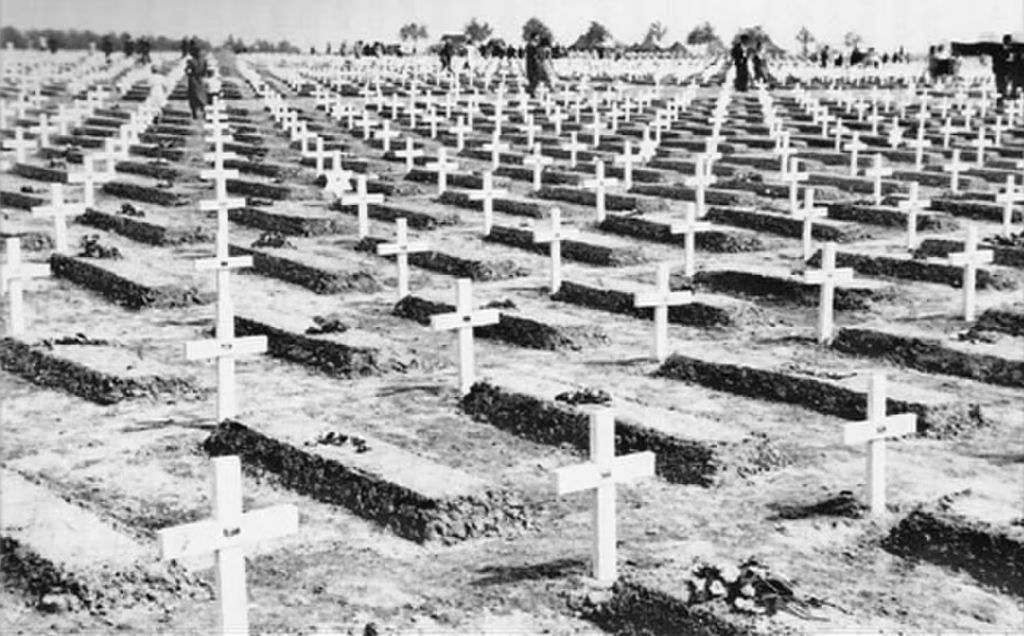
The Netherlands American Cemetery is the final resting place for more than 8,000 American soldiers killed in Europe during World War II, and an additional 1,700 names appear on the Walls of the Missing. Dutch historians estimate that at least 174 of the buried or missing are African American.
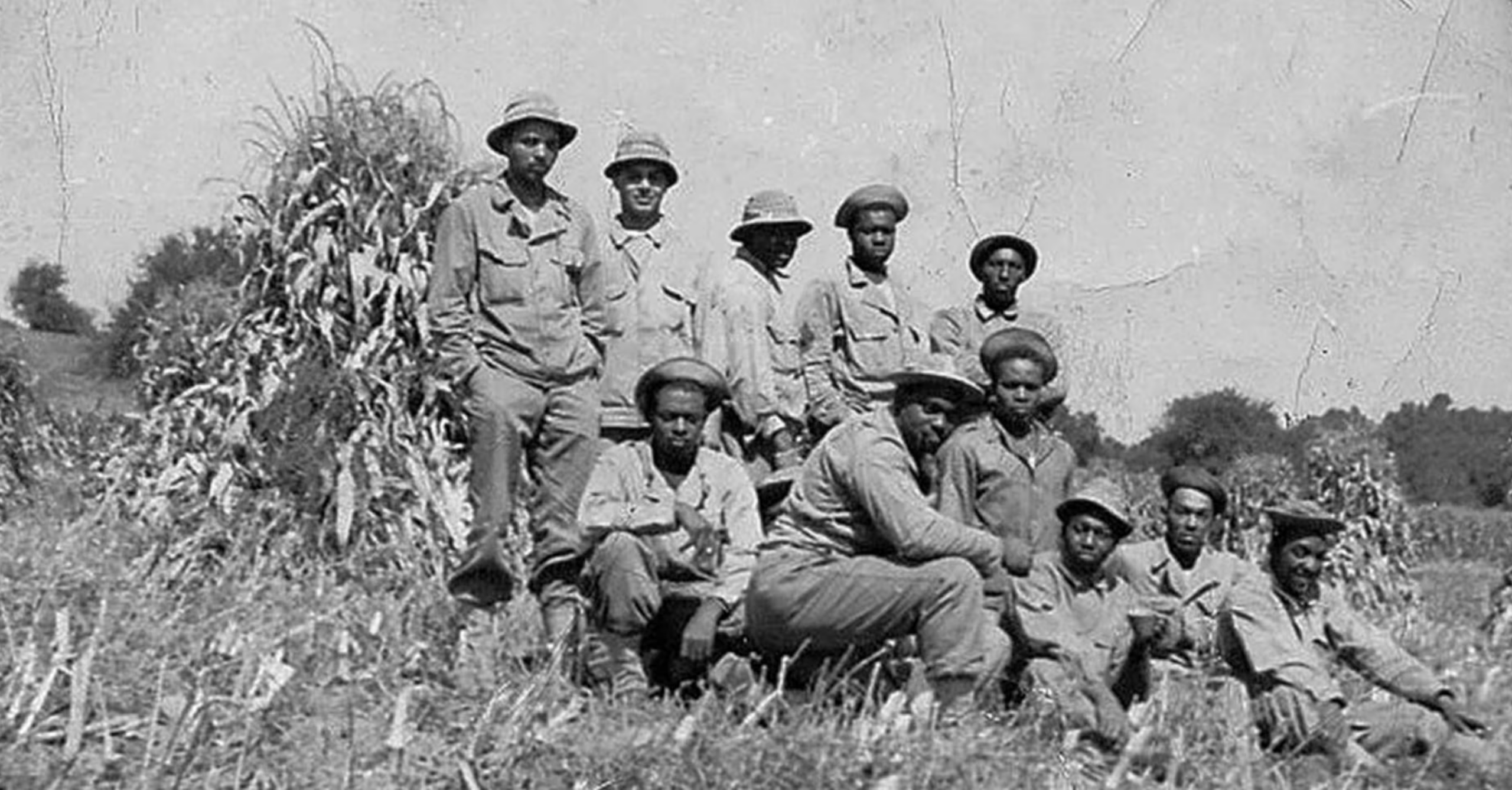
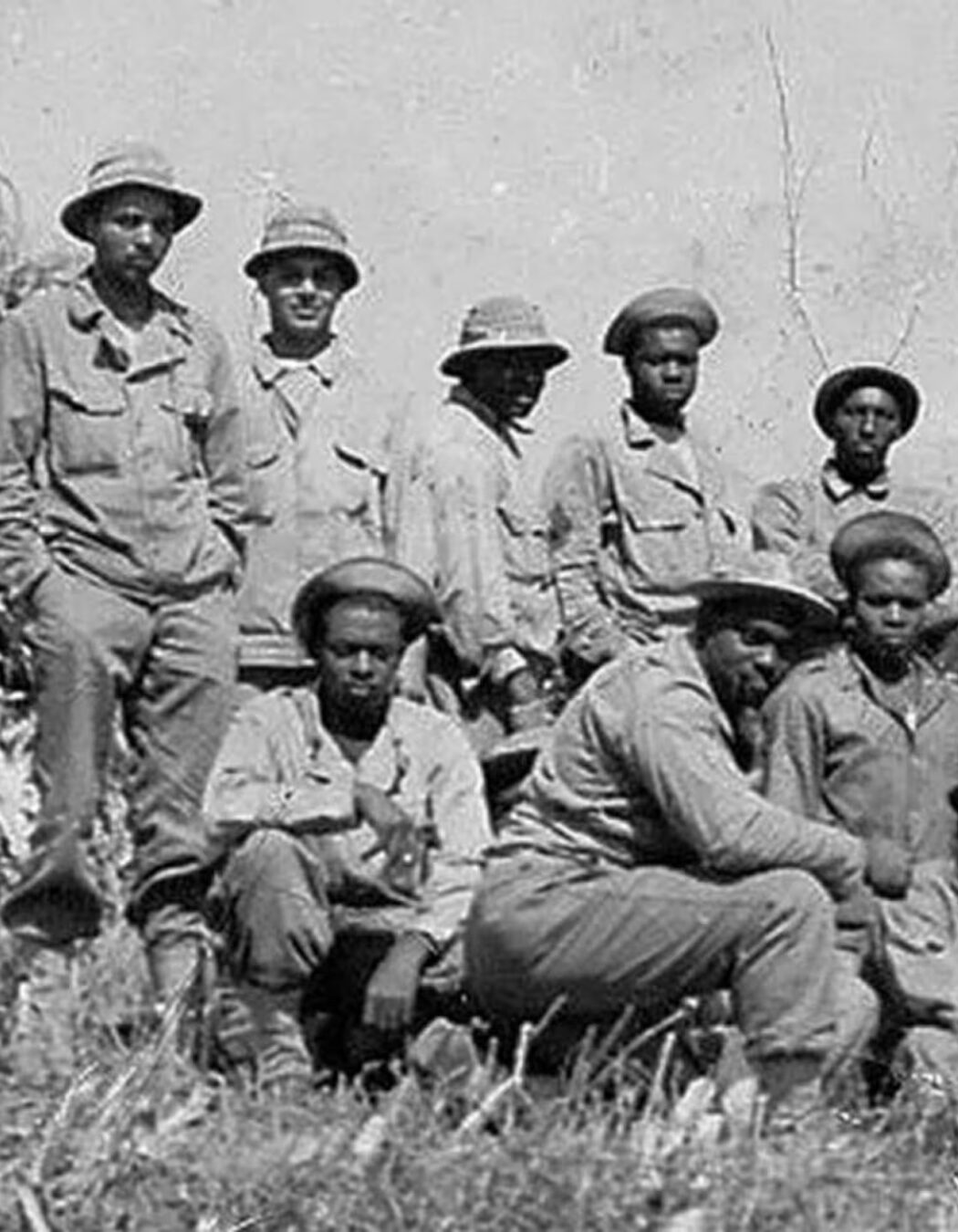
The removed panels, part of a 15-panel exhibition installed last year, featured the story of Technician Fourth Class George H. Pruitt, a New Jersey-born engineer who died rescuing a fellow soldier, and a second display that quoted First Lt. Jefferson Wiggins, who served in the segregated 960th Quartermaster Service Company. That same unit helped establish the cemetery in 1944 while Black troops were barred from combat and restricted to menial labor and burial duties.
In statements to the press, the ABMC confirmed the panels’ removal but said the changes were part of a normal cycle. “Our exhibits are modular,” the agency said. “Individual panels rotate over time to feature a broader range of stories about those interred.” It added that four of the current 15 panels “continue to feature African American service members.”
But recent visitors, journalists, and local officials say no such displays were visible during site visits this autumn. “We were shocked,” said Bas Albersen, a spokesperson for the governor of Limburg province, who called the missing panels a “painful erasure” of a story central to the island’s liberation. “These men fought for freedom they themselves did not enjoy at home,” Albersen said.
Dutch officials are urging the ABMC and the U.S. Embassy to reinstall the panels, calling their presence “non-negotiable” for an inclusive remembrance of World War II.
“Routine Rotation” or Political Pressure?
The controversy arrives amid a wider political reckoning over how U.S. government institutions address race, diversity, and historical narrative.
In Washington, conservative organizations, most prominently the Heritage Foundation, have led a campaign to roll back federal diversity, equity, and inclusion (DEI) programs. In its Project 2025 policy blueprint—a 900-page transition guide for a potential Republican administration—the foundation explicitly calls for eliminating DEI offices and rewriting agency missions to focus on “patriotism” and “traditional American values.”
While the ABMC has not cited any political directive in its Margraten decision, historians and civil rights advocates note that the removal mirrors a growing tendency within certain agencies to scale back or reframe public storytelling about marginalized groups. “We can’t ignore the timing,” said Dr. Kees Ribbens, a senior historian at the NIOD Institute for War, Holocaust and Genocide Studies in Amsterdam. “Just as agencies in Washington are under pressure to tone down DEI efforts, two panels about Black soldiers disappear from one of America’s most symbolic overseas cemeteries. It may be coincidence—but it’s one that demands scrutiny.”
Ribbens added that such interpretive changes carry outsized weight in the Netherlands, where remembrance culture is deeply embedded in civic identity. “When those stories vanish, even temporarily, it’s felt as an affront to the moral obligation to tell the whole truth of liberation,” he said.
A Heritage Foundation spokesperson, reached by email, said the think tank “has no involvement in decisions made by the ABMC,” but defended its broader campaign to end what it called “ideological indoctrination in government storytelling.” The statement added, “Federal memorials should honor the heroism of all Americans equally, without filtering history through a political lens.”
Dutch Reaction and the Legacy of the “Black Liberators”
The disappearance of the panels comes as the Netherlands marks 80 years since liberation from Nazi occupation. The Black Liberators project, a Dutch civic initiative that documents African American service in Europe, confirmed that the displays were removed earlier this year. Project chair Theo Bovens, also a member of the Dutch Parliament, said the decision “undermines years of work to highlight the overlooked role of Black soldiers.”
He and other officials are calling for a permanent installation rather than a “rotating” one. “We understand exhibitions change,” Bovens said. “But to remove both of the panels that specifically addressed segregation and Black service—without notice—sends the wrong message to descendants and to our own citizens.”
Dutch media outlets have reported that Limburg’s provincial government will file a formal diplomatic protest with the U.S. ambassador in The Hague. The American embassy has so far referred all inquiries to the ABMC.
Inside the American Battle Monuments Commission
The ABMC, established in 1923, maintains 26 American cemeteries and 32 memorials across 17 countries. Though largely insulated from politics, the agency’s leadership is appointed by the U.S. president. Under the Trump administration, appointees made several interpretive changes at American cemeteries in Europe, replacing exhibits that referenced racial segregation and the Holocaust with broader tributes to “American sacrifice,” according to internal memos obtained by journalists in 2021.
Those shifts, while subtle, drew criticism from scholars who saw them as aligning with a conservative backlash against what opponents call “revisionist history.” With the Heritage Foundation’s Project 2025 now circulating as an influential playbook for the next Republican administration, observers say institutions like the ABMC could face new scrutiny over how they handle issues of race and remembrance.
“The fear,” said Dr. Sarah Wagner, a George Washington University anthropologist who studies war memory and military cemeteries, “is that the rhetoric of neutrality—of saying ‘we’re just rotating panels’—can become a pretext for suppressing difficult or inconvenient history.”
Calls for Restoration—and Accountability
For now, the ABMC maintains that the Pruitt panel remains “in rotation” and may be reinstalled later, while the Wiggins panel has been “retired.” The agency said new interpretive materials are under review. Dutch officials say that response is inadequate.
In an open letter, the Netherlands’ National Institute for Human Rights urged the ABMC to “restore the removed panels immediately” and “consider making the representation of African American soldiers permanent.” The letter noted that the cemetery’s founding in 1944 relied heavily on Black quartermaster units who dug graves and built infrastructure under segregation.
Meanwhile, advocacy groups in the United States, including the NAACP Veterans Affairs Committee and several historians from the Smithsonian’s National Museum of African American History and Culture, have also called on the ABMC to reinstate the panels and provide greater transparency.
“This isn’t just about two pieces of plexiglass,” said Dr. Lonnie Bunch III, Smithsonian Secretary, in an interview with The Washington Post last week. “It’s about who gets remembered, who gets erased, and what values we choose to export to the world when we tell America’s story abroad.”
Remembering in Full
At Margraten, local volunteers continue to tend every grave—a decades-old tradition that began in gratitude and endures through generations. Fresh flowers, many placed by Dutch families who have “adopted” graves, now lie beside headstones marked with crosses and Stars of David. Among them are the names of men like Private Julius W. Morris, Private Johnnie Williams, and dozens of other African Americans whose units once built the cemetery that now holds them.
For the people of Limburg, their stories remain woven into the region’s history, regardless of what hangs on the walls of the visitor center. Yet for historians, the incident is a reminder that remembrance itself is not static.
As Dr. Ribbens put it: “If remembrance is to mean anything, it must include every hand that dug, built, and fought. Otherwise, we risk turning history into half a story.”
Whether the ABMC’s decision reflects bureaucratic misjudgment or an ideological chill from Washington, the episode underscores how fragile inclusion can be—even in places built to commemorate sacrifice and freedom.
Sources
- The Guardian, “Panels Honoring Black WWII Soldiers Removed from US Cemetery in Netherlands” (Nov. 2025)
- The Washington Post, interviews with U.S. and Dutch officials on ABMC exhibit rotation and DEI policy context (Nov. 2025)
- Reuters, “Dutch Officials Protest Removal of Black Liberators Panels” (Nov. 2025)
- The New York Times, background on U.S. federal diversity rollbacks and the Heritage Foundation’s “Project 2025” blueprint (Oct. 2025)
- NIOD Institute for War, Holocaust and Genocide Studies, interviews with Dr. Kees Ribbens (Nov. 2025)
- American Battle Monuments Commission public statements and media responses (2024–2025)
- Heritage Foundation, Project 2025: Presidential Transition Project policy framework (2024)